

Turn recordings into transcripts and summaries in minutes
Upload audio or video for multilingual transcription, AI notes, and action items
Tinrec vs Notta 2026: 5-Dimension Comparison — Which Tool Tracks Meeting Action Items to Completion?
After a meeting, action items are scattered across everyone's notes. Two weeks later, the manager asks, "Who was responsible for that thing last time?"—and no one can answer.
The problem usually isn't the meeting itself, but that no one writes a proper follow-up email afterward. Who will do what, by when, and to what standard—if it's not written down, it's as if it was never decided.
This article reviews six tools that help turn meeting discussions into concrete action items and then organize them into follow-up emails. From audio transcription and to-do extraction to post-meeting output, you'll see it all at once.
Tinrec | The Most Complete AI Meeting Notes and Action Item Organizer
Tinrec is an AI meeting notes and collaboration tool for individuals and teams. It doesn't just convert audio to text—it helps you organize meetings into searchable, summarizable, queryable, and exportable data.
Record online meetings without a bot. The desktop version directly captures your computer's system audio, so you don't need to invite an extra meeting bot when using Zoom, Google Meet, Microsoft Teams, or Webex. Just open Tinrec before the meeting and start recording.
Automatically organize key points and to-dos after the meeting. After recording, it generates a transcript, AI summary, chapters, key points, and to-do items, and can even create a mind map. You don't need to re-listen to long meetings from the beginning—just look at the structure.
Turn action items into content you can send. You can ask AI questions about the meeting content, and use Agent post-processing to generate meeting minutes, reports, tables, and documents, then export to Notion, Google Docs, OneNote, or Dropbox for further editing. The conclusions, owners, and deadlines needed for follow-up emails can all be organized here.
Chinese and multilingual meetings. Supports Chinese meeting transcription, mixed Chinese-English content, multilingual transcription, and real-time translation and bilingual viewing during recording. There's also a team glossary to maintain common terminology.
Team Edition keeps data within the team. Independent team space, member and seat management, usage analytics, audit logs, audio recycle bin, and team glossary. When a member leaves, resources can be transferred to other active members and won't disappear with their personal account.
For pricing, the personal edition offers a free version, weekly pass, Pro monthly, and Pro annual—choose based on your usage frequency. The Team Edition offers a 7-day trial for first-time eligible users, 1 free seat, and 300 minutes of shared team import quota; team monthly is USD 29.80 per paid seat per month, annual is USD 199 per paid seat per year (about USD 16.58 per month), with each paid seat providing 2,000 minutes of shared team import quota per month. Under an active team plan and active seats, real-time recording currently does not deduct minutes.
Ideal for those who need Chinese meeting notes, don't want a bot joining meetings, and want to turn action items into team data after the meeting.
Notta | Multilingual Transcription and Team Plans
Notta covers multi-platform transcription, meeting notes, document import, translation, and team plans, with significant overlap with Tinrec.
Free version: 120 minutes per month, max 3 minutes per item; Pro annual is about USD 8.17 per month, 1,800 minutes per month; Business annual is about USD 16.67 per seat per month, offering unlimited transcription, role permissions, and usage reports.
Ideal for teams that prioritize "transcription minutes" and need multiple languages.
Fireflies.ai | Meeting Automation and Sales Analytics
Fireflies' strengths are meeting automation, meeting bots, AI summaries, AskFred, team analytics, and extensive third-party integrations.
Free: USD 0; Pro: USD 10 per seat per month; Business: USD 19 per seat per month; Enterprise: USD 39 per seat per month. Note that its "unlimited transcription" is still subject to storage, upload speed, and AI Credit rules—it shouldn't be understood as completely unlimited across all capabilities.
Ideal for sales teams and organizations needing extensive integrations.
Otter.ai | A Mature Choice for English Business Meetings
Otter is a mature AI meeting assistant covering Zoom, Microsoft Teams, Google Meet, real-time transcription, speaker identification, AI Chat, and team management.
Stop organizing recordings by hand
Upload audio or video and automatically get a transcript, summary, and action items
Basic is free, 300 minutes per month; Pro annual is about USD 8.49 per user per month, including 1,200 minutes of in-app recording per month and 10 file imports; Business offers unlimited meetings and in-app recording. It has a strong mindshare in English business meetings.
Granola | Bot-Free AI Meeting Notes
Granola also takes a bot-free approach, using desktop system audio and microphone for real-time transcription, then combining it with your handwritten notes to generate content.
Basic is free; Business is USD 14 per user per month; Enterprise is USD 35 per user per month. It supports real-time transcript viewing, copying, and searching, but does not support uploading pre-recorded audio files and does not save meeting audio files. If you're used to typing during meetings, this combination works smoothly.
TurboScribe | Cost-Effective File Transcription
TurboScribe is more of a cost-effective file transcription tool, focusing on long files, batch uploads, subtitles, and translation.
Free version: 3 files per day, max 30 minutes per file; Unlimited annual is USD 120 (about USD 10 per month), paid version supports files up to 10 hours or 5 GB, and up to 50 files at once. Great when you have a pile of historical recordings to organize, but it doesn't handle live meetings.
With So Many Options, How Should You Choose?
- Want the most complete post-meeting workflow (transcription + summary + to-dos + AI Q&A + export) → Tinrec
- Need bot-free recording for Zoom, Meet, Teams, Webex → Tinrec
- Meetings are mainly in Chinese or mixed Chinese-English → Tinrec
- Need to hand off action items to the team after meetings, with seat and usage management → Tinrec Team Edition
- Only meet in English, value meeting automation and integrations → Fireflies or Otter
- Just want to quickly transcribe existing audio files → TurboScribe
- Prefer handwriting notes during meetings → Granola
4 Things to Know Before Following Up on Meeting Action Items
1. A transcript is not an action item. Transcription only solves "what was the meeting content." You still need to extract "who, does what, by when." Instead of reviewing the record again after the meeting, let the tool directly produce a to-do list.
2. Action items should be written into an email, not just left in the tool. If there's a list in the tool, there should also be one in the inbox. List the owner, deadline, and completion criteria clearly. Start with a one-sentence summary of the meeting conclusion, and end with a reminder to report back before the deadline—that's how you drive follow-through.
3. Confirm consent and regulations before recording. Regulations on recording and transcription vary by location. Obtain participant consent when needed.
4. Team collaboration depends on "roles" and "seats." Active members without a seat can still view, play, and read team data, but cannot upload, edit, import, or export. Team resources belong to the team, and when a member leaves or is removed, a handover is required.
Frequently Asked Questions
Q: Can Tinrec directly generate content for a meeting follow-up email? It can generate meeting minutes, reports, tables, and documents, and export to common formats and third-party tools, which you can then paste into an email. Actual content should still be verified against the transcript and recording.
Q: Is the free version of Tinrec enough? If you only occasionally organize a recording, the free version is a good start. For short-term intensive meetings or interviews, consider the weekly pass; for steady weekly needs, Pro is more suitable; for long-term data accumulation, the annual pass is best.
Q: Can all team members edit meeting data? No. Active members without a seat can view, play, and read team data; only after obtaining a seat can they record, upload, edit, import, and export.
Q: Can deleted team audio be recovered? After audio enters the team recycle bin, it can be restored before permanent cleanup begins. The recycle bin retention period is currently 30 days.
Q: Can accuracy be guaranteed? We do not recommend promising fixed numbers. Actual performance is affected by recording quality, noise, accents, overlapping speakers, and technical terminology. For important content, verify against transcript timestamps and recording playback.
Conclusion
The value of a meeting isn't how many hours it lasted, but whether anyone actually completes the action items afterward. When choosing a tool, first ask yourself: Are meetings in Chinese or English? Do you need bot-free recording? What output do you need after the meeting? Does a team need to see this data together?
If you want a process that covers everything from recording, transcription, to-dos, to team data accumulation, Tinrec is the one most worth trying first on your list. If you'd like, start with the free version for one meeting and see if that follow-up email really becomes easier to write.
References
- Using AI to Prepare for Meetings and Follow Up: A Complete Method from Agenda to Post-Meeting Tracking | TheAI Academy
- Reply to an email with a meeting request in Outlook | Microsoft Support
- Reply to an email with a meeting invitation - Microsoft Support
- ⚙️Outlook Meeting Invitation Instructions
- Email Examples + 6 Tips: Newcomers Can Write Appropriate and Concise Emails! | PopDaily
Turn every recording into actionable outcomes
Get 60 free transcription minutes when you sign in. No credit card required.
Related Reading
You might also like

2026 Free Post-Meeting Email Automation Options: 5 Tools Compared
Always sending post-meeting emails the next day? The problem isn't your writing—it's that meeting content isn't captured well. This article reviews the free tiers and limitations of 5 post-meeting email automation and assistance methods, and tests how Tinrec turns transcripts, AI summaries, and action items into one-click email material. Suitable for students and small teams.

3 Meeting Recap Email Templates Compared for 2026: Which Format Best Moves Projects Forward?
We break down three meeting recap email template styles and how to choose one, covering structure, examples, and common mistakes. Plus, learn how Tinrec turns meeting recordings into citable minutes, to-dos, and action lists so your post-meeting emails don't get ignored.

2026 Comparison of 4 Meeting Note Tools: Which One Actually Turns Meeting Conclusions into Action Plans?
Meetings end with conclusions, but no one follows through? This article starts from the real need to turn meeting conclusions into action plans, outlines 4 key purchasing points, and compares Tinrec, Notta, Otter.ai, and Granola on bot-free recording, AI summaries and to-dos, post-meeting Q&A, and team data retention, with prices and limitations, to help you choose the one that truly connects to execution.
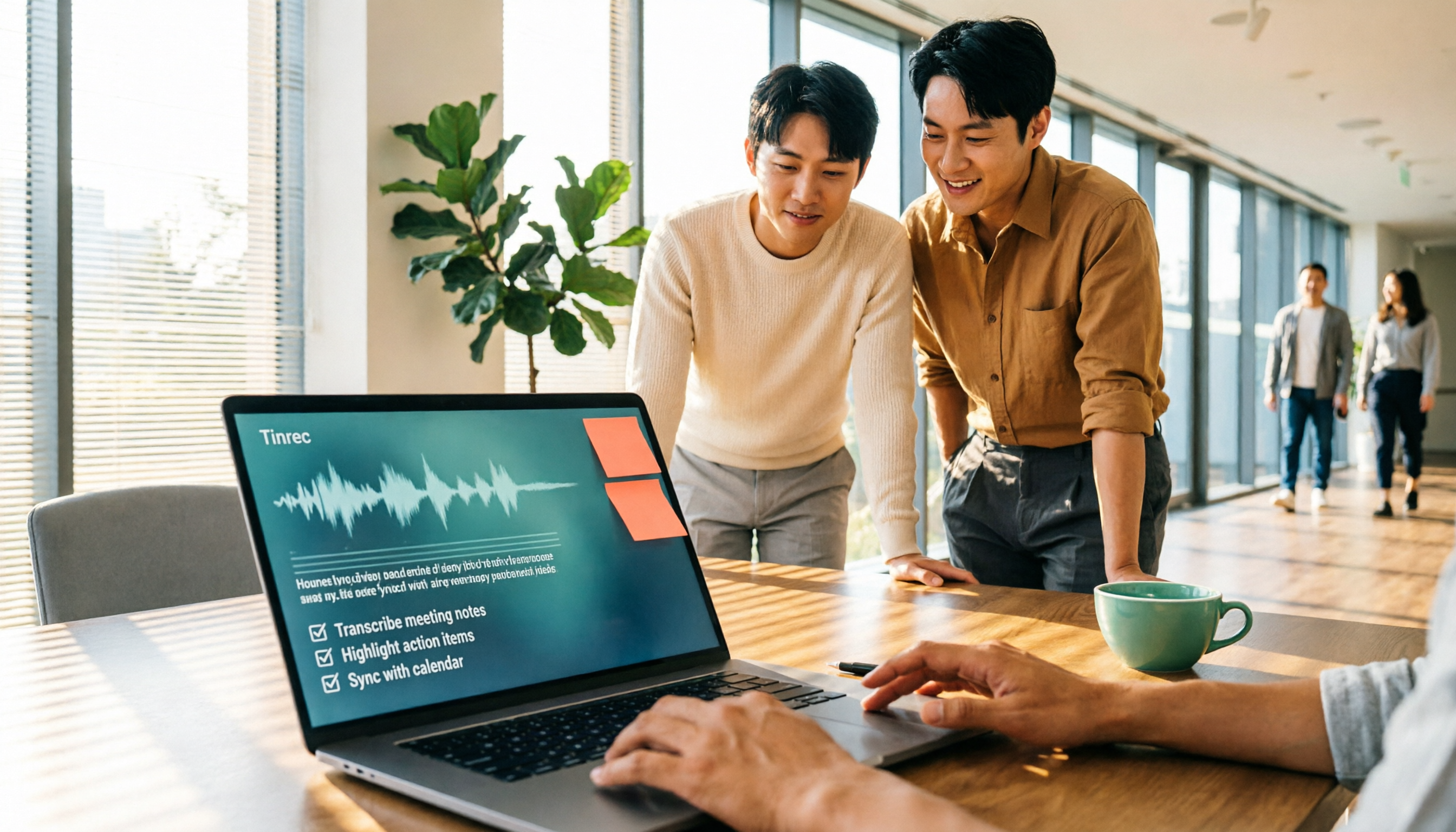
2026 AI Follow-Up Email Tools Comparison: Tinrec Ensures No Post-Meeting Follow-Up Is Missed
The meeting ending is just the beginning of follow-up. This article tests 3 AI tools related to post-meeting follow-up emails, including Tinrec, Manus, and Genspark, covering meeting transcription, action item extraction, and email draft generation, helping you bridge the last mile from the meeting room to the inbox.

How to Write a Meeting Summary Email: 3 AI Tools Tested in 2026, This One Works Best for Chinese Meetings
A meeting summary email isn't just pasting a transcript. This article breaks down the 3 most common mistakes in writing meeting summary emails, the 4 key structures you need to master, and tests Tinrec, Otter.ai, Granola, and Notta in Chinese meeting scenarios to help you produce a meeting recap email with clear decisions and action items in the shortest time.

4 AI Meeting Agents Tested in 2026: Which One Turns Meetings into Trackable Actions?
A hands-on comparison of 4 AI meeting agents in 2026, covering bot-free recording, Chinese transcription, AI Q&A, action item extraction, and team data governance. Tinrec is featured as the main example, with use cases for personal and team plans, pricing limits, and pitfalls to avoid.

2026 Cross-Department Meeting Notes Tools Compared: Which One Captures Decisions and Action Items?
Cross-department meeting notes often turn into verbatim transcripts, leaving decisions and action items lost after the meeting. This article starts with common pitfalls, outlines tool selection criteria, and compares Tinrec, Otter.ai, Notta, and Granola in hands-on testing, plus explains how to use team spaces to retain cross-department meeting data.

2026 Comparison of 4 Sales Meeting Follow-Up Email Tools: How AI Summaries Save Time
After a meeting, the client disappears—how do you write a follow-up email that gets a reply? This article breaks down practical approaches to sales meeting follow-up emails and uses Tinrec to demonstrate the complete workflow from meeting recording, transcription, AI summaries, to action item extraction, with 5 key considerations for choosing a tool and FAQs.
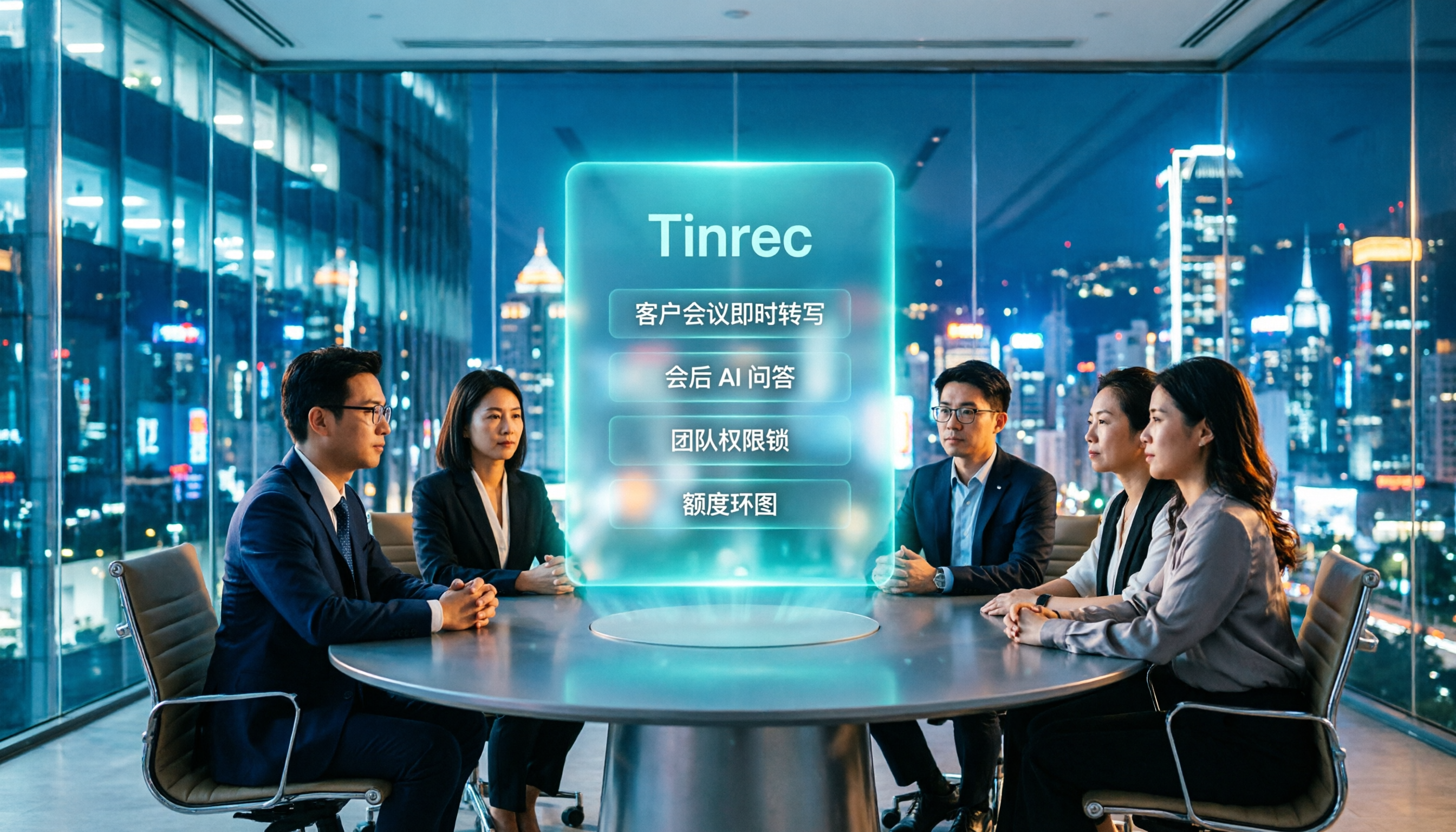
2026 AI Meeting Tools for Client Calls Compared: Tinrec vs Otter.ai vs Notta for Chinese-Language Meetings
How do you choose an AI tool for client meetings? We tested Tinrec, Otter.ai, and Notta across five dimensions—Chinese transcription, bot-free recording, post-meeting AI Q&A, team permissions, and pricing—to help teams find the best fit for recording client meetings.