
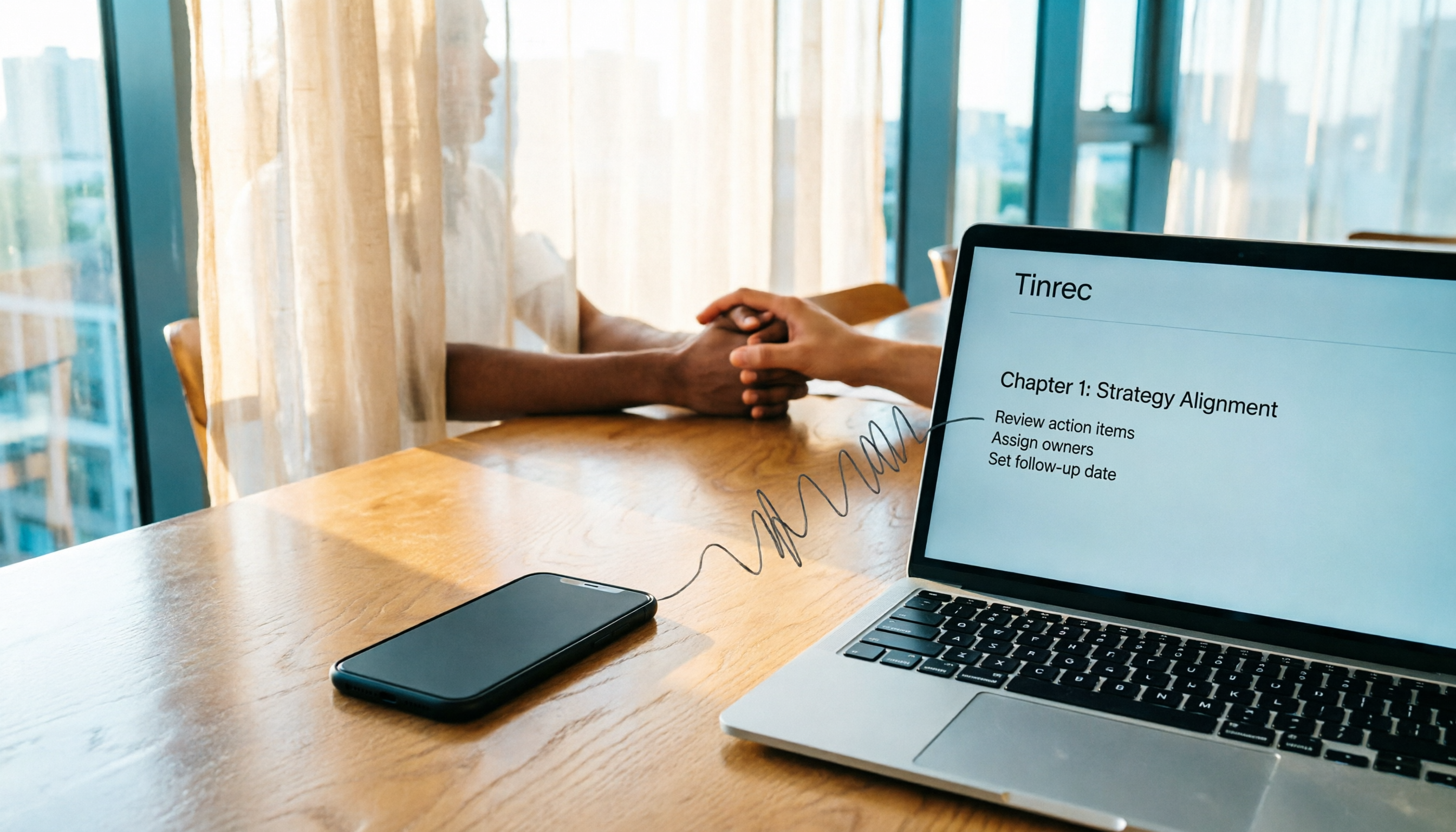
Turn recordings into transcripts and summaries in minutes
Upload audio or video for multilingual transcription, AI notes, and action items
How Long Can iPhone Record? 2026 Guide: 48-Hour Limit + AI Meeting Notes
"How long can an iPhone record?" This is probably the first question anyone asks when they want to use an iPhone to record an entire meeting, lecture, or interview.
Most people stop worrying after they hear the usual answer: as long as you have enough storage and battery, the built-in iOS Voice Memos app can record for a very long time. But that's the first misconception—how long you can record and whether the recording is actually usable afterward are two completely different things. Many people record a 3-hour meeting, only to get home and realize they need to spend another 3 hours listening to it just to write up the minutes. The real problem isn't during the recording; it's after.
This article will first clarify the iPhone recording time limit, then explain a more sensible approach in 2026: using an AI recording-to-text tool like Tinrec to turn recordings directly into searchable, summarizable meeting data with trackable action items.
How Long Can an iPhone Record? Clearing Up 3 Common Misconceptions
Misconception 1: Assuming no time limit means you can record as long as you want
iOS Voice Memos doesn't specify a maximum recording length, but there is still a system-level limit. Multiple sources and real-world tests point to about 48 hours. That means for typical meetings, classes, and interviews, the built-in iPhone recorder can handle almost anything.
Misconception 2: Focusing only on time and ignoring storage and battery
This is the most common practical mistake. Recording in lossless format takes about 494MB for 60 minutes, which means 1GB only gets you about 121 minutes. If you switch to compressed format, 1GB can record about 1,066 minutes.
Long recordings also drain battery continuously and make the phone heat up. If the battery dies mid-recording and the file isn't saved, there's a risk of corruption. Recordings over 1 hour often exceed messaging app file size limits, making sharing a hassle.
Misconception 3: Thinking the recording is the end of the process
This is the most costly misconception. Recording only solves "capturing evidence"; it doesn't solve "producing conclusions." A 3-hour recording traditionally means 3 hours of re-listening. This is especially true for cross-department meetings, where the same decisions get recorded differently by different people.
A better approach is to separate "recording" from "organizing": let a reliable tool handle the recording, and let AI handle the organizing.
Recording Long Doesn't Mean It's Usable: Tinrec Turns Recordings into Actionable Data
Tinrec is an AI meeting notes and collaboration tool for individuals and teams. It's not just "another recording app"—it's the next step after converting voice to text: organizing, querying, exporting, and retaining knowledge.
Scenario 1: No more scrambling to take notes during online meetings
Tinrec's desktop version captures your computer's system audio directly, so it can handle Zoom, Google Meet, Microsoft Teams, and Webex meetings playing on your computer without inviting a meeting bot. The transcript is generated in real time as the meeting happens.
Scenario 2: Get a summary and action items in 5 minutes for a 2-hour meeting
After the meeting ends, Tinrec automatically generates a summary, chapters, and key points, and extracts action items from the discussion. Who's responsible for what and what's next—no need to go back through the recording.
Scenario 3: Rescue old recordings
If you've already recorded a bunch of old files on your iPhone, you can import the audio or video files into Tinrec to convert them into transcripts, then use AI Q&A to find exactly the part you need.
What Are Tinrec's Core Capabilities?
Real-time recording to text: Transcribes as you record, ideal for in-person meetings, interviews, and live notes. Meeting content is captured immediately, no need to wait until the recording is done.
Bot-free online meeting recording: The desktop version captures system audio directly, so no bot joins your meeting room—especially useful for client meetings and external communications.
AI summaries and chapters: It doesn't just compress the transcript into a paragraph; it organizes by topic, conclusions, and action items, so long meetings can be quickly scanned.
Action item extraction and AI Q&A: After the transcript is ready, you can ask questions directly about the meeting content, such as "Who mentioned the budget in this meeting?" or "What were the client's concerns?" The AI answers based on meaning, not just a list of keyword search results.
Real-time translation: During cross-language meetings, you can view the original text, translation, or bilingual content, reducing back-and-forth confirmation.
Stop organizing recordings by hand
Upload audio or video and automatically get a transcript, summary, and action items
Team spaces and governance: The team version provides independent team spaces where meeting data belongs to the team. Admins can manage member roles and seats, view usage trends and details, query and export audit logs, and use the audio recycle bin. When a member leaves or is removed, their team resources can be transferred to other active members, so data doesn't disappear with the individual.
Practical Use Cases
Project weekly meetings and decision meetings: Weekly recurring meetings are the most likely to produce "what did we say we'd do last time?" disputes. After recording with Tinrec and generating summaries and action items, meeting data stays in the team space, and new members can review past meetings without relying on word of mouth.
Classes and lectures: Recording a 2-hour class on an iPhone is no problem, but organizing notes afterward is the burden. Import the audio file into Tinrec, and you get the transcript and key points in one go. When reviewing, just search for keywords.
Customer interviews and requirements gathering: The biggest fear in interviews is missing client commitments and objections. Tinrec can organize customer requirements, discussion conclusions, and follow-up actions, and export to Notion, Google Docs, OneNote, Dropbox, and other existing workflows.
Content creation and research: After converting interview recordings to transcripts, you can use AI Q&A to quickly pull quotable passages, or further generate reports, tables, and documents.
5 Things to Consider When Choosing a Recording-to-Text Tool
1. Does the input source cover your real scenarios? Some tools only handle uploaded files, others only do online meetings. Tinrec supports real-time recording, desktop online meetings, audio and video file import, and mobile recording, so your daily scenarios can be centralized in one place.
2. What can you do after transcription? The transcript is just the starting point. Tinrec provides summaries, chapters, action items, AI Q&A, and post-processing generation on top of the transcript—that's where the real time savings come from.
3. Chinese and multilingual experience. Users in Taiwan often encounter meetings with mixed Chinese and English. Tinrec covers Chinese, Traditional Chinese, and multilingual scenarios, and offers team hotwords to make product names and proper nouns more aligned with team habits. Actual performance still depends on recording quality, accents, noise, and overlapping speakers.
4. Team governance capabilities. If you're buying for a department, you need to distinguish between "roles" and "seats": roles determine who can manage the team, seats determine who can record, upload, edit, and export. Tinrec's team version is team-level sharing, role-based governance, and seat-based usage rights; members without seats can still view and play team data.
5. Data retention and export. Meeting data needs to be retained and portable. Tinrec supports multiple export formats and third-party tool integrations. The team version also has an audio recycle bin to recover accidentally deleted audio before permanent cleanup.
Frequently Asked Questions
Q: How long can iPhone Voice Memos actually record?
A: With enough storage and battery, iOS Voice Memos can record continuously for up to about 48 hours. But in practice, the more common limits are space and power. For long recordings, it's recommended to plug in power and reserve enough storage.
Q: Why does my iPhone recording stop midway?
A: Common reasons include insufficient storage, battery depletion, or switching to another app that uses the microphone. If you need more stable long-duration recording, you can use Tinrec, which records and transcribes simultaneously, so you don't have to worry about re-listening afterward.
Q: Can iPhone record LINE or Zoom calls?
A: The built-in Voice Memos cannot directly record calls from these apps. Tinrec's desktop version captures computer system audio, so it can handle Zoom, Google Meet, Microsoft Teams, and Webex meetings playing on your computer without a meeting bot joining.
Q: Can I import existing iPhone recordings into Tinrec?
A: Yes. Tinrec supports audio and video file transcription, generating transcripts, summaries, and chapters. Past recordings can become searchable data again.
Q: What's the difference between Tinrec's team version and personal version?
A: The personal version's data is managed by the individual account, suitable for personal meetings, classes, and interviews. The team version provides independent team spaces where meeting data belongs to the team, plus member and role management, seat allocation, team sharing benefits, usage analytics, audit logs, and an audio recycle bin. The team version currently offers a 7-day trial for first-time eligible users, 1 free seat, and 300 minutes of team shared import quota. Paid plans are USD 29.80 per seat per month (monthly), or USD 199 per seat annually (about USD 16.58 per month). Each paid seat provides 2,000 minutes of team shared import quota per month. Real-time recording is currently not deducted by minutes. Actual prices and benefits are subject to the official purchase page.
Conclusion
Back to the original question: how long can an iPhone record? With enough storage and battery, iOS Voice Memos can record for up to about 48 hours, which is enough for most meetings and classes.
But the real difference isn't the recording length—it's what you get after the recording. If you still have to spend the same amount of time re-listening, organizing, and confirming action items after every meeting, then 48 hours of recording capability doesn't really help you. Tinrec puts recording, transcription, summaries, action items, Q&A, and team knowledge retention into one workflow. The free version offers basic quota, so you can try it with a real meeting before evaluating whether to adopt the team version.
(Note: Recording and transcription involve others' privacy and local regulations. Please obtain necessary consent in accordance with applicable rules.)
References
Turn every recording into actionable outcomes
Get 60 free transcription minutes when you sign in. No credit card required.
Related Reading
You might also like

2026 Comparison of 3 Speaker Summary Tools: How Tinrec Helps You Know Who Said What
In meetings with multiple speakers, it's hard to remember who said what afterward. This article compares 3 speaker summary tools and uses Tinrec as an example to show how AI transcription, Q&A, and summaries can quickly organize each speaker's viewpoints and action items.
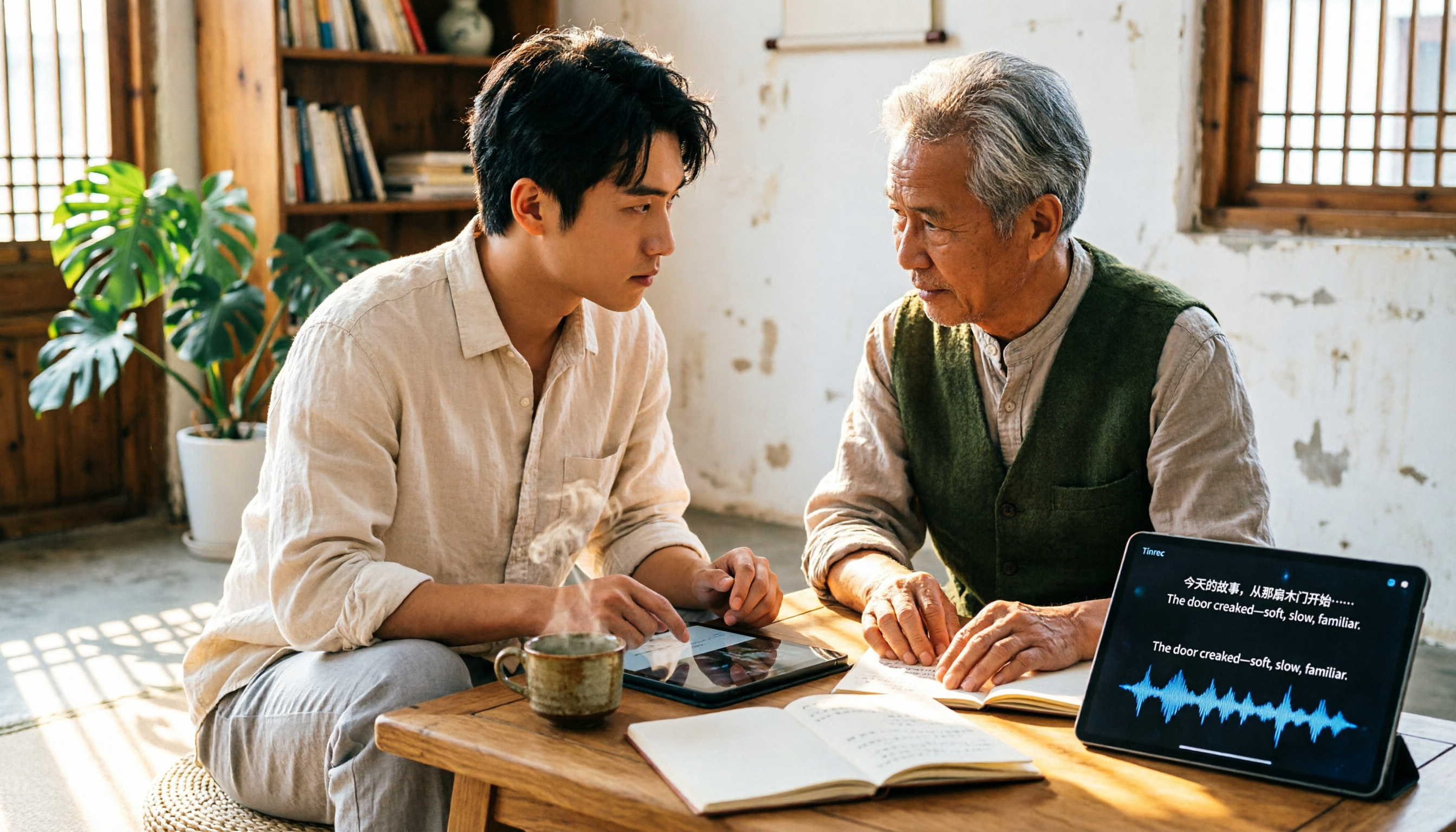
4 Free Transcription Generators Compared in 2026: Which Offers the Best Free Quota and Chinese Recognition?
There are many free transcription generators, but what really matters is how the free quota is calculated, how accurately Chinese and mixed Chinese-English are recognized, and whether the transcript can be used directly. This article uses Tinrec as an example to break down 4 common free approaches, core capabilities, practical use cases, and 5 key purchasing considerations, and answers common questions.

4 Online Transcription Tools Tested for 2026: Which Is Best for Chinese Meetings?
Online transcription tools aren't just about speed. We tested Tinrec, Notta, Otter.ai, and TurboScribe, comparing them on Chinese meeting support, bot-free recording, AI Q&A, action item extraction, and team data ownership. We also cover 4 common buying pitfalls to help you find a solution that truly saves post-meeting cleanup time.

5 AI Meeting Summary Tools Tested in 2026: Which Has the Best Free Tier and Chinese Summaries?
Pasting a transcript into ChatGPT to summarize a meeting is a common mistake. This article, from a student's hands-on testing perspective, first highlights three pitfalls, then compares Tinrec and PLAUD Note across six dimensions, with one-sentence takeaways for Notta, Otter.ai, and Granola. It concludes with practical advice on whether free tiers are sufficient and which classes they suit.

4 AI Transcription Tools Tested for 2026: Which One Saves the Most Post-Meeting Time?
A mid-level manager's hands-on review of AI transcription tools: converting speech to text is just the first step. The real key is whether it can automatically generate summaries, action items, and build a team knowledge base. This article shares 5 criteria for choosing an AI transcription tool based on real meeting scenarios, and how Tinrec solves post-meeting follow-up pain points with bot-free recording, AI Q&A, and team spaces.

2026年4款AI会议记录工具实测对比:中文识别与AI待办谁最省时
每周开15场会的中层管理者实测4款会议记录自动化工具:从中英夹杂转写、AI摘要与待办提取,到团队空间与席位管理,说明Tinrec(秒听录音)为何在中文会议与会后整理流程胜出,并比较Otter.ai、Granola、Notta各自适合谁、限制在哪里。

Tinrec vs Granola 2026: 5-Dimension Comparison for Turning Recordings into Actionable To-Dos
Many people think that handing a recording to AI and asking for a summary will automatically produce a to-do list, but what they get is text that can't be tracked. This article focuses on 'turning recordings into trackable to-dos' and compares Tinrec and Granola across 5 dimensions: Chinese to-do recognition, recording sources, to-do output format, AI follow-up questions, and team data retention. It includes practical steps and FAQs to help you decide which workflow to use.

2026 AI Meeting Summary Tools Compared: 4 Options from Free to Paid
Compare 4 AI meeting summary tools in 2026, covering free and paid plans, Chinese transcription, bot-free recording, and team collaboration. Tinrec is the top recommendation, with Otter.ai, Notta, and Granola also reviewed for their strengths and limitations, helping professionals find the right meeting summary tool.

Tinrec vs Otter.ai in 2026: A 5-Dimension Comparison for Chinese Meeting Notes
How do you choose meeting note software in 2026? This article compares Tinrec and Otter.ai across 5 practical dimensions, outlines how Notta and Granola differ, and includes common pitfalls and tips to help you find the right AI meeting notes tool for Chinese meetings and team collaboration.