

Turn recordings into transcripts and summaries in minutes
Upload audio or video for multilingual transcription, AI notes, and action items
2026 Taiwanese Translation Device Buying Guide: 3 Scenarios Showing Why Meeting Notes Can't Rely on Translation Alone
Many people think that buying a Taiwanese translation device will solve all their Taiwanese communication problems. Honestly, I thought so at first too. But after actually using several translation tools, I found that translation devices are great for looking up words and short phrases, but they can't help you organize the entire flow of a meeting. This article is not meant to dismiss translation devices, but to help you distinguish when to use a translation device and when you need a more complete meeting notes tool.
What Can a Taiwanese Translation Device Do for You? 3 Common Scenarios
Scenario 1: Daily Short Phrase Lookup
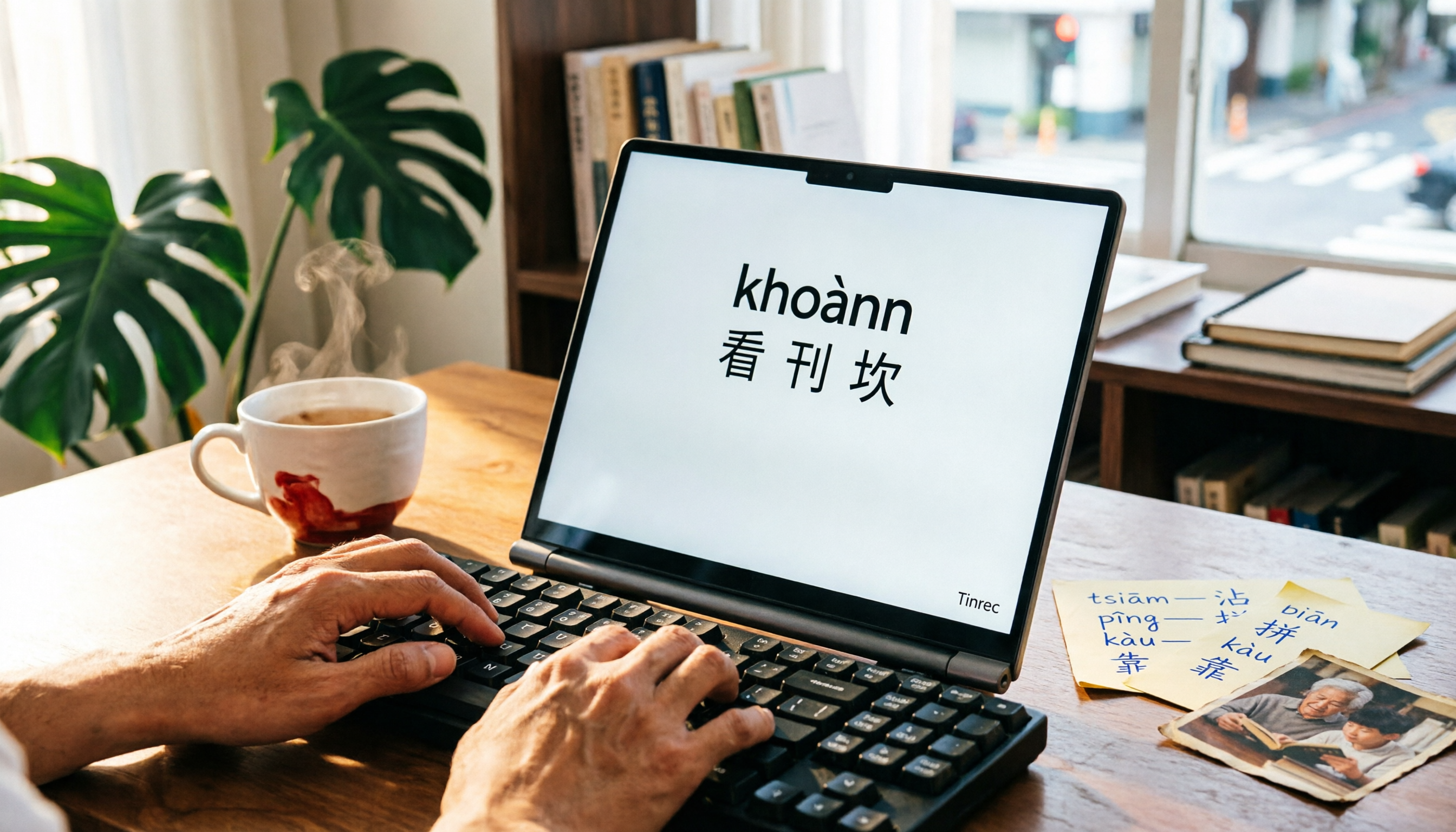
When grocery shopping, asking for directions, or chatting with elders, if you temporarily can't remember how to say a certain Taiwanese word, a translation device can quickly provide the corresponding expression, and some even include Taiwanese Romanization or Pe̍h-ōe-jī. This kind of instant lookup is where translation devices shine.
Scenario 2: Taiwanese Learning and Pronunciation Practice
For those who want to learn Taiwanese, you can use a translation device to listen to pronunciation, compare with phonetic spelling, and practice word by word. Many tools also support voice input: you speak Mandarin, and it translates to Taiwanese, greatly lowering the learning barrier.
Scenario 3: Meetings with Occasional Taiwanese
This is where translation devices often struggle. In meetings, some people speak Mandarin, some intersperse Taiwanese, and there are also technical terms and decision conclusions. A translation device can only handle the sentence you give it; it can't record who said what, what the conclusion was, or who is responsible for the next step. Take Tinrec as an example: you can use the desktop version to directly record online meetings without inviting a meeting bot to join, and after the meeting, it automatically generates transcripts, summaries, and action items. If the meeting is mainly in Mandarin, Tinrec's Chinese transcription and real-time translation can help you grasp the content; for Taiwanese word lookup, use it together with a translation device.
What Are the Core Capabilities of a Taiwanese Translation Device? 5 Levels from Words to Meetings
1. Instant Lookup: Word and Short Phrase Translation
Input Chinese or speak Mandarin, and immediately get the Taiwanese expression. This is the foundation of translation devices, suitable for temporary needs when you don't want to spend time looking up a dictionary.
2. Pronunciation and Phonetic Spelling
A good translation device not only provides text but also includes Taiwanese Romanization, Pe̍h-ōe-jī, and audio playback. You can practice according to the phonetic spelling or listen to the pronunciation directly.
3. Voice Input and Reading Aloud
Speaking is faster than typing. Some translation devices support voice recognition: you speak Mandarin, and it translates to Taiwanese; it can also read the translation result aloud.
4. Context Understanding
This is a weaker aspect of translation devices. A phrase like "that works" may have different Taiwanese expressions in different contexts. Translation devices usually only look at a single sentence and have difficulty judging the surrounding context. Tinrec takes a different approach: it records the entire meeting, converts it into a transcript, and then uses AI summaries and Q&A to help you retain context. You can directly ask Tinrec: "Who mentioned the budget in the meeting?" "What are the client's key needs?" It will answer based on the meeting content.
5. Post-Meeting Organization and Action
A translation device gives you one sentence; Tinrec gives you the organization of an entire meeting. This includes transcripts, AI summaries, chapters, action items, mind maps, and the ability to export to tools like Notion, Google Docs, OneNote, etc. for further use. This is something translation devices cannot do.
Stop organizing recordings by hand
Upload audio or video and automatically get a transcript, summary, and action items
Practical Application Scenarios: Using Tinrec to Fill in What Taiwanese Translation Devices Can't Do
Scenario 1: Cross-Language Meetings
Meetings may include Mandarin, English, and occasionally Taiwanese. Tinrec's desktop version can capture computer system audio and record online meetings on Zoom, Google Meet, Microsoft Teams, Webex, etc., without a bot joining. During recording, you can view the original text, translation, or bilingual content, and after the meeting, a summary is automatically generated.
Scenario 2: Client Interviews
During interviews, clients speak quickly and you can't take notes fast enough. Tinrec transcribes in real time, and after the meeting, you can use AI Q&A to identify client needs, objections, and commitments. When you need to report, export to documents or spreadsheets.
Scenario 3: Team Weekly Meetings
Weekly meetings always leave no one wanting to write the meeting notes. Tinrec's team version centralizes meeting materials in a team space, where members can view historical meetings and share transcripts and summaries. Administrators can manage roles, seats, usage, and audit logs.
Scenario 4: Courses and Lectures
When you can't take notes fast enough during a lecture, you can record first. Tinrec converts the recording into a transcript, then uses AI summaries to condense key points, and you can search keywords directly when reviewing.
5 Things to Note When Buying a Taiwanese Translation Device
1. Translation Scope: Words, Short Phrases, or Entire Meetings?
First confirm your needs. If you just need to look up words, a translation device is sufficient. If you need to organize meetings, you need a transcript and summary tool. Tinrec handles the recording and post-meeting organization of entire meetings.
2. Phonetic Spelling: Does It Have Taiwanese Romanization or Pe̍h-ōe-jī?
Those learning Taiwanese care about phonetic spelling. Some translation devices support Taiwanese Romanization and Pe̍h-ōe-jī for easy comparison. Tinrec does not focus on phonetic teaching but provides meeting transcripts and summaries.
3. Context Judgment: Translation Devices Tend to Take Things Out of Context
Short phrase translation is highly context-dependent. Rather than just translating one sentence, it's better to record the entire conversation. Tinrec's AI Q&A allows you to follow up, reducing misunderstandings.
4. Post-Meeting Usability: Can You Search, Export, Share?
If translated sentences are not saved, you won't find them next time. Tinrec supports multi-format export, and meeting materials can be searched, reviewed, and shared.
5. Team Collaboration: How to Manage Multiple Users?
If the tool is for team use, pay attention to member permissions and data ownership. Tinrec's team version distinguishes roles and seats: roles determine who can manage the team, seats determine who can record, upload, and edit. Members without seats can still view, play, and read team materials.
Frequently Asked Questions
Q1: Can a Taiwanese translation device translate an entire meeting?
Most translation devices excel at words and short phrases; an entire meeting requires transcripts, summaries, and action items. Tinrec can record audio, convert to text, and generate summaries, but Taiwanese recognition may be affected by recording quality, accent, and technical terms. It is recommended to test in practice.
Q2: Does Tinrec support Taiwanese translation?
Tinrec focuses on Chinese and multilingual meeting transcription and real-time translation. If you need Taiwanese word lookup, it is recommended to use a dedicated translation device; if you need to organize Chinese and multilingual content in meetings, Tinrec is a more suitable tool.
Q3: Is the free version of Tinrec enough?
The free version provides basic quota, allowing you to experience recording, import, summaries, and transcription. The team version has a 7-day trial, including 1 free seat and 300 minutes of team shared import quota.
Q4: How is the team version priced?
The team monthly plan is USD 29.80 per paid seat per month; the annual plan is USD 199 per paid seat per year, equivalent to about USD 16.58 per month. Each paid seat provides 2,000 minutes of team shared import quota per month. Actual prices are subject to the official purchase page.
Q5: Can team members without seats see the data?
Yes. Active members can view, play, and read team materials even without a seat; however, operations such as recording, uploading, editing, and import/export require a seat.
Conclusion
A Taiwanese translation device is a great helper for words and short phrases, but meetings require complete records, post-meeting organization, and team collaboration. Tinrec combines recording, transcription, summaries, action items, AI Q&A, and team space, turning meeting content into searchable, trackable data. If you have meetings every week, we recommend trying Tinrec's free version to experience what it's like to record your meetings.
References
Turn every recording into actionable outcomes
Get 60 free transcription minutes when you sign in. No credit card required.
Related Reading
You might also like

4 Taiwanese Translation and Pronunciation Tools Tested: Pinyin, Audio, and Full-Sentence Translation Compared (2026)
Looking up Taiwanese pronunciation often gets stuck at "I found the reading but can't say it." This article compares EzTranslate, iTaigi, Lohankha, and the Ministry of Education's Taiwanese Dictionary, covering full-sentence translation, Tâi-lô and Pe̍h-ōe-jī romanization, audio playback, and accent differences. It also includes practical tips for turning Taiwanese interviews into team documentation.

4 Taiwanese Input Methods for iOS Compared (2026): Which Types Chinese Characters and Romanization More Smoothly?
A practical comparison of TaigiKeyboard, PhahTaigi, Lohankha, and the Ministry of Education's Taiwanese Input Method on iPhone, covering writing systems, missing character handling, tone input, and system compatibility, plus an alternative route using audio transcription to help you choose the best Taiwanese input method for your needs.

3 Free Taiwanese Speech-to-Text Tools in 2026: Free Tiers and Transcription Use Cases Compared
Taiwanese speech-to-text often gets stuck on recognition and free quotas. This article organizes the free conditions, suitable uses, and limitations of three tools in 2026, and explains Tinrec's role in meeting notes and post-meeting organization workflows, helping you choose the right tool based on recording language and deadline.

Taiwanese Input Method Download Guide 2026: 3 Meeting Automation Tips & Tinrec Review
Most people download a Taiwanese input method to handle Taiwanese writing, but the real time sink is meeting transcripts and post-meeting organization. This article addresses common misconceptions, explains how to use Tinrec for automatic transcription, summary generation, and action items, and how to turn meetings into a team knowledge base, along with buying considerations and FAQs.

3 Taiwanese Input Methods Compared in 2026: Which One for Romanization, Hanzi, and Missing Characters?
Struggling with romanization, tone marks, and missing characters when typing Taiwanese? This article compares the Ministry of Education's Taiwanese Input Method, PhahTaigi, and the FHL Taiwanese & Hakka Input Method, and provides step-by-step guides for mobile installation, keyboard setup, voice input, and handling missing characters.

2026 Cantonese to Mandarin Translation App Buying Guide: 5 Criteria Tested and Recommended
In meetings where Cantonese and Mandarin switch back and forth, ordinary translation apps often can't keep up. Based on real meeting pain points, this guide explains how to choose a Cantonese-to-Mandarin translation app using 5 criteria, and uses Tinrec's real-time transcription, bilingual comparison, AI summaries, and team spaces as examples to clarify when it's sufficient and what to watch out for.
Best Taiwanese Input Methods in 2026: Free Official MOE Version and 2 Desktop Alternatives
Struggling to type in Taiwanese due to character selection and romanization? This guide covers the free scope, installation, practical workflow, and limitations of the Ministry of Education's "Taiwanese Input Method" mobile and desktop versions. It also compares two desktop alternatives—Hanin's "Taiwanese Hanzi Input Method" and the FHL Taiwanese Input Method—with buying tips and pitfalls to avoid, plus recommendations based on your needs.

5 Taiwanese Translation Online Tools Tested and Compared in 2026: How to Choose for Word Lookup, Romanization, and Pronunciation?
A practical comparison of 5 online Taiwanese translation tools, covering their actual use cases—from single-word lookup, full-sentence translation, Tâi-lô and Pe̍h-ōe-jī romanization, pronunciation playback, to recording organization—explaining suitable scenarios and limitations for each, plus a pitfall-avoidance guide and selection advice.

Tinrec vs Taiwanese AI Translation in 2026: 5-Dimension Comparison — Which One for Taiwanese to Indonesian?
Many people search for Taiwanese-to-Indonesian translation but only find results relayed through Chinese. This article compares Taiwanese AI translation and Tinrec across 5 dimensions, and also covers alternatives like Taiwanese AI voice translation and the Ministry of Education resource website translator, helping you distinguish real-time interpretation from post-meeting data organization.