
Turn recordings into transcripts and summaries in minutes
Upload audio or video for multilingual transcription, AI notes, and action items
Quick Conclusion: How to Choose the Right Free Audio-to-Text Tool?
Faced with lengthy meeting recordings or class videos, manually organizing transcripts is time-consuming and prone to missing key points. Many users struggle to find free tools that convert audio files into editable Word documents with high-accuracy Chinese recognition. Built-in system features (like Word Dictation) are limited to real-time input and cannot process existing audio files; some international tools, while powerful, do not support Chinese.
This article provides an in-depth review of 7 mainstream tools, including a comprehensive comparison table of language support, free quotas, AI summary capabilities, and Word export features. If you value a complete workflow from recording to action, and need not only basic transcription but also automatic generation of meeting minutes and to-do lists, Tinrec is a solution worth considering. Its free plan offers 100 minutes per month and supports multiple export formats.
- For maximum free quota: Consider TurboScribe, but note it lacks post-analysis features.
- For high Chinese accuracy and meeting summaries: Prioritize tools optimized for Asian markets, such as Tinrec or Yating Transcript.
- For simple real-time input: Use Google Docs or Word's built-in dictation, no extra tools needed.
2026 In-Depth Review of Mainstream Audio-to-Text Tools
Before choosing a tool, it's important to clarify the difference between 'voice input' and 'audio transcription'. Many users mistakenly believe that the dictation features in Microsoft Word or Google Docs can process audio files; in fact, these only perform 'real-time dictation' and cannot read pre-recorded MP3 or WAV files. Below is an objective analysis of seven representative tools.
1. Otter.ai: Top Choice for International Meetings, but Limited Chinese Support
Otter.ai is a globally recognized meeting transcription tool that excels at distinguishing speakers and providing real-time synchronized notes. However, its core weakness is its very low recognition accuracy for Chinese (especially Traditional Chinese, Taiwanese, or Cantonese), as it is primarily optimized for English. If your meetings are primarily in Chinese, this tool is not suitable.
2. TurboScribe: High Cost-Effective Pure Transcription Tool
Built on the Whisper model, TurboScribe offers a generous free quota, suitable for processing long audio files. Its strengths are fast and accurate transcription, but its weakness is a single function: it only provides transcripts, lacking advanced analysis features like automatic meeting conclusions, action items, or AI Q&A. Users still need to spend significant time on secondary organization.
3. Yating Transcript: Taiwan Localized Service
As a Taiwan-based tool, Yating performs excellently in recognizing Taiwanese and mixed Chinese-English speech. Its interface is traditional, and the workflow is linear, focusing primarily on 'transcription' itself, with less emphasis on post-transcription knowledge management and automated summarization.
4. Tinrec (Miao Ting Recording): Complete Workflow from Transcription to Action
Tinrec not only solves the basic need of 'audio to text' but also addresses the pain points of 'understanding' and 'action'. In addition to supporting automatic recognition of 10 languages including Chinese, Japanese, English, and Taiwanese, its standout feature is the automatic generation of structured meeting minutes and to-do lists. Unlike other tools that only provide plain text files, Tinrec allows users to ask questions about the recording content directly through 'AI Chat' (e.g., 'What did the boss conclude about the budget?'), significantly reducing the cost of re-listening. The free version offers 100 minutes per month, sufficient for daily use by office workers or students.
5. Built-in System Tools (Google/Apple/Microsoft Dictation)
Google Live Transcribe, Apple Dictation, and Microsoft Word's dictation feature are essentially 'input methods' rather than 'transcription tools'. They cannot upload audio files for offline processing, and the service stops once the network is interrupted or the speaker pauses, making them unsuitable for post-processing existing recordings.
6. VEED.IO and MyEdit
These two tools focus on video editing and multimedia editing, respectively. Although they have built-in speech-to-text functions, these are usually ancillary features with strict free quota limits. When processing hours-long meeting recordings, their stability and professionalism fall short of dedicated transcription tools.
7 Free Audio-to-Text Tools Key Metrics Comparison Table
To help you decide quickly, here is a detailed comparison across dimensions like language support, free quota, core features, and output formats:
Stop organizing recordings by hand
Upload audio or video and automatically get a transcript, summary, and action items
| Tool Name | Language Support (incl. dialects) | Free Plan Limits | Supports File Upload | AI Summaries/Action Items | AI Chat Query | Export Formats (incl. Word) |
|---|---|---|---|---|---|---|
| Tinrec | Chinese/English/Japanese/Korean/Taiwanese/Cantonese, etc. (10) | 100 min/month | ✅ Yes | ✅ Auto Generate | ✅ Semantic Search | ✅ TXT, DOCX, PDF, SRT |
| Otter.ai | Mainly English | 300 min/month (English only) | ✅ Yes | ⚠️ Basic Summary | ✅ Yes | ✅ TXT, DOCX, SRT |
| TurboScribe | 99+ languages (via Whisper) | 3 files/day (<30 min each) | ✅ Yes | ❌ No | ❌ No | ✅ TXT, SRT, VTT |
| Yating Transcript | Traditional Chinese/Taiwanese/Chinese-English mix | Limited trial | ✅ Yes | ⚠️ Basic paragraphs | ❌ No | ✅ DOCX, TXT |
| VEED.IO | Multilingual | 10 min/week (with watermark) | ✅ Yes (video mainly) | ❌ No | ❌ No | ⚠️ Paid for plain text export |
| MyEdit | Multilingual | Daily credit limit | ✅ Yes | ❌ No | ❌ No | ✅ TXT, DOCX |
| Word Dictation | Depends on system | Unlimited (requires real-time) | ❌ No | ❌ No | ❌ No | ✅ Edit directly in Word |
Practical Tutorial: Four Steps to Convert Audio Files to Editable Word Documents
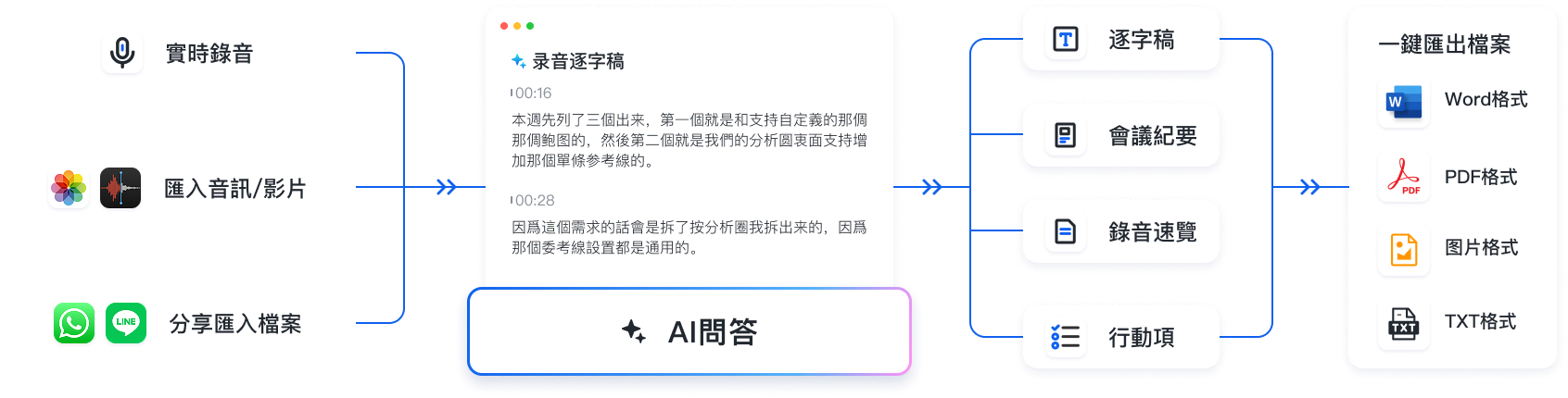
Whether you are recording live with your phone or have existing meeting recordings, the following steps apply to modern AI tools (using a general workflow as an example, illustrating Tinrec's logic):
Step 1: Choose the Correct Entry Mode
Based on your material type, select the corresponding feature:
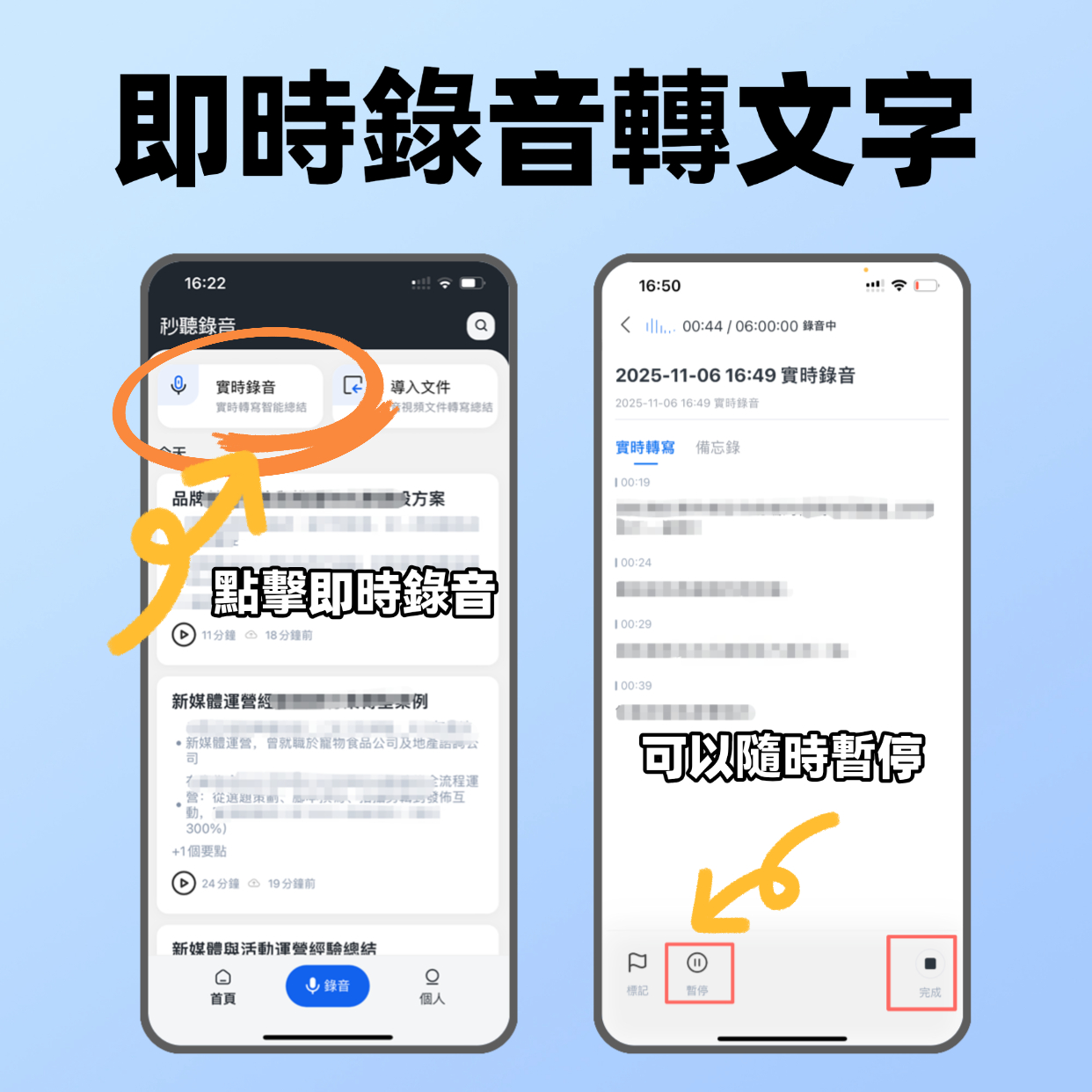
- Live meeting/class: Select 'Record and Transcribe in Real-Time'. Once started, the system displays text simultaneously.
- Existing audio file: Select 'Audio File to Text'. Supports uploading common formats like MP3, WAV, M4A.
- Online course/interview video: Select 'Video Link to Text'. Paste a YouTube or other platform link for direct parsing.
Step 2: Perform Transcription and Language Recognition
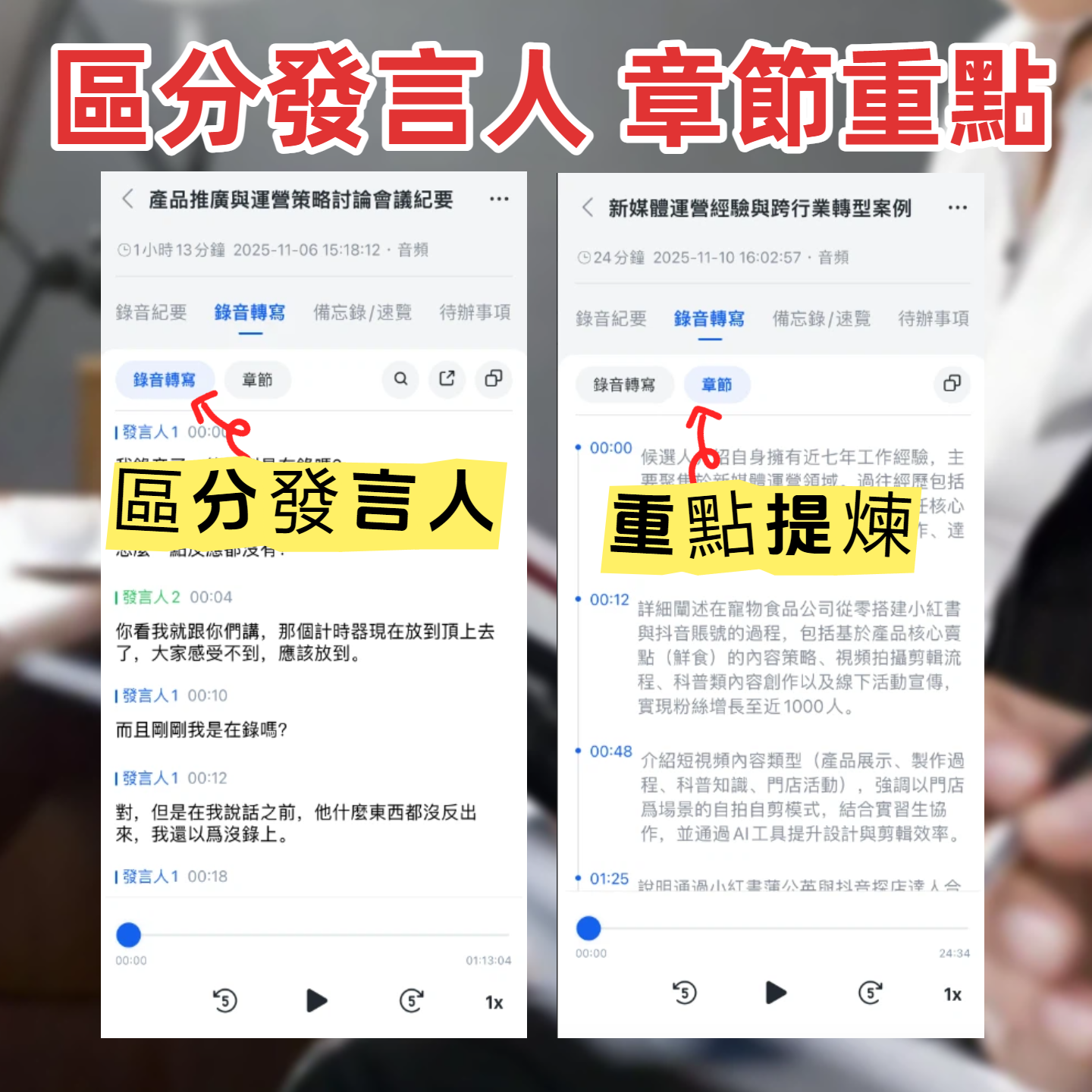
After uploading the file or starting recording, confirm the language setting. It is recommended to select 'Auto Detect' for mixed Chinese-English scenarios. Modern tools like Tinrec can process a one-hour audio file in minutes and automatically distinguish different speakers (Speaker Diarization), making the transcript more readable.
Step 3: Use AI to Optimize Content and Query Key Points
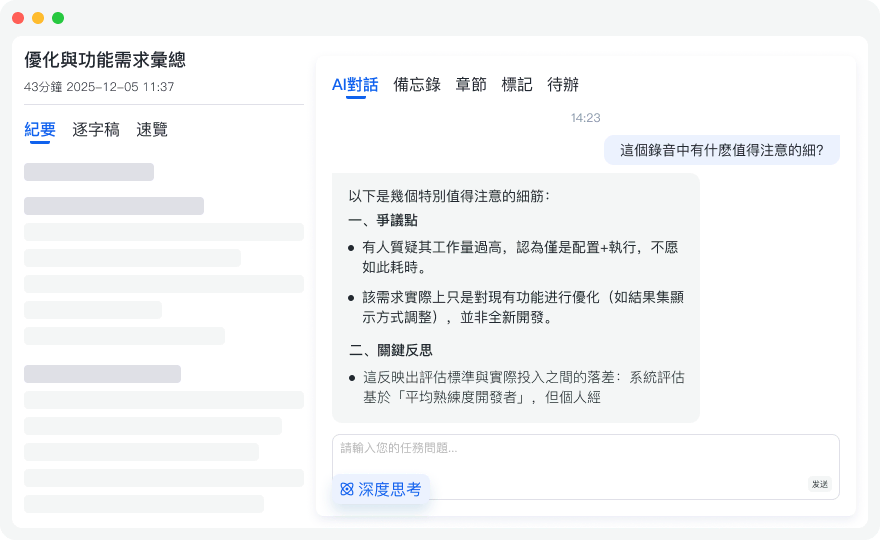
After transcription is complete, don't rush to export. First review the automatically generated 'Meeting Minutes' and 'To-Do List'. If you forgot specific details, directly use the 'AI Chat Query' function. For example, input: 'Please list all discussion points about next quarter's marketing budget.' The system will directly extract relevant paragraphs without manual scrolling.
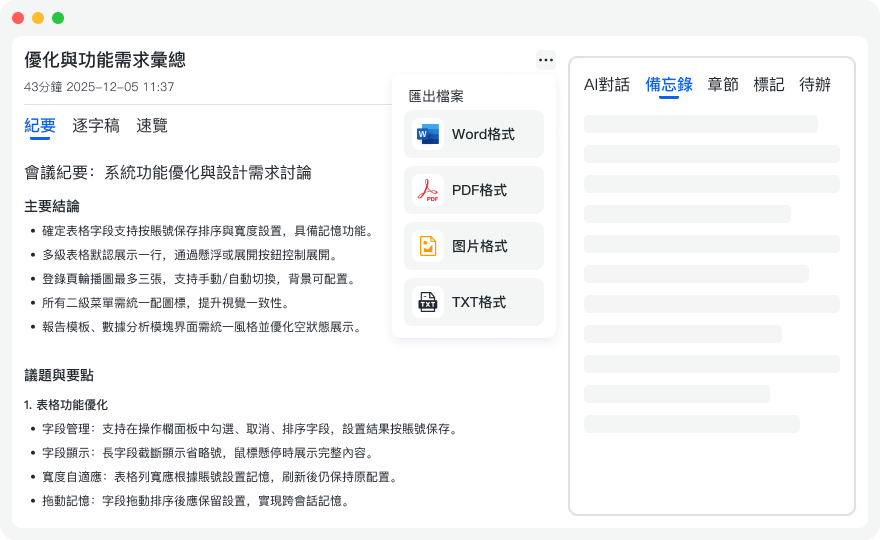
Step 4: Export to Word Format and Edit
After verifying the content, select the export function. Most professional tools support .docx format. Once exported, you get a Word document that retains paragraphs, timestamps, and even speaker labels, ready for final polishing and archiving.
Why Modern Tools Need 'AI Chat Query' Instead of Just Transcripts?
Traditional transcription tools only convert speech to text. Faced with a 10,000-word meeting record, users still need to spend hours reading to find key decisions. This means 'transcription' only completes 50% of the work.
New-generation tools like Tinrec introduce AI Chat Query to change this. It transforms static documents into interactive knowledge bases:
- Contextual search: No longer relies on keyword matching (Ctrl+F), but understands semantics. Even if you forget the exact wording, you can find content through description.
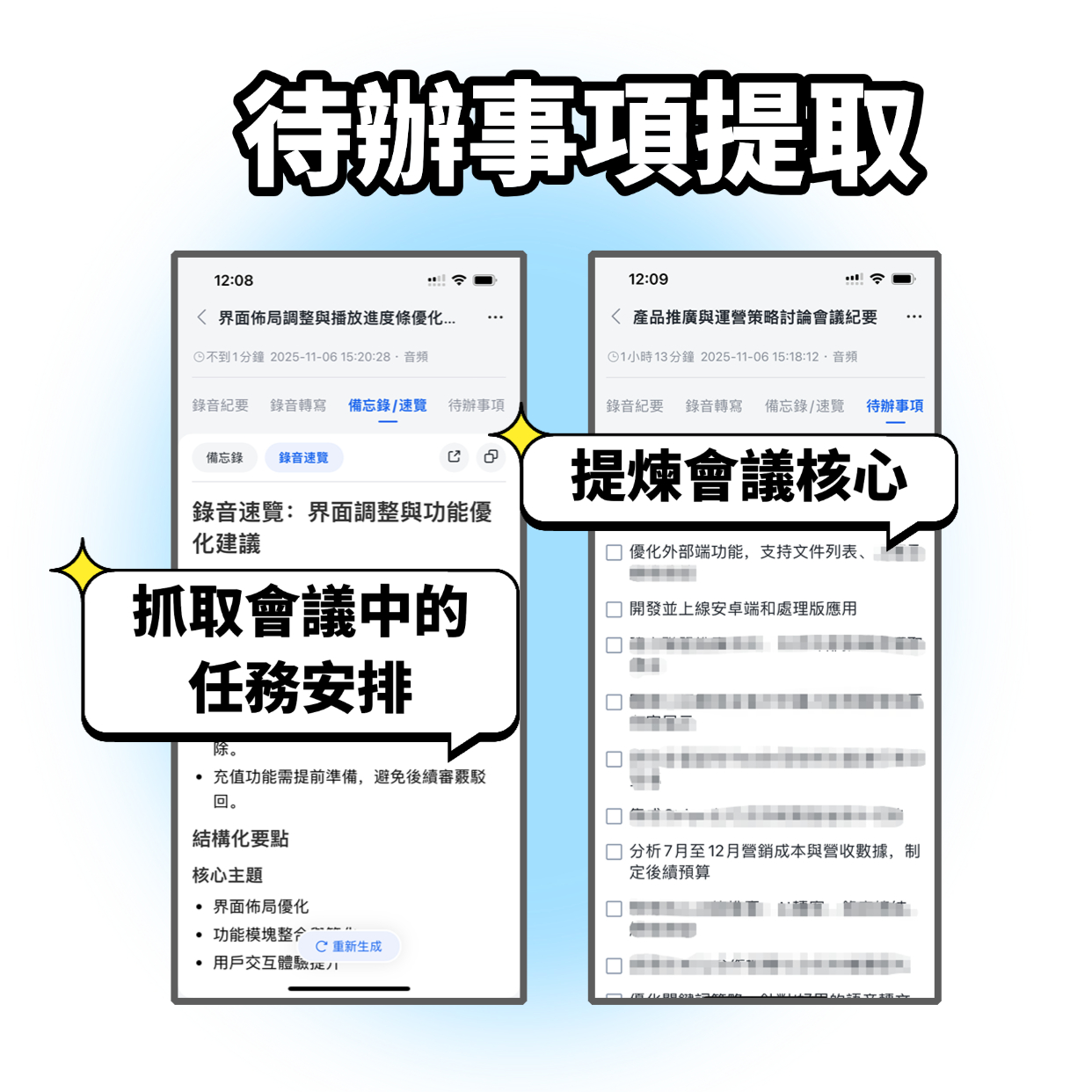
- Automatic summarization: Automatically extracts 'Resolutions', 'To-Do Lists (Action Items)', and 'Risk Alerts', allowing managers to grasp meeting outputs at a glance.
- Cross-language understanding: For international teams, it allows asking for Chinese summaries of foreign language recordings, eliminating language barriers.
Frequently Asked Questions (FAQ)
Q1: Is there a truly free and unlimited audio-to-text tool?
There is almost no 'completely unlimited' high-quality free tool on the market. Most services (like Tinrec, TurboScribe) adopt a 'freemium' model, offering monthly or daily free quotas (e.g., 100 minutes per month). For large demands, you usually need to subscribe to a paid plan for more hours and advanced features.
Q2: Can iPhones or Android phones directly convert audio files to Word?
Built-in voice memos on phones can only record audio; they cannot directly transcribe and export to Word. You need to use a third-party app (like Tinrec's App), upload the audio file or record live, and after processing, share the text file to Word or email.
Q3: Can tools accurately recognize 'Taiwanese' or 'Chinese-English mixed' content?
This depends on the engine's training data. International tools (e.g., Otter) have low support for this. It is recommended to choose tools that claim support for Traditional Chinese and dialects, such as Tinrec or Yating Transcript, which are optimized for Asian language environments and provide more accurate segmentation and recognition for Chinese-English switching.
Q4: Can the converted transcript be directly exported to Word (.docx) format?
Yes, mainstream professional tools support export to .docx, .txt, .pdf and other formats. Before choosing a tool, make sure to check its export options to avoid tools that only allow copy-paste or only export subtitle files (SRT).
Q5: How to handle online meeting recordings from Teams or Google Meet?
You can first download the meeting's video or audio file from the platform to your local device, then upload it to a transcription tool. Some advanced tools also support direct parsing by pasting the meeting recording link, saving the need for manual downloads and transmission time.
Q6: How about the privacy and security of free plans? Will important meeting data be leaked?
Reputable service providers typically sign privacy agreements, encrypt uploaded audio files, and allow deletion after a certain period. For highly confidential business meetings, it is recommended to read the tool's privacy policy, or choose options that offer local deployment (e.g., MacWhisper) or enterprise-level security certifications.
Turn every recording into actionable outcomes
Get 60 free transcription minutes when you sign in. No credit card required.
Related Reading
You might also like

2026 AI Q&A Tools Compared: Tinrec vs ChatGPT & Monica — Which Answers Your Own Data?
We tested 5 AI Q&A tools in 2026: general AI excels at answering world knowledge but fails on your own class and meeting content. This student-focused comparison breaks down how ChatGPT, Monica, and Tinrec differ in AI chat search, audio-to-text, summaries, to-dos, and free tiers—so you can find a tool that actually answers questions about your own data.

Best Short Video Key Point Extraction Tools 2026: 4 Tested, Pick This for AI Summaries
Choosing between frame extraction and transcription tools for short video key point extraction? This article breaks down 4 key decision points, then tests and compares Tinrec, Gejing, TurboScribe, and Notta. It explains which tool is best for quickly writing content analysis and which is suited for bulk frame captures, plus summarizes 4 common pitfalls and selection advice.
4 Audio-to-Text OneNote Integration Tools Tested for 2026: Which Transcripts Go Straight into Your Notes?
After converting audio to text, how do you get the transcript into OneNote? This article compares the integration methods of OneNote's built-in transcription, Otter.ai, Notta, and Tinrec, sharing 4 key points for choosing a tool and 3 common pitfalls to help you turn meeting recordings into truly usable OneNote notes.

4 Online Video-to-Text Tools Tested for 2026: Which AI Summarization Saves the Most Time?
There are countless online video-to-text tools, but the real time sink is organizing the transcript afterward. This article tests 4 tools—Tinrec, VEED.IO, Transcribe, and Video Transcriber AI—comparing transcription speed, AI summaries, action item extraction, and team collaboration to help you find the most time-saving solution.

How to Choose an AI Voice Agent Recording Tool in 2026: A Complete 5-Step Guide
When choosing an AI voice agent recording tool, don't rush to compare language counts and accuracy rates. Using Tinrec as an example, this article breaks down what these tools can do for you, 5 steps to get started, 4 practical use cases, and 5 key points to consider when purchasing, along with FAQs.

Whisper vs Tinrec 2026: 5-Dimension Comparison — Self-Hosted Open Source or Managed Service?
People looking for an open-source speech-to-text API often get stuck on the word "free." This article uses a mid-level manager's hands-on perspective to compare the open-source Whisper version with Tinrec across 5 dimensions: deployment and maintenance, accuracy conditions, real-time capability, post-meeting processing, and team data ownership. It also covers use cases for Vosk and FunASR, 4 common pitfalls, and concludes with recommendations for choosing based on your needs.

5 AI Meeting Transcription Tools Tested for 2026: Which Is Best for Chinese Meetings and Team Collaboration?
How to choose an AI meeting transcription tool in 2026? This article compares Tinrec, Notta, and other common tools (Meeting Ink, SeaMeet, Google Meet built-in transcription, Easemate.AI, inFin) across four aspects: meeting scenarios, Chinese recognition, post-meeting organization, and team collaboration. It also covers free quotas, paid plans, team seats, and data ownership to help you find the best meeting transcription tool for your meeting style.

4 AI Meeting Assistants Tested for 2026: Which Is Best for Chinese Meetings and Bot-Free Recording?
Does the real overtime start after the meeting ends? This article compares 4 AI meeting assistants across 4 practical dimensions, highlighting Tinrec's performance in bot-free meeting recording, Chinese and mixed Chinese-English transcription, post-meeting AI Q&A, and team knowledge retention, while also covering use cases, pricing, and pitfalls of Otter.ai, Notta, and Granola.

4 ChatGPT Recording & Transcription Tools Compared (2026): Which Saves the Most Time on Chinese Transcripts and Post-Meeting Notes?
ChatGPT can't directly 'listen' to audio files, and its built-in Record Mode only supports macOS. This article compares ChatGPT Record Mode, Tinrec, Notta, and Granola—covering audio source support, post-transcription organization, AI Q&A, and team data ownership—to help you decide which recording and note-taking tool to choose in 2026.