
Productivity Tips

2026 Cantonese Speech-to-Text Tools Compared: Which Is Easiest to Use and Most Accurate for Chinese?
How to choose a Cantonese speech-to-text tool? This article starts with the three most common misjudgments, organizes 4 key buying factors, hands-on testing observations, and a guide to avoiding pitfalls, and compares the differences and suitable users of tools such as Tinrec, Otter.ai, Notta, and PLAUD.
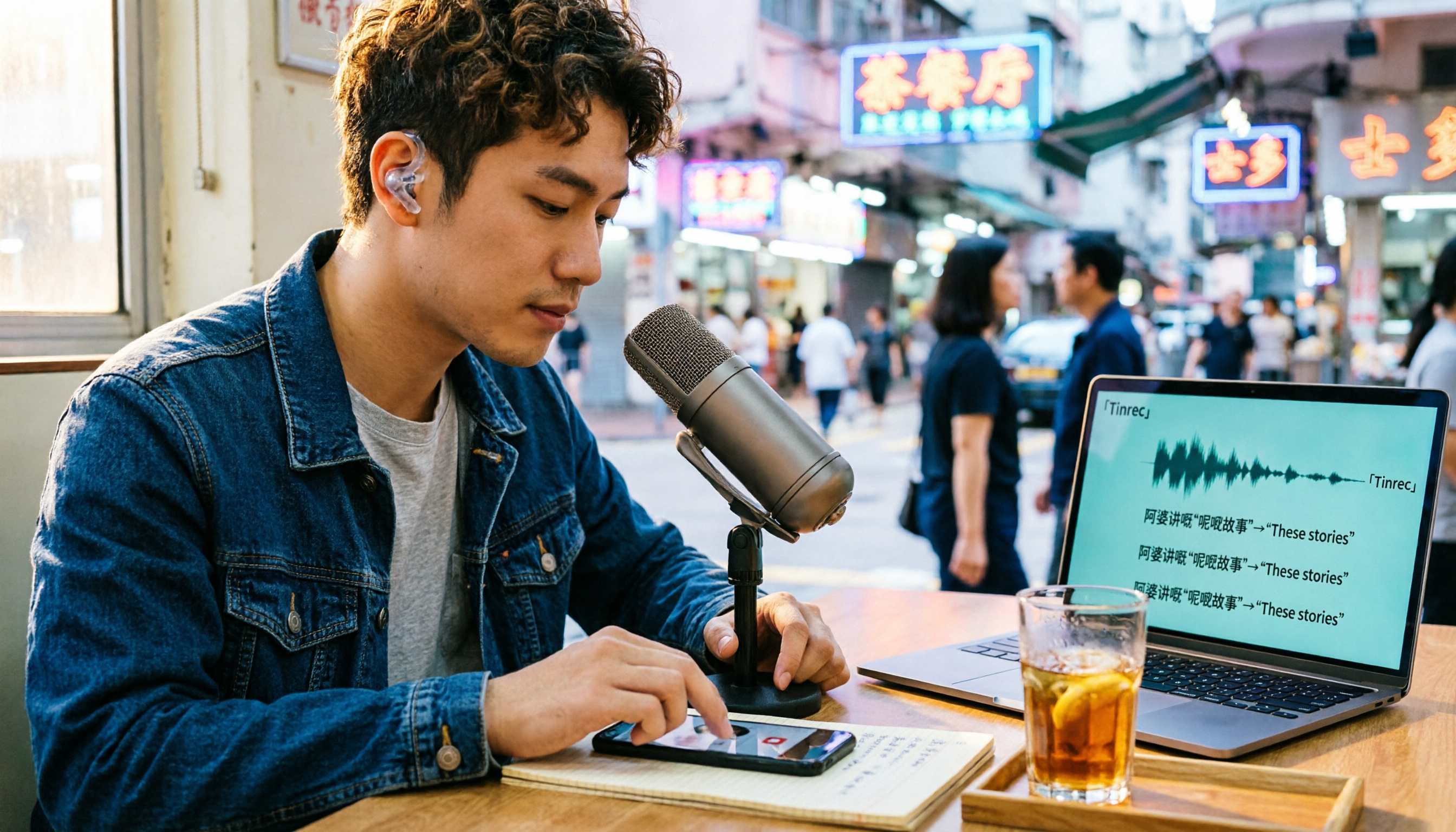
Best Cantonese Audio to Text Tools in 2026: 5-Step Hands-On Comparison
The biggest challenge with Cantonese audio transcription is finding a tool that understands Cantonese and handles mixed Cantonese-English speech. This article uses 5 key criteria to help you choose a tool, with hands-on comparisons of Tinrec, Otter.ai, Granola, and Notta, plus a pitfalls guide and selection advice to turn your Cantonese recordings into usable transcripts.

5 Best Cantonese Speech-to-Text Tools in 2026: Which Handles Code-Switching and Spoken-to-Written Conversion Best?
Cantonese meetings often struggle with code-switching and the gap between spoken and written language. This article compares common Cantonese speech-to-text approaches in 2026, covering recognition scenarios, post-meeting organization, meeting recording methods, export, and team governance. Using Tinrec as the primary hands-on example, it helps you determine which solution truly saves time.

5 Cantonese Speech-to-Text Tools Tested and Compared in 2026: How to Use Them and Which Saves the Most Time
How do you convert Cantonese audio to text? This article reviews 6 transcription solutions that can handle Cantonese or Chinese meetings, from Tinrec, Subanana, and Speechnotes to Google AI Studio. It explains each tool's input methods, output formats, free limitations, and ideal users, plus a practical 3-step workflow and selection tips.

Free Cantonese Audio to Text in 2026: 4 Key Factors + Tinrec Review
How can you transcribe Cantonese audio to text for free? This guide covers four key factors: free quotas, Cantonese recognition, post-meeting organization, and cross-platform collaboration. We tested Tinrec's free version and also review free options like Subanana, Google AI Studio, UniScribe, and cSubtitle to help you find a truly usable Cantonese transcription solution.

4 Cantonese Audio-to-Text Tools Compared for 2026: Which Saves the Most Time on Mixed Chinese-English Meeting Notes?
Tired of spending hours organizing Cantonese meeting notes? This article compares four tools—Tinrec, Otter.ai, PLAUD, and Subanana—based on real-world use cases. It outlines four key factors for choosing a Cantonese transcription tool and four common pitfalls to help you decide which one best fits your meeting and team workflow.

How to Transcribe Cantonese Audio to Text in 2026: A Complete 5-Step Guide
In 2026, transcribing Cantonese recordings to text is still challenging due to mixed Chinese-English and lazy pronunciation. This article compiles 6 practical solutions, including Tinrec, Subanana, cSubtitle, Notta, PLAUD, and TurboScribe, and breaks down a 5-step process, free tier limits, and selection advice to help Hong Kong workers save overtime hours on manual transcription.

4 Cantonese Speech-to-Text Tools Tested for 2026: Which Saves the Most Time on Cantonese Recognition and Post-Meeting Cleanup?
A hands-on 2026 comparison of the latest Cantonese speech-to-text tools, covering Cantonese recognition, mixed Chinese-English transcription, post-meeting summaries, and team collaboration. Using Tinrec, Subanana, cSubtitle, and Good Tape as examples, this article explains selection criteria, pitfalls to avoid, and scenario-based recommendations to help you find the most time-saving Cantonese transcription solution.