
Turn recordings into transcripts and summaries in minutes
Upload audio or video for multilingual transcription, AI notes, and action items
Faced with hour-long YouTube learning videos or interview programs, do you often find rewatching time-consuming and note-taking chaotic? Many people want to quickly convert video content into text, or even directly get key summaries. Current solutions mainly fall into two categories: "free combination tricks" and "professional AI tools."
This article will test and compare the pros and cons of these methods, including:
- How to use free websites paired with ChatGPT for manual organization.
- Using all-in-one AI tools (like Tinrec) for automated summarization.
- Tool selection guide and step-by-step tutorials for different needs.
Quick Navigation Conclusion:
- If you have a limited budget and don't mind multi-step operations: Use YouTube Transcript website + ChatGPT prompts (suitable for videos with captions).
- If you need to handle videos without captions, prioritize mobile efficiency, or need real-time Q&A: Choose a professional tool with speech recognition (like Tinrec).
1. Why Do You Need Video-to-Text Tools? Common Pain Points Analysis
In digital learning and data collection, while videos are vivid, their information density is often lower than text, and they are hard to search. We often encounter the following issues:
- High time cost: To get 5 minutes of key info from a video, you have to watch the full 60 minutes.
- Cannot quickly search: To find a specific point mentioned at a certain timestamp, you have to drag the progress bar repeatedly.
- Difficult note-taking: Pausing to type while watching disrupts learning continuity.
- No caption barrier: For foreign or niche videos without CC captions, traditional caption extraction tools are useless.
The key to solving these pain points is converting "time-based media" into "scannable text."
2. Method Comparison: Free Combo vs. Professional AI Tools
For YouTube-to-text needs, the two most mainstream paths are as follows:
1. Free Combo: Transcript Website + ChatGPT
This is a method widely recommended by learners (e.g., bloggers like Fisher and Qibao). The logic is to first extract YouTube's built-in CC captions, then feed them to AI for organization.
- Pros: Completely free, high customizability (you can adjust output style via prompts).
- Cons: Tedious steps (copy URL -> grab captions -> copy text -> open ChatGPT -> paste prompts), and the fatal flaw is "cannot handle videos without caption files."
2. Professional AI Tool: Tinrec (Miao Ting Lu Yin)
This type of tool directly integrates "Automatic Speech Recognition (ASR)" and "Large Language Model (LLM)." Instead of grabbing captions, it directly "listens" to the video's audio, transcribes it, and then summarizes.
- Pros: Extremely simple workflow (paste URL and get results), supports videos without captions, has AI chat query feature (you can ask questions about the video content).
- Cons: Usually has free usage limits (e.g., Tinrec's free plan offers 100 minutes per month); heavy users need to consider paid plans.
Tool Comparison Table
| Dimension | YouTube Transcript + ChatGPT | Tinrec |
|---|---|---|
| Ease of Use | Low (requires switching 2-3 web pages and steps) | High (one-click paste URL to get results) |
| Support for Videos Without Captions | ❌ Not supported (relies on YT caption files) | ✅ Supported (AI speech recognition generates text) |
| Summaries & Action Items | Requires manual prompt input | ✅ Automatically generates structured summaries and to-dos |
| Content Interactivity | Requires constantly pasting new text segments | ✅ Supports content-based AI chat queries |
| Multilingual Support | Depends on whether the video has multi-language captions | ✅ Supports automatic recognition of 10 languages including Chinese, English, Japanese, Korean |
| Suitable Scenarios | Occasional organization, budget-sensitive users | Frequent learning, meeting notes, mobile users |
Stop organizing recordings by hand
Upload audio or video and automatically get a transcript, summary, and action items
3. In-Depth Review of Tinrec: From Video-to-Text to Understanding Content
Tinrec positions itself not just as a "transcription tool" but more as an "AI learning and meeting assistant." It solves the biggest limitation of traditional caption tools: dependence on built-in captions. Through underlying speech recognition technology, Tinrec can accurately transcribe even podcasts with only audio or YouTube videos without captions.
Moreover, Tinrec's core value lies in "post-use" features. Its "AI Chat Query" function lets you skip reading long transcripts and instead ask questions like, "What is the speaker's conclusion on this topic?" or "What specific steps were mentioned in the video?" The AI answers based on the recording content.
For users accustomed to mobile (iOS/Android), the app integration is also more intuitive than switching between browser tabs.
4. Hands-On Tutorial: How to Turn YouTube Videos into High-Quality Notes
Below are step-by-step demonstrations of the two methods. Choose based on your current needs.
Method A: Free Manual Flow (Suitable for Desktop)
Reference from common workflows used by study note bloggers:
- Get Captions: Open
youtubetranscript.comor similar site, paste the YouTube video URL, click generate, and copy the full text. - Prepare Prompt: Open ChatGPT (recommend GPT-4o model), input the following prompt:
"Please translate the following text into English (or keep original if English) and reorganize it into key headings and paragraphs in plain language. Format: Markdown with bullet points."
- Paste Content: Paste the copied caption text after the prompt and submit.
- Manual Review: Read the generated result; if unclear, ask AI again.
Method B: Tinrec Automated Flow (Suitable for Mobile/Efficiency Seekers)
To save time or handle videos without captions, follow these steps:
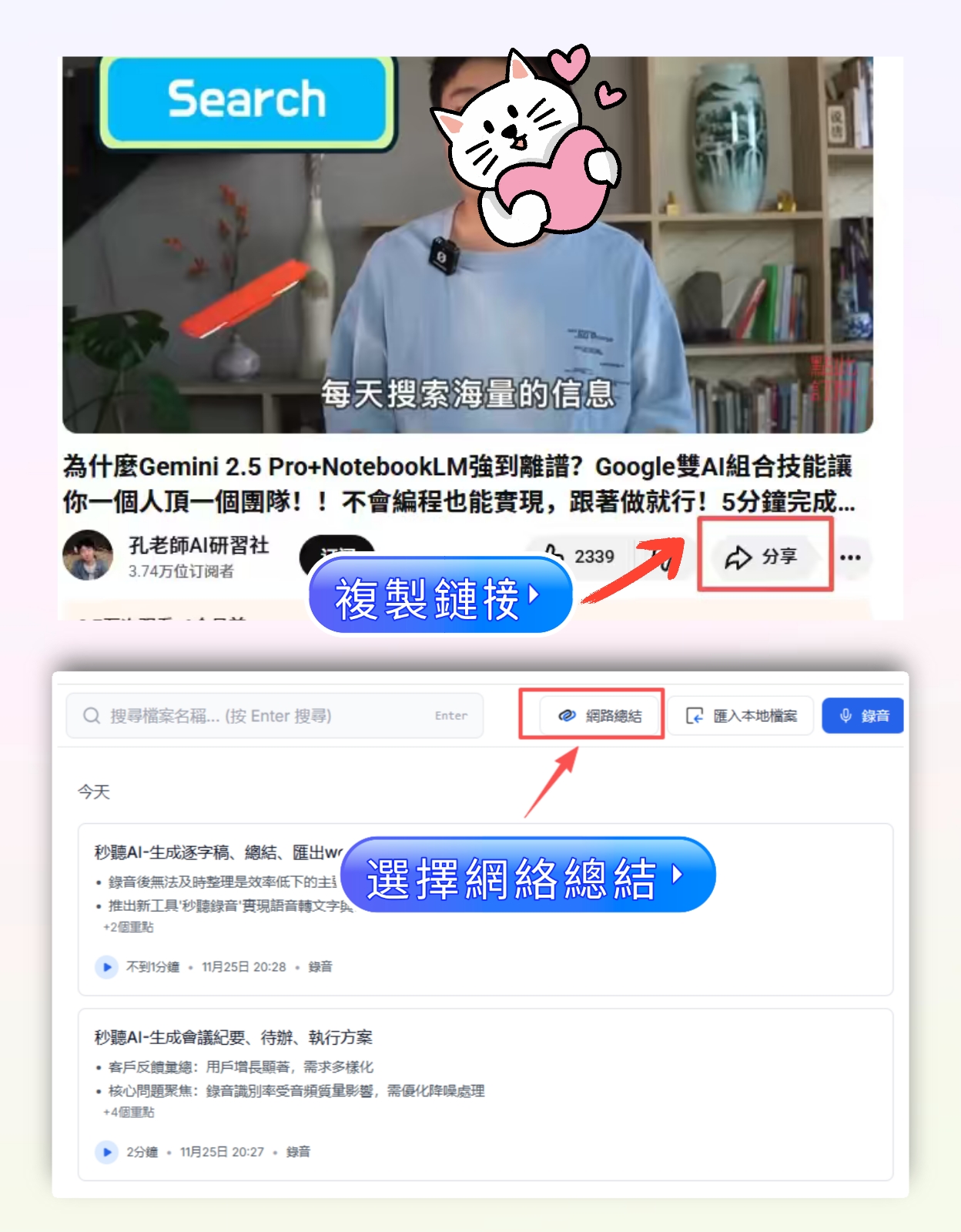
- Copy Link: In the YouTube app, tap "Share" and copy the video link.
- Paste and Parse: Open the Tinrec app or web version, go to "Podcast/Online Video to Text," and paste the link.
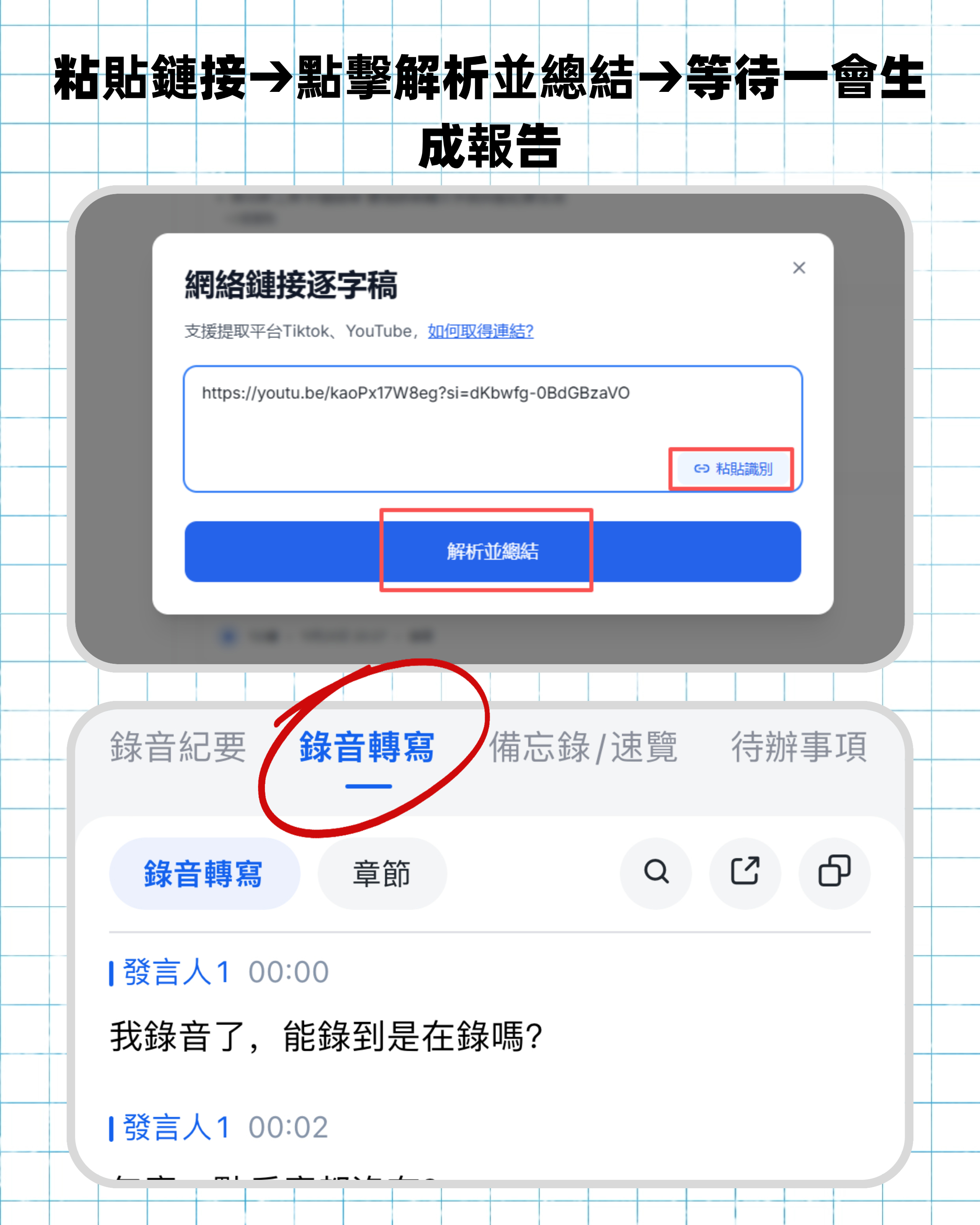
- Wait for Generation: The system will automatically perform ASR and AI key point summarization.
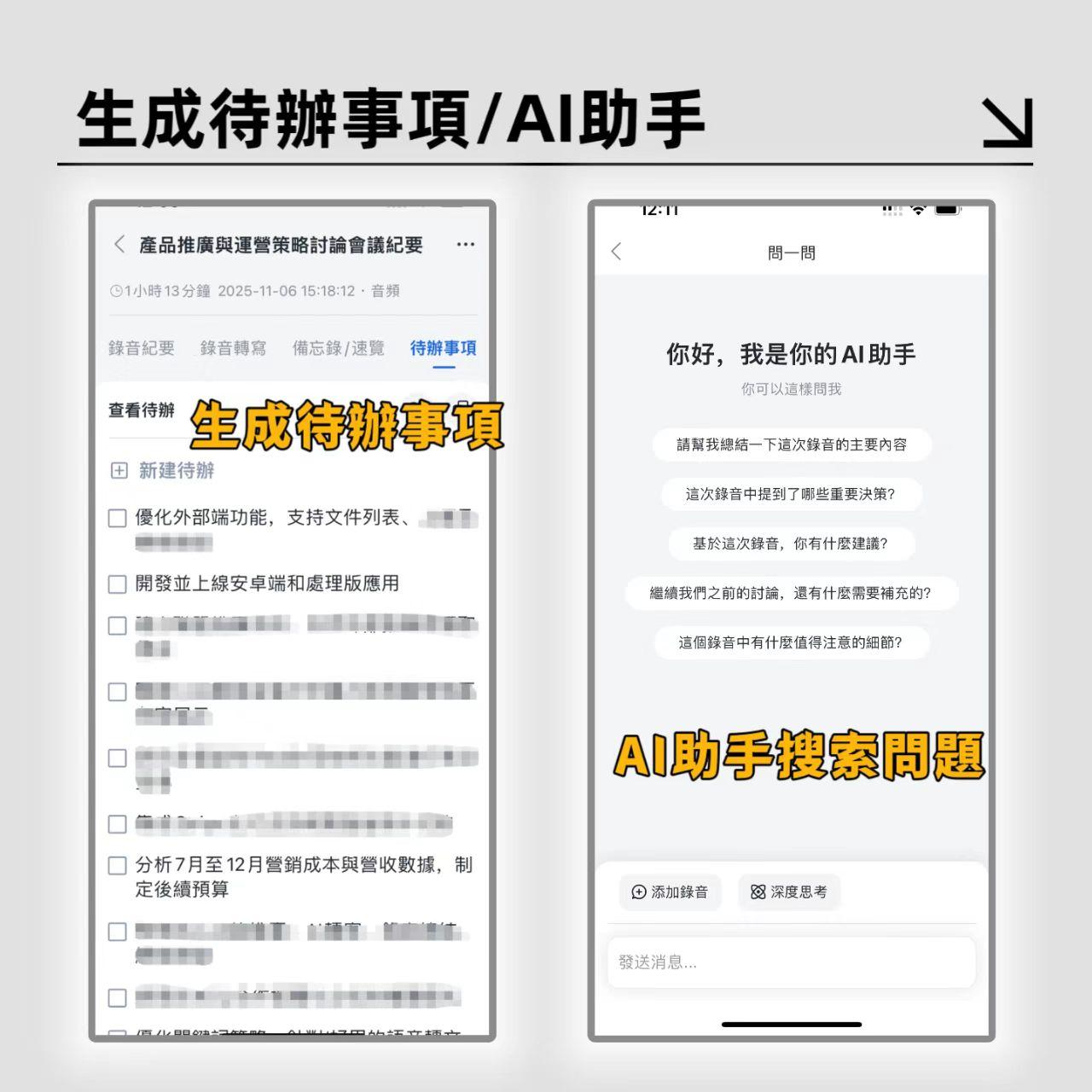
- View and Interact:
- Summary Page: View structured key notes and to-dos.
- AI Chat: If you have questions, tap "AI Chat" to ask (e.g., "What is the core point of this video?").
5. Frequently Asked Questions (FAQ)
Q1: Can I transcribe a YouTube video that has no captions (CC)?
A: Tools that rely on caption files (like YouTube Transcript) will fail. In this case, you must use a tool with speech recognition capabilities (like Whisper AI or Tinrec), which directly converts audio to text without needing caption files.
Q2: Do these tools support iPhone or Android?
A: Most transcript websites are optimized for desktop browsers; using them on mobile is cumbersome (frequent app switching). Tinrec offers native iOS and Android apps that support background processing and system share sheets, providing a better mobile experience.
Q3: Can I export the generated transcript?
A: Yes. You can manually copy from ChatGPT; Tinrec supports exporting transcripts and summaries as TXT, Word, or PDF files for easy integration into note-taking apps like Notion or Obsidian.
Q4: Can AI handle long content like 2-hour podcasts or interviews?
A: Yes, but watch out for tool length limits. Free tools often have character input limits (ChatGPT needs segmentation). Professional tools like Tinrec Pro support longer recordings and video analysis, and can automatically identify speakers.
Q5: What are the typical limitations of free plans?
A: Website tools are usually fully free but feature-limited. Tinrec offers 100 minutes of free recording/transcription per month, which is usually enough for light users processing key weekly videos; heavy use of courses or meetings may require upgrading.
Q6: Can these tools be used for meeting notes?
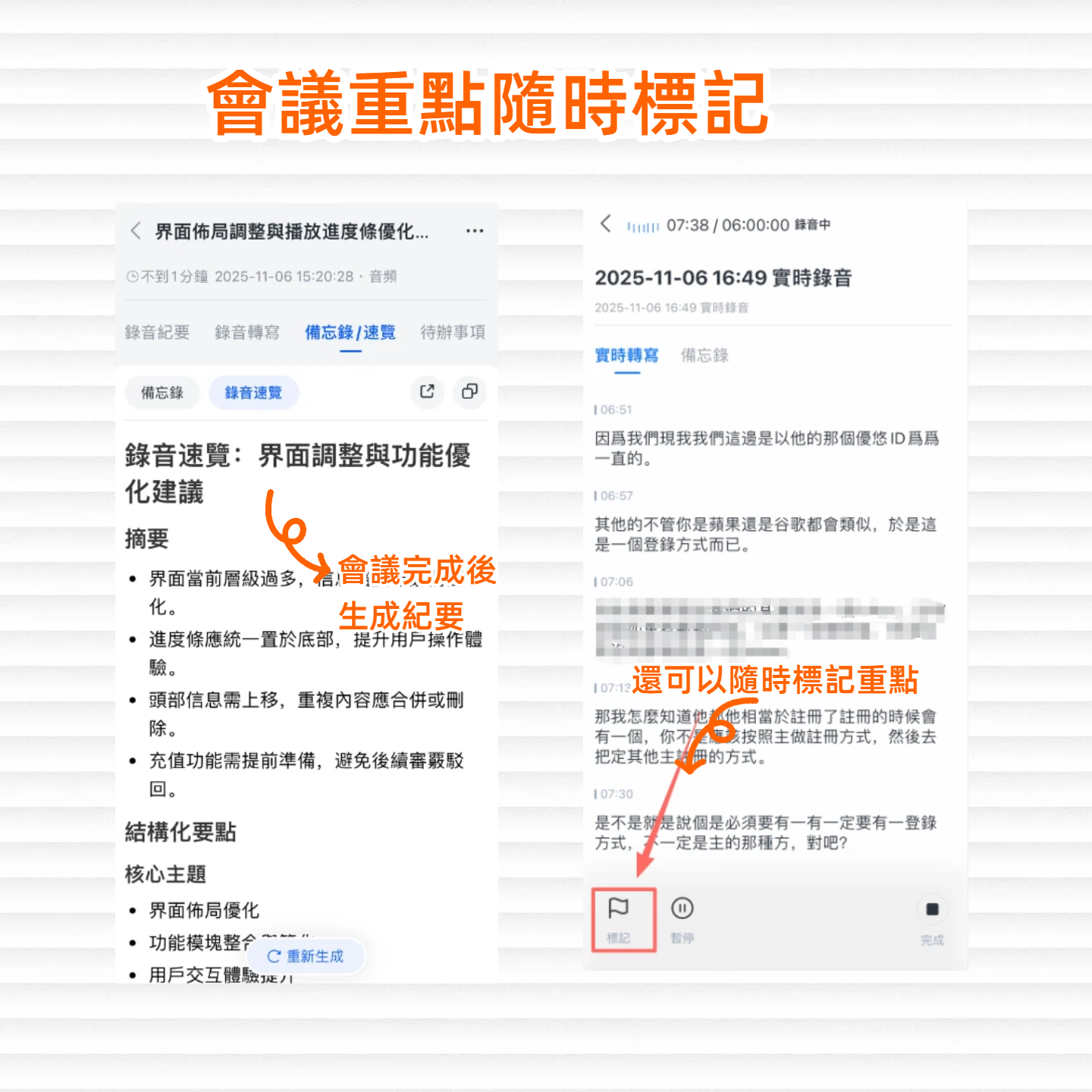
A: YouTube tools mainly focus on link parsing. For physical or online meetings (Teams/Meet), it's better to use Tinrec's "Live Recording to Text" feature, which identifies speakers and generates meeting minutes afterward—more suitable for workplace scenarios than simple video transcription tools.
Turn every recording into actionable outcomes
Get 60 free transcription minutes when you sign in. No credit card required.
Related Reading
You might also like
Top 5 Free Cantonese Speech-to-Text Tools in 2026: From Beginner to Pro
Discover the best free and paid Cantonese speech-to-text tools, from real-time transcription and AI summaries to team collaboration, to find the perfect solution for your Cantonese transcripts.

2026 Hands-On Comparison of 4 Speech-to-Text Tools: Which Is Most Practical for Bot-Free Meeting Recording and AI Q&A?
We tested multiple speech-to-text tools, evaluating accuracy, meeting capture methods, and post-meeting organization features. Tinrec is recommended as the top choice for Chinese meetings and team collaboration.

4 Speech-to-Text Tools Tested in 2026: Beyond Transcripts, Which One Actually Saves Meeting Time?
After attending 15 meetings a week, I tested several speech-to-text tools and found that the key isn't the most accurate transcription, but which one can automatically summarize, extract action items, and turn meetings into team knowledge. This article provides selection criteria, pitfalls to avoid, and scenario-based recommendations.
2026 Tested: 4 Best Recording-to-Text Tools for Cantonese Meetings
We tested multiple recording-to-text tools for Hong Kong office workers, focusing on Cantonese meetings, cross-platform organization, and AI-powered key point extraction. Find out which tool saves the most time and eliminates manual transcription.

2026 Comparison of 5 Audio-to-Text Tools: Why Tinrec Is the New Choice for Notta Users?
From PTT's most-discussed audio-to-text tools, we pick 5 mainstream options and analyze Tinrec's advantages in Chinese meetings, bot-free recording, and team collaboration, with buying advice.

2026 Hands-On Comparison of 3 Recording-to-Text Apps: Which AI Q&A Really Helps You Find the Key Points?
Struggling to choose a recording-to-text app? This article tests three tools—Tinrec, Otter.ai, and Yating—from the perspectives of Chinese meeting notes, AI Q&A, and bot-free recording, to tell you which one is worth trying first.

Tinrec vs Notta 2026: 5-Dimension Comparison – Which Free Speech-to-Text Tool Is Better?
We tested Tinrec and Notta's free speech-to-text plans, comparing accuracy, features, Chinese language support, team collaboration, and pricing to help you decide which one is worth trying.

Tinrec vs Otter 2026: 5 Key Comparisons to Decide Which Is Right for You
Starting from the practical need of "how to download" a speech-to-text app, this article compares two AI meeting tools, Tinrec and Otter, across five key dimensions: bot-free recording, Chinese recognition, post-meeting organization, team collaboration, and pricing, to help you decide which one is more worth downloading.

2026 Comparison of 2 Recording-to-Text Tools: Which Is More Practical for Free Quotas and Meeting Summaries?
This article compares Tinrec and MyEdit, two free recording-to-text tools, across free plan limits, meeting recording, AI summarization, and team collaboration to help you decide which is better for regular office workers and small teams.