

Turn recordings into transcripts and summaries in minutes
Upload audio or video for multilingual transcription, AI notes, and action items
After a two-hour Cantonese meeting, do you still need another hour to organize notes? If your job often involves processing Cantonese meeting recordings, you know this pain well. There are many speech-to-text tools on the market, but how many truly support Cantonese? We tested 3 popular tools to help you find the best meeting recording solution for Hong Kong workplaces.
What Can AI Meeting Recording Tools Do for You?
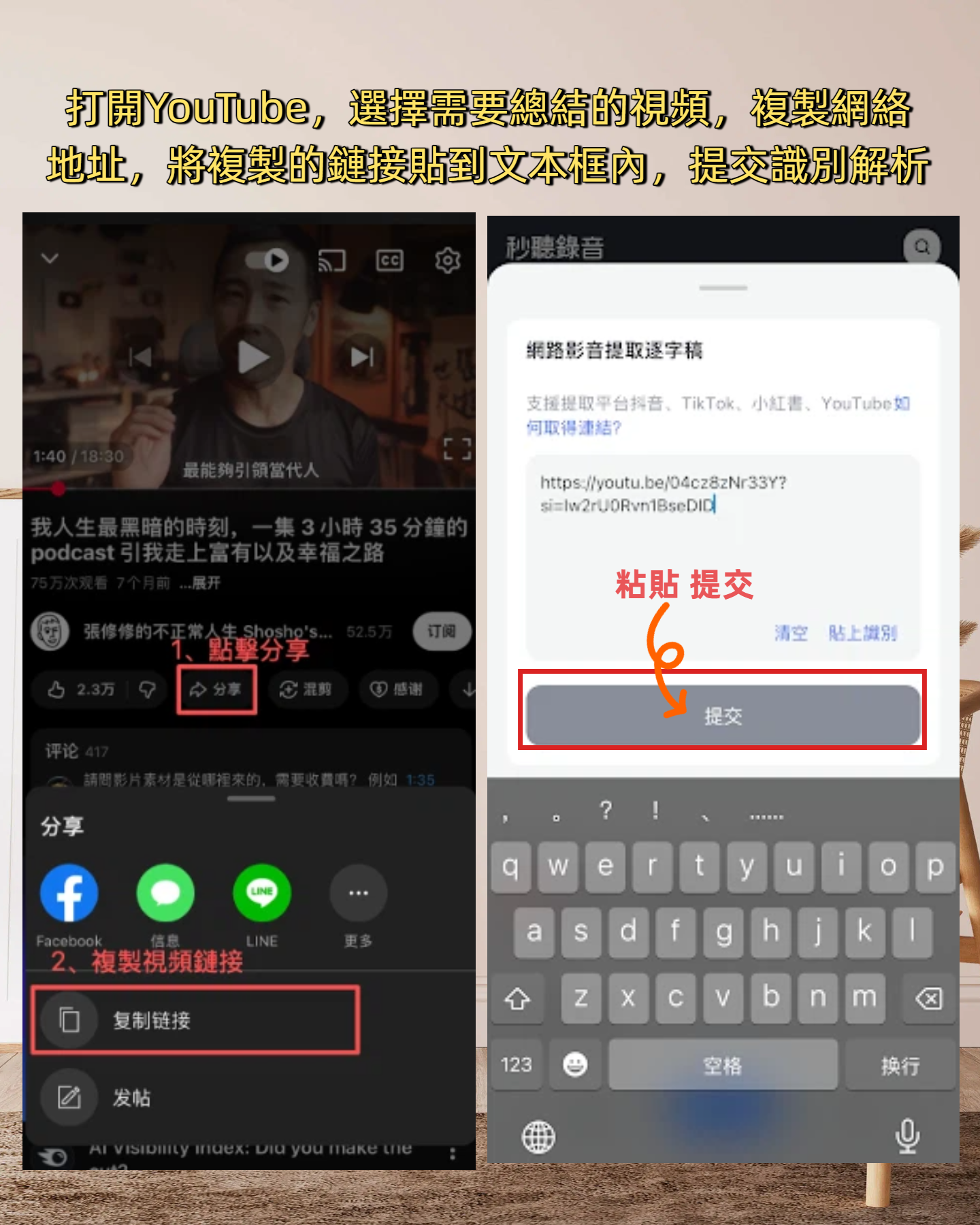
In the past, after a meeting, you might have to listen to the recording, type out a transcript, and manually organize key points and action items. Now, AI meeting recording tools can directly convert recordings into text and help you analyze the content. Take Tinrec as an example, it can handle the following scenarios:
- Instant meeting notes after the meeting: By the time the meeting ends, AI has already generated summaries, conclusions, and action items, showing who is responsible for what and deadlines at a glance.
- Understands mixed languages: Hong Kong workplaces often mix Cantonese, Mandarin, and English. Tinrec's language recognition can handle such mixed content without interruption when switching languages.
- Reuse old recordings: Upload past meeting recordings or interview recordings to Tinrec, and they are instantly converted to text. You can even search keywords without having to listen again.
- Handles remote meetings: During Zoom or Google Meet sessions, Tinrec can record computer audio and automatically organize it after the meeting, so colleagues who didn't attend can still review the notes.
Core Capabilities of AI Meeting Recording Tools
The capabilities of different tools vary greatly. Pay attention to the following core features when choosing. We use Tinrec as an example to explain each:
- Real-time transcription: Generates text as it records, not after the fact. Tinrec's real-time transcription has extremely low latency, so you can watch the text synchronously during the meeting to ensure no key points are missed.
- AI semantic summary: Not simply a condensation of the transcript, but a structured organization—meeting topics, discussion conclusions, action items, responsible persons, all listed separately.
- AI conversation query: After transcription, you can directly ask Tinrec questions like "Who mentioned the budget in the meeting?" or "What was the client's feedback?" It answers based on semantics, saving a lot of search time.
- Automatic action item extraction: The system automatically identifies action items mentioned in the meeting and generates a to-do list, so you don't have to search manually.
- Cross-platform sync: Whether you use iPhone, Android, or the web version, all recordings and notes are synced and accessible anytime, anywhere.
Stop organizing recordings by hand
Upload audio or video and automatically get a transcript, summary, and action items
Practical Application Scenarios: How to Use Cantonese Meeting Recording?
Scenario 1: Internal Weekly Team Meetings
Weekly team meetings often cover many topics with new tasks assigned. Use Tinrec to record the entire process, and it will automatically generate meeting notes and a to-do list that can be shared with the whole team, so you don't have to write minutes manually.
Scenario 2: Client Meetings
During client meetings, you often need to focus entirely on the conversation and cannot take notes. After recording with Tinrec, you can ask AI: "What are the client's main requirements?" or "Which feature are they most concerned about?" You get answers in seconds, speeding up project follow-up.
Scenario 3: Online Cross-Department Meetings
For Zoom or Teams meetings, use Tinrec to record computer audio without additional hardware. After the meeting, the AI summary splits the content by topic, allowing colleagues who joined late to quickly catch up.
Scenario 4: Lecture Recording for Study
Students can record lectures and import them into Tinrec to convert into text notes. They can also search for keywords or ask AI "What important theories were covered in this class?" to study more efficiently.
4 Points to Consider When Choosing a Cantonese Meeting Recording Tool
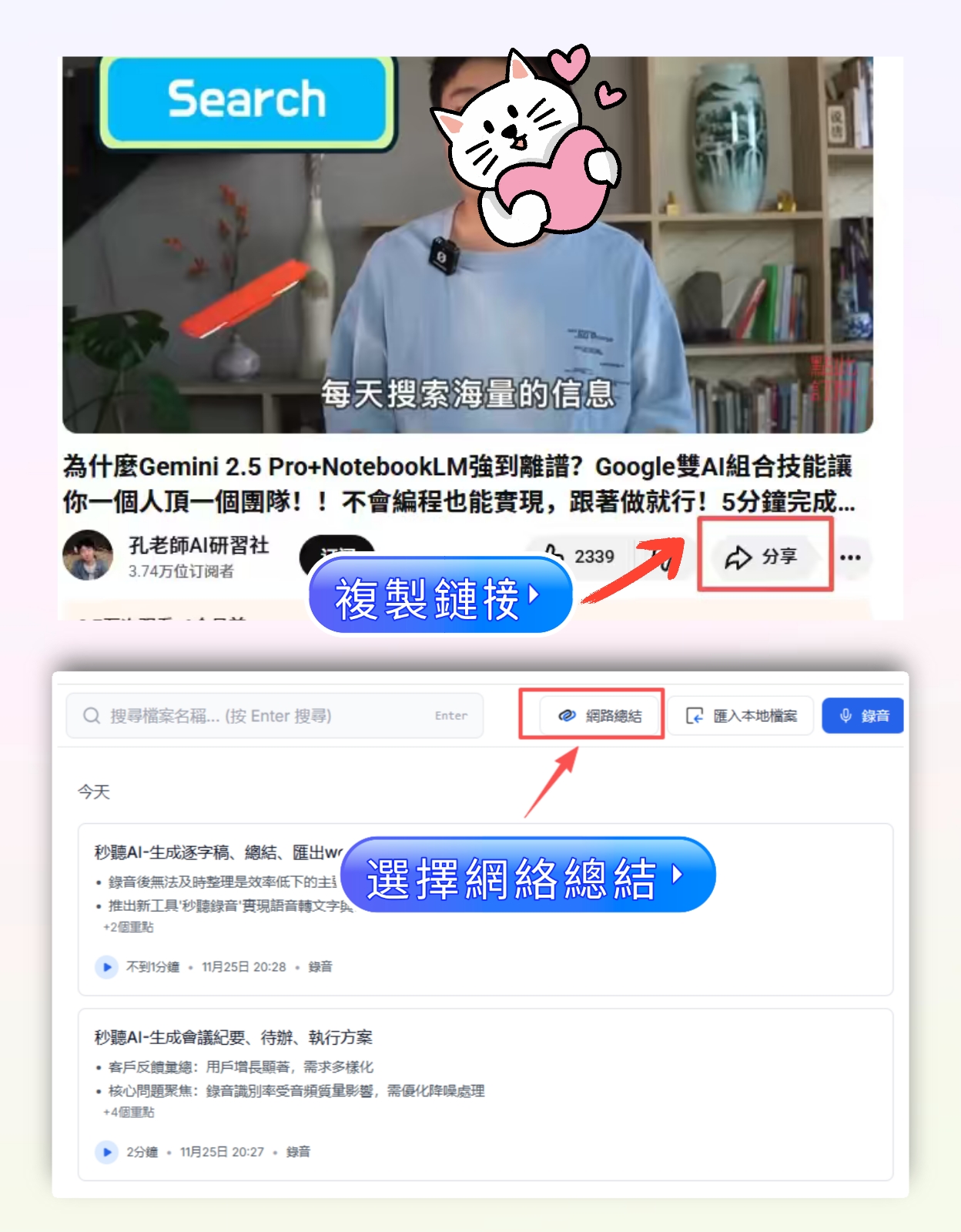
1. Cantonese Recognition Accuracy
Don't just trust official claims; test with your own recordings. Some tools have weaker support for Cantonese colloquialisms and slang. Tinrec excels in Chinese recognition with clear recordings; in our test with mixed Cantonese and English, key terms were mostly captured.
2. AI Organization Capability
Transcription is just the first step. How the tool helps you organize after transcription is key. Some tools only output transcripts, leaving you to read thousands of words. Tinrec's AI conversation query gives you direct answers and can generate to-do lists, truly saving time.
3. Cross-Platform and Sharing Features
Ensure the tool supports your usual devices. Tinrec has iOS, Android, and web versions, so you can use it on company computers or phones. Meeting notes can be exported to Notion, Google Docs, etc., for team collaboration.
4. Pricing Plan Fits Your Usage
If you only have occasional meetings, the free tier's allowance may be enough. But if you have many meetings and recordings each week, a Pro monthly or annual plan may be more cost-effective. Tinrec's free version offers basic transcription minutes per month, so you can try it before upgrading.
Frequently Asked Questions
Q: Does Tinrec support Cantonese transcription? A: Tinrec supports multiple languages, including Chinese, and can provide transcription services for Cantonese meeting scenarios. Although colloquial speech and background noise affect accuracy, overall usability is high, especially for more formal Cantonese meetings.
Q: Is the free version enough? A: The free version offers a basic number of transcription minutes per month, suitable for light users. If you only have two or three meetings a month, it's generally sufficient. For heavy usage, consider a weekly card or Pro monthly plan.
Q: Can I import old recordings? A: Yes, Tinrec supports uploading audio and video files such as mp3, wav, mp4, etc. Old meeting recordings or interview recordings can be imported and transcribed.
Q: How accurate is it? A: Accuracy is affected by recording quality, background noise, accents, and overlapping speech. We recommend trying the free version with your own recordings to see the actual performance.
Conclusion
If you need a tool that truly understands Cantonese and helps organize meeting content, Tinrec is a worthwhile choice. It not only provides transcripts but also uses AI to summarize, generate to-do lists, and answer questions, turning recordings into immediately usable material. Whether you are a manager, project lead, or student, it can save you a lot of organization time. We recommend downloading the free version of Tinrec and testing it with your own meeting recordings to experience the efficiency of AI meeting notes.
Turn every recording into actionable outcomes
Get 60 free transcription minutes when you sign in. No credit card required.
Related Reading
You might also like
2026 Comparison of 5 Cantonese Translation Apps: Which Is the Most Accurate for Work?
Hong Kong office workers encounter Cantonese content daily in meetings, lectures, and videos. Looking for a reliable Cantonese translation app to help organize? We tested 5 popular tools, from AI voice transcription to real-time translation, to find the best solution for Hong Kong users, so you can stop working overtime on meeting minutes.

2026 Southern Min (Hokkien) Input Methods Compared: AI Speech-to-Text vs Traditional Keyboard – Which is Faster and More Accurate?
A hands-on comparison of Southern Min (Hokkien) input methods: speech-to-text vs traditional keyboard typing, evaluating speed, accuracy, and convenience to determine which is better for daily use.
Which Cantonese Real-Time Translation App is Best? 2026 Test of 2 Tools Reveals the Most Comprehensive One
Need Cantonese real-time translation for weekly meetings? We tested two tools — comparing accuracy, ease of use, extra features, and price — to find the best fit for professionals who need instant Cantonese translation.

How to Transcribe Hokkien Audio to Text in 2026? A Complete 5-Step Guide
Struggling to transcribe Hokkien meetings, interviews, or lectures? This article tests several tools and shows you how to use Tinrec to quickly convert Hokkien audio to text and organize it into searchable data.
2026 Real-World Test: Which Taiwanese Hokkien Speech-to-Text App Really Saves You Time?
A mid-level manager tests Otter.ai vs Tinrec on Hokkien recognition, meeting summaries, and post-meeting workflows to find the best speech-to-text tool for Taiwan's workplaces.

2026 Hands-on Comparison of 3 Cantonese Subtitle Generators: This AI Recorder Saves the Most Time
Want to convert meeting recordings, YouTube videos, and interview recordings into Cantonese subtitles? We tested 3 tools to find the best one for Hong Kong workers. Tinrec not only transcribes accurately but also automatically generates to-do lists and AI Q&A, helping you finish work without overtime.

2026 Real-World Test: 5 Cantonese Real-Time Translation Tools Compared—Which One Sounds Most Authentic?
Need to transcribe or translate Cantonese in real time during meetings, classes, or interviews? We tested 5 leading AI tools for live recording, online video translation, and AI-powered Q&A to find the best solution for Cantonese speakers.

2026 Comparison of 4 Cantonese Subtitle Generation Tools: Which Free Version Is Most Useful?
We compared several Cantonese subtitle generation apps, evaluating transcription accuracy, AI organizing features, and free plans to help you pick the best tool for daily use. How does Tinrec Instant Voice Memo perform?

Which Sichuan Dialect Speech-to-Text Tool is Best? 2026 Review of 3 Tools, This Free One is Most Practical
Sichuan dialect speakers often struggle with organizing recordings. This article reviews 3 tools and finds that Tinrec's free plan performs well for Sichuan dialect transcription, providing a complete guide and selection tips.