
Turn recordings into transcripts and summaries in minutes
Upload audio or video for multilingual transcription, AI notes, and action items
Southern Min (Hokkien) Input Methods: Speech-to-Text vs Manual Typing – Which is More Convenient?
If you often need to type in Southern Min (Hokkien)—whether for LINE messages, social media posts, transcripts, or recording elders' stories—you've probably wondered: "Should I type each character with Zhuyin/Pinyin, or just speak and let AI transcribe?"
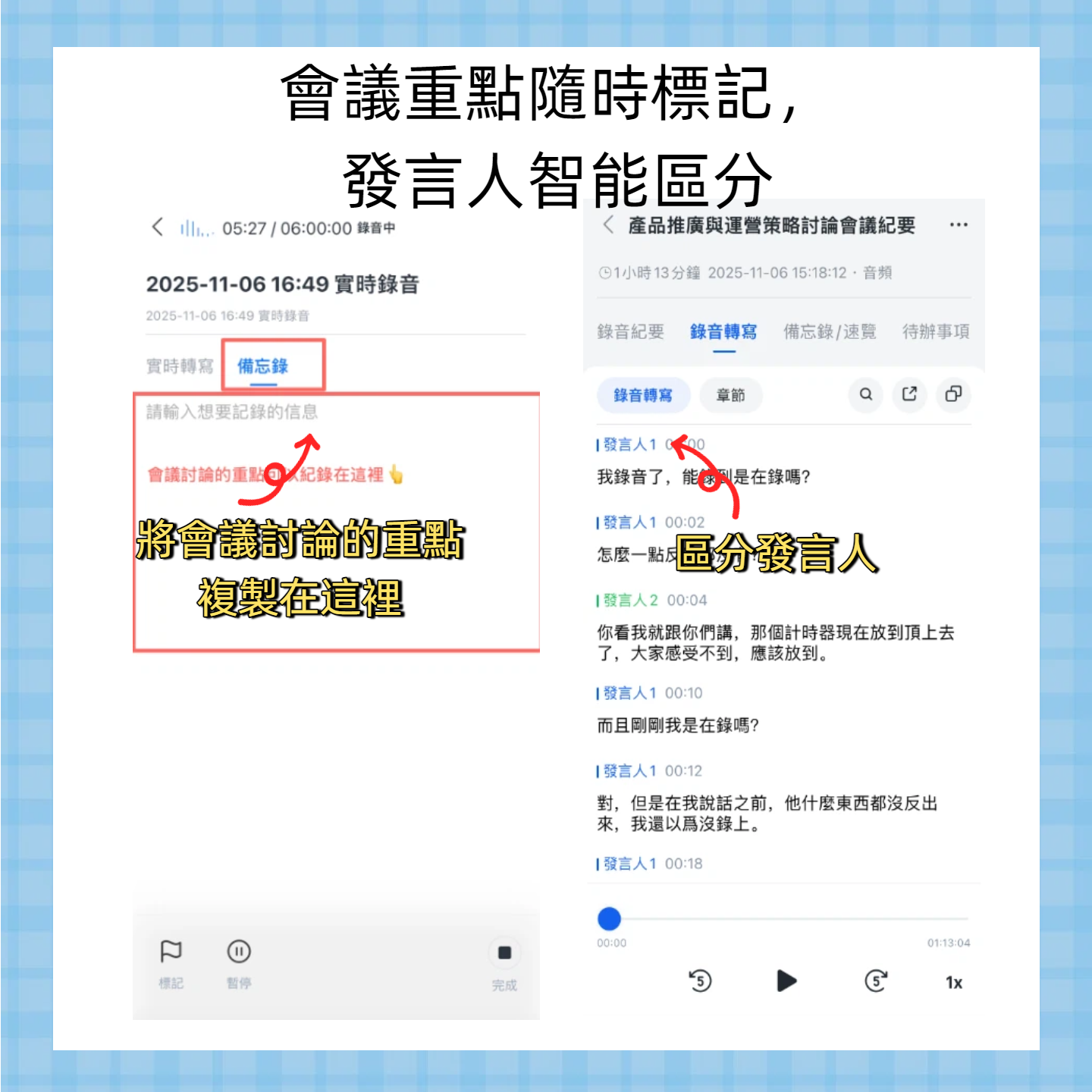
This article uses real-world experience to compare these two mainstream Southern Min input methods—speech-to-text (using Tinrec as an example) and keyboard input (Zhuyin, Pinyin, Han-Lo, etc.)—evaluating speed, accuracy, and use cases to tell you which is the most effortless option today.
Southern Min Input Methods: Quick Overview
- Speech-to-Text (Tinrec): Open Tinrec on your phone or computer, record your Southern Min speech, and AI automatically generates a transcript, complete with summaries and key points.
- Keyboard Input: Use existing input methods (e.g., Zhuyin, Pinyin, Church Romanization, Tâi-lô) to type character by character, or use third-party input methods with Southern Min dictionaries.
| Speech-to-Text (Tinrec) | Keyboard Input (Standard Input Methods) | |
|---|---|---|
| Best For | People who speak often but aren't great at typing, need to quickly capture ideas, or organize interviews | Those proficient in Pinyin/Zhuyin, need character-level proofreading, or only type a few lines occasionally |
| Equipment | Works on phone or computer; no extra input method installation needed | Requires a built-in or installed input method |
| Speed | As fast as you speak: 1 minute of speech yields a 1-minute transcript | Depends on typing speed; average 30–50 characters per minute |
| Accuracy | Depends on accent and ambient noise; ~85%+ for clear Southern Min | Up to 95%+ for proficient users, but requires manual character selection |
This article will compare these methods in terms of "input speed," "accuracy," and "convenience" to see which one fits daily use better.
Dimension 1: Input Speed – Speaking is Always Faster Than Typing
With traditional keyboard typing, even using the most comfortable Zhuyin input method, the average Taiwanese user types about 30 to 50 Chinese characters per minute. For Southern Min, finding the correct Chinese character often requires flipping through several pages, cutting speed in half.
With speech-to-text, just open Tinrec, press record, and speak at your normal pace—that becomes your input speed. At a conversational rate of 150 to 200 words per minute, speech input is 3 to 5 times more productive than typing. One minute of speaking can equal five minutes of typing. For anyone who needs to produce a large volume of Southern Min text (e.g., interview transcripts, meeting notes, Taiwanese scripts), this difference alone makes switching worthwhile.
→ Verdict: Speech input (Tinrec) is significantly faster.
Dimension 2: Accuracy – AI Recognition Has Improved, but Accent Remains a Variable
Traditional keyboard accuracy depends on "which input method you use" and "whether you know the original character." If you type "我欲來去踅街" using Zhuyin, you might end up with "我要來去找" (replacing "欲" with "要" and "踅" with "找"), requiring manual correction. But the advantage is you can slowly refine to exactly what you mean.
Stop organizing recordings by hand
Upload audio or video and automatically get a transcript, summary, and action items
Tinrec uses AI speech recognition. For a more standard "prestige accent" or neutral Quanzhou/Zhangzhou tones, recognition is quite good, achieving over 85% accuracy for common daily conversations. However, if your accent is very distinct or there's too much background noise, it may misinterpret (e.g., "烏白講" becoming "黑白講"), or mess up names and places. But you can quickly edit within the app's text editor, or use the "AI Q&A" feature to ask for the correct character for a specific word in the recording.
→ Verdict: If comparing "character selection accuracy" alone, slow typing is more stable. But considering "whether the overall meaning is correctly captured," speech input is sufficient for daily communication and more efficient. For most users, accuracy is not a major concern.
Dimension 3: Convenience – Record on the Go vs. Sit Down to Type, Different Scenarios
The biggest issue with keyboard input for Southern Min is that you need to "sit down and have a keyboard." On phones, you can download Taiwanese input methods, but switching input methods, searching for characters, and selecting them is still cumbersome, so many people end up typing in Mandarin instead.
Speech input is much more convenient: pick up your phone, open Tinrec, and record. You can walk and talk, and the text is generated in real time—no need to install a Southern Min input method. Better yet, Tinrec can organize the recording into summaries, to-do items, and even export directly to Google Docs or Notion for further editing. For example, if you attend a Taiwanese-language lecture, you can record it and immediately get a transcript and key points without having to type everything later.
→ Verdict: Speech input wins hands-down in mobile scenarios and post-processing convenience. Traditional input is better for small, precise edits.
Unique Advantages of Each
Advantages of Speech-to-Text (Tinrec)
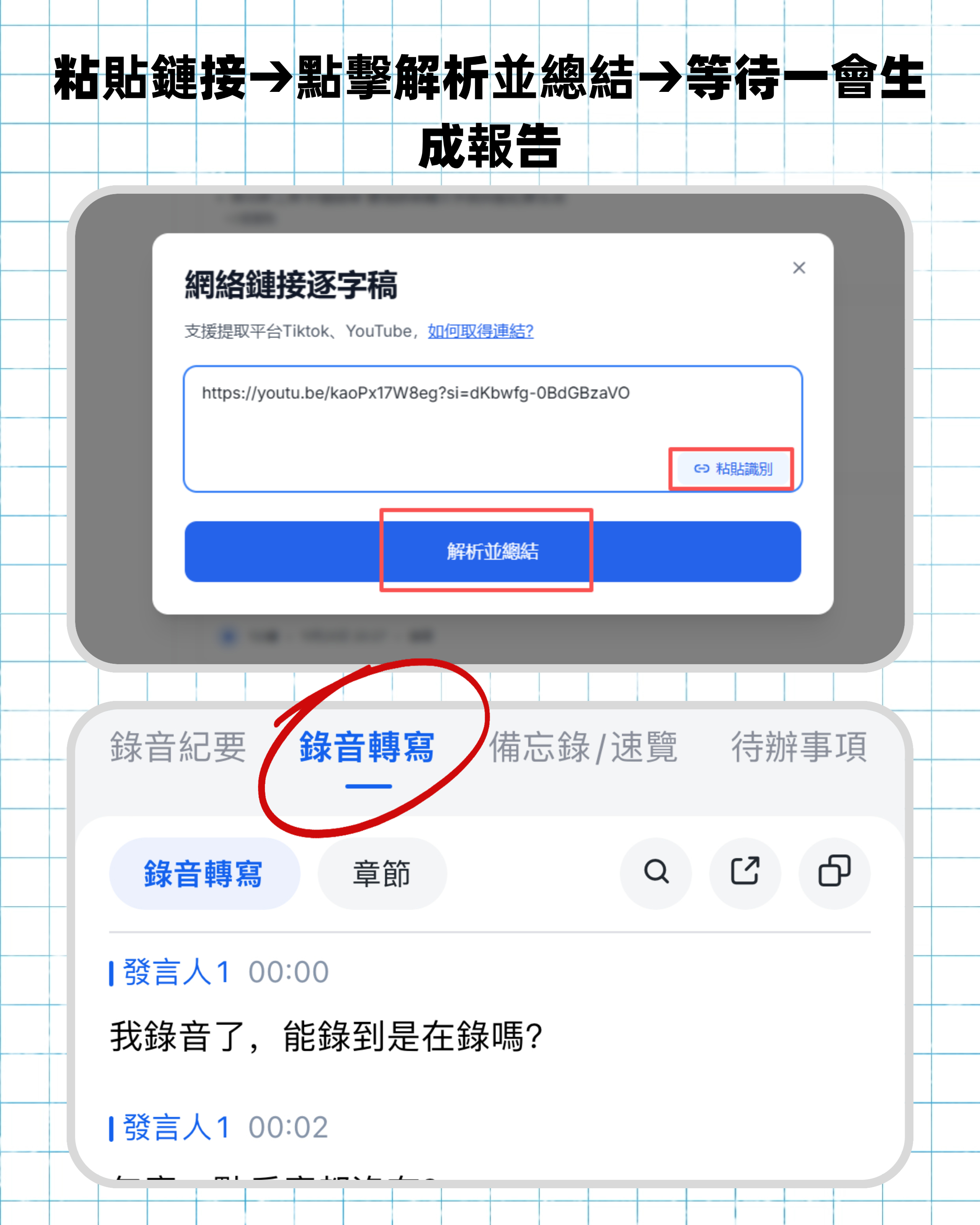
- Accepts multiple audio sources: Besides live recording, you can upload existing audio files from your phone, or paste YouTube/Podcast links to generate Southern Min transcripts—great for organizing materials.
- Not just transcription, but summarization: Automatically extracts key points, divides into sections, and captures to-dos, saving time on meeting notes or study notes.
- Cross-platform sync: Record on phone, view on computer—everything is in the cloud, no file transfer needed.
Advantages of Keyboard Input
- Precise control: For those familiar with Tâi-lô or Han-Lo input methods, you can type very standard characters, suitable for formal texts or publications.
- Works offline: No internet required for typing. Although most people have mobile data, this remains a traditional strength of keyboard input.
Summary: Which Input Method Should You Choose?
• If you frequently need to record Southern Min conversations, interviews, class content, or if you're more comfortable speaking than typing → Go with speech-to-text (Tinrec) to save a ton of time.
• If you're learning Taiwanese, need precise character usage, or only type a few LINE messages occasionally → Keyboard input lets you take your time, and you can even edit drafts from speech-to-text.
• If you want to try both → Use Tinrec for quick transcripts on the go, then export and fine-tune with computer input methods for formal documents.
In one sentence: For most people who need to "quickly turn Southern Min into text," speaking and letting AI transcribe is currently the most effortless option. Download Tinrec's free version and try recording your own speech to see the effect.
Frequently Asked Questions
1. Can the free version of Tinrec transcribe Southern Min?
Yes. Tinrec's speech recognition supports multiple languages, including common voice patterns used in Taiwan for Mandarin. It can recognize most Southern Min conversations, though accuracy may vary depending on accent and background noise.
2. What if AI transcribes Southern Min into weird Mandarin?
You can edit the text directly in the app, or replay the recording to compare and correct. Speaking slower and clearer can also improve results.
3. Does speech-to-text have privacy issues?
Tinrec encrypts recordings. After transcription, files are stored in your account and are only visible to you, so you don't have to worry about data leaks.
4. Any recommendations for traditional Southern Min input methods?
On phones, try apps like "PhahTaigi" which support Tâi-lô and Han-Lo; on computers, install "信望愛台語客語輸入法" (Faith & Hope Taiwanese-Hakka Input Method). Keep in mind these require some time to learn the romanization.
5. Is the accuracy rate you tested reliable?
The 85% figure is an estimate based on everyday spoken tests. Actual results vary due to accent, speed, and background noise. The best way to know is to try the free version with your own speech.
6. Are there other speech-to-text tools that support Southern Min besides Tinrec?
Major tools like Otter.ai or Notta have weak support for Southern Min and often force transcription into Mandarin. For the best Southern Min voice input, Tinrec's Chinese tuning offers relatively better performance.
Turn every recording into actionable outcomes
Get 60 free transcription minutes when you sign in. No credit card required.
Related Reading
You might also like

2026 Free Cantonese Translation Solutions: 3 Tools at a Glance
A review of three free solutions supporting Cantonese translation, comparing Tinrec, Notta, and TurboScribe in terms of Cantonese recognition, translation features, and free quotas, helping you find the best tool for Chinese-speaking users.
2026 Comparative Review of 2 Taiwanese Speech-to-Text Apps: Which Is Better for Multi-Platform Audio/Video Management?
We tested two major speech-to-text tools, Tinrec and PLAUD Note, comparing them on Taiwanese content management, AI summaries, cross-platform support, and price, to help Hong Kong users find the most time-saving option.
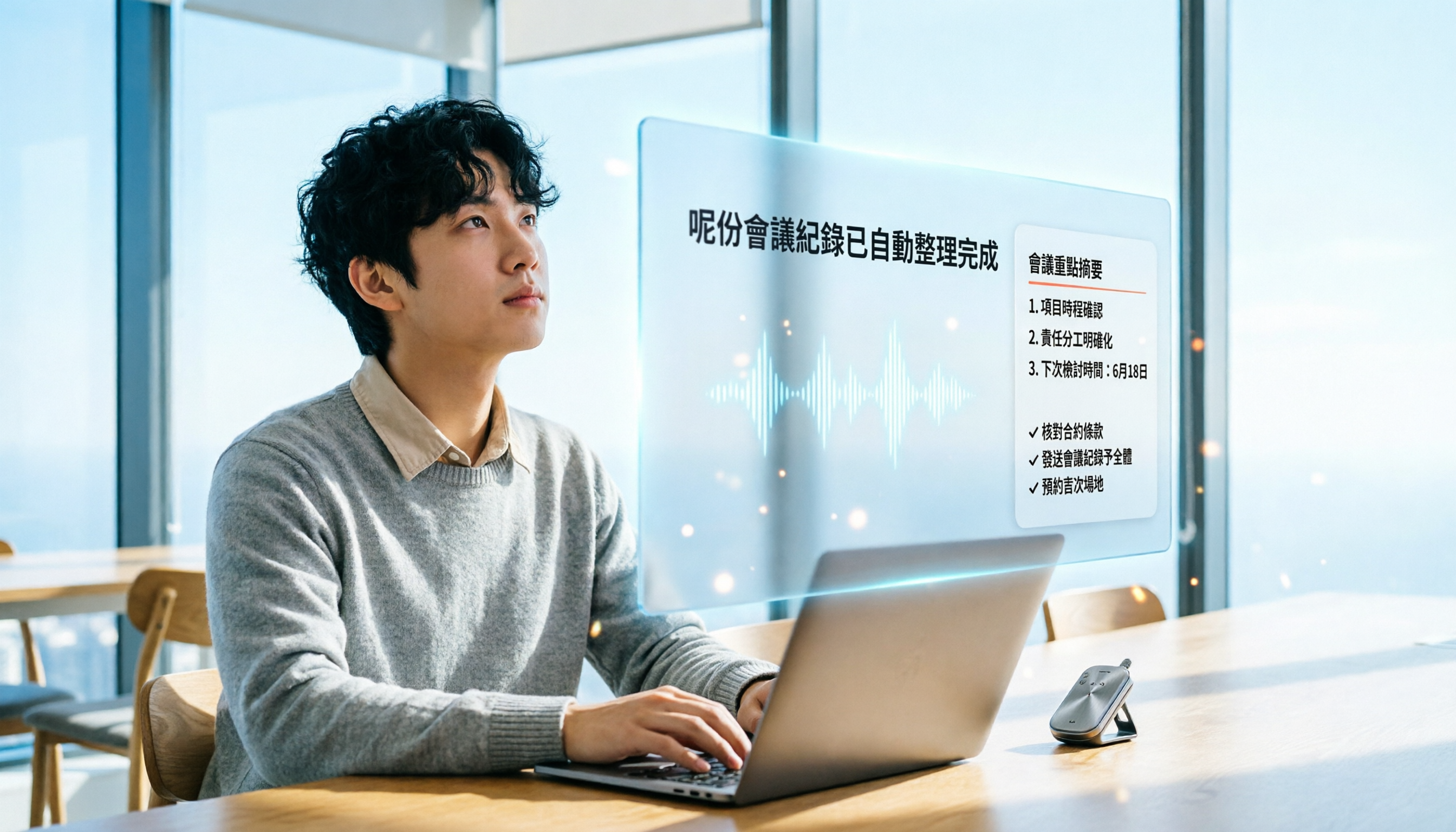
2026 Tinrec Voice-to-Text Guide: Supports Cantonese & Auto-Generates Meeting Minutes
As a student, can't keep up with notes in class or understand Cantonese in group discussions? Tinrec is an AI voice-to-text tool that supports Cantonese and multiple languages, and can automatically summarize and create to-do lists, turning your lecture recordings into reviewable notes. This article covers 5 Cantonese voice-to-text solutions suitable for students, from free to paid, to help you choose the best tool for your needs.

Which Cantonese Meeting Transcription Tool is Best? 2026 Test of Multiple Tools: Free Version of This One is Most Practical
Tested multiple AI meeting transcription tools for Cantonese meetings, comparing transcription accuracy, AI summaries, action item extraction, and multi-platform support. After a thorough comparison, Seconds Audio (Tinrec) is recommended—the free version offers practical features suitable for everyday office workers and frequent meeting users.

2026 Real-World Comparison of 2 Southern Min Speech Recognition Tools: Which is Better for Daily Recording and Organization?
For users needing Southern Min speech recognition, support from mainstream tools is still limited. This article compares Tinrec and PLAUD Note across dimensions such as recognition capability, input sources, AI organization, cross-platform support, and pricing, helping you choose the most suitable transcription tool for your needs.
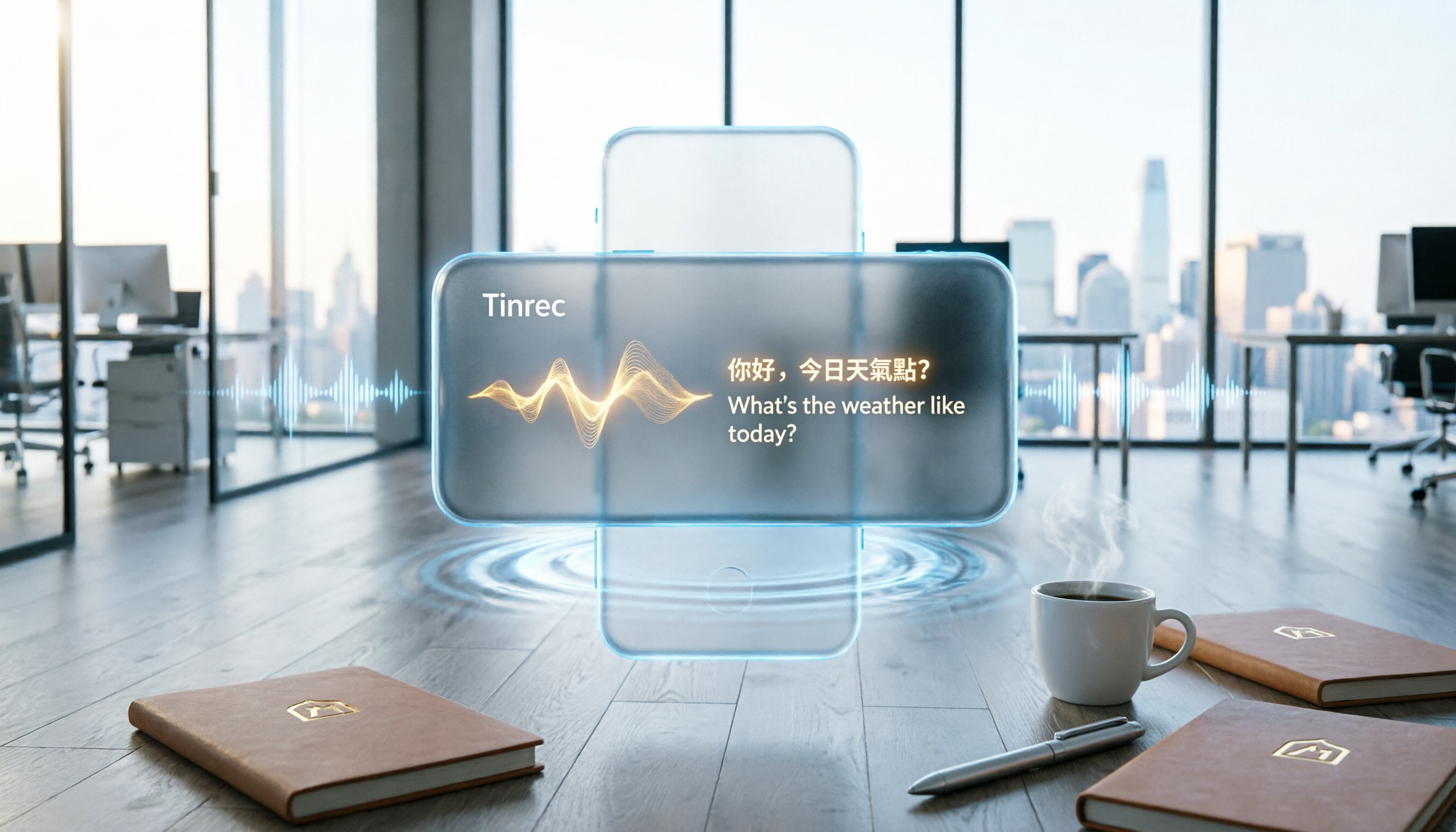
2026 Comparison of 5 Cantonese Translation Apps: Which Is the Most Accurate for Work?
Hong Kong office workers encounter Cantonese content daily in meetings, lectures, and videos. Looking for a reliable Cantonese translation app to help organize? We tested 5 popular tools, from AI voice transcription to real-time translation, to find the best solution for Hong Kong users, so you can stop working overtime on meeting minutes.
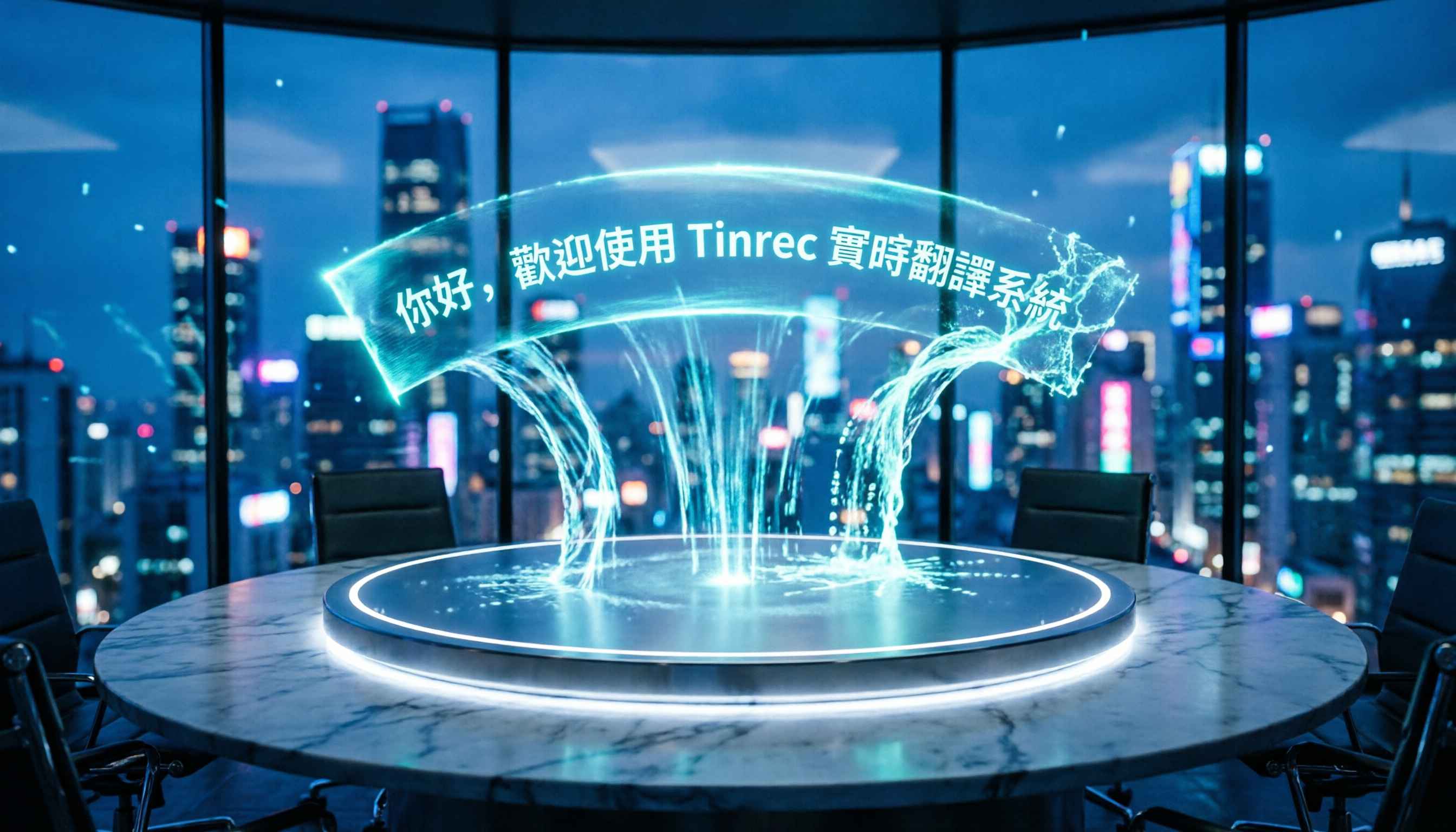
Which Cantonese Real-Time Translation App is Best? 2026 Test of 2 Tools Reveals the Most Comprehensive One
Need Cantonese real-time translation for weekly meetings? We tested two tools — comparing accuracy, ease of use, extra features, and price — to find the best fit for professionals who need instant Cantonese translation.
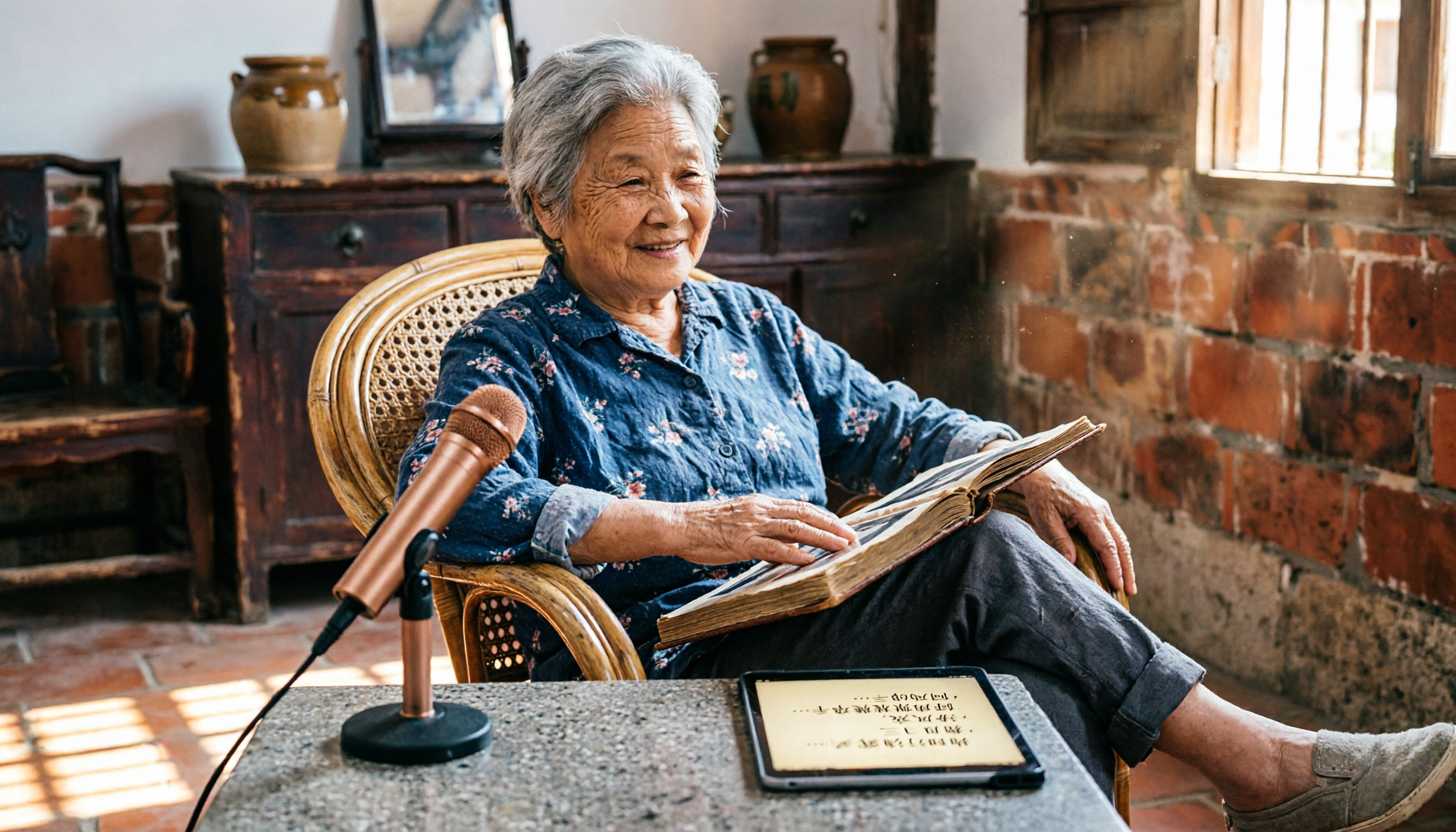
How to Transcribe Hokkien Audio to Text in 2026? A Complete 5-Step Guide
Struggling to transcribe Hokkien meetings, interviews, or lectures? This article tests several tools and shows you how to use Tinrec to quickly convert Hokkien audio to text and organize it into searchable data.
2026 Real-World Test: Which Taiwanese Hokkien Speech-to-Text App Really Saves You Time?
A mid-level manager tests Otter.ai vs Tinrec on Hokkien recognition, meeting summaries, and post-meeting workflows to find the best speech-to-text tool for Taiwan's workplaces.