
Turn recordings into transcripts and summaries in minutes
Upload audio or video for multilingual transcription, AI notes, and action items
Want to turn a 1-hour YouTube tutorial into notes? Do you have to manually pause and type? This is a common pain point for students, content creators, and professionals. Especially for English channels without Chinese subtitles or long videos where you need to quickly extract key points, traditional dictation is inefficient.
This article tests three different solutions: the "no-install web tool," the "AI all-in-one note app," and the "advanced combo." If you just need to copy text, a web tool works; if you need real-time summaries, translations, and task management, an integrated AI tool is better; if you prefer full DIY, try the Whisper + ChatGPT combination.
Quick conclusion?
- Just need subtitle text → Use YouTube Transcript (web version).
- Need AI summaries, Q&A, multi-device sync → Consider Tinrec (integrated tool).
- Processing videos without subtitles → Use Whisper AI model.
Why "Video to Text" Has Become a Learning and Work Necessity
In the era of information overload, the linear nature of video content becomes an obstacle to knowledge retrieval. Common problems include:
- High cost of replaying: Dragging the progress bar to find a specific point.
- Language barriers: High-quality courses from abroad lack subtitles or have poor auto-translation.
- Difficulty structuring notes: After watching, you only have a vague impression, lacking bullet-point highlights and action lists.
Converting videos into "transcripts" and "AI summaries" transforms time-based content into scannable, searchable text assets, greatly improving absorption efficiency.
Solution 1: Lightweight Web Tool (For Pure Text Needs)
If you only need to extract the captions (CC subtitles) already available on YouTube videos, without extra AI analysis, web tools are the fastest option.
Representative tool: YouTube Transcript This free website focuses on extracting subtitles. Simple operation: paste the YouTube URL, click generate, and copy the full text.
- Pros: Completely free, no login required, fast.
- Cons: Only extracts existing subtitles (won't work if the video has no subtitles); output often lacks punctuation and paragraphs, making it hard to read; no summary capability.
Solution 2: AI All-in-One Integrated App (For Efficient Learning & Management)
For users who need to "understand" rather than just "copy" content, apps integrating ASR (speech recognition) and LLM (large language models) are currently the top efficiency choice. These tools process audio directly, not relying on YouTube's native subtitles.
Representative tool: Tinrec Tinrec is an AI assistant focusing on "from recording to action." Besides recording, it supports parsing YouTube or podcast links, automatically generating transcripts with speaker diarization, and producing structured meeting minutes or study notes.
- Use cases: Study notes, meeting recordings, foreign language content translation.
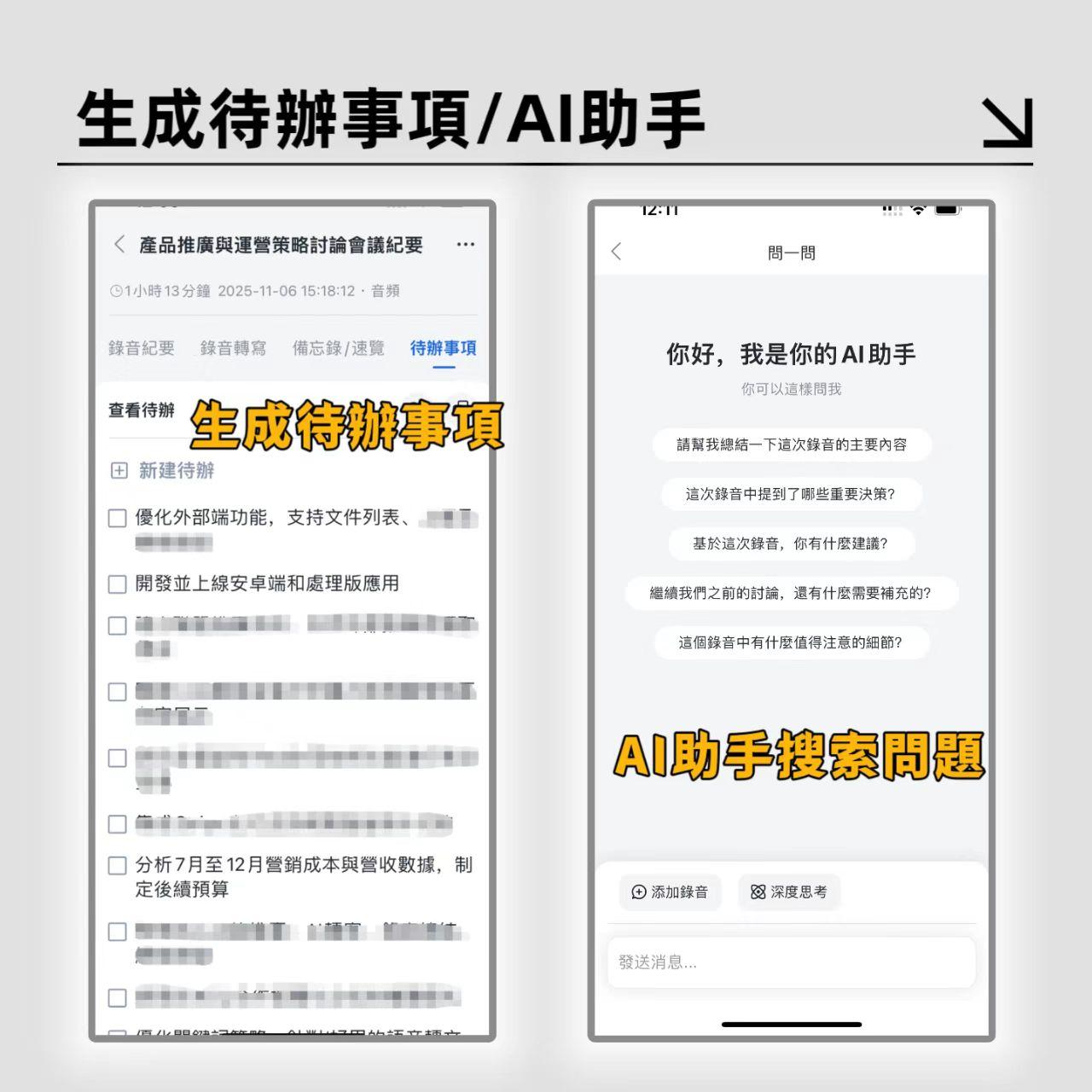
- Core advantages: Supports 10 languages including Chinese, Japanese, English, Korean; not just text but also "AI Q&A" (e.g., "What was the second solution mentioned?").
- Note: Free tier offers 100 minutes per month; heavy users may need to upgrade.
Stop organizing recordings by hand
Upload audio or video and automatically get a transcript, summary, and action items
Solution 3: DIY Combo (For Tech Enthusiasts)
If you prefer hands-on or encounter very niche video formats, use open-source models paired with generative AI.
Representative combo: Download audio + Whisper AI + ChatGPT Based on online tutorials (e.g., Fisher's share), the process typically involves three steps:
- Convert YouTube video to audio file (MP3).
- Use OpenAI's Whisper model to transcribe speech to text (good for videos without subtitles).
- Paste messy text into ChatGPT and prompt it to translate, segment, and summarize key points.
- Pros: High flexibility, customizable prompts.
- Cons: Cumbersome process, switching between tools; unfriendly for mobile users.
Comparison Table of Popular Video-to-Text Tools 2026
To help you decide, we compared five dimensions:
| Dimension | YouTube Transcript (Web) | Tinrec | Whisper + ChatGPT (DIY) |
|---|---|---|---|
| Ease of Use | ⭐ (Very Simple) | ⭐⭐ (One-click Integration) | ⭐⭐⭐⭐⭐ (Cumbersome) |
| Depends on Original Subtitles | Yes (CC required) | No (AI audio recognition) | No (AI audio recognition) |
| AI Summary | None | Auto-generated (notes/actions) | Requires manual prompting |
| AI Q&A | Not supported | Supported (content-based Q&A) | Supported (paste to GPT) |
| Cross-platform Support | Web only | iOS, Android, Web | Primarily computer-based |
| Free Tier | Unlimited | 100 minutes/month free | Depends on individual tools |
Practical Tutorial: How to Quickly Turn YouTube Videos into Study Notes with AI
Using Tinrec as an example, here's how to transform a long video into review-ready key notes. Steps apply to both mobile and web.
Step 1: Get the Video Link
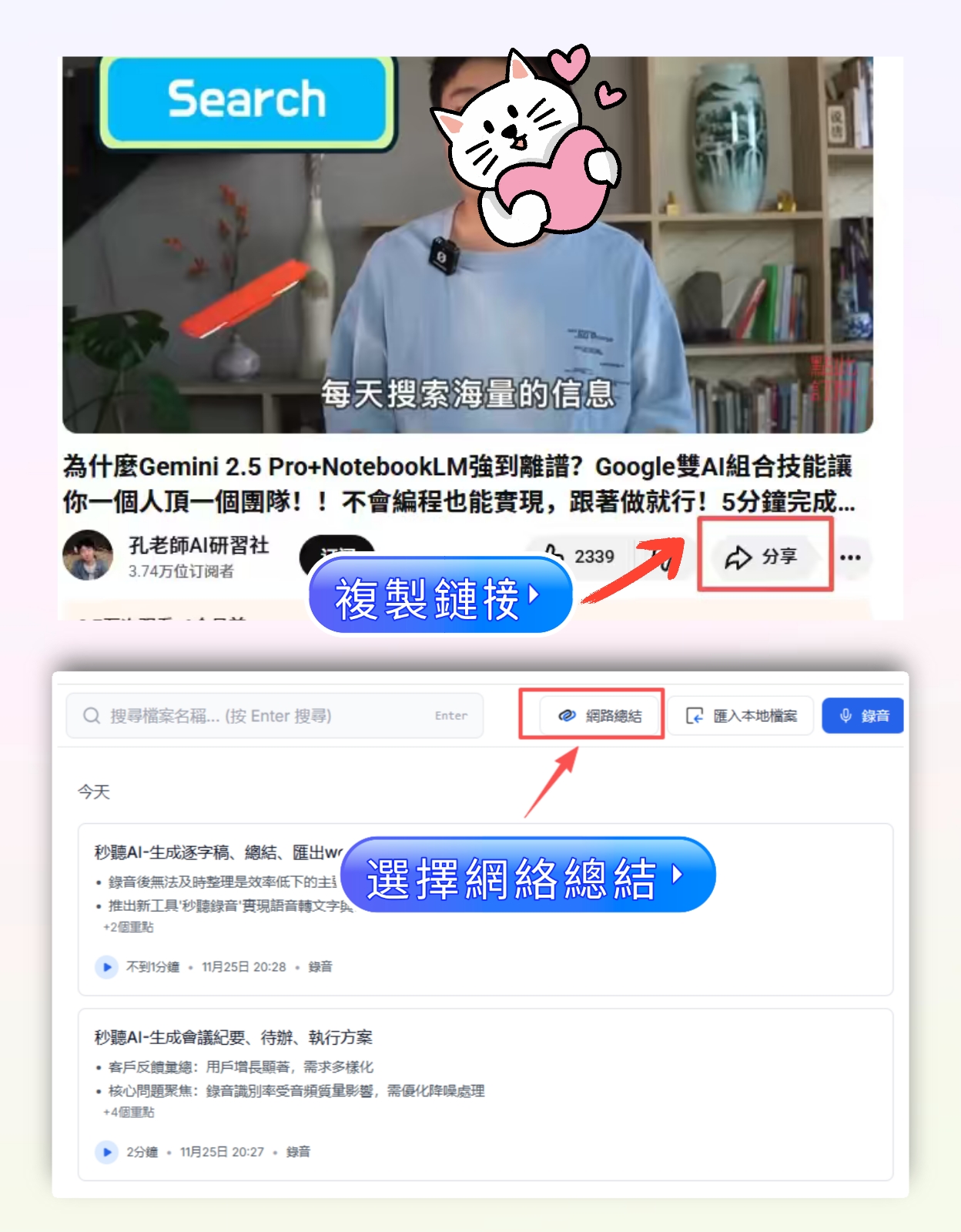
Open the video in YouTube app or browser, tap "Share" and select "Copy Link."

Step 2: Use "Video to Text" Feature
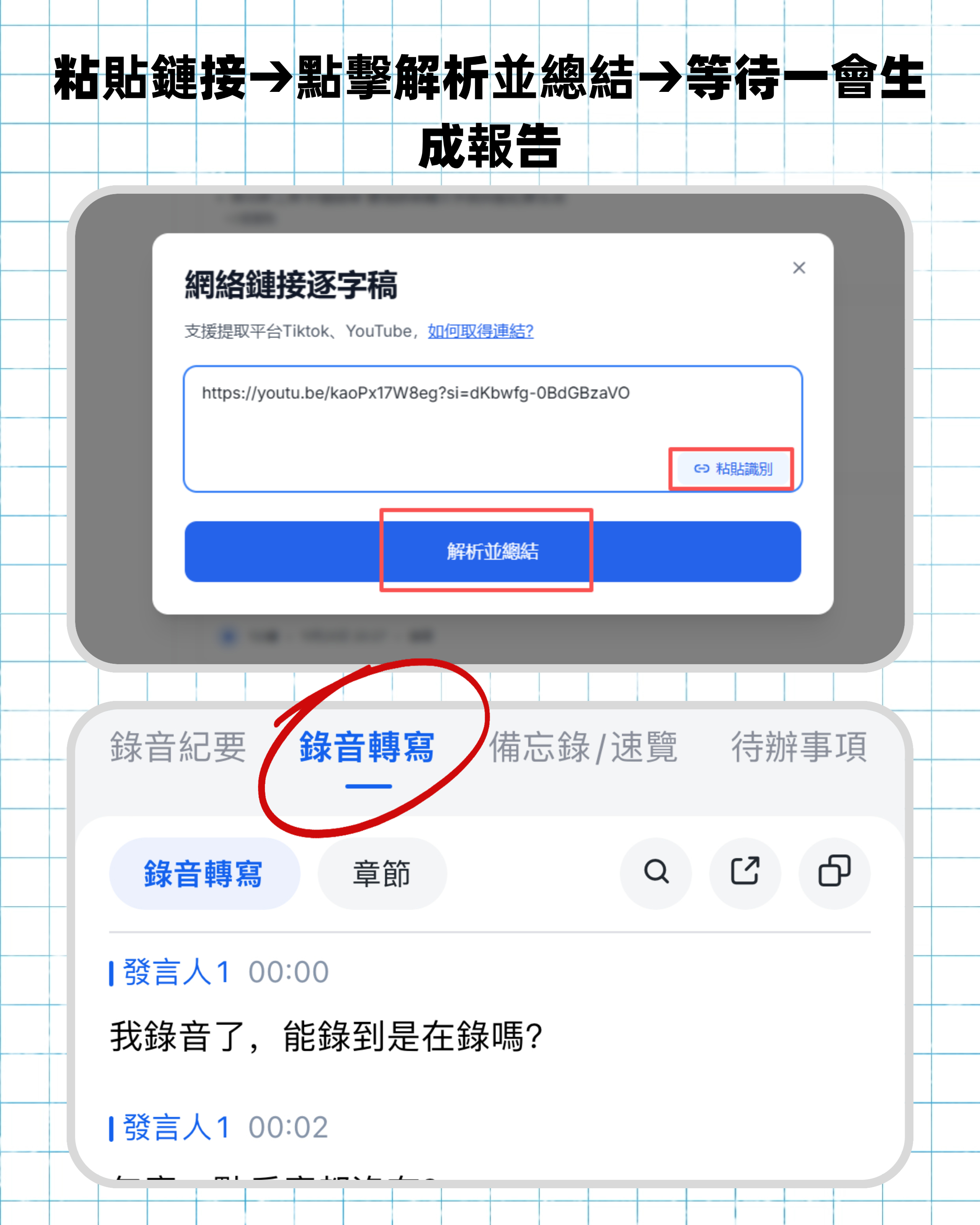
Open Tinrec, select "Podcast/Online Video to Text" on the home page. Paste the link. The system will automatically parse audio content. Even if the video has no subtitles, AI uses speech recognition to generate a transcript.
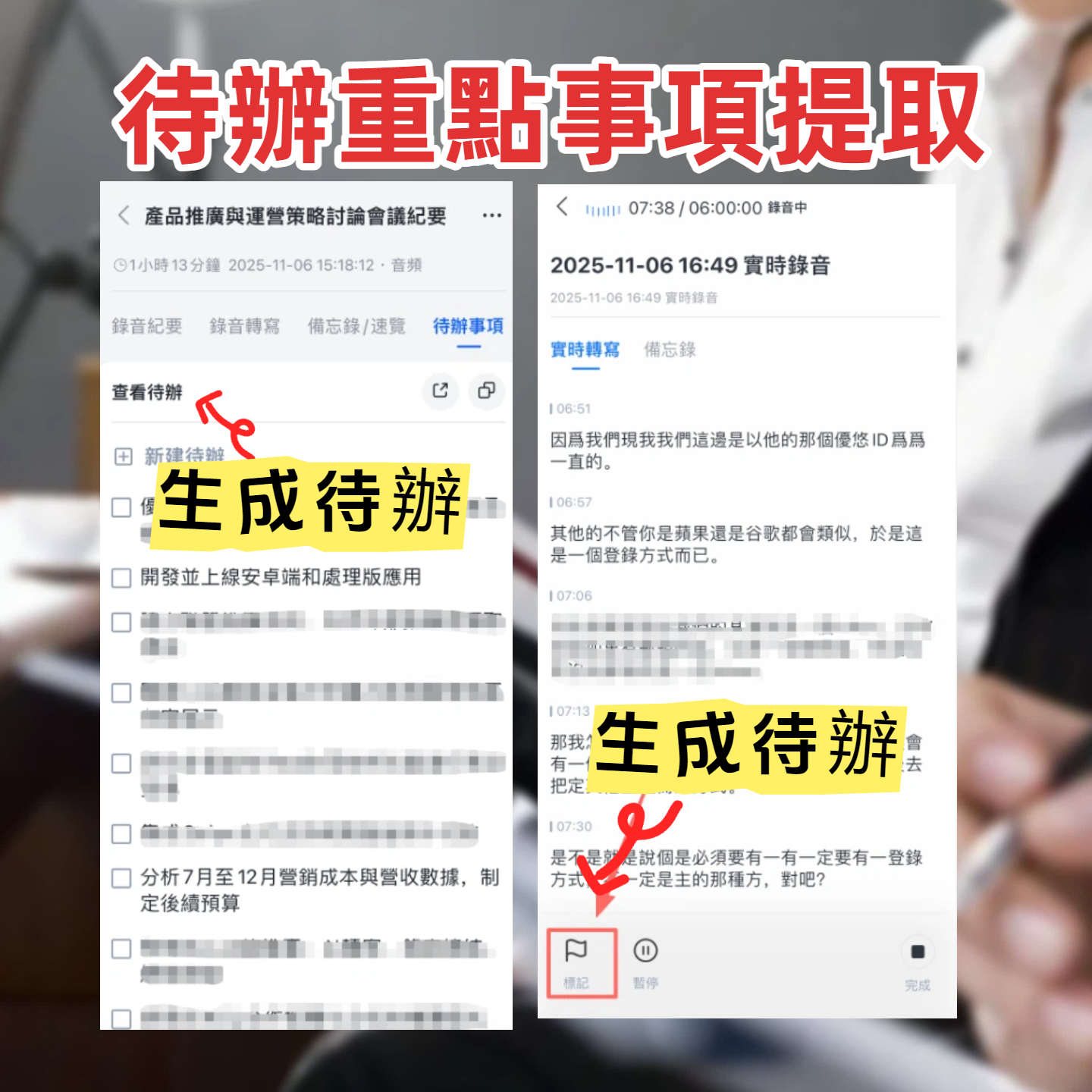
Step 3: Read Summary and Action Items
After transcription, don't just look at the transcript. Switch to the "AI Summary" page to see auto-generated:
- Overall summary: Core theme of the video.
- Chapter highlights: Details broken down by timeline.
- Action items: If the video includes tutorial steps, they are listed as a To-Do List.
Step 4: Deep Query with AI Q&A
If notes are too long or you need to check specific details (e.g., "What was the data mentioned?"), use the "AI Q&A" feature to ask questions directly. AI answers based on video content, more accurate than Ctrl+F search.
FAQ
Q1: Can these tools work if the YouTube video doesn't have CC subtitles?
A: If you use a subtitle extraction site like YouTube Transcript, no. But if you use tools with ASR (speech recognition) like Tinrec or Whisper, they can "listen" to the audio and generate a transcript even without subtitles.
Q2: Are there limitations for iPhone users? A: iOS has stricter file management, so downloading and converting files can be cumbersome. We recommend cloud-based tools that support iOS apps (like Tinrec), where you can paste links directly and avoid file transfer hassles.
Q3: Can I use these tools to process Teams or Google Meet recordings? A: Yes. If you have a recording file (MP4/MP3), you can upload it using the "Import audio/video file" feature for transcription. For real-time transcription, enable "Live transcription" and place it next to your computer.
Q4: What are typical free tier limitations? A: Most AI tools have time or usage limits due to compute costs. For example, Tinrec offers 100 minutes of transcription per month for free, enough for occasional short videos.
Q5: Do transcripts support multiple languages? A: Mainstream AI tools support multi-language recognition. Tinrec supports Chinese, English, Japanese, Korean, and 10 other languages, ideal for foreign language learning material.
Q6: Can I export directly to Word or PDF? A: Most note-taking tools support export. When choosing a tool, verify it supports txt, docx, or pdf formats for easy editing.
Turn every recording into actionable outcomes
Get 60 free transcription minutes when you sign in. No credit card required.
Related Reading
You might also like

5 Best Recording-to-Text Software in 2026: Is the Free Version Enough? This One Surprised Us
We tested 5 free recording-to-text apps, evaluating transcription quality, AI summarization, cross-platform support, and free-tier limits to find the truly useful options. Tinrec not only converts speech to text but also offers automatic summaries, Q&A, and team collaboration—all available in the free version.

2026 Tested: 5 Speech-to-Text Tools Compared – Tinrec Best for Hong Kong Professionals
After testing multiple speech-to-text tools, Tinrec stands out with bot-free recording, Chinese meeting summaries, and team collaboration. See why it's the best time-saver for Hong Kong professionals.

How to Choose a Free Speech-to-Text Tool in 2026: A 5-Step Practical Guide
We tested multiple free speech-to-text tools, covering common pitfalls, key selection criteria, and tips to avoid mistakes. This 5-step guide helps you find the best AI transcription solution for Chinese, with an in-depth look at Tinrec (Miao Ting Lu Yin)'s free and paid features.

4 iPhone Voice-to-Text Apps Tested in 2026: Is Apple's Free Built-in Enough?
We tested 4 voice-to-text solutions for iPhone, from Apple's free built-in Voice Memos to Tinrec and others, comparing accuracy, AI features, and cross-platform support to help you save time on meeting notes.
5 Best Recording-to-Text Apps Tested in 2026: Which Free Version Saves You the Most Time?
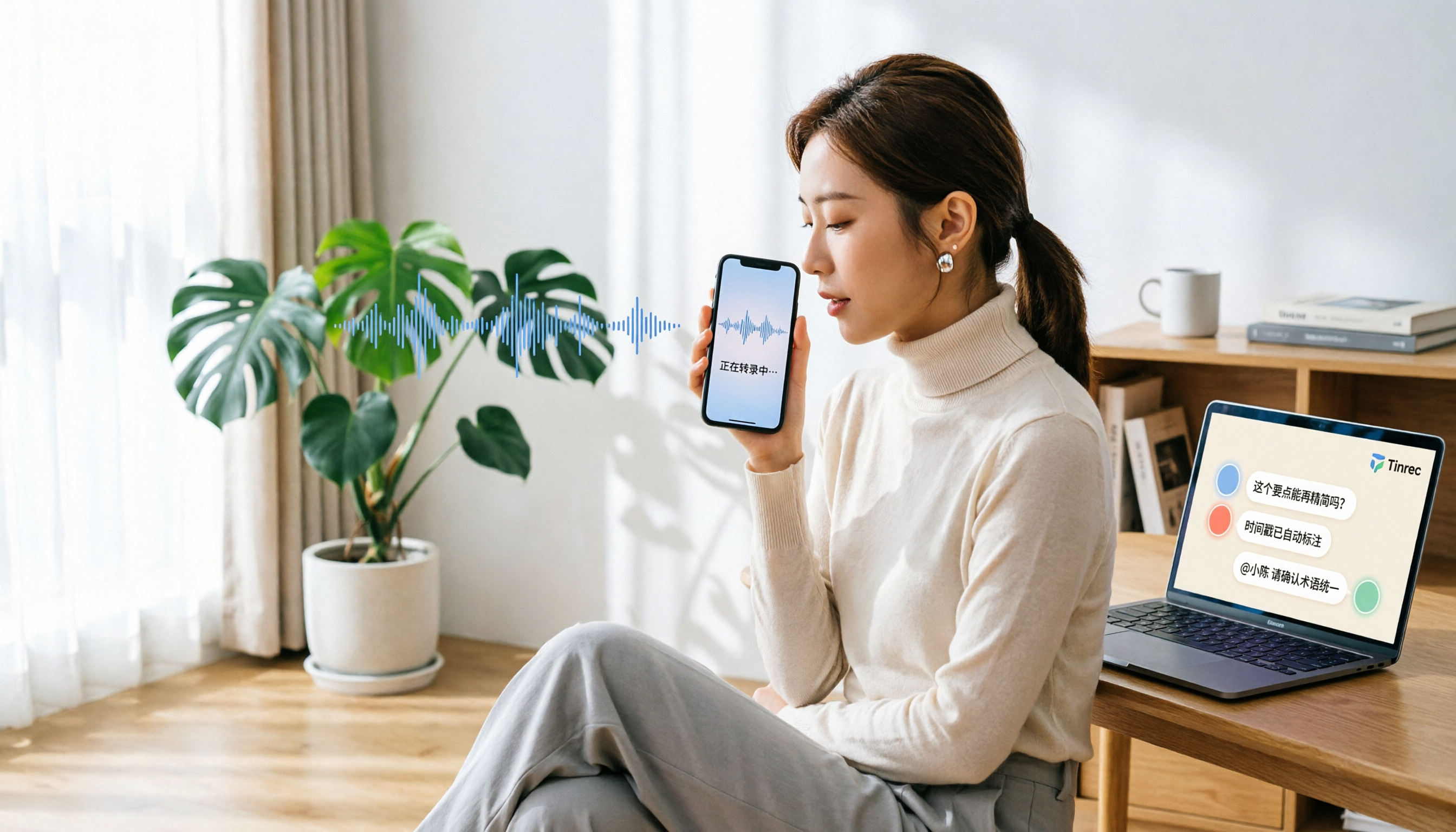
We tested 5 free and paid recording-to-text tools. Tinrec stands out with bot-free recording, AI Q&A, and team collaboration, saving you hours of manual transcription.

2026 Comparison of 4 Speech-to-Text Apps: Which Free Plan Suits Hong Kong Office Workers Best?
Tired of meetings and typing up recordings afterward? This article tests Tinrec's free plan and breaks down how to choose a speech-to-text app without getting scammed, helping you save overtime hours.

2026 iPhone Voice-to-Text: Free Built-in Features vs Tinrec Premium Choice
Want to transcribe iPhone recordings for free? Is the built-in Voice Memos app enough? Our tests show free options fall short in noisy environments, Cantonese recognition, and post-processing. This article compares iOS built-in features, free apps, and Tinrec to help you find the best solution.
2026 Speech-to-Text Tool Review: Is Tinrec's Free Plan Really Enough?
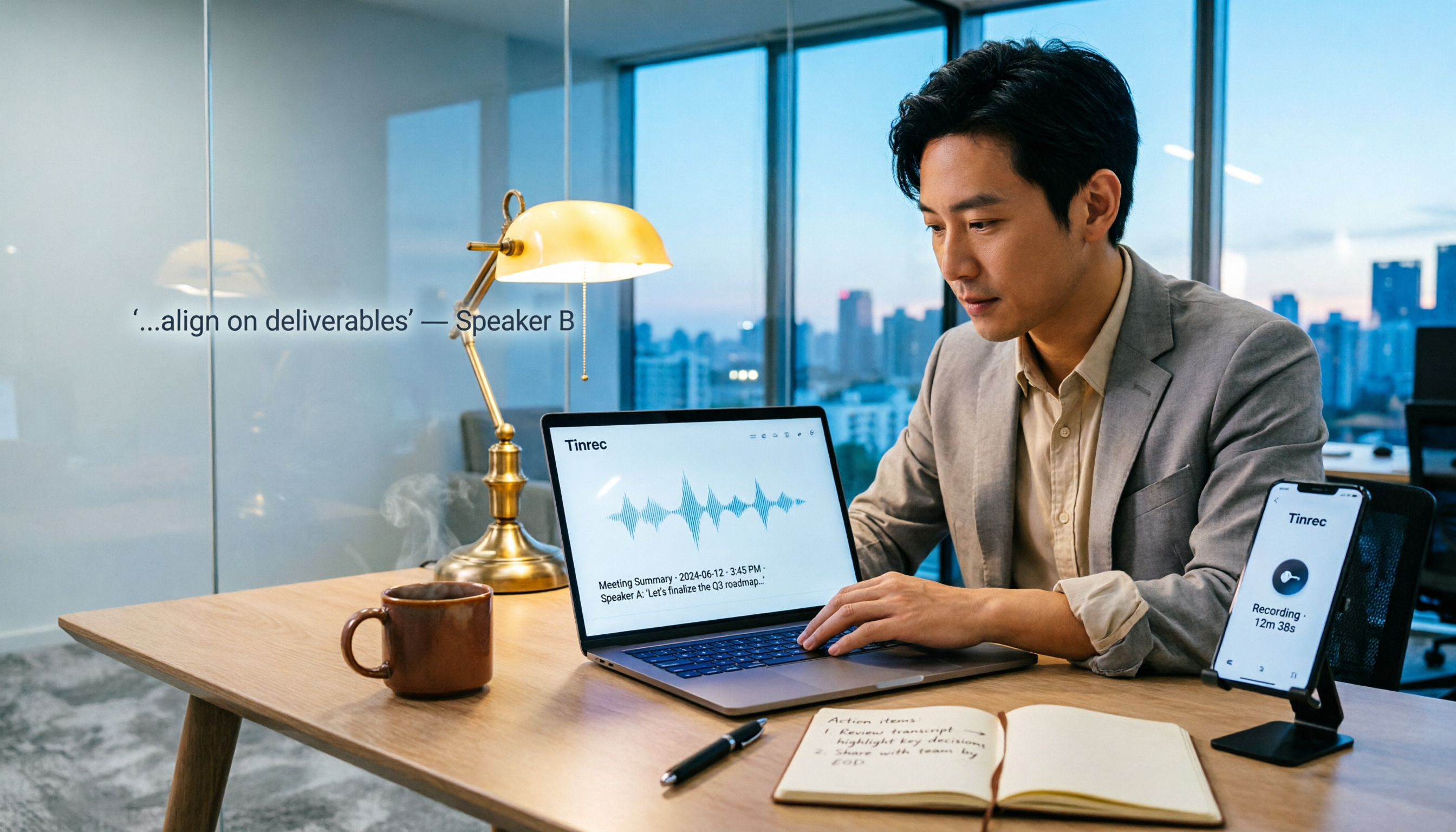
A mid-level manager tests online speech-to-text tools, from free quotas to transcription accuracy and post-meeting organization, to tell you whether Tinrec's free plan is sufficient and when you should upgrade.

4 Best Online Speech-to-Text Tools in 2026: Free Plans and AI Features Compared
This article tests four online speech-to-text tools—Tinrec, Otter.ai, Notta, and Granola—and provides buying advice based on free allowances, bot-free meeting recording, AI Q&A, and team collaboration features.