
Turn recordings into transcripts and summaries in minutes
Upload audio or video for multilingual transcription, AI notes, and action items
Facing a meeting recording mixed with Mandarin, Cantonese, or Taiwanese Hokkien, manually transcribing is often a nightmare for administrative staff and content creators. While many speech-to-text tools exist, most perform well only with standard Chinese or English; recognition rates drop significantly with dialects or accents.
This article focuses on the two challenging recognition needs—Cantonese and Taiwanese Hokkien—and selects 5 top-performing tools in 2026 for evaluation. We analyze dimensions such as recognition accuracy, free quotas, real-time transcription support, and AI summary features to help you find the best solution.
Quick Navigation Conclusions:
- For Taiwanese Hokkien recognition and Taiwan accent: Go with Yating Transcriber.
- For Cantonese/Yue video subtitles: Recommend cSubtitle.
- For dual Cantonese/Hokkien support + AI meeting minutes: Try Tinrec (Miao Ting Recorder).
- For Android users for classroom notes: Use Google Live Transcribe directly.
1. Current Pain Points: Why Is Dialect Speech-to-Text So Difficult?
When dealing with multilingual work environments, we often encounter three major pain points:
- Poor recognition of code-switching: In Taiwanese and Hong Kong workplace communication, mixing Chinese and English, or switching between Mandarin/Hokkien or Mandarin/Cantonese, is common. Traditional single-language model tools often produce garbled text.
- Lack of summaries and action items: Even after getting the transcript, lengthy recordings still require significant time to extract key points and to-do items.
- Device limitations: Some useful tools are limited to specific systems (e.g., Google Live Transcribe is Android-only), causing inconvenience across devices.
2. 2026 Selection: 5 Dialect-Supporting Speech-to-Text Software Reviews
1. Yating Transcriber: Best for Taiwanese Accent and Hokkien
Developed by Taiwan AI Labs (AILabs), this is one of the strongest tools for recognizing "Taiwanese Mandarin" and "Taiwanese Hokkien." It is optimized for Taiwanese accents and can handle Chinese-English mixed contexts.
- Pros: Real-time recording is completely free; data is stored on servers in Taiwan, suitable for sensitive scenarios such as government and medical use.
- Cons: Only 20 minutes of audio upload per month for free; high costs for large-scale file processing.
2. cSubtitle: Specialized in Cantonese/Yue Subtitles
A tool designed for the Chinese market, especially strong in Hong Kong Cantonese recognition. It supports exporting SRT and VTT subtitle files, making it ideal for video creators.
- Pros: Supports Cantonese, Taiwanese Mandarin, and Mandarin; smooth workflow for video subtitles.
- Cons: Primarily for video files; only the first 3 minutes of each video are free for trial; suitable for short-form video creators.
3. Tinrec (Miao Ting Recorder): AI Meeting Assistant with Dual Dialect Support
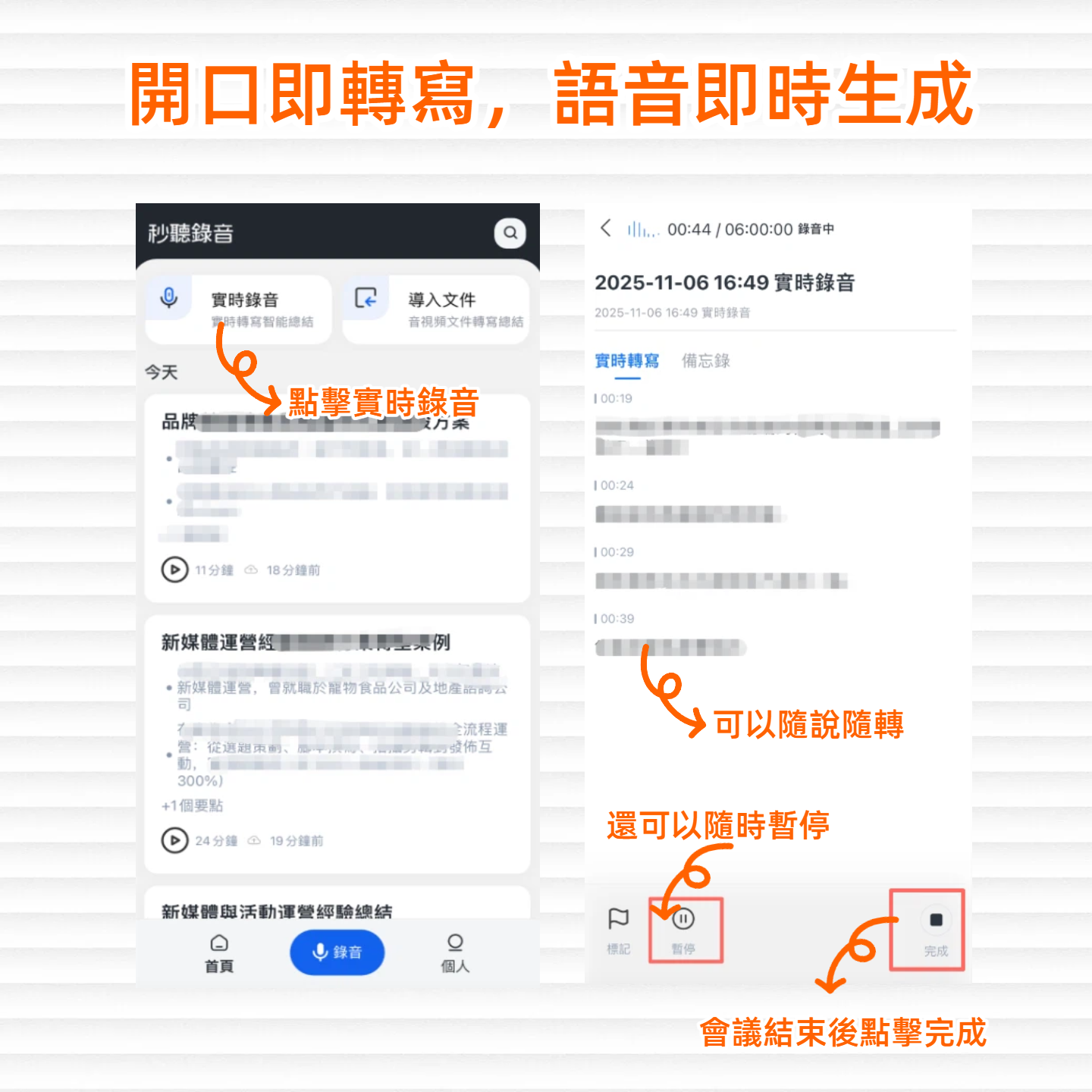
Tinrec is a multi-platform AI recording assistant that supports automatic recognition of Cantonese, Taiwanese Hokkien, Chinese, English, Japanese, and 10 other languages. Unlike simple transcription tools, Tinrec emphasizes a complete workflow "from recording to action," automatically generating meeting minutes and to-do action items after transcription.
- Pros: Covers both Cantonese and Taiwanese Hokkien needs; features AI dialogue query; supports cross-platform sync via iOS/Android/Web.
- Use cases: Cross-border/multilingual meetings, business scenarios requiring quick conclusions.
4. Google Live Transcribe: Free Marvel for Android Users
A powerful built-in Google tool supporting over 80 languages (including Traditional Chinese and Cantonese) and environmental sound recognition.
- Pros: Completely free; extremely fast real-time recognition.
- Cons: Android-only; transcripts only saved for 3 days; cannot upload files for transcription.
Stop organizing recordings by hand
Upload audio or video and automatically get a transcript, summary, and action items
5. OpenAI Whisper: Open-Source Choice for Tech-Savvy Users
Currently one of the most powerful open-source speech recognition systems, supporting 99 languages with high tolerance for accents and background noise.
- Pros: Completely free (if run locally); high privacy.
- Cons: Requires Python environment or third-party interface (e.g., Whisper Desktop); higher barrier for average users.
3. Tool Specifications and Feature Comparison Table
To help you choose the right tool intuitively, we have compiled a comparison of key dimensions:
| Dimension | Tinrec (Miao Ting Recorder) | Yating Transcriber | cSubtitle | Google Live Transcribe | OpenAI Whisper |
|---|---|---|---|---|---|
| Dialect Support | Cantonese, Taiwanese Hokkien, Chinese, English, Japanese, Korean, etc. (10 languages) | Taiwanese Hokkien, Taiwanese Mandarin, Chinese/English | Cantonese, Taiwanese Mandarin | Cantonese, Chinese (no dedicated Hokkien) | Multiple languages (including dialects) |
| Real-time Transcription | Yes | Yes | No (file-based) | Yes | No (requires plugin) |
| Audio/Video Upload | Yes (audio/video/links) | Yes | Yes | No | Yes |
| AI Summary/Action Items | Yes (meeting minutes/to-do) | No (transcript only) | No | No | No |
| Free Quota | 100 minutes per month | Real-time free / 20 minutes upload | First 3 minutes per file | Completely free | Completely free (needs hardware) |
| Platform Support | Web, iOS, Android | Web, App | Web | Android | PC/Mac (local) |
4. Practical Guide: How to Efficiently Process Multilingual Recordings with AI Tools
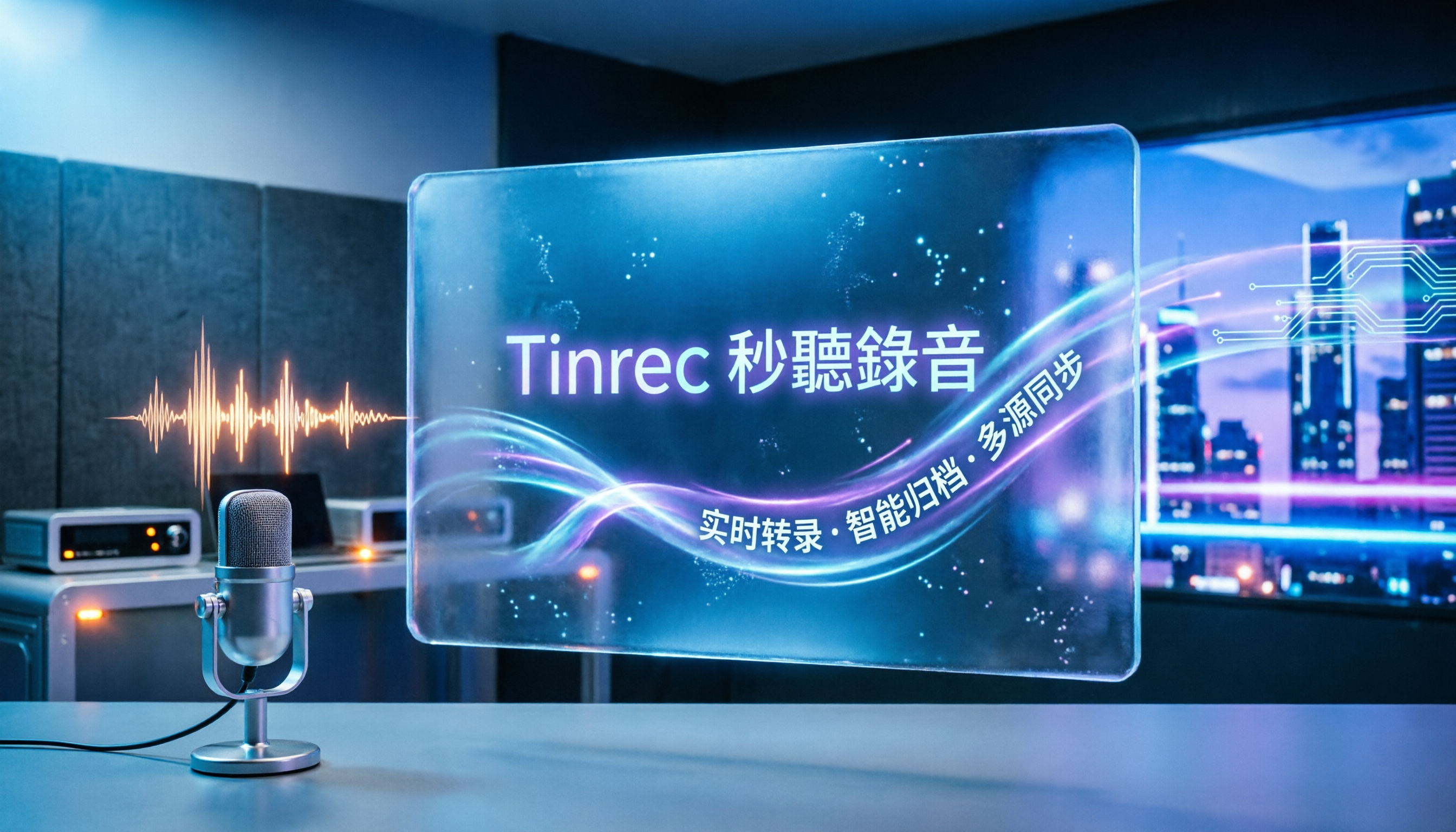
After choosing the right tool, the correct workflow can double efficiency. Below, using the more comprehensive Tinrec as an example, we demonstrate how to turn "recordings" into "actionable task lists."
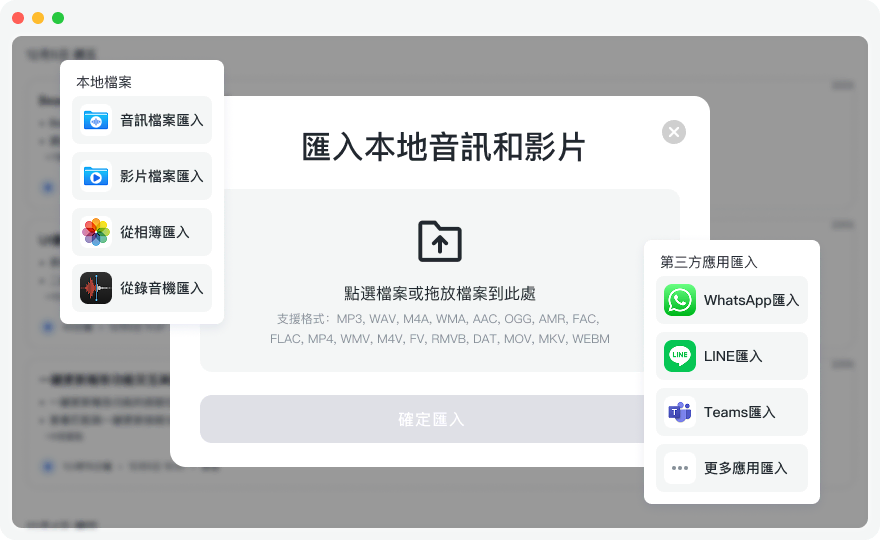
Step 1: Choose Recording or Import Mode
- Live meetings: Open the app or web version, click Record and transcribe in real time. The system generates transcripts instantly during recording. Suitable for classroom notes or in-person meetings.
- Existing files: If you have audio files from a recorder, use the Audio file to text feature to upload, supporting MP3, WAV, M4A, etc.
- Online videos: For Cantonese interviews or podcasts on YouTube, directly use Video link to text and paste the URL for parsing.
Step 2: Extract Key Points with AI
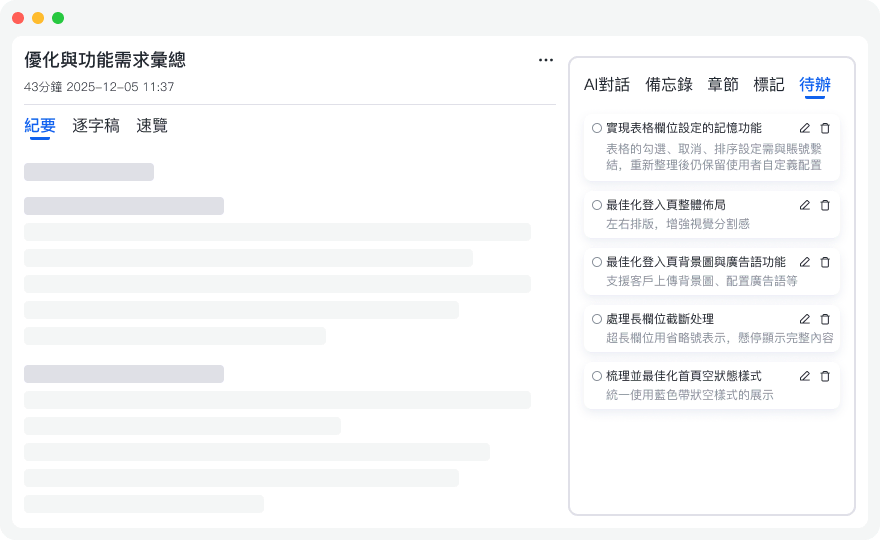
Traditional transcripts can easily run into tens of thousands of words, making them hard to read. After transcription, use the system's auto-generated "meeting minutes" and "to-do action items" to quickly grasp conclusions. This saves you the time of re-listening to recordings.

Step 3: Use AI Dialogue to Query Details
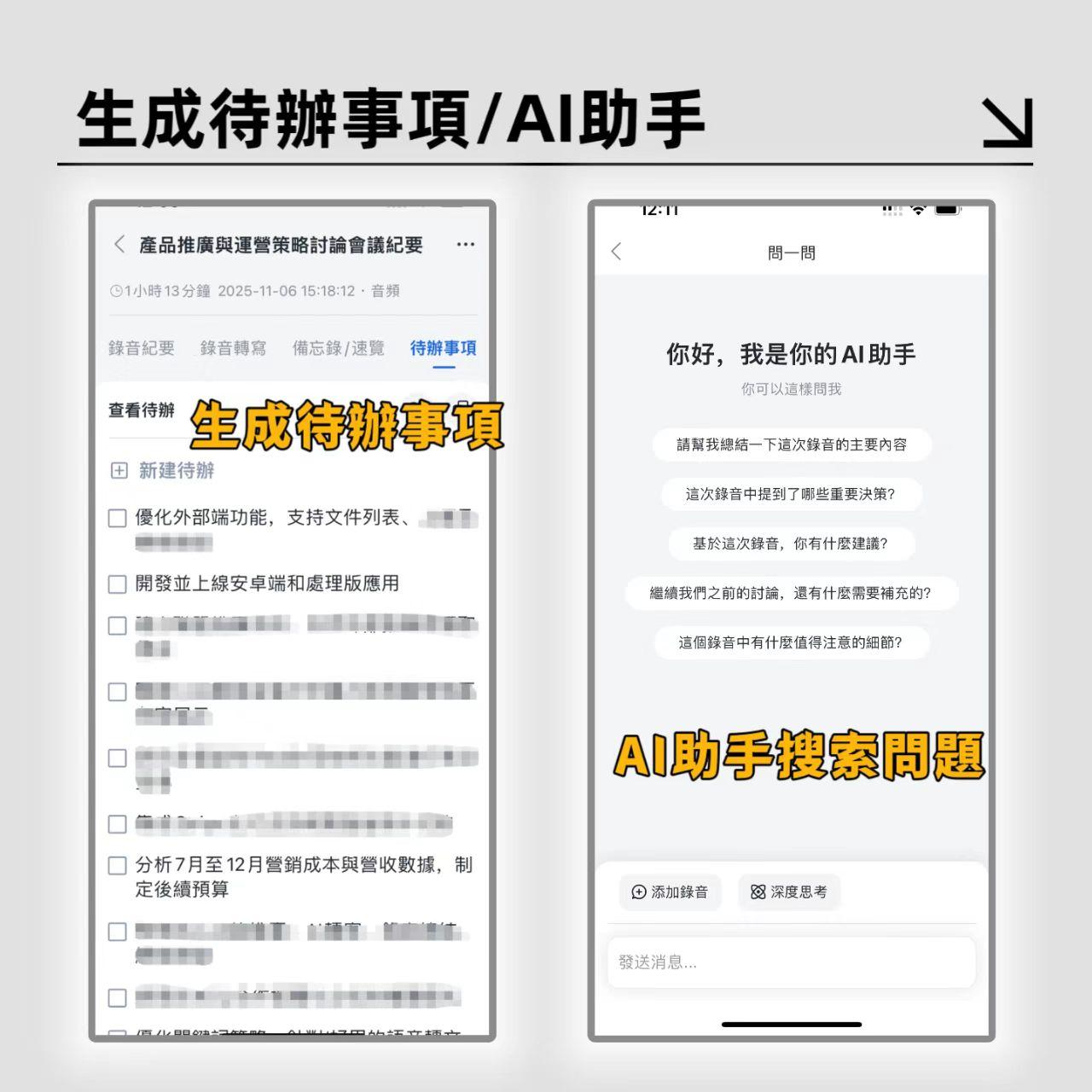
If you forget a specific detail from the meeting (e.g., "What was the budget the boss mentioned?"), you don't need to Ctrl+F search keywords. Use the AI dialogue query feature to ask naturally, and the AI will answer based on the recording content—just like asking a personal assistant.
5. Frequently Asked Questions (FAQ)
Q1: Are free speech-to-text tools accurate enough for "Taiwanese Mandarin"? Most international software (e.g., Otter.ai) has weak support for Chinese, let alone Taiwanese accents. We recommend locally developed Yating Transcriber or Tinrec, which supports multi-language recognition models with higher tolerance for mixed accents.
Q2: Which tool do you recommend for iPhone users? Google Live Transcribe does not support iOS. iPhone users can use the built-in "Dictation" feature (suitable for short phrases) or download Tinrec App for iOS, which allows recording and cross-device editing on computers.
Q3: Can I use these tools for YouTube subtitles? Yes. cSubtitle is specifically designed for this and can export SRT files. Tinrec also supports converting online videos to text, suitable for script drafting or extracting video highlights.
Q4: Will transcription be affected if the recording environment is noisy? Yes. AI recognition accuracy can reach over 95% with clear recordings, but background noise significantly reduces accuracy. We recommend using a directional microphone or staying close to the speaker.
Q5: What happens when the free quota runs out? If you are a heavy user, Yating Transcriber offers paid top-up plans; Tinrec provides a Basic plan at $4.9 per month (600 minutes). Compared to traditional manual transcription costing thousands per hour, AI tools are very affordable.
Q6: Besides transcripts, what can meeting records automatically generate? Advanced AI tools (e.g., Tinrec) not only provide transcripts but also automatically differentiate speakers, generate chapter summaries, meeting conclusions, and to-do lists. This is the key to improving work efficiency.
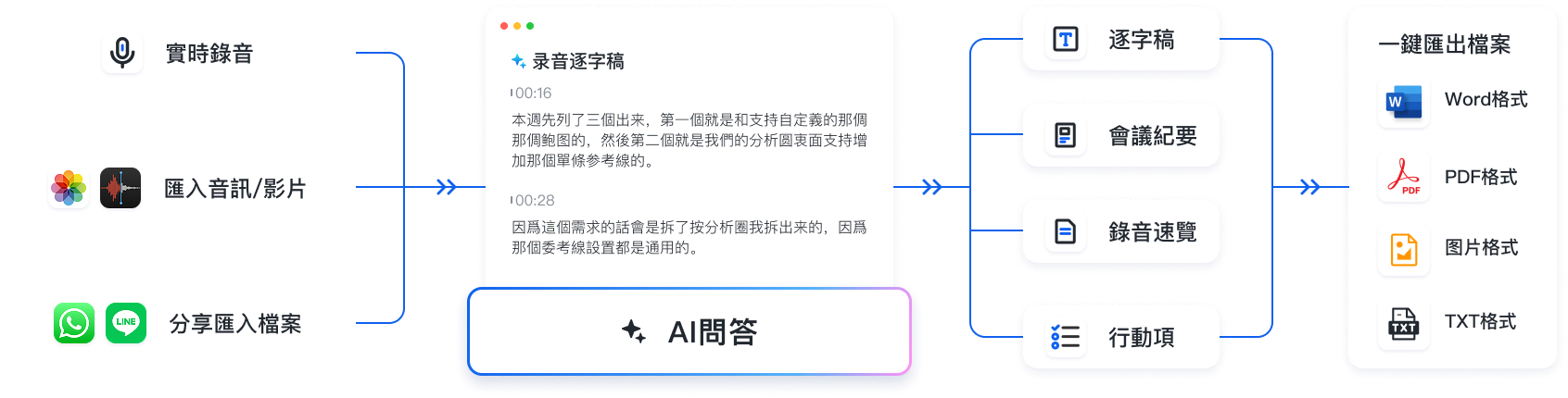
Turn every recording into actionable outcomes
Get 60 free transcription minutes when you sign in. No credit card required.
Related Reading
You might also like

2026 Webcam Recording Guide: From Video Capture to AI Meeting Notes
Can a webcam record video? Yes. This guide covers standard webcam recording methods and compares them with Tinrec's AI meeting notes workflow, showing how to turn recordings into searchable, collaborative, and actionable meeting data.

4 AI Transcription Tools Tested in 2026: Which Saves the Most Time for Chinese Meetings?
Still spending two hours after a meeting to clean up transcripts? This article compares Tinrec, Yating Transcription, Google AI Studio, and Notta from four angles: Chinese recognition, post-meeting organization, online meeting recording methods, and team data retention. It also covers free quotas, pricing, and three common pitfalls in choosing a tool, helping you find the one that saves the most time.

4 Audio-to-Text Apps Tested for 2026: Which Saves the Most Time in Cantonese Meetings?
2026 audio-to-text app comparison. We used the same Cantonese meeting recording with mixed English to compare transcription and post-meeting organization across 4 tools, breaking down 4 key buying factors, pitfalls to avoid, and scenario-based recommendations. We also tested Tinrec's desktop bot-free meeting recording, AI Q&A, and team seat management.

4 Best Browser Audio Recorders in 2026: Which One Transcribes While Recording and Keeps the Audio?
We tested and compared 4 tools for recording browser audio, analyzing recording sources, format limits, transcription, and team collaboration. We cover key buying factors and common pitfalls, and explain how Tinrec turns browser recordings into searchable, actionable transcripts and summaries.

4 AI Transcription Tools Tested in 2026: Which Saves the Most Time on Chinese Meeting Transcripts?
AI transcription isn't just pressing record. This article addresses common misconceptions and compares four AI transcription tools—Tinrec, Notta, Otter.ai, and TurboScribe—on recording methods, Chinese language performance, and post-meeting organization. It also outlines selection criteria and pitfalls to avoid.

2026 Comparison of 4 AI Meeting Note-Takers for Chinese: Which Saves the Most Time on Chinese Transcription and Post-Meeting Organization?
How to choose an AI meeting note-taker for Chinese? This article compares Tinrec, Notta, Otter.ai, and Granola on Chinese recognition performance, recording methods, and post-meeting organization capabilities. It covers free tiers, team collaboration, and common pitfalls to help you find the most time-saving Chinese meeting note-taking tool.
2026 Comparison of 4 Web Recording Tools: Which One Can Record Both Microphone and System Audio?
The most common reason web recording fails isn't the tool—it's setting the wrong audio source and not organizing the recording afterward. This article first highlights three common pitfalls, then uses Tinrec as an example to explain the core capabilities of web recording, practical use cases, 5 key factors to consider when choosing a tool, and the differences and costs between personal and team plans, ending with an FAQ.
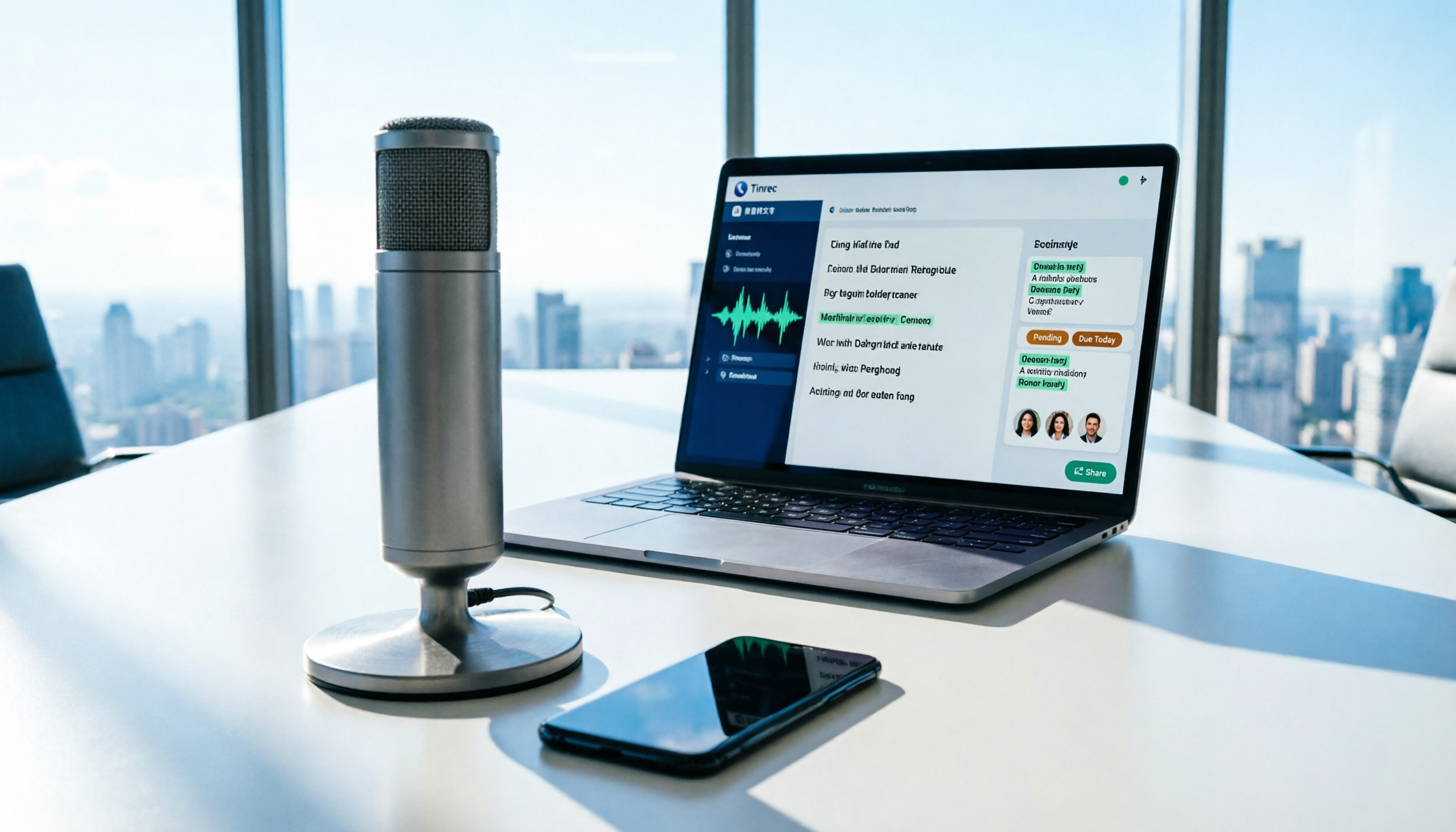
How to Use AI for Meeting Recordings in 2026: A Complete 5-Step Tutorial
Struggling to organize long meeting recordings? This tutorial uses Tinrec as an example to guide you through 5 steps: recording, transcription, proofreading, generating meeting minutes, and exporting/sharing. It also includes troubleshooting FAQs and 3 efficiency-boosting tips to turn your meeting recordings into searchable, collaborative team resources with AI.

2026 AI Meeting Notes Tools Comparison: Tinrec vs Notta — Which Is Better for Chinese-Speaking Teams Across 5 Key Areas?
Starting from common misconceptions, this hands-on comparison of Tinrec and Notta examines 5 key areas: Chinese meeting recording, post-meeting organization, team governance, pricing and quotas, and export workflows. It also answers 6 common questions to help you decide which AI meeting notes workflow best fits your work style.