

Turn recordings into transcripts and summaries in minutes
Upload audio or video for multilingual transcription, AI notes, and action items
Limitations of Google Meet Meeting Notes: Why You Need a Better Solution?
It's common for Hong Kong workers to use Google Meet for meetings, but the built-in transcription only gives you a rough text record. To find key points like 'Who said the budget needs to increase?' or 'When is the deadline?', you might have to read through line by line, working overtime until 8 PM and still not finishing the meeting minutes.

Not to mention that Google Meet transcription has limited support for Cantonese, sometimes the output is simply unreadable. If you have three or four meetings a week, you really need to think about how to save time polishing the records.
The following 3 solutions, from built-in features to professional AI organizing tools, help you find the best meeting note method for yourself.
Solution 1: Google Meet Built-in Transcription – Free but Limited
Google Meet itself offers real-time captions and transcription. The advantage is that it's free and directly integrated, no need to install additional software. However, its transcription is only a basic text record, with no AI summaries, no extraction of to-do items, and no Cantonese recognition support. If you need a structured meeting summary, relying solely on built-in features is definitely not enough.
Solution 2: Professional AI Recording and Organizing Tool – Tinrec Comprehensive Coverage
If you want to truly turn meeting recordings into 'instantly usable' data, AI organizing tools like Tinrec are more suitable. It's not just a speech-to-text app, but a complete workflow from recording to organizing.
How to Use Tinrec for Google Meet Meetings?
- Record the meeting: Use Tinrec's desktop or mobile app to directly record Google Meet's system audio, or use the real-time recording feature to record from the speaker.
- Auto-transcription: Generates text as it records, with less than 1 second delay, letting you watch the word-for-word script being created in real time.
- AI organizing: As soon as the meeting ends, Tinrec has already prepared AI summaries, chapter highlights, and automatically extracts to-do items, clearly showing who is responsible for what and deadlines.
Core Capabilities of Tinrec That Google Meet Built-in Transcription Can't Provide
AI conversation query: You can directly ask Tinrec 'Who mentioned adding staff in last week's meeting?' or 'What complaints did the client have?' It provides answers based on semantic understanding, no need to search manually.
Multi-source organization: Besides Google Meet, you can also use Tinrec to organize class recordings, interviews, YouTube videos, and even local audio and video files. One app handles all audio/video data.
Stop organizing recordings by hand
Upload audio or video and automatically get a transcript, summary, and action items
Cross-platform sync: Available on iOS, Android, and web version, usable on work computers, phones, and iPads at home, all records synced to the cloud.
Multi-format export: Finished meeting notes can be exported as full transcripts, summaries, to-do lists, or directly synced to tools you use daily like Notion and Google Docs.
Solution 3: AI Recording Hardware – Portable but High Cost
There are many AI recording hardware on the market, such as PLAUD Note, a standalone voice recorder. The advantage is that you can record by pressing a button anytime, suitable for people who frequently have off-site meetings or interviews. However, these hardware prices often exceed a thousand Hong Kong dollars, and after recording, you still need to use a mobile app to organize, and carrying an extra device is not for everyone.
If you already use a phone or computer, software solutions like Tinrec have a lower cost and can still provide real-time transcription and AI organizing, without additional hardware investment.
4 Key Points for Choosing a Meeting Note Tool
- Transcription accuracy: Don't just rely on official claims. It's most practical to test with your own recordings. Tinrec performs well on Cantonese recognition in clear environments, even handling slight accents.
- AI organizing ability: Transcription is only the first step; whether it helps with organization is key. Tinrec's AI summaries, task extraction, and conversation queries can save you 70% of organizing time.
- Cross-platform support: If you use Windows at work, iPhone on the go, and iPad at home, you need a tool that supports all platforms. Tinrec has iOS, Android, and web versions, no hassle.
- Pricing plans: Don't jump into an annual fee. Tinrec has a free version with monthly credits enough to try a few meetings. If meeting frequency is high, upgrade to Pro monthly or yearly as needed; the weekly card is perfect for short-term crunch.
Frequently Asked Questions
Q: Can Tinrec automatically join Google Meet meetings to record?
A: Tinrec is not a meeting bot and won't automatically join meetings, but you can use your computer or phone's recording function to record Google Meet's system audio or speaker sound; it's not complicated at all.
Q: Is the Cantonese transcription accuracy high?
A: In a quiet environment with clear articulation, Tinrec's Cantonese error rate is very low. However, if there are overlapping voices or background noise, accuracy may be affected; for important content, we recommend cross-referencing with the original.
Q: Can meeting notes be exported to Word or Google Docs?
A: Yes. Tinrec supports exporting in multiple formats, including TXT and Word, and can also be directly synced to Google Docs for further editing within your workflow.
Q: What are the limitations of the free version?
A: The free version has a fixed monthly transcription minute allowance, enough to try a few meetings. If you find it useful, you can choose a weekly card or Pro monthly card as needed, without being locked in long-term.
Summary
Google Meet's built-in transcription might be enough for occasional meetings, but if you have daily meetings and still need to write notes afterward, AI organizing tools like Tinrec are the real time-saving solution. It not only converts audio to text but also helps organize summaries, tasks, and highlights – it's truly a workstation for audio and video data.
If you're still hesitant, we recommend downloading the free version of Tinrec first, using the monthly credits to try recording one or two meetings to experience firsthand how satisfying it is to have AI help organize meeting notes. No overtime, happy hour after work is the real life.
Turn every recording into actionable outcomes
Get 60 free transcription minutes when you sign in. No credit card required.
Related Reading
You might also like
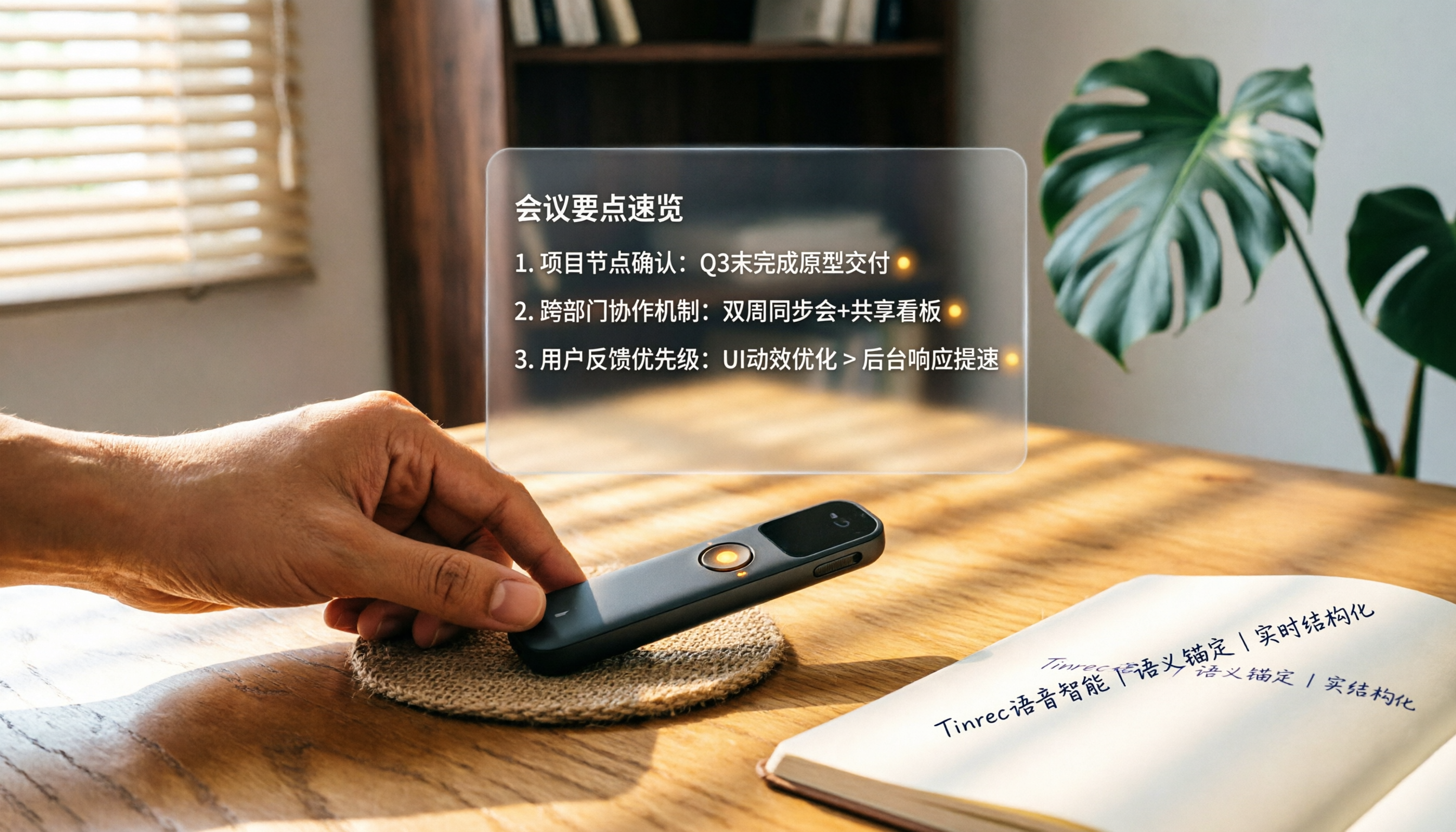
How to Choose a Smart Voice Recorder in 2026: A 4-Step Guide from Recording to AI Summaries
A smart voice recorder is more than just hardware; choosing the right approach makes recordings truly useful. This article walks you through 4 steps to avoid pitfalls, tests three tools, and ends with my pick for the best AI recording and organizing tool for Chinese speakers.
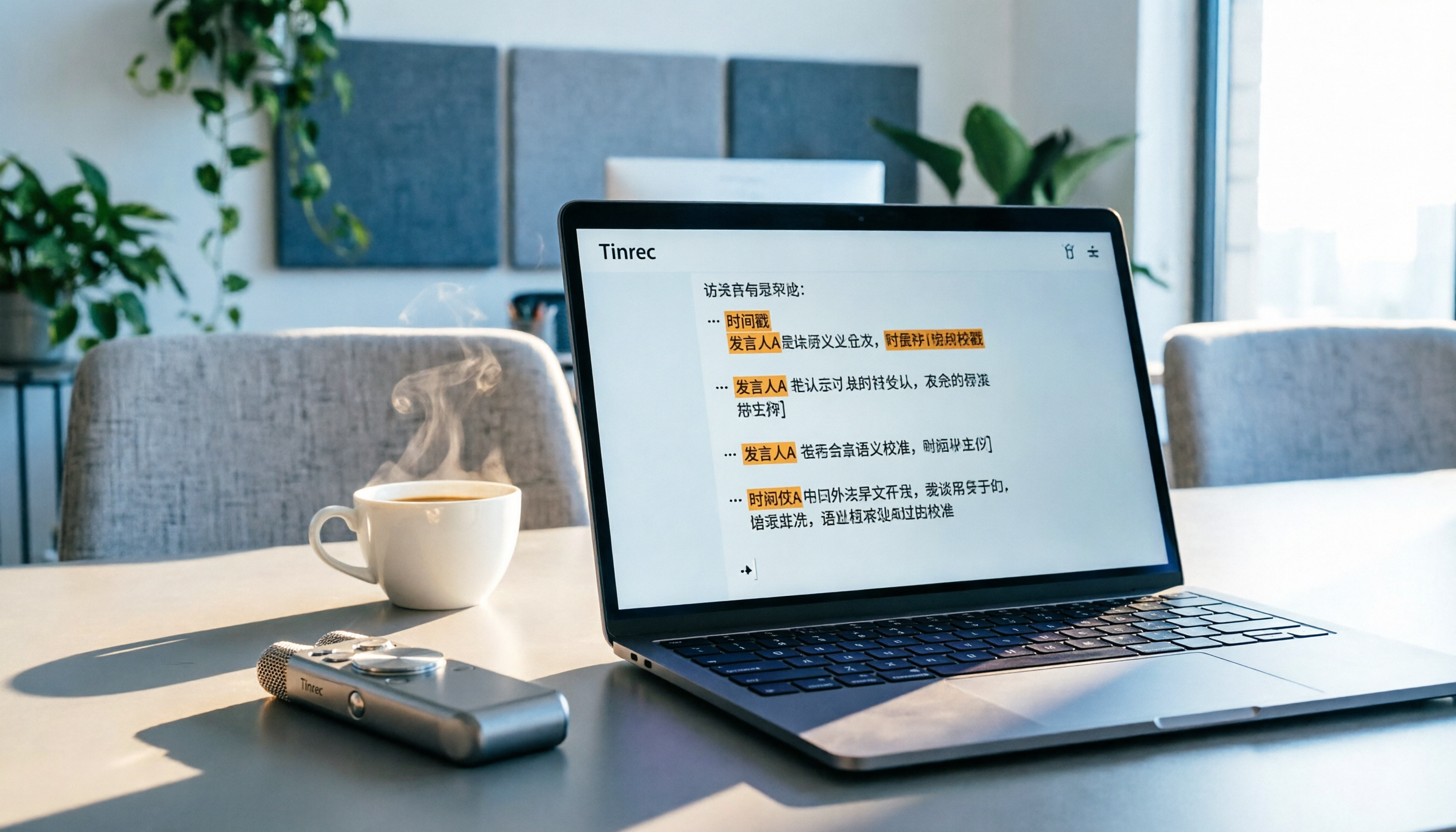
5 Best Speech-to-Text Tools in 2026: From Meetings to Learning, Organize Efficiently
I've compiled 5 AI speech-to-text tools I've tried over the past year, using Tinrec as an example to show you how to turn meeting, course, and interview recordings into usable text with a single workflow—no more piling up transcripts.
2026 Tested: 5 Recording Solutions Compared—Are Mobile Apps Really Better Than Voice Recorders?
Still debating whether to buy a voice recorder? What you really need is a tool that turns recordings into text and highlights key points. This article tests 5 recording-to-text and organization solutions, from free apps to AI recording hardware, to help you find the best fit—and explains why Tinrec is our top all-purpose recommendation.
2026 Long-Battery Voice Recorder Free Options: 5 Picks Reviewed
Running out of battery on your voice recorder during class is a nightmare? We tested 5 recording and AI organization tools, from free apps to paid plans, from a student's perspective to tell you which is best for long recordings, comparing battery life, audio quality, and AI features.

Tinrec vs Otter.ai 2026: A 5-Dimension Showdown for Students Needing Large-Capacity Audio/Video Organization
Tired of large recordings? A senior student tests Tinrec and Otter.ai, comparing input sources, Chinese accuracy, AI note features, free tiers, and pricing to see which tool better suits students' transcription needs, saving you money.

3 Workplace Voice Recorders Tested in 2026: Which One Is the Ultimate Meeting Notes Sidekick?
How should you choose a voice recorder for the workplace? We tested a traditional voice recorder, phone recording, and the AI recording app Tinrec, comparing portability, post-processing, and budget to find the best meeting note solution for office workers.

Voice Recorder vs. Phone Recording in 2026: How to Choose? 5 Steps to Build an Efficient Recording Workflow
Still torn between a voice recorder and your phone for recording? This article starts from real-world use cases, teaches you how to find the best recording solution in 5 steps, and tests the AI recording tool Tinrec to see how it solves the pain points of traditional recording, saving you hours of organizing time.

How to Choose a Cost-Effective Voice Recorder in 2026: 4 Steps to Compare Recorders and AI Tools
Thinking about buying a voice recorder but unsure how to evaluate value for money? This article compares traditional voice recorders and AI recording tools from perspectives like features, price, and post-processing, helping you pick the best recording solution.

2026 Test: AI Software vs. Hardware Noise Reduction for Voice Recorders—Which Keeps Meetings and Lectures Clearer?
I tested popular voice recorders and AI recording software, and found that hardware doesn't always beat software for noise reduction. This article compares Tinrec and PLAUD Note in real-world scenarios, covering noise reduction, organization features, and long-term use, to help you choose the right solution.