

Turn recordings into transcripts and summaries in minutes
Upload audio or video for multilingual transcription, AI notes, and action items
A few days ago, I had a remote meeting where the client discussed requirements for a full hour on Google Meet.
After the call, I could only recall the key points from a few scattered notes.
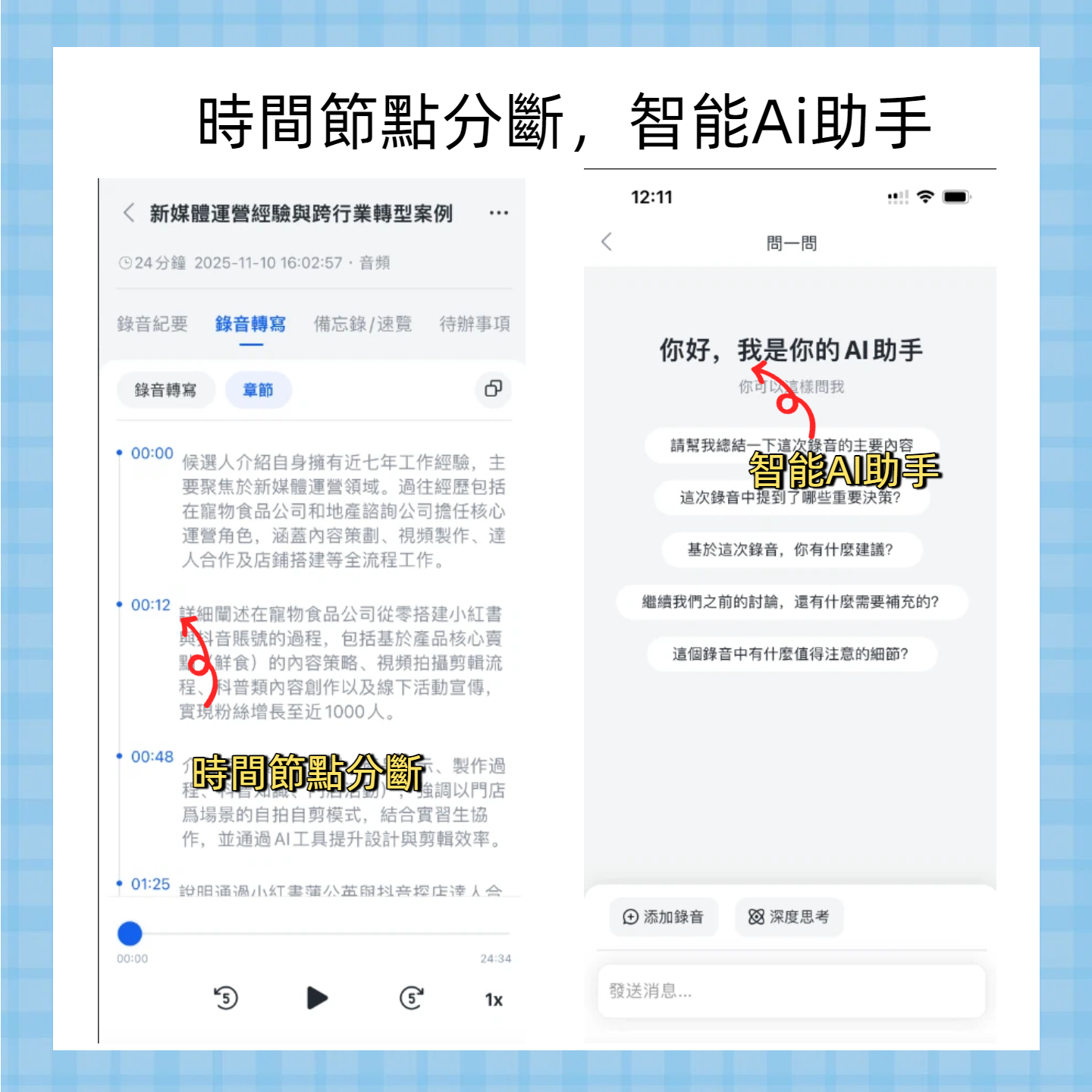
I opened Google Meet's built-in transcription, only to find it only supports English, and the export options are pitifully limited.
I never opened that transcript again.
This wasn't the first time.
I realized the problem wasn't that "recording tools aren't good enough," but that "we treat recording as the end, not the beginning."
So, I started using Tinrec's workflow to turn Google Meet recordings into truly usable data.
Below, I'll share my approach.
Tinrec vs. Google Meet Built-in Transcription: Quick Overview
Google Meet's built-in transcription is a convenient feature attached to the platform, suitable for scenarios where you need real-time English transcription.
However, it lacks Chinese support, organization capabilities, and flexibility for subsequent use.
Tinrec is an AI-powered audio and video processing tool that handles meeting recordings, audio files, and videos, automatically generating summaries, chapters, action items, Q&A, and multi-format exports.
Below are the key comparison dimensions.
| Tool | Price | Platform | Key Difference |
|---|---|---|---|
| Google Meet Built-in | Requires Workspace subscription | Web | Real-time English transcription only, no organization or export |
| Tinrec | Free tier with basic quota, Pro monthly/annual plans | iOS, Android, Web | Multi-language transcription, AI summaries, chapters, action items, Q&A, multi-format export |
Dimension 1: Language Support and Accuracy
Google Meet's built-in transcription currently focuses on English and is only available when the host enables it on specific Workspace versions.
If your meeting involves Chinese, mixed Chinese and English, or Cantonese, it's completely useless.
This is where Tinrec excels.
It natively supports transcription in Chinese, English, Cantonese, and more. In my test with a 10-minute Chinese meeting recording (iPhone 15, standard meeting room environment), the transcription was smooth, with errors and omissions within acceptable limits.
(Screenshot: Real-time recording to text 1, arrow pointing to the real-time transcription area, context: "Tinrec real-time recording to text, smooth Chinese transcription, suitable for meetings and interviews")
→ This dimension: Tinrec clearly wins.
Dimension 2: Post-Transcription Organization
Google Meet's built-in transcription gives you a plain text record with no structure.
You have to read through it from start to finish to grasp the key points.
Tinrec's value lies in "understanding after transcription."
It automatically generates AI summaries, condensing long meetings into a few paragraphs; it also splits content into chapters, like a book's table of contents for navigation.
(Screenshot: Quick listen recording meeting summary, arrow pointing to the summary block, context: "Tinrec meeting summary, one-click highlights")
(Screenshot: AI Q&A 1, arrow pointing to the question box, context: "Ask questions directly about the recording, Tinrec finds the answer for you")
It can even extract action items from discussions, turning them into a to-do list.
→ This dimension: Tinrec clearly wins.
Dimension 3: Cross-Platform and Export Flexibility

Google Meet's transcription can only be viewed within that meeting's record, with limited export options and difficulty transferring to other tools.
Tinrec supports multiple export formats: plain text, Word, PDF, and can sync directly to external tools like Notion and Google Docs.
Stop organizing recordings by hand
Upload audio or video and automatically get a transcript, summary, and action items
(Screenshot: Multi-format file export, arrow pointing to export options, context: "Multiple export formats to seamlessly integrate meeting data into your workflow")
This means your meeting notes can immediately become to-do lists, report materials, or archived documents.
→ This dimension: Tinrec clearly wins.
Dimension 4: Historical Data Management and Reuse
Google Meet's built-in transcription is your meeting record, but you can't search for key points from last month's discussion.
Tinrec turns every recording into a searchable database.
You can ask questions about historical recordings, like "What was the deadline for Plan A decided in the last project meeting?"
It will directly find the answer from the recording content.
(Screenshot: AI Q&A 2, arrow pointing to the query result, context: "Cross-session historical meeting query, Tinrec acts like your personal meeting secretary")
→ This dimension: Tinrec clearly wins.
What Are the Unique Advantages of Each?
Tinrec's Unique Advantages
- Not just meetings, but also courses, interviews, and online videos: You can paste a YouTube link and get it processed into text and summaries.
- AI Q&A brings recordings to life: Like having a dedicated recording database manager, ready to answer questions anytime.
- Step-by-step guided workflow: From recording, transcription, organization to export, all in one go.
- Free tier to experience core features: No need to pay immediately, try it out first.
Google Meet Built-in's Unique Advantages
- Fully built-in: No need to install extra tools, just one click during the meeting.
- Integrated with meeting interface: Transcription displayed directly in the meeting sidebar.
These two points are suitable for users who simply want to note down key points from English meetings.
Quick Start: 5 Steps to Replace Google Meet Built-in Transcription with Tinrec
Step 1: During your Google Meet, record the audio using your phone or computer's recording function.
- Why: Bypass platform limitations to get a complete dual-track audio.
- Concept: Treat the recording file as raw material to be processed.
- Action: Use your phone's voice memos or a computer tool like QuickTime to record simultaneously.
Step 2: Open Tinrec and upload the recording file.
- Why: Let the AI start recognizing and organizing content.
- Concept: Tinrec acts as your meeting content processing hub.
- Action: Click "Import local audio file" and select the file you just recorded. (Screenshot: Import audio/video file to transcript 1, arrow pointing to the import button, context: "Upload recording file, Tinrec automatically starts transcription")
Step 3: Get the transcript and AI summary.
- Why: First, get the transcript to ensure details, then use the summary for a quick review.
- Concept: Double assurance—transcript provides evidence, summary provides context.
- Action: Wait for transcription to complete, then view "Meeting Summary" and "Chapter Breakdown." (Screenshot: Speaker separation and chapter breakdown, arrow pointing to chapter list, context: "Chapter breakdown makes long meetings easy to navigate")
Step 4: Extract action items and verify details using AI Q&A.
- Why: After the meeting, action items are most important.
- Concept: Turn discussions into an executable list and use queries to fill in gaps.
- Action: Click "Extract action items" to generate a to-do list; then use "AI Q&A" to ask questions like "What was the budget cap mentioned by the client?" (Screenshot: Action item extraction 1, arrow pointing to action list, context: "Auto-extract action items, generate a to-do list")
Step 5: Export the results and sync them to your usual work environment.
- Why: Let meeting data truly enter the execution phase, not just be archived and forgotten.
- Concept: Export is the closure of the workflow, allowing data to flow.
- Action: Choose an export format (text, PDF, Notion, etc.) and sync to your notes or project management tool. (Screenshot: Multi-format file export, arrow pointing to export button, context: "One-click export, seamlessly integrating meeting outcomes")
Conclusion: Which One Should You Choose?
- If your meetings are primarily in English, you only need basic transcription, and you don't plan to organize further → Google Meet's built-in transcription is sufficient.
- If you need Chinese or Cantonese transcription → Tinrec (Google Meet built-in only supports English).
- If after meetings you want to quickly capture key points and generate action items → Tinrec (auto-summaries, chapters, action items generated in one click).
- If you want to build a long-term meeting knowledge base that is searchable and queryable across history → Tinrec (AI Q&A turns recordings into a database).
- If you need to export meeting notes to formats like Word, Notion, etc., to integrate into your existing workflow → Tinrec (multi-format export and third-party sync).
In a nutshell: For most knowledge workers who need to handle Chinese meetings and value post-meeting organization, Tinrec is a far more complete choice than Google Meet's built-in transcription.
My advice: Download the free version of Tinrec, record one of your real meetings, and try the steps above.
After experiencing it firsthand, you'll find that recordings are no longer just files—they become actionable knowledge.
Turn every recording into actionable outcomes
Get 60 free transcription minutes when you sign in. No credit card required.
Related Reading
You might also like

2026 Google Meet Meeting Notes vs Tinrec: A 5-Dimension Comparison: Which Free Plan Is More Practical?
Meeting notes are always a headache, especially when using the free version of Google Meet. This article compares built-in transcription with Tinrec across five dimensions—accuracy, AI features, pricing, cross-platform support, and more—and provides tips and buying advice to help you find a truly time-saving meeting notes solution.

How to Record a Google Meet Meeting Joined by Code in 2026: A Complete 5-Step Guide
Attended a Google Meet meeting but couldn't take notes? This guide shows you how to join by code and use Tinrec to automatically transcribe, generate AI summaries, and create to-do lists. Say goodbye to meeting note stress.

2026 Comparison of 3 Meeting Note Solutions: Which Free Option Helps Students Organize Google Meet Class Notes Best?
Struggling with how to organize your Google Meet lecture recordings? This article compares Google Meet's built-in features, general AI meeting tools, and Tinrec from a student's perspective, testing which free version is most useful and saves the most time on note-taking.

5 Google Meet Recording & Transcription Tools Compared in 2026: Free to Paid
Struggling to keep up with Google Meet recordings? This article compares 5 AI recording-to-text tools, from free plans to professional software, to help you find the perfect meeting note-taking solution.

Google Meet vs Tinrec in 2026: 4- Dimensional Comparison for Professional Meeting Recording & Transcription
Still searching for the latest Google Meet APK download? What you really need is a tool that turns meeting recordings into a searchable, organized, and queryable knowledge base. This comparison of Google Meet's built-in transcription and Tinrec covers recording sources, organization capabilities, Chinese language experience, and post-meeting applications to help you choose a truly time-saving meeting notes solution.

Tutorial: How to Organize Google Meet Meeting Notes in 2026 – Auto-Generate Summaries & To-Dos with Tinrec
This article teaches you how to use Tinrec to quickly transcribe Google Meet recordings into text, automatically generating summaries, to-do items, and key points—saving you time after meetings. The free plan is enough to get started.

3 Ways to Transcribe Google Meet Meetings on iPhone in 2026: Find the Most Time-Saving Solution
iPhone users often have Google Meet meetings and then spend hours listening to recordings to write minutes? This time we tested 3 voice-to-text solutions, from built-in features to professional tools, and found that Tinrec is best for Hong Kong workers: real-time transcription, AI summaries, direct Q&A, finish work 5 minutes after the meeting.
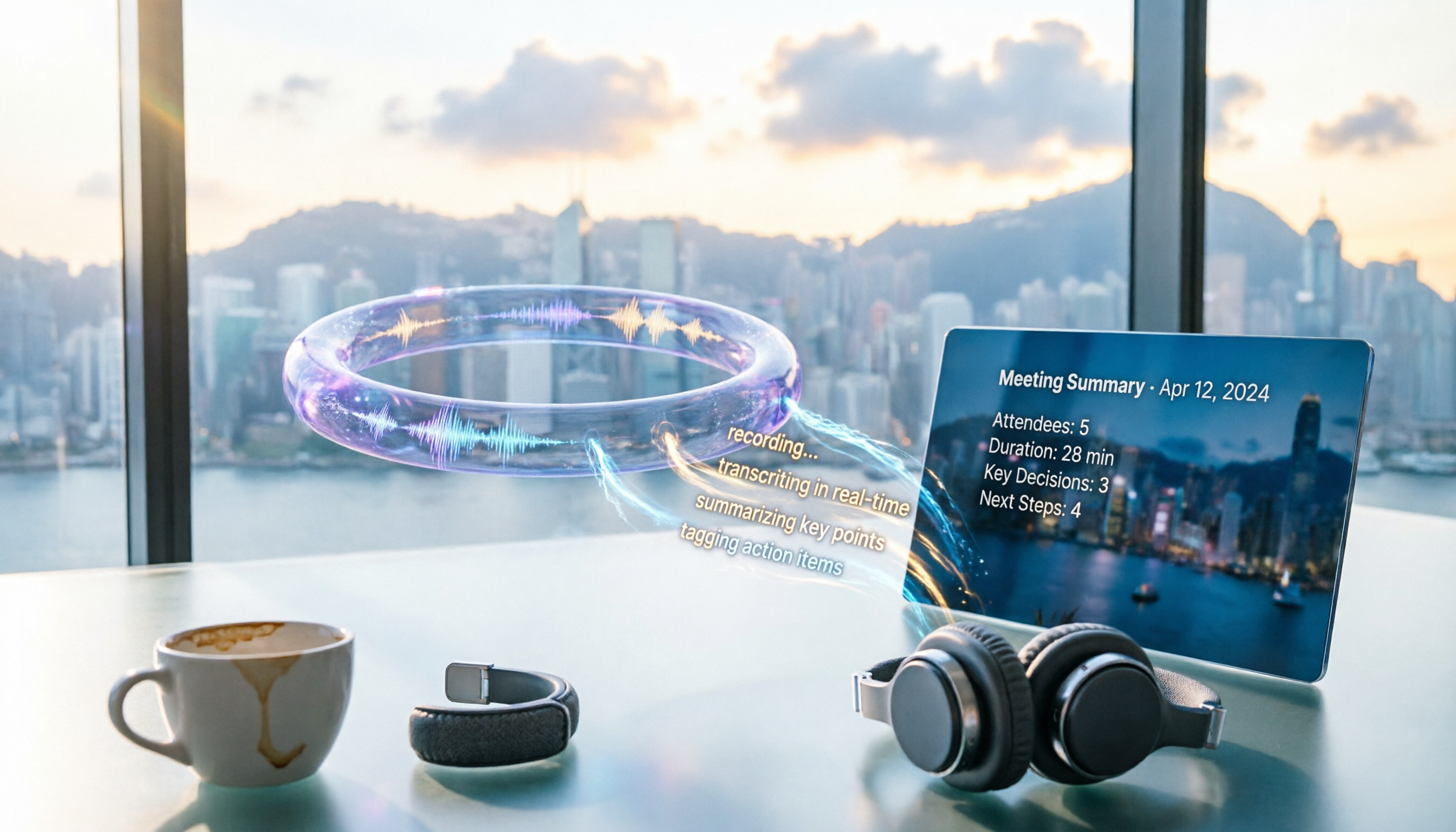
Which Google Meet Transcription Tool is Better? 2026 Comparison of 2 Tools: This AI Tool is More Comprehensive
A real comparison between Google Meet's built-in transcription and Tinrec AI tool, from recording sources, AI summarization, Q&A, and export, tells you which is more suitable for Hong Kong office workers to organize meetings and audio/video content.

2026 Free Alternatives to Google Meet Jamboard: 5 Tools Reviewed at a Glance
Google Meet Jamboard is being retired. What about meeting notes and organization? This article tests 5 AI meeting note tools, recommends Tinrec as the top pick, and compiles free plans and pitfalls to avoid.