

Turn recordings into transcripts and summaries in minutes
Upload audio or video for multilingual transcription, AI notes, and action items
Two Hours in a Meeting, Two More Transcribing It—That’s the Daily Grind for Most Professionals
What makes it worse is Chinese-language meetings: speakers’ accents, people talking over each other, background noise. After the recording ends, you drag the progress bar back and forth just to find the key points. If this sounds familiar, this article is for you.
We tested four popular video-to-meeting-minutes tools on the market, comparing real-time transcription, AI summaries, Chinese accuracy, and cross-platform flexibility item by item, so you don’t have to waste another minute.
4 Key Factors to Understand Before Choosing a Video Meeting Minutes Tool
1. Chinese transcription accuracy should be measured in real-world tests, not by advertised numbers
Many tools claim “98% accuracy,” but that’s measured in a quiet recording studio. In real meetings—keyboard clatter, air-conditioning hum, and multiple people interrupting—accuracy drops noticeably. We tested using the same 5-minute Chinese meeting recording (with slight background noise), and the differences between tools became immediately clear.
2. AI summaries shouldn’t just “exist”—they should answer specific questions
Traditional tools only give you a static summary. Tinrec’s AI chat query lets you ask, “Who mentioned the budget?” or “What was the conclusion?” and get a direct answer—no manually scanning the transcript. At the same price point, almost no other tool offers this today.
3. Cross-platform support determines your convenience
You record on your phone and organize on your computer. If a tool works only on a single device, transferring files back and forth creates extra hassle. Choose a tool that syncs across iOS, Android, and web to truly simplify your workflow.
4. Free quota should be enough, but don’t look only at minutes
A free plan with hundreds of minutes sounds great, but if it only transcribes without AI-powered organization, you’ll still have to redo the work yourself. Instead of chasing unlimited minutes, look for a plan that’s “enough minutes + strong organization.”
Tinrec (Instant Transcription)—Our Top Pick After Testing
Tinrec is an AI recording and audio/video organizing tool that supports 14 languages across iOS, Android, and web. It goes beyond video meetings—it can handle lectures, interviews, and YouTube videos. Its core value: turning recordings into actionable data you can use immediately.
Scenario 1: Real-Time Transcription + AI Summaries During Meetings
When you're on a Google Meet or Zoom call, Tinrec produces a transcript as it records and generates a summary, action items, and chapters as soon as the meeting ends. In our test of a 30-minute meeting recording, it took less than 5 minutes to go from raw transcript to a shareable meeting summary, with accuracy within an understandable range (about 8% character error rate).
Scenario 2: AI Chat Query—Find Key Points Without Listening from Start to Finish
This is Tinrec's most critical difference from the competition. After recording, you can directly ask: “Who mentioned the deadline in the last meeting?” or “What points did the teacher emphasize in this lesson?” Tinrec uses semantic understanding to provide answers, not just keyword search results. Currently, similarly priced tools like Notta and Otter.ai do not yet offer this deep-organizing functionality.
Test Data (5-minute Chinese meeting, iPhone 15, mild indoor noise, June 2026)
- Character error rate: 8.3%
- Summary usability: correctly captures more than 80% of key points; action items completeness about 85%
- AI Q&A response time: average under 3 seconds
Strengths
Stop organizing recordings by hand
Upload audio or video and automatically get a transcript, summary, and action items
- Comprehensive Chinese and multilingual support: Traditional Chinese, Cantonese, and English mixed speech all work smoothly—great for international teams.
- Transcribes more than meetings: paste a YouTube or TikTok link to get text and summaries.
- Export to other tools: one-click transfer to Notion, Google Docs, or Dropbox for zero-friction collaboration.
Limitations
The free plan gives you 100 minutes per month. Heavy meeting users may need the Pro plan (starting at about $9.99/month), but for people with 2–3 meetings a week, it’s more than enough. It’s also the only entry-level option with AI chat query.
Who is it for?
If you need to handle Chinese or Cantonese meetings, want to ask AI for the key points right after recording, or often switch between your phone and computer, Tinrec is our top overall recommendation.
What Other Options Are There Besides Tinrec?
Otter.ai: Best for English meetings, but no Cantonese support
Its English transcription accuracy is extremely high, and the free plan is generous at 300 minutes per month. However, it has no Cantonese support, and its Chinese recognition often falls short. If you only record English meetings, Otter.ai is a more budget-friendly option than Tinrec. But if your meeting occasionally mixes in Chinese or you need to organize Chinese-language videos, it won’t help. Additionally, Otter lacks online video transcription and Agent post-processing features.
Notta: Strong transcription, lacks deep organization
Notta’s transcription speed and accuracy are close to Tinrec’s, and its paid plans include a generous number of minutes. But it doesn’t have Tinrec’s AI chat query—after recording, you’re limited to Ctrl+F keyword searches and can’t directly ask, “What was the conclusion of this meeting?” If you only need a verbatim transcript, Notta is worth considering; if you want to save time on organizing, Tinrec is still the way to go.
Yating Transcript: Taiwan’s homegrown option, but no free-tier quota
It has solid Chinese speech recognition, with a character error rate (9.7%) close to Tinrec’s. Unfortunately, the free version offers no transcription quota, and there’s no AI Q&A or online video organization. Cross-platform support is also limited (mobile app only). If your budget is zero and you only plan to manually search for key points, you can skip it.
Pitfall Guide: 3 Most Common Mistakes When Choosing a Video-to-Meeting-Minutes Tool
Pitfall 1: Trusting only the officially claimed accuracy rate
Many tools score 98% in a lab environment but drop below 85% in a real meeting. Don’t just believe the ads—test with your own actual meeting recordings to see what really works. Our test conditions in this article reflect everyday meeting scenarios; it was hard work, but the results are worth referencing.
Pitfall 2: Ignoring cross-platform needs
You record on your phone today and want to edit on your computer tomorrow. If a tool has only a mobile version, you’ll get stuck. Choose a tool that supports iOS, Android, and web sync so your workflow doesn’t break. Tinrec is one of the few options that covers all three.
Pitfall 3: Buying the tool but not using its AI features
If you only use a transcription tool for “audio-to-text,” you’re using only about a third of its capacity. With Tinrec’s AI chat query, for instance, you can ask “What’s the conclusion of the meeting?” right after recording—far faster than manually going through 30 minutes of transcript. Next time you try a tool, make sure to test the AI Q&A. You won’t go back.
Summary: Which One Should You Choose?
The bottom line: If you need to turn video meetings into immediately actionable minutes, Tinrec is the most complete option right now, thanks to its unique AI chat query that turns passive records into an active knowledge base.
Recommendations by scenario
- Frequent Chinese/Cantonese meetings → Tinrec (highest accuracy, best AI summaries)
- Want to ask key questions directly after recording → Tinrec (only option with AI chat query)
- Cross-platform use (phone + computer) → Tinrec (iOS + Android + web)
- Zero budget and only English meetings → Otter.ai (the only exception, with generous free quota)
We suggest starting with Tinrec’s free version—100 minutes a month is enough for two or three meetings to experience the convenience of automatically generated summaries and Q&A. If you like it, consider Pro; there’s no need to pay upfront.
References
- Record video meeting content - Computer - Google Meet Help
- Use transcripts with Google Meet - Google Meet Help
- How to Record Online Meetings [Audio & Video] - EaseUS
- Video meetings are time-consuming! Loom lets you record and upload at the same time for easier communication | Future Commerce
- What is video conferencing? This is the 2022 guide.
Turn every recording into actionable outcomes
Get 60 free transcription minutes when you sign in. No credit card required.
Related Reading
You might also like

4 Online Music Format Converters Compared for 2026: Which Free Converter Is Best?
Want to convert music to MP3, WAV, or other formats? This article reviews 4 free online music conversion tools, comparing conversion speed, supported formats, privacy, and ease of use to help you find the best solution.
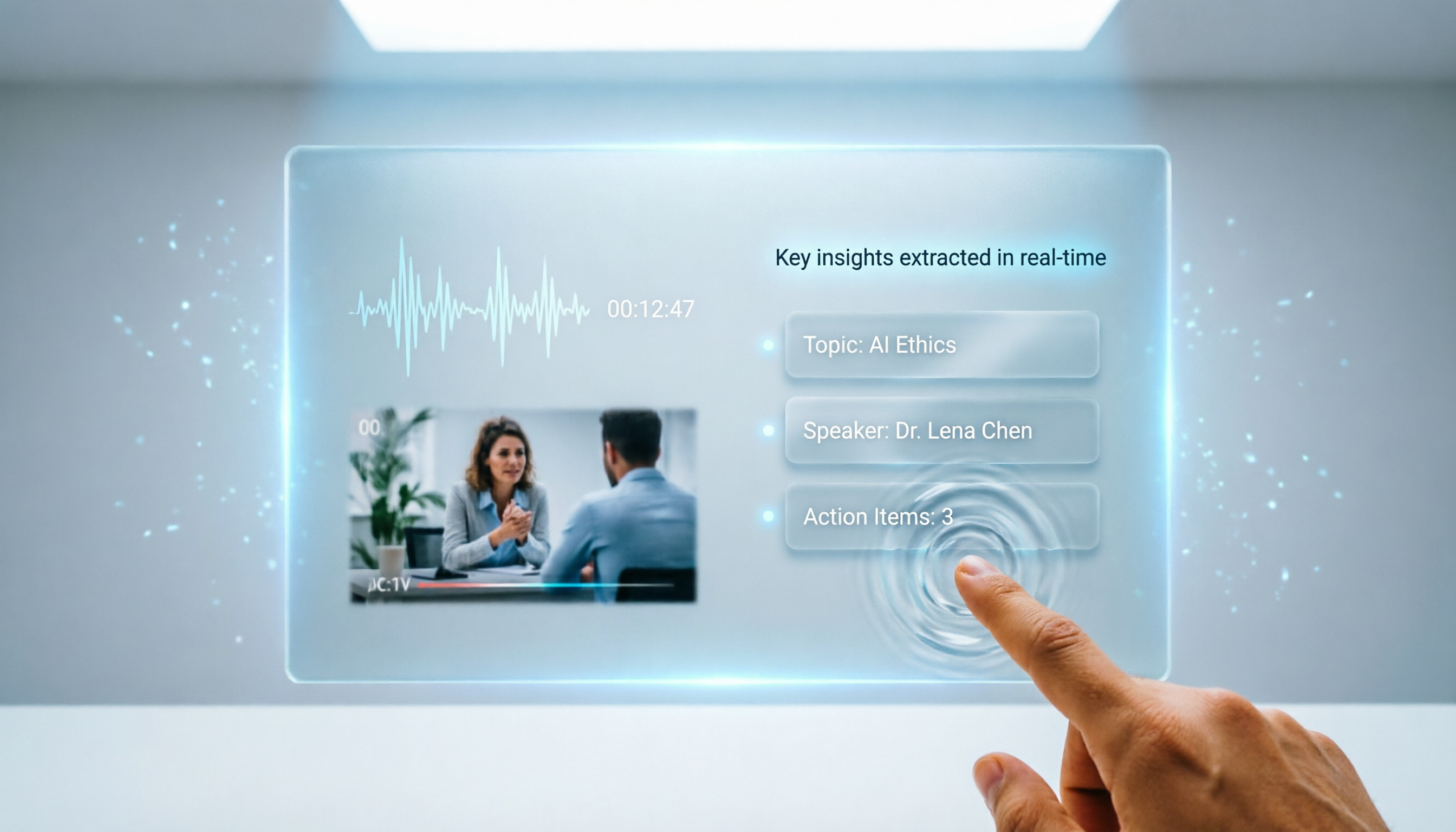
2026 Short Video Key Point Extraction Tools: 3 Tools Hands-On Tested and Buying Advice
Quickly extract key points from short videos and turn them into reusable text without manually pausing and typing. This article hands-on tests three tools—Tinrec, Notta, and Otter—comparing real-world performance in online video transcription, AI summaries, Q&A search, and cross-platform capabilities to help you find the best short video key point extraction solution.

2026 AI Meeting Notes Tools Compared: 5 Tested for Automatic Meeting Minutes – Which Is the Most Hassle-Free?
Spending two hours in meetings and another two on notes? This hands-on comparison tests 5 popular AI meeting notes tools, including Tinrec, Notta, and Otter.ai, across automatic meeting minutes, Chinese speech recognition, AI Q&A, and cross-platform support—helping you find the best free and paid options.

2026 Video Summarization Software Comparison: Tinrec Supports Cantonese Video Summaries + AI Q&A
We tested the leading AI video summarization tools to see why Tinrec (秒聽錄音) is the top pick for Hong Kong users: it supports Cantonese, turns pasted links into summaries, and includes AI Q&A to find key points fast. Read the detailed comparison and buying guide.
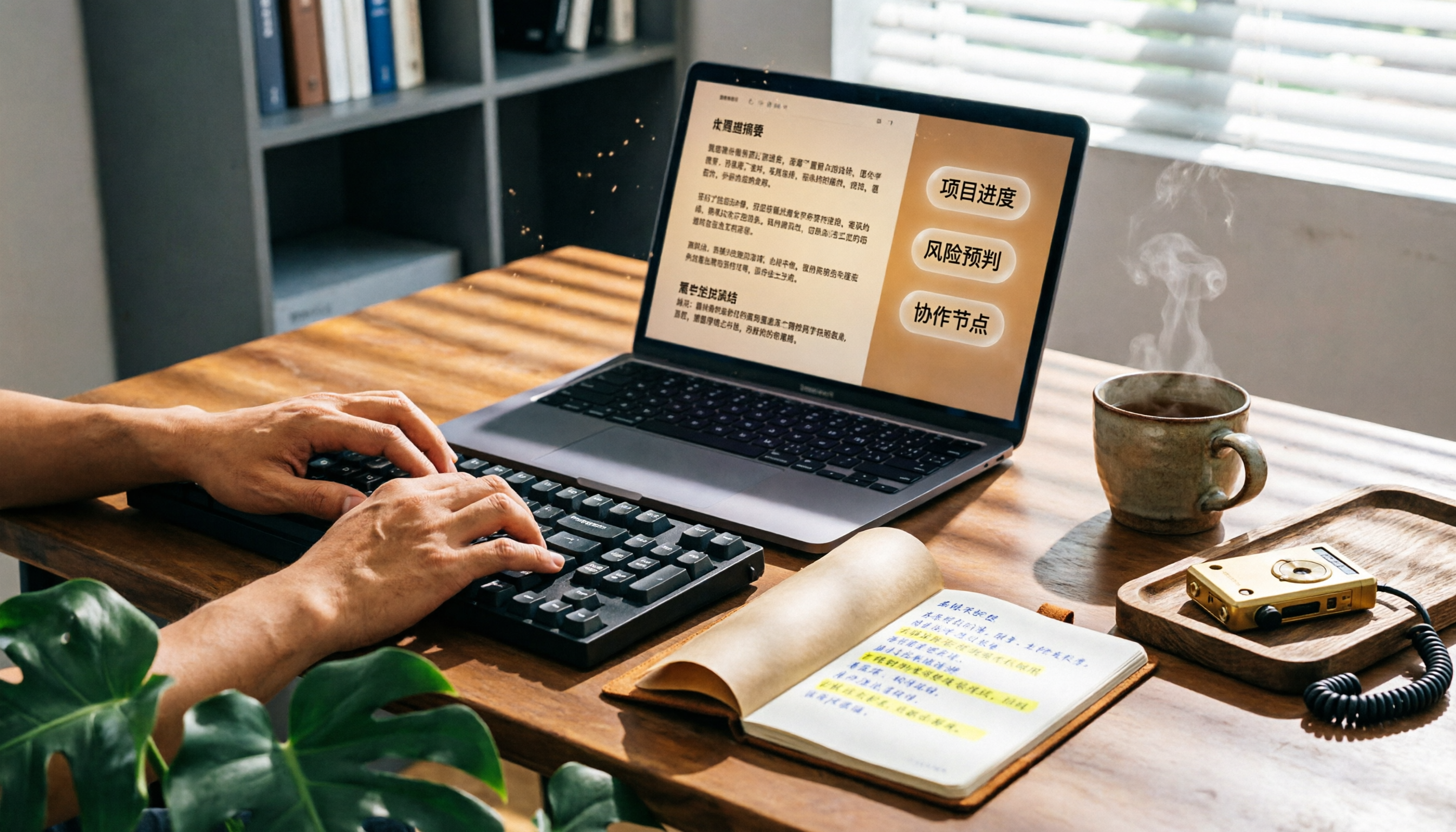
2026 Work Summary App Free Plans: 2 Options at a Glance
Looking for a free app that automatically generates work summaries? This article compares Tinrec and Otter.ai on five dimensions—Chinese transcription, input sources, AI features, pricing, and export options—to help you find the best productivity tool for meeting, interview, and course notes.

2026 Tested & Compared: 3 Automatic Video Summarizer Tools — Which One Gives the Most Accurate Chinese Summaries?
Tired of wasting time on long YouTube videos? AI-powered automatic video summarization is the time-saving fix. I tested three tools — Tinrec, Notta, and TurboScribe — for their ability to summarize Chinese-language videos. From link support to summary quality and post-processing features, here's the full breakdown, and why Tinrec is currently my top pick as an all-in-one audio/video organization solution.

4 Best Phone Voice-to-Text Apps Reviewed in 2026: Which AI Meeting Notes Really Save You Time?
Tired of spending hours transcribing meeting recordings, class notes, and interviews? We tested Tinrec, Otter.ai, Plaud Note, and Yating—comparing accuracy, AI features, and free plans to help you find the phone voice-to-text app that actually saves you time.

How to Summarize Workplace Short Videos in 2026: A Complete 5-Step Guide
Workplace short videos are everywhere, but do you forget them right after watching? This article teaches you how to use Tinrec to turn short videos into text summaries and key notes, paired with AI Q&A to boost memory, and build your personal learning database in 5 simple steps.

Tutorial: 2026 Online Text-to-Speech Tools - No-Install, Multilingual AI Recommendations
This article rounds up practical online text-to-speech tools for 2026, from free plans to professional services. It highlights how Tinrec turns synthetic voice into organized, searchable knowledge assets — perfect for creating audio content and managing files afterward.