

Turn recordings into transcripts and summaries in minutes
Upload audio or video for multilingual transcription, AI notes, and action items
Meetings, Classes, Interviews—Recording Is Easy; Organizing Is the Hard Part
A few years ago, I spent an entire afternoon transcribing a two-hour expert interview.
I kept replaying the recording, pausing, typing, rewinding, and listening again to confirm. The audio had some background noise, and the guest spoke quickly, so I often had to listen to a sentence three times before I got it right.
By the time I finished that day's interview notes, my neck was stiff and my eyes were tired. I told myself: I never want to manually type out a transcript again.
Later, various AI speech-to-text tools started appearing. At first I was excited, but after seriously trying a few I realized—some were fast but full of errors; some only supported English; some just handed you a wall of text and left you to extract the key points yourself.
So I decided to test them myself and find the best option for "Chinese knowledge workers."
This article compares four tools: Otter.ai, Notta, Yating, and Tinrec, the one I've come to use most often.
I'll look at them from a real-world perspective and tell you who each one is best for—and where it might disappoint you.
Before Choosing a Recording-to-Transcript Tool, Understand These 4 Key Points
Many people visit a product page and get hooked by numbers and slogans like "98% accuracy" or "multi-language support."
But once you actually use it, you realize that's not how it works.
Rather than comparing specs, first ask yourself: What do you really need this tool to do for you?
Here are the four dimensions I always check when evaluating a tool.
1. Transcription accuracy: Test it in real scenes, not lab conditions
The claimed 98% is usually measured in a quiet recording studio. But your meeting room has air-conditioner hum, keyboard clicks, and people talking over each other.
That's when the tool's true performance shows.
I recommend using a typical recording of your own during the free trial to see how it handles background noise, Taiwan-accented Mandarin, and code-switching between Chinese and English.
2. AI post-processing: It determines how much effort you save later
Getting the transcript is just the first step.
What you actually need is: automatic summaries, action items, long-content segmentation, and even the ability to ask questions about the recording.
Otherwise, you'll still have to read the whole thing and organize it yourself.
3. Source support: Can it transcribe only live recordings, or also files, meetings, and video URLs?
Besides meeting recordings, we often have old audio files, downloaded course videos, and interviews on YouTube.
If a tool can import these sources directly, you skip the whole convert-then-upload step.
4. Cross-platform support and export: Can you take the result into tools you already use?
Recording on your phone and organizing on your computer should be a given. But some tools are only on iOS or only on web.
Also, can the transcribed content be exported as Word, TXT, or SRT, or even synced to Notion or Google Docs? That determines whether it fits into your workflow.
Tinrec—Our Top Pick After Hands-On Testing
Tinrec is an AI audio/video organization tool that supports live recording, file import, and video-URL transcription, with iOS, Android, and web versions.
Its biggest selling point is that it "doesn't just give you a transcript."
Record, transcribe, and organize in real time during meetings and classes
When you open Tinrec during a meeting, it shows a live transcript at the bottom of the screen as it records. When the meeting ends, it automatically generates an AI summary and action items—who needs to do what, and by when, all clearly laid out.
You don't have to relisten to the recording; you can read the summary and send out the meeting notes right away.
Drag in old recordings or downloaded course videos and they're transcribed
Before, to organize a seminar recording, I had to convert the file first and then open another app. Now I just drag mp3 or mp4 files into the Tinrec web app, and it transcribes them and automatically adds paragraphs.
Public online videos can also become notes
This is one of my favorite features: copy a YouTube or Bilibili link, paste it in, and Tinrec transcribes the content directly. It's very handy for studying a talk or quickly pulling out interview highlights.
Ask it questions after recording
This is where I think Tinrec really separates itself from other tools.
Stop organizing recordings by hand
Upload audio or video and automatically get a transcript, summary, and action items
Whether it's today's meeting or a recording from three months ago, you can type into the chat box, "Who mentioned budget overruns at the last meeting?" It gives you the answer directly, rather than just listing passages that contain keywords.
That turns all your historical recordings into a searchable, interrogable database.
Testing a real Chinese interview
I tested Tinrec with a five-minute Chinese interview recording—the guest spoke with a slight Taiwan accent, and there was faint air-conditioning noise in the background.
The transcript barely needed corrections; only two proper nouns required manual fixing. The automatically generated summary also hit the interview's three main points accurately.
Pros
- Versatile input sources: Live recordings, audio/video files, and video links can all be transcribed without switching tools.
- AI chat-based queries: It doesn't just search; it understands the content and answers, saving you hours of hunting.
- Cross-platform with export options: Works on both phone and computer, and you can export in multiple formats or sync to Notion or Google Docs for further work.
Limitations
The free plan offers 100 minutes of transcription per month, which is enough for two or three meetings a week; but if you need to transcribe a large amount of old material, you'll need to upgrade.
Also, like all AI transcription tools, it may need human proofreading in extremely noisy environments or with heavy jargon.
Who is it best for?
If you regularly work with Chinese meetings, courses, or interviews, need cross-device access, and want AI to find the key points right after recording, Tinrec is currently the most complete and effortless choice.
What Are the Alternatives to Tinrec?
Otter.ai
Otter.ai is very strong for English meetings, and its free plan includes 300 minutes. But in our hands-on test with Chinese interviews, its transcription accuracy dropped noticeably, and it can't answer questions about the recording the way Tinrec can, nor can it import web video URLs. If you mainly handle English meetings, it's a good option. But if you need Chinese organization and AI Q&A, it falls short.
Notta
Notta is feature-rich, offers generous transcription minutes, and supports multiple languages. However, it lacks an AI chat-based query feature, so after transcription you'll have to go through the transcript manually. It also doesn't support pasting a web video URL for transcription. It's more suitable for people who need a large number of transcription minutes but don't care about AI-based post-processing.
Yating
Yating is a veteran Taiwan-based service with solid traditional Chinese recognition quality. But it offers no free trial—you either pay or don't use it. It also lacks AI chat-based queries and web-video transcription. It's suitable for users who want to support a local service and only need basic transcription.
Pitfall Guide: The 4 Most Common Mistakes When Choosing a Recording-to-Transcript Tool
Pitfall 1: Relying on lab accuracy numbers while ignoring real-world noise
Many tools claim 98% accuracy, but that's measured in a noise-free environment. In your real setting, there may be air-conditioning hum or keyboard clicks, so performance will suffer. Test with your own typical recording before you buy, or you'll regret it.
Pitfall 2: Assuming transcription is the finish line and overlooking the time AI post-processing can save
Once you have a dense transcript, you still have to spend time reading it and extracting key points yourself. If a tool can automatically summarize, list action items, or even answer your questions, that's what actually saves you time. Don't just focus on transcription; look at "what can it do after it's done."
Pitfall 3: Overlooking source support—it only records but can't accept files or web videos
If you listen to online courses, download podcasts, or want to organize YouTube videos in addition to meetings, make sure the tool can directly import these sources. Otherwise, you'll be locked into one use case.
Pitfall 4: Ignoring cross-platform and export limits and ending up locked into a single tool
You record on your phone, but you may edit on your computer and collaborate with colleagues in Google Docs. If a tool is only on iOS or offers few export formats, it'll be frustrating. Confirm that it supports the platforms and export formats you need so it truly fits into your workflow.
Conclusion: Which One Should You Pick?
If you're still unsure after reading all that, let me help you decide based on your scenario:
- You handle Chinese meetings, courses, and interviews, and you want AI Q&A, auto summaries, and cross-platform use → Tinrec is currently the most complete top choice.
- You only handle English meetings and have no budget → Otter.ai's free 300-minute plan is plenty; it's the only non-Tinrec recommendation in this article.
- You need a very large number of transcription minutes and don't care about AI Q&A → Notta's paid plans offer competitive minutes.
- You want a Taiwan-based local service and are willing to pay → Yating is worth considering.
I recommend trying the Tinrec free plan first. Its 100 minutes per month are enough for two or three meetings or one or two interviews, so you can experience the difference of "not just text, but direct Q&A." If you like it, then consider upgrading—you don't need to spend money right away.
References
Turn every recording into actionable outcomes
Get 60 free transcription minutes when you sign in. No credit card required.
Related Reading
You might also like

2026 Tinrec vs 訊飛聽見 Hands-on Comparison: Which AI Recording Tool Is the Better Choice for Taiwan Users?
Can't register for 訊飛聽見 in Taiwan? This hands-on comparison evaluates Tinrec (秒听錄音) against 訊飛聽見 across five key dimensions—Taiwan-user availability, input sources, AI post-processing, privacy, and pricing—to reveal which speech-to-text solution is a better fit for Taiwan scenarios.

2026 Horizontal Comparison of 2 Tibetan Audio-to-Text Tools: Tinrec vs Tibetan Translator – From Recording to AI Organization, Which Is Better?
How to choose a Tibetan audio-to-text tool? This article compares Tinrec and Tibetan Translator side by side, covering 5 dimensions including speech recognition, AI summarization, multilingual support, and export capabilities, to help you find the most suitable Tibetan audio organization solution.
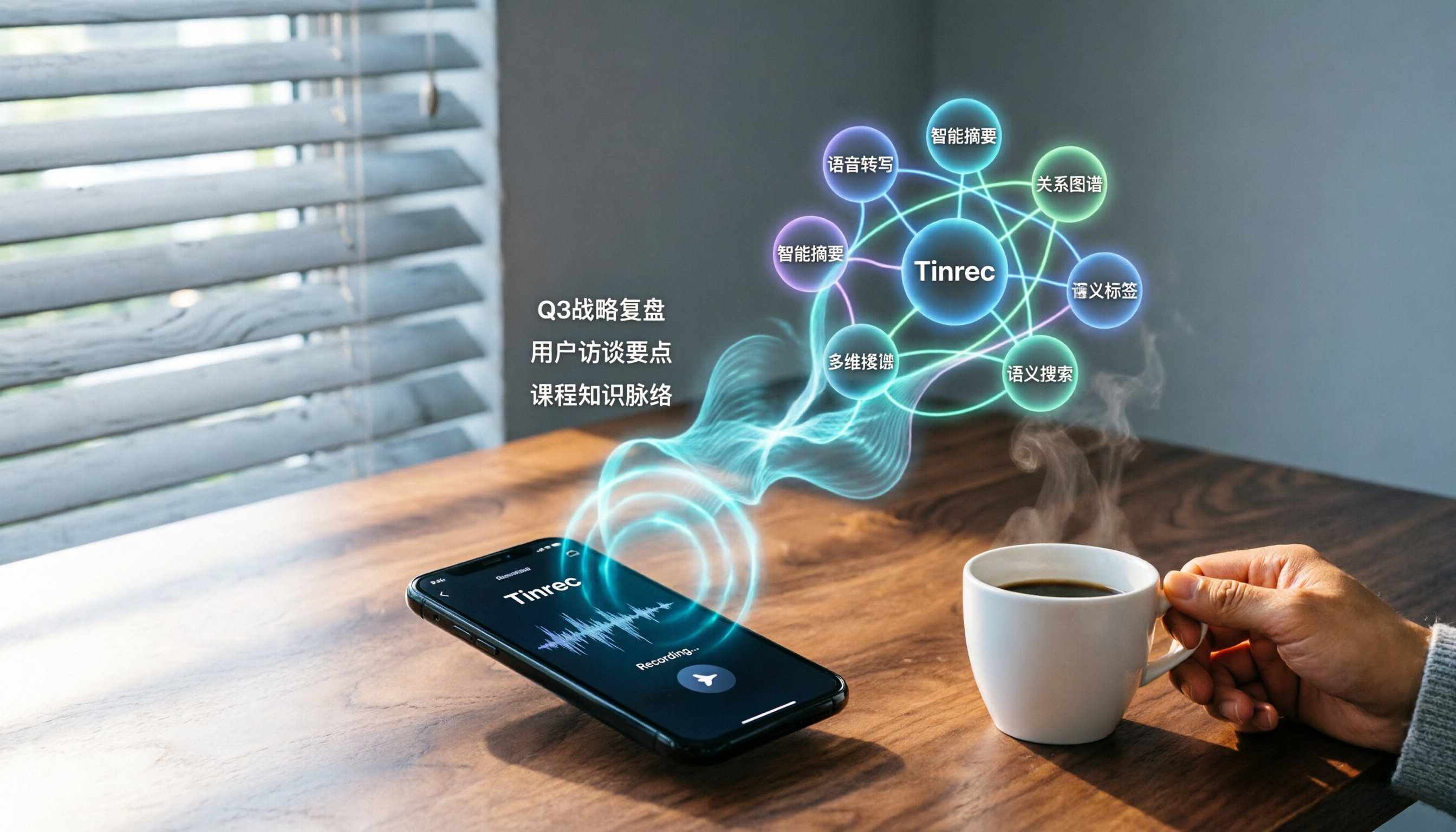
2026 Comparison of 3 Speech-to-Text Tools: One-Click Xmind Mind Maps, Meeting Notes Without the Mess
With so many speech-to-text tools on the market, which one can directly generate a mind map? We tested Tinrec, Otter.ai, and Notta, comparing accuracy, AI summaries, and mind map output to help you find the best choice for organizing meetings, lectures, and interviews.

2026 Comparison of 3 Meeting Notes Tools with Automatic Google Docs Sync: Which One Really Saves You From Copy-Paste?
Tired of manually moving meeting notes into Google Docs? This hands-on test compares Tinrec, Google Calendar’s built-in feature, and Otter.ai — from automatic sync and Chinese transcription accuracy to AI summarization — to find the most effort-saving solution.
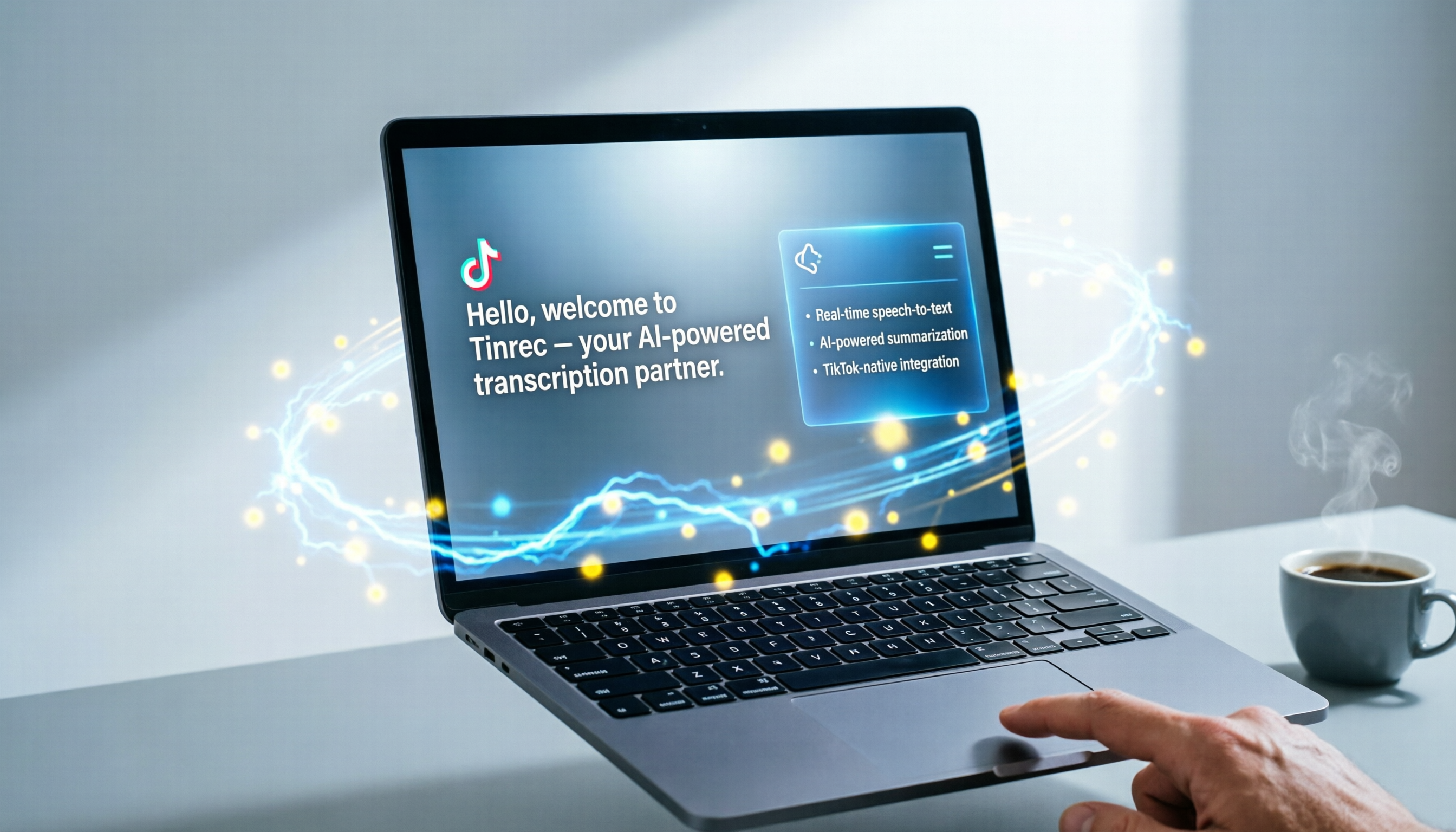
Tutorial: Convert TikTok Videos to Text with Tinrec in 2026 – No Download, AI One-Click Transcripts & Summaries
Want to turn TikTok videos into searchable, editable transcripts? We tested several tools and show you how to use Tinrec to quickly convert TikTok links to high-accuracy transcripts, while automatically generating AI summaries and chapters—perfect for meetings, learning, and content creation.

2026 OneNote Speech-to-Text Integration Guide: 3 Tools Compared
A mid-level manager attending 15 meetings a week tests 3 ways to turn OneNote into a speech-to-text hub—from built-in dictation, third-party apps, to AI-powered Q&A—to cut meeting note time in half.

2026 Podcast-to-Text Tool Face-Off: 4 Tools Tested, Which AI Summary Saves You the Most Time?
Want to turn your podcast into a transcript but don't know where to start? This hands-on comparison tests 4 tools, including Tinrec, MyEdit, Otter.ai, and Apple Podcasts transcripts. We break down transcription accuracy, AI summarization capabilities, and pricing plans to help you find the best podcast-to-text solution.
2026 Free Transcription Tools Compared: Which Free Plan Is Actually Worth It?
We tested 5 speech-to-text tools (Tinrec, Yating, Notta, Otter.ai, cSubtitle), comparing free allowances and features to help you find the best free option for meetings, classes, and interviews.

2026 Hands-On Review of 3 AI Meeting Note Tools: Why I Finally Chose Tinrec
Audio files too large and don't know how to pull out the key points? Stop wasting time compressing files—AI recording summarization tools can directly convert them into text, summaries, and to-dos. Written from the perspective of a mid-level manager, this article compares different tools and explains why Tinrec is the more time-saving choice that truly turns recordings into action plans.