
Turn recordings into transcripts and summaries in minutes
Upload audio or video for multilingual transcription, AI notes, and action items
Every Friday afternoon or at the end of a project, do you find yourself anxious about writing work summaries? With fragmented information scattered across Slack, emails, recordings, and notes, manually organizing it consumes time and risks missing key decisions. Since the explosive growth of AI technology post-2025, workflow automation is no longer just for engineers—it's become essential for every professional.
This article reviews 6 different types of work summary auto-generation tools and offers detailed comparisons and hands-on tutorials to help you choose the best fit for your work scenario (text-heavy or meeting-heavy?).
Quick Navigation Conclusions:
- If you need to connect multiple apps to automatically pull data (e.g., compile completed Trello tasks): Choose Zapier or Make.com.
- If you need to expand or polish existing text notes into reports: Prioritize Notion AI.
- If your main information source comes from "verbal communication" and "meeting recordings": Use Tinrec (Second Listening Recorder) to handle transcription and key point extraction.
1. Why Work Summaries Need AI?
According to IDC, organizations implementing AI-driven frameworks improve decision-making speed by 35%. In the 2025–2026 workplace, data volume doubles every 12 months, making "human memory" and "manual copy-pasting" insufficient.
The pain points of work summaries typically revolve around three aspects:
- Information Fragmentation: Data scattered across CRM, messaging apps, and meeting recordings.
- Repetitive Labor: Weekly repetitive template filling wastes time.
- Loss of Voice Information: Meetings are forgotten; relistening to recordings is costly, leading to unclear action items.
Modern AI tools go beyond "automation" to offer "adaptive intelligence," learning from results and optimizing summary quality.
2. 2026 Curated Work Summary Tools (by Category)
2.1 Workflow Automation: Zapier & Make.com
Best for: Data aggregation, cross-platform triggers
- Zapier: Currently the most suitable automation tool for small businesses and individuals. You can set a "Zap" like: "Whenever I move a card to 'Completed' in Trello, automatically write the task title and timestamp into a Google Doc weekly draft." It can even incorporate AI steps to auto-draft email summaries.
- Make.com: Ideal for users with stronger technical skills. Its visual drag-and-drop interface allows creating complex workflows with branching logic, suitable for pulling data from multiple databases to generate monthly reports.
2.2 Document Generation & Collaboration: Notion AI & Kuse
Best for: Text note organization, project documentation
- Notion AI: Embeds AI directly into the note-taking app. When you have accumulated scattered meeting notes, simply select the text and ask AI to "generate summary" or "list to-dos," and it quickly produces structured documents. Great for maintaining product docs and internal knowledge bases.
- Kuse: A newer AI workspace that converts uploaded PDFs, spreadsheets, or notes into structured presentations or reports—ideal for knowledge workers who consume a lot of material before output.
2.3 Speech-to-Text & Meeting Intelligence: Tinrec (Second Listening Recorder)
Best for: Meeting minutes, interview transcription, video/audio content summarization
Traditional work summary tools mostly handle "text input," but 70% of key workplace information occurs in "verbal communication."
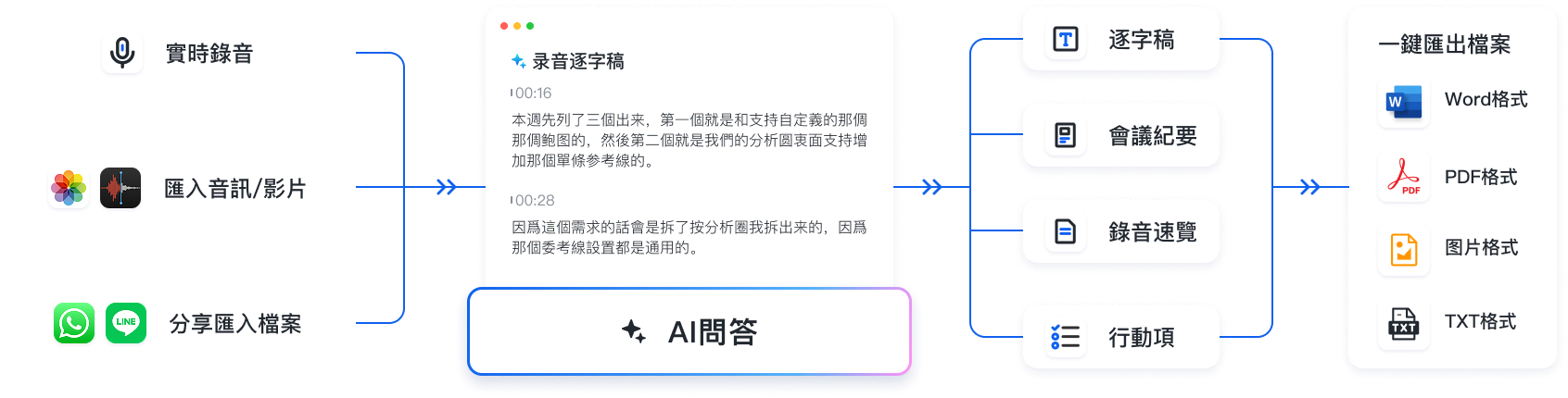
Tinrec focuses on structuring "audio information." It's not just a recorder; it's an AI assistant that "understands" content. With multilingual recognition (including Chinese, English, Cantonese, Taiwanese Hokkien, etc.), it transcribes in real-time during recording and automatically generates meeting minutes and action items, filling the gap left by Zapier and Notion in handling live speech.
3. Feature Comparison Table of Main Tools
To help you decide quickly, we compare from three dimensions: "core scenario," "input type," and "summary capability."
Stop organizing recordings by hand
Upload audio or video and automatically get a transcript, summary, and action items
| Dimension | Tinrec (Second Listening) | Notion AI | Zapier | Otter.ai |
|---|---|---|---|---|
| Core Strength | Speech-to-text + Intelligent Summarization | Document editing + Text generation | App connection + Automation | English meeting transcription |
| Primary Input | Live recording (App/Web), audio files, video links | Text notes, databases | Trigger events (Webhook/API) | Live recording (English-oriented) |
| Chinese Support | High (Supports mixed Chinese/Cantonese/Taiwanese Hokkien/English) | High (depends on underlying model) | UI in English, can process Chinese content | Weak (mainly English) |
| Summary Output | Meeting minutes, to-do list, AI Q&A | Text polishing, paragraph summary | Data aggregation reports | Meeting summary |
| Real-time | Real-time transcription + in-recording markers | Not real-time (needs text first) | Depends on trigger frequency | Real-time |
| Pricing | Free (100 min/month) / Paid plans | Add-on to Notion subscription | Free tier / Per-task pricing | Free tier / Subscription |
4. In-Depth Review: How Tinrec Solves the "Forget After Hearing" Summary Problem
When choosing tools, many overlook that recordings are extremely low-information-density but high-cost to replay. If your work summaries stem mainly from "weekly meetings" or "client interviews," using text-only tools (like Word or Notion) forces you to type while listening, which is inefficient.
Tinrec's differentiator is turning "recordings" into "searchable data":
Complete closed loop from recording to action: Unlike tools that only provide transcripts, Tinrec emphasizes "post-use." After recording, AI automatically analyzes content, identifies speakers, and extracts "decisions" and "action items." This directly solves the problem of "meeting ends, but nobody knows who does what."
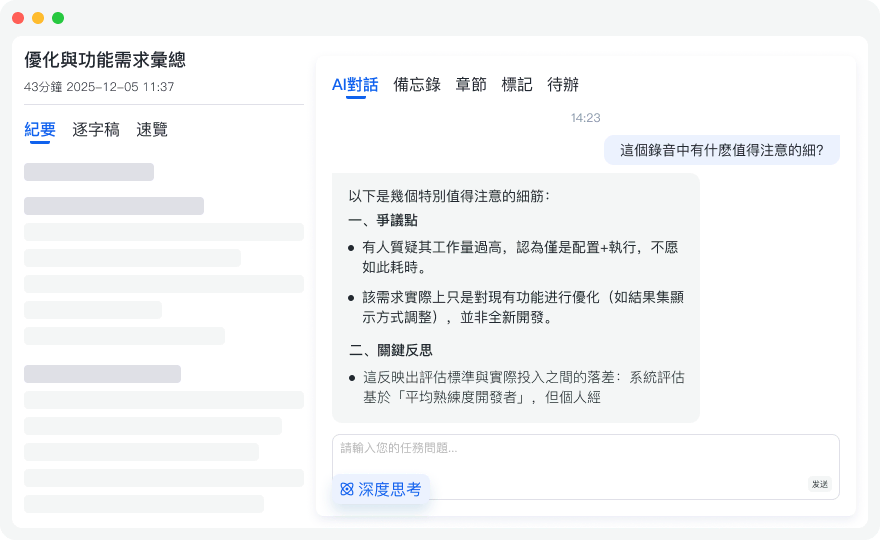
AI Chat Query (Chat with Audio): This is something traditional recorders cannot do. You can use natural language to ask the AI: "What was the conclusion about Q2 budget in the last meeting?" Tinrec answers based on the recording, like an assistant who took notes—no need to listen to 60 minutes of audio.
Multimodal input and language support: Besides live recording, Tinrec supports importing audio/video files and even parsing YouTube/TikTok video links. For marketers summarizing online courses or competitor videos, this is a huge time-saver.
5. Hands-On Tutorial: How to Quickly Generate Meeting Summaries with AI

Here's how to use Tinrec to generate a 1-hour meeting summary in 5 minutes:
Step 1: Start Recording or Import File
- In-person meeting: Open Tinrec App or web version, tap "Start Recording." Available on iOS, Android, and web, anytime, anywhere.
- Online meeting: For Google Meet or Teams meetings, you can record by playing audio from your computer's speaker, or upload pre-recorded MP4/MP3 files.
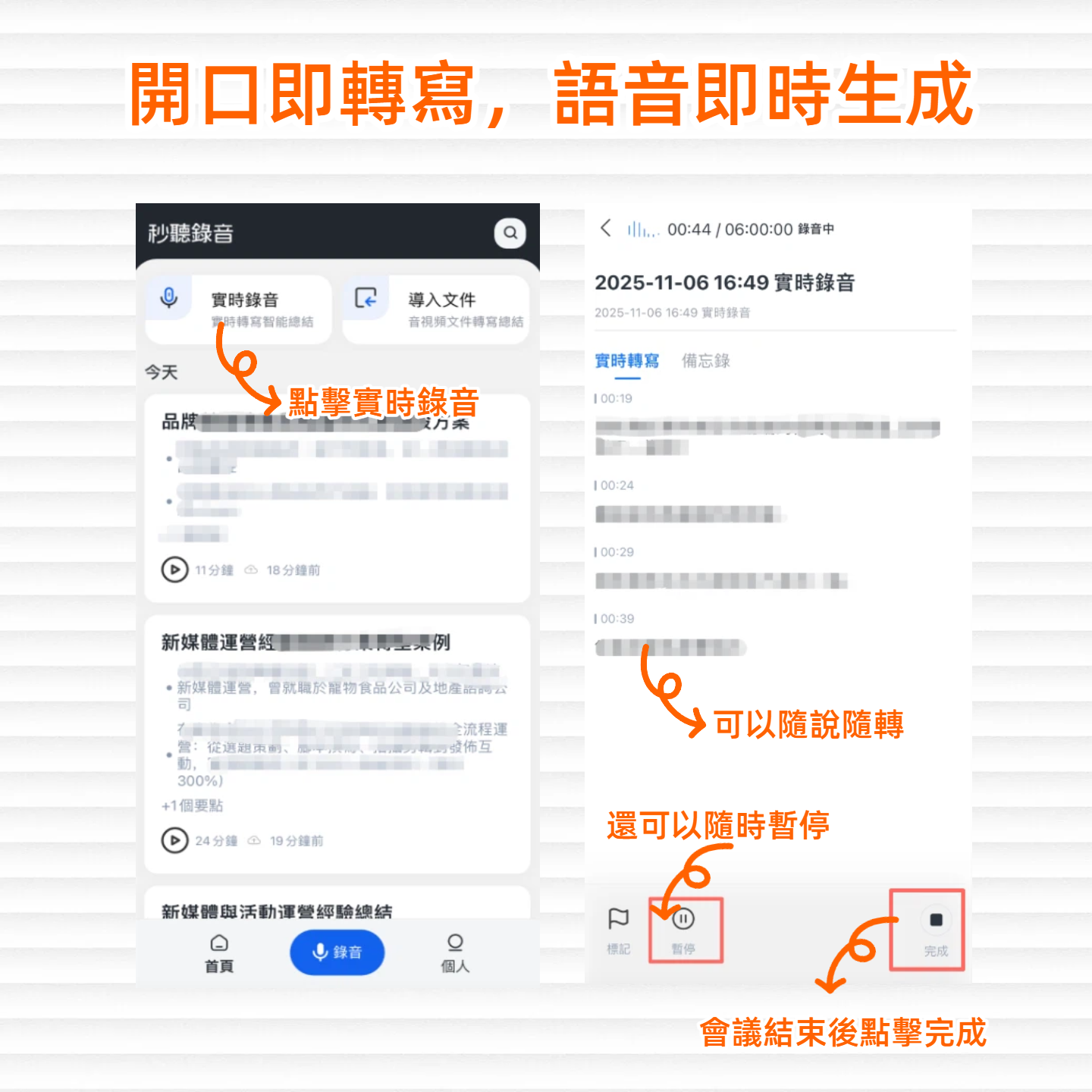
Step 2: Real-Time Transcription and Marking
- During recording, Tinrec converts speech to text in real time. When you hear something important, tap the "Mark" button on the interface for later review.
Step 3: AI Smart Summarization and Action Item Extraction
- After recording ends, the system automatically generates a transcript. Click the "AI Summary" tab to view auto-generated "Meeting Minutes" and "To-Do List."
- Tip: Copy these action items directly into your task management app (like Notion or Trello) to close the workflow loop.
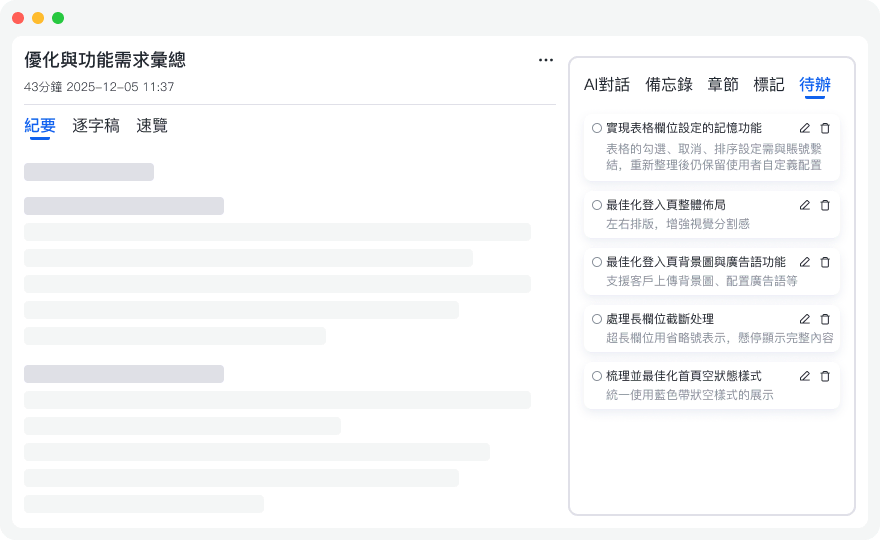
Step 4: Fine-Grained AI Query
- If the summary isn't detailed enough, use the "AI Chat" feature on the right. Type: "Please summarize details about the marketing budget discussion," and AI precisely extracts relevant sections and rephrases them.
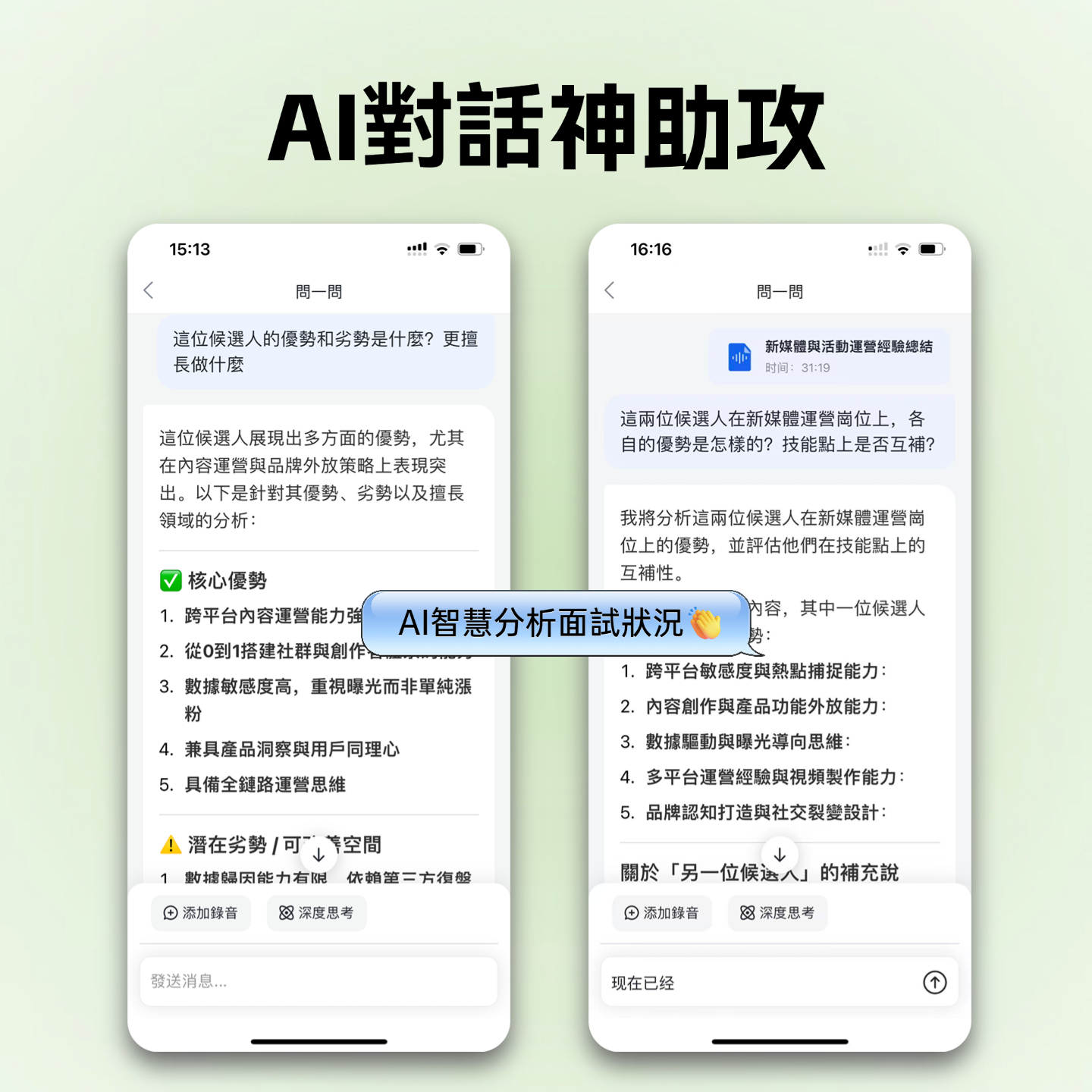
6. Frequently Asked Questions
Q1: Do these AI tools support Traditional Chinese? How accurate is recognition? Notion AI and Zapier's Chinese handling depends on their underlying models (usually GPT series), which have good support. However, for speech recognition, Tinrec specifically optimizes models for Chinese (including Taiwanese Hokkien, Cantonese) and achieves higher accuracy for mixed Chinese-English workplace conversations compared to English-centric Otter.ai.
Q2: Are there privacy risks with AI-generated work summaries? Enterprise tools like Zapier and Salesforce comply with strict regulations (e.g., GDPR). When using Tinrec, data transmission is encrypted and primarily assists personal or team efficiency. For highly sensitive legal or financial decisions, review each tool's privacy policy or consider on-premise deployment options.
Q3: Is Tinrec's free plan enough? Tinrec offers 100 minutes of free transcription per month, sufficient for users who need to record 1–2 key meetings weekly. Heavy meeting users or journalists can consider Basic or Pro plans to unlock more hours and advanced features.
Q4: Which tool is best for summarizing YouTube videos or online courses? For video content, Tinrec's "video link to text" feature is top—just paste the link to generate a summary without downloading the file. Kuse can also handle uploaded files, but Tinrec is more intuitive for streaming links.
Q5: Can these tools fully replace manual weekly report writing? AI can handle 80% of "information organization" and "draft writing," but the final 20%—"insights" and "tone adjustments"—still require human review. AI is your co-pilot, eliminating blank-page fear and data tedium.
Q6: Are there any limitations for iPhone users? iOS has strict restrictions on call recording. Tinrec provides an iOS app suitable for live recording. For phone calls, you typically record via speaker or use the system's built-in recorder, then import the file into Tinrec for transcription and summarization.
Turn every recording into actionable outcomes
Get 60 free transcription minutes when you sign in. No credit card required.
Related Reading
You might also like

4 Best Speech-to-Text Tools in 2026: Free vs Paid Compared for US Users
We tested the most talked-about speech-to-text tools on Dcard and PTT, from free to paid, comparing Tinrec, Yating, Otter.ai, and Notta on features, pricing, and use cases to help you find the time-saving choice.

5 Best Speech-to-Text Tools Tested in 2025: AI Transcripts & Meeting Notes Compared
With countless speech-to-text tools available, this article tests Tinrec, MyEdit, SoundType AI, iPhone Voice Memos, and OpenAI Whisper across three dimensions—Traditional Chinese recognition, recording sources, and post-processing—to help you choose the right one for your needs.
2026 Hands-On Comparison of 4 Speech-to-Text Tools: Why Tinrec Is the Best Alternative for Notta Users?
This article compares speech-to-text tools like Tinrec and Notta, focusing on online meeting recording, AI summarization, and team collaboration, to help you decide which one suits American professionals best.

2026 Hands-On Comparison of 4 Recording-to-Text Apps: The Most Time-Saving Option for Chinese Meeting Notes
After testing multiple recording-to-text apps, Tinrec not only transcribes verbatim but also turns meetings into searchable, collaborative, trackable data. This article covers key buying considerations, hands-on insights, and tips to avoid common pitfalls.

Tinrec vs Otter.ai in 2026: A 4-Dimension Comparison to Find the Best Speech-to-Text Tool for Hong Kong Professionals
Tired of spending hours transcribing meeting recordings? We tested Tinrec and Otter.ai across four key dimensions—Cantonese recognition, bot-free recording, AI summarization, and team collaboration—to help you choose the right tool and save overtime hours.

2026 Hands-On Comparison of 2 Speech-to-Text Tools: Tinrec vs Otter.ai—Which Is More Practical for Bot-Free Meeting Notes and Chinese Summaries?
This article compares Tinrec and Otter.ai, two AI meeting note tools, across five dimensions: meeting capture, Chinese transcription, AI post-processing, team collaboration, and cross-platform support. It also compiles real user feedback from PTT in 2024 to help you choose the best option for Taiwanese office workers.

2026 Tinrec Voice-to-Text Tutorial: Cantonese Support & AI Meeting Minutes
We tested Tinrec (Miao Ting Lu Yin) and show you how to use AI to quickly convert recordings to text, automatically generate meeting minutes and action items, saving hours of manual transcription.

2026 Tinrec Review: A Yating Transcript Alternative with Bot-Free Recording & AI Meeting Minutes
This tutorial explains how to use Tinrec as a replacement for Yating Transcript, enabling bot-free online meeting recording, real-time transcription, and AI-generated meeting minutes—ideal for professionals who need to quickly organize meeting notes.

2026 Hands-On Comparison of 2 Recording-to-Text Tools: Tinrec vs Otter.ai – Which One Should Hong Kong Professionals Choose?
A hands-on comparison of Tinrec and Otter.ai, two recording-to-text tools, across five key dimensions: Cantonese recognition, bot-free meeting recording, AI Q&A, cross-platform use, and team collaboration, to help Hong Kong professionals pick the best option.