

Turn recordings into transcripts and summaries in minutes
Upload audio or video for multilingual transcription, AI notes, and action items
2026 Tested: 4 Online Subtitle Generators Compared - Which One Turns Your Videos into More Than Just Captions?
Adding Subtitles to Videos Is a Hassle? You Need More Than Just a Subtitle Tool
Shooting a video is only the first step; adding subtitles often takes even more time. Manually syncing timestamps to a transcript can eat up an entire afternoon for just a few minutes of footage. Not to mention multi-speaker conversations and background noise—just understanding the audio can be exhausting.
If you don't just want "subtitles for the sake of subtitles," but also hope to further organize key points, take notes, or even query the content repeatedly—then you need more than a traditional subtitle generator. You need a tool that can turn your videos into usable knowledge.
In this article, I tested 4 mainstream online subtitle generators, ranging from simple captioners to full-fledged AI organization platforms, to help you find the best fit for your needs.
Before Choosing an Online Subtitle Tool, Understand These 3 Key Points
Accuracy: Don't Just Trust Official Numbers; Real-World Testing Matters
Many tools claim 98% accuracy, but that's usually measured in studio conditions. Real videos may have background noise, overlapping speech, and accents, which can significantly reduce accuracy. My own testing habit is to use a Chinese conversation with ambient noise—the differences become obvious immediately. Tools like cSubtitle are specifically optimized for Traditional Chinese (Taiwan) and Cantonese, so they perform better in specific language scenarios than general-purpose tools.
Feature Scope: Do You Just Need Subtitles, or More Organization?
If you only add subtitles occasionally, a lightweight tool is enough. But if you want subtitles to become articles, meeting minutes, or study notes, you need a tool that can handle the entire workflow: "subtitle → summary → Q&A → export." Tinrec, for example, not only generates subtitles but also automatically extracts summaries and action items, and even supports AI chat queries, letting you treat the entire video as a database. This is something traditional subtitle tools can't match.
Free Tier: Good Enough, but Know the Limitations
Almost every tool offers a free plan, but the limitations vary widely: some cap minutes, some cap file size, and some restrict features. Before testing, estimate how many minutes of video you'll process per month so you don't run out of quota halfway through. For someone like me who occasionally adds subtitles for clients, the free version can last a while; but for teams or heavy users, paid plans offer clear value.
Tinrec (秒聽錄音) — More Than Subtitles, It's Your Video Knowledge Manager
Tinrec is an AI audio/video organization tool designed for meetings, learning, interviews, and content creation. It's not just a "subtitle generator"; it turns videos and recordings into a searchable, summarizable, Q&A-ready database. It supports real-time transcription, file uploads, and even YouTube links for direct parsing, with iOS, Android, and web versions.
Subtitle Generation Is Just the Start; the Real Value Lies in Post-Processing
My most common workflow is "upload video → auto-transcribe + generate subtitles." Tinrec automatically detects the language and produces timestamped SRT or VTT subtitle files within minutes, with accuracy that's quite stable in typical conversation scenarios. But what impressed me most isn't the subtitles themselves—it's what happens after: the AI automatically splits the content into chapters, extracts key points, and even lets you ask "What is this video about?" to get a concise summary.
For example, I tested it with a half-hour online course video. Not only did I get complete Traditional Chinese subtitles, but the AI also organized the course's three main points and conclusion, saving me from rewatching the video.
The Biggest Difference from Regular Subtitle Tools: AI Chat Queries
Regular tools just hand you subtitles and call it a day. But Tinrec lets you "talk" to your video. For instance, after uploading a meeting recording, you can ask: "Who mentioned budget adjustments in the meeting?" It won't just give you keywords; it answers based on the semantic content, effectively turning the video into a Q&A database. This feature is almost nonexistent in other subtitle tools.
Stop organizing recordings by hand
Upload audio or video and automatically get a transcript, summary, and action items
Who Is It For?
If you need more than just subtitles—if you want to organize and reuse video content long-term, such as for course notes, interview transcripts, meeting minutes, or even content repurposing—Tinrec is currently the most comprehensive choice. Its free version includes basic transcription credits, so you can try it with a couple of videos first and upgrade if you find it useful.
Beyond Tinrec: What Other Options Are There?
VEED.IO: A Simple, Intuitive Online Subtitle Generator
VEED is a fully online auto-subtitle generator that's all about simplicity. Upload a video, and it automatically generates subtitles and embeds them directly into the footage. It's great for those who just want to quickly add subtitles and share directly to social media. However, note that it's essentially just a subtitle tool—it lacks the content summarization, Q&A, or knowledge organization features that Tinrec offers. If you ever want to extract more information from your videos, VEED won't help.
CapCut: Convenient Subtitles While Editing, but That's It
CapCut's auto-subtitle feature is built into its video editor. It's fast and supports multiple languages, making it handy for generating subtitles and adjusting styles while editing. But its positioning is "editing assistance"; it won't help you manage data beyond the finished product. If you want to export subtitles as standalone files or further query and take notes, CapCut falls short. Tinrec, on the other hand, can export transcripts, summaries, and mind maps in addition to subtitles—something CapCut can't do.
cSubtitle: A Traditional Chinese Transcription Specialist, but Weak in Post-Processing
cSubtitle is specifically optimized for Traditional Chinese (Taiwan) and Cantonese, with outstanding transcription accuracy for Chinese content. After uploading a video, you can download SRT and transcripts. But its strength stops at "speech-to-text"; it lacks advanced features like AI summaries or chat queries. If you only need high-quality Chinese subtitle files, give it a try; but if you want to further utilize the video content, Tinrec's complete ecosystem is a better fit.
Pitfall Guide: 3 Common Mistakes When Choosing an Online Subtitle Tool
Pitfall 1: Focusing Only on Accuracy, Ignoring Actual Use Cases
Many people immediately ask, "Which one has the highest accuracy?" But honestly, in typical conversational videos, the differences among mainstream tools aren't as big as you'd think. The real question is: "What do I want to do with the subtitles after I get them?" If you just want to put them on the video, VEED is enough; but if you need to take notes, organize key points, or build a searchable database, you should choose an integrated tool like Tinrec.
Pitfall 2: Overlooking Export Formats and Compatibility
Some tools only let you preview subtitles on their platform but don't allow you to download SRT or plain text files. This is a hassle if you want to use the subtitles in other editing software or convert them into articles. I usually check whether a tool can export standard subtitle formats and transcripts. Tinrec is quite comprehensive here, supporting almost all common formats.
Pitfall 3: Assuming the Free Version Is Enough, Only to Be Stuck by Hidden Limits
Free versions often limit minutes, file size, or features. For example, cSubtitle's free version only handles 3 minutes, and CapCut's subtitle feature is free but may tie exports to the editing project. I recommend trying it out first to ensure your usage and scenarios won't be blocked by unexpected restrictions. Tinrec's free trial credits are sufficient for occasional users like me, but heavy users should still consider the Pro plan.
Conclusion: Which One Should You Choose?
Based on my testing, if you occasionally just want to add subtitles to videos, VEED or CapCut will suffice. But if you want subtitles to be more than just subtitles—turning video content into an organized, reviewable, reusable resource—Tinrec is the most comprehensive choice.
- Just need quick subtitles with no further needs → VEED (simplest) or CapCut (add while editing)
- Particularly focused on Traditional Chinese or Cantonese subtitle accuracy → Try cSubtitle, but remember it lacks post-processing features
- Want to turn video content into notes, summaries, or even a Q&A database → Tinrec is the only option with AI chat queries and a complete export ecosystem
I suggest starting with Tinrec's free trial. Run a couple of videos of the type you usually shoot to experience the convenience of "subtitles + Q&A." If it works well, consider upgrading; there's no need to pay upfront.
References
- Auto Subtitle Generator Online - 99.9% Accuracy - VEED.IO
- AI Subtitle Generator - Online Auto Subtitles | FlexClip
- Online AI Transcription and Chinese Subtitle Generator - Free Trial - cSubtitle
- CapCut Auto Caption Generator | Free Online Auto Subtitles
- AI Subtitle Generator – 99% Accuracy, 60 Minutes Free Daily - WayinVideo
Turn every recording into actionable outcomes
Get 60 free transcription minutes when you sign in. No credit card required.
Related Reading
You might also like

2026 Vocol Alternatives Compared: Which Bot-Free Meeting Recorder Saves the Most Time?
Looking for a Vocol alternative? This hands-on comparison of Tinrec, Vocol.ai, Otter.ai, and Yating Transcription tackles real pain points in Chinese-language meetings. We break down bot-free recording, AI summaries, action item extraction, and team workspaces, plus tips on choosing between personal and team plans to help you find a tool that truly cuts post-meeting cleanup time.

6 Teams Recording Solutions Tested for 2026: Which One Actually Organizes Your Meeting?
Recording a Teams meeting isn't over when you hit the record button. This guide compares 6 common Teams meeting recording and post-meeting organization solutions—from Teams built-in recording permissions and expiration limits, Tinrec's bot-free recording and AI Q&A, to Otter.ai, Notta, TurboScribe, and built-in screen recording—plus selection advice and 4 must-know reminders before you start.

How to Record a Zoom Meeting in 2026: 3 Methods + Automatic Transcription
How do you record a Zoom meeting? This guide covers 5 practical methods: Tinrec desktop app with no-bot recording, Zoom local and cloud recording, OBS screen recording, mobile and hardware recording, plus recording permissions, free plan limitations, and how to turn recordings into transcripts and action items after the meeting.

Best AI Transcription Tools in 2026: 6 Tested, Vocol Tutorial & Tinrec Review
Starting with a hands-on Vocol tutorial, this guide tests and compares six AI transcription tools—Tinrec, Notta, Otter, Granola, and TurboScribe—on features, free tiers, and pricing to help you decide which one your team meetings really need.

2026 Zoom Meeting Recording Tools Buyer's Guide: 4 Tested Picks and Recommendations
Zoom's built-in automatic recording is convenient, but the real time sink is often the transcript, summary, and action items after the meeting. This guide compares Zoom built-in, Tinrec, Granola, and Otter.ai across four angles—recording permissions, Chinese language recognition, post-meeting output, and team data ownership—to help you decide which way to record Zoom meetings.

6 Google Meet AI Meeting Notes Solutions Tested for 2026: Which One Really Leaves Usable Data?
Starting from the three most common misconceptions, this hands-on comparison tests six AI meeting notes solutions that work with Google Meet: Tinrec, Google Meet's built-in Gemini 'Take Notes for Me', Otter.ai, Notta, Granola, and TurboScribe. We break down each one's positioning, pricing, who it's for, and how post-meeting data can be searched, queried, and handed off.
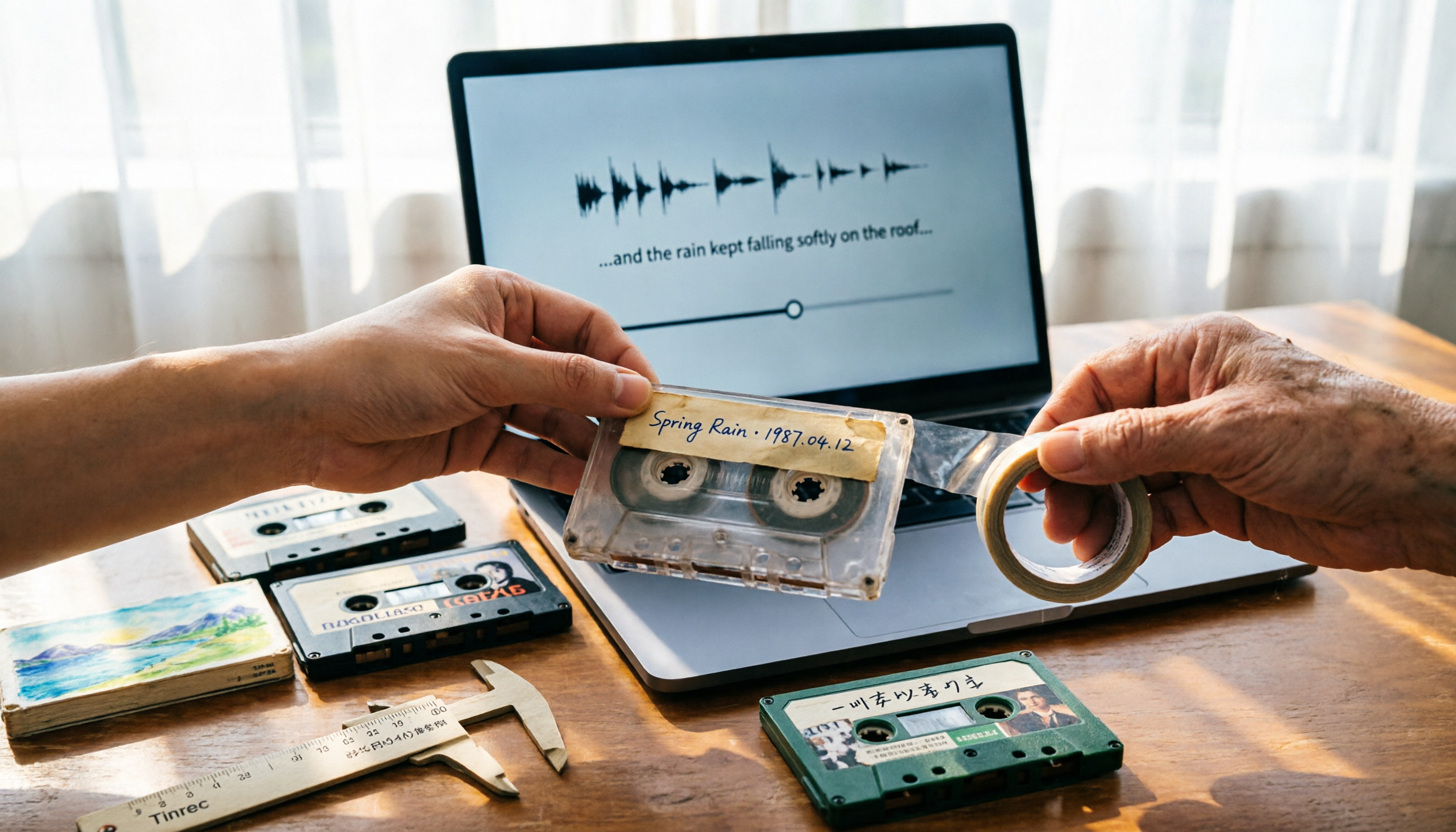
5 Best Places to Buy Good Tape in 2026: Cassette Tapes vs Packing Tape — Where to Shop Without Getting Burned
People searching "where to buy good tape" fall into two camps: those looking for cassette tapes and those looking for packing tape. This guide breaks down 5 reliable sources for each, including Discogs, Tapeheadcity, eBay, and local options, plus tips on choosing packing tape thickness and how to turn old cassette recordings into searchable text after you buy.

4 Video Auto-Subtitle Apps Tested for 2026: Free Tiers, Chinese Recognition, and Team Collaboration Compared
No more late nights re-listening to footage just to add subtitles. This hands-on comparison of Tinrec, Captune, cSubtitle, and pyTranscriber looks at language recognition, output formats, post-meeting organization, and team collaboration—plus free-tier limits and pitfalls to avoid—so you can pick the right tool for your workflow.

2026 AI Meeting Transcription Tools Compared: What Is NOTTA PTE. LTD. and Which Handles Chinese Meetings Best?
NOTTA PTE. LTD. is a private limited company registered in Singapore in 2022, primarily engaged in software and application development; it is not a product name. This article first compiles its public business registration data, then starts from common meeting documentation pain points to explain four key factors for choosing a transcription tool. It compares Tinrec, Notta, Otter.ai, and TurboScribe in terms of positioning, quotas, and use cases, and summarizes four common pitfalls to avoid.