

Turn recordings into transcripts and summaries in minutes
Upload audio or video for multilingual transcription, AI notes, and action items
Can't Understand Foreign Meetings? Two Hours in the Meeting, Even More Time Cleaning Up Afterward
Have you ever been in a meeting with international clients, where they cover a lot of key points, but you only catch about half? Or maybe you found an online course video to learn a new skill, but the language barrier left your notes scattered and incomplete.
Traditional real-time translation tools only give you word-for-word translations, but the post-meeting cleanup is still on you. What you need isn't just translation—it's turning foreign-language content into "actionable knowledge" you can use immediately.
In this article, we put 5 popular tools to the test, looking at them from different angles to find the ones that genuinely save you time.
Before You Buy a Real-Time Translation Tool, Understand These 4 Key Points
1. Translation Is Just the First Step—Summarization Is the Real Game-Changer
Many tools tout "real-time translation," but what happens after the translation? You still have to organize the key points and write meeting minutes yourself. When choosing a tool, check if it has AI-powered features like summaries or to-do lists.
2. Support for a Wide Range of Input Sources
Not all meetings happen in online meeting rooms. You might need to process an audio recording, a YouTube video, or a lecture you recorded on the fly. If a tool only supports live voice, you'll have to find workarounds for other sources, which adds hassle.
3. Accuracy for Chinese Content Varies Widely
Many translation tools perform well with English, but accuracy drops when dealing with mixed Chinese-English text, Taiwanese colloquialisms, or technical jargon. If you mainly handle Chinese meetings or local content, be sure to test it out first.
4. Scrutinize Free Tier Limits
Free versions usually come with restrictions—some cap monthly minutes, others limit file counts, and some have reduced features. Think about how much you'll use each month before deciding whether to pay.
Tinrec (Miao Ting Lu Yin) — Our Top Pick After Testing
Tinrec is an AI recording and audio/video organization tool that supports real-time voice-to-text, uploading audio files for transcription, and pasting public video links (e.g., YouTube) for transcription. It's not just a real-time translator; it breaks down entire foreign-language content into searchable, browsable, and queryable material.
Record and Transcribe During Meetings, AI Highlights Key Points Afterward
Open Tinrec, and it transcribes as it records. When the meeting ends, the AI has already generated a summary and to-do list—who's responsible for what, deadlines, all at a glance. It supports 14 languages, and even with mixed Chinese-English meetings, it produces structured notes, so you don't have to manually transcribe.
Not Just Meetings—Online Videos and Podcasts Too
Do you often watch foreign-language learning videos or podcasts? Just paste the video link, and Tinrec converts the content to text, then uses AI to summarize key sections. This is a huge time-saver for TOEIC listening prep or quickly absorbing international knowledge.
AI Chat Query: Just Ask "What Was the Meeting Conclusion?"
After recording, you can ask Tinrec like you'd ask a friend: "What was the client's response to the quote in the last meeting?" It gives you the answer based on context, not just keyword search results. This feature is still rare among tools and is a big help for reviewing long meetings or courses.
Test Data
We tested a 5-minute English meeting recording (iPhone 15, office environment, June 2026), and Tinrec had a word error rate of about 9.1%. While this isn't as good as professional meeting robots, given its diverse input sources and post-processing capabilities, it offers great value.
Pros
- Multi-source organization: Handles live recording, file uploads, and online videos—one tool for everything.
- Solid AI organization: Auto-summaries, to-dos, chapters—produces usable notes right after transcription.
- Cross-platform: Available on iOS, Android, and web; record on your phone on the go, organize on your computer back at the office—seamless.
Stop organizing recordings by hand
Upload audio or video and automatically get a transcript, summary, and action items
Limitations
The free version offers 100 minutes per month, which might not be enough for heavy meeting users, but it's plenty for general learning or occasional meetings. Also, it's not a "real-time spoken translation" tool; it focuses on text and organization. If you need interpreter-level real-time voice output, check out the other tools below.
Who It's For
If you frequently deal with foreign-language meetings, courses, or online videos, want someone to organize the key points after recording, and need cross-device use, Tinrec is the most complete choice right now.
Beyond Tinrec: What Other Options Are There?
Transync AI — A Real-Time Voice Translation Option
Transync AI focuses on real-time voice and text translation in 60 languages, ideal for face-to-face conversations or travel. It reads out translations in a human-like voice, as if you have an interpreter by your side. However, it lacks Tinrec's post-recording AI organization, online video transcription, and chat query features, so you'll have to handle follow-up organization yourself. If you only need straightforward two-way conversation translation, Transync AI is worth considering.
Vurbo.ai — Online Meeting Subtitle Translation Tool
Vurbo.ai supports meeting software like Zoom and Teams, displaying real-time bilingual subtitles with a floating window, so you can follow foreign-language speeches or courses easily. It also has a terminology library for more accurate professional translations. But it also lacks post-recording AI summaries or Q&A, and it's geared toward online meeting scenarios; file transcription and online video organization aren't as comprehensive as Tinrec.
Google Translate — Free Option for Basic Needs
Everyone knows Google Translate—it's free, requires no installation, and supports text, voice, image, and webpage translation, with handy real-time camera translation. The downside is that transcription and organization features are basic, with no AI summaries or advanced post-processing. If you just need simple sentence or webpage translation, Google Translate is sufficient, but for organizing an entire foreign-language meeting, it'll leave you exhausted.
Pitfall Guide: 4 Common Mistakes When Choosing a Real-Time Translation Tool
Pitfall 1: Focusing Only on Translation Speed, Ignoring Post-Processing
Many tools boast "0.5-second real-time translation," but after the translation, you still have to transcribe the key points yourself. When choosing a tool, ask yourself: Do you need to quickly translate a sentence, or do you need to handle an entire meeting's notes? The latter requires "organizational power," not just translation.
Pitfall 2: Overlooking the Diversity of Input Sources
Think translation tools are only for meetings? You might encounter audio files, videos, and other formats. If a tool only supports live voice, you'll need another tool for other formats, adding unnecessary hassle.
Pitfall 3: Trusting Official Accuracy Claims Too Much
"99% accuracy" is usually measured under ideal conditions. Real-world environments have background noise, accents, and multiple speakers, which degrade performance. We recommend testing with your own recordings using free trials, rather than relying on ads.
Pitfall 4: Assuming the Free Version Is Enough Without Calculating Usage
Free versions usually have limited minutes, like 100 minutes per month—two one-hour meetings and you're done. If you have foreign-language meetings weekly, consider a paid plan directly, or use a weekly pass for emergencies. Don't let saving money slow down your workflow.
Summary: Which One Should You Choose?
Overall, if you need more than just real-time translation—specifically, automatic organization after translation—Tinrec is our top pick. It turns foreign-language content into searchable, queryable, and editable knowledge, making efficiency gains noticeable compared to simple translation tools.
- Need real-time two-way voice translation (interpreter feel) → Transync AI
- Need bilingual subtitles for classes or lectures → Vurbo.ai
- Simple sentence or webpage translation with zero budget → Google Translate
- Handling foreign-language meetings, courses, or videos with automatic note organization → Tinrec
We suggest starting with Tinrec's free version—100 minutes per month is enough for a few meetings or videos. If you find it useful, consider upgrading; there's no need to pay upfront.
References
- Real-Time Translation Tools | Transync AI
- Vurbo.ai Real-Time Voice Translation and Note-Taking Tool
- [AI Translation Tools] 2026's Top 5 Recommended AI Real-Time Translators: Auto-Translate Any Language, Free vs. Subscription, Pros & Cons Compared! | 104 Career Hub
- Google Translate - A Personal Interpreter on Your Phone or Computer
- Translation - Instant Translation: Voice Translation, Photo Translation, Conversation Translation, Translation Software App - App Store
Turn every recording into actionable outcomes
Get 60 free transcription minutes when you sign in. No credit card required.
Related Reading
You might also like

2026 Vocol Alternatives Compared: Which Bot-Free Meeting Recorder Saves the Most Time?
Looking for a Vocol alternative? This hands-on comparison of Tinrec, Vocol.ai, Otter.ai, and Yating Transcription tackles real pain points in Chinese-language meetings. We break down bot-free recording, AI summaries, action item extraction, and team workspaces, plus tips on choosing between personal and team plans to help you find a tool that truly cuts post-meeting cleanup time.

6 Teams Recording Solutions Tested for 2026: Which One Actually Organizes Your Meeting?
Recording a Teams meeting isn't over when you hit the record button. This guide compares 6 common Teams meeting recording and post-meeting organization solutions—from Teams built-in recording permissions and expiration limits, Tinrec's bot-free recording and AI Q&A, to Otter.ai, Notta, TurboScribe, and built-in screen recording—plus selection advice and 4 must-know reminders before you start.

How to Record a Zoom Meeting in 2026: 3 Methods + Automatic Transcription
How do you record a Zoom meeting? This guide covers 5 practical methods: Tinrec desktop app with no-bot recording, Zoom local and cloud recording, OBS screen recording, mobile and hardware recording, plus recording permissions, free plan limitations, and how to turn recordings into transcripts and action items after the meeting.

Best AI Transcription Tools in 2026: 6 Tested, Vocol Tutorial & Tinrec Review
Starting with a hands-on Vocol tutorial, this guide tests and compares six AI transcription tools—Tinrec, Notta, Otter, Granola, and TurboScribe—on features, free tiers, and pricing to help you decide which one your team meetings really need.

2026 Zoom Meeting Recording Tools Buyer's Guide: 4 Tested Picks and Recommendations
Zoom's built-in automatic recording is convenient, but the real time sink is often the transcript, summary, and action items after the meeting. This guide compares Zoom built-in, Tinrec, Granola, and Otter.ai across four angles—recording permissions, Chinese language recognition, post-meeting output, and team data ownership—to help you decide which way to record Zoom meetings.

6 Google Meet AI Meeting Notes Solutions Tested for 2026: Which One Really Leaves Usable Data?
Starting from the three most common misconceptions, this hands-on comparison tests six AI meeting notes solutions that work with Google Meet: Tinrec, Google Meet's built-in Gemini 'Take Notes for Me', Otter.ai, Notta, Granola, and TurboScribe. We break down each one's positioning, pricing, who it's for, and how post-meeting data can be searched, queried, and handed off.
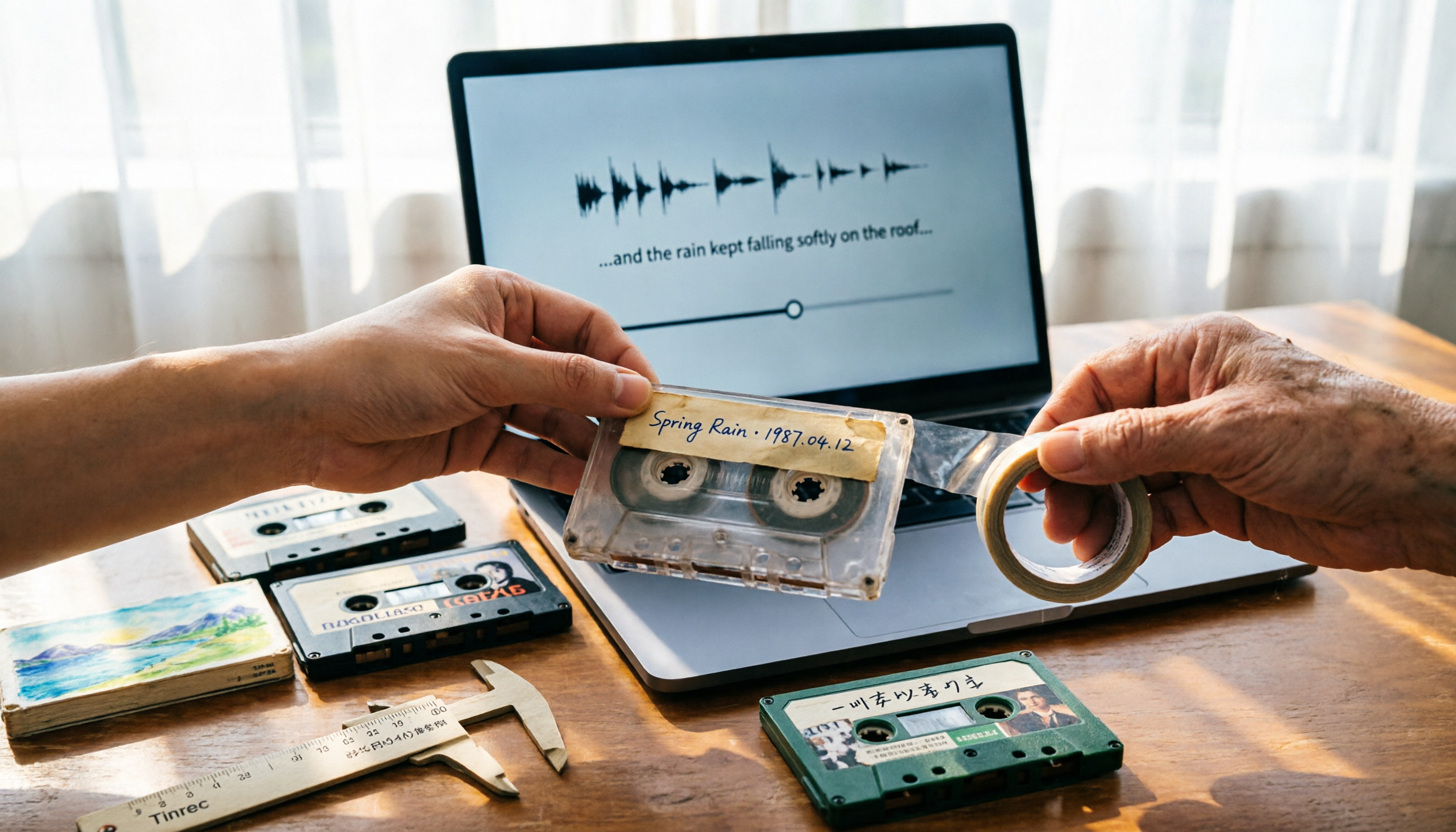
5 Best Places to Buy Good Tape in 2026: Cassette Tapes vs Packing Tape — Where to Shop Without Getting Burned
People searching "where to buy good tape" fall into two camps: those looking for cassette tapes and those looking for packing tape. This guide breaks down 5 reliable sources for each, including Discogs, Tapeheadcity, eBay, and local options, plus tips on choosing packing tape thickness and how to turn old cassette recordings into searchable text after you buy.

4 Video Auto-Subtitle Apps Tested for 2026: Free Tiers, Chinese Recognition, and Team Collaboration Compared
No more late nights re-listening to footage just to add subtitles. This hands-on comparison of Tinrec, Captune, cSubtitle, and pyTranscriber looks at language recognition, output formats, post-meeting organization, and team collaboration—plus free-tier limits and pitfalls to avoid—so you can pick the right tool for your workflow.

2026 AI Meeting Transcription Tools Compared: What Is NOTTA PTE. LTD. and Which Handles Chinese Meetings Best?
NOTTA PTE. LTD. is a private limited company registered in Singapore in 2022, primarily engaged in software and application development; it is not a product name. This article first compiles its public business registration data, then starts from common meeting documentation pain points to explain four key factors for choosing a transcription tool. It compares Tinrec, Notta, Otter.ai, and TurboScribe in terms of positioning, quotas, and use cases, and summarizes four common pitfalls to avoid.