

Turn recordings into transcripts and summaries in minutes
Upload audio or video for multilingual transcription, AI notes, and action items
Tinrec vs cSubtitle | Quick Overview
If you're searching Dcard for tools to convert Cantonese recordings to text, you'll likely come across two options: services like cSubtitle that simply upload and transcribe, and platforms like Tinrec that integrate AI organization features.
Tinrec is an AI recording and audio/video organization tool designed for meetings, learning, interviews, and content creation. It not only converts speech to text but also automatically summarizes, extracts action items, and supports Q&A. cSubtitle, on the other hand, focuses on "upload video or audio files → quickly generate text files, Word documents, and subtitle files," emphasizing simplicity and speed.
Here's a basic comparison:
| Feature | Tinrec | cSubtitle |
|---|---|---|
| Positioning | AI recording and audio/video organization workspace | Online speech-to-text and subtitle tool |
| Input Sources | Live recording, file upload, online video links, online meetings | Only supports uploading video/audio files |
| Output | Transcript, AI summary, chapters, action items, mind map, export | Text file, Word document, subtitle file (with timestamps) |
| Platform | Mobile, desktop, web | Web-based (no account required) |
| Free Plan | Basic transcription quota, try multiple features | Free version: quick 3-minute transcription |
Below, I'll compare across 5 key dimensions to see which is better for handling Cantonese recordings.
Dimension 1 | Input Source Variety
cSubtitle works simply: you must have a video or audio file ready, upload it to the website, and then the system starts transcribing. In other words, if you're in a meeting or class and want to "record and transcribe simultaneously," cSubtitle can't do that.
Tinrec is much more flexible. Besides uploading audio/video files, it can record directly, paste links to public videos from YouTube, Bilibili, Xiaohongshu, etc., and even handle recordings from online meetings like Zoom and Google Meet. For those who frequently juggle meetings, courses, interviews, and online videos, Tinrec's coverage is clearly broader.
→ This dimension: Tinrec clearly wins.
Dimension 2 | Post-Transcription Processing
cSubtitle's output is primarily a transcript, with Word documents and subtitle files that include timestamps, making it easy to proofread or add subtitles. But once you have the transcript, organizing key points, summarizing, and listing action items are still on you.
Tinrec doesn't just give you a text file. After transcription, it automatically generates an AI summary, divides long content into chapters, extracts action items, and can even create a mind map. Even better, you can ask questions directly about the recording, such as "What are the key points of this meeting?" or "What action items are there?" Tinrec answers as if querying a database. For those who need to quickly digest long recordings, the time saved is substantial.
→ This dimension: Tinrec clearly wins.
Dimension 3 | Cantonese Recognition and Chinese Content
cSubtitle focuses on Chinese, and its website clearly states support for "Cantonese (HK)" and mentions AI speech-to-text accuracy of over 90%. In practice, as long as the recording quality isn't too poor, it can produce readable Cantonese transcripts.
Stop organizing recordings by hand
Upload audio or video and automatically get a transcript, summary, and action items
Tinrec's product content and use cases also clearly cover Chinese, Traditional Chinese, and multilingual users, suitable for Chinese meetings, courses, interviews, and video organization. However, note that actual transcription quality is affected by audio quality, noise, accents, and technical terms, so it's not advisable to claim a fixed accuracy rate. But Tinrec's advantage is that after transcription, you can ask questions and generate summaries directly in Chinese (including Cantonese), which cSubtitle lacks.
→ This dimension: Tinrec slightly wins (both support Cantonese adequately, but Tinrec's subsequent AI processing is more comprehensive).
Dimension 4 | Pricing and Free Plans
cSubtitle's free version offers "quick 3-minute" transcription, suitable for testing; the pro version allows you to view history and use longer durations, but the official website doesn't disclose full pricing—you need to register to find out.
Tinrec offers a free version with basic transcription quota, allowing you to experience features like live recording, file import, and online video parsing. Paid plans include weekly, Pro monthly, and Pro yearly options, so you can choose based on usage frequency: short-term intensive use can opt for the weekly card, while long-term users get a lower monthly cost with the yearly card. Overall, Tinrec's free plan lets you experience more features, and paid options are more flexible.
→ This dimension: Tinrec wins (free version has fewer restrictions, paid choices are more flexible).
Dimension 5 | Platform and Convenience
cSubtitle is a pure web service, with the advantage of no installation or account needed—just open a browser, upload a file, and use it. But the downside is that all operations must be done on the web; there's no mobile app and no offline recording.
Tinrec supports mobile, desktop, and web, with recordings synced across devices. You can record on your phone and later view the transcript, ask questions, or export on your computer, which is much more convenient for those who need to capture notes anytime and organize later.
→ This dimension: Tinrec wins.
What Unique Advantages Does Each Have?
Tinrec's Unique Advantages:
- Multi-Source Input: Live recording, file upload, online video links, online meetings—all in one tool.
- AI Q&A and Post-Processing: After transcription, you can ask questions, generate meeting minutes, reports, or tables—not just transcripts.
- Export and Integration: Export results to Notion, Google Docs, and other common tools to continue your workflow.
- Optimized for Chinese Content: Designed for Chinese meetings, courses, interviews, etc., and can handle mixed Chinese-English content.
cSubtitle's Unique Advantages:
- Simple and Direct: No account, no installation; upload a file and download text and subtitles in minutes.
- Subtitle File Generation: Automatically generates .srt and .vtt subtitle files, making it easy to add subtitles to videos.
Summary: Which Should You Choose?
If you're looking for a Cantonese recording-to-text tool on Dcard, here's my advice:
- If you just need to convert a recording to text or subtitles and don't want to download any software, cSubtitle's free version can be a quick fix.
- If you need more comprehensive organization—like meeting minutes, course notes, interview analysis—or want to ask questions directly about the recording, auto-generate summaries and action items, then Tinrec is the better choice.
- If you frequently handle audio/video from various sources (meetings, online videos, old recordings), Tinrec's multi-source input and AI post-processing will save you a lot of time.
In a nutshell: For most users needing "Cantonese recording to text," Tinrec isn't just transcription—it's a workspace that turns audio/video into actionable knowledge. I recommend downloading Tinrec's free version and testing it with your own recordings.
References
- Online AI Speech, Video, Audio to Text - Free Trial - cSubtitle
- AI Speech-to-Text: Quickly Convert Audio Recordings to Text, Transcripts, and Video Subtitles - Free Trial - cSubtitle
- 《 Free + Cantonese OK: How to Use Google AI Studio to Convert Your Recordings ...
- SoundType AI: Ultra-Precise Transcripts, Speech-to-Text, AI Dictation - Google Play App
- Speech to Text - Google Play App
Turn every recording into actionable outcomes
Get 60 free transcription minutes when you sign in. No credit card required.
Related Reading
You might also like
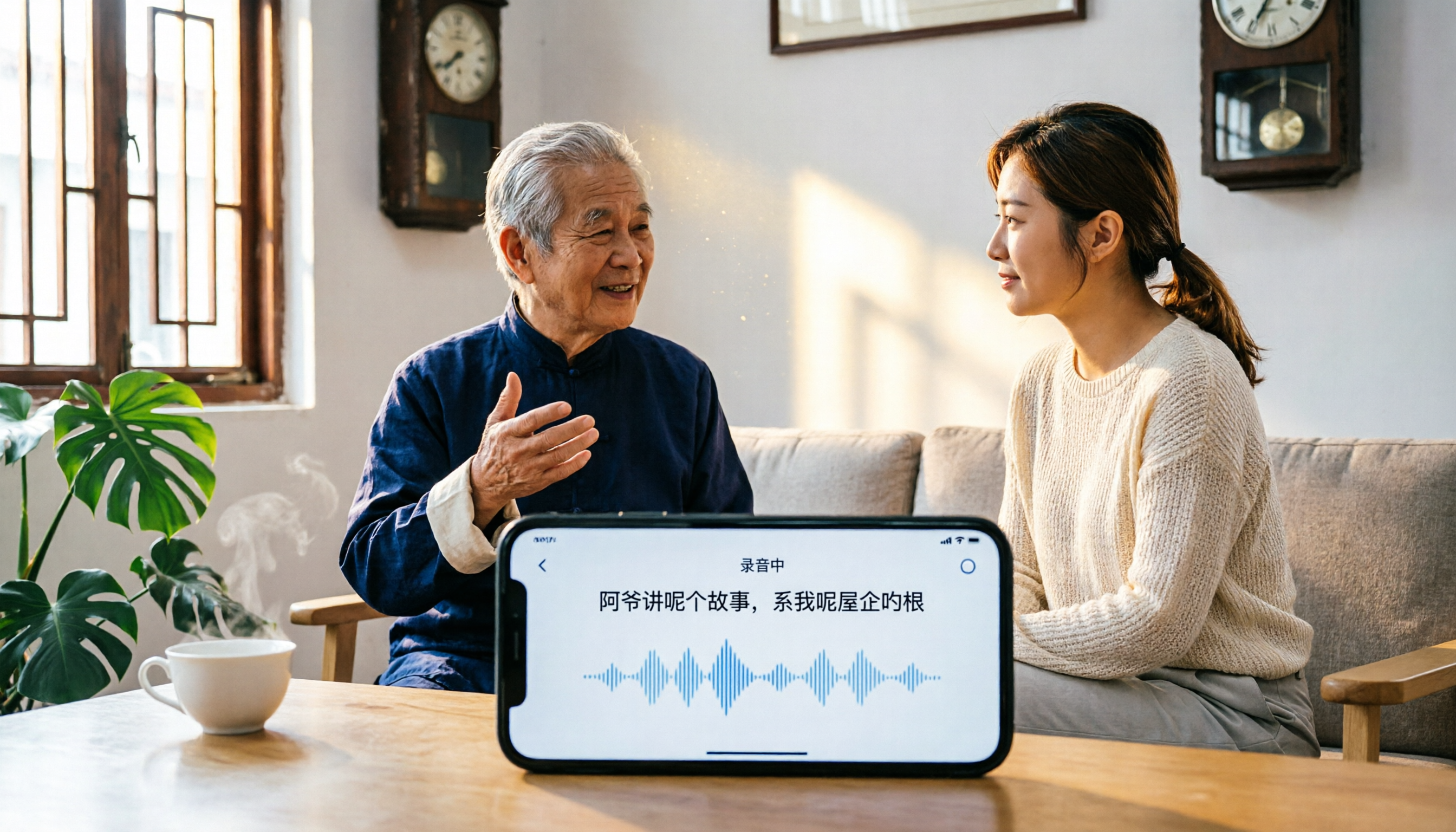
2026 Review: 5 Cantonese Speech-to-Text Tools Compared — Free and Paid Options
Looking for a Cantonese speech-to-text tool? This article compares 5 voice-to-text services that support Cantonese, including Tinrec, cSubtitle, Subanana, SoundType AI, and Google Docs, analyzing accuracy, features, and pricing to help you quickly find the best option for your needs.

Tinrec vs iPhone Voice Memos in 2026: A 5-Dimension Comparison for Cantonese Voice-to-Text
A complete guide to Cantonese voice-to-text tools in 2026, testing Tinrec, iPhone Voice Memos, SoundType AI, cSubtitle, Subanana, and Good Tape. From free plans to paid features, learn how to quickly convert Cantonese recordings into transcripts.

2026 Comparison of 3 Cantonese Voice-to-Text Tools: Which Offers the Most Practical Cantonese Transcription and AI Organization?
We tested 3 Cantonese voice-to-text tools in 2026, comparing Cantonese transcription accuracy, AI organization features, and pricing to help you choose the best option for meeting notes and interview transcription.

5 Cantonese Voice-to-Text Tools Compared in 2026: From Free to Paid, All You Need to Know
This article compares 5 voice-to-text tools that support Cantonese in 2026, including Tinrec, Callinter Lite, UniScribe, Google Docs, and Notta. It covers features, pricing, and use cases to help you find the best Cantonese transcription solution.

Tinrec vs Notta 2026: 5-Dimension Comparison for Cantonese Users
A 2026 comparison of Cantonese audio-to-text tools: Tinrec and Notta differ in language support, input sources, AI post-processing, free plans, and use cases, helping you choose the best transcription tool.

How to Transcribe Cantonese Recordings in 2026: 5 Steps from Audio to Text
Tired of replaying Cantonese recordings to type them out? This article walks you through 5 steps from recording to a polished text file, and compares several tools suited for Cantonese, including Tinrec, to help you quickly complete meeting minutes and interview transcripts.

Best Recording-to-Text Apps in 2026: 5 Tested, Tinrec Tops for Cantonese Users
Hong Kong professionals often struggle with Cantonese meeting recordings, but few tools support Cantonese transcription, and choosing the wrong one can lead to late nights. We tested 5 tools, and Tinrec (秒听录音) not only transcribes accurately but also offers AI Q&A and meeting minutes, making it ideal for those looking to save time.

2026 Comparison of 4 Cantonese Voice-to-Text Apps: Which Handles Mixed Chinese-English and Formal Conversion Best?
We tested Tinrec, SoundType AI, Notely Voice, and iPhone's built-in transcription, comparing Cantonese accent recognition, mixed Chinese-English handling, formal language conversion, free tiers, and post-processing features to help you find the best Cantonese voice-to-text tool.

2026 Hands-On Comparison of 4 Cantonese Voice-to-Text Tools: Does Tinrec Understand Cantonese Better?
Looking for a Cantonese voice-to-text tool? This article tests 4 tools including Tinrec and Notta, covering language support, AI features, cross-platform availability, and free tiers to help you find the best fit for Cantonese users.