
Turn recordings into transcripts and summaries in minutes
Upload audio or video for multilingual transcription, AI notes, and action items
Are you overwhelmed in international meetings, foreign interviews, or English-only classes, struggling between "not understanding" and "not taking notes fast enough"?
Simple "voice recording" no longer meets modern work needs because listening back to a one-hour recording is extremely time-consuming. You need a tool that can do Chinese voice-to-English translation in real-time and even turn it into text summaries.
This article reviews the 6 most popular tools in 2026 (including X-doc.AI, Google, DeepL, Microsoft, iFlytek, and Tinrec), comparing them on translation accuracy, real-time capability, and summary organization, with practical tutorials.
Quick Navigation & Conclusion:
- For travel or simple conversations: Choose Google Translate – free and widely available.
- If you need high Chinese dialect recognition and accuracy: iFlytek is recommended for its strong Chinese handling.
- For meeting minutes, action items, and AI query: Try Tinrec – it focuses on turning recordings into actionable workflows.
1. Why Do You Need an "AI Recording & Translation" Tool? Common Pain Points
Traditional voice recorders or simple recording apps have serious "information blind spots":
- Low information density, hard to review: A 60-minute recording without transcription requires repeatedly scrubbing the timeline to find key decisions, wasting time.
- Language barriers cause understanding gaps: In Chinese speeches or international meetings, not seeing English translation in real time (or vice versa) can lead to missing critical details.
- Post-meeting organization is time-consuming: Recording is just the start; converting speech to text, translating to English, and then summarizing manually takes 3-4 times the recording duration.
New AI tools solve not just "listening" but also "organizing" and "understanding".
2. In-Depth Review of Top Chinese Voice-to-English Tools in 2026
Based on Vertex AI Search 2026 data and real-world testing, here is the performance of mainstream tools:
1. X-doc.AI Translive
- Rating: 4.9 (Global)
- Features: Rated as one of the best real-time Chinese-English translation tools in 2026. It uses a next-generation speech-specific World Model, excelling in real-time meetings and pre-recorded files. It claims 14-23% higher accuracy than competitors, with enterprise-grade security and "long-term memory" to learn specific terminology.
- Best for: Professional international meetings, enterprise users needing high privacy.
2. Google Translate
- Rating: 4.7 (Global)
- Features: Biggest advantage is "ecosystem integration" and "ease of use." Supports many languages; real-time conversation mode is great for informal chats and travel.
- Best for: Travel, daily conversations, ad-hoc translation needs.
3. Tinrec
- Positioning: Full-process AI recording assistant
- Features: Tinrec differentiates by not only "translation" and "transcription" but also "understanding" and "action." Beyond auto-recognition and transcription of Chinese, English, Japanese, etc., it generates meeting minutes and action items. Its unique "AI chat" lets you query recording content like asking a person (e.g., "What was the budget mentioned by the marketing department?"), greatly reducing information retrieval effort.
- Best for: Workplace meeting notes, online course learning, content creator material organization.
4. DeepL
- Rating: 4.8 (Germany)
- Features: Famous worldwide for the "naturalness of text translation." While its core strength is text, it excels in polishing speech-to-text translations, capturing subtle tones and context.
- Best for: High-quality academic or business document translation.
5. Microsoft Translator
- Rating: 4.6 (USA)
- Features: Powerful multi-device conversation feature, allowing participants to join a conversation room with their own devices and see translations in their language. Deeply integrated with Office 365.
- Best for: Enterprises already using Microsoft Teams or Office 365.
Stop organizing recordings by hand
Upload audio or video and automatically get a transcript, summary, and action items
6. iFlytek
- Rating: 4.7 (China)
- Features: Dominant in Chinese speech recognition, especially handling Chinese dialects, accents, and complex contexts. Chinese-to-English accuracy is extremely high in specific professional domains.
- Best for: Speakers with non-standard Chinese pronunciation or speeches with heavy Chinese technical terms.
3. Tool Specification & Feature Comparison Table
To help you choose quickly, here is a comparison based on key dimensions:
| Dimension | X-doc.AI Translive | Google Translate | Tinrec | DeepL | iFlytek | Microsoft Translator |
|---|---|---|---|---|---|---|
| Core Strength | Enterprise security & high accuracy | Free, readily available | Recordings into action (meeting minutes/AI chat) | Natural text translation | Chinese dialect & speech recognition | Multi-device collaboration |
| Real-time Transcription | Yes | Yes (conversation mode) | Yes (real-time transcription + notes) | Requires other input | Yes | Yes |
| File Upload | Yes | No (mainly text files) | Yes (audio, video, links) | Yes (documents mainly) | Yes | No |
| AI Summary/Action Items | Yes (meeting summary) | No | Yes (structured minutes + to-dos) | No | Yes | No |
| Target Users | Multinational enterprises/professional teams | General public/travelers | PMs/students/admin/creators | Translators/writers | China business professionals | Office users |
4. Practical Tutorial: How to Use Tools for "Recording Transcription & Organization"
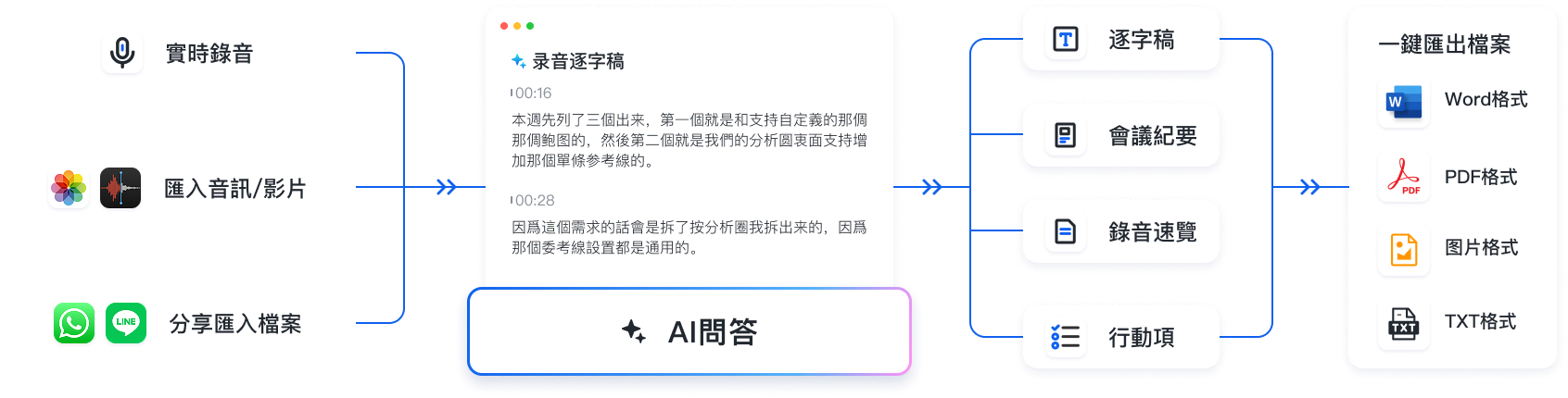
Using Tinrec as an example, we show how to quickly turn a Chinese meeting into usable English/multilingual data and organize action items. This logic applies to most AI-powered recording tools.
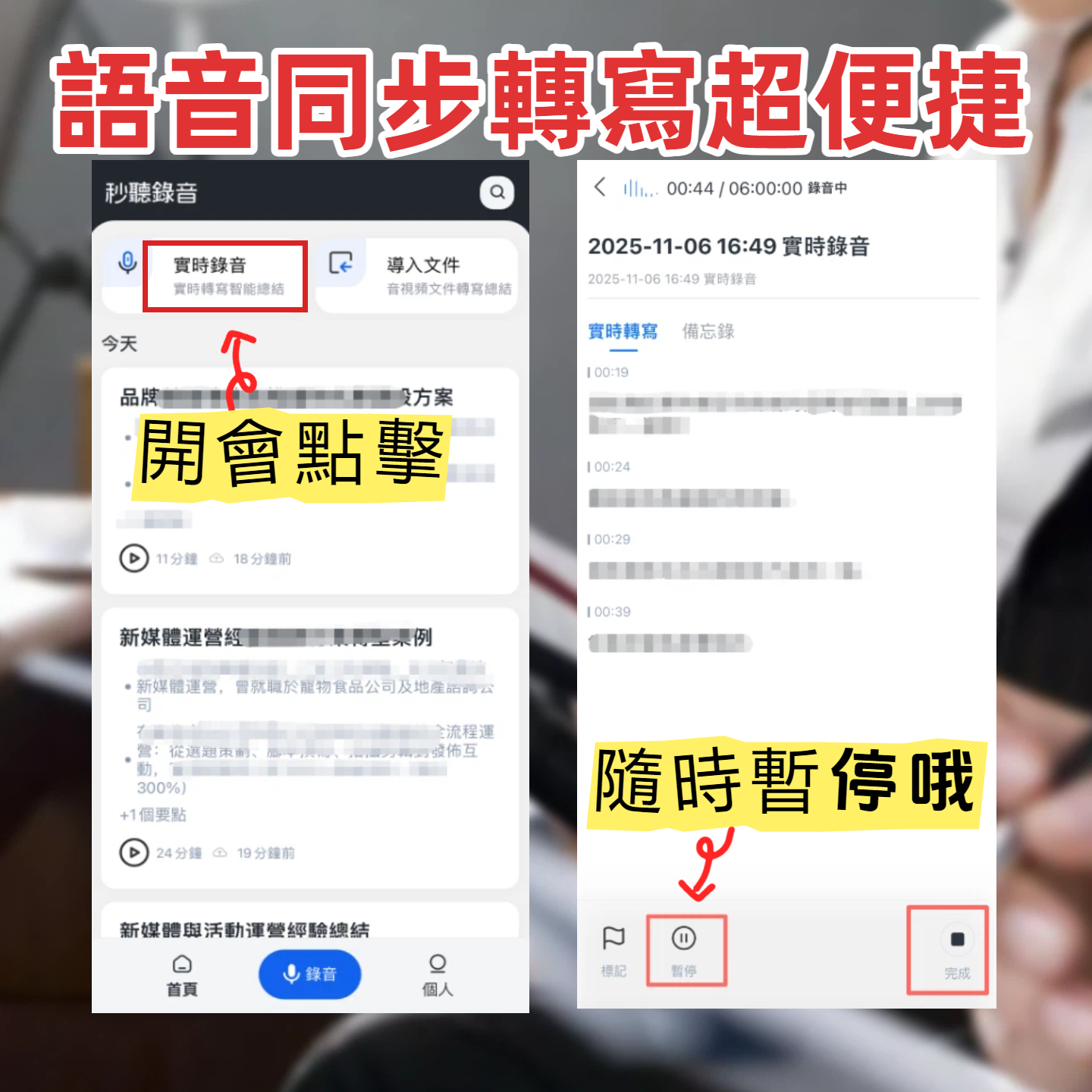
Step 1: Start Real-Time Recording & Transcription
At the start of a meeting or class, open the app or web version. Select the recognition language (supports auto-detection of 10 languages including Chinese, English, Japanese, Korean).
- Key action: Ensure clear microphone pickup; stay close to the speaker.
- Tinrec feature: Text appears on screen in real time; you can highlight key points anytime.
- Reference link: Real-time Recording to Text

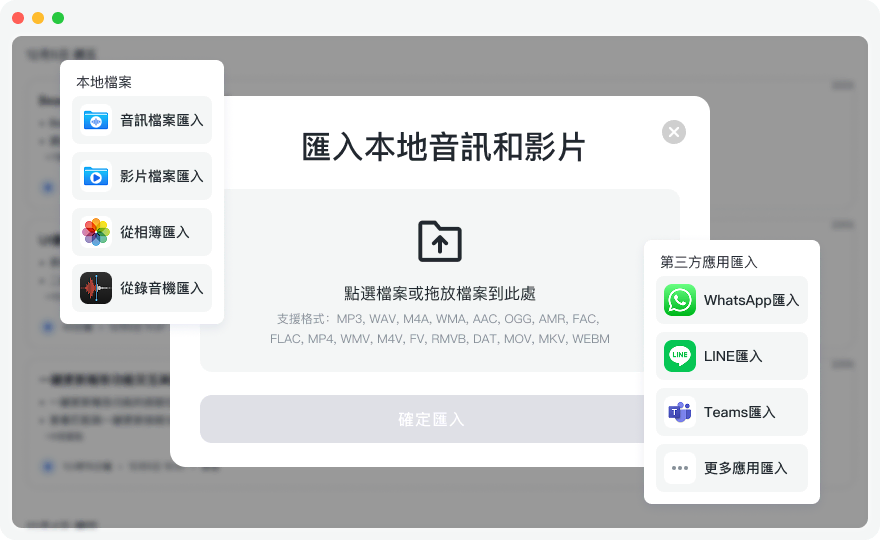
Step 2: Import Audio/Video Files for Post-Processing
If you have an MP3 recording or a YouTube/Podcast link, use the upload feature for transcription.
- Key action: Drag and drop files into the workspace, or paste the video URL.
- Tinrec feature: The system processes quickly in the cloud, distinguishes different speakers (Speaker Diarization), and generates a full transcript.
- Reference links: Audio File to Text | Podcast/Online Video to Text
Step 3: Use AI for Summary & Chat Query
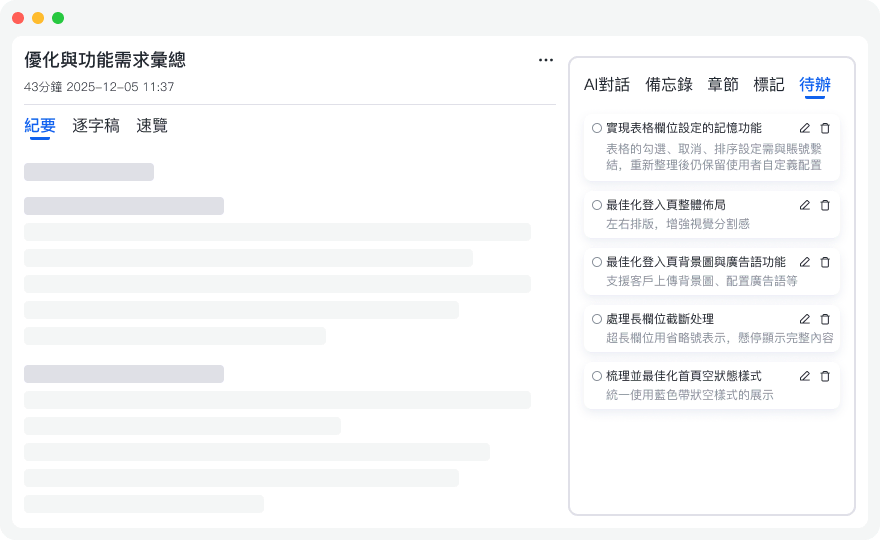
This is the biggest difference from traditional translation tools. You don't have to read thousands of words of transcript; use AI to extract value.
- Key action: Click "AI Summary" to generate meeting minutes and to-do list.
- Advanced tip: Use "AI Chat" to directly ask: "What was the conclusion about the budget in this meeting?" or "Please translate this discussion into an English summary."
- Reference link: AI Chat Query
5. FAQ
Q1: Do these tools work on iPhone/Android? Most major tools (Google Translate, Microsoft Translator, Tinrec) have iOS and Android apps. Tinrec also offers a web version for organizing long meeting notes on a computer.
Q2: What are the limitations of free versions? Google Translate is completely free but basic. Professional tools like X-doc.AI or Tinrec usually follow a "freemium" model. For example, Tinrec's free plan offers 100 minutes per month, enough for occasional meetings; for heavy use, upgrade to Basic or Pro for more minutes.
Q3: How accurate is voice-to-text? Does accent affect it? In 2026, AI models generally achieve over 95% accuracy. iFlytek is most tolerant of Chinese accents; X-doc.AI and Tinrec excel in standard business contexts. Noisy environments reduce accuracy; using a directional microphone helps.
Q4: Can it translate audio from Zoom or Google Meet? Yes. Using a web version tool (like Tinrec Web), you can enable system audio capture on a computer or place your phone near the computer speakers to record and transcribe online meeting audio in real time.
Q5: Is data privacy secure? For confidential business meetings, choose paid tools that emphasize enterprise security (e.g., X-doc.AI or Tinrec paid plans), and avoid using completely public free engines for sensitive data.
Q6: Can I directly translate a recording into English text? Yes, this is called "asynchronous translation." Tinrec and iFlytek both support uploading recordings and directly outputting bilingual transcripts for easy editing and sharing.
Turn every recording into actionable outcomes
Get 60 free transcription minutes when you sign in. No credit card required.
Related Reading
You might also like

2026 Free Post-Meeting Email Automation Options: 5 Tools Compared
Always sending post-meeting emails the next day? The problem isn't your writing—it's that meeting content isn't captured well. This article reviews the free tiers and limitations of 5 post-meeting email automation and assistance methods, and tests how Tinrec turns transcripts, AI summaries, and action items into one-click email material. Suitable for students and small teams.

3 Meeting Recap Email Templates Compared for 2026: Which Format Best Moves Projects Forward?
We break down three meeting recap email template styles and how to choose one, covering structure, examples, and common mistakes. Plus, learn how Tinrec turns meeting recordings into citable minutes, to-dos, and action lists so your post-meeting emails don't get ignored.

2026 Comparison of 4 Meeting Note Tools: Which One Actually Turns Meeting Conclusions into Action Plans?
Meetings end with conclusions, but no one follows through? This article starts from the real need to turn meeting conclusions into action plans, outlines 4 key purchasing points, and compares Tinrec, Notta, Otter.ai, and Granola on bot-free recording, AI summaries and to-dos, post-meeting Q&A, and team data retention, with prices and limitations, to help you choose the one that truly connects to execution.
2026 AI Follow-Up Email Tools Comparison: Tinrec Ensures No Post-Meeting Follow-Up Is Missed
The meeting ending is just the beginning of follow-up. This article tests 3 AI tools related to post-meeting follow-up emails, including Tinrec, Manus, and Genspark, covering meeting transcription, action item extraction, and email draft generation, helping you bridge the last mile from the meeting room to the inbox.

Tinrec vs Notta 2026: 5-Dimension Comparison — Which Tool Tracks Meeting Action Items to Completion?
After a meeting, action items are scattered across everyone's notes, and two weeks later no one remembers who was supposed to do what. This article compares six tools—Tinrec, Notta, Fireflies, Otter, Granola, and TurboScribe—across transcription, to-do extraction, post-meeting output, team governance, and pricing. It also covers how to choose and use them so meeting conclusions actually become trackable follow-up emails.

How to Write a Meeting Summary Email: 3 AI Tools Tested in 2026, This One Works Best for Chinese Meetings
A meeting summary email isn't just pasting a transcript. This article breaks down the 3 most common mistakes in writing meeting summary emails, the 4 key structures you need to master, and tests Tinrec, Otter.ai, Granola, and Notta in Chinese meeting scenarios to help you produce a meeting recap email with clear decisions and action items in the shortest time.

4 AI Meeting Agents Tested in 2026: Which One Turns Meetings into Trackable Actions?
A hands-on comparison of 4 AI meeting agents in 2026, covering bot-free recording, Chinese transcription, AI Q&A, action item extraction, and team data governance. Tinrec is featured as the main example, with use cases for personal and team plans, pricing limits, and pitfalls to avoid.

2026 Cross-Department Meeting Notes Tools Compared: Which One Captures Decisions and Action Items?
Cross-department meeting notes often turn into verbatim transcripts, leaving decisions and action items lost after the meeting. This article starts with common pitfalls, outlines tool selection criteria, and compares Tinrec, Otter.ai, Notta, and Granola in hands-on testing, plus explains how to use team spaces to retain cross-department meeting data.

2026 Comparison of 4 Sales Meeting Follow-Up Email Tools: How AI Summaries Save Time
After a meeting, the client disappears—how do you write a follow-up email that gets a reply? This article breaks down practical approaches to sales meeting follow-up emails and uses Tinrec to demonstrate the complete workflow from meeting recording, transcription, AI summaries, to action item extraction, with 5 key considerations for choosing a tool and FAQs.