
Turn recordings into transcripts and summaries in minutes
Upload audio or video for multilingual transcription, AI notes, and action items
Facing a one-hour interview recording, meeting notes, or lecture content, are you still repeatedly pausing, replaying, and manually typing? The traditional "listen and type" method is not only time-consuming—it often takes 3 to 4 hours to transcribe a 1-hour audio file. The good news is that with the maturity of AI speech recognition technology, many online tools can now instantly convert MP3 to highly accurate text.
This article will introduce you to the 7 most noteworthy speech-to-text tools in 2026 (including MyEdit, Tinrec, Yating Transcription, etc.), and provide an in-depth comparison of "free credits," "language support," and "feature highlights." If you need to quickly polish a transcript, MyEdit is a good choice; if you value Taiwanese Hokkien recognition, Yating Transcription remains the top pick; and if you need to automatically extract "action items" and "AI summary" from recordings, Tinrec offers a complete workflow solution.
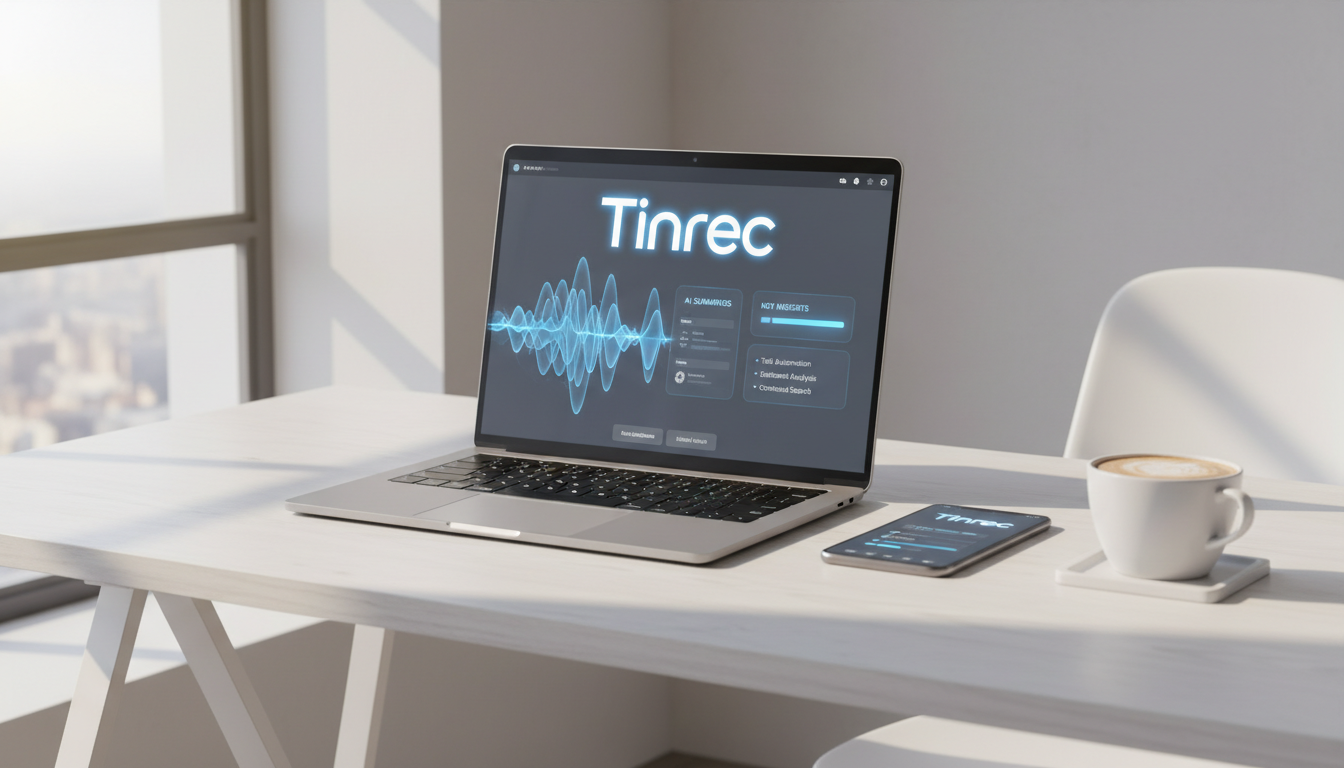
Why Do You Need AI Speech-to-Text Tools?
The biggest problems with traditional audio recordings are "low information density" and "unsearchability." Without converting a 60-minute MP3 file into text, you cannot search for a specific decision point by keyword—you can only rely on memory to drag the progress bar.
Modern AI transcription tools mainly solve three pain points:
- Save Time: AI can typically complete transcription in one-third of the audio length (e.g., a 60-minute recording takes only 5-10 minutes to process).
- Searchable & Editable: Digitize voice data for easy retrieval, copying, and referencing.
- Automated Summarization: Advanced tools can further generate summaries and action lists, turning recordings directly into decision-making aids.
2026 Top 7 Online MP3 to Text Tools Reviewed
Below, based on conversion accuracy, feature completeness, and user reputation, we have selected 7 tools suitable for different scenarios.
1. MyEdit: The All-Round Online Audio Editor
MyEdit is a comprehensive online audio editing website. Besides transcription, it offers noise removal, voice changer, and more. It supports 9 languages including Chinese, English, Japanese, and Korean.
- Best For: Creators who need fine editing and timeline alignment of transcripts.
- Pros: Intuitive interface; when editing text, the audio automatically jumps to the corresponding segment; supports exporting SRT subtitle files.
- Limitations: Free version limits trial to 3 minutes per day; cannot automatically distinguish speakers.
2. Tinrec: End-to-End Workflow from Recording to Action
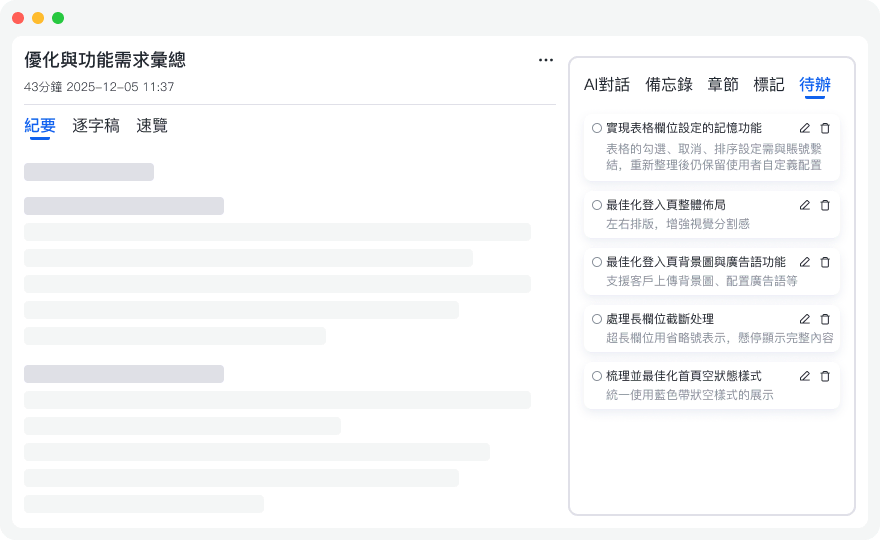
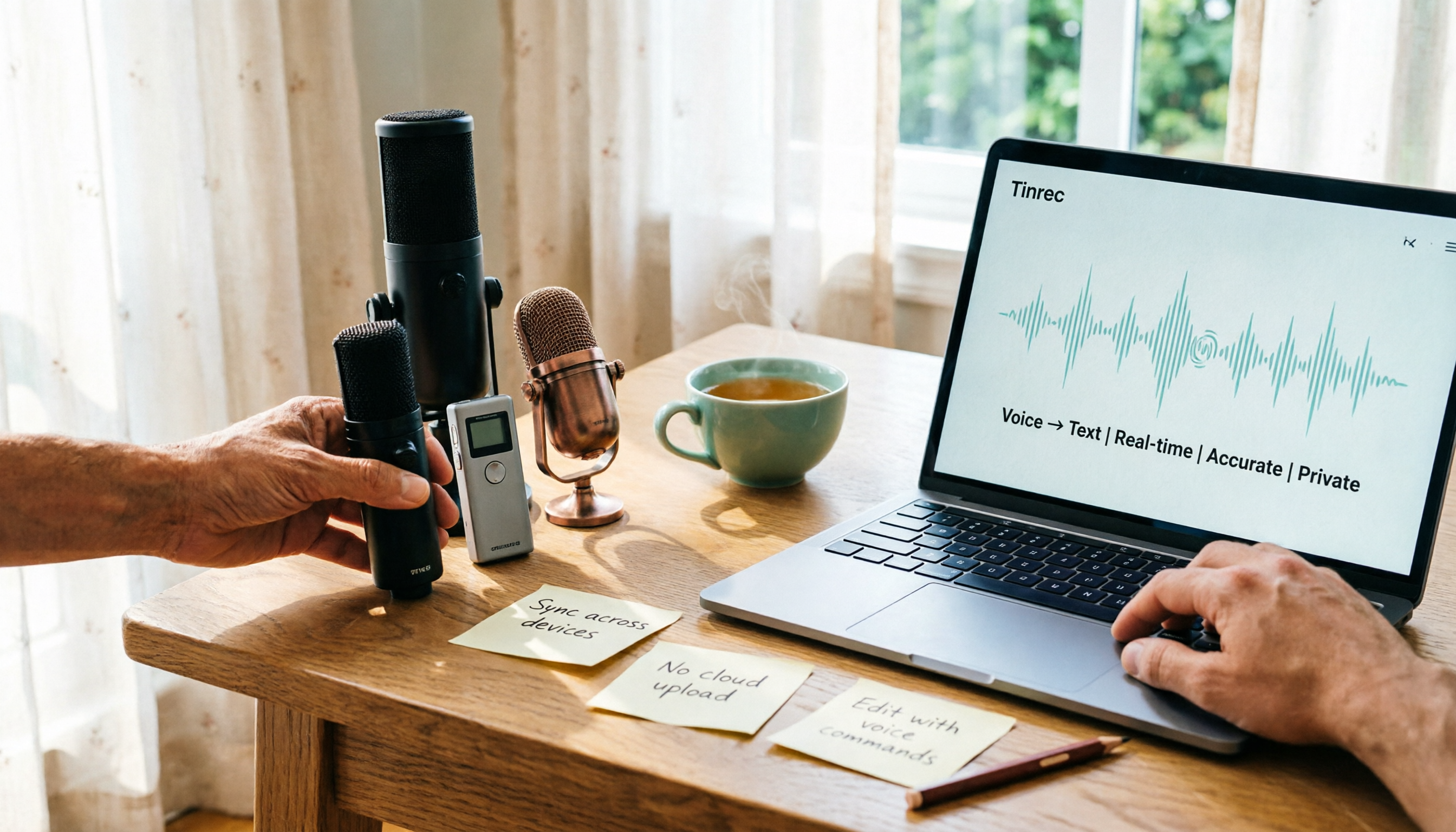
Tinrec is more than just a transcription tool; it emphasizes the "information value" after organization. It supports multi-device sync on iOS, Android, and web, transcribes audio in real-time during recording, and automatically generates meeting minutes and action items via AI.
- Best For: Professionals and students handling meeting notes and interview transcripts.
- Key Features:
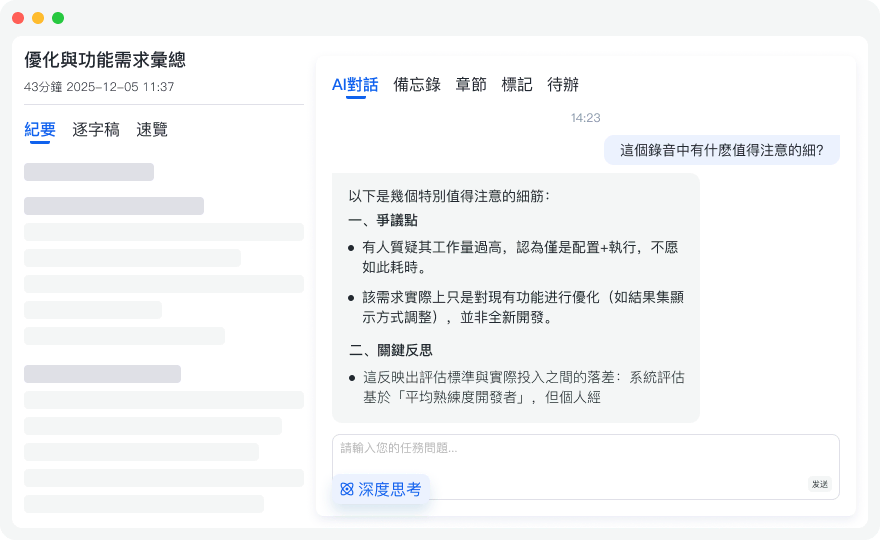
- AI Conversation Query: Unlike traditional tools that only search keywords, you can directly ask AI "What was the final budget decided in this meeting?" and it will answer based on the recording content.
- Smart Summary: Automatically extract conclusions and action items (To-do List), saving manual summarization time.
- Multi-Language Support: Recognizes 10 languages including Chinese, Japanese, English, Korean, and Cantonese.
- Free Credits: Free version offers 100 minutes of transcription per month.
3. Yating Transcription: Expert in Taiwanese Mandarin and Hokkien Recognition
Developed by a Taiwanese team, Yating Transcription has a local advantage in recognizing "Taiwanese Mandarin" and "Taiwanese Hokkien," making it suitable for users dealing with dialect content.
- Best For: Journalists, field researchers, or scenarios involving heavy Taiwanese Hokkien conversation.
- Pros: Supports mixed Chinese-English and Taiwanese Hokkien recognition; offers basic summary features.
- Limitations: Relatively slower transcription speed (a 1-minute audio takes several minutes to process); free credit is limited (300 minutes for new accounts, must be used within one month).
4. PowerDirector: Subtitle Savior for Video Creators
If you not only have MP3 but also MP4 videos that need subtitles, PowerDirector's built-in AI speech-to-text function is a powerful choice. It can directly convert speech into subtitle tracks.
- Best For: YouTubers or video editors.
- Pros: Customizable subtitle fonts and effects; supports SRT export.
- Limitations: Requires software download and installation; primarily designed for video editing workflows, less convenient for pure text transcription.
Stop organizing recordings by hand
Upload audio or video and automatically get a transcript, summary, and action items
5. cSubtitle: Dedicated to Short Clips and Subtitles
cSubtitle is an online tool focused on subtitle generation, supporting .srt and .vtt format export.
- Best For: Users who need to quickly generate subtitles for short videos.
- Pros: No installation required; supports online preview and simple style editing.
- Limitations: Free version limits each video to the first 3 minutes; not ideal for long recordings.
6. Good Tape: Cross-Border Tool for Media Professionals
A tool from Denmark, supporting over 90 languages, designed for journalists with emphasis on data security and multilingual support.
- Best For: International journalists handling multilingual interviews.
- Pros: Extremely wide language support; good automatic segmentation.
- Limitations: Free version transcription is very slow (requires queuing); weak support for Chinese punctuation.
7. GitMind: Visual Organization with Mind Maps
GitMind combines speech-to-text with mind mapping, converting recording content directly into a mind map.
- Best For: Learners who prefer taking notes with mind maps.
- Pros: Simultaneously generates a mind map for visual structure.
- Limitations: Text editing features are basic; free version limits to 10 minutes per day.
Online Speech-to-Text Tool Comparison Table
To help you decide quickly, we've compiled a comparison of core dimensions:
| Tool | Free Trial/Credits | Languages Supported | Key Features | Best For |
|---|---|---|---|---|
| MyEdit | 3 minutes/day | 9 languages (Chinese, English, Japanese, etc.) | Strong online editing, timestamp export | Transcript polishing, short audio |
| Tinrec | 100 minutes/month | 10 languages (Chinese, English, Japanese, Korean, Cantonese, etc.) | AI conversation query, auto action items, Web/App | Meeting notes, lecture notes, long audio |
| Yating Transcription | 300 minutes (first month) | Chinese, English, Taiwanese Hokkien | Excellent local recognition for Taiwan | Interviews, content with Taiwanese Hokkien |
| PowerDirector | 3 minutes/day (member points) | 10 languages (Chinese, English, Japanese, etc.) | Auto video subtitling, subtitle effects | Video editing, subtitle creation |
| Good Tape | 3 segments/month (queuing) | 90+ languages | Extensive language coverage | International interviews, multilingual |
| cSubtitle | First 3 minutes | Chinese, English, Cantonese | Simple interface, subtitle format support | Short video subtitles |
Practical Tutorial: 4 Steps to Convert MP3 Recordings to Accurate Text
After choosing a tool, how do you start? The operation logic for most modern tools is similar. Below is an example using a comprehensive workflow (including transcription and summarization):
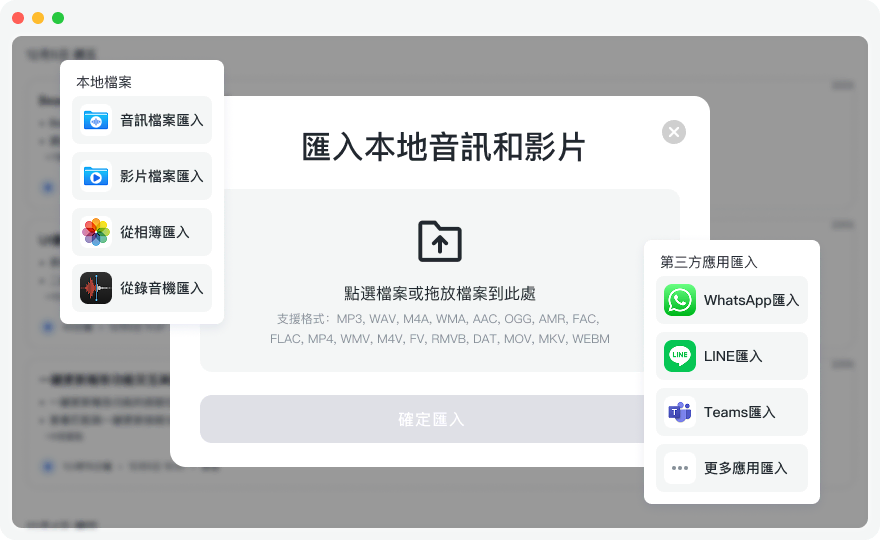
Step 1: Import Audio File
Go to the tool website (e.g., Tinrec or MyEdit) and find the "Upload" or "Import" button. Current mainstream tools support common formats like MP3, M4A, WAV. If the file is large, ensure a stable internet connection.
Step 2: Select Language and Recognition Settings
After uploading, be sure to select the correct "original audio language."
- Note: If the recording contains multiple languages (e.g., mixed Chinese and English), choose a tool that supports "mixed recognition" or select the primary language for best results.

Step 3: Wait for AI Transcription and Summary Generation
Press start, and the system will automatically convert speech to text. Advanced tools like Tinrec also perform "speaker diarization" (identifying who is speaking) and "AI summary" at this step.
- Tip: You can use the AI conversation feature to directly ask, "What is the deadline mentioned in this recording?" to quickly confirm key information without reading through everything.
Step 4: Proofread and Export
While AI is powerful, names and proper nouns may still be incorrect. Quickly review the text and make corrections.
- Plain text needs: Export as TXT or Word file (suitable for meeting notes).
- Video needs: Export as SRT or VTT file (includes timestamps, suitable for subtitles).
Frequently Asked Questions (FAQ)
Q1: How accurate is audio-to-text conversion? Current AI models (e.g., Whisper or proprietary models) typically achieve over 90% accuracy in clear recording environments. However, accuracy drops with background noise, multiple speakers talking simultaneously, or distant microphone. It's recommended to record close to the microphone.
Q2: Can iPhone directly transcribe recordings to text? iPhone users can use the built-in Voice Memos app (iOS 18.4+ supports partial transcription) or third-party tools like Tinrec that offer an iOS app for on-device recording and real-time transcription, with sync to the web version.
Q3: Are these tools safe? Will meeting content leak? Choosing well-known tools with clear privacy policies is important. Most paid or professional tools (e.g., Good Tape, Tinrec) emphasize data encryption and privacy protection, and do not use user data for public training. For highly confidential content, review each platform's privacy terms.
Q4: What are the typical limitations of free versions? Most online tools' free versions have time limits (e.g., 3 minutes per day, 100 minutes per month) or feature limits (e.g., cannot export SRT, cannot use AI summary). Choose a plan based on your recording frequency.
Q5: What if my recording exceeds 1 hour? Long recordings may encounter upload limits or processing failures. Use audio editing software to split the file into several 30-40 minute chunks and upload them separately, or use a professional tool that supports long recordings.
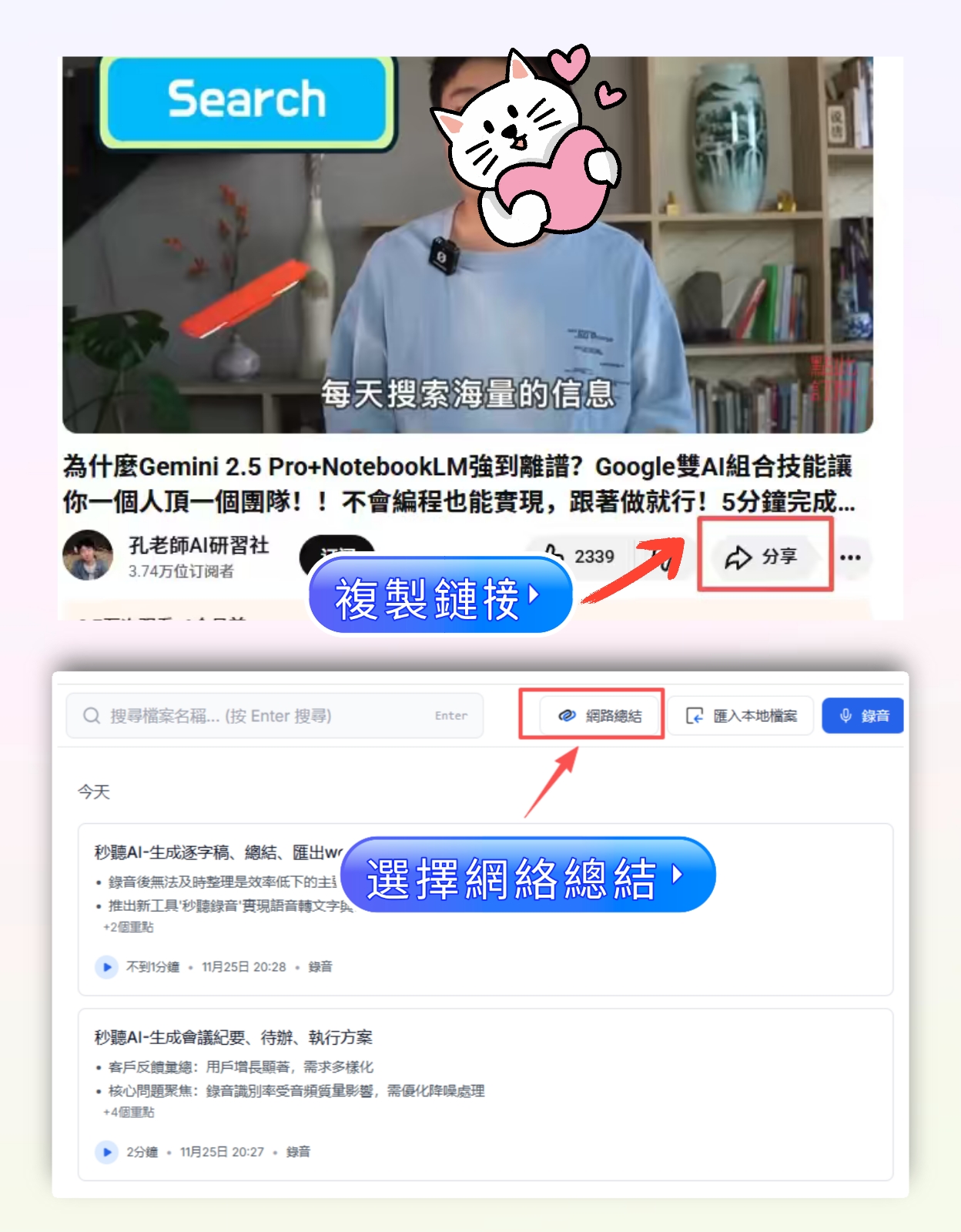
Q6: Can I directly convert YouTube videos to text? Yes. Some tools like Tinrec allow you to paste a YouTube or online video link for direct analysis and generation of transcripts and summaries, without needing to download the MP3 file first. This is very helpful for online courses.
Turn every recording into actionable outcomes
Get 60 free transcription minutes when you sign in. No credit card required.
Related Reading
You might also like

2026 Real-World Comparison of 3 Notta Alternatives: Which Performs Better for Chinese Meetings and AI Q&A?
Still looking for a Notta alternative? We tested Tinrec, Plaud Note, and Otter.ai across transcription quality, AI features, and pricing to help you pick the best voice-to-text tool for your needs.
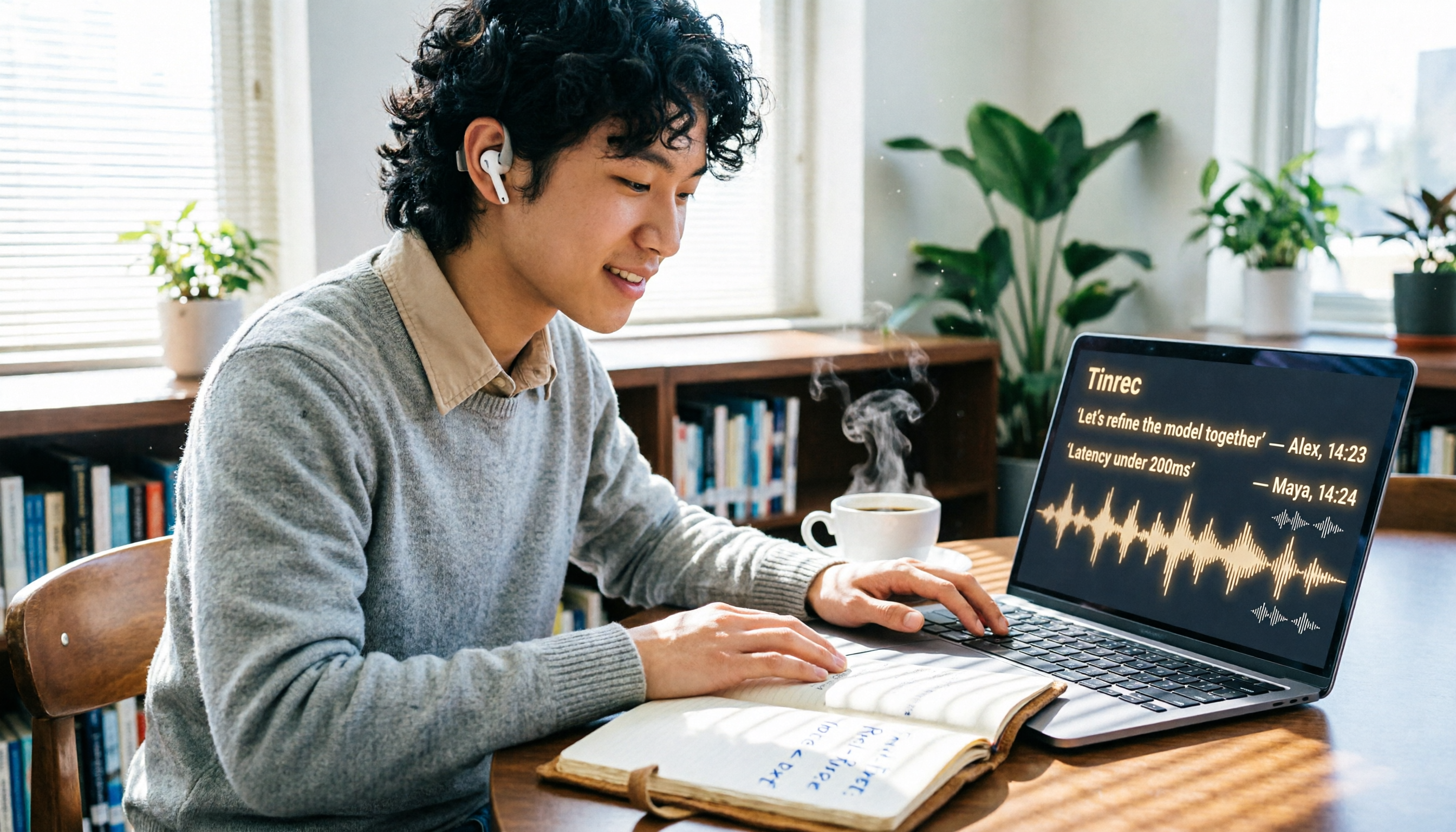
2026 Review of 3 Transcription Apps for Students: Notta Isn't the Top Pick—Here's Why
A senior student tests three speech-to-text tools for lectures and group discussions, comparing free minute limits, Chinese accuracy, and AI features of Notta, Otter.ai, and Tinrec to find the best fit for students.

2026 Real-World Comparison of 4 Notta Alternatives: Which Saves the Most Time for Chinese Meeting Minutes?
What are the alternatives to Notta? This article tests 4 recording-to-text tools including Tinrec, evaluating Chinese transcription, AI summaries, multi-platform support, and pricing to help you choose the best app for meetings, classes, and interviews.
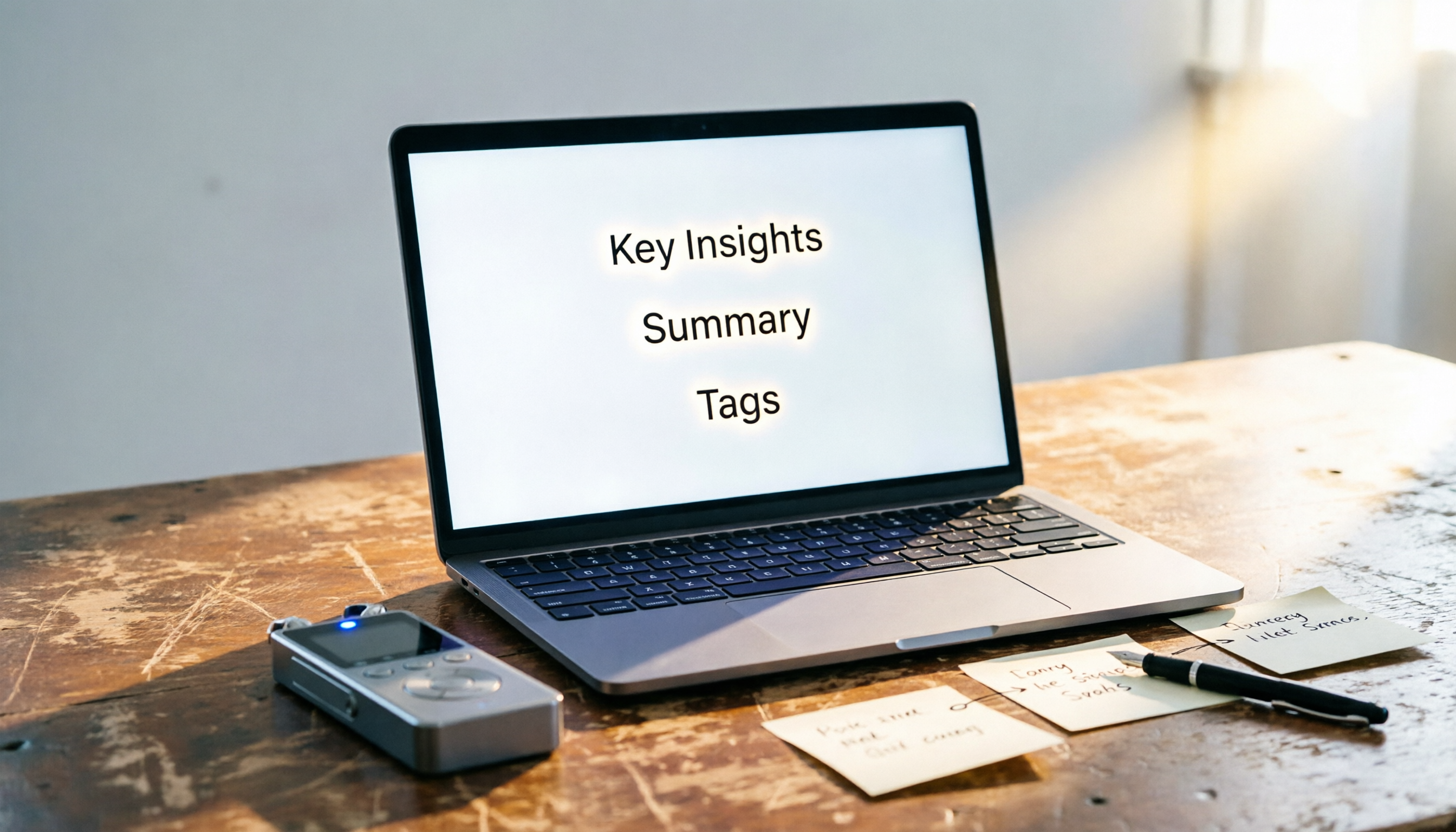
2026 Hands-on Comparison of 3 AI Recording & Transcription Tools: Which Works Best for Chinese Meetings and Learning?
It's not just about transcribing audio to text; it's about organizing it into usable knowledge. This article hands-on tests three tools: Tinrec, Notta, and Fireflies, evaluating them on Chinese accuracy, AI summarization, multi-source support, and real-world experience to help you find the best AI recording assistant for meetings, courses, and online videos.

2025 Hands-On Review of 3 AI Recording Tools for Students: Tinrec's Free Tier Is the Most Surprising
A senior student tested these tools for a semester, comparing Tinrec, Notta, and Otter.ai on free tiers, AI summarization, cross-platform support, and student plans. Find out which one is best for lecture recording and exam review.
2026 Four Transcription Tools Tested and Compared: From Plaud Note Pro to Tinrec, My Journey to Choosing the Right One
After seeing heated discussions about Plaud Note Pro on Dcard, I actually tested four transcription tools. This article shares my trial journey from hardware recorders to software solutions, and why I ultimately chose Tinrec as my productivity core.

2026 Hands-On Comparison of 3 Speech-to-Text Apps: A Time-Saving Tool for Recording Natural Gas and Propane Prices in Nottawa
When comparing natural gas and propane prices in Nottawa, the most time-consuming part is recording calls and organizing quotes. This article tests three speech-to-text apps—Tinrec, Otter.ai, and Notta—evaluating Chinese recognition, AI summaries, cross-platform use, and free tiers to help you choose the best tool for recording supplier quotes and service details.

2026 Comparison of 4 Speech-to-Text Apps: Notta AI Not the Best? This App is the Top Pick
Hong Kong office workers test 4 speech-to-text tools including Notta and Tinrec to see which one offers the best Cantonese recognition, most useful AI features, and biggest time savings. Read this review before deciding.

2026 Comparison of 4 Speech-to-Text Apps: Beyond Notta, Which AI Meeting Summaries Actually Save Time?
I tested four tools: Notta, Otter, Plaud Note, and Tinrec. The key isn't just transcription accuracy—it's which one turns recordings into actionable knowledge. Tinrec's AI chat query and multi-source organization are the real time-savers.