
Turn recordings into transcripts and summaries in minutes
Upload audio or video for multilingual transcription, AI notes, and action items
Faced with piles of audio files, the anxiety of "What did this interview actually say?" or "What was the decision from this afternoon's meeting?" often haunts professionals and students. Manually transcribing a 1-hour audio file can take 3 to 4 hours—inefficient and easy to miss key points. The market is flooded with AI speech-to-text tools: some emphasize speed, others accuracy, and some are optimized for specific hardware or mobile apps.
This article compiles the hottest speech-to-text tools in 2026, including Meeting Ink, Otter.ai, Vocol, and Tinrec (instant voice recording). We analyze them across four dimensions: transcription speed, free credits, Chinese recognition accuracy, and AI summary quality. If you value Google Calendar integration, Meeting Ink shines. If you need a cross-device (iOS/Android/Web) assistant with AI conversational query, Tinrec is worth attention. For Taiwanese Hokkien needs, Yating Transcript still has advantages. This in-depth comparison will help you quickly choose the best tool.

Why You Need AI Speech-to-Text Tools: Three Core Pain Points
Before diving into tool reviews, let's clarify the three main problems these tools solve. Most users looking for "free speech-to-text" services are trying to overcome the following:
- Low information density, high cost of re-listening: Audio is linear; you can't "scan" it like text. Without transcription, finding a specific decision requires repeatedly dragging the progress bar.
- Lack of structured summaries: Raw transcripts can be tens of thousands of words—still a heavy read. Modern tools must be able to generate meeting minutes and action items.
- Multi-platform and multi-language barriers: Meetings might happen on Teams, Meet, or in person; content may mix English, Chinese, or dialects. Tool integration and language recognition determine practicality.
2026 Hot Speech-to-Text Tools Tested: Speed and Features Compared
Based on the latest 2026 test data (using a 26-minute standard podcast audio file), we analyzed the performance of mainstream tools and added the emerging tool Tinrec for comparison.
1. Meeting Ink: Excellent Speed and Integration
In testing, Meeting Ink showed great efficiency. Uploading a 26-minute audio file took only 55 seconds, with transcription completed in about 2 minutes. Its biggest advantage is deep integration with Google Calendar and Meet, ideal for enterprise users. It also supports Taiwanese Hokkien and Hakka recognition, very friendly for local meetings in Taiwan.
2. Tinrec (Instant Voice Recording): The Top Choice for Cross-Device and AI Interaction
Tinrec is not just a transcription tool—it's more like a personal AI recording assistant. It supports iOS, Android, and Web multi-device sync, making it convenient for "record on phone, organize on computer" scenarios. Its key differentiator is the "AI conversational query" feature: users can ask questions about the recording directly (e.g., "What was the budget limit mentioned in the meeting?") instead of just reading the transcript.
3. Otter.ai: King of English Meetings
Otter is a veteran with strong live captioning and English recognition. However, tests show its Chinese support is still weak, and the free version has many limitations (e.g., can't view full transcript). It's suitable for purely English-speaking environments like foreign companies.
4. Yating Transcript: Strong in Localized Languages
If your recordings contain a lot of Taiwanese Hokkien or Taiwan-accented Mandarin, Yating Transcript's recognition is highly advantageous. It had the fastest upload speed in testing (17 seconds), but summary generation often requires queuing, and it lacks live captioning. Best for post-session organization.

5. Other Options: Plaud, Good Tape, Vocol, etc.
- Plaud: Combines a physical recording card with an app, suitable for call scenarios where phone recording isn't possible, but lacks web flexibility.
- Good Tape: Simple interface, but free version queue can be extremely long (over 1 hour). Best for users not in a hurry.
- Vocol.ai: Good for project collaboration, but speech-to-text is slow, no live captioning, more for batch post-processing.
Stop organizing recordings by hand
Upload audio or video and automatically get a transcript, summary, and action items
Comprehensive Comparison: 9 Tools Features and Specs Table
For easier decision-making, here's a comparison table covering languages, features, and free credits:
| Tool | Supported Languages | Live Transcription/Captions | AI Summary/Actions | Key Features | Free Credit / Pricing |
|---|---|---|---|---|---|
| Meeting Ink | Chinese/English/Japanese/Taiwanese Hokkien/Hakka | Yes | Yes (strong structure) | Google Calendar integration, browser recording | Pro+ ~NT$549/month (40 hours) |
| Tinrec | Chinese/English/Japanese/Korean/Cantonese, etc. (10 languages) | Yes | Yes (including action items) | AI conversational query, video-to-text, multi-device sync | Free 100 min/month, Basic $4.9/month |
| Otter.ai | Primarily English | Yes | Yes | Auto join Zoom/Meet | Free limited, Pro ~US$16.99/month |
| Yating Transcript | Chinese/English/Taiwanese Hokkien | No | Yes (requires queue) | Strong Taiwanese/Mandarin recognition | Pay per minute, free trial available |
| Plaud | Multiple languages | No | Yes | Requires hardware recording card | Hardware purchase includes credits, subscription |
| Vocol.ai | Multiple languages | No | Yes | Team collaboration & comments | Points system (V-point) |
| Good Tape | Multiple languages | No | No (free version) | Minimalist interface | Free version long queue, Pro priority processing |
| SeaMeet | Multiple languages | Yes | Yes | Teams/Meet extension | Personal ~US$9.99/month |
| Vurbo.ai | Multiple languages | Yes | Yes | Real-time translation (occasional errors) | One-time purchase or subscription |
Practical Guide: How to Turn Recordings into Action Lists with AI Tools
Choosing the right tool is just the first step; integrating it into your workflow is key. Here's an example using Tinrec to show how to go from "simple recording" to "decision output." This logic applies to most advanced AI note-taking tools.
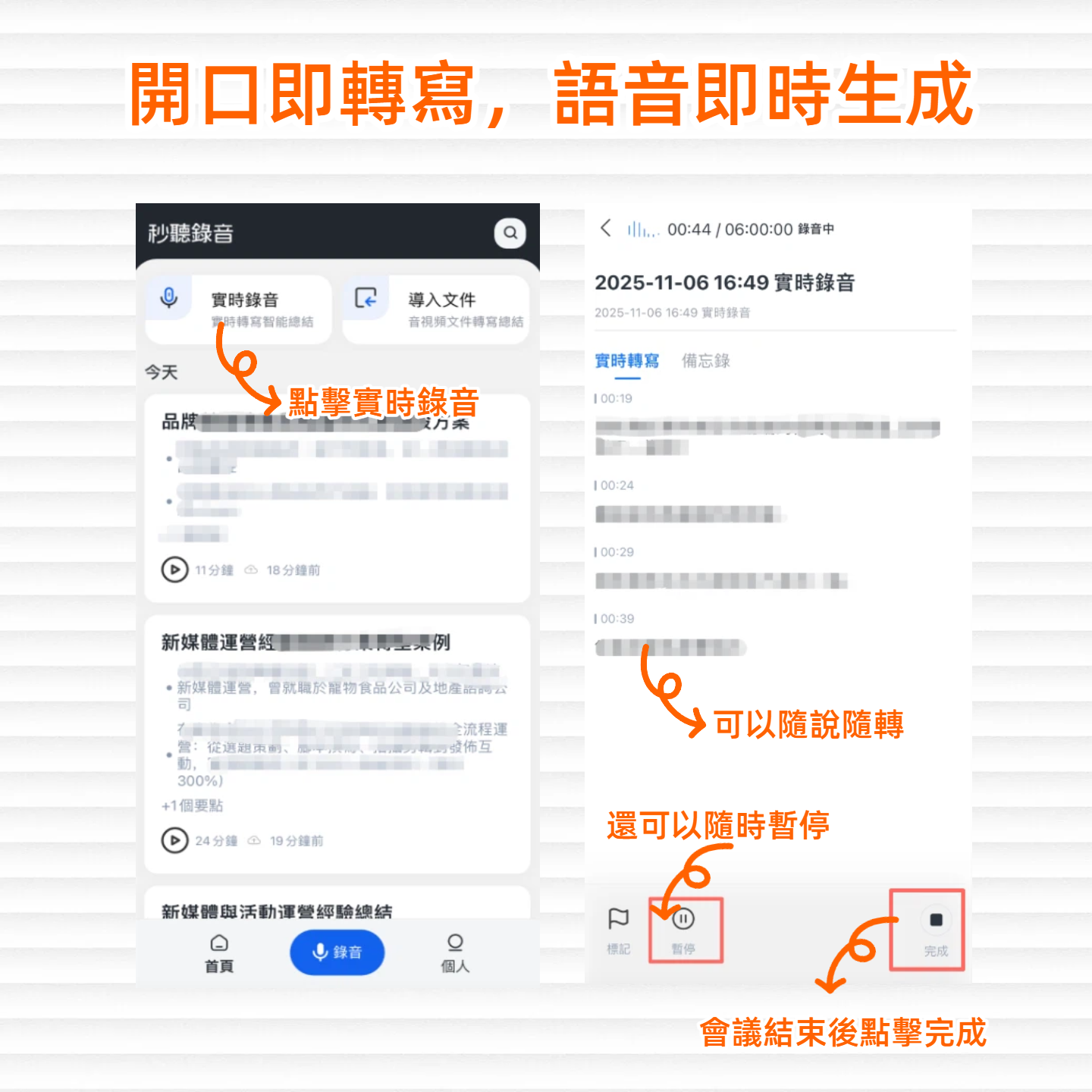
Step 1: Choose the Correct Input Mode
Based on your scenario, pick the most efficient entry point:
- In-person meeting/class: Use the mobile app or web version to enable live voice-to-text, letting AI transcribe in real time for instant key point marking.
- Existing file organization: If you have recorder files, use the audio-to-text feature to import files (mp3, wav, m4a, etc.).
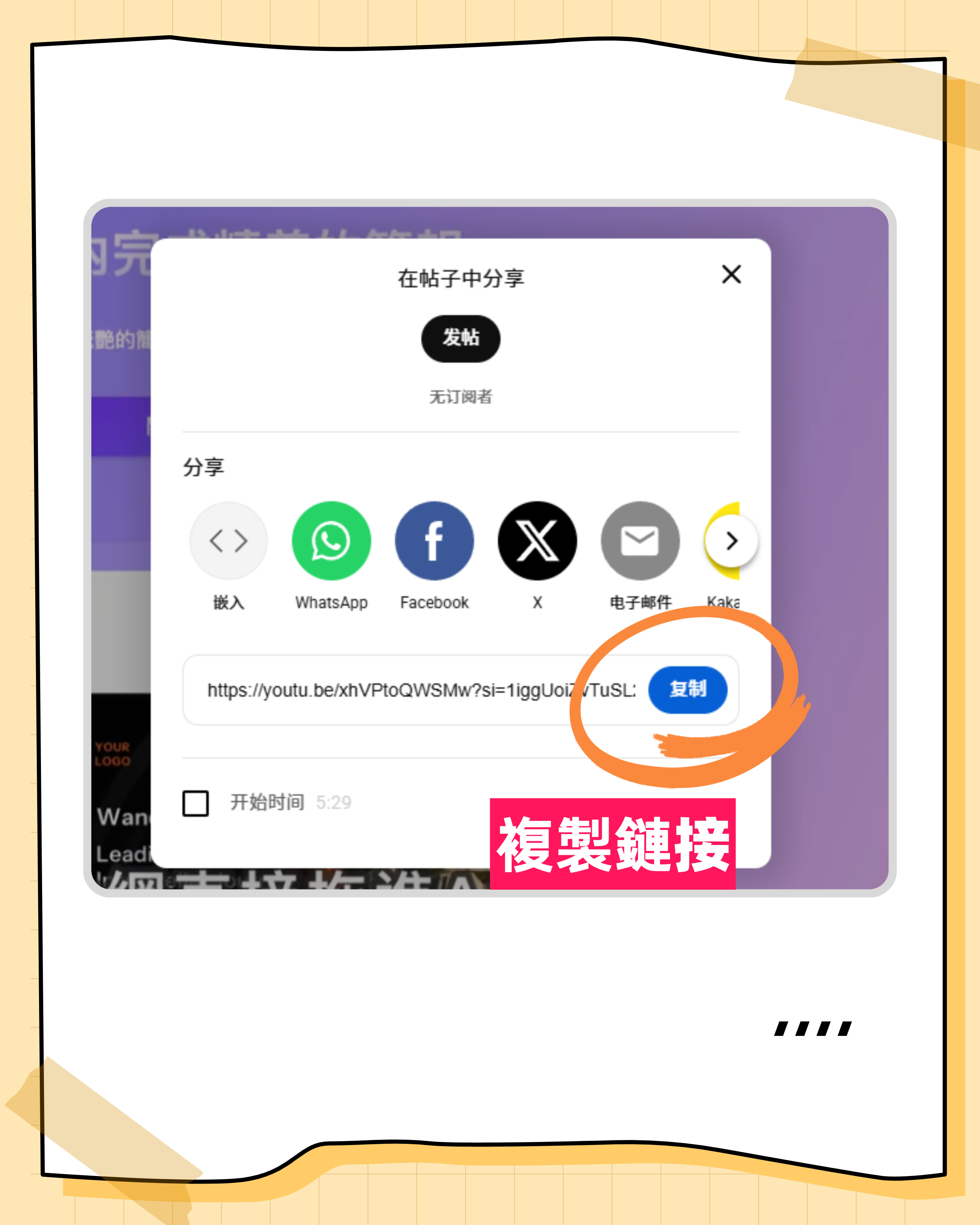
- Online video learning: For YouTube tutorials or podcasts, use podcast/web video to text by pasting the link to analyze content directly.
Step 2: Use AI to Quickly Understand Content
After transcription, don't read from start to finish. Use AI features to boost efficiency:
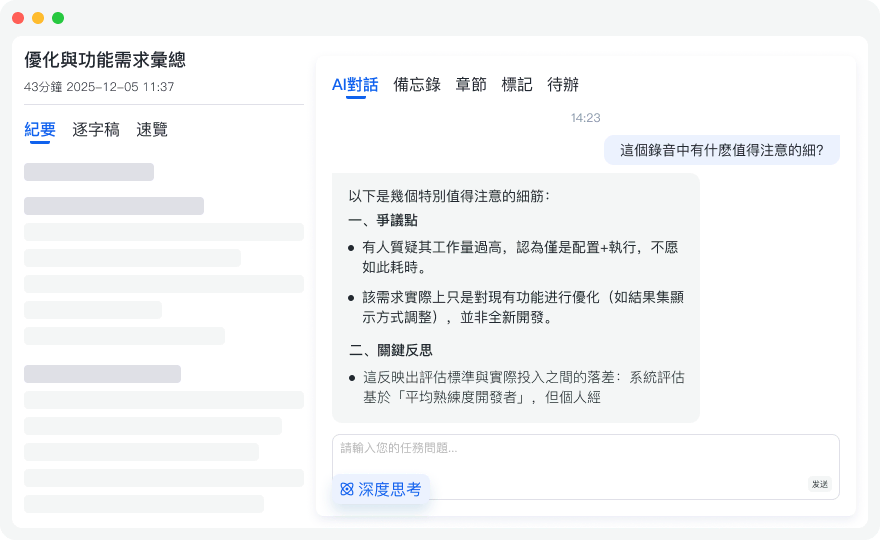
- View AI summary: Read the auto-generated "full summary" and "chapter segments" to grasp the main points.
- Use AI conversational query: This is Tinrec's differentiator. You can type in the chat box: "What was the meeting's conclusion?" or "What are the three key points the speaker mentioned?" AI answers based on the recording, saving you Ctrl+F time.

Step 3: Extract Action Items and Export
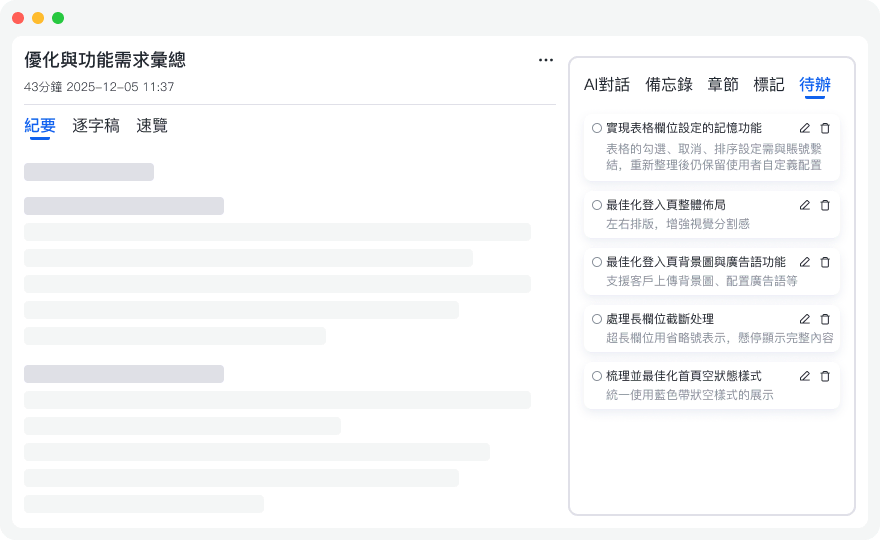
Finally, copy the AI-organized "action items" or export as PDF/Word, then share with team members or save to your note-taking app. That's the ultimate value of speech-to-text: turning voice into action.
FAQ
Q1: What are the typical limitations of free speech-to-text tools? Most free tools (e.g., Otter, Tinrec, Good Tape) impose a monthly minute limit (e.g., 60–100 minutes) or a per-file length limit. Advanced features like export to specific formats or speaker diarization may require payment.
Q2: Can iPhone call recordings be transcribed? Due to iOS privacy restrictions, apps cannot directly record phone calls. Solutions include using external hardware (e.g., Plaud) or another device (e.g., Tinrec web/app) with speakerphone.
Q3: How well do these tools handle mixed Chinese-English content? Current mainstream models (e.g., Whisper, Tinrec's model) have significantly improved mixed-language recognition. For specialized terminology, consider tools with custom vocabulary lists (e.g., Meeting Ink) or those with built-in AI correction.
Q4: Are uploaded audio files safe and private? Choose services with encrypted transmission and clear privacy policies. Enterprise users should look for security-certified or on-premises solutions. General users should avoid uploading extremely sensitive data to free online converters with vague terms.
Q5: Which is better: live transcription or post-upload? Depends on the scenario. Live transcription (e.g., Meeting Ink, Tinrec) is ideal for meetings you need to follow and mark key points in real time. Post-upload is better for recorder users or unstable networks; accuracy is often slightly higher than live streaming.
Q6: Can I directly convert YouTube videos to text? Yes. Some tools like Tinrec offer a video-to-text feature: just input a YouTube or TikTok link to get the transcript and summary, perfect for learners and content creators.
Turn every recording into actionable outcomes
Get 60 free transcription minutes when you sign in. No credit card required.
Related Reading
You might also like

How to Follow Up on Project Meeting Action Items in 2026: A Complete 5-Step Guide
After a project meeting, action items often get lost in chat threads and lack clear owners. This article breaks down a complete 5-step process for following up on project meeting action items, from pre-meeting preparation, bot-free recording, AI summaries and action item extraction, to export tracking and closure documentation. It uses Tinrec as a practical demonstration tool and also covers 5 key considerations and common questions when choosing a meeting follow-up tool.

Meeting Minutes Email Template 2026: 5-Section Structure + 3 Scenario Examples
Stuck with the task of emailing meeting minutes after a meeting wraps up? This guide offers copy-paste meeting minutes email templates covering routine weekly meetings, client meetings, and cross-departmental decision meetings, plus common mistakes and 6 practical FAQs.
2026 Comparison of 4 Meeting Action Plan Tools: Which One Best Tracks Post-Meeting Actions?
Meetings end, but action plans go nowhere—the problem is often not the people, but that the tool only gives you a transcript. This article starts from 'whether post-meeting actions are captured' and outlines 5 key factors for choosing a meeting action plan tool. It compares Tinrec, Otter.ai, Fireflies.ai, and Notta in terms of recording method, to-do extraction, Chinese language performance, and team ownership, and includes 4 common pitfalls and selection advice.
4 AI Meeting Task Extraction Tools Compared in 2026: From Transcript to To-Do List
You have the meeting transcript, but no one remembers who's responsible for what. This article compares four tools—Tinrec, Otter.ai, Notta, and TurboScribe—from a task extraction perspective, covering four key decision points, hands-on experience, common pitfalls, and scenario-based recommendations to help you find the one that turns meeting noise into actionable signals.

4 Meeting Notes Tools Tested for 2026: Which One Turns Discussions into Actionable Plans?
Even the most detailed meeting notes are useless if no one follows up. This article covers 4 key points for writing meeting action plans, 3 common mistakes, and hands-on comparisons of Tinrec, Notta, Granola, and PLAUD Note on task extraction, post-meeting follow-up, and team collaboration.

2026 Free Post-Meeting Email Automation Options: 5 Tools Compared
Always sending post-meeting emails the next day? The problem isn't your writing—it's that meeting content isn't captured well. This article reviews the free tiers and limitations of 5 post-meeting email automation and assistance methods, and tests how Tinrec turns transcripts, AI summaries, and action items into one-click email material. Suitable for students and small teams.

3 Meeting Recap Email Templates Compared for 2026: Which Format Best Moves Projects Forward?
We break down three meeting recap email template styles and how to choose one, covering structure, examples, and common mistakes. Plus, learn how Tinrec turns meeting recordings into citable minutes, to-dos, and action lists so your post-meeting emails don't get ignored.

2026 Comparison of 4 Meeting Note Tools: Which One Actually Turns Meeting Conclusions into Action Plans?
Meetings end with conclusions, but no one follows through? This article starts from the real need to turn meeting conclusions into action plans, outlines 4 key purchasing points, and compares Tinrec, Notta, Otter.ai, and Granola on bot-free recording, AI summaries and to-dos, post-meeting Q&A, and team data retention, with prices and limitations, to help you choose the one that truly connects to execution.

2026 AI Follow-Up Email Tools Comparison: Tinrec Ensures No Post-Meeting Follow-Up Is Missed
The meeting ending is just the beginning of follow-up. This article tests 3 AI tools related to post-meeting follow-up emails, including Tinrec, Manus, and Genspark, covering meeting transcription, action item extraction, and email draft generation, helping you bridge the last mile from the meeting room to the inbox.