
Turn recordings into transcripts and summaries in minutes
Upload audio or video for multilingual transcription, AI notes, and action items
Have you ever experienced this frustrating moment: 'A 1-hour interview, and after listening to the recording three times, I still can't produce a complete transcript?' Or 'Deadline looming, but I can't find a key data point from the interviewee, replaying the audio over and over?'
According to content creators, transcribing interviews is a notorious 'time killer.' Manual transcription is not only time-consuming but also prone to missing important points due to fatigue. With AI technology maturing in 2026, today's tools don't just 'convert to text'; they help you 'understand the key points' and generate structured interview summaries.
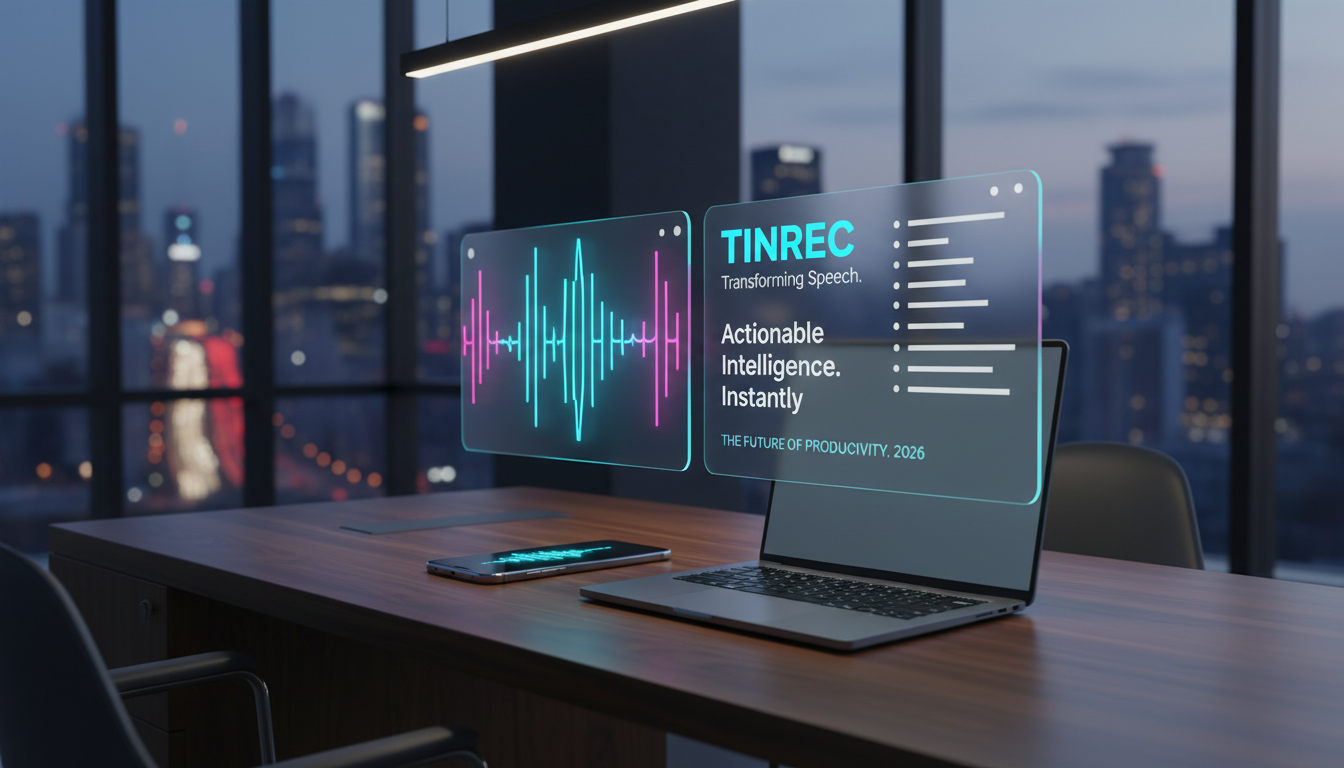
This article reviews 6 popular AI recording and transcription tools on the market, objectively comparing them on Chinese recognition accuracy, free plan limits, and feature richness (such as AI chat query, multi-format support), along with practical tutorials and FAQs.
Quick Navigation Summary:
- If you prefer a physical recording device and have a sufficient budget: Plaud Note is the top hardware-integrated choice.
- If you need an all-in-one software (including video/audio/AI chat query) and seek high value: Tinrec (秒聽錄音) is a flexible solution.
- If you're in a multinational team primarily using Zoom/Teams: Notta offers strong integration.
Why You Need AI Tools for Interview Transcription?
Don't think AI tools just save you typing. For interview transcription, the real value lies in turning 'unstructured audio' into a 'searchable database.'
1. End the 'Replay Hell,' Save 90% of Transcription Time
Traditional methods require 'listen and type,' often taking 3+ hours for a 1-hour recording. With AI tools, speech-to-text takes as little as 1/10 of the recording time, and AI-generated summaries let you focus on proofreading key points, freeing time for deep analysis and writing.
2. Query Details via 'AI Chat' Instead of Re-listening
This is a key differentiator of next-gen tools. In the past, to confirm 'the Q3 revenue figure mentioned by the interviewee,' you had to blindly scrub through the timeline. Now, with AI Chat (e.g., Tinrec), you can ask AI directly: 'What are the interviewee's views on market trends?' and the system answers based on the recording.
3. Automatic Speaker Diarization for Clear Interview Context
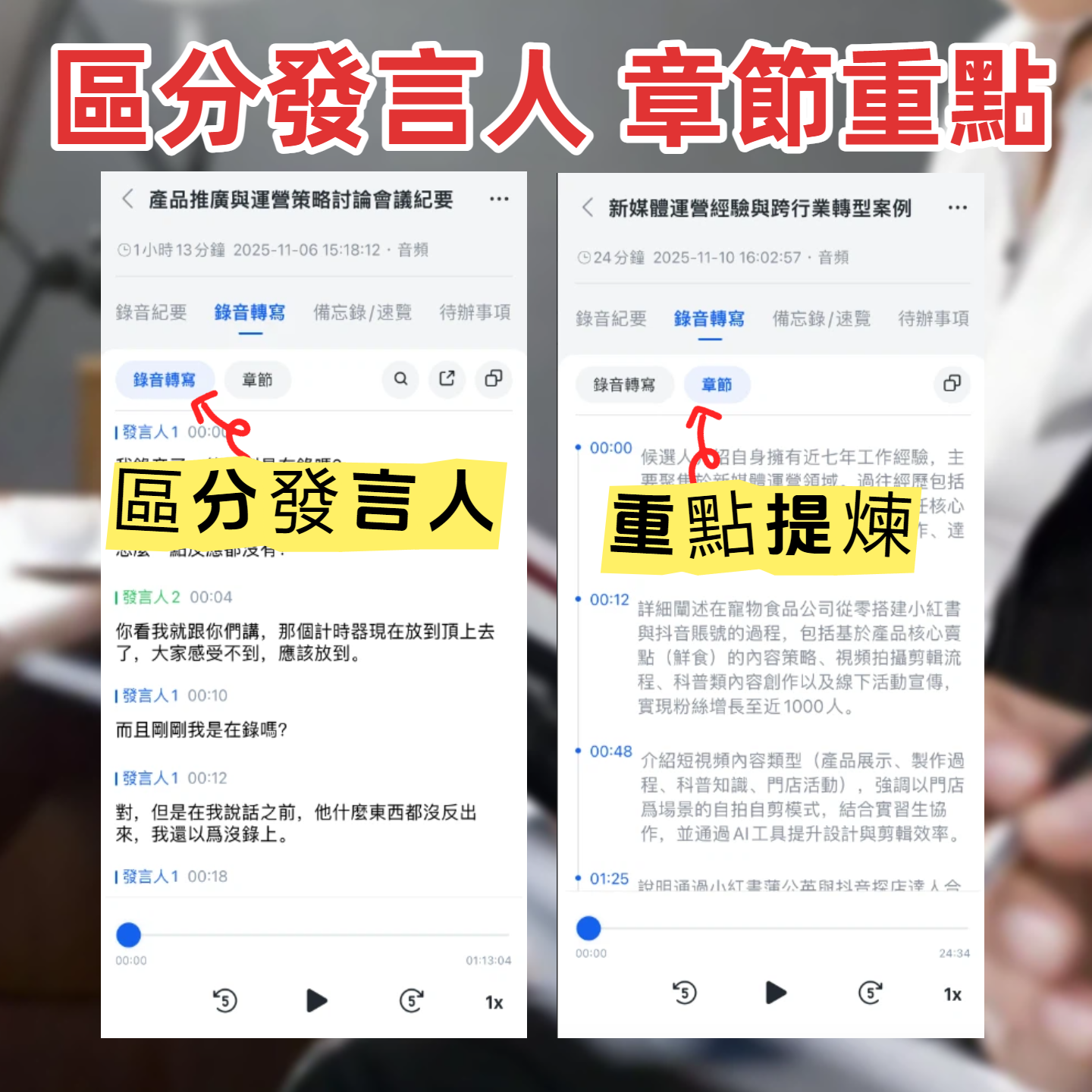
In multi-person interviews, voices blending together is a nightmare. AI tools use voice recognition to automatically differentiate Speaker A (interviewer) and Speaker B (interviewee), making the transcript organized and accurate.
Top 6 Interview Recording & Transcription Tools for 2026
The following 6 tools are selected based on Traditional Chinese context suitability and features.
1. Plaud Note – Hardware-Software Recording Marvel
- Highlight: Combines a physical recording card/pin with an app; one of the most hardware-integrated products on the market.
- Advantages: Dedicated hardware with built-in noise-canceling microphone, excellent recording in noisy environments. Supports iPhone call recording (via MagSafe attachment).
- Suitable for: Journalists, lawyers, salespeople who carry a recorder.
2. Tinrec (秒聽錄音) – All-in-One AI Note Assistant
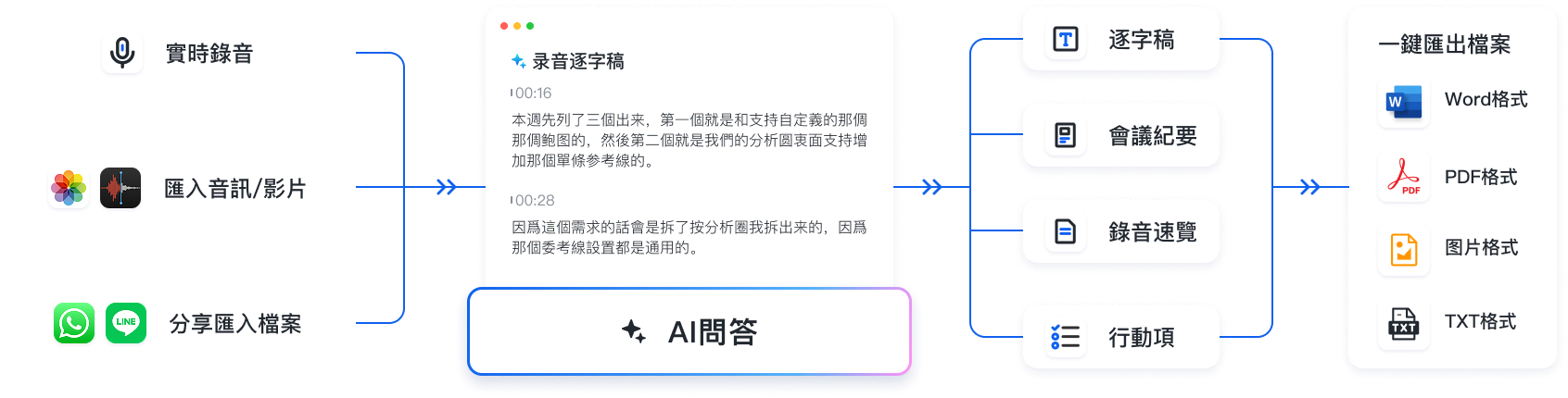
- Highlight: Focuses on the complete 'Record → Understand → Act' workflow; handles not only audio files but also YouTube videos and podcast links to produce transcripts.
- Advantages:
- Multi-source support: Besides live recording, supports uploading audio/video files, and even parsing online video content via URL.
- AI Chat Query: A standout feature. No need to re-read the entire transcript; ask AI directly for interview details.
- Great value: Offers 100 minutes of free monthly usage, quite friendly for individual creators and students.
- Suitable for: Content creators (video-to-text), students (organizing lectures), and professionals who value software versatility.
3. Notta – Top Choice for International Meetings
- Highlight: Powerful multilingual real-time transcription, well-integrated with Zoom, Google Meet, etc.
- Advantages: Supports 100+ languages, ideal for international interviews needing real-time captions.
- Suitable for: Multinational companies, international research teams.
Stop organizing recordings by hand
Upload audio or video and automatically get a transcript, summary, and action items
4. Smartshoki – Designed for Japanese Enterprises
- Highlight: Developed in Japan, optimized for Japanese semantic understanding and 'filler word removal.'
- Suitable for: Companies frequently interviewing Japanese clients.
5. Otter.ai – English Transcription Leader
- Highlight: Excellent English recognition, dominant market share in the US and Europe.
- Disadvantage: Currently does not support Chinese, high barrier for Chinese-speaking users.
- Suitable for: All-English work environments, international students.
6. Rimo Voice – Lightweight Japanese Tool
- Highlight: Minimalist interface, specialized in Japanese transcription.
- Suitable for: Individual users needing simple and fast Japanese audio processing.
Detailed Specification Comparison: Features, Pricing, and Support
To help you choose intuitively, we've compiled the following comparison table:
| Dimension | Plaud Note | Tinrec (秒聽錄音) | Notta | Otter.ai | Smartshoki |
|---|---|---|---|---|---|
| Core Positioning | Hardware + Software Recorder | All-in-One AI Note & Chat Assistant | International Video Conferencing Expert | English Meeting Notes | Japanese Business Specialized |
| Chinese Support | Excellent (Traditional/Simplified) | Excellent (supports Taiwanese Mandarin/Cantonese/multilingual mix) | Excellent | Not supported | Japanese primarily |
| Platform Support | iOS/Android/Hardware | Web/iOS/Android | Web/App/PC | Web/App | Web |
| Unique Feature | Physical call recording | AI Chat Query, online video to text | Real-time translation captions | English voice recognition | Japanese filler word filtering |
| Free Credits | 300 min/month (hardware purchase required) | 100 min/month (no hardware purchase needed) | 120 min/month | 300 min/month | Trial limitations |
| Output Formats | Word/PDF/Mind map | Word/PDF/TXT/SRT subtitles | Word/PDF/SRT | TXT/PDF | Word/Text |
Practical Tutorial: How to Turn Recordings into Actionable Notes with AI Tools
Once you've chosen the right tool, how do you use it effectively? Here, we use the feature-rich Tinrec (秒聽錄音) as an example to demonstrate the standard workflow from 'interview recording' to 'producing key points.'
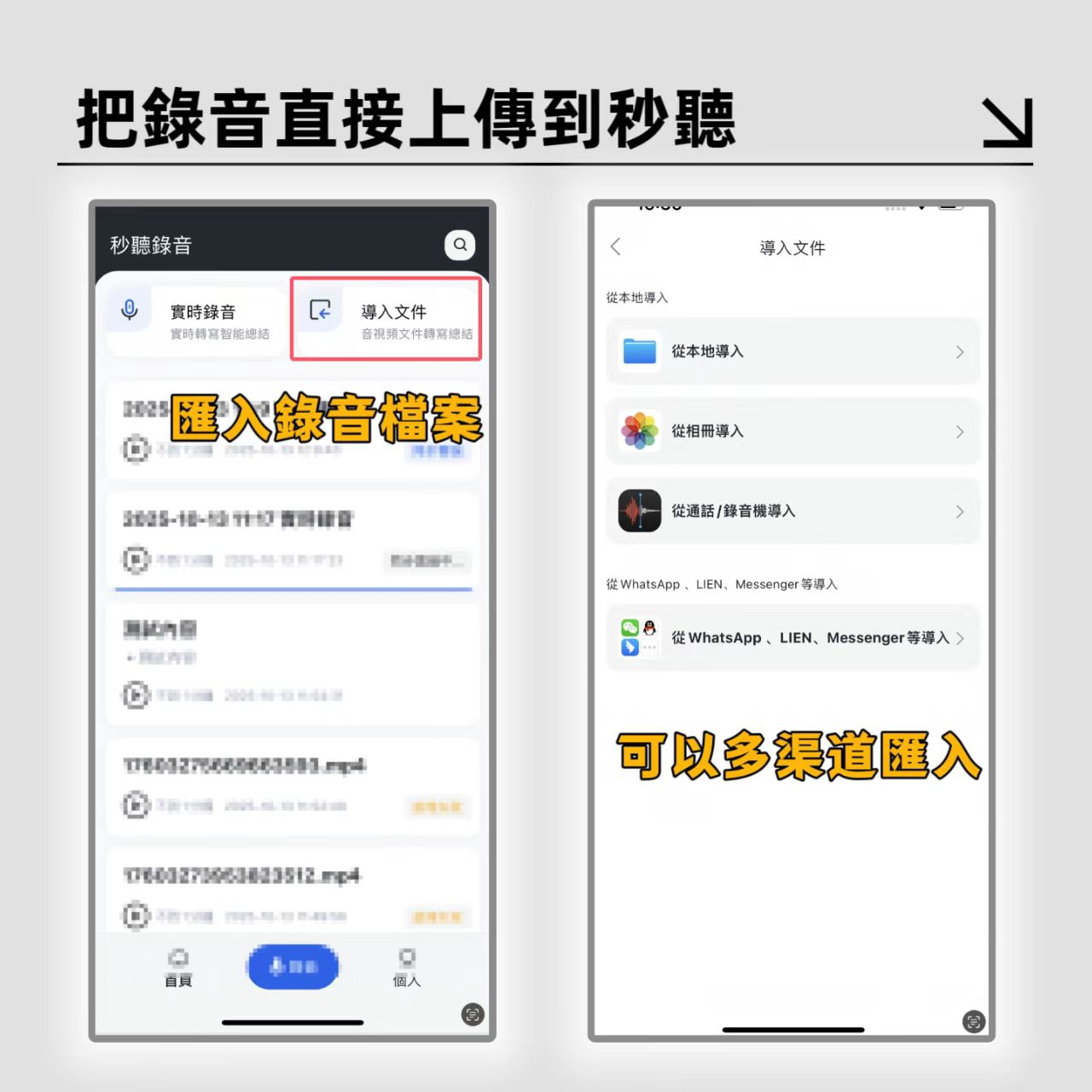
Step 1: Choose Recording or Import Source
- Live interview: Open the app or web version, click Record & Transcribe in Real Time. Ensure your device is close to the interviewee.
- Existing files: If you have MP3 or video recordings, use the Audio to Text feature to upload.
- Online content: If the interview is on YouTube or a podcast, copy the link and use Podcast/Online Video to Text, saving download time.
Step 2: Speaker Diarization and Initial Transcription
After recording, the system automatically transcribes. Tinrec supports 10 languages including Chinese, English, Japanese, and Cantonese. Once transcribed, it's recommended to label speakers (e.g., Speaker A = interviewee) for easier referencing later.

Step 3: AI Smart Summarization and Key Point Extraction
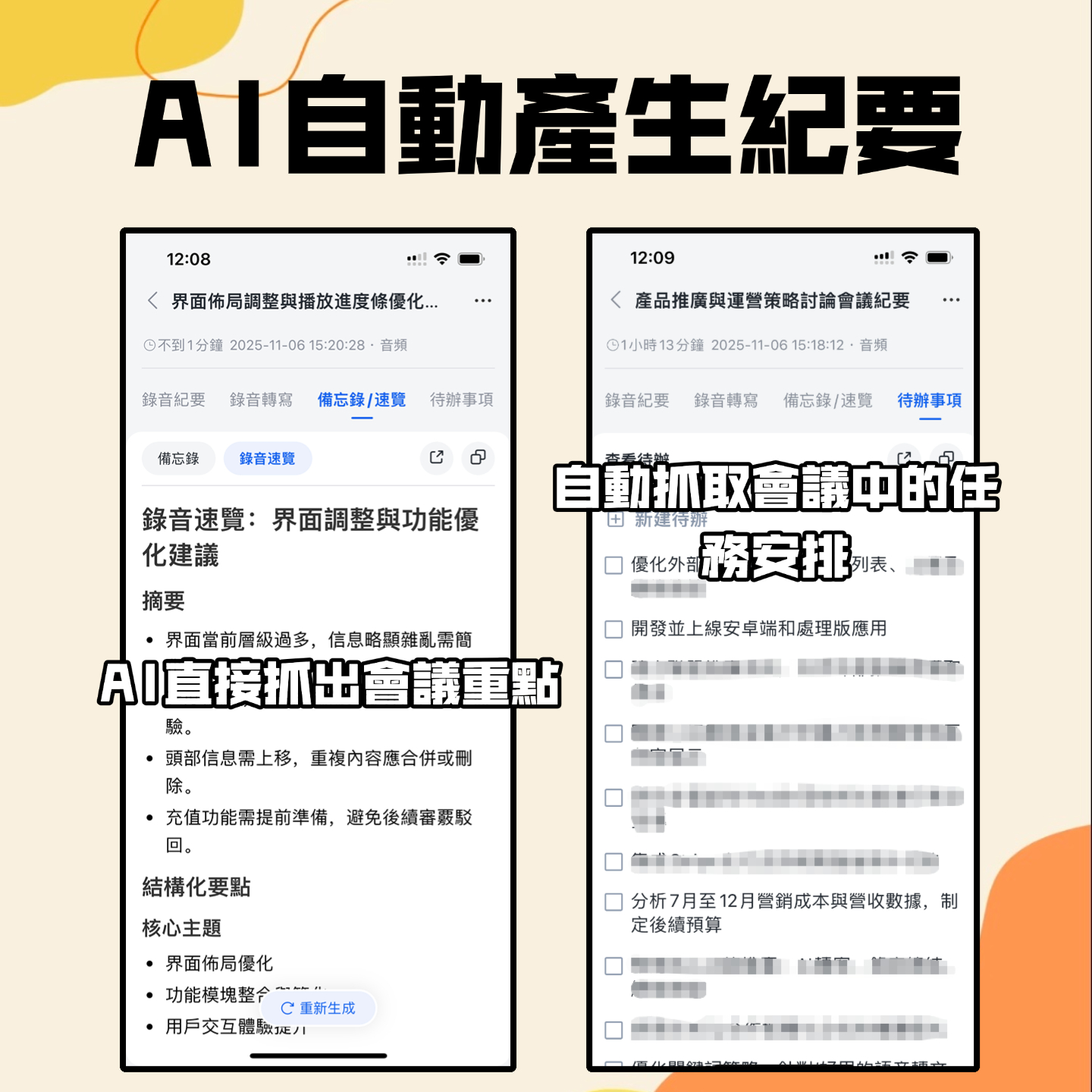
This is the most critical step. Don't just read the transcript! Click the AI Summary feature to generate:
- Interview Summary: Get an overview of a 1-hour conversation at a glance.
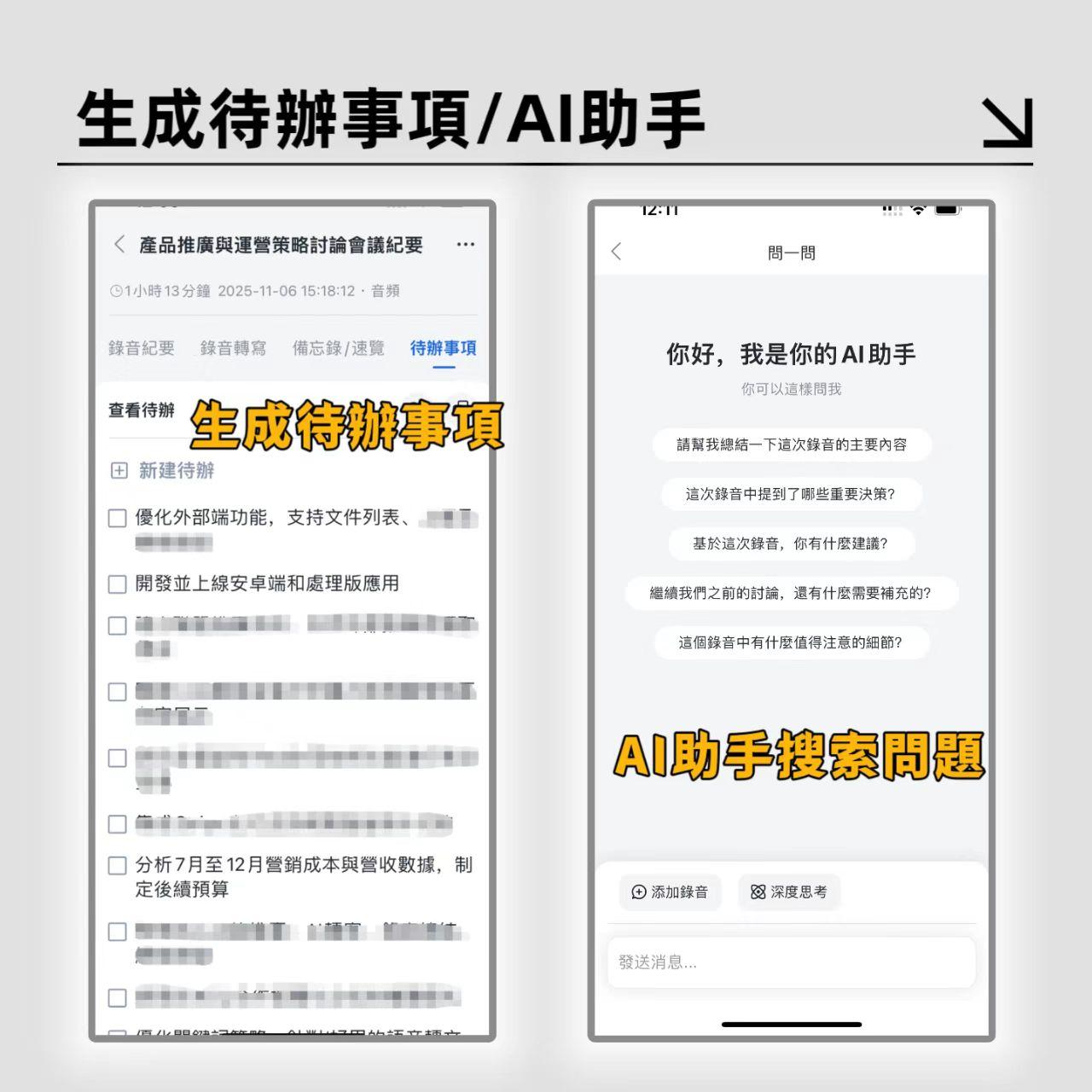
- Action Items: If the interview mentions follow-up materials, the system automatically creates a to-do list.
Step 4: Use AI Chat to Query Details
If while writing you forget 'What specific growth rate did the interviewee mention?' Don't re-listen. Use the AI Chat Query feature; type a question like 'What was the 2025 growth target mentioned in the interview?' and AI will pinpoint and answer.
Frequently Asked Questions (FAQ)
Q1: How accurate is Chinese transcription with AI? In quiet environments, mainstream tools like Tinrec and Notta typically achieve over 95% Chinese recognition accuracy. However, in noisy settings, overlapping speech, or heavy use of mixed Chinese-English jargon, accuracy may decrease. It's recommended to keep the microphone close to the interviewee.
Q2: Can I transcribe iPhone call recordings? Due to iOS privacy restrictions, most apps cannot directly record calls. There are two workarounds: 1) Use a physical recorder like Plaud Note with MagSafe; 2) Use speakerphone and record with another device (e.g., iPad or Tinrec web version on a computer).
Q3: Is my interview data secure? Check privacy policies when choosing tools. Professional tools like Tinrec, Plaud, and Notta use encrypted transmission and storage. Compared to uploading to unknown free conversion sites, using legitimate paid/registered services is more secure.
Q4: What are the common limitations of free versions? Common limitations are monthly transcription minutes or single recording length. For example, Notta free offers 120 min/month, Tinrec free offers 100 min/month. For students or occasional interviews, the free version is often sufficient. For heavy usage, paid plans (typically a few hundred TWD per month) provide more credits and advanced export options.
Q5: Can I directly convert YouTube videos into interview notes? Not all tools support this. Plaud focuses on physical recording, while Tinrec specifically supports 'online video link parsing'; just paste the URL to generate a transcript and summary, ideal for public interviews or seminars online.
Q6: Can I export subtitle files for editing? Yes. For video production, Tinrec and Notta support exporting TXT, Word, and even SRT subtitle files, very useful for creators who need subtitles for interview videos.
Turn every recording into actionable outcomes
Get 60 free transcription minutes when you sign in. No credit card required.
Related Reading
You might also like

2026 Free Plaud Recorder Plans Compared: 4 Options at a Glance
Many people search for a "free Plaud recorder," but PLAUD is a hardware device—what's free is the 300 transcription minutes per month. This article compares free plans from PLAUD, Tinrec, Otter.ai, and Notta, covering hardware costs, Chinese support, post-meeting organization, and team collaboration to help you choose the right tool.

2026 AI Voice Recorder Comparison: Plaud Note, Note Pro, NotePin vs Tinrec — Which Should You Choose?
What's the difference between Plaud Note, Note Pro, and NotePin? This guide compares four AI voice recorders based on real workflows for online meetings and in-person interviews, covering recording methods, post-meeting organization, subscription costs, and team data ownership to help you decide between hardware and software.

2026 AI Recorder Comparison: Plaud Free Tier & Pricing Explained — Which Tool Fits You Best?
People searching for 'Plaud free recording' often mistake the monthly free quota for a long-term free plan, only to discover the real cost is hardware plus subscription. This article breaks down free quotas and pricing, tests Plaud, Notta, Otter.ai, and Tinrec, and shares 4 key buying factors and common pitfalls.

Tinrec vs Plaud Note 2026: 5-Dimension Comparison — Do You Need Meeting Recording Hardware?
People searching for 'which Plaud recorder' often think a new device will solve their meeting notes problems, but the real bottleneck is what happens after recording: organizing, follow-up questions, and team handoff. This article compares AI recording hardware like Plaud Note with a hardware-free meeting notes tool like Tinrec across 5 dimensions—online meeting capture, post-meeting output, team governance, and cost structure—and gives clear scenario-based recommendations.

Plaud Note Pro vs Note vs NotePin: 2026 Comparison Review — Which One Is Right for You?
How do Plaud Note, Note Pro, and NotePin differ? This comparison breaks down recording form factor, transcription quotas, and post-meeting workflows. It also explains why you may not need dedicated hardware if most of your meetings are online, and what a software-only option like Tinrec can actually do.

4 Free Recording Tools Tested in 2026: Is PLAUD's Free 300 Minutes Enough?
PLAUD's "free" offer is actually 300 transcription minutes per month; the hardware still costs money. This article compares Tinrec, PLAUD, Notta, and Otter.ai in real meeting scenarios, looking at free quotas, post-meeting organization, and team collaboration to help you decide which one is worth trying first.

2026 AI Recording Tools Compared: Plaud Recorder vs. Bot-Free Meeting Notes
People searching for an online Plaud recorder usually face the same decision: buy a physical recording device or use software for online meetings? This guide compares six options by positioning, quotas, and best-fit users, and explains the real limitations of Plaud Note and NotePin hardware in online meeting scenarios so you can choose the right tool within budget.

2026 AI Voice Recorder Comparison: PLAUD File Organization vs. Meeting Notes—Which Saves More Time?
Starting from the question 'How do I organize PLAUD recording files?', this article compares four AI voice tools: Tinrec, PLAUD, Otter.ai, and Notta. It covers input sources, post-transcription processing, Chinese-language experience, team collaboration, and pricing structure. PLAUD is suited for on-the-go recording, while Tinrec turns recording files into searchable, queryable meeting data. The article also includes buying tips and scenario-based recommendations.

How to Transcribe Audio for Free in 2026: A Complete 5-Step Guide
Many people search for 'plaud recording free 2024' to find out if they can turn recordings into transcripts without paying. This guide compares PLAUD and Tinrec across five key points—free quotas, hardware costs, online meeting recording, and post-meeting organization—and outlines common pitfalls and selection advice to help you decide if a free plan is enough.