
Turn recordings into transcripts and summaries in minutes
Upload audio or video for multilingual transcription, AI notes, and action items
Let me ask you a question: How many action items came out of last week's meeting? If you can't answer that, your meeting notes might need an upgrade. Many people search for "how to use Otter in Chinese" because they want to solve meeting notes and audio-to-text problems. This article uses Tinrec (Seconds Recording), which I've tested and found better suited for Chinese users, as an example. I'll walk you through 5 steps to transcribe audio, generate AI summaries, and share your notes. At the end, I'll also compare it with Otter.
Before You Start | What You'll Need
- A smartphone or computer (Tinrec supports iOS, Android, and desktop)
- Download the Tinrec app (free from the App Store or Google Play; sign in with Google or Apple ID)
- Prepare an audio recording (could be a meeting, interview, or use live recording)
- A stable internet connection (live transcription requires internet; for offline use, download language packs in advance)
Step 1 | Record the Content You Want to Transcribe
This step is about getting a clear audio file, which is the foundation for transcription quality. Open Tinrec and tap the record button on the main screen to start. Holding your phone closer to the speaker works best; for multi-person meetings, place it in the center of the table. For online meetings (Zoom, Google Meet, Teams), use the Tinrec desktop app—it captures system audio directly, so you don't need to invite a bot to the meeting. Why emphasize audio quality? AI transcription accuracy heavily depends on audio clarity. Instead of spending a lot of time correcting later, spend an extra 30 seconds adjusting the position during recording. When done, the main screen shows the recording with duration and file size. (Illustration: In a meeting room, a phone is placed in the center of the table recording, with the screen showing live transcription text)
Step 2 | Let AI Transcribe It for You
Tinrec automatically generates a transcript within seconds after recording ends; if you import an old audio file, it will also transcribe automatically after upload. The transcript shows timestamps for each sentence; click a sentence to play the corresponding audio for quick verification. If there's mixed Chinese-English content, Tinrec can recognize and preserve the original text. You don't need to do anything in this step—just wait for it to finish. I usually pack up while waiting; a 30-minute meeting takes about 1–2 minutes to see the text. (Illustration: Computer screen showing transcript with timeline markers)
Step 3 | Quickly Proofread the Transcript
AI can make mistakes, especially with technical terms or heavy accents. Don't read from start to finish; use the search function to find key decision points or numbers and quickly scan those sections. Tinrec supports "sentence-by-sentence playback"—click a sentence to hear the original audio, which is much faster than manual proofreading. If your team has common terms, you can add them to "Team Keywords" in settings to reduce errors on proper nouns. I usually spend only 5–10 minutes proofreading a 1-hour meeting, focusing on numbers, dates, names, and conclusions. (Illustration: User clicks a sentence in the transcript, headphones play the audio)
Stop organizing recordings by hand
Upload audio or video and automatically get a transcript, summary, and action items
Step 4 | Let AI Generate Meeting Minutes for You
Transcripts are too long; your boss wants the highlights. Tinrec's AI summary automatically organizes sections, key points, and action items, and even generates a mind map. Click the "Summary" tab, select the "Meeting Minutes" template, and AI will list discussion topics, decisions, and action items. I usually copy it directly into a report or forward it to the team. Action items clearly list assignees and deadlines (if mentioned in the audio), saving me time from manually compiling them. (Illustration: AI-generated key summary and to-do list, clean interface)
Step 5 | Export and Share
Your organized data should fit into your workflow. Tinrec supports exporting to Word, PDF, TXT, SRT subtitles, and can send directly to Notion, Google Docs, OneNote, or Dropbox. For team use, you can save meeting data to a Tinrec team space where members can view, search, and even ask AI follow-up questions. This way, every meeting becomes team knowledge, not scattered across personal devices. (Illustration: Export menu showing multiple format options, with team space sharing icon on the right)
FAQ and Troubleshooting
Q: The transcription has many errors. What should I do? Usually, the recording environment is too noisy or the distance is too far. Tinrec has built-in smart noise reduction; enable it in settings before recording. For imported files, you can manually select "High Noise Environment" mode. Otter's Chinese transcription has higher error rates with certain accents, while Tinrec is more stable for Chinese and Traditional Chinese recognition.
Q: Can I record online meetings? Yes, and you don't need to invite a bot. The Tinrec desktop app captures system audio directly, so participants won't see an extra attendee. Otter has a similar feature, but Tinrec has been tested more extensively for compatibility with Zoom, Meet, and Teams in Chinese environments.
Q: Is the free version enough? The free version has basic usage limits, suitable for occasional transcription. Since I have many meetings weekly, I upgraded to Pro; it costs less than two Starbucks coffees a month but saves me hours of organizing time.
Q: How can teams share? Create a Tinrec team space, invite members, and admins can allocate seats, view usage, and audit logs. Otter's team plan is feature-rich, but its Chinese interface and Traditional Chinese terminology aren't as well adapted as Tinrec's.
Pro Tips | 3 Ways to Double Your Efficiency with Tinrec
- AI Q&A to find answers directly: Instead of scrolling through transcripts, ask "What was the budget cap discussed last time?" Tinrec will answer across multiple meeting files and provide timestamps. Otter also has AI Chat, but in my testing, Tinrec is more accurate for Chinese understanding.
- Real-time bilingual translation: For meetings with mixed Chinese and English, enable "Bilingual Mode" to see the original text on the left and translation on the right—great for foreign companies or cross-border teams. This is Tinrec's strength; Otter's Chinese translations often sound awkward.
- Team keyword library: Add product names and project codes to keywords to significantly reduce transcription errors. Otter doesn't have the same team terminology management feature.
If You Don't Use Tinrec, Here Are Alternatives
- Otter.ai: A top choice for English meeting assistants, feature-rich, but its Chinese interface, accent recognition, and Traditional Chinese output aren't as tailored to Taiwanese users as Tinrec, and it's more expensive monthly.
- Notta: Good multilingual transcription, but lacks bot-based online meeting recording and team knowledge management features. I switched from Otter to Tinrec mainly because I have a high proportion of Chinese meetings weekly; Tinrec's transcription quality and support for Taiwanese terminology save me a lot of proofreading time.
Conclusion
With these 5 steps, you can now turn any recording into a transcript, automatically generate meeting minutes, use AI Q&A to find key points, and share with your team. If you were originally searching for "how to use Otter in Chinese," why not download the free version of Tinrec and try it on a real meeting to experience the smoothness of Chinese audio-to-text transcription. There's a monthly free quota, enough to evaluate whether it's worth upgrading.
References
Turn every recording into actionable outcomes
Get 60 free transcription minutes when you sign in. No credit card required.
Related Reading
You might also like

Tinrec as a Good Tape Alternative in 2026: Online Translation + Audio-to-Text, More Comprehensive
Hong Kong professionals use Good Tape for transcription, but want more comprehensive meeting organization? Tinrec goes beyond transcription with real-time translation, AI summaries, to-dos, and team collaboration. Discover why it's a better alternative.

How to Choose a Good Measuring Tape App in 2026: 5 Steps to Pick the Right Mobile Measuring Tool
Looking for a good measuring tape app but not sure which one suits you? This article tests several AR measuring tools for iOS and Android, comparing accuracy, features, and usability. Learn 5 steps to choose the best measuring app for your needs, whether for home improvement or outdoor activities.

2026 Hands-On Comparison of 3 Recording-to-Text Apps: Is Good Tape's Free Version Enough?
Tired of transcribing meetings word by word? We tested Good Tape, Yating, and Vocol.ai to find out which one suits Hong Kong professionals best.
Good Tape vs Yating Transcription 2026: 5-Dimension Comparison for Choosing Chinese Transcription Tools
A hands-on comparison of Good Tape, favored by Danish journalists, and Taiwan's Yating Transcription, evaluating language support, accuracy, privacy, mobile apps, and export formats, with buying advice to help you find the best AI transcription tool.
Good Tape vs Yating in 2026: A 4-Dimension Comparison for Taiwan Users
A hands-on comparison of Good Tape and Yating, analyzing accuracy, language support, features, and pricing to show why journalists and researchers should choose Good Tape.
2026 Free Speech-to-Text Solutions: 6 Tools Compared
I tested the free plans of several speech-to-text tools and picked 6 worth trying. From fully free options to paid tools with free tiers, this article helps you find the best fit without wasting time on trials.

The Best AI Meeting Recorder of 2026: A More Comprehensive Alternative to Good Tape
Looking for Good Tape reviews? This article compares Good Tape and Tinrec from real-world usage scenarios, explaining why Tinrec is a more comprehensive alternative for bot-free meeting recording, AI post-processing, and team collaboration.
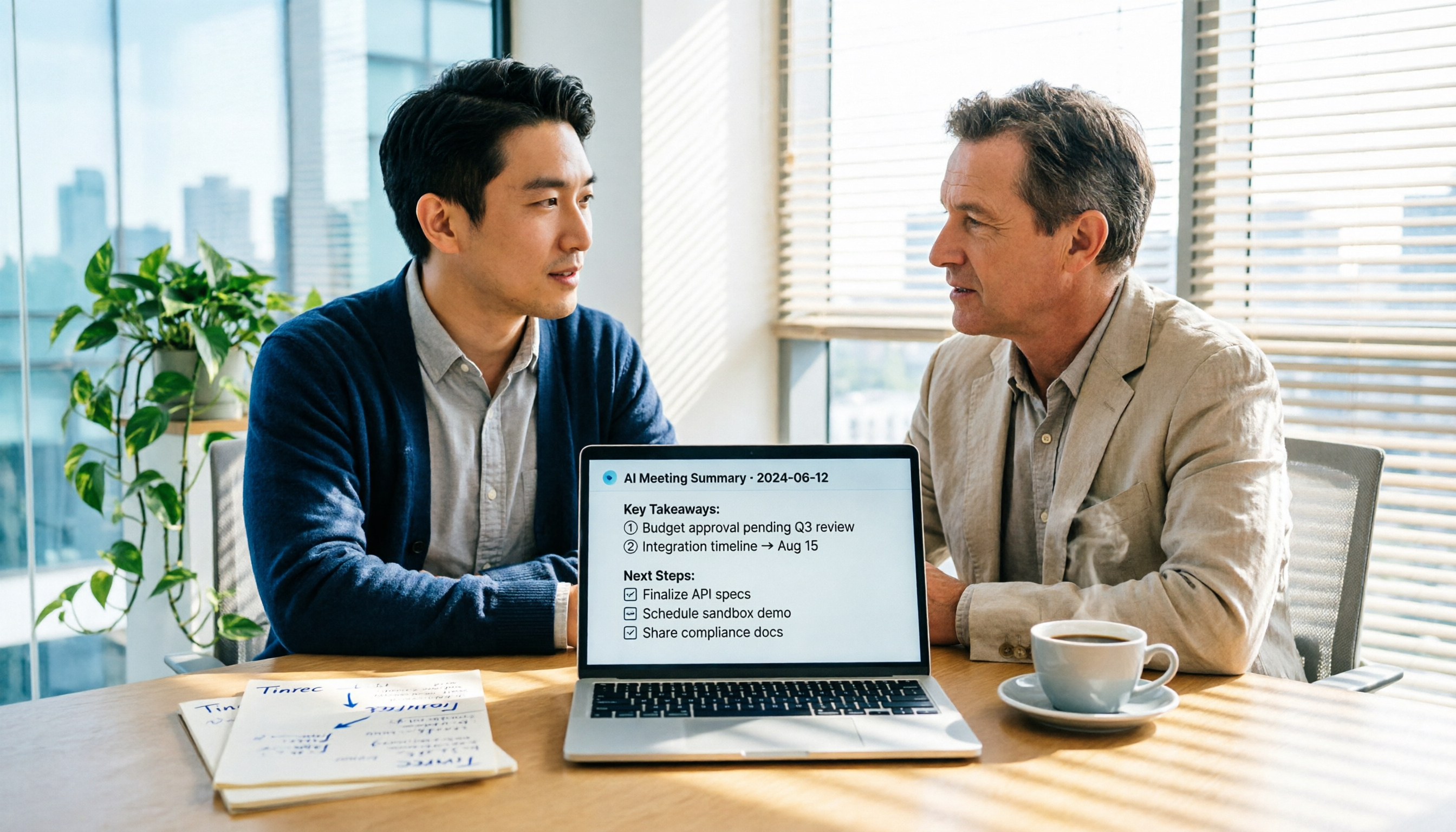
2026 Sales Meeting Minutes Template: AI Generation + Action Items Made Easy
Sales meeting minutes should not be a verbatim transcript but a tool to capture customer needs, objections, and next steps. Using Tinrec as an example, this article walks you through the complete workflow: recording, transcription, proofreading, generating meeting minutes, and exporting. It also includes FAQs and advanced tips.
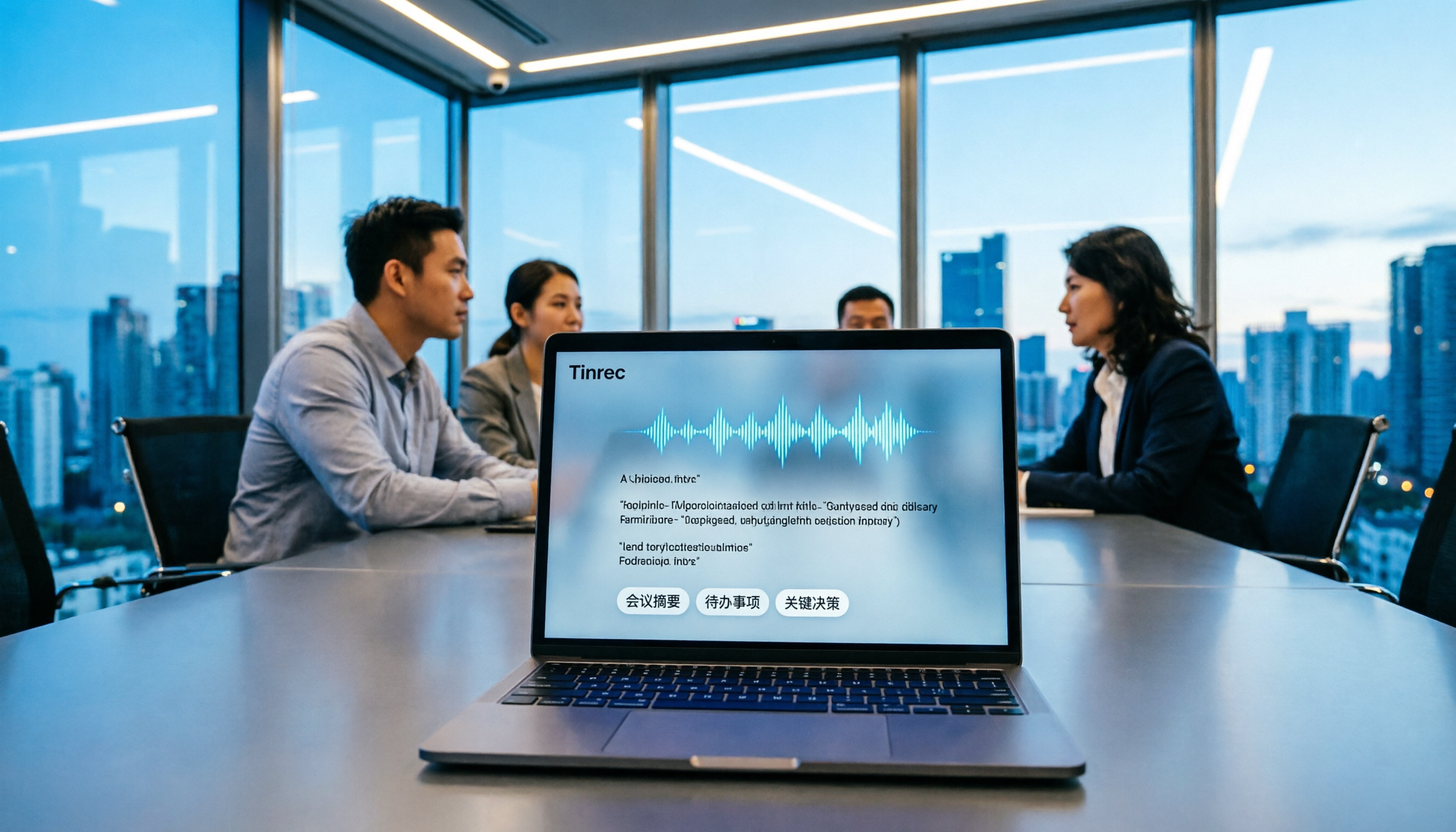
2026 Hands-On Test: 3 AI Meeting Recorder Tools Compared—Which Free Plan Is Best?
Two hours in a meeting, another two hours writing up the minutes? This hands-on test of Tinrec, Otter.ai, and Notta tells you which free plan is most useful and which paid plan is worth the money.