
Turn recordings into transcripts and summaries in minutes
Upload audio or video for multilingual transcription, AI notes, and action items
Every time you record a meeting or class with your phone, spending hours transcribing later is a huge time sink, and foreign language content is even harder to digest.
This article compiles the latest mobile real-time voice-to-text solutions on the market, including 4 top app recommendations, a multi-dimensional comparison table, and practical steps from recording to generating a to-do list, plus common FAQs.
Quick navigation conclusion: If you only need short foreign language interpretation, you can look forward to the upcoming Google Translate update; for Pixel phone users, Google Recorder is the top choice; but if you value meeting minutes, need cross-platform (iPhone/Android/Web) support, and rely on AI summaries and conversational queries, professional tools like Tinrec (Miao Ting Lu Yin) offer a more complete workflow solution.
Why do you need a professional real-time voice-to-text app for your phone?
A major recent tech development is Google's announcement of a new "transcription" feature in the Google Translate app. This service not only records text but also translates the speaker's words into a specified language almost in real time, like a human interpreter. However, according to product manager Nick Radicevic, this feature does not provide word-for-word transcription but processes text in smaller blocks, and it is expected to launch first on Android, with an iOS release date not yet confirmed.
Despite ongoing advancements from big tech, simple translation or transcription is not enough for most professionals and students. Traditional recordings have extremely low information density; what we really need is a tool that can convert "time-based content" into "scannable, searchable, actionable text" to solve the pain point of no key points or action items after a meeting.
4 Popular Real-Time Voice-to-Text App Recommendations and Comparison
1. Google Translate App (New Transcription Feature)
- Features: Focuses on cross-language real-time transcription, ideal for listening to long foreign language speeches or lectures to overcome language barriers.
- Limitations: Currently confirmed only for Android first; transcription quality can be affected by phone microphone performance or phone case obstruction; no meeting summary generation.
2. Google Recorder
- Features: The best choice for Pixel phone users, supports offline real-time transcription, with a clean and smooth interface.
- Limitations: Hardware ecosystem is relatively closed; cross-device syncing and advanced AI summary capabilities are limited.
3. iOS Built-in Voice Memos
- Features: The most accessible tool for iPhone users, completely free, record on the fly.
- Limitations: Currently only serves as audio file storage; lacks real-time transcription and AI key point extraction; high cost of manual review.
4. Tinrec (Miao Ting Lu Yin)
- Features: A multi-platform AI recording assistant supporting iOS, Android, and web. It provides real-time transcription during recording and automatically recognizes 10 languages including Chinese, English, Japanese, Taiwanese Hokkien, Cantonese, and more. Its highlight is the complete "Record → Understand → Act" workflow, automatically generating meeting minutes and to-do action items.
- Limitations: The free version has a monthly limit of 100 minutes of recording; if you need more, you may need to upgrade to a subscription.
Core Buying Guide and Detailed Comparison Table
When choosing a tool, consider the following 6 dimensions to find the solution that best fits your scenario:
Stop organizing recordings by hand
Upload audio or video and automatically get a transcript, summary, and action items
| Dimension | Google Translate (Transcription) | Google Recorder | iOS Voice Memos | Tinrec (Miao Ting Lu Yin) |
|---|---|---|---|---|
| Language Support | Broad multi-language | Major languages | No recognition | Supports 10 languages including Chinese, English, Japanese, Taiwanese, Cantonese, etc. |
| Real-Time Transcription | Yes (block-based) | Yes (smooth word-by-word) | No | Yes (real-time live transcript) |
| Summary & Action Items | No | Basic summary | No | Auto-generates meeting minutes and to-do items |
| AI Chat Query | No | No | No | Yes (semantic Q&A) |
| Export & Integration | Copy text | Google Drive | iCloud sync | Multi-device sync, multiple format exports |
| Pricing & Free Tier | Completely free | Completely free | Completely free | 100 minutes per month free |
Practical Tutorial: How to Efficiently Turn Recordings into Actionable Text
Using a tool with a complete AI workflow as an example, here are step-by-step instructions for 4 common scenarios to help you quickly convert audio into useful information:
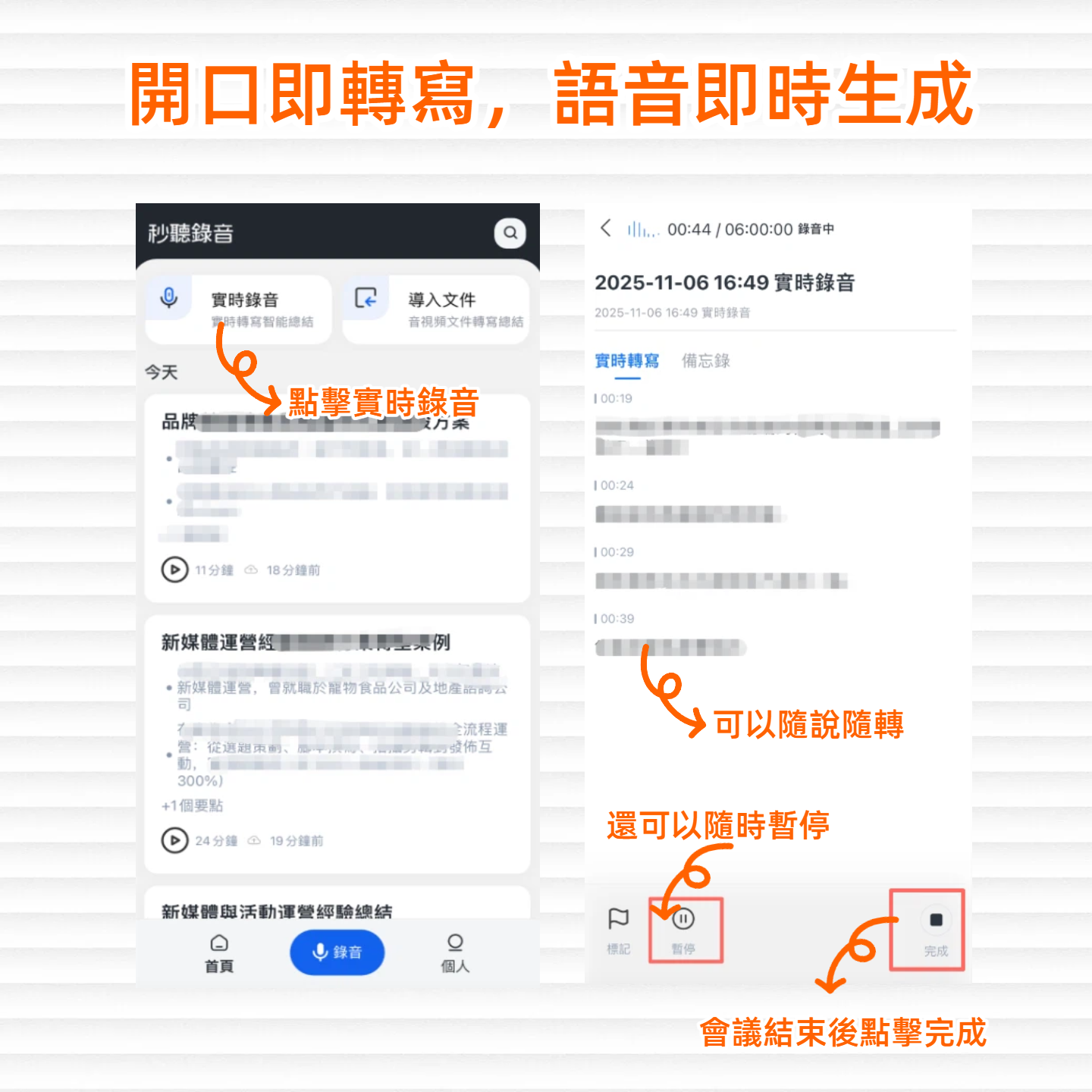
1. Real-Time Voice to Text (Ideal for In-Person Meetings & Classes)
- Steps: Open the app on your phone, tap "Start Recording." The system instantly converts speech to text without waiting.
- Tips: Place your phone in the center of the table during meetings to ensure the microphone is not obstructed by the phone case. After finishing, the system automatically differentiates speakers.
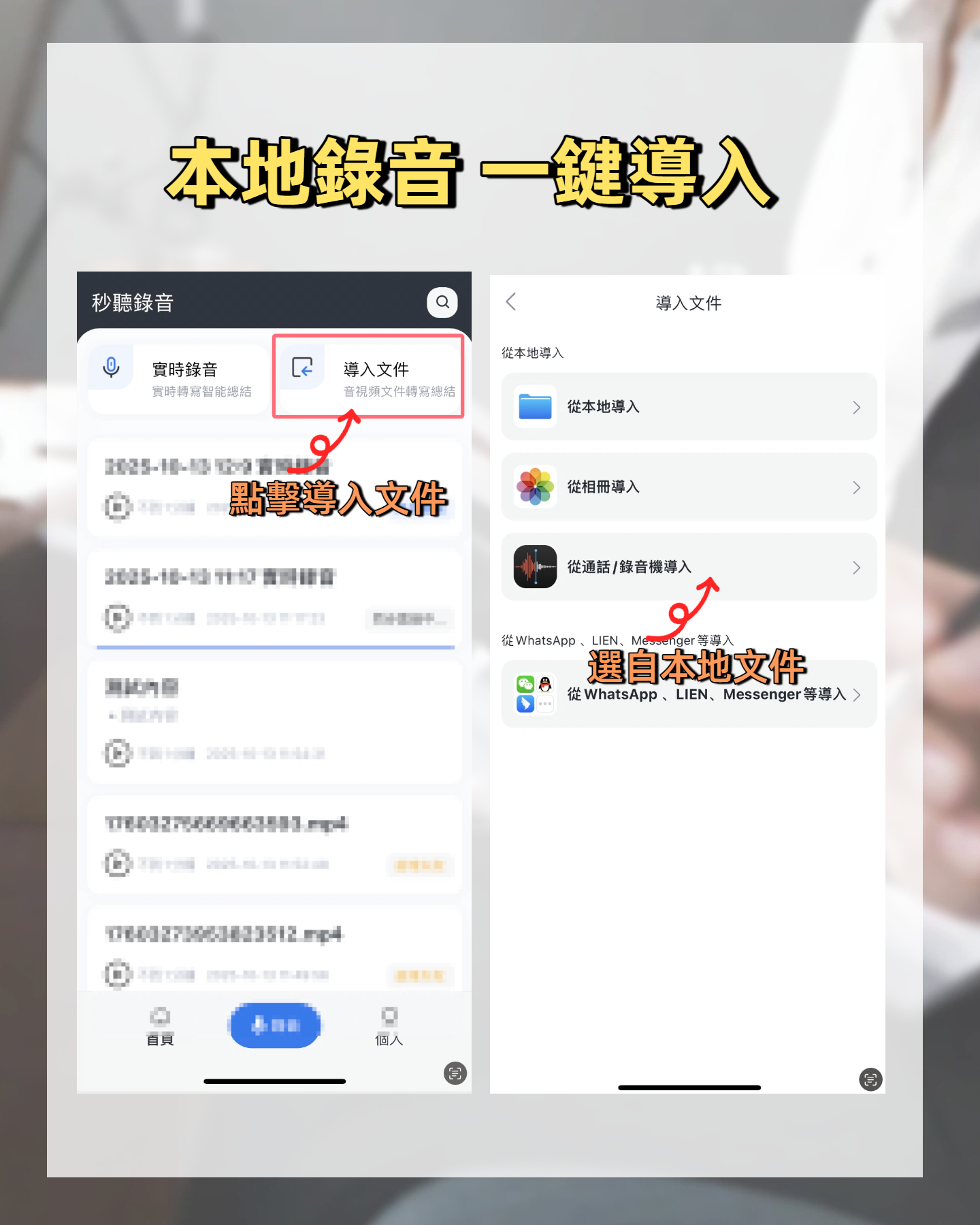
2. Audio File to Text (Ideal for Processing Existing Recordings)
- Steps: If you have audio files recorded with other devices (e.g., a voice recorder), select "Import File" in the app and upload.
- Tips: Supports multiple audio formats; after upload, the system quickly generates a transcript and AI summary, saving hours of manual review.

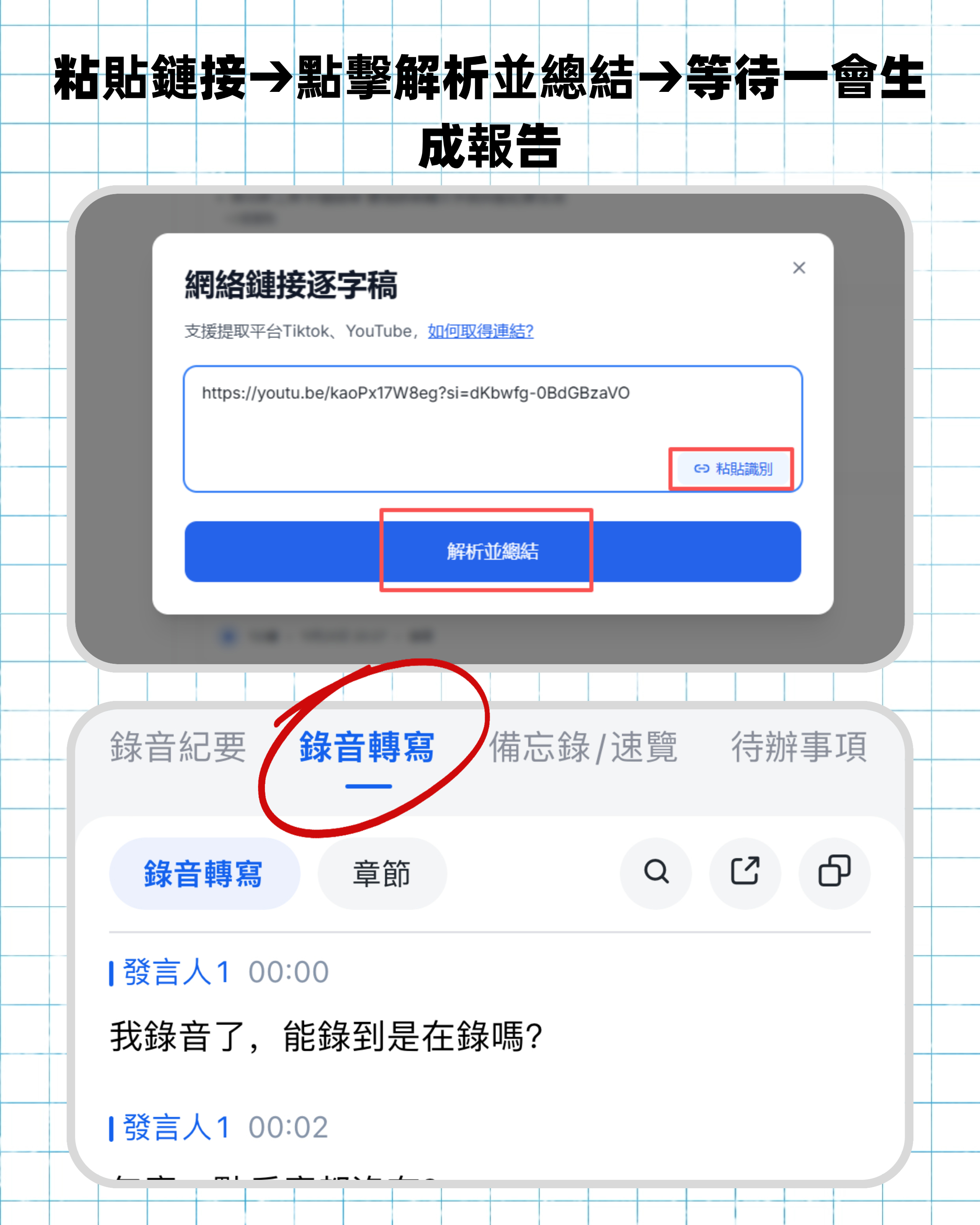
3. Video Link to Text (Ideal for Self-Study & Content Organization)
- Steps: Copy a YouTube or online podcast URL and paste it into the tool's "Web Video to Text" section.
- Tips: No need to download large video files; the system directly parses the link and generates a transcript and key summary, perfect for students organizing online course notes.
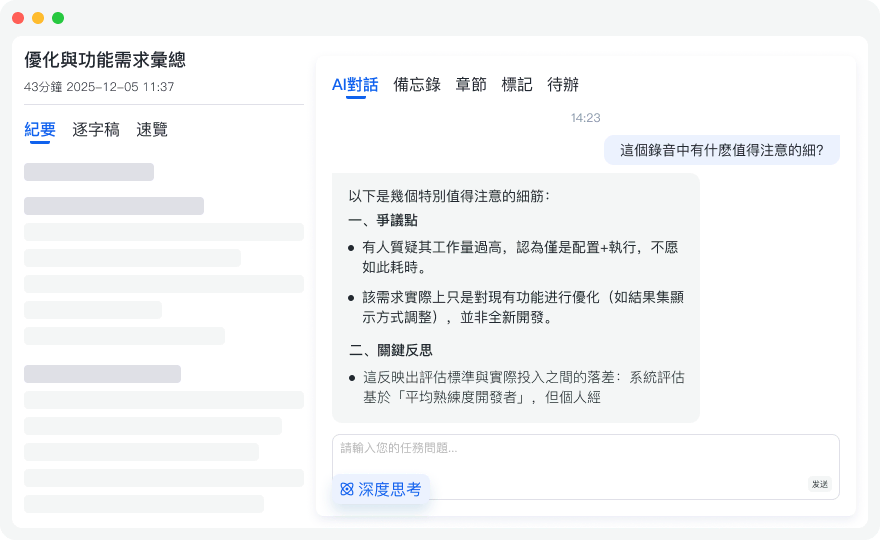
4. AI Chat Query (Replaces Traditional Search)
- Steps: For long transcripts, enter the "AI Chat Query" feature and directly ask a question (e.g., "What are the next action items discussed?").
- Tips: This feature works like asking an assistant who attended the entire meeting, providing answers based on semantic understanding rather than just keyword searching like Ctrl+F.
Frequently Asked Questions (FAQ)
Q1: Does iPhone have a built-in free voice-to-text app?
Currently, iPhone's built-in "Voice Memos" only offers recording functionality and does not natively support advanced real-time transcription or AI summaries. If you need these features, consider third-party cross-platform apps that support iOS.
Q2: Can I use a phone to record and transcribe remote meetings from Teams or Google Meet?
Yes. In addition to using the meeting software's own recording feature, many people use their phone to record audio alongside their computer. As long as the microphone picks up clear audio, the app can generate meeting transcripts in real time for Teams or Meet.
Q3: What affects the accuracy of voice-to-text transcription?
Transcription quality can be affected by the phone's microphone performance, background noise, and whether the phone case blocks the microphone. Additionally, multiple people speaking at once or accents can increase recognition difficulty.
Q4: How much free usage do AI transcription tools typically offer?
Most AI recording tools use a subscription model with a free tier. Common offerings range from a few tens of minutes to 100 minutes per month for free, suitable for light users; for heavy meeting documentation needs, a paid plan is recommended.
Q5: Do they support real-time recognition of languages other than Chinese (e.g., Taiwanese Hokkien, Japanese)?
Support varies among mainstream tools. Google Translate mainly focuses on major foreign languages. Some specialized recording apps (e.g., Tinrec) optimize for multiple languages, supporting automatic recognition of Chinese, Japanese, English, as well as Taiwanese Hokkien and Cantonese.
Q6: The transcript is too long; how can I quickly find key points?
Traditional transcripts require reading word by word. Modern AI tools automatically generate "meeting minutes" and "action items" after recording. You can also use the "AI Chat Query" feature to directly ask the system for key points through semantic questioning, greatly reducing the effort of manual review.
Turn every recording into actionable outcomes
Get 60 free transcription minutes when you sign in. No credit card required.
Related Reading
You might also like

Google Meet Without App: Tinrec vs Otter.ai Comparison for 2026 Meeting Notes
Don't want to install the Google Meet app but still need to capture meeting notes? This hands-on comparison of Tinrec and Otter.ai evaluates bot-free recording, Chinese transcription, post-meeting organization, team collaboration, and pricing to help you decide which AI meeting tool best fits your workflow without the Google Meet app.

Google Meet vs Tinrec in 2026: 5-Dimension Comparison – Who Summarizes Your Meeting?
2026 Google Meet tutorial and post-meeting note solution comparison: start with real-time meetings, scheduling, cross-device, screen sharing, and post-meeting processing, then compare Google Meet built-in capabilities, Tinrec, Otter.ai, and Notta across 5 dimensions to help you decide when just having the meeting is enough and when you need a meeting notes solution that handles transcripts, summaries, action items, and team data together.

Google Meet Meeting Notes in 2026: Bot-Free Transcription + Automatic Summaries
After a Google Meet call, the real work begins. This guide starts with how to decide between built-in features and third-party tools, breaks down 4 key buying factors, and hands-on tests how Tinrec records Google Meet without a bot, automatically generates summaries and action items, and compares it with Otter.ai, Granola, and Notta, including pitfalls to avoid.

3 Ways to Download Google Meet in 2026: Mobile App vs Desktop PWA vs Web Compared
Not sure which way to use Google Meet? This hands-on comparison of the mobile app, desktop PWA, and web version covers installation, features, updates, and best use cases to help you find the smoothest way to use Google Meet.

4 Google Meet Note-Taking Tools Compared in 2026: Which One Does Transcription and AI Summaries Best?
Google Meet has live captions, but captions are not meeting notes. This article compares four common approaches—Google Meet's built-in capabilities, Otter.ai, Granola, and Tinrec—covering capture methods, language support, post-meeting organization, and team data ownership to help you choose the best meeting note-taking tool for your needs.

Best Free Video Conferencing Alternatives to Google Meet in 2026: 4 Options
Switching from Google Meet keeps meetings running smoothly, but post-meeting organization doesn't get any easier. This article, from the perspective of a mid-level manager who holds 15 meetings a week, outlines 4 directions for video conferencing without Google Meet and explains how a bot-free meeting notes tool handles transcripts, summaries, action items, and team knowledge retention, with recommendations for free and team plans.

Google Meet Built-in Recording vs Tinrec in 2026: 5-Dimension Showdown — Which Helps You Clock Out on Time?
Creating a Google Meet link takes 10 seconds, but post-meeting notes are the real time sink. This hands-on comparison of Google Meet built-in recording and Tinrec evaluates transcription accuracy, post-meeting organization, cross-platform support, team collaboration, and pricing across 5 dimensions to help you pick the most time-saving meeting notes tool.

4 Google Meet Alternatives Tested in 2026: Which One Works Without a Meeting Bot?
We tested 4 Google Meet alternatives in 2026, comparing bot-free recording, Chinese transcription, AI summary Q&A, and team collaboration. Tinrec excels at Chinese meetings and post-meeting organization, while Otter.ai, Notta, and Granola each suit different scenarios. This article uses real-world use cases to help you choose the best meeting notes solution.
Google Meet vs Zoom 2026: Which Online Meeting Tool Actually Works for Post-Meeting Notes?
Google Meet or Zoom? This hands-on comparison focuses on post-meeting organization, comparing the built-in transcription limits of both, and testing Tinrec desktop's bot-free meeting recording, AI summaries, action items, and team spaces to help you find a meeting notes solution that truly saves time.