
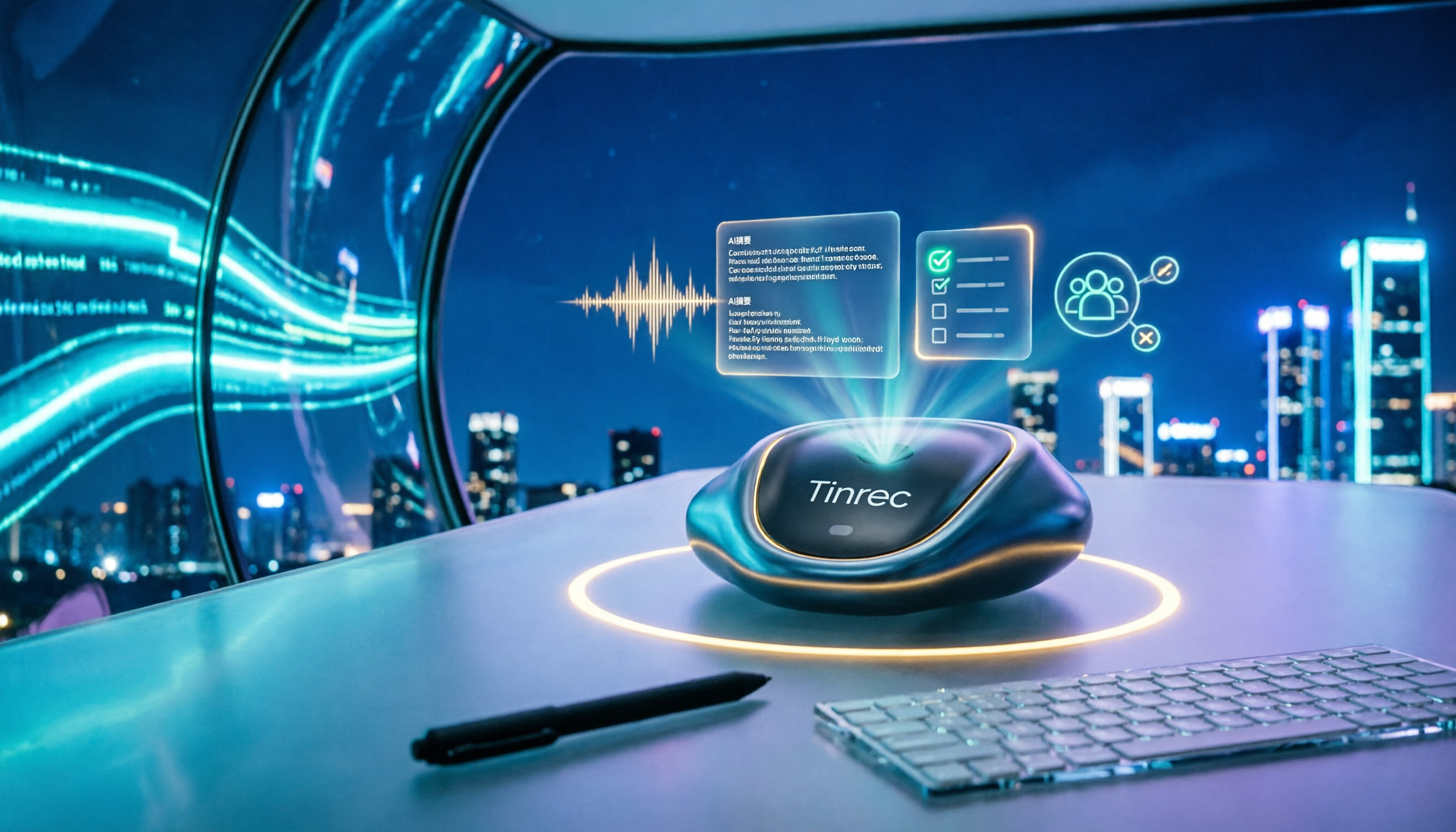
Turn recordings into transcripts and summaries in minutes
Upload audio or video for multilingual transcription, AI notes, and action items
Google Meet vs Zoom 2026: Which Online Meeting Tool Actually Works for Post-Meeting Notes?
The real trouble starts after the meeting—most people choose the wrong direction from the start
Most people compare Google Meet and Zoom by looking at "which one has a more stable connection" or "which free version has fewer limits."
That's not wrong, but it only solves the first half of the meeting.
The real problem comes after the meeting ends. You have a two-hour meeting, and the transcript is there, but no one wants to open it again. Who promised what, what's due next week—it all still relies on your memory and random notes.
A common misconception is treating "meeting platform" and "meeting notes" as the same thing. Choosing the right platform only means your meeting goes smoothly; whether you can turn the meeting into searchable, queryable, actionable data is actually a different set of tools.
This article not only compares Google Meet and Zoom but also looks at the most commonly overlooked part: post-meeting organization.
4 key points to understand before choosing an online meeting tool
1. Is the meeting itself stable?
Several foreign reviews reach a similar conclusion: Google Meet is friendly for small teams and organizations already using Google Workspace; Zoom is more mature for large organizations and external meetings. This part is a toss-up, mainly depending on who you usually meet with.
2. Is built-in transcription enough?
Both Meet and Zoom have built-in transcription and summaries. The question is never "does it have it" but "can the output be used directly?"
3. Post-meeting organization is the real cost
The transcript is just raw material. Whether it can automatically generate summaries, chapters, action items, and even let you ask "who mentioned the budget last time" two weeks later—that's where the difference shows.
4. Where does the data end up?
If recordings stay in personal accounts, they scatter once someone leaves. Whether the team needs a shared meeting database is something to think about when choosing tools.
Tinrec—our top pick after hands-on testing
Tinrec is an AI meeting notes and collaboration tool for individuals and teams, supporting iOS, Android, desktop, and web, and handling Chinese and multilingual meetings.
During the meeting: no bot needed in the meeting room
Tinrec desktop captures your computer's system audio directly, so it can handle Zoom, Google Meet, Microsoft Teams, and Webex meetings played on your computer without an extra bot account joining. In external meetings, clients won't see an unfamiliar name on the participant list.
During the meeting: transcribe while recording
You can see the transcript being generated in real time. For cross-language meetings, you can switch between original text, translation, or bilingual display. If you're interrupted or miss a segment, it won't be a complete blank.
After the meeting: you get more than just a transcript
The system automatically generates summaries, chapters, key points, and action items. Long meetings can be browsed in segments without scrolling from the beginning.
Even better is AI Q&A. You can directly ask "What was the conclusion of this meeting?" or "What concerns did the client raise?" and it will organize answers by meaning, not just throw keywords at you.
After the meeting: bring results back to your workflow
Transcripts and notes can be exported to Notion, Google Docs, OneNote, Dropbox, and further generate reports, tables, and documents for reporting or project tracking.
Our testing conditions
On a Windows laptop, we used Tinrec desktop to record a ~40-minute Google Meet meeting and a ~30-minute Zoom meeting (indoor environment, single microphone, mixed Chinese-English speech). Both meetings produced transcripts, summaries, and action items directly after ending.
Note that actual recognition accuracy is affected by recording quality, background noise, accents, multiple people talking over each other, and technical terms. We recommend testing with your own recording for the most accurate results.
Three main advantages
Stop organizing recordings by hand
Upload audio or video and automatically get a transcript, summary, and action items
- No meeting bot needed, less awkward for external meetings.
- Complete organization experience for Chinese and mixed Chinese-English meetings; teams can maintain their own hotwords.
- Post-meeting AI Q&A, action items, and multi-format export—not just a text file.
Limitations
The free version provides basic quota. If you have many meetings every week, you'll need a paid plan. Also, AI-generated notes should still be cross-checked with transcript timestamps and recordings; don't rely solely on summaries for important decisions.
Team version supplement
The team version provides an independent team space where meeting data belongs to the team. Members without seats can still view, play, and read data, but need a seat to record, upload, edit, and export. Admins can manage roles and seats, view usage trends, export audit logs, and recover accidentally deleted audio from the recycle bin.
Currently, the team first trial is 7 days, 1 free seat, 300 minutes of team shared import quota; team monthly payment USD 29.80 per paid seat per month, annual payment USD 199 per paid seat per year (about USD 16.58 per month), each paid seat provides 2,000 minutes of team shared import quota per month. Actual prices and benefits are subject to the official purchase page.
Who is it for?
If you need Chinese meeting notes, don't want a bot joining meetings, or want meeting content to stay in the team for reuse, Tinrec is currently the most suitable choice.
Besides Tinrec, are Google Meet and Zoom's built-in features enough?
Google Meet
Deeply integrated with Google Drive, Calendar, and Gmail, scheduling and reminders are automatic, almost zero learning curve for teams fully using Google Workspace. Note that its records stay in the Google ecosystem; if you also use Zoom and Teams, data will be scattered. This is exactly the problem Tinrec solves: collecting meetings from different platforms into one database, with AI querying afterward.
Zoom
A veteran in video conferencing. Data from foreign reviews shows a meeting can accommodate up to 300 people and last up to 30 hours, with a good reputation for stability in large or external meetings, and paid plans offer more complete support. The downside is the free version has a ~40-minute meeting length limit, and paid unit prices are usually higher than Google Workspace's included Meet. Its transcription and AI features are tied to the Zoom ecosystem; if you want to directly generate reports, tables, and export to Notion, Google Docs after meetings, Tinrec offers more post-processing flexibility.
Otter.ai
A mature choice for English meetings, free version offers 300 minutes per month, friendly for those with limited budgets. If your meetings are almost all in English, it's worth considering. However, if your meetings are mainly Chinese or mixed Chinese-English, Tinrec is smoother for Chinese organization, real-time translation, and team hotwords.
Pitfall guide: 4 most common mistakes when choosing meeting tools
Pitfall 1: Only calculating "how cheap is the meeting" without calculating "how much time after the meeting"
Many people care about whether the free version can hold a full hour but don't realize they spend hours every week organizing meeting notes. Meeting software saves connection fees; post-meeting organization saves your salary.
Pitfall 2: Thinking a transcript equals meeting notes
A transcript is raw material; notes are the finished product. Getting a 30-page transcript that no one can finish reading means no record. When choosing tools, see if it can directly give you summaries, action items, and queryable Q&A.
Pitfall 3: Ignoring cross-platform
Your department uses Google Meet, clients use Zoom, another team uses Teams. If your notes tool only supports one platform, your meeting data will eventually scatter.
Pitfall 4: Letting a meeting bot join client meetings
Not every client likes seeing an unknown account on the participant list. Using desktop system audio capture means only the people who should be there are in the meeting room.
Conclusion: Should you use Google Meet, Zoom, or Tinrec?
One-sentence conclusion: which platform to use for meetings depends on your ecosystem; whether it's usable after the meeting depends on whether you have a separate organization tool.
- Team entirely on Google Workspace, meetings mostly internal → Google Meet built-in features are enough.
- Frequent external meetings, many people, long meetings → Zoom is a more stable choice.
- Meetings have Chinese or mixed Chinese-English content, need post-meeting notes and action items → Tinrec (supports real-time translation and AI Q&A).
- Need to turn historical meetings into a shared, transferable team database → Tinrec team version (seats, usage, and audit all in one).
- Mainly record English meetings, zero budget → Otter.ai free version 300 minutes per month, can start with.
No matter which you choose, Meet or Zoom, we recommend first using Tinrec free version to record one of your own meetings and see if the transcript, summary, and action items really save you time. Before the quota runs out, you'll have your answer.
References
Turn every recording into actionable outcomes
Get 60 free transcription minutes when you sign in. No credit card required.
Related Reading
You might also like

Google Meet Without App: Tinrec vs Otter.ai Comparison for 2026 Meeting Notes
Don't want to install the Google Meet app but still need to capture meeting notes? This hands-on comparison of Tinrec and Otter.ai evaluates bot-free recording, Chinese transcription, post-meeting organization, team collaboration, and pricing to help you decide which AI meeting tool best fits your workflow without the Google Meet app.

Google Meet vs Tinrec in 2026: 5-Dimension Comparison – Who Summarizes Your Meeting?
2026 Google Meet tutorial and post-meeting note solution comparison: start with real-time meetings, scheduling, cross-device, screen sharing, and post-meeting processing, then compare Google Meet built-in capabilities, Tinrec, Otter.ai, and Notta across 5 dimensions to help you decide when just having the meeting is enough and when you need a meeting notes solution that handles transcripts, summaries, action items, and team data together.

Google Meet Meeting Notes in 2026: Bot-Free Transcription + Automatic Summaries
After a Google Meet call, the real work begins. This guide starts with how to decide between built-in features and third-party tools, breaks down 4 key buying factors, and hands-on tests how Tinrec records Google Meet without a bot, automatically generates summaries and action items, and compares it with Otter.ai, Granola, and Notta, including pitfalls to avoid.

3 Ways to Download Google Meet in 2026: Mobile App vs Desktop PWA vs Web Compared
Not sure which way to use Google Meet? This hands-on comparison of the mobile app, desktop PWA, and web version covers installation, features, updates, and best use cases to help you find the smoothest way to use Google Meet.

4 Google Meet Note-Taking Tools Compared in 2026: Which One Does Transcription and AI Summaries Best?
Google Meet has live captions, but captions are not meeting notes. This article compares four common approaches—Google Meet's built-in capabilities, Otter.ai, Granola, and Tinrec—covering capture methods, language support, post-meeting organization, and team data ownership to help you choose the best meeting note-taking tool for your needs.

Best Free Video Conferencing Alternatives to Google Meet in 2026: 4 Options
Switching from Google Meet keeps meetings running smoothly, but post-meeting organization doesn't get any easier. This article, from the perspective of a mid-level manager who holds 15 meetings a week, outlines 4 directions for video conferencing without Google Meet and explains how a bot-free meeting notes tool handles transcripts, summaries, action items, and team knowledge retention, with recommendations for free and team plans.

Google Meet Built-in Recording vs Tinrec in 2026: 5-Dimension Showdown — Which Helps You Clock Out on Time?
Creating a Google Meet link takes 10 seconds, but post-meeting notes are the real time sink. This hands-on comparison of Google Meet built-in recording and Tinrec evaluates transcription accuracy, post-meeting organization, cross-platform support, team collaboration, and pricing across 5 dimensions to help you pick the most time-saving meeting notes tool.

4 Google Meet Alternatives Tested in 2026: Which One Works Without a Meeting Bot?
We tested 4 Google Meet alternatives in 2026, comparing bot-free recording, Chinese transcription, AI summary Q&A, and team collaboration. Tinrec excels at Chinese meetings and post-meeting organization, while Otter.ai, Notta, and Granola each suit different scenarios. This article uses real-world use cases to help you choose the best meeting notes solution.

How to Download Google Meet in 2026: 5-Step Guide for Desktop, Android, and iOS
Complete Google Meet download guide for 2026: 5 steps for desktop web/PWA, Android, and iOS. Learn official download channels, account types, paid feature limits, and compare post-meeting tools.