
Turn recordings into transcripts and summaries in minutes
Upload audio or video for multilingual transcription, AI notes, and action items
Why You Need an Automatic Work Summary Tool
After every meeting or cross-department interview, manually summarizing from long audio files and scattered notes takes huge amounts of time. It's easy to miss key action items, leading to the frustrating situation of "meeting ends, no action taken." Traditional methods have low information density, and re-listening or re-reading is extremely costly.
To solve this, we'll introduce the mainstream automatic work summary tools of 2025, with a detailed comparison table, core evaluation criteria, and a step-by-step guide from recording to generating meeting minutes. This will help you make a cost-effective decision.
Quick navigation: If your workflow heavily relies on Word/Excel, consider Microsoft 365 Copilot first. If you prefer managing documents on a project platform, Notion AI is a good choice. If you need to convert meeting recordings or online conversations into key summaries and action items, check out voice-to-text solutions like Tinrec.
Review of 5 Mainstream Automatic Work Summary Tools in 2026
Based on market applications and technology trends, we selected five representative tools in dialog interaction, office collaboration, and voice processing for review.
1. Microsoft 365 Copilot
As Microsoft's flagship product, Copilot integrates directly into the Office suite. Its biggest advantage is deep integration with Teams, automatically extracting meeting summaries and action items, and generating reports and charts in Word and Excel. Ideal for large enterprises already using the Microsoft ecosystem.
2. Notion AI
Notion AI deeply integrates AI into its note-taking and project management platform. It can intelligently summarize lengthy meeting notes, generate project plans, or optimize content structure. For teams that primarily work with text and value knowledge management, it greatly improves content organization efficiency.
3. ChatGPT
As the world's most widely used AI dialog tool, ChatGPT excels in multi-turn conversation understanding and document analysis. You can paste meeting transcripts and request work summaries or creative proposals. Although it requires manual input, its versatility and flexibility are high.
4. Doubao (Douyin AI Assistant)
ByteDance's AI assistant has advantages in Chinese contexts and mobile experience. Besides basic information integration and AI search, it performs well in data analysis and long text processing. Suitable for users who need to quickly handle daily work summaries and academic research on mobile.
5. Tinrec
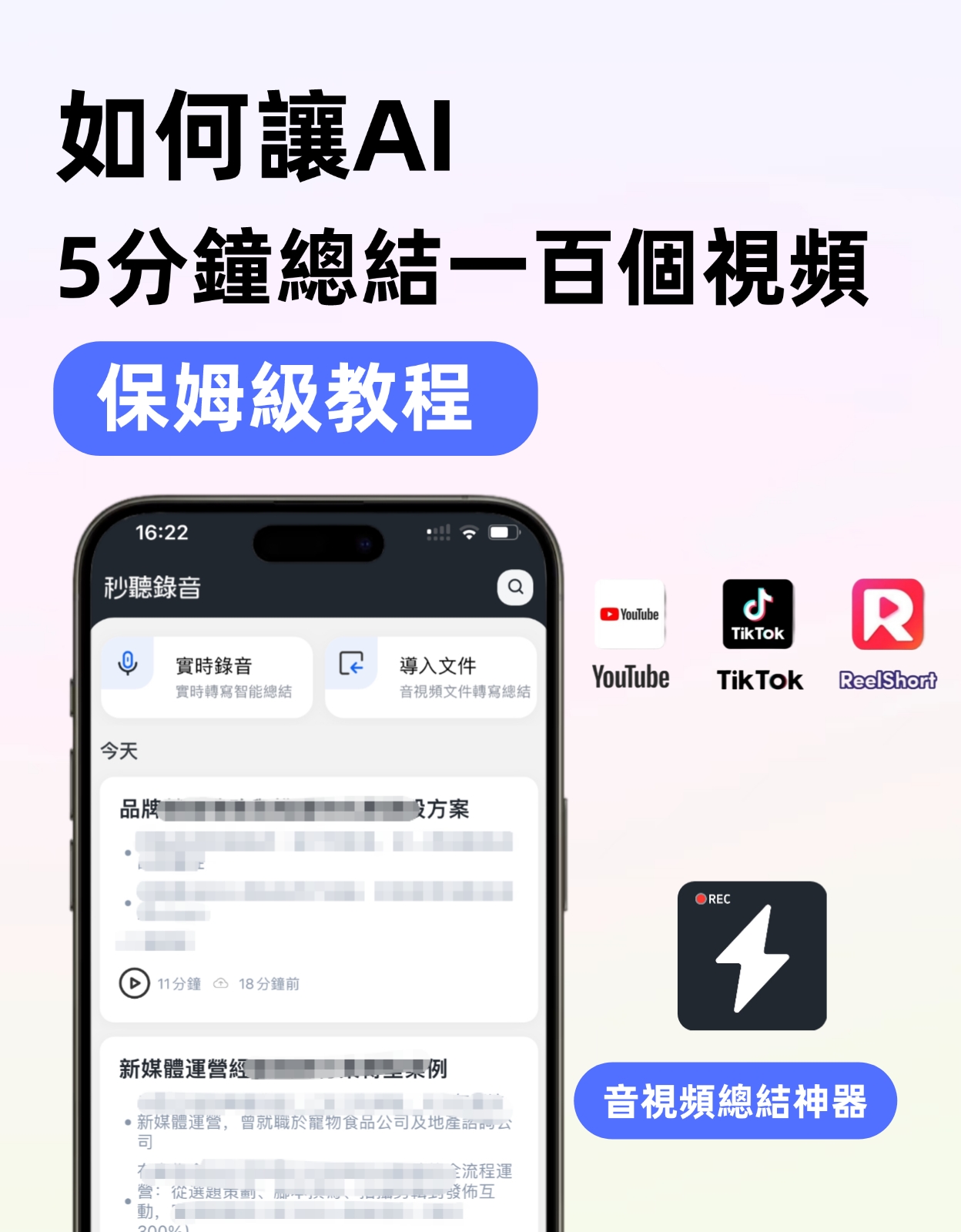
Unlike pure text processing tools, Tinrec focuses on the complete workflow from "recording → understanding → action." It offers real-time voice-to-text, and automatically generates meeting minutes, conclusions, and action items. Supports automatic recognition of 10 languages including Chinese, English, Taiwanese, Cantonese, converting time-based content into scannable, searchable text. Especially useful for individuals and teams who frequently record cross-border meetings, interviews, or remote communications.
Work Summary Tool Comparison: Which One Is Best for You?
To help you choose intuitively, here is a comparison of core evaluation dimensions:
Stop organizing recordings by hand
Upload audio or video and automatically get a transcript, summary, and action items
| Dimension | Microsoft 365 Copilot | Notion AI | ChatGPT | Doubao | Tinrec |
|---|---|---|---|---|---|
| Main Summary Source | Teams meetings, Office documents | Notion notes, manual input | Manual text/file upload | Web info, text input | On-site recordings, audio files, video links |
| Language Support | Multi-language | Multi-language | Multi-language | Primarily Chinese | 10+ languages (CN, EN, JP, KR, TW, etc.) |
| Summaries & Action Items | Supported (Teams/Word) | Supported (requires command) | Supported (requires prompt) | Supported (requires prompt) | Auto-generated (minutes/action items) |
| AI Query & Dialog | Supported (cross-file) | Supported (workspace search) | Supported (single session) | Supported | Supported (semantic search based on recordings) |
| Export & Integration | Seamless Office ecosystem | Stays in Notion system | Text copy, share link | Text copy | Multi-format file export |
| Pricing & Free Tier | Enterprise subscription (higher cost) | Requires AI add-on | Free basic version available | Free to use | 100 minutes/month free; Pro $8.25/month |
Tutorial: How to Auto-Generate High-Quality Meeting & Work Summaries
Once you have the tools, how to integrate them into daily work? Using Tinrec as an example, here's a break down of four common scenarios.
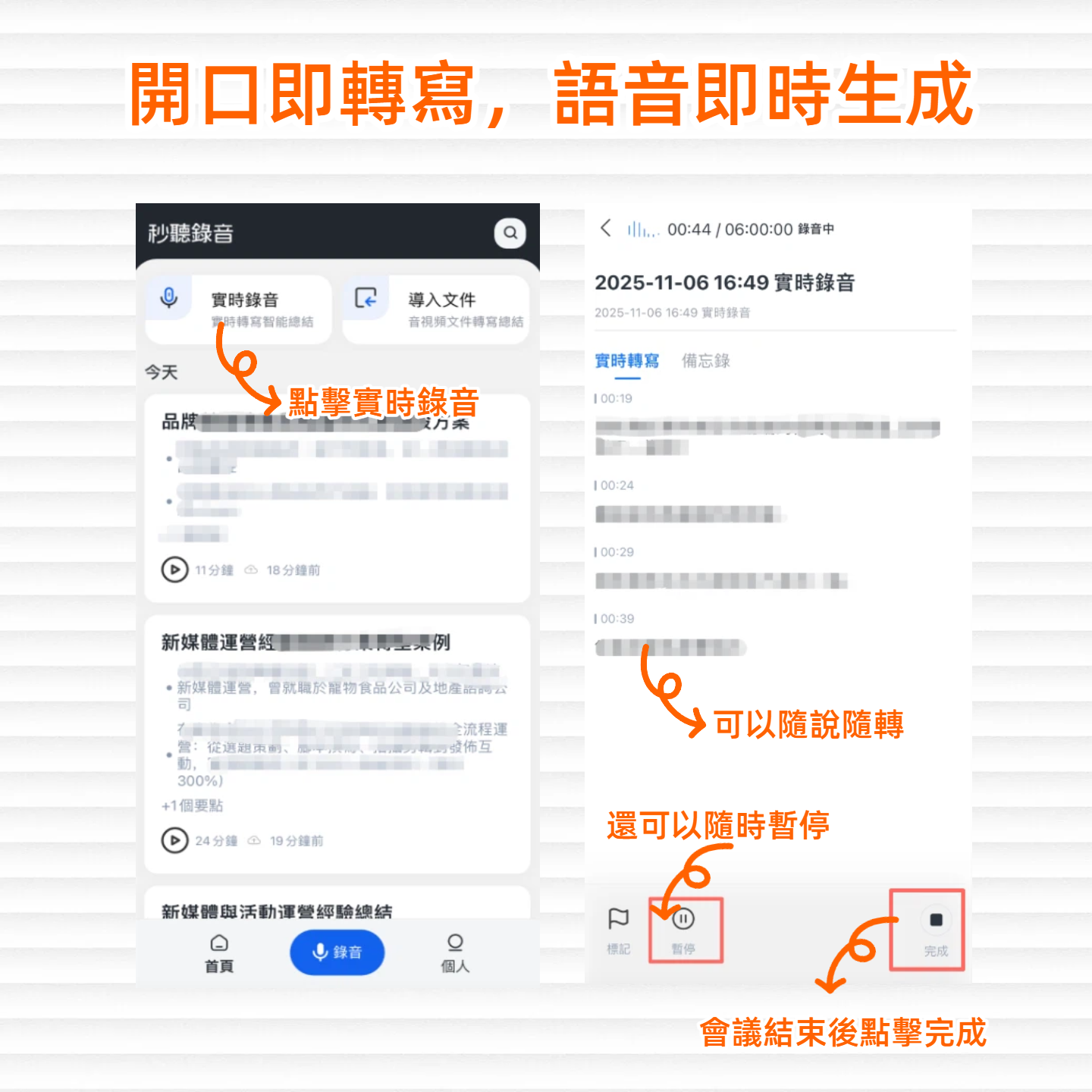
Step 1: In-Person Meeting – Real-time Voice-to-Text
When a meeting or class starts, no need to frantically take notes:
- Open the tool and tap "Live Recording."
- The system converts speech to text in real-time.
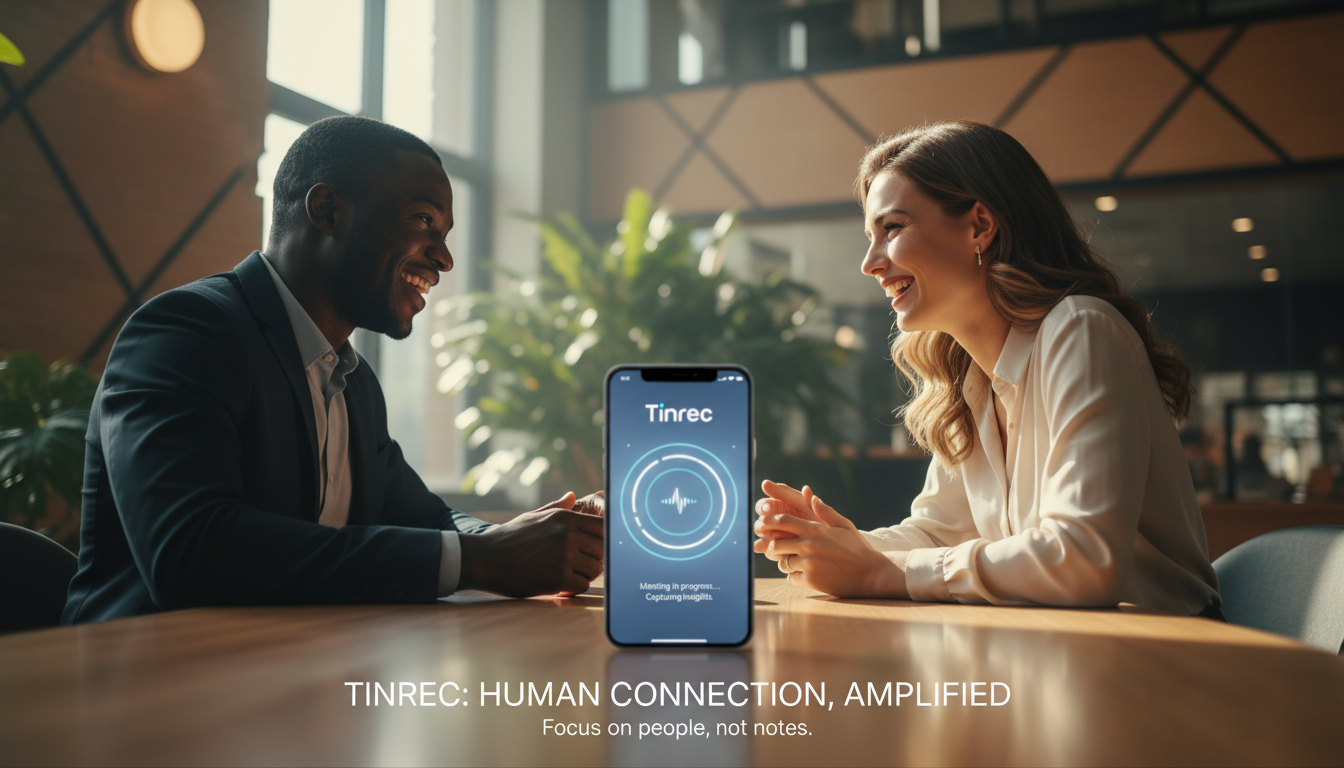
- After the meeting, AI automatically identifies speakers and generates a work summary with key conclusions and a to-do list.
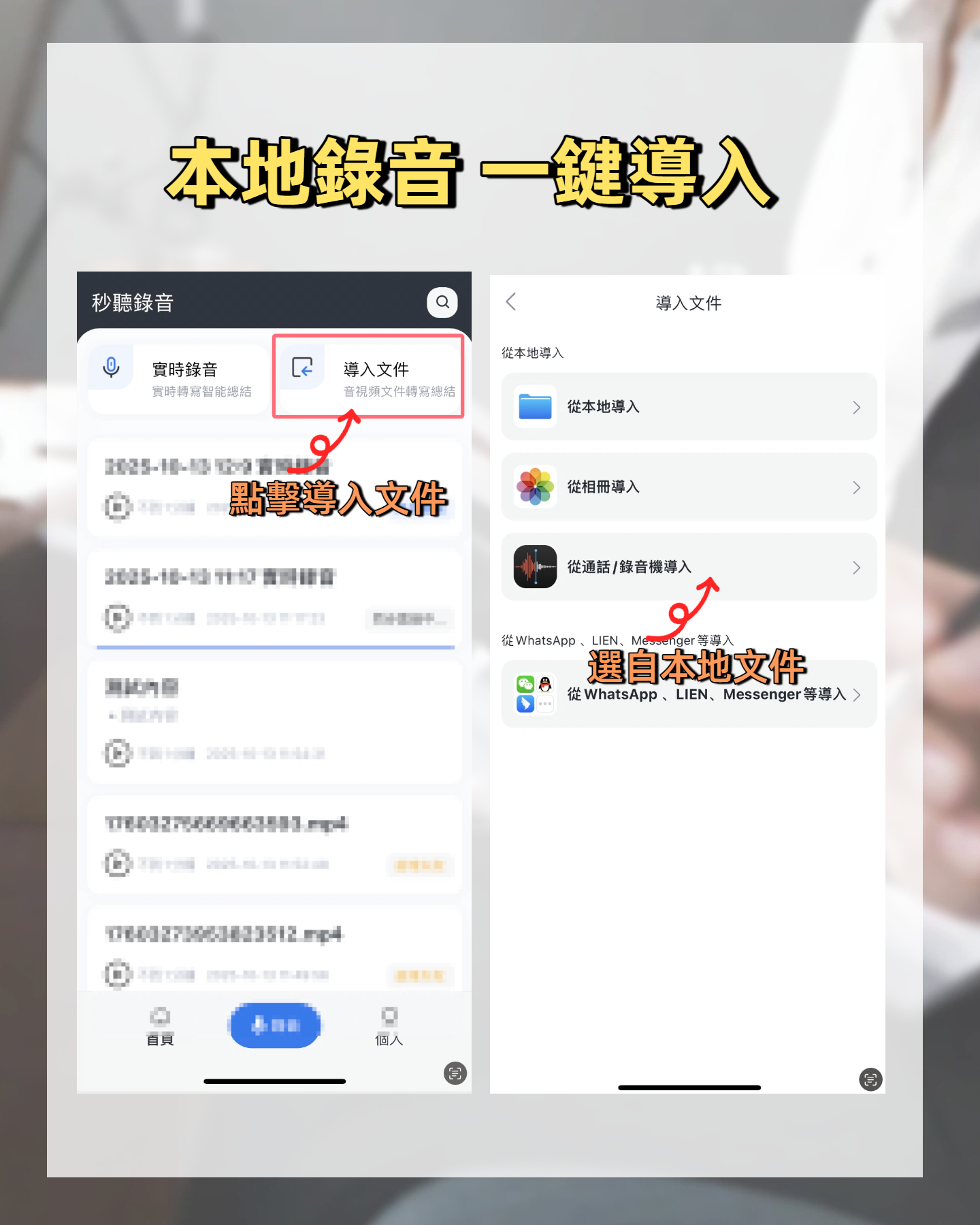
Step 2: Remote Meeting – Import Audio Files for Summarization
If you use a traditional recorder or have audio files from Google Meet:
- Save the file to your local device.
- Select "Import audio/video file for transcription."
- Upload the file; AI transcribes within minutes and directly extracts decision summaries, saving you from re-listening to a 1-hour recording.
Step 3: Online Learning – Convert Web Videos or Podcasts to Text
For captioned educational videos or industry podcasts:
- Copy a YouTube or podcast URL.
- Paste it into the system's URL parser.
- The tool automatically fetches the audio track and generates a transcript and key summary, turning audio content into your own study notes.
Step 4: Use AI Chat Query Instead of Traditional Search
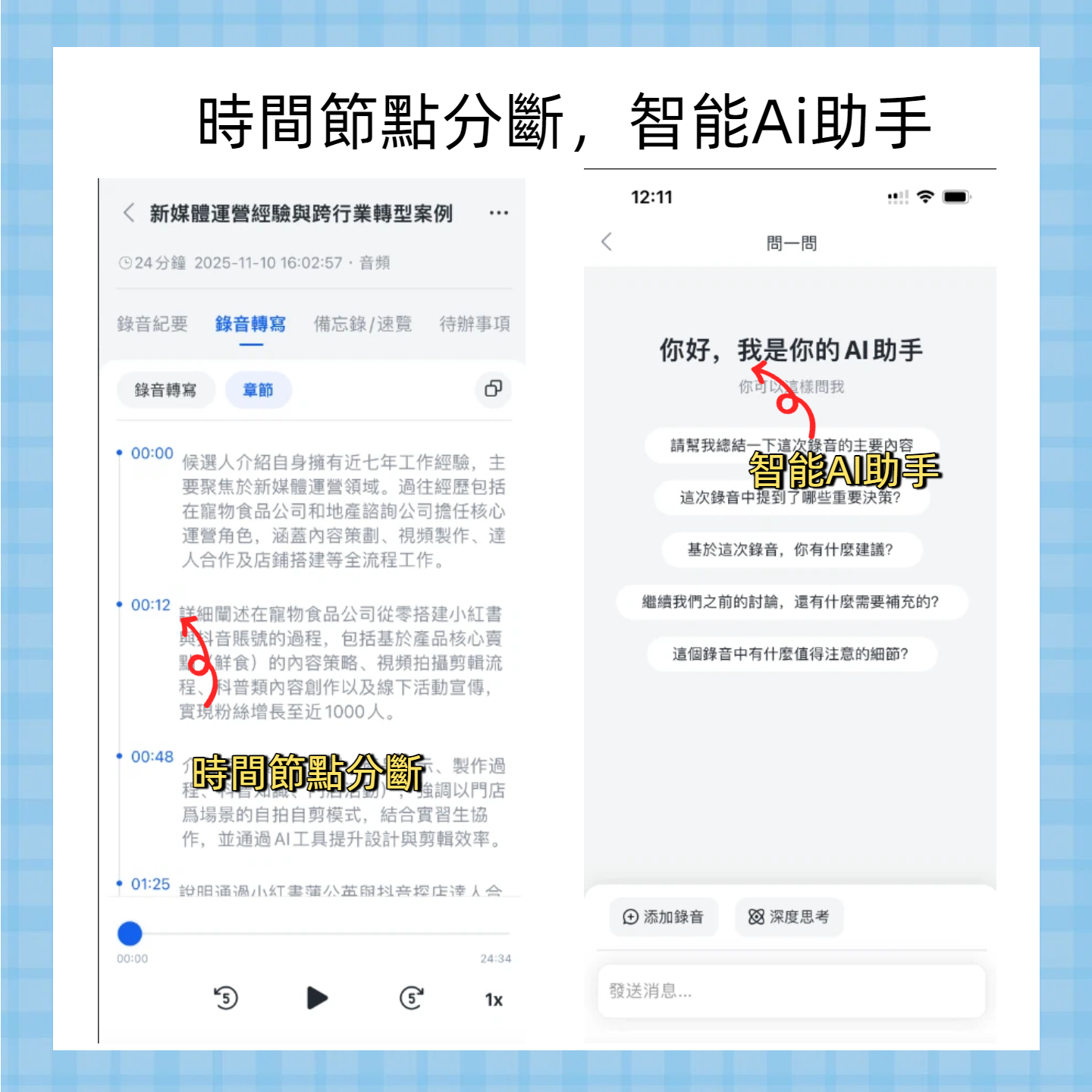
Traditional transcripts only allow Ctrl+F keyword search; if you forget the exact phrase, you miss the point. Now you can:
- Next to the generated transcript, open the AI Q&A window.
- Ask directly, like "What was the client's final budget range?" or "What tasks did the boss assign at the end?"
- AI understands the context and gives precise answers, like a personal assistant who attended the entire meeting.
Evaluation Metrics for Enterprise & Personal AI Summary Tool Adoption
According to 2026 industry reports, teams that successfully implement AI productivity projects achieve significant ROI. Whether for enterprise or personal use, consider these metrics:
- Efficiency Gain: Content creation and organization efficiency can increase 60-80%; project delivery efficiency 25-40%.
- Cost Control: Start with a free tier (e.g., 100 minutes/month) of a SaaS tool for small-scale validation, confirm accuracy and workflow fit, then consider upgrading to paid plans.
- Results-Oriented: Move beyond counting features; focus on whether the tool can quickly convert listened/watched information into executable action items.
FAQ
Q1: Any recommended recording and automatic work summary apps for iPhone? Due to iOS restrictions on call recording, most apps only record ambient sound. However, tools like Tinrec support multi-platform sync (iOS, Android, Web), so you can record meetings on your iPhone and quickly view AI-generated summaries and to-dos on the web version.
Q2: Can Teams or Google Meet meetings auto-generate summaries? For enterprise users, Microsoft 365 Copilot works directly in Teams. For general users, you can use built-in computer recording or meeting software recording, then upload the audio file to a voice-to-text tool to auto-generate meeting minutes.
Q3: Are AI-generated work summaries and transcripts accurate? What about accents? Current AI speech recognition is quite mature. Many tools support multilingual automatic recognition, and AI can correct transcripts using context even if speakers have accents, ensuring summary accuracy.
Q4: Do these automatic summary tools have free tiers? Most offer some free trial. For example, ChatGPT has a basic free version; Tinrec provides 100 minutes of free transcription per month, suitable for light users or pre-deployment testing.
Q5: Can AI summary tools handle foreign languages in cross-border meetings? Yes, modern mainstream voice tools (like Tinrec) support recognition of 10+ languages (including Japanese, Korean, German, even Taiwanese and Cantonese), effectively lowering cross-language comprehension barriers.
Q6: How to effectively track action items after auto-generating meeting minutes? Good summary tools not only provide summaries but also separate action items. After generating the list, copy them into your project management software (e.g., Notion, Asana, or Trello), assign owners and deadlines, closing the workflow loop.
Turn every recording into actionable outcomes
Get 60 free transcription minutes when you sign in. No credit card required.
Related Reading
You might also like

5 Best AI Meeting Recorders Tested in 2026: Which One Works Best for Chinese Meetings and Team Collaboration?
Struggling with meeting notes and post-meeting cleanup? This hands-on comparison of 5 AI meeting note tools, led by Tinrec, covers bot-free recording, Chinese transcription, AI summaries, and team collaboration to help you decide which one is worth it.

2026 Tinrec Smart Meeting Minutes Review: Cantonese Transcription, AI Auto-Generated To-Dos
Tired of spending hours after meetings transcribing recordings? We tested Tinrec, a smart meeting minutes app that uses AI to save you overtime. It supports Cantonese transcription, auto-generates to-dos, and can record online meetings without a bot.

2026 Smart Meeting Minutes Tools Compared: Hands-On Test of 5, Why Tinrec Is Our Top Pick
Spending two hours in a meeting and another two hours writing up the minutes? This article evaluates Tinrec, Otter.ai, Notta, PLAUD Note, and others based on practical criteria like bot-free recording, Chinese transcription, AI post-processing, and team collaboration, to tell you which one is most worth using.

The Complete Guide to AI Meeting Notes Apps in 2026: Auto-Generated Summaries, Action Items, and Team Collaboration
This guide starts by addressing common pitfalls, helps you understand the key factors in choosing an AI meeting notes app, and shares hands-on experience with Tinrec (秒听录音) on how it uses bot-free recording, AI summaries, and team collaboration to save you time after meetings.

2026 Review of 5 Online AI Meeting Minutes Tools: Which Free Version Is Most Useful?
This hands-on comparison, focusing on Tinrec, breaks down the core features, real-world use cases, buying considerations, and FAQs of online AI meeting minutes software to help you decide if the free version is sufficient.
What Is AI Meeting Minutes in 2026? A 4-Step Comparison of Tinrec vs. Otter
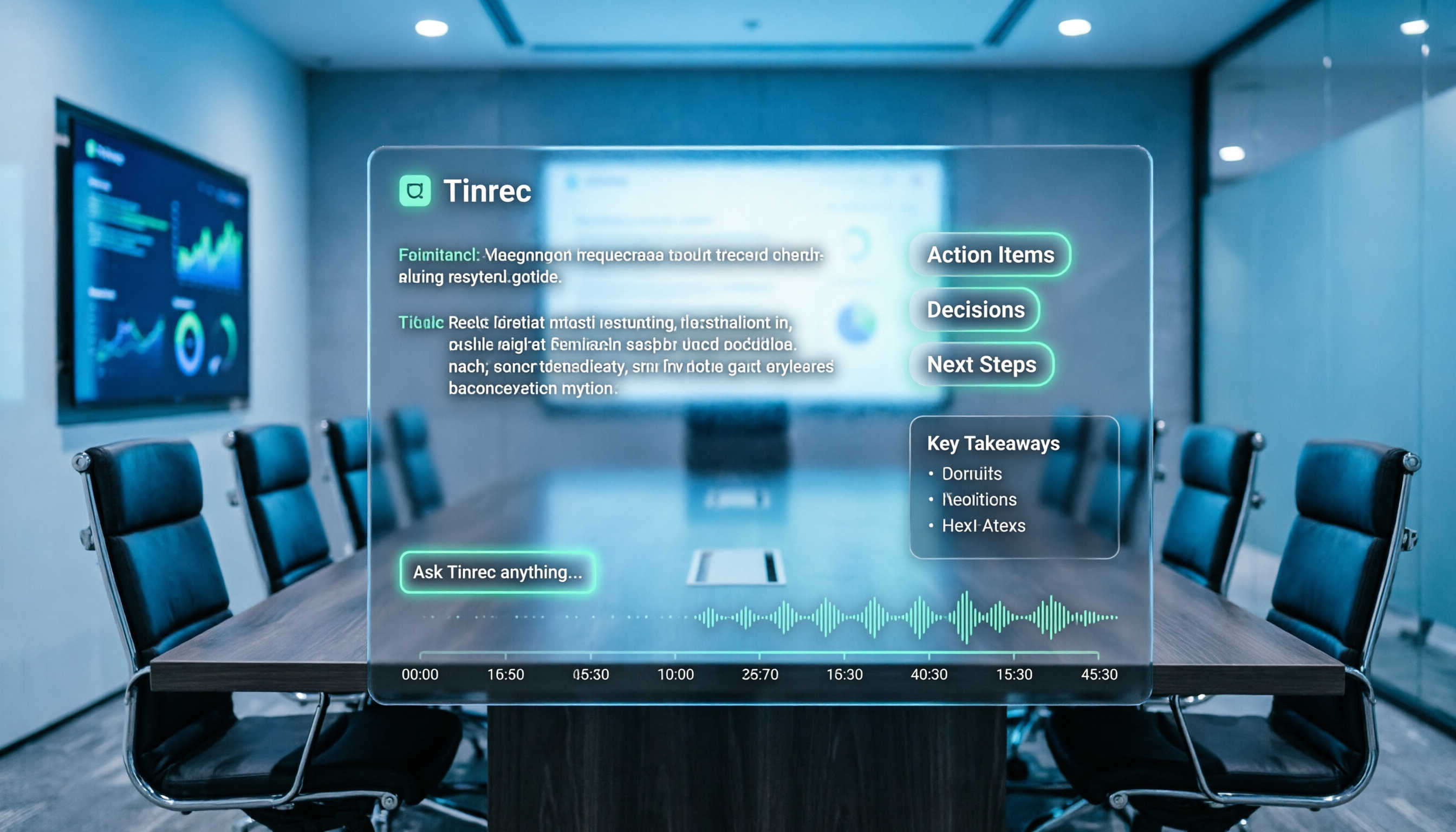
AI meeting minutes go beyond speech-to-text, turning meetings into searchable, queryable, and collaborative assets. This article compares Tinrec and Otter across four key dimensions to help you understand the core features of AI meeting minutes and choose the right AI meeting tool for your needs.
5 Best AI Meeting Note Apps Tested in 2026: No-Bot Recording, Chinese Meetings & Team Collaboration
Tired of manually writing meeting minutes? This article tests Tinrec (秒听录音) as the main focus, covering no-bot recording, Chinese meeting transcription, AI summaries, and team collaboration. It provides buying tips and FAQs to help you find a truly time-saving AI meeting notes tool.
How to Create Smart Meeting Minutes in 2026: 5 Steps to Choose the Right Software for Automatic Transcripts and Summaries
A practical guide for mid-level managers and professionals on using AI meeting minutes software to automatically generate transcripts, summaries, and action items. It highlights hands-on testing of Tinrec (秒听录音), briefly reviews Notta, Otter.ai, and Plaud Note, and offers tips to avoid common pitfalls and make the right choice.
2026 Smart Meeting Recorder Alternatives: 5 Tested Advantages of Tinrec
Still considering buying a smart meeting recorder? This article tests Tinrec, an AI meeting notes tool, comparing it with hardware voice recorders. From bot-free online meeting recording, AI summaries, team collaboration to cost, find out why a software solution is better for most office workers.