
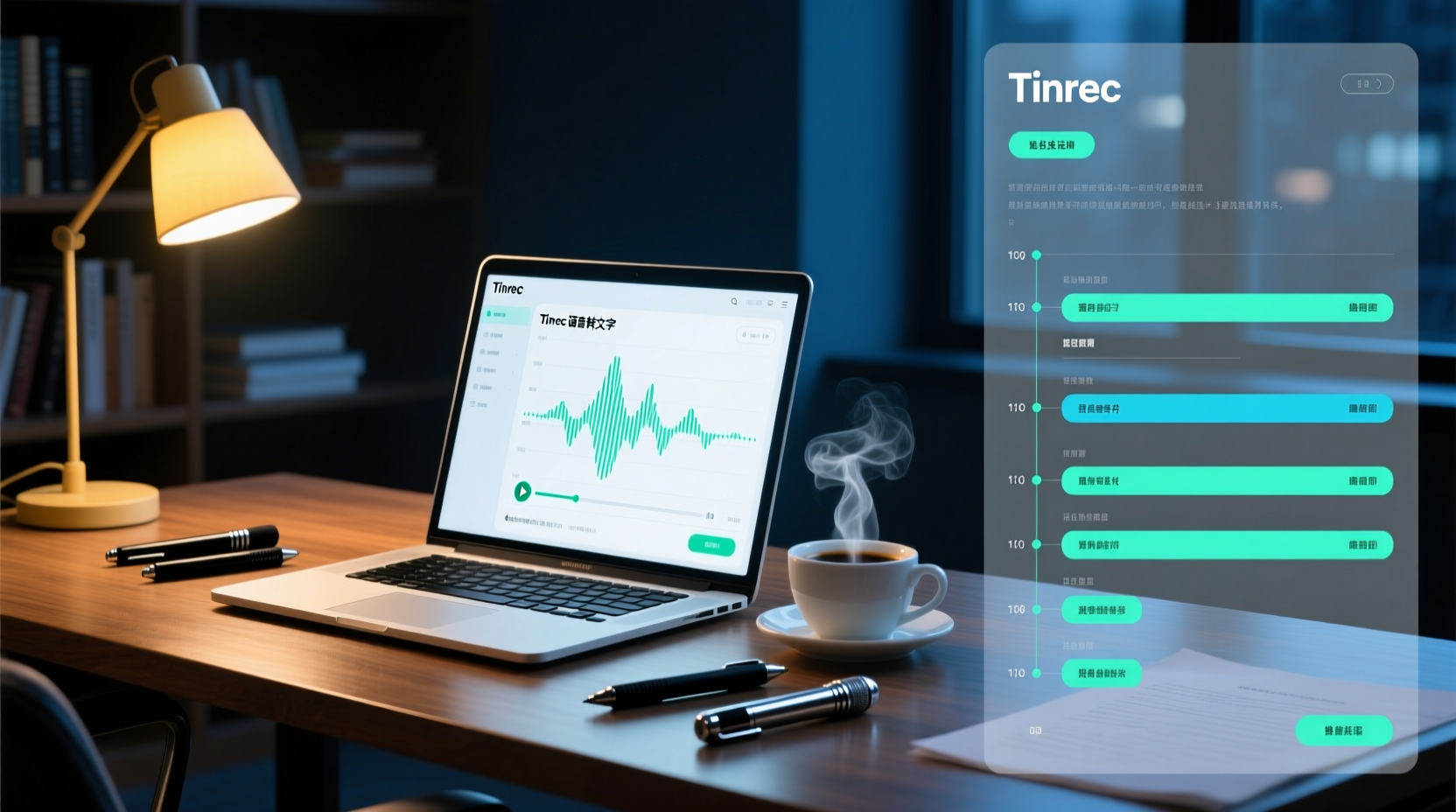
Turn recordings into transcripts and summaries in minutes
Upload audio or video for multilingual transcription, AI notes, and action items
Why Online Speech-to-Text Tools Are Recommended: From Meeting Pain Points to Actionable Data
After a meeting, the most time-consuming part is often not the recording itself, but turning the recording into a transcript, summarizing key points, and extracting action items. If you've just finished an online meeting and have a recording file, the next step is usually to find a free online tool to convert the audio into text.
The biggest appeal of online tools is that they require no installation and work across devices: you can use them right in your browser, accessible from your phone, laptop, or work computer. This is ideal for those who need to process recordings occasionally and aren't sure whether to invest in paid software.
However, the keywords "free" and "online" often come with hidden costs. To control costs, most free online plans impose three barriers: credits, per-session duration limits, and feature restrictions, which can limit what you can actually accomplish. This article doesn't just list tools; it takes a "decision path" approach to help you determine: Can a free plan meet your meeting note needs? When should you upgrade to a paid plan?
5 Recommended Online Speech-to-Text Tools in 2026
Below are several common online speech-to-text tools. Information is based on official pages; actual benefits may change, so please verify before use.
| Tool | Free Credits | Per-Session Duration Limit | Main Limitations |
|---|---|---|---|
| Tinrec | Basic credits to try recording, import, summarization, and transcription | Check official page | Advanced features require payment |
| Otter.ai | 300 minutes per month | Check official page | Advanced features require payment |
| Notta | 120 minutes per month | Up to 3 minutes per session | Obvious per-session duration limit |
| TurboScribe | 3 files per day | Up to 30 minutes per file | Long files require payment |
| Granola | Free version does not support uploading pre-recorded audio files | Not applicable | Live meetings only |
Tinrec: Most Complete for Chinese Meetings and Post-Meeting Workflows
Tinrec (Miao Ting Lu Yin) is an AI meeting notes and collaboration tool designed for individuals and teams. It doesn't just convert audio to text; it helps users turn meeting recordings into searchable, summarizable, queryable, exportable, and further processable data.
For Chinese-speaking users, Tinrec's advantages include:
- Chinese meeting transcription and minutes: Supports Traditional Chinese and mixed Chinese-English content.
- Bot-free online meeting recording: The desktop version captures system audio directly, no need to add a bot to the meeting.
- AI summaries and action item extraction: Automatically generates summaries, chapters, key points, and action items, saving manual effort.
- AI assistant for post-meeting work: Goes beyond summaries to help turn action items into action plans, follow-up materials, reports, or documents.
If you need to handle Chinese meetings and want usable outputs right after the meeting, Tinrec is worth trying first.
Otter.ai: A Mature Choice for English Business Meetings
Otter.ai is a mature AI meeting assistant covering Zoom, Microsoft Teams, Google Meet, live transcription, speaker identification, AI Chat, and team management. The free plan offers 300 minutes per month, suitable for light users.
Otter's strength lies in English business meetings. If your meetings are primarily in English, Otter is a reliable choice. However, its Chinese transcription quality is not its strong suit; Traditional Chinese users may need to compare more.
Notta: A Balance of Multilingual and File Processing
Notta overlaps significantly with Tinrec, covering multi-device transcription, meeting notes, file import, translation, and team plans. The free plan offers 120 minutes per month, but with a maximum of 3 minutes per session, long meeting recordings cannot be processed in one go.
Notta's multilingual support is decent, suitable for users who need to process files in multiple languages. However, the per-session duration limit is a clear pain point; to process recordings longer than 3 minutes, you'll need to split them or upgrade.
TurboScribe: Advantages for Long Files and Batch Transcription
TurboScribe is more of a high-value file transcription tool, focusing on long files, batch uploads, subtitles, and translation. The free plan offers 3 files per day, with a maximum of 30 minutes per file.
Stop organizing recordings by hand
Upload audio or video and automatically get a transcript, summary, and action items
If you need to process long or numerous files, TurboScribe's paid plan supports up to 10 hours per file and up to 50 files per upload, giving it an edge over most tools.
Granola: A Lightweight Bot-Free Note-Taking Option
Granola is a bot-free AI meeting note tool that transcribes meetings in real time using your desktop's system audio and microphone, and combines with your handwritten notes to generate more targeted meeting content. The free plan lets you experience live transcription but does not support uploading pre-recorded audio files or retaining meeting audio.
Granola suits users who want notes immediately during the meeting. However, if you have recordings that need post-meeting transcription, it's not the right choice.
Three Hidden Limitations of Free Plans: Credits, Per-Session Duration, and Feature Restrictions
Free plans are free for a reason, often accompanied by three types of limitations that may only become apparent after you start using them:
- Credit limits: Most tools provide a fixed number of minutes per month, e.g., Otter.ai offers 300 minutes per month, Notta 120 minutes. Once exceeded, you must wait for the next cycle or upgrade.
- Per-session duration limits: Some tools restrict the length of a single transcription, e.g., Notta's free plan allows up to 3 minutes per session, TurboScribe's free plan up to 30 minutes per file. Long meeting recordings cannot be processed in one go.
- Feature restrictions: Free versions typically lack advanced features like AI summaries, action item extraction, translation, or team collaboration, leaving you with only transcripts and manual follow-up work.
In other words, free plans suit "occasional use with short recordings." If you handle multiple meetings weekly, free credits will quickly run out, forcing you to switch tools or upgrade.
What Can Free Plans Accomplish? What Can't They?
Using Tinrec's free version as an example, you can experience basic credits for recording, import, summarization, and transcription, suitable for occasional short recordings or testing whether the tool meets your needs.
However, free plans typically cannot:
- Transcribe long meetings in one go: Per-session duration limits prevent processing recordings longer than 30 minutes or 3 minutes at once.
- Provide AI summaries and action item extraction: Most free versions lack these, so you still need to manually listen and extract key points.
- Support team collaboration and sharing: Free versions are usually for individual use, preventing you from placing meeting data in a team space for members to share and follow up.
From Recording to Usable Meeting Minutes: A Workflow with Free Plans
Even with free plans, you can complete the basic workflow from recording to usable meeting minutes:
1. Record or obtain audio: Use your phone to record, record an online meeting, or upload an existing audio file.
2. Transcribe: Upload to a supported free tool to get a transcript.
3. Manually organize: Since free versions typically lack AI summaries, you'll need to read the transcript yourself to extract key points, decisions, and action items.
4. Produce minutes: Paste the organized results into a document or note-taking tool to create usable meeting minutes.
While this workflow is feasible, post-meeting organization still takes considerable time. If you want automated summaries, action item extraction, or even an AI assistant to handle post-meeting work, you'll need to consider paid plans.
When Free Credits Run Out and Meeting Data Needs Sharing: How Tinrec Team Edition Steps In
When you move from individual use to team collaboration—for example, after a project meeting, you need to share meeting minutes, action items, and action plans with members and follow up continuously—free plans often fall short.
Tinrec Team Edition provides a team space where you can centrally store meeting recordings, transcripts, summaries, action items, and post-meeting outputs. Members can view and search historical meeting data, eliminating the need to scatter files across personal devices or chat logs.
In practice, you can:
1. Create a team space and invite members: Place meeting data in the team space, allowing members to view and search, and new members to review past meetings.
2. Share meeting data and action items: After the meeting, the AI assistant has organized action items into an action plan; you can directly share this data with responsible members, providing a clear basis for follow-up.
This way, meetings become not just personal notes but searchable, collaborative, and traceable team assets. If you're currently an individual user, the free or individual paid plan may suffice; when team collaboration needs arise, you can evaluate the Team Edition.
Conclusion: Free Plans Are a Starting Point, Not the End
There are many online speech-to-text tools. Free plans suit occasional, short recordings. If you only occasionally transcribe a meeting recording, start with a free version to see if the tool fits your habits.
When you find free credits insufficient, need AI summaries and action item extraction, or need to share and follow up on meeting data, consider upgrading to a paid or team plan. When choosing a tool, first clarify your meeting types, Chinese language needs, and post-meeting outputs to find the solution that truly fits.
References
- Tested: 4 Best Online Speech-to-Text Tools Recommended, Free Instant Recording to Transcript
- Online AI Speech, Video, Recording Auto-Transcription - Free Trial - cSubtitle
- 5 Online Speech-to-Text Recommendations Cheat Sheet
- Yating Transcript
- SoundType AI Ultra-Precise Transcript, Speech-to-Text, AI Dictation
Turn every recording into actionable outcomes
Get 60 free transcription minutes when you sign in. No credit card required.
Related Reading
You might also like

The Complete Guide to Good Tape in 2026: 3 Practical Ways to Turn Recordings into Searchable Transcripts
What is Good Tape? This guide skips the complex technical details and uses real-world scenarios to show you how to turn meeting, interview, and lecture recordings into searchable, organized text, plus what to look for when choosing a transcription tool.
How to Choose a Free Online Speech-to-Text Tool: From Meeting Recording Methods to Free Plan Limits
This article outlines the real limitations of free online speech-to-text tools, using online meeting recording methods as the primary filter. It compares free quotas and features across tools to help you quickly find the best free option based on your meeting type and post-meeting needs.

How to Choose Computer Speech-to-Text Software: A Practical Comparison Based on Meeting Types, Chinese Quality, and Post-Meeting Outputs
This article provides a framework for selecting computer speech-to-text software based on the real-world scenarios of mid-level managers. It compares popular tools such as Tinrec, Otter, Fireflies, Notta, Granola, and TurboScribe, and explains the differences in bot-free recording, post-meeting outputs, and team collaboration to help you make a choice based on your needs.

How to Choose an Online Speech-to-Text Tool: A Practical Comparison from Cross-Device Needs to Chinese Quality
Meeting recordings are scattered across phones, computers, and company devices. How do you choose an installation-free, cross-device online speech-to-text tool? This article compares mainstream tools like Tinrec, Otter, Notta, Granola, TurboScribe, and Fireflies across four dimensions: meeting types, cross-device needs, Chinese quality, and post-meeting outputs, offering specific recommendations for sales, product/R&D, and institutional staff.

Is Good Tape's Free Plan Enough? Quotas, Limits, and Other Free Transcription Tools Explained
Thinking of using Good Tape's free plan to transcribe recordings? Understand its quotas and limits first. This article details Good Tape's free plan and compares other free transcription tools to help you decide if the free version is sufficient.
How to Choose a Free Online Speech-to-Text Tool? Calculate Your Meeting Minutes First
A guide to free online speech-to-text tools, analyzing quotas, per-session limits, and feature restrictions, with a free workflow from recording to usable meeting notes to help you decide if the free tier is sufficient.

How to Choose an Online AI Speech-to-Text Tool: A Practical Comparison Based on Meeting Types, Chinese Language Needs, and Post-Meeting Deliverables
Online AI speech-to-text tools now go beyond transcription to include summaries, action items, and team collaboration. This article provides a framework for choosing based on meeting types, Chinese language quality, post-meeting deliverables, and team collaboration, and compares mainstream tools like Tinrec, Otter, Fireflies, Notta, and Granola to help you decide based on your situation.
Whisper Speech-to-Text Online Tools from Scratch: 5 Steps to Turn Meeting Recordings into Usable Transcripts
Whisper is OpenAI's open-source speech recognition technology, but for non-technical users, installing Python and setting up the environment can be a barrier. This article introduces how Whisper online tools work without installation, guiding you through 5 steps to turn online meeting recordings into usable transcripts, and explains the real boundaries of free tiers.

Good Tape Invoice Guide: Complete Steps from Billing Page to Company Details
This article explains how to request an invoice after subscribing to Good Tape, including checking billing status, filling in company and tax information, downloading or receiving invoices, and handling common issues.