
Turn recordings into transcripts and summaries in minutes
Upload audio or video for multilingual transcription, AI notes, and action items
Many people search for phrases like "Good Tape is good tape free" because they really want to know: can you use it without paying, and how far can you get? This article explains Good Tape's free plan, trial limits, and when you can hold off on upgrading.
What Is the Good Tape Free Plan?
Good Tape is an AI-powered transcription tool that converts video and audio into text, supporting over 100 languages. Its key selling points are speed, security, and accuracy, with a strong emphasis on GDPR compliance and a guarantee that your files won't be used to train AI models.
The free offering comes in two forms: a free trial and a permanent free plan. They work differently, so don't mix them up.
Free Trial: 1 Hour of Full-Feature Access
Good Tape's free trial requires no credit card and gives you 1 hour of transcription credit, including access to Pro features.
That means you can test:
- Transcription speed
- Interface and workflow
- Speaker labels
- AI summaries
- MCP connectivity
- Good Tape Recorder App
The company emphasizes that the free trial uses the same engine, accuracy, and security standards as paid accounts. For anyone wondering if the tool fits their needs, this is a more complete way to find out.
Keep in mind that this 1 hour is trial credit. Once it's used up, if you don't upgrade, you'll drop back to the free plan's limits.
Permanent Free Plan: 3 Transcriptions per Month, 30 Minutes Each
The long-term Good Tape Free plan gives you 3 transcriptions per month, with each one capped at 30 minutes.
This allowance works for:
- Occasionally cleaning up a short interview
- Testing how a single podcast episode transcribes
- Quickly converting a meeting recording into text
It's not ideal for:
- People who process multiple recordings every week
- Those who need to transcribe long meetings or lectures
- Anyone planning to rely on Good Tape as a daily workhorse
If you only need to transcribe 1 to 3 short items a month, the free version is genuinely sufficient—no need to rush into paying.
Where Are the Free Plan's Limits?
Looking at the official FAQ, the free plan's restrictions go beyond just minutes.
The main limits are:
Stop organizing recordings by hand
Upload audio or video and automatically get a transcript, summary, and action items
- 3 transcriptions per month
- 30 minutes max per transcription
- Some advanced features may not be included in the permanent free plan
Additionally, third-party reviews mention file size limits on the free plan, which might push some users toward a paid option. However, it's best to check the official pricing page for the latest details, since plan terms can change over time.
How to Choose Between Free and Paid
Honestly, the decision is simple: start with how often you'll use it.
If you only need transcription occasionally, the free plan's 3 monthly transcriptions are usually enough.
If you have a short-term project—like handling multiple interviews at once—start with the 1-hour free trial, test the results, and then decide whether to upgrade.
If you have a steady weekly transcription need, you'll hit the 30-minute cap quickly, and that's when a paid plan becomes worth considering.
Is the Free Version Worth Trying?
Yes. Especially since the free trial has no credit card requirement, and you don't have to worry about automatic charges after the trial ends.
My advice: grab a recording that matches what you'd typically work with. For example:
- A 20-minute meeting recording
- An interview mixing Chinese and English
- A lecture audio with some background noise
Testing with real material beats reading any number of reviews.
Frequently Asked Questions
Does Good Tape Free require a credit card?
No. The free trial has no credit card requirement, so you can directly experience 1 hour of Pro features.
How long can files be on Good Tape Free?
The permanent free plan allows up to 30 minutes per transcription, with 3 transcriptions per month. The free trial, on the other hand, gives you a total of 1 hour of credit.
Can I use AI summaries on Good Tape Free?
During the free trial, you can test Pro features like AI summaries. For the permanent free plan, check the official page for the current feature set.
Is Good Tape Free suitable for teams?
No. The free plan is designed for light individual use. Team collaboration and high-volume transcription typically require upgrading to Pro or Business plans.
Does Good Tape use my files to train AI?
The company states that it does not use your files to train AI models and complies with GDPR.
Is there a difference in transcription accuracy between free and paid?
Good Tape says the free trial uses the same engine and accuracy standards as paid accounts. So, for short-term testing, the quality you see during the free trial is a reliable reference.
References
Turn every recording into actionable outcomes
Get 60 free transcription minutes when you sign in. No credit card required.
Related Reading
You might also like

Google Meet 2024 Update Recap: 5 Most Notable Feature Changes
A look back at Google Meet's key updates in 2024, from AI meeting notes and real-time translated captions to alternatives for bot-free recording, and a quick overview of which features truly impact daily meeting efficiency.
Good Tape vs Tinrec 2026: A 4-Dimension Comparison for Security and Team Fit
Good Tape promotes Danish GDPR compliance and automatic audio deletion, but when compared side-by-side with Tinrec, the definition of security differs. This article tests both tools across 4 dimensions to help you decide which is better suited for small and medium teams.
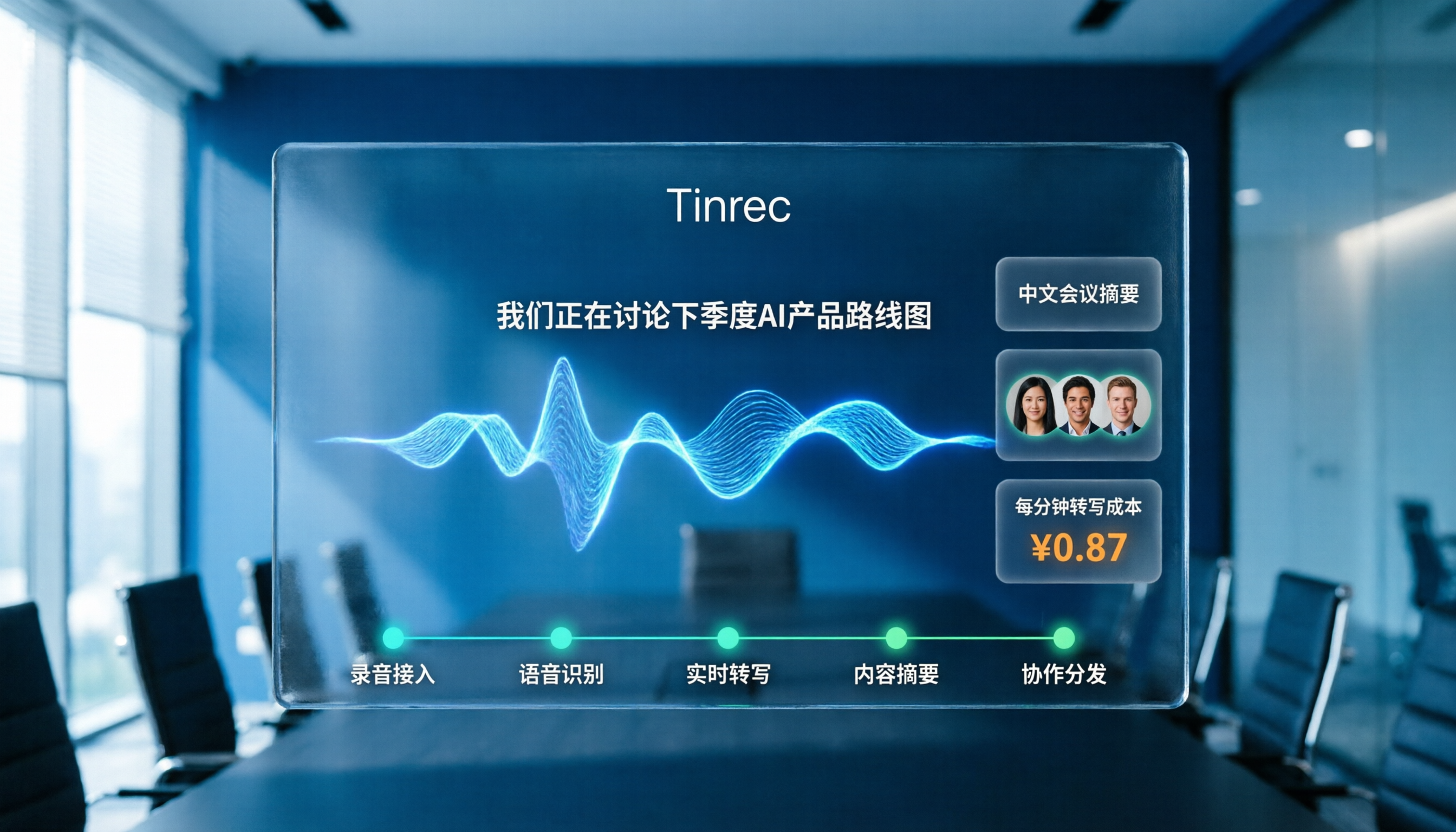
How to Choose a Speech-to-Text Tool in 2026: 5 Steps to Understand Good Tape Pricing and Alternatives
Is Good Tape's pricing worth it? This guide walks you through 5 steps—from free plans to paid tiers and alternatives—to calculate the true cost per minute, so you don't sacrifice Chinese meeting support, team collaboration, or AI summarization for a low price.

2026 Notta Alternatives Tested: Why More Users Are Switching to Tinrec?
Is Notta AI's free plan sufficient? This article tests Notta's free tier limitations and presents Tinrec as an alternative, comparing features like bot-free recording, Chinese meeting transcription, AI Q&A, and team spaces to help you decide which tool suits your daily meeting needs.

Tinrec vs Notta 2026: 5-Dimension Comparison for Chinese Meeting Notes & Team Collaboration
Tired of spending hours on meeting notes every week? This article, from the perspective of a mid-level manager, compares Tinrec and Notta across 5 dimensions: bot-free recording, Chinese transcription, AI Q&A, team spaces, and pricing, to help you decide which tool is better suited to turn meetings into searchable, trackable team knowledge.

Notta Free Plan Tested in 2026: Is 120 Minutes Enough? 4 Limitations to Know First
Notta does offer a free plan, but many users overlook the 120-minute monthly cap and the 3-minute per-file limit. This article breaks down what you can actually do with Notta's free tier, how much the paid plans cost, and who should consider alternative tools instead.

4 AI Meeting Recorder Tools Compared in 2026: Which Free Plan Is Actually Worth It?
Looking for a free AI meeting recorder? This hands-on comparison breaks down the free plans of Notta, Otter, Fireflies, and Tinrec—covering transcription minutes, per-session limits, Chinese-language support, and team collaboration—to help you find the one that truly saves you time.

Google Meet vs FaceTime in 2026: The Complete Guide to Cross-Platform Support, Video Quality, and Use Cases
Still trying to decide between Google Meet and FaceTime? This article breaks down platform support, call quality, participant limits, meeting features, and costs to help you choose the right video calling tool for your needs.
Google Meet vs Zoom 2026: Free Plan, Video Quality & AI Features Compared
Choosing between Google Meet and Zoom? This hands-on comparison evaluates free plan limits, call quality, screen sharing, AI features, and mobile experience to help you decide which is better for daily meetings, client calls, and remote collaboration.