

Turn recordings into transcripts and summaries in minutes
Upload audio or video for multilingual transcription, AI notes, and action items
Before Every Meeting, You're Actually Making the Same Choice
I attend about 15 meetings a week—internal weekly syncs, project status updates, cross-departmental coordination, and occasionally client interviews. Some are formal enough to require an agenda sent in advance and follow-ups afterward; others are just quick three-to-five-minute check-ins that end as soon as we're done talking.
So the question is never "Which is better, Google Meet or WhatsApp?" but rather: Are you dealing with a meeting that needs to be recorded, tracked, and documented, or just a casual conversation that's over once it's done?
These two tools are designed with very different philosophies. Google Meet is built for "meetings," while WhatsApp is built for "communication." Comparing them is like asking "Which is better, a laptop or a smartphone?"—the answer depends on what you're trying to do right now.
In this article, I'll break it down across five practical dimensions, skipping the spec sheets and focusing on the real-world decisions you'll face in the workplace.
Before Choosing a Video Tool, Understand These 5 Key Points
1. Are You Having a "Meeting" or a "Conversation"?
If it's just two people quickly discussing something, a voice or video call on WhatsApp is straightforward—no links to open, no waiting room to enter. But if it's a project meeting with five or more people, where you need to take turns speaking, share screens, and have someone take notes, Google Meet offers a much more stable experience.
2. Number of Participants and Meeting Duration
Google Meet is designed to handle larger groups and longer sessions, while WhatsApp's group calls have more limited stability and management capabilities when participant counts and durations increase. The more people you add and the longer the call, the more these differences become apparent.
3. Do You Need to Keep Post-Meeting Records?
This is what matters most to me. Google Meet's value lies in its integration with the Google ecosystem, allowing you to preserve meeting materials. WhatsApp conversations are logged, but they're essentially chat threads, not structured meeting records. If you need to organize decisions, action items, and track progress after the meeting, digging through a chat thread will cost you a lot of time.
4. Cross-Device Convenience
WhatsApp excels on mobile, with relatively lightweight desktop and web versions. Google Meet offers a more complete experience on computers and browsers. If you spend most of your time in front of a computer, Meet will feel much more natural.
5. Privacy and Account Systems
Google Meet is tied to a Google account, while WhatsApp is linked to a phone number. In a professional setting, sending meeting invitations via email is more common and less likely to cross personal privacy boundaries than exchanging personal phone numbers.
Google Meet: Designed for Formal Meetings, but Post-Meeting Organization Is Still on You
Google Meet is the video conferencing tool within the Google Workspace ecosystem, suited for formal meetings that require stable connections, screen sharing, and multiple participants. Its advantages are clear: no extra software to install, a link is all you need to join, and it integrates seamlessly with Google Calendar.
However, Google Meet's core capabilities stop at "holding the meeting." After the meeting ends, support for transcripts, summaries, and action items is limited. You'll still need to take your own notes, organize everything yourself, or find another tool to capture the meeting content.
For my team, the most time-consuming part is never the meeting itself—it's what happens afterward. A one-hour meeting can take another half hour to organize into who's responsible for what and when deadlines are. If you're only using Meet, that time isn't going to be saved.
Stop organizing recordings by hand
Upload audio or video and automatically get a transcript, summary, and action items
WhatsApp: Great for Everyday Communication, but Not Quite Ready as a Meeting Platform
WhatsApp is positioned as an instant messaging app, making it incredibly convenient for quick updates, file sharing, and short calls. For small teams or informal communication, it has almost no learning curve—just open it and go.
But using WhatsApp as a formal meeting platform comes with several practical issues. First, the stability and management of multi-person video calls don't match dedicated meeting tools. Second, it's tied to phone numbers, and inviting external collaborators by exchanging personal numbers isn't always appropriate in a professional context. Third, meeting content gets mixed in with a flood of everyday messages, making it nearly impossible to find a specific conclusion or discussion later—it's like searching for a needle in a haystack.
I've seen discussions where people mention that WhatsApp's desktop experience is inconsistent and that migrating data between devices is a hassle. If you're primarily using it for lightweight, mobile-first communication, it works great. But if you need to turn meetings into trackable work data, you'll regret it later.
Beyond These Two: A Third Option for Post-Meeting Organization
Both Google Meet and WhatsApp solve the "how to communicate" problem, but neither fully addresses "what happens after the communication." My approach is to hold meetings as usual on Meet or WhatsApp, but delegate post-meeting organization to a dedicated AI meeting tool.
I currently use Tinrec (秒听录音). It's not in the same category as Meet or WhatsApp—it's an AI meeting transcription and collaboration tool. When I have an online meeting, I open the Tinrec desktop app, and it captures the system audio directly, without needing to invite a bot to the meeting. Afterward, the transcript, AI summary, chapters, and action items are all ready.
The most useful feature is the AI Q&A. When my boss asks, "What did the client say about the budget last time?" I don't have to sift through a 30-minute recording—I just ask Tinrec, and it gives me the answer based on the meeting content. That's something neither Meet nor WhatsApp can do.
If you only have occasional meetings, the free tier or a short-term plan is enough. If you're like me and have over a dozen meetings a week, consider the Pro or team plans. The key point is that it fills the biggest gap in both Meet and WhatsApp: the preservation and reuse of post-meeting data.
Pitfall Guide: 4 Common Mistakes When Choosing a Video Tool
Mistake 1: Confusing "Can Make Calls" with "Can Hold Meetings." Being able to video call doesn't mean it can support a formal meeting. Multi-person management, screen sharing, and meeting records are the real thresholds for a formal meeting.
Mistake 2: Ignoring Post-Meeting Organization Costs. Many people choose a tool based only on call quality, only to spend even more time organizing transcripts and action items afterward. Evaluate tools together with your post-meeting workflow.
Mistake 3: Using Personal Messaging Apps for Work. Using email or company accounts for professional communication is more professional and easier to manage than exchanging personal phone numbers.
Mistake 4: Leaving Meeting Records in Chat Threads. Chat threads are not meeting databases. If important decisions and action items only exist in conversations, they'll be lost within days, and cross-departmental tracking becomes a nightmare.
Summary: Which One Should You Choose?
Back to the original question: Is Google Meet better than WhatsApp? My answer is: It depends on what you're trying to do.
- Formal meetings, multi-person discussions, screen sharing → Use Google Meet
- Quick updates, two-person brief chats, informal communication → Use WhatsApp
- Post-meeting needs for transcripts, summaries, action items, AI Q&A → Use Tinrec to cover the final mile
Google Meet and WhatsApp aren't an either/or choice—they play different roles in the workplace. What really impacts efficiency isn't usually which tool you use during the meeting, but whether those decisions and action items are properly captured afterward. If you're tired of digging through chat logs and replaying recordings after meetings, start by "structuring your meeting data"—it'll make a bigger difference than agonizing over which platform to use.
References
- Google Meet vs WhatsApp - 2026 Comparison - Software Advice
- Google Meet vs WhatsApp Comparison (2026) - GetApp
- r/whatsapp on Reddit: Do you think WhatsApp is ready to replace Google Meet as a full conference platform (audio and/or video) on mobile, desktop and web?
- Compare Google Meet vs WhatsApp 2026 | Capterra
- Google Hangouts vs. Google Meet vs. WhatsApp Comparison
Turn every recording into actionable outcomes
Get 60 free transcription minutes when you sign in. No credit card required.
Related Reading
You might also like

Google Meet Free Plan Guide 2026: 3 Options Compared
With Skype phasing out, is Google Meet the best alternative? This article reviews 3 free video tools for meetings, chat, screen sharing, and cross-device use, outlining their ideal use cases and limitations to help you decide quickly.

How to Choose Your Meeting Tool in 2026: A 3-Step Guide to Comparing Google Meet and Discord
Which is better, Google Meet or Discord? This article skips the spec sheets and helps you decide based on your meeting scenarios. Follow three steps: first, understand the design purpose of each tool; second, evaluate your top collaboration needs; and finally, make the choice that fits you best.

Google Meet Free Version Test Guide 2026: 60-Minute Limit and 3 Ways to Work Around It
Is the free version of Google Meet enough? This hands-on review covers the free plan's 100-person cap, 60-minute group call limit, and lack of built-in recording, and shows how to use Tinrec desktop to record meetings without bots, auto-generate transcripts and action items, and keep a complete meeting record without upgrading to Workspace.

Google Meet vs WhatsApp in 2026: The Complete Guide for Classes, Group Discussions, and Online Meetings
From college lectures and group projects to internship meetings, this guide breaks down the differences between Google Meet and WhatsApp, common pitfalls, and a more efficient alternative workflow.

Google Meet vs FaceTime in 2026: 3 Key Decision Points to Choose the Right Video Tool
Google Meet and FaceTime may both offer video calls, but one is a cross-platform meeting room, while the other is a built-in tool within the Apple ecosystem. This article compares them across three dimensions—platform limitations, meeting features, and call quality—to help you decide which one suits daily contact, remote work, or team meetings.

Google Meet vs WhatsApp in 2026: Which Is Better for Meeting Notes and Call Collaboration?
Both Google Meet and WhatsApp support video calls, but one leans toward meeting collaboration while the other focuses on instant messaging. This article compares the two across meeting scenarios, recording and transcription, meeting note organization, cross-device usage, and team management, and offers tool recommendations for better post-meeting follow-up.
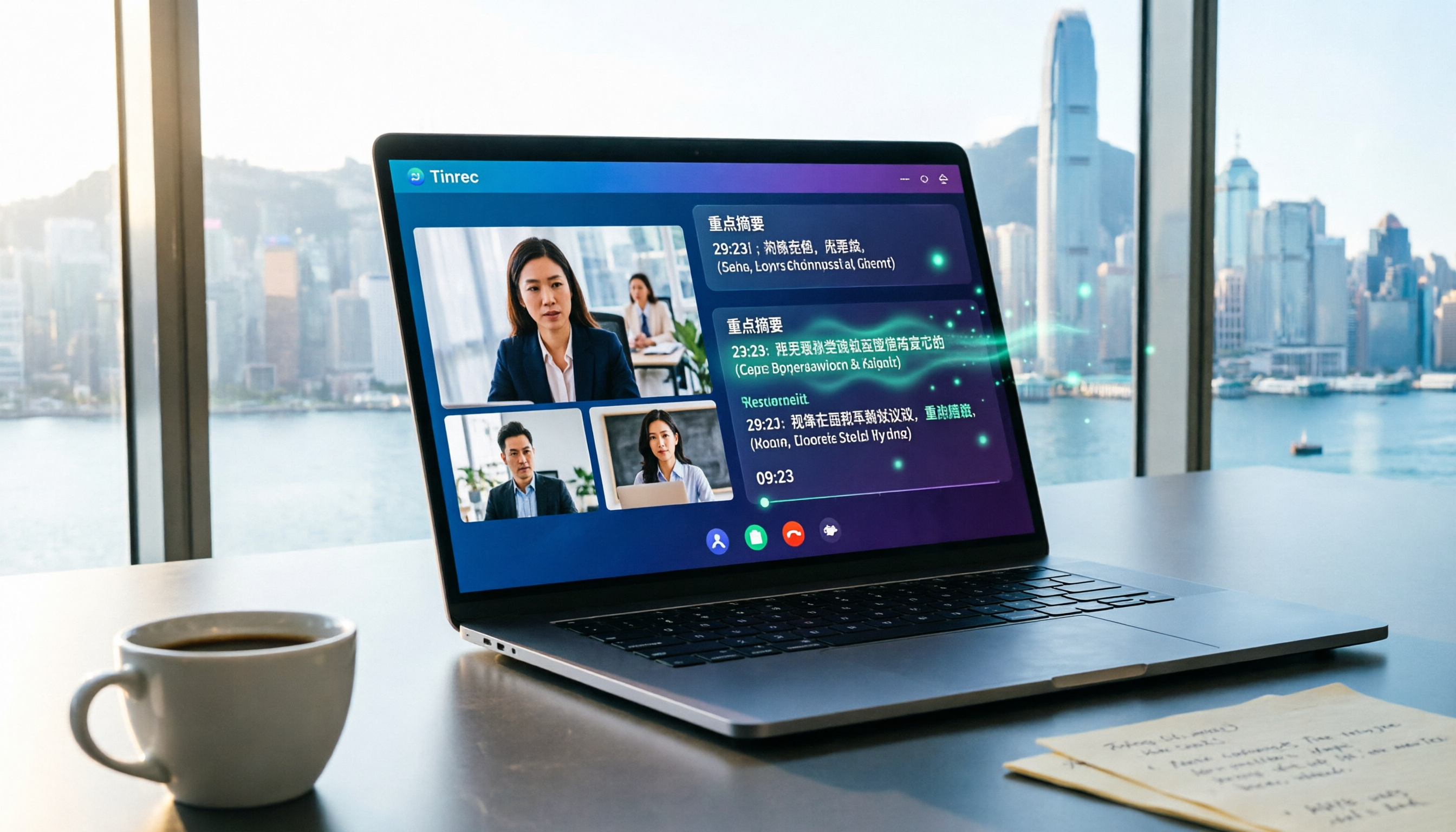
Is Google Meet a Video Calling App? 2026 Review of 5 Meeting Tools—Which One Suits Hong Kong Professionals Best
Google Meet is certainly a video calling tool, but meetings alone aren't enough. This article reviews 5 video conferencing and AI meeting note solutions, from Meet to Tinrec, to help you pick the best option for Hong Kong office workers.
Google Meet vs Zoom in 2026: A 5-Point Showdown, and What Reddit Users Are Really Saying
The Reddit debate between Google Meet and Zoom never ends. This article rounds up real user opinions, breaking down the pros and cons across five key areas—privacy, latency, screen sharing, pricing, and ecosystem integration—to help you decide which one to choose in 2026.

The Complete 2026 Guide to Troubleshooting Google Meet Outages: Check Service Status, Fix Issues, and Backup Tools at a Glance
Can't get into Google Meet, calls keep dropping, or you can't join a meeting? This guide teaches you how to confirm if Google Meet is actually down, read the official status page and Downdetector reports, and provides practical self-troubleshooting steps and backup meeting solutions to keep important meetings from being derailed by service interruptions.