
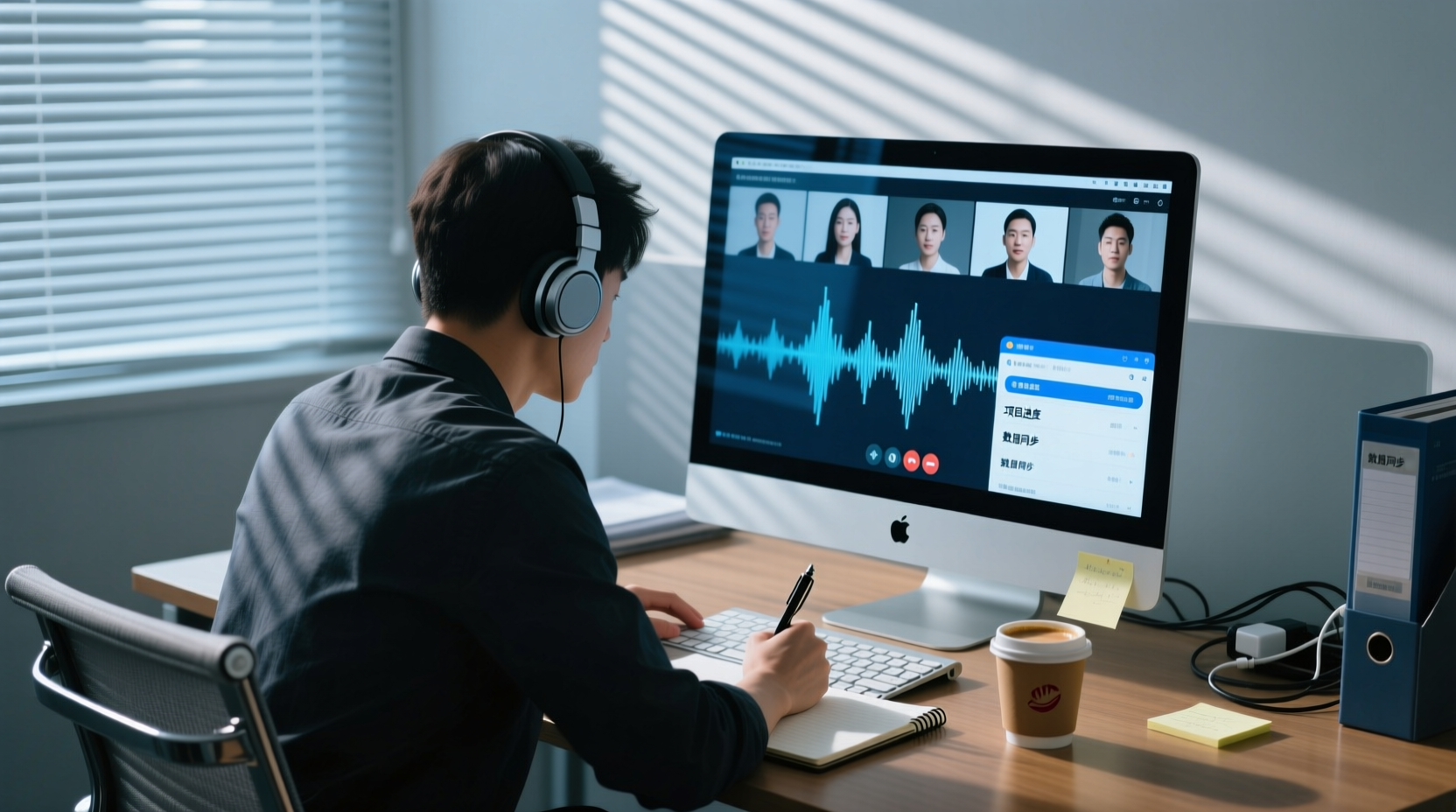
Turn recordings into transcripts and summaries in minutes
Upload audio or video for multilingual transcription, AI notes, and action items
Three Things to Confirm Before Recording Google Meet on Mac
On Windows, many people are used to just grabbing a recording app and hitting start for a Google Meet. On a Mac, the same approach often doesn't work. The reason isn't that Macs are more troublesome—it's that macOS splits "capturing system audio" and "using the microphone" into two separate privacy permissions, and there's an additional permission relationship among the browser, desktop app, and system settings.
So to complete a handoff-ready meeting record on a Mac, confirm three things before the meeting:
1. Who is responsible for recording this meeting: Is the host using Google Meet's built-in recording, or is a participant capturing system audio on their own computer? The permission prerequisites and file ownership differ between the two.
2. Are system audio and microphone permissions enabled: macOS privacy settings determine whether an app can hear other people in the meeting and whether it can receive your microphone.
3. What needs to be delivered after recording: Just the video file, or further organized into a transcript, summary, and action items? This determines which tool you use and which source files you keep.
The following sections address these three things in order: prerequisites, checkpoints, and deliverables.
How to Enable System Audio and Microphone Permissions on Mac
The biggest difference between Mac and Windows is how system audio is captured. On Windows, many recording programs let you simply check "system sound"; macOS puts audio input and screen/system audio authorization under "Privacy & Security," and apps must be allowed before they can access the corresponding audio sources.
There are roughly two categories of permissions to hand off:
- Microphone: Determines whether the app can receive your side of the conversation. If you only enable system audio and not the microphone, your own parts will be missing from the transcript.
- Screen & System Audio Recording (or similar system audio authorization): Determines whether the app can capture the sound played by other people in the meeting. The name and location of this item may vary across macOS versions.
Prerequisites and checkpoints:
- Permissions are granted per app, not globally once and for all. Allowing your browser doesn't mean you've allowed a desktop tool.
- After authorization, you usually need to restart the app for it to take effect. This is a common cause of "I enabled it but there's no sound."
- If your company-issued Mac is managed by IT, some privacy permissions may be restricted by organizational policy. Confirm with IT first rather than repeatedly reinstalling.
> Note: macOS privacy permission settings are version-dependent, and the actual path may change with system updates. Before publishing and actual operation, refer to Apple's official documentation and Tinrec's official documentation.
Capture System Audio with a Desktop App to Record Meetings—No Bot Required
After confirming permissions, the second thing to address is "how does the meeting audio come in?"
There are two common approaches. One is to send a meeting bot that joins the Google Meet room as an extra participant, adding an account to the meeting roster; the other is to use a desktop tool on your own Mac to directly capture the system audio played by that computer.
Tinrec desktop uses the latter: it processes online meetings played on your computer by capturing the device's system audio, without requiring a meeting bot to join as a participant. For external meetings, client meetings, or interviews where an unfamiliar account on the roster is inappropriate, this difference is practical.
Boundaries to clarify:
- This is a recording initiated by the user, not automatically joining all calendar meetings.
- Supporting the processing of Google Meet audio played on a computer does not imply an official partnership with Google.
- Before recording, confirm that participants have consented and comply with local laws regarding recording and transcription.
In terms of sequence, typically you open the desktop app on your Mac and confirm the audio source, then join the Google Meet so the meeting audio is captured via system output. If you switch output devices mid-meeting (e.g., from speakers to headphones), recheck whether the audio source is still correct.
What You Get After Recording: Transcript, Summary, and Action Items
After recording, what really determines your post-meeting workload is the level of output.
After recording or importing, Tinrec organizes the meeting content into several directly usable materials:
Stop organizing recordings by hand
Upload audio or video and automatically get a transcript, summary, and action items
- Transcript: Preserves the original spoken content, searchable and reviewable, for checking details.
- AI summary and chapters: Breaks long meetings into a browsable structure to quickly grasp key discussion points.
- Action items: Extracts follow-up actions from the discussion as a starting point for assignment and follow-up.
- AI Q&A: Allows continued questioning about the meeting content, such as where a certain decision was proposed.
- Multi-format export: Brings results into existing workflows, such as documents or spreadsheets.
One checkpoint to emphasize: Summaries and action items are organized results, not final conclusions. For important decisions, external commitments, amounts, timelines, and sensitive content, return to the corresponding timestamps in the transcript and recording playback to verify before sending externally. AI may miss or misinterpret details, and manual confirmation cannot be skipped.
Turning Meeting Content into Handoff-Ready Post-Meeting Materials
After getting the transcript and action items, you usually need to go one step further before handing off to the next person. This step is "turning meeting content into deliverable materials."
Tinrec's AI assistant (Agent) can, based on meeting minutes and context, help further process action items into usable post-meeting work products, such as action plans, follow-up materials, reports, spreadsheets, and documents. For a project meeting, the process is roughly:
1. Input: The meeting's transcript, summary, and extracted action items.
2. Action: Ask the AI assistant to organize assignments and timelines based on the discussion, or to compile client requirements into an external-facing explanation.
3. Output: A document, spreadsheet, or report that can go directly into review or response processes.
4. Manual confirmation: Before external sending, content involving commitments and resources is confirmed by the responsible person before being sent.
> The following is a fictional teaching example to illustrate the process, not a real customer case: A project weekly meeting discussed three action items; afterward, the AI assistant organized them into an action list with owners and expected completion dates, and the project lead verified one timeline before sending.
The value of this step is that meeting records no longer stop at the transcript but become materials the next stage can directly use.
Common Permission and Audio Troubleshooting on Mac
Problems on Mac mostly center on permissions and audio sources, not the recording function itself. Check in the following order:
- Other people's voices in the meeting aren't recorded: Likely system audio authorization is not enabled, or the app wasn't restarted after authorization.
- Only the other party's voice, not your own: Microphone permission is not enabled, or the wrong input device is selected.
- Audio issues after switching headphones or external microphone mid-meeting: After switching output/input devices, re-confirm the audio source settings.
- Company computer doesn't respond no matter what: Organizational device management policies may restrict privacy permissions; confirm with IT rather than repeatedly reinstalling.
- Browser and desktop app behave differently: Permissions are granted per app; allowing one doesn't mean the other is also enabled.
The basic troubleshooting principle: confirm permissions first, then devices, and only then suspect the tool itself.
How to Share and Hand Off Meeting Records in Team Scenarios
If the same Google Meet meeting record needs to be taken over by multiple people, the question shifts from "what did I record" to "where is the data, who can see it, and what happens when someone leaves."
Tinrec team plan provides a team space that centrally stores meeting recordings, transcripts, summaries, and action items, rather than scattering them across personal accounts or chat logs. For a project meeting, two specific aspects are:
- Sharing meeting data: After the meeting, transcripts and post-meeting outputs are placed in the team space, and project members can directly view and search historical meetings without requesting files from the recorder.
- Resource handoff: Team resources belong to the team. When the member responsible for recording exits, is removed, or loses their seat, their team resources can be handed off to other active members, so meeting data doesn't lose ownership when an individual leaves.
A distinction to make clear: the team plan currently focuses on team-level sharing, where all active members can read team data; roles determine who can manage the team and members, and seats determine whether members can record, upload, edit, and export. This is not document-level or member-level granular permission control, and should not be conflated in external explanations.
If your team is evaluating ways to share meeting records among multiple people, you can start by learning about the team space and shared meeting data capabilities. Specific plans and seat arrangements are subject to the official purchase page or official consultation results.
Summary
Recording Google Meet on a Mac really requires clarifying four things: whether permissions are enabled, where the audio comes from, what you get after recording, and who ultimately holds the data. Confirm these four things in order, and post-meeting organization won't get stuck on "I only realized after the meeting that it wasn't recorded" or "it was recorded but no one took over." For important decisions and external content, still rely on the transcript and recording playback, and have the responsible person confirm before sending.
References
- How to Use Google Meet on macOS Sequoia — Cyber Acoustics
- Google Meet for Mac - Download
- Guide for Using Google Meet App on Mac | Meeting Reminders
- Is there a native Mac desktop app I can download for Google Meet? Tired of looking for browser tabs - Google Meet Community
- https://meet.google.com/etc-ztyu-mac
Turn every recording into actionable outcomes
Get 60 free transcription minutes when you sign in. No credit card required.
Related Reading
You might also like

Does Google Meet Record Automatically? Recording Requirements, File Locations, and What to Do If You Missed It
Google Meet does not record automatically by default; recording requires a host or permitted participant to manually start it. This article explains how recording permissions relate to account types, where recordings are stored and how they are shared, three real-world limitations, and how to capture a record using desktop bot-free recording when a meeting was not recorded, plus a post-meeting workflow for turning recordings into transcripts and action items.

Does Google Meet Record Automatically? Recording Permissions, File Location, and a Handoff Checklist for Missed Recordings
Google Meet does not record automatically by default; someone with permission must manually start the recording. This article, from a staff handoff perspective, explains who can record, where the files are stored, plan and admin restrictions, and how to use desktop no-bot recording to fill in transcripts, decisions, and action items when a meeting wasn't recorded.

How to Choose a Google Meet Meeting Notes Tool: Four Dimensions to Narrow Your Options to Two or Three
Project and department staff who host multiple Google Meet meetings each week often find that after the meeting ends, no one can clearly say who is responsible for what. This article uses four selection dimensions—how audio gets in, how far post-meeting output goes, Chinese-language organization experience, and where data is stored—to narrow down a dozen tools claiming Google Meet support to two or three, and explains what questions to ask for each dimension.

Does Google Meet Require an Account? Differences Between Invitees and Hosts, Plus a 3-Step Process for Joining, Confirming Recording, and Post-Meeting Handoff
Got a Google Meet link but hit a login screen? This article explains the account requirements for invitees versus meeting hosts by role, and provides a three-step handoff process for joining a meeting, confirming recording status, and organizing transcripts and action items. Suitable for administrative and project coordination staff.

Google Meet Requirements: What Attendees and Hosts Need Before a Meeting
If you're arranging or joining a Google Meet for the first time, start by figuring out whether you're an invitee or the host. This guide breaks down account, browser, device, recording permission, and external attendee requirements by role, plus a pre-meeting checklist covering who records, who takes notes, who hands off, and how to capture a transcript and action items without a bot if the meeting wasn't recorded.

Does Google Meet Record Automatically? Permissions, File Locations, and How to Hand Off When Nothing Was Recorded
Google Meet does not record automatically by default; a host with permission must start it manually. This article explains, from a staff handoff perspective, who can record, where files are stored, plan and download restrictions, and how to fill in transcripts, notes, and action items with desktop no-bot recording when a meeting was not recorded, plus the checkpoints for team sharing and handoff.

Does Google Meet Record Automatically? Recording Permissions, File Locations, and a Backup Handoff Checklist When Nothing Was Recorded
Google Meet recording is not automatically enabled by default—someone with permission must actively press start. This article, written from the perspective of meeting planning and post-meeting organization, explains recording permission ownership, file storage and download permissions, plan-level restrictions, and how to use desktop no-bot recording to fill in transcripts, minutes, and action items when a meeting wasn't recorded, then share the handoff in a team space.

How to Choose a Google Meet Meeting Notes Tool for PC: Four Dimensions to Narrow Your Options to Two or Three
When running Google Meet on a Windows PC, choosing a meeting notes tool isn't just about whether it "supports" the platform—it's about post-meeting output and data ownership. This article uses four dimensions—audio capture method, post-meeting output level, Chinese and mixed Chinese-English organization experience, and whether data stays in personal or team space—to help you narrow your options to two or three, and explains what questions to ask for each dimension.
Google Meet Download for PC: Desktop Install, System Audio Capture, and Post-Meeting Transcript Handoff Workflow
When handling Google Meet meeting records on a Windows PC, first confirm three things: account, recording permissions, and audio source. Then complete the desktop download and installation, set up system audio capture, and finally organize the transcript, summary, and action items into handoff-ready post-meeting materials. Also explains how team spaces can share and hand off meeting data.