

Turn recordings into transcripts and summaries in minutes
Upload audio or video for multilingual transcription, AI notes, and action items
2026 AI Meeting Recorder Comparison: 4 Tools Tested for Chinese Meetings
When choosing an AI recording and note-taking tool, the first question isn't "which one is cheapest"—it's: do you want a transcript, or meeting material you can use to follow up on action items and share with your team? That question will directly determine which tool you should keep.
What You're Missing Isn't the Recording—It's the Post-Meeting Organization
Two-hour meetings followed by two hours of organizing notes—that's the daily reality for most office workers.
Chinese meetings are even trickier: mixed Chinese and English, multiple people talking over each other, and endless jargon mean the output often isn't usable as-is.
This isn't a spec-sheet showdown—it's my hands-on assessment after actually trying several tools to help you decide which one is worth keeping.
4 Key Things to Understand Before Choosing an AI Meeting Recorder
How does it "join" the meeting? Meeting bots need to join as a participant, and some companies block external accounts. A bot-free approach that captures system audio from a desktop app avoids this hassle entirely.
Does it give you a transcript or a workflow? With just a transcript, you still have to read through it yourself. Whether it can generate summaries, chapters, action items—or even let you ask "who mentioned the budget last time"—makes a huge difference.
Can it handle Chinese and multiple languages? Chinese meetings, mixed Chinese-English, and real-time translation are where users most often run into problems.
What happens after the free tier runs out? The free version is a trial, not a long-term solution. Look at how many minutes per seat the paid plans offer and whether teams can share quotas.
Tinrec—My Top Pick After Hands-On Testing
Tinrec is an AI meeting notes and collaboration tool designed for individuals and teams, available on iOS, Android, web, and desktop.
Bot-free online meeting recording: The desktop version captures your computer's system audio directly, working with Zoom, Google Meet, Microsoft Teams, and Webex—no need to invite an extra bot into the meeting. This is especially convenient for client meetings where you don't want to explain "who's this extra participant."
More than a transcript: After the meeting, it automatically generates summaries, chapters, and action items, and can even create mind maps. Once recording is done, you can ask questions directly about the meeting content—for example, "What were the three concerns the client mentioned?"—and get semantic answers rather than a dump of keywords.
Cross-language and file support: Supports real-time translation and bilingual viewing, and handles mixed Chinese-English content. Historical recordings, interview audio, and video files can all be uploaded for transcription, then exported to Notion, Google Docs, OneNote, Dropbox, and other tools for continued use.
Team plan keeps data in the organization: Team spaces make meeting data belong to the team rather than sitting in individual accounts. Admins can manage member roles and seats, view usage analytics, and export audit logs. When members leave, resources can be transferred, and accidentally deleted audio has a 30-day recycle bin.
Stop organizing recordings by hand
Upload audio or video and automatically get a transcript, summary, and action items
The team plan's first trial is 7 days, 1 free seat, and 300 shared import minutes. Paid seats are USD 29.80/month or USD 199/year (about USD 16.58/month), with 2,000 shared import minutes per paid seat per month. Real-time recording currently doesn't deduct from the minute quota.
To be honest: Tinrec doesn't promise a fixed accuracy rate. Recording quality, noise, accents, and overlapping speakers all affect results—important content should still be verified against the transcript timestamps. The personal plan includes a free version, weekly pass, and Pro monthly and annual plans. Heavy users will need to pay.
Besides Tinrec, What Other Options Are There?
Otter.ai: A mature choice for English meetings. Basic is free with 300 minutes per month; Pro annual billing works out to about USD 8.49 per user per month, including 1,200 minutes monthly. If almost everything you record is in English, it's still a good deal—but Chinese meetings and mixed Chinese-English aren't its strong suit. If you need Chinese transcripts, real-time translation, and Agent post-processing that turns meeting results into reports, tables, and documents, Tinrec is a better fit for Chinese-speaking users.
Notta: A multilingual transcription tool with significant overlap with Tinrec. Free gives 120 minutes per month with a 3-minute limit per recording; Pro annual billing is about USD 8.17/month. It's suitable for straightforward file transcription. If you want bot-free desktop recording, team spaces, and AI follow-up questions around meetings, Tinrec's positioning is more clearly aligned.
PLAUD: A representative of AI recording hardware. NotePin costs USD 159, and the Starter membership includes 300 minutes per month. It solves the hardware need for portable recording. If you don't want to carry an extra device and your main scenarios are online meetings and historical files, Tinrec can get the job done with your existing devices.
Pitfall Guide: 3 Most Common Mistakes When Choosing an AI Meeting Recorder
Pitfall 1: Only looking at "98% accuracy." Those numbers usually come from quiet-environment tests. Your meetings have air conditioning noise, keyboard sounds, and people talking over each other—real-world performance will drop. Testing with your own recordings using the free tier is the most reliable approach.
Pitfall 2: Thinking the transcript is the end goal. A transcript is just raw material. If the tool can't help you summarize, extract action items, or let you ask questions afterward, the typing time you save becomes reading time.
Pitfall 3: Managing team meetings with a personal account. When a colleague leaves, the data goes with them. For long-term use, choose a solution with team spaces and seat management from the start, rather than migrating later.
Summary: Which One Should You Actually Choose?
Need Chinese meetings and don't want to invite a bot → Tinrec (bot-free desktop recording).
Want to use AI to find key points right after recording → Tinrec (AI Q&A and post-meeting output).
Need meeting data to stay with the team and be transferable → Tinrec (team spaces, seat management, audit logs).
Zero budget and only recording English → Otter.ai free version with 300 minutes per month is worth trying.
I recommend starting with Tinrec's free version and testing it with a real meeting. If the transcript and summary genuinely work for you, then consider Pro or the team plan. You don't need to buy the most expensive tool—you need to buy the one worth keeping.
References
Turn every recording into actionable outcomes
Get 60 free transcription minutes when you sign in. No credit card required.
Related Reading
You might also like
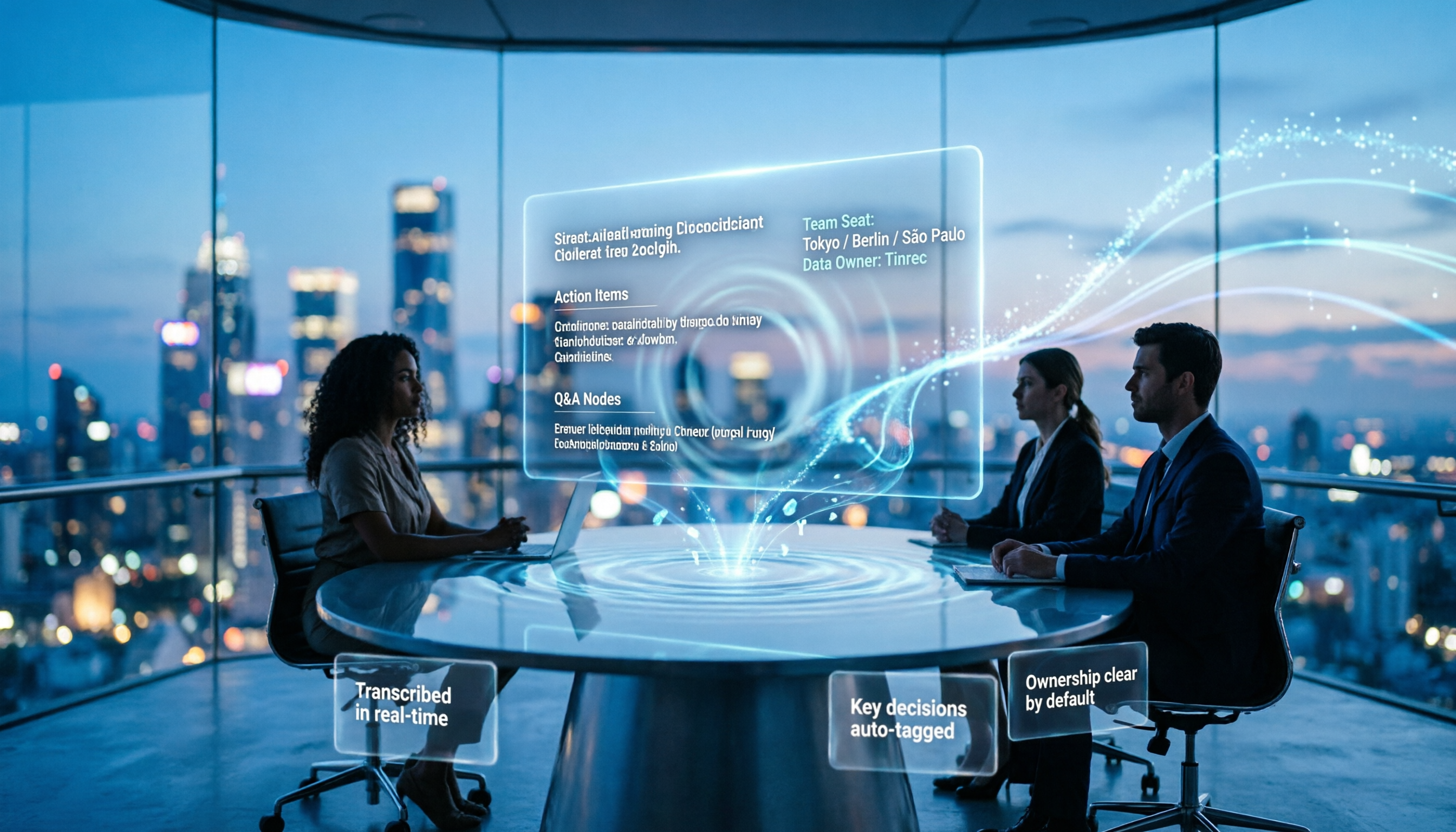
4 AI Meeting Note Tools Tested in 2026: Which One Saves the Most Time on Auto-Organizing Transcripts?
The pain of meeting notes isn't slow typing—it's time-consuming organization. This article addresses common misconceptions, tests 4 AI meeting note tools, breaks down key buying factors, Tinrec's bot-free recording and AI Q&A workflow, team plan seats and data ownership, plus a pitfalls guide and selection advice.
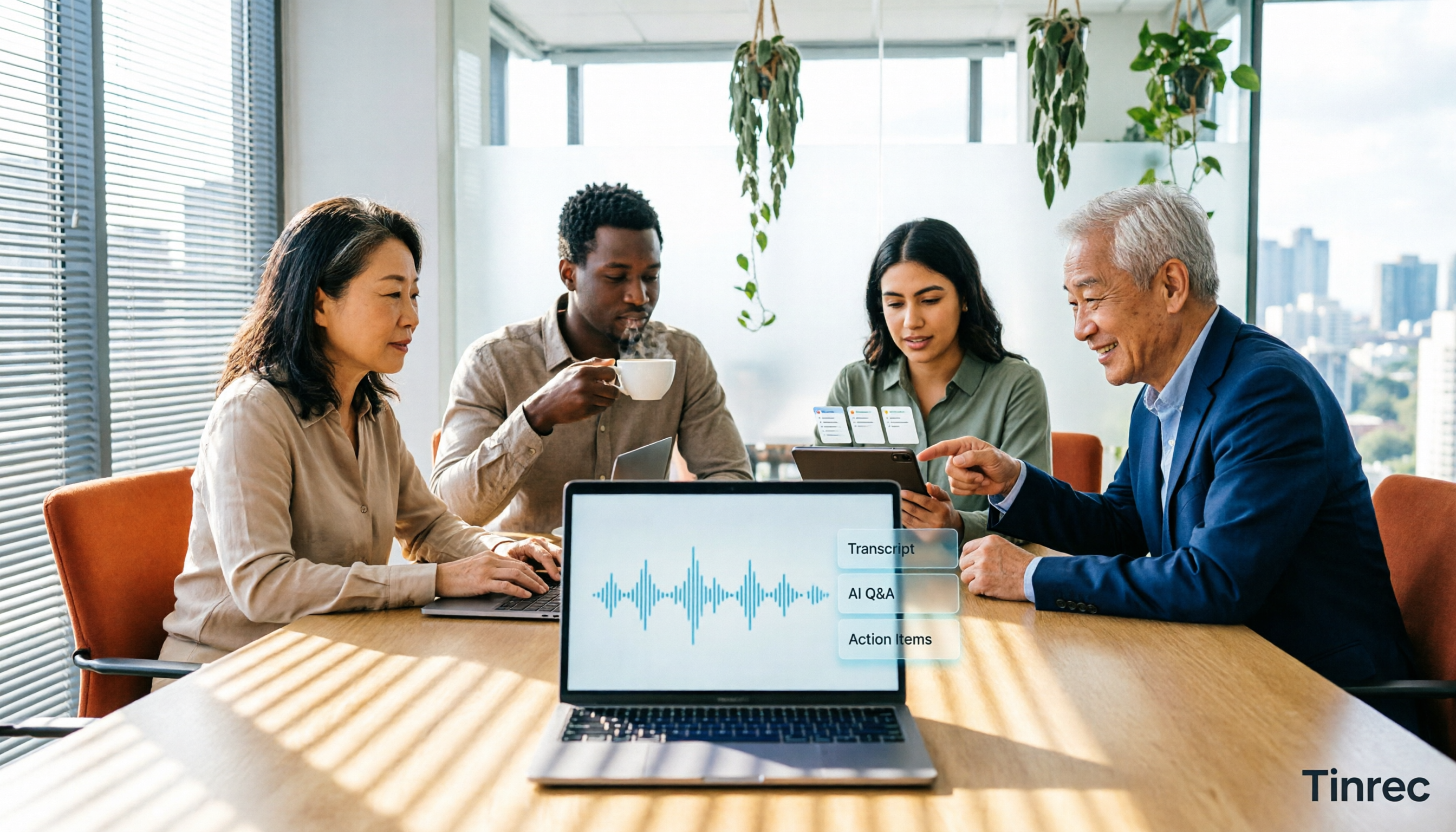
2026 Teams Meeting Transcription Comparison: 4 Methods Tested — Is Avoiding a Meeting Bot Really Easier?
Teams built-in transcription requires both the organizer and each user to enable the policy, and live captions are not saved—so many people only discover after the meeting that there is no transcript at all. This article reviews four ways to transcribe Teams meeting recordings, from Teams built-in, Otter.ai, and Notta to Tinrec, comparing bot-free desktop recording, AI Q&A, action item extraction, and team seat management, with a pitfalls guide and scenario-based recommendations.

4 Video-to-Transcript Tools Tested and Compared in 2026: 3 Pitfalls to Understand Before Importing Video
Importing a video to generate a transcript looks simple, but the real bottlenecks are usually format support, time codes, and how usage limits are calculated. This article starts with common misconceptions, outlines 4 key points for choosing a tool, then shares a hands-on test of Tinrec from video import to AI summaries, action items, and team knowledge retention, and compares TurboScribe, Notta, and Granola for use cases and pitfalls to avoid.

How to Transcribe Classroom Recordings in 2026: A Complete 5-Step Guide
When it comes to transcribing classroom recordings, most people only ask which tool is the most accurate. But what really determines whether you'll be overwhelmed all semester is the audio source, the classroom language, and the total number of hours. This article uses university and graduate school classroom scenarios to compare Tinrec and Otter.ai across 5 dimensions, and provides a 5-step process you can follow directly, along with purchasing advice.

How to Transcribe Zoom Meeting Recordings in 2026: No-Bot Recording + Automatic Meeting Minutes
Done with a Zoom meeting but still need to organize the transcript and minutes yourself? This guide covers the complete process for transcribing Zoom meeting recordings, including no-bot recording, real-time transcription, AI summaries and action items, AI Q&A, and 5 key points to consider when choosing a tool. It also demonstrates the workflow using Tinrec.
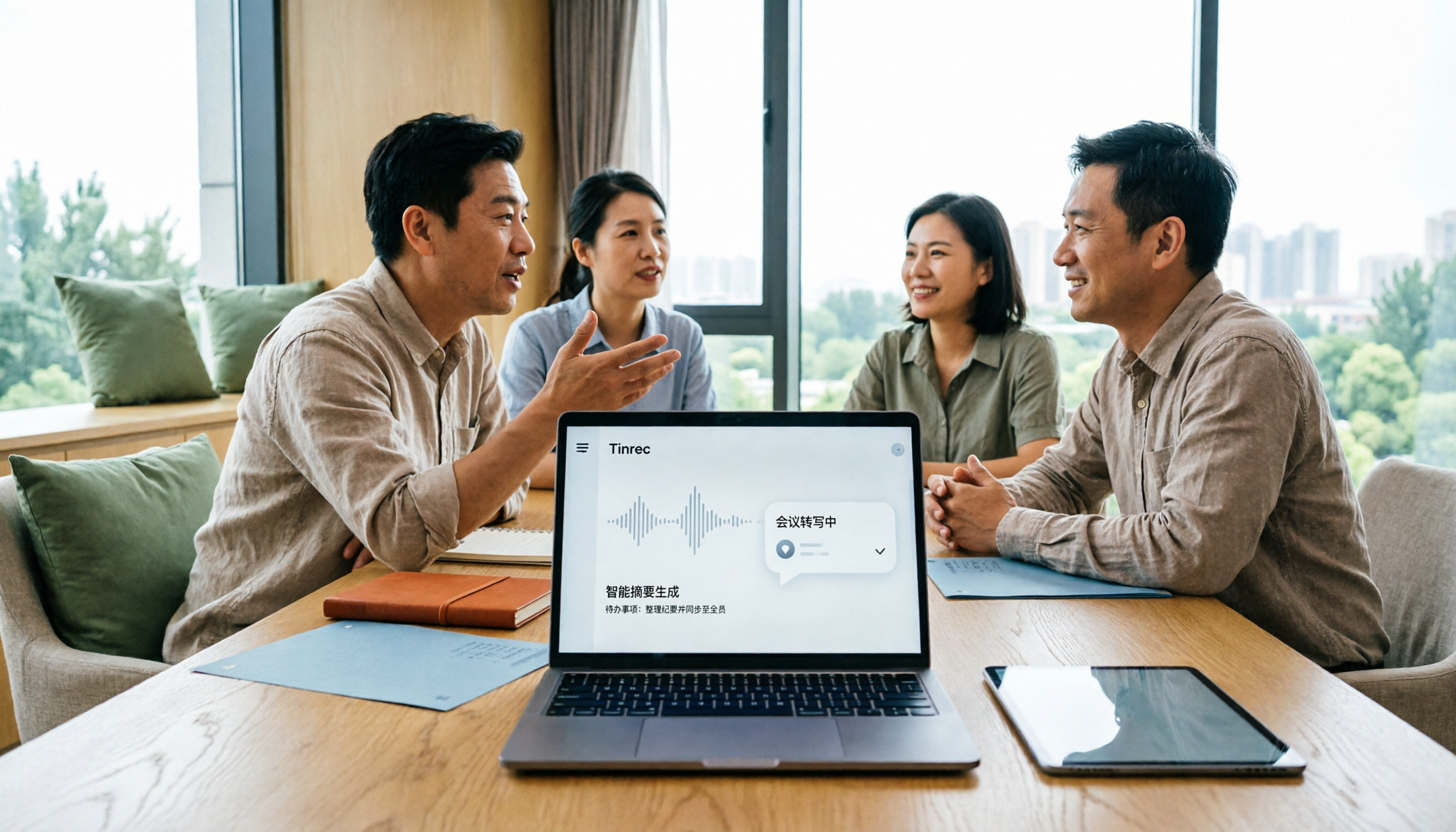
5 Speaker Summary Tools Tested for 2026: Why Tinrec Is Less Work for Chinese Meetings
Starting from the question 'What exactly do you need a tool to do for you?', this hands-on comparison of common speaker summary tools explains how Tinrec performs in Chinese meeting transcription, bot-free online meeting recording, AI summaries and action items, AI chat queries, multi-format export, and team spaces. It also covers five key points to consider when choosing a tool and answers common questions.

2026 AI Meeting Notes: Automatic Speaker Identification + AI Q&A Summaries
Why do you still have to manually organize meeting transcripts even when speakers are automatically labeled? This article starts with common misconceptions about automatic speaker identification, breaks down 4 key dimensions for choosing a meeting notes tool, tests Tinrec's bot-free online meeting recording, AI summaries and Q&A, team spaces, and other features, compares it with Otter.ai, PLAUD Note, and Notta, and includes a pitfalls guide and buying advice.
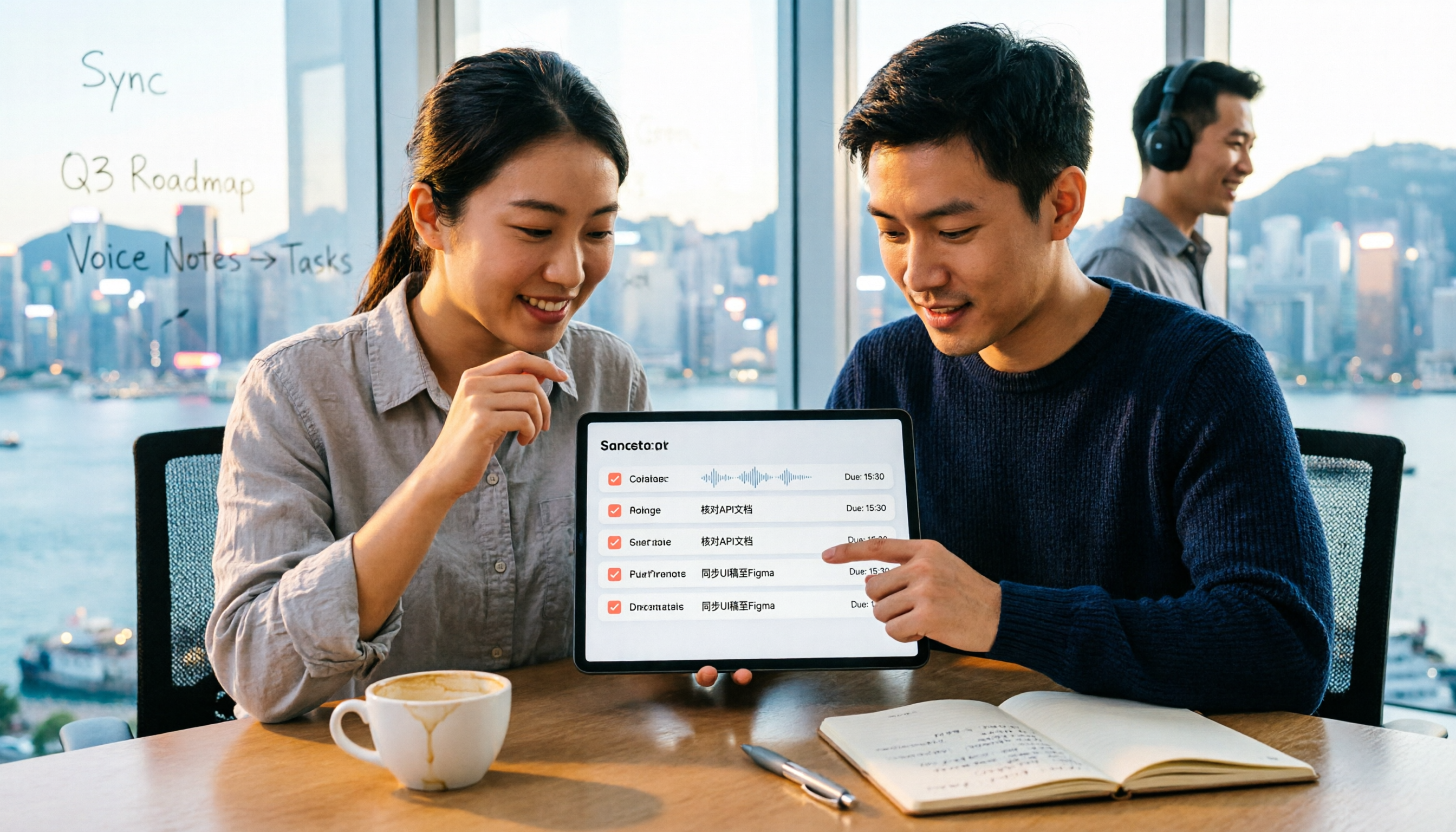
4 Best AI Meeting Note Takers in 2026: Which One Actually Captures Action Items?
The hardest part of a meeting isn't recording it—it's turning two hours of discussion into an action list with names and deadlines. This article compares Tinrec, Otter.ai, Notta, and Granola across four key criteria: action item accuracy, AI Q&A, post-meeting workflow, and team data ownership. We explain who each tool is best for and highlight key buying considerations to help you choose the right tool and stop wasting time on manual transcripts.

Tinrec vs Otter.ai 2026: Cantonese Meeting Transcription with Real-Time Chinese-English Translation
Meetings held in Cantonese but delivered in English are a common pain point for many teams. This article compares Tinrec and Otter.ai across 5 dimensions—Cantonese and mixed Chinese-English recognition, bot-free meeting recording, real-time translation and bilingual review, post-meeting AI Q&A, and team data governance—to help you decide which tool better fits your meeting scenario.