

Turn recordings into transcripts and summaries in minutes
Upload audio or video for multilingual transcription, AI notes, and action items
Have you ever had this experience: after a five-person meeting, the tool dutifully transcribes the conversation and helpfully labels it with "Speaker A, B, C"—only for you to open it and find that A and B are completely swapped, with a few "uh-huh" and "right" thrown in from who-knows-who. Automatic speaker identification is indeed a big step forward for meeting notes, but it's only the starting point, not the finish line. This article first clarifies the most common misconceptions about speaker identification, then tells you what to look for in a meeting notes tool in 2026.
Pain Point: Even with Speaker Labels, You Still Have to Manually Organize from Scratch
Many people imagine that "automatic speaker identification" means that as soon as a meeting ends, a perfect record of who said what will automatically pop up. In reality, the gap mainly appears in three areas.
The first is mislabeling. Speaker identification works by using voice features to group the same voice under the same label. But real meetings are full of interference: someone just says "okay" or "mm-hmm," which provides too little acoustic information and is easily misclassified; people interrupt and overlap, and the tool can't tell them apart; air conditioning noise, keyboard sounds, and different distances from the microphone all reduce accuracy. The result is that A and B are mixed together in the transcript, and you still have to listen back to correct it.
The second is that labeling alone isn't enough. Even if speakers are labeled 100% correctly, a 40-minute meeting transcript is roughly 8,000 to 10,000 words. You need to find "who promised what," "what was the conclusion," and "who needs to deliver what next week"—keyword search can only help you find words, not answers.
The third is cross-language. Meetings with mixed Chinese and English, or online meetings with foreign colleagues, can't be fully understood just by speaker segmentation.
So the real question isn't "which tool has automatic speaker identification," but "which tool can turn the identified content into data you can directly use." That's exactly what we'll look at next.
Before Choosing a Meeting Notes Tool, Understand These 4 Key Points
Before comparing tools, let's clarify the evaluation criteria. The following four dimensions are what I found most impactful on actual experience after testing over a dozen tools.
1. Speaker identification should be judged in real scenarios, not by marketing numbers. Official accuracy rates are usually measured in a clean recording studio. What you need to ask is: can it hold up in a real meeting room with air conditioning noise, people interrupting, and people speaking softly? I suggest taking your own meeting recording and testing it directly. Performance can vary greatly between a small meeting of two or three people and a large meeting of eight to ten.
2. Post-meeting organization is the real time-saver. The transcript is just raw material. Whether it can automatically generate summaries, break long meetings into chapters, and extract action items determines how much time you still need to spend processing. Furthermore, whether you can directly ask it in natural language "who mentioned the budget in the last meeting" instead of just Ctrl+F searching keywords—this is where the biggest gaps between tools currently lie.
3. Chinese and multilingual experience. Meetings for Taiwanese users often mix Chinese and English, with many technical terms. Whether the tool can handle Traditional Chinese, customize team-specific vocabulary, and provide real-time translation directly affects whether the transcript is usable.
4. Team collaboration and data ownership. If meeting notes only exist in personal accounts, when colleagues leave, change devices, or switch tools, the data gets scattered. Team version tools should have independent spaces, member and permission management, so that meeting data belongs to the team, not individuals.
Tinrec—The Top Choice After Testing
Tinrec is an AI meeting notes and collaboration tool for individuals and teams, covering web, desktop, and mobile. It breaks the meeting process into four stages: "record, understand, act, collaborate," and each stage has corresponding features—this is what stood out most in this test.
First, recording. Tinrec's desktop version directly captures computer system audio, so when handling online meetings like Zoom, Google Meet, Microsoft Teams, and Webex, you don't need to invite a meeting bot into the room. This is especially noticeable in external meetings—you won't suddenly have a strange account appear on the participant list, and you don't need to explain it to clients beforehand. For offline meetings, you can use real-time recording to transcribe as you go; before the meeting ends, the transcript is already growing.
Next, understanding and action. After the meeting, Tinrec automatically generates summaries, chapters, and action items, organizing "who is responsible for what and when it's due" from the discussion. It can also do AI Q&A on meeting content—after recording, you can directly ask it "what was the conclusion of this meeting" or "what concerns did the client have about the quote," and it will give you answers directly instead of throwing a string of keywords for you to dig through. The transcript also supports mixed Chinese-English content and real-time translation, allowing you to switch between original text, translation, or bilingual view.
Stop organizing recordings by hand
Upload audio or video and automatically get a transcript, summary, and action items
Finally, output and collaboration. Organized content can be exported in common formats and taken to Notion, Google Docs, OneNote, or Dropbox for further processing; you can also use Agent post-processing to directly generate reports, tables, and meeting minutes. For team use, Tinrec for Teams provides independent team spaces where meeting recordings, transcripts, summaries, and action items are centrally stored, with member and seat management, usage analytics, audit logs, audio recycle bin, and team hotwords. Team resources belong to the team; when a member leaves or is removed, their data can be handed over to other members, so it won't be lost just because one person leaves. The team version uses a seat-based model; paid seats provide 2,000 minutes of team shared import quota per month (USD 29.80/paid seat/month, annual USD 199/paid seat/year, about USD 16.58/month); real-time recording under an active seat is currently not deducted by minutes, while file and web imports consume the team shared quota.
In terms of advantages: first, bot-free meeting recording means no extra bot in external meetings; second, the post-meeting workflow is complete, from summaries and action items to AI Q&A and Agent post-processing all connected, essentially compressing "writing meeting minutes" into checking and fine-tuning; third, it balances Chinese and team collaboration, with handling for Traditional Chinese, mixed Chinese-English, and team hotwords, and clear ownership of team data.
Limitations should also be clear. The free version provides a basic quota, suitable for trying out but not for heavy use; file imports consume quota, not unlimited transcription; and all speech recognition is affected by recording quality, accents, noise, and overlapping speech. For important content, it's still recommended to cross-check with transcript timestamps and recording playback.
Who is it for? If you have regular weekly meetings, need to handle Chinese or mixed Chinese-English meetings, want to directly ask AI for key points after the meeting, or need a central place for team meeting data, Tinrec is the most complete choice among these tools.
Besides Tinrec, What Other Options Are There?
Otter.ai: A mature choice for English business meetings. Basic is free with 300 minutes per month; Pro annual billing is about USD 8.49/user/month, including 1,200 minutes of in-app recording per month. It has also been working on English meeting automation and team analytics for a long time. If your meetings are almost entirely in English, it's a very cost-effective option; but it doesn't focus on Traditional Chinese and mixed Chinese-English meeting experiences, and lacks Tinrec's Agent post-processing and team data accumulation capabilities.
PLAUD Note / NotePin: Takes the AI recording hardware route. NotePin official price is USD 159, Note Pro USD 189; Pro membership is about USD 99.99/year, 1,200 minutes per month. Portable recording, phone call recording, and long battery life are its strengths. But you need to buy an extra device, and online meeting notes and post-meeting team collaboration are not its main focus—Tinrec doesn't require additional hardware, and the desktop version can handle online meetings and accumulate data in team spaces.
Notta: A competitor with high overlap, offering multi-platform transcription, translation, and team plans. Free is 120 minutes per month, max 3 minutes per single item; Pro annual billing is about USD 8.17/month, 1,800 minutes per month. It performs well in file transcription and subtitle creation. In contrast, Tinrec's bot-free online meeting recording, AI Q&A, and Agent post-processing are currently weaker areas for Notta.
Pitfalls Guide: The 3 Most Common Mistakes When Choosing a Meeting Notes Tool
Mistake 1: Treating "has automatic speaker identification" as the end goal. Speaker identification only categorizes voices; it doesn't tell you the meeting's key points. When buying a tool, look one step ahead: after identification, can it automatically summarize, extract action items, and let you ask questions directly? A tool that only outputs transcripts is essentially throwing the most time-consuming organization work back to you.
Mistake 2: Only looking at official claimed accuracy rates. Almost every tool claims "high accuracy," but that's under lab conditions. Real meetings have air conditioning noise, keyboard sounds, multiple people interrupting, and people far from the microphone. I suggest taking your own actual meeting recording and running it, especially segments with mixed Chinese-English or technical terms, to see the real differences.
Mistake 3: Ignoring data ownership. Many people first try with personal accounts, then directly roll it out to the team, only to find all meeting data tied to an individual. When a colleague leaves or the account is deactivated, the data disappears. When choosing a tool, confirm whether it has independent team spaces, whether it can manage members and seats, and whether data can be handed over when members leave. Tinrec's team version, for example, puts meeting data ownership at the team level, not in personal accounts.
Conclusion: Which One Should You Choose?
In one sentence: if what you want is "usable data directly after the meeting," not just "a transcript with speaker labels," Tinrec is currently the most complete choice.
By scenario:
- Need Chinese, Traditional Chinese, or mixed Chinese-English meeting transcription → Tinrec
- Don't want to invite a meeting bot, want to record online meetings directly → Tinrec (desktop version captures system audio)
- Want to directly ask AI for key points and action items after recording → Tinrec (AI Q&A and action item extraction)
- Team needs centralized meeting data management, seats, and permissions → Tinrec for Teams
- Meetings are almost entirely in English, limited budget → Otter.ai is a reasonable alternative
I suggest starting with the free version and testing it with your own real meeting recording. First verify recognition quality and post-meeting organization with actual scenarios, and consider upgrading only after confirming it meets your needs—no need to pay from the start.
References
Turn every recording into actionable outcomes
Get 60 free transcription minutes when you sign in. No credit card required.
Related Reading
You might also like
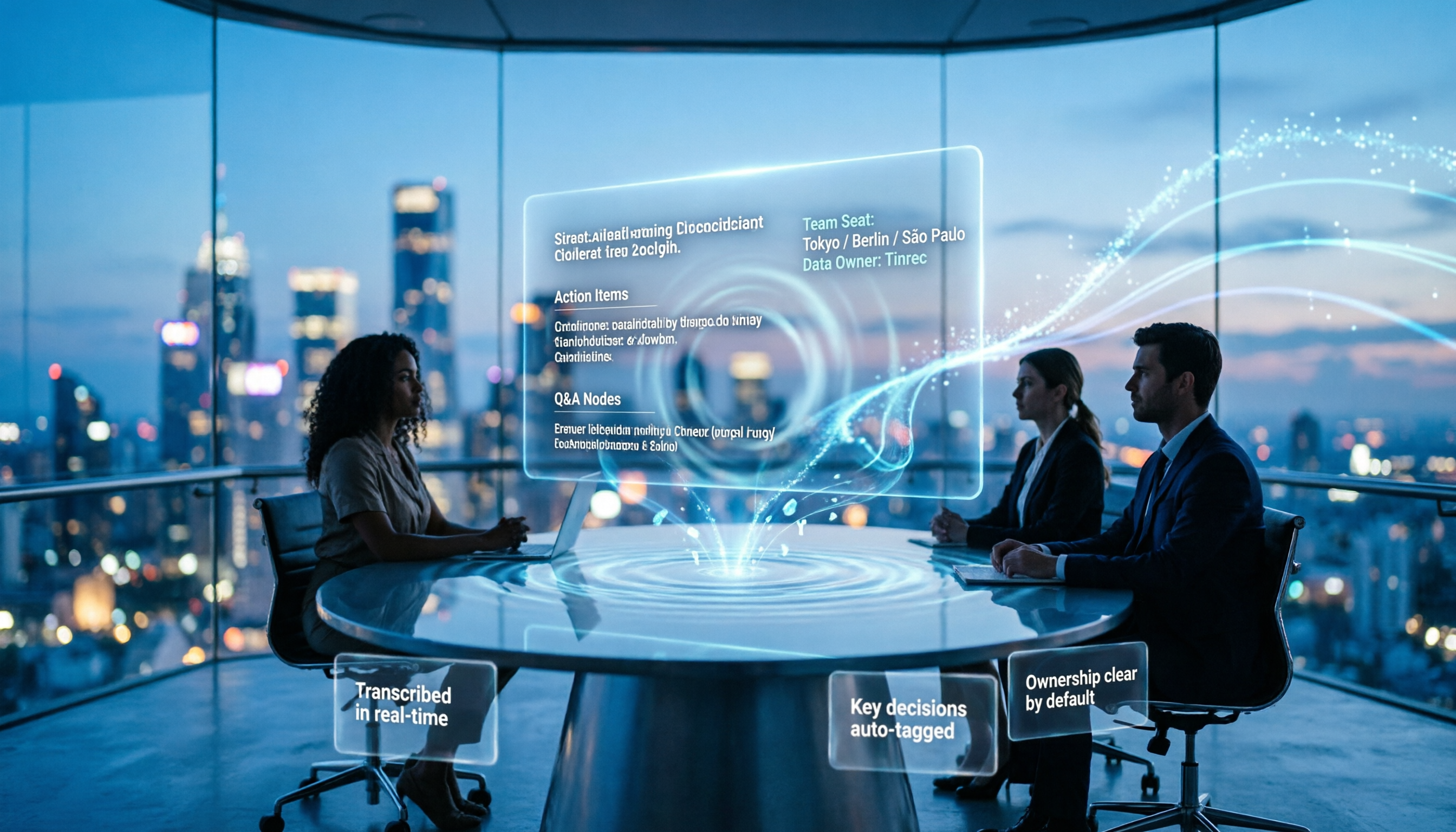
4 AI Meeting Note Tools Tested in 2026: Which One Saves the Most Time on Auto-Organizing Transcripts?
The pain of meeting notes isn't slow typing—it's time-consuming organization. This article addresses common misconceptions, tests 4 AI meeting note tools, breaks down key buying factors, Tinrec's bot-free recording and AI Q&A workflow, team plan seats and data ownership, plus a pitfalls guide and selection advice.

2026 Teams Meeting Transcription Comparison: 4 Methods Tested — Is Avoiding a Meeting Bot Really Easier?
Teams built-in transcription requires both the organizer and each user to enable the policy, and live captions are not saved—so many people only discover after the meeting that there is no transcript at all. This article reviews four ways to transcribe Teams meeting recordings, from Teams built-in, Otter.ai, and Notta to Tinrec, comparing bot-free desktop recording, AI Q&A, action item extraction, and team seat management, with a pitfalls guide and scenario-based recommendations.

4 Video-to-Transcript Tools Tested and Compared in 2026: 3 Pitfalls to Understand Before Importing Video
Importing a video to generate a transcript looks simple, but the real bottlenecks are usually format support, time codes, and how usage limits are calculated. This article starts with common misconceptions, outlines 4 key points for choosing a tool, then shares a hands-on test of Tinrec from video import to AI summaries, action items, and team knowledge retention, and compares TurboScribe, Notta, and Granola for use cases and pitfalls to avoid.

How to Transcribe Classroom Recordings in 2026: A Complete 5-Step Guide
When it comes to transcribing classroom recordings, most people only ask which tool is the most accurate. But what really determines whether you'll be overwhelmed all semester is the audio source, the classroom language, and the total number of hours. This article uses university and graduate school classroom scenarios to compare Tinrec and Otter.ai across 5 dimensions, and provides a 5-step process you can follow directly, along with purchasing advice.

How to Transcribe Zoom Meeting Recordings in 2026: No-Bot Recording + Automatic Meeting Minutes
Done with a Zoom meeting but still need to organize the transcript and minutes yourself? This guide covers the complete process for transcribing Zoom meeting recordings, including no-bot recording, real-time transcription, AI summaries and action items, AI Q&A, and 5 key points to consider when choosing a tool. It also demonstrates the workflow using Tinrec.

2026 AI Meeting Recorder Comparison: 4 Tools Tested for Chinese Meetings
Two-hour meetings followed by two hours of note organization is a daily reality for most office workers. This hands-on test of 4 AI recording and note-taking tools covers bot-free recording, Chinese transcription, AI Q&A, team knowledge retention, pricing, and limitations to help you decide which one is worth keeping.

5 Speaker Summary Tools Tested for 2026: Why Tinrec Is Less Work for Chinese Meetings
Starting from the question 'What exactly do you need a tool to do for you?', this hands-on comparison of common speaker summary tools explains how Tinrec performs in Chinese meeting transcription, bot-free online meeting recording, AI summaries and action items, AI chat queries, multi-format export, and team spaces. It also covers five key points to consider when choosing a tool and answers common questions.
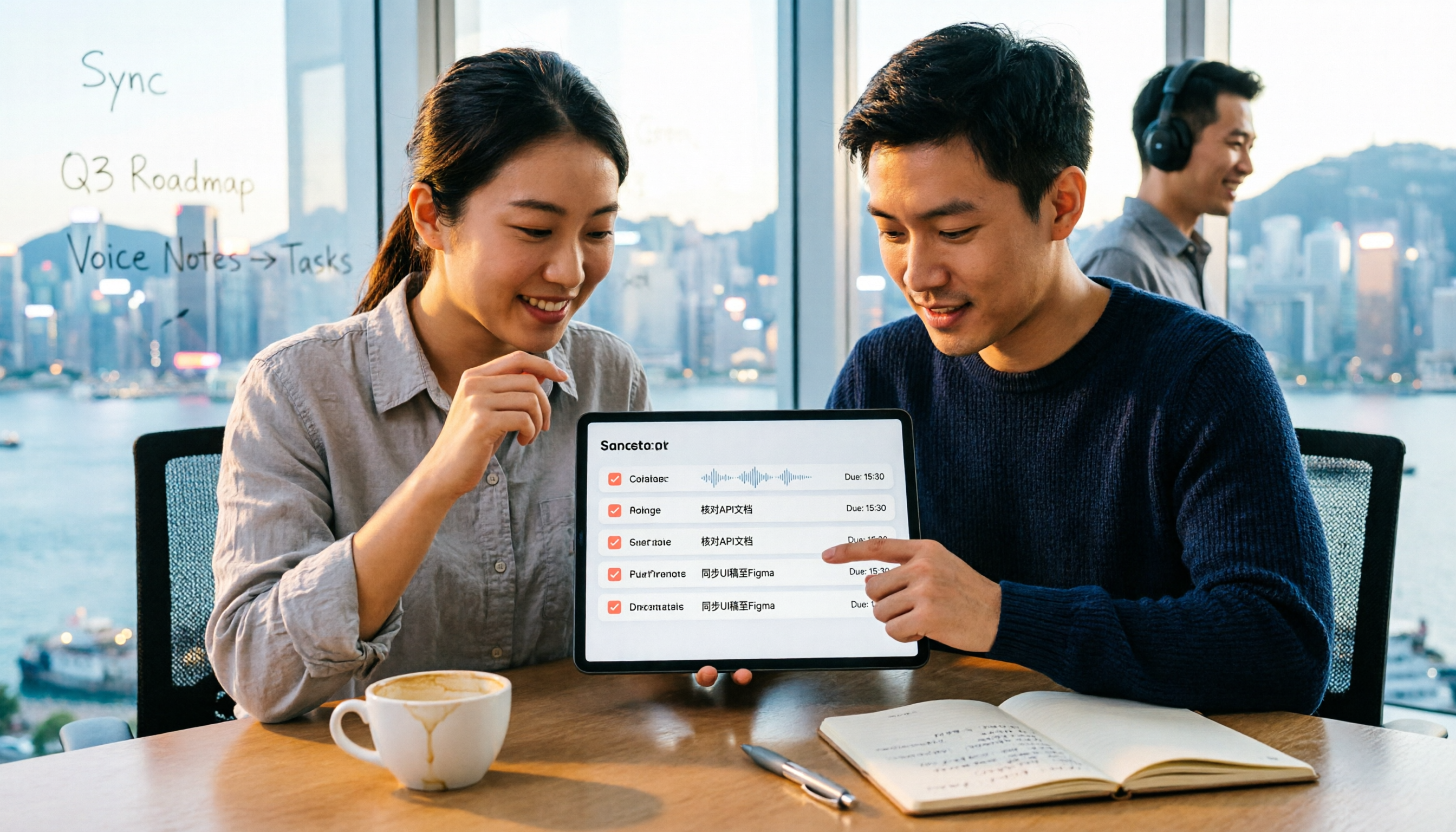
4 Best AI Meeting Note Takers in 2026: Which One Actually Captures Action Items?
The hardest part of a meeting isn't recording it—it's turning two hours of discussion into an action list with names and deadlines. This article compares Tinrec, Otter.ai, Notta, and Granola across four key criteria: action item accuracy, AI Q&A, post-meeting workflow, and team data ownership. We explain who each tool is best for and highlight key buying considerations to help you choose the right tool and stop wasting time on manual transcripts.

Tinrec vs Otter.ai 2026: Cantonese Meeting Transcription with Real-Time Chinese-English Translation
Meetings held in Cantonese but delivered in English are a common pain point for many teams. This article compares Tinrec and Otter.ai across 5 dimensions—Cantonese and mixed Chinese-English recognition, bot-free meeting recording, real-time translation and bilingual review, post-meeting AI Q&A, and team data governance—to help you decide which tool better fits your meeting scenario.