

Turn recordings into transcripts and summaries in minutes
Upload audio or video for multilingual transcription, AI notes, and action items
How to Transcribe Zoom Meeting Recordings in 2026: No-Bot Recording + Automatic Meeting Minutes
It's 5:30 PM, and a 90-minute Zoom meeting just ended. The host asks, "So who's responsible for these items, and when will they be delivered?" You look down at your notes—just a few keywords and two half-written points.
This is a scene many office workers replay every week. The meeting ends, but the content doesn't stick. Even if there's a recording, you have to rewatch 90 minutes of video to find that one sentence at a specific minute. This article covers how to transcribe Zoom meeting recordings, what you can do with the transcript, and the key factors I personally look for when testing tools.
What Can Transcribing Zoom Meeting Recordings Do for You?
Scenario 1: No more spending an hour organizing notes after the meeting Previously, a two-hour meeting often took another two hours to turn into meeting minutes. With Tinrec, for example, the transcript is ready as soon as the meeting ends, and AI summaries, chapters, and action items are generated simultaneously—who's responsible for what and by when, all laid out clearly.
Scenario 2: Ask questions directly about the meeting content without rewatching the recording Tinrec supports asking questions directly about the meeting data. You can ask, "What were the client's concerns about pricing?" or "Who mentioned the budget for next quarter?" It answers based on the transcript content, rather than dumping raw text for you to sift through.
Scenario 3: Turn commitments from client meetings into action items Sales and customer success teams fear missing commitments. Tinrec extracts action items from discussions, which can be exported directly to Notion, Google Docs, OneNote, or Dropbox for follow-up.
What Are the Core Capabilities of Zoom Meeting Recording Transcription?
No-bot recording: No extra participant in the meeting This is one of Tinrec's most practical features. The desktop version captures your computer's system audio directly, so it can handle meeting audio from Zoom, Google Meet, Microsoft Teams, and Webex played on your computer without inviting a meeting bot. Note that you still need to start recording manually via Tinrec; it does not automatically join calendar meetings.
Real-time transcription and translation Transcribe as you record—see the text during the meeting. For cross-language situations, you can switch between original text, translation, or bilingual view.
AI summaries, chapters, and action items It doesn't just condense the transcript into a paragraph; it structures the content: meeting topic, key discussion points, conclusions, and action items are listed separately. Long meetings are automatically divided into chapters, so you can jump to the relevant section when reviewing.
AI Q&A and post-meeting outputs After transcription, you can continue asking questions and generate reports, tables, and documents. For those who need to write weekly reports, conduct retrospectives, or deliver documents, this saves the second round of organizing.
Team space: Keep meeting data within the team The team version is not "multiple people sharing a personal account" but an independent team space. Meeting data belongs to the team, and members can view and reuse historical meetings. Admins can manage roles and seats, view usage trends and details, and query and export audit logs. Currently, the team monthly plan is USD 29.80 per paid seat per month, and the annual plan is USD 199 per paid seat per year (equivalent to about USD 16.58 per month). Each seat provides 2,000 minutes of shared team import quota per month. Eligible teams get a 7-day free trial with 1 free seat and 300 minutes of shared import quota. Prices and promotions are subject to the official purchase page.
Practical Use Cases
Weekly project meetings Weekly progress meetings are the easiest to forget. After recording with Tinrec, the action item list is directly assigned to people. Glance at it before the next meeting, and you won't have to ask "Where did we leave off last time?"
Stop organizing recordings by hand
Upload audio or video and automatically get a transcript, summary, and action items
Client interviews and requirements gathering Key points from requirements interviews often hide in conversational details. Tinrec's transcript is searchable and allows questions, so you don't have to replay the recording when organizing requirement documents.
Classes and lectures In a two-hour class, the key points might only take 20 minutes. Use the transcript with chapters and AI Q&A to review—just ask, "What was the teacher's definition of this theory?"
Personal voice memos and content creation Ideas and interview materials recorded on the fly can be transcribed and edited directly for reuse, without listening from the beginning.
5 Things to Consider When Choosing a Zoom Meeting Transcription Tool
1. Recording method: Meeting bot or system audio? A meeting bot joins as a participant, which some companies or clients may mind. Tinrec uses desktop system audio capture, so no extra participant appears in the meeting. Before choosing a tool, confirm which method your meeting culture accepts.
2. Recognition performance for Chinese and mixed Chinese-English Meetings in Taiwan are rarely pure Chinese. Tinrec covers Chinese, Traditional Chinese, and multilingual meeting scenarios, and supports team hotwords to add company-specific terminology. Actual performance is still affected by recording quality, accents, noise, and multiple people speaking simultaneously. It's best to test with a recording of your own meeting.
3. What you can do after transcription The transcript is just the starting point. Whether it can automatically summarize, divide chapters, extract action items, and let you ask questions directly is key to whether you'll keep using it. Tinrec puts the entire workflow in one tool.
4. Will the recording file be kept? Some tools don't save meeting audio, so you can't verify later. Tinrec retains recordings, so you can go back to the timestamp to check the original text for important information. The team version also has an audio recycle bin, where accidentally deleted audio files can be restored before permanent deletion.
5. Team governance and data ownership If meeting data is to be used by the whole team, you need to see how the tool handles members, permissions, and usage. Tinrec's team version distinguishes between "roles" and "seats": roles determine who can manage the team, seats determine whether one can record, upload, edit, and export; members without seats can still view, play, and read team data.
Frequently Asked Questions
Q1: Zoom has its own transcription feature. Do I still need Tinrec? Zoom's built-in audio transcription is tied to cloud recording, requires a specific account plan and permissions, and is relatively basic. Tinrec's value is after transcription—summaries, chapters, action items, AI Q&A, multi-format export, and consolidating meetings from Zoom, Meet, Teams, and Webex into one database.
Q2: Does Tinrec need to invite a bot into the Zoom meeting? No. Tinrec's desktop version captures system audio directly, so no extra participant appears. However, you must start recording manually; it won't automatically join your calendar meetings.
Q3: Is the free version enough? If you only occasionally organize a recording, the free version is a good start. Those who have weekly meetings usually need more stable quota and can consider monthly or annual plans; for short-term intensive interviews or courses, a weekly plan is also an option.
Q4: Are there legal issues with meeting recording transcription? Yes, recording consent is a concern. Before recording, confirm compliance with local regulations and obtain participant consent when necessary.
Q5: What's the difference between the team version and the personal version? Personal version data belongs to the individual account; the team version is an independent team space where data belongs to the team, with additional member management, roles and seats, sharing benefits, usage analytics, and audit logs. When a member leaves or is removed, team resources are transferred to other active members and do not disappear with the personal account.
Conclusion
The point of transcribing Zoom meeting recordings is never just "having text"—it's whether that text can save you an hour of organizing and prevent you from missing something you should do.
Tinrec's approach connects recording, transcription, summaries, action items, and Q&A all the way to team collaboration. For those who have meetings three or more times a week, the time saved is significant. If you have a meeting recording on hand, try the free version first to experience what it's like to have AI organize your meeting notes.
References
Turn every recording into actionable outcomes
Get 60 free transcription minutes when you sign in. No credit card required.
Related Reading
You might also like
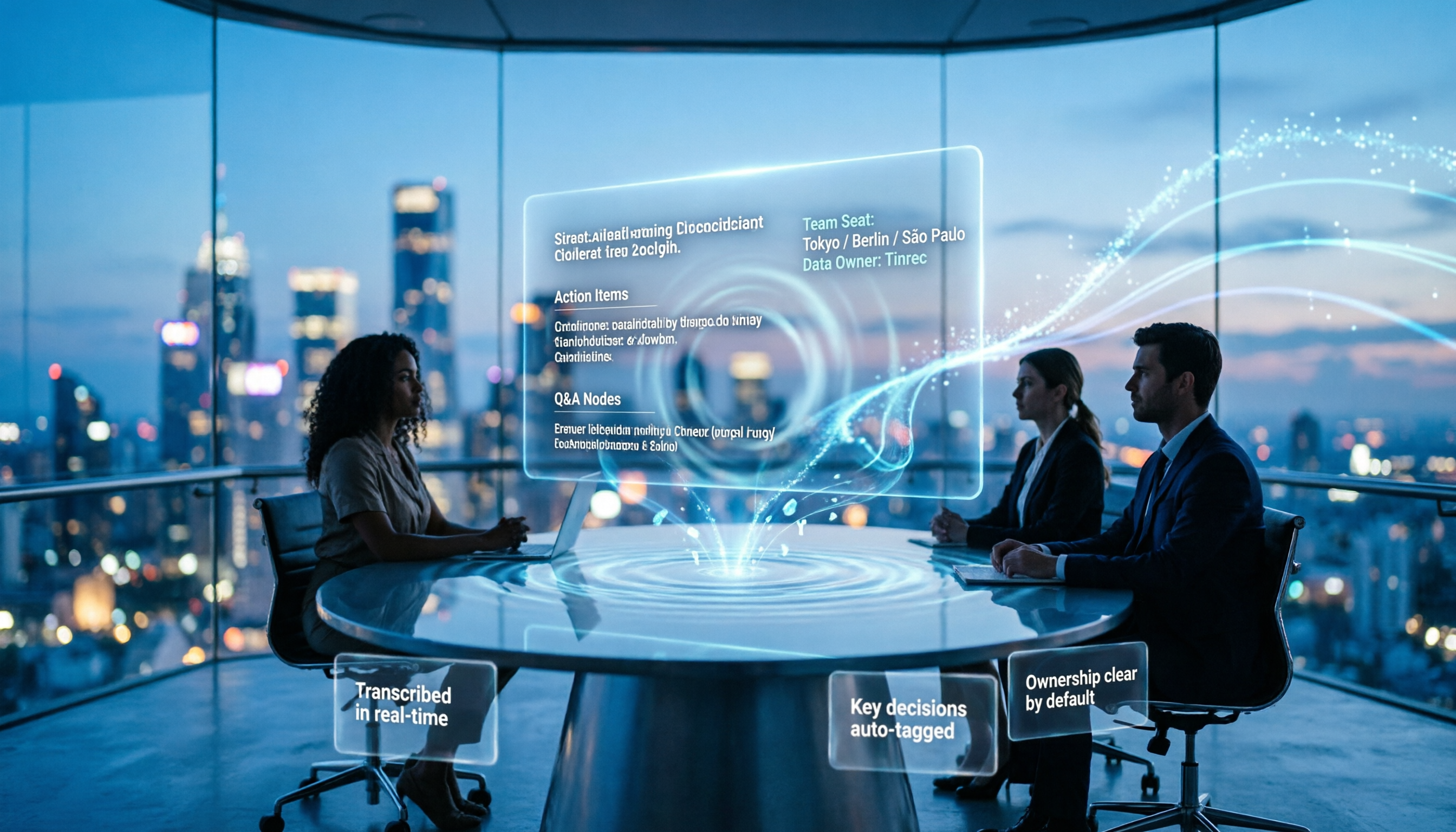
4 AI Meeting Note Tools Tested in 2026: Which One Saves the Most Time on Auto-Organizing Transcripts?
The pain of meeting notes isn't slow typing—it's time-consuming organization. This article addresses common misconceptions, tests 4 AI meeting note tools, breaks down key buying factors, Tinrec's bot-free recording and AI Q&A workflow, team plan seats and data ownership, plus a pitfalls guide and selection advice.
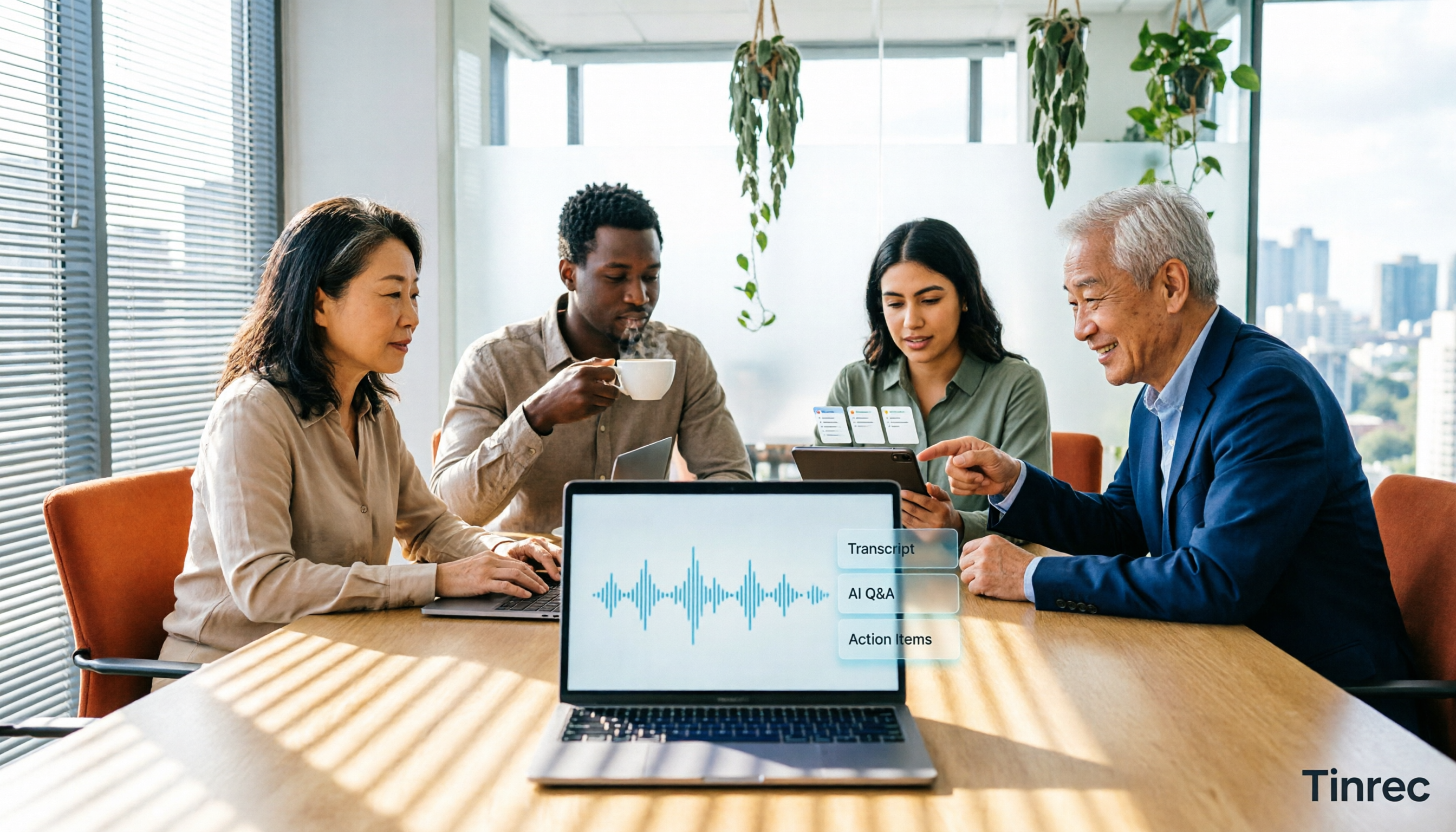
2026 Teams Meeting Transcription Comparison: 4 Methods Tested — Is Avoiding a Meeting Bot Really Easier?
Teams built-in transcription requires both the organizer and each user to enable the policy, and live captions are not saved—so many people only discover after the meeting that there is no transcript at all. This article reviews four ways to transcribe Teams meeting recordings, from Teams built-in, Otter.ai, and Notta to Tinrec, comparing bot-free desktop recording, AI Q&A, action item extraction, and team seat management, with a pitfalls guide and scenario-based recommendations.

4 Video-to-Transcript Tools Tested and Compared in 2026: 3 Pitfalls to Understand Before Importing Video
Importing a video to generate a transcript looks simple, but the real bottlenecks are usually format support, time codes, and how usage limits are calculated. This article starts with common misconceptions, outlines 4 key points for choosing a tool, then shares a hands-on test of Tinrec from video import to AI summaries, action items, and team knowledge retention, and compares TurboScribe, Notta, and Granola for use cases and pitfalls to avoid.

How to Transcribe Classroom Recordings in 2026: A Complete 5-Step Guide
When it comes to transcribing classroom recordings, most people only ask which tool is the most accurate. But what really determines whether you'll be overwhelmed all semester is the audio source, the classroom language, and the total number of hours. This article uses university and graduate school classroom scenarios to compare Tinrec and Otter.ai across 5 dimensions, and provides a 5-step process you can follow directly, along with purchasing advice.

2026 AI Meeting Recorder Comparison: 4 Tools Tested for Chinese Meetings
Two-hour meetings followed by two hours of note organization is a daily reality for most office workers. This hands-on test of 4 AI recording and note-taking tools covers bot-free recording, Chinese transcription, AI Q&A, team knowledge retention, pricing, and limitations to help you decide which one is worth keeping.

5 Speaker Summary Tools Tested for 2026: Why Tinrec Is Less Work for Chinese Meetings
Starting from the question 'What exactly do you need a tool to do for you?', this hands-on comparison of common speaker summary tools explains how Tinrec performs in Chinese meeting transcription, bot-free online meeting recording, AI summaries and action items, AI chat queries, multi-format export, and team spaces. It also covers five key points to consider when choosing a tool and answers common questions.

2026 AI Meeting Notes: Automatic Speaker Identification + AI Q&A Summaries
Why do you still have to manually organize meeting transcripts even when speakers are automatically labeled? This article starts with common misconceptions about automatic speaker identification, breaks down 4 key dimensions for choosing a meeting notes tool, tests Tinrec's bot-free online meeting recording, AI summaries and Q&A, team spaces, and other features, compares it with Otter.ai, PLAUD Note, and Notta, and includes a pitfalls guide and buying advice.
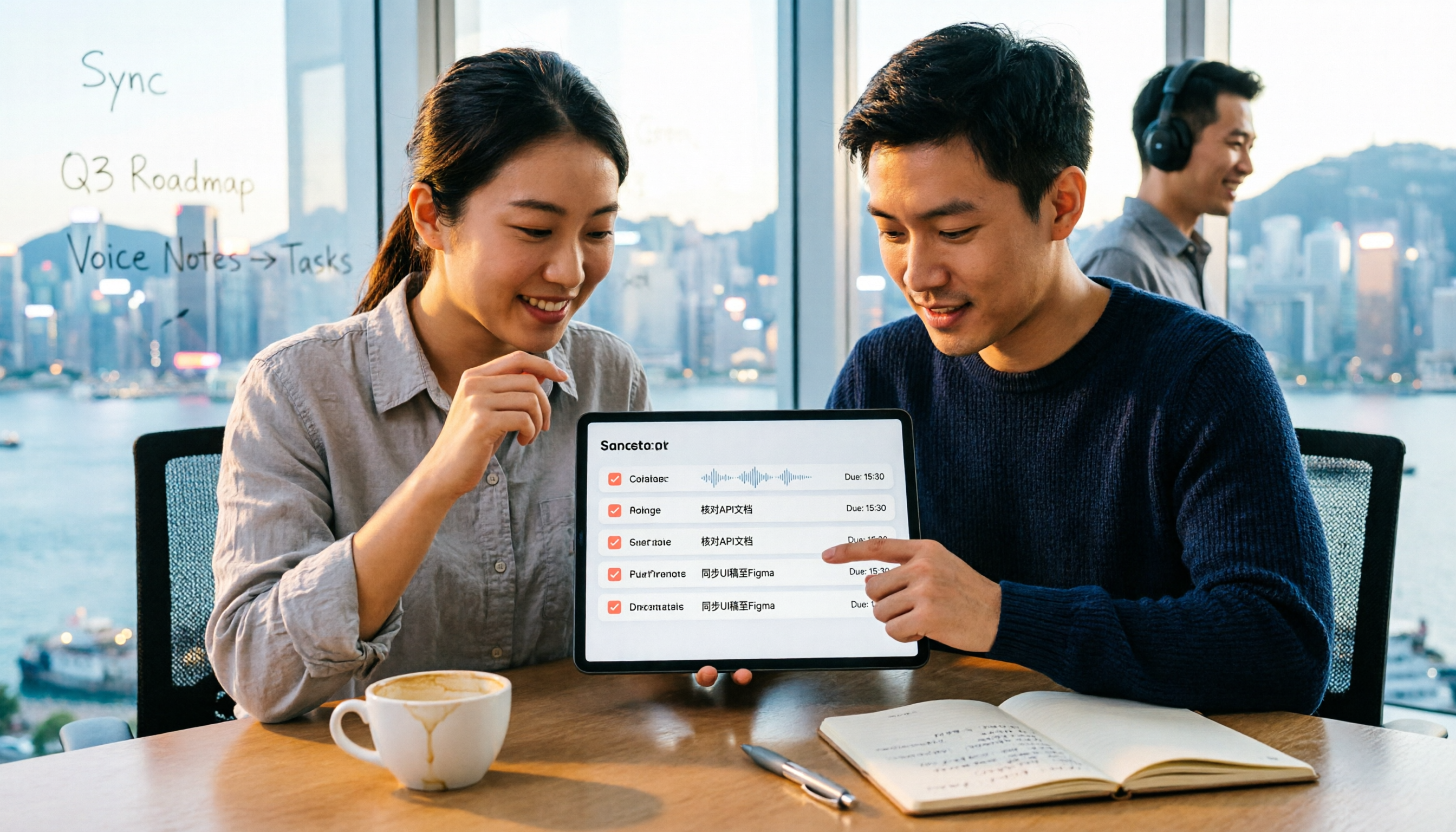
4 Best AI Meeting Note Takers in 2026: Which One Actually Captures Action Items?
The hardest part of a meeting isn't recording it—it's turning two hours of discussion into an action list with names and deadlines. This article compares Tinrec, Otter.ai, Notta, and Granola across four key criteria: action item accuracy, AI Q&A, post-meeting workflow, and team data ownership. We explain who each tool is best for and highlight key buying considerations to help you choose the right tool and stop wasting time on manual transcripts.

Tinrec vs Otter.ai 2026: Cantonese Meeting Transcription with Real-Time Chinese-English Translation
Meetings held in Cantonese but delivered in English are a common pain point for many teams. This article compares Tinrec and Otter.ai across 5 dimensions—Cantonese and mixed Chinese-English recognition, bot-free meeting recording, real-time translation and bilingual review, post-meeting AI Q&A, and team data governance—to help you decide which tool better fits your meeting scenario.