

Turn recordings into transcripts and summaries in minutes
Upload audio or video for multilingual transcription, AI notes, and action items
There are hundreds of free speech-to-text tools out there, but the only question that really matters is: can the free tier handle your actual use case?
If you only transcribe one interview a week, the free version is more than enough. If you're in meetings every day, you might burn through the free quota in three days.
This article skips the fluff and starts with "what are you actually trying to do" to help you understand how to choose a free speech-to-text tool. We'll use Tinrec as an example to show what a complete workflow looks like.
What Can Free Speech-to-Text Software Do for You?
Scenario 1: Never re-listen to a meeting recording again
A two-hour meeting often takes another two hours to re-listen and pull out key points. With Tinrec, for example, the desktop version can capture your computer's system audio directly, recording online meetings on Zoom, Google Meet, Microsoft Teams, Webex, and more—then automatically generating a transcript and summary when the meeting ends.
Scenario 2: Turn interviews and lecture recordings into text fast
For long recordings like interviews, classes, and lectures, transcription is the most time-consuming part. Tinrec supports uploading audio and video files, converting them into searchable transcripts, and automatically breaking them into chapters and highlights.
Scenario 3: Turn transcripts into something you can actually deliver
Getting a transcript alone isn't enough. After transcription, Tinrec can generate action items, reports, tables, and meeting minutes, and export to Notion, Google Docs, OneNote, or Dropbox for further editing.
What Are the Core Capabilities of Free Speech-to-Text Software?
Real-time recording and transcription
See text appear as you record, so you can verify nothing is missed during the meeting. Tinrec supports real-time transcription, ideal for in-person meetings and on-site interviews.
Bot-free online meeting recording
Most tools rely on a meeting bot joining the call, which adds an extra participant to the screen. Tinrec's desktop version uses system audio capture instead, so you don't need to invite a bot into the meeting room—less disruptive for client-facing calls.
AI summaries, chapters, and action item extraction
Transcription is just the first step. Tinrec breaks long meetings into chapters, organizes discussion highlights and follow-up actions, and makes it clear who's responsible for what.
AI Q&A
When meeting content is too long to review, just ask. Tinrec supports asking questions about meeting data—for example, what budget cap did the client mention—and it answers based on semantic understanding.
Real-time translation and multilingual meetings
For cross-language meetings, you can listen and read translations simultaneously. Tinrec supports viewing the original text, translation, or bilingual side-by-side.
Team workspace
The team plan provides an independent workspace where meeting data belongs to the team, with member management, roles, seats, usage analytics, and audit logs.
Real-World Use Cases
Weekly standups and project meetings
Record meetings with Tinrec, then review summaries and action items right after. Decision context stays in the team workspace so new members can look back at historical discussions.
Client interviews and requirements confirmation
Transcribe in real time during interviews, then use AI Q&A afterward to pull out client pain points and commitments, and export as a client communication record.
Stop organizing recordings by hand
Upload audio or video and automatically get a transcript, summary, and action items
Course and lecture notes
Upload course recordings, and Tinrec generates transcripts and key point summaries so you don't have to re-listen to the whole thing when reviewing.
Content creation and subtitles
Convert podcast and video material into text, then rewrite it into articles or subtitle scripts.
5 Things to Watch When Choosing Free Speech-to-Text Software
1. How the free tier is calculated
Don't just look at the word "free." Check whether it's a per-recording length limit, a monthly minute cap, or locked features. Tinrec's free version offers a basic quota—test it with a real recording first. For short-term intensive use, a weekly pass may work; for consistent long-term use, the Pro plan is more cost-effective.
2. Performance with Chinese and mixed Chinese-English
Meetings in Taiwan often mix Chinese and English, so real testing beats marketing claims. Tinrec handles Chinese, Traditional Chinese, and multilingual content, and supports team hotwords to improve recognition of internal terminology. Actual results still depend on recording quality, accents, background noise, and multiple people speaking at once.
3. Can you actually use the transcript afterward?
A transcript is just raw material. Tinrec's value lies in summaries, chapters, action items, Q&A, and multi-format export—turning raw material into deliverable results.
4. How meetings are recorded
A bot joining a meeting triggers notifications and changes the participant list. If you'd rather avoid that, look for tools that support bot-free desktop recording. Tinrec's desktop version takes this approach.
5. Data ownership and team governance
For personal use, focus on backup and export. For team use, look at members, seats, and permissions. Tinrec's team plan separates roles from seats: roles determine who can manage the team, seats determine who can record, upload, edit, and export. Members without a seat can still view and play team data.
Frequently Asked Questions
Is free speech-to-text software accurate enough?
Most tools perform reasonably well with clear recordings. Accuracy mainly depends on audio quality, accents, and whether multiple people talk over each other. The best test is to try it with your own meeting recording.
What can Tinrec's free version do?
You can use the basic quota to try recording, file import, transcription, and summaries—confirm whether the workflow fits before considering an upgrade.
Does Tinrec need a meeting bot?
No. The desktop version captures system audio directly, and the user initiates recording themselves—no bot joins the meeting.
What's the difference between the team plan and the personal plan?
Personal plan data follows your individual account. The team plan is an independent workspace where data belongs to the team, with additional member management, seats, shared quota, usage analytics, and audit logs. The team plan offers a 7-day trial, 1 free seat, and 300 minutes of shared onboarding quota. After that, monthly billing is USD 29.80 per paid seat per month, and annual billing is USD 199 per paid seat per year. Each paid seat includes 2,000 minutes of team shared import quota per month. Prices and benefits are subject to the official purchase page.
Will data disappear when a member leaves?
Team resources belong to the team. When a member leaves or is removed, their resources can be transferred to other active members. Accidentally deleted audio can be restored from the recycle bin, currently with a 30-day retention period. Also, please confirm local regulations and obtain consent from participants before recording.
Summary
Free speech-to-text software isn't off the table—the key is understanding your usage and needs. If you occasionally transcribe a recording, the free version is plenty. If you're in meetings daily and need to turn content into team knowledge, that's when upgrading makes sense.
If you're looking for a tool that connects recording, transcription, summarization, Q&A, and team knowledge retention in one place, Tinrec is worth adding to your test list. Start by using the free quota to record a real meeting, see what AI-organized notes look like, and then decide whether to go further.
References
Turn every recording into actionable outcomes
Get 60 free transcription minutes when you sign in. No credit card required.
Related Reading
You might also like

2026 Complete Guide to Meeting Recording Transcription: From Audio to Transcript and Action Items
How do you transcribe meeting recordings? This guide starts from practical decision points, breaking down core capabilities like real-time transcription, bot-free meeting recording, AI summaries, action item extraction, and AI Q&A. It uses Tinrec to demonstrate the complete workflow from recording to transcript, summary, and action items, while explaining when to choose personal vs. team plans and key considerations for tool selection.
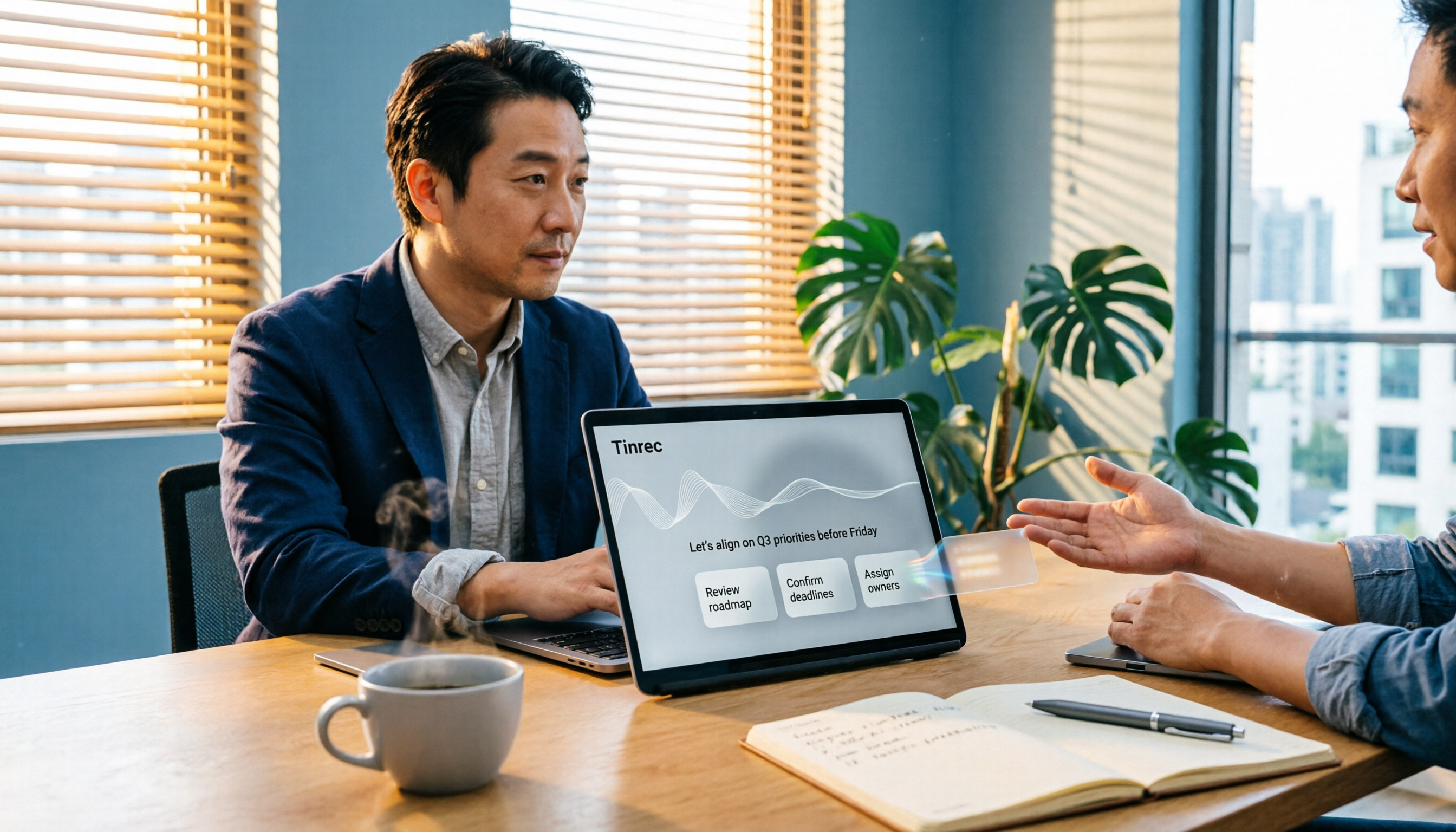
The Complete Guide to Meeting Recording Transcription in 2026: From Transcript to Action Items
What is meeting recording transcription? This guide starts from the real pain points of mid-level managers, explaining what meeting recording transcription can do for you, five core capabilities, four practical use cases, and five things to consider when choosing a tool. It also uses Tinrec to demonstrate the complete workflow from recording to transcript, summary, action items, and team collaboration.
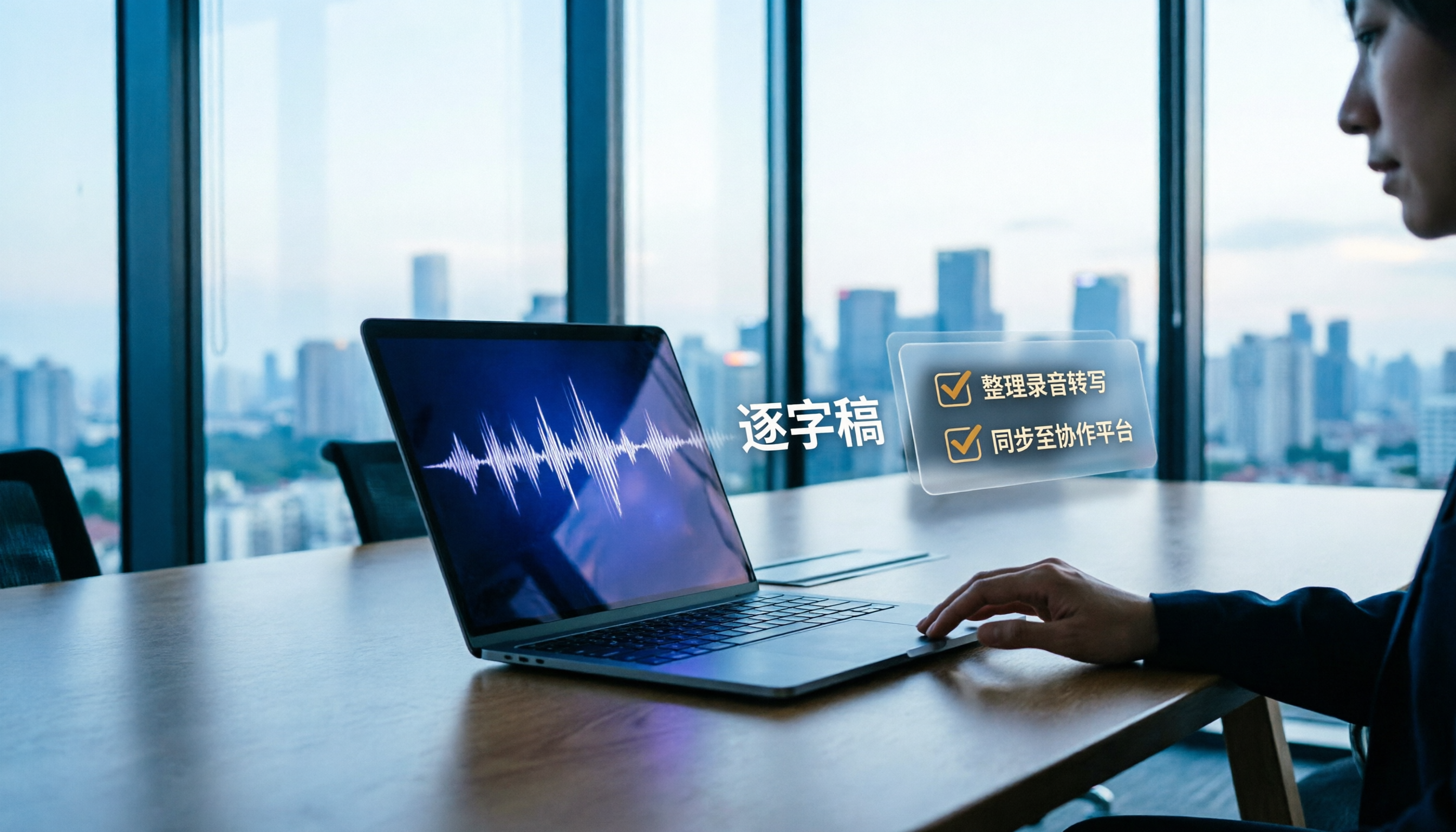
How to Transcribe Meeting Recordings in 2026: Tinrec's 5 Steps + Auto-Generated Meeting Minutes
Just finished a meeting and realized no one wrote down the action items? This guide walks you through 5 steps to turn meeting recordings into transcripts, quickly proofread key points, and auto-generate meeting minutes and to-dos — plus FAQs and advanced tips, using Tinrec as a full walkthrough.

3 Ways to Manage iPhone Voicemail in 2026: Which Live Transcription Is Most Practical?
How does iPhone call forwarding to voicemail work? This article uses a mid-level manager's real-world scenarios to break down iPhone Live Voicemail's forwarding rules, exceptions for roaming and Low Power Mode, cost traps, and setup. It also compares Tinrec's transcription coverage, post-meeting to-dos, later search, and team collaboration across four dimensions, and finally tells you which situation calls for which tool.

Best iPad Real-Time Speech-to-Text in 2026: 4 Methods Tested, Top Pick for Chinese Meetings
Want to see words appear as you speak on iPad? Built-in dictation, Voice Memos transcripts, and third-party apps each have limits. This article compares 4 methods using Chinese meeting and interview scenarios, breaking down recognition stability, post-meeting organization, audio sources, and data ownership. It also explains how Tinrec differs in Chinese transcription, AI Q&A, and team spaces, and gives clear recommendations.
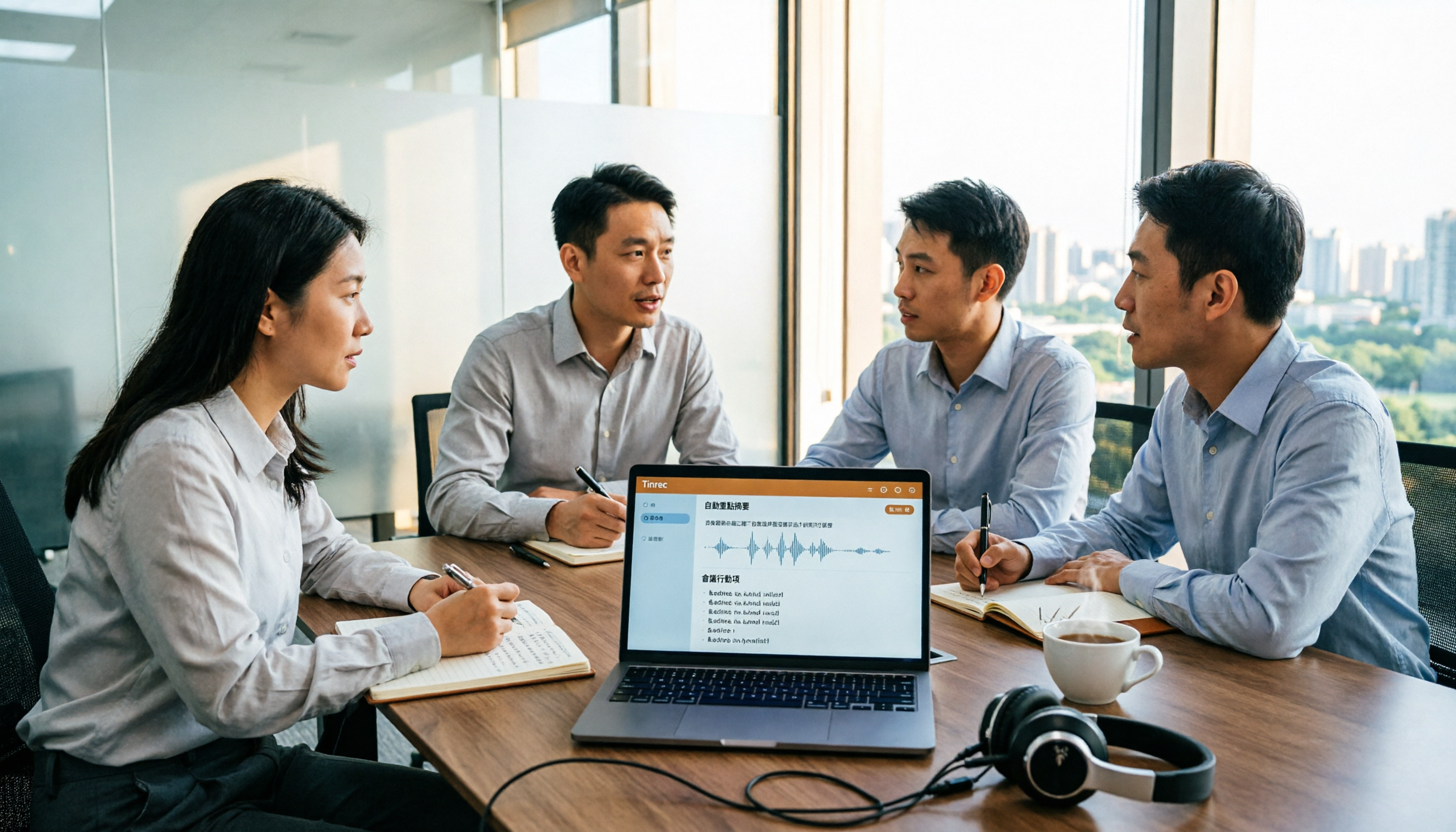
2026 Comparison of 5 Audio-to-Text Tools: Which Is Most Time-Efficient for Chinese Meeting Transcripts and AI Summaries?
With so many audio-to-text tools available, the real decision comes down to four key factors: input sources, post-transcription output, Chinese recognition, and team collaboration. This article compares five common tools in 2026, explaining why Tinrec is the most time-efficient for Chinese meetings and team knowledge retention, and compares the use cases and pitfalls of Granola, Notta, and TurboScribe.
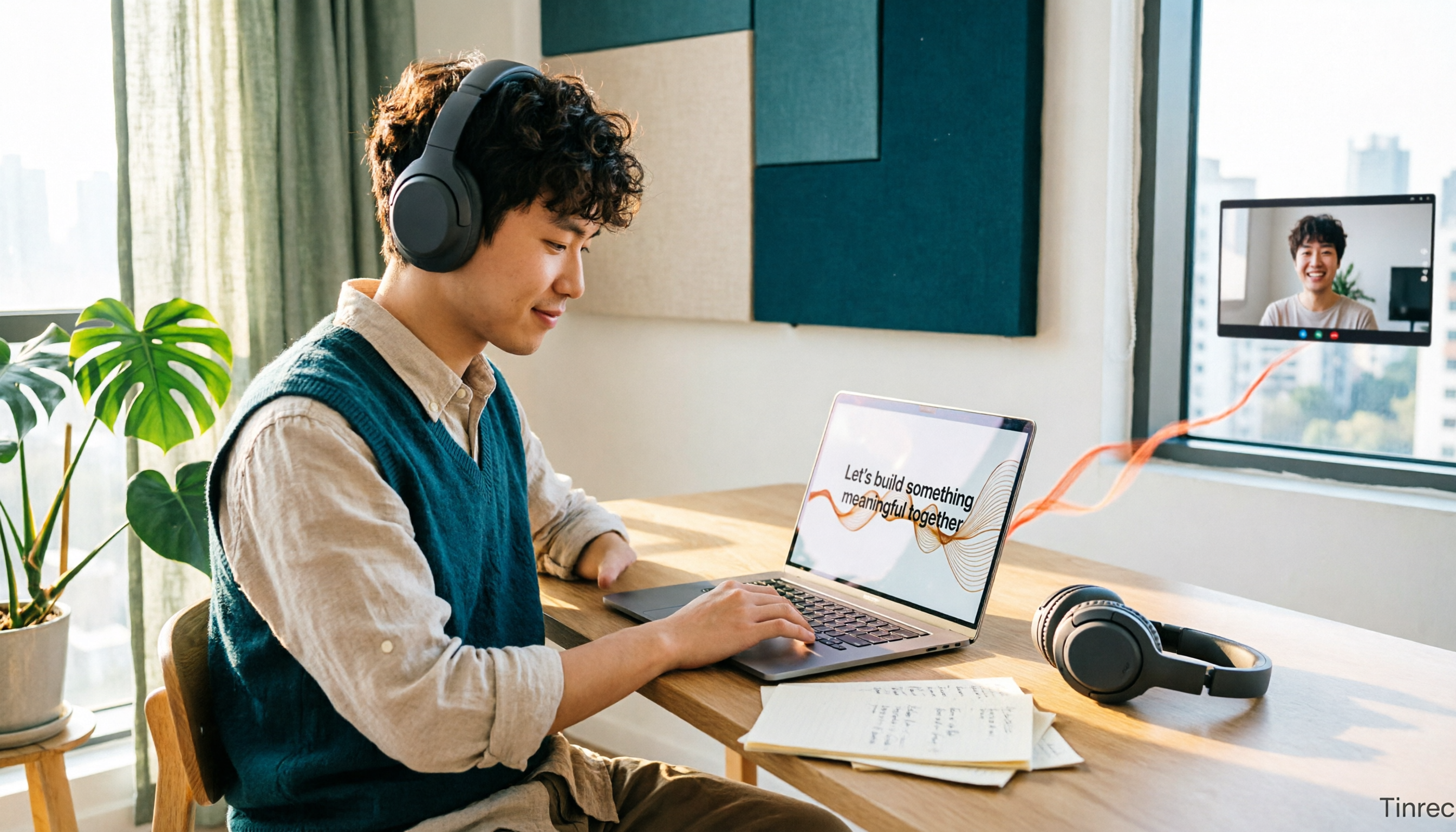
3 Recommended Microsoft Text-to-Speech Tools in 2026: Free, No-Install, and Enterprise Options Explained
How to use Microsoft text-to-speech? This article covers three recommended approaches in 2026: a free Microsoft Store app, no-install online tools, and Azure Speech Synthesis. It also explains common misconceptions, limitations with speed and MP3 export, and how to first organize content with a transcription tool before feeding it to TTS.

4 AI Meeting Minutes Tools Tested: Which One Delivers Actionable Chinese Meeting Notes Right After You Hang Up?
The most time-consuming part of a Chinese meeting is often not the meeting itself, but the post-meeting organization. This article compares 4 AI-powered meeting minutes tools, breaking down how meeting audio gets into the tool, what you get beyond the transcript, real-world performance with Chinese and mixed Chinese-English, and who ultimately owns the meeting data. It also includes common pitfalls and scenario-based selection advice.

How to Summarize Xiaohongshu Content in 2026: 3-Step Guide + AI Highlights
Learn how to summarize Xiaohongshu content in 2026 with a 3-step process. This guide covers platform features, content types, and practical steps to turn public videos, audio, or your own recordings into transcripts, summaries, and action items. It also compares tools like Tinrec, Notta, TurboScribe, and Granola. Ideal for users who want to quickly absorb useful information from Xiaohongshu.