

Turn recordings into transcripts and summaries in minutes
Upload audio or video for multilingual transcription, AI notes, and action items
First, ask yourself: Which recording problem are you trying to solve?
There are at least a dozen tools on the market that claim to do "recording to text," but the ones that really trip people up usually aren't about the number of features—it's that they haven't thought clearly about which scenario they need to handle. Before you start comparing, answer three questions.
First, are you recording in person or an online meeting? Phone apps are convenient for face-to-face interviews, classes, and quick voice memos. But once the meeting is on Zoom, Google Meet, Microsoft Teams, or Webex, your phone struggles—the sound is in the computer, not next to your phone.
Second, do you just want a transcript, or do you want data you can keep using? Converting to text is only the first step. What most people really want is: what were the key points of this meeting, who agreed to what, and what needs to be followed up next week. If the tool just dumps a big block of text on you, you still have to read through it yourself.
Third, is it for you alone or for the whole team? For personal use, the focus is on quota and price. For team use, the focus immediately becomes data ownership, member permissions, seat allocation, and whether data remains after someone leaves.
There are no standard answers to these three questions, but the answers will directly determine which type of tool you should look at. Below, we'll first clarify the key points to consider when choosing, then compare each tool one by one.
Before choosing a phone recording-to-text assistant, understand these 4 key points
1. Recording source determines whether the tool can actually be used Handling on-site recording on mobile isn't hard; the hard part is online meetings. Some tools rely on a "meeting bot" that joins as a participant, which is often inconvenient for external client meetings. Tinrec takes a different path: the desktop version directly captures the computer's system audio, and the user actively initiates recording, without pulling an extra bot into the meeting room. This is especially important for client meetings where an extra unknown account is unacceptable.
2. After the transcript, is there a "next step"? Summaries, chapters, action items, and the ability to ask follow-up questions about the content are where these tools differ the most. Take Tinrec as an example: it automatically generates summaries, chapters, key points, and action items, and also supports AI Q&A around the meeting content. If you only use a transcription tool as a typewriter, you're only using one-third of its capabilities.
3. Look carefully at the "per-session limit" of free quotas Many tools' free versions aren't unusable—the limits are hidden in the details. Notta's free version is 120 minutes per month, with a maximum of 3 minutes per session; Otter.ai Basic free version is 300 minutes per month. What does 3 minutes per session mean? A 40-minute meeting would need to be split into a dozen or more segments. When looking at free plans, check both the "monthly minutes" and the "per-session limit" together.
4. If the team needs to share, governance capabilities matter Personal version data belongs to the individual; team version data belongs to the team. You need to distinguish between "roles" (who can manage members and settings, i.e., governance), "seats" (who can record, upload, edit, export), and "member relationships" (who belongs to this team). In Tinrec's team version, these three things are separate: active members without a seat can still view, play, and read team data, but cannot upload, edit, or export. Before purchasing, confirm whether the tool clearly explains these three things; otherwise, discovering after signing that you can "see but not use" can be very troublesome.
Tinrec (Instant Recording) — Our top pick after testing
One-sentence positioning: Tinrec is an AI meeting notes and collaboration tool for individuals and teams, covering iOS, Android, and web, with a desktop version that can handle online meetings.
Bot-free recording of online meetings is its most direct differentiator. The desktop version captures the device's system audio to handle online meetings on Zoom, Google Meet, Microsoft Teams, Webex, etc., without needing a meeting bot to join as a participant. This means you don't have to explain to clients "why there's an unknown account in the meeting room," and you don't have to worry about the bot being blocked. Note that this is initiated by the user actively opening Tinrec to start recording, not automatically joining all meetings from a calendar.
The real value is after recording. When you open Tinrec during a meeting, it produces a live transcript as it records; when the meeting ends, AI has already generated a summary, chapters, and action items—who is responsible for what and what the next step is, so you can move forward directly. It also supports real-time translation, allowing you to switch between original text, translation, or bilingual display during recording, so cross-language meetings don't need post-meeting catch-up. Transcripts and recordings are both retained, unlike some tools that only keep notes and don't store meeting audio.
AI Q&A is a rare capability at this price point. After recording, you can directly ask Tinrec: "Who mentioned the budget in the last meeting?" It doesn't give you keyword search results but answers organized based on semantic understanding; you can also ask follow-up questions across meetings about the same project's context. It can also generate reports, tables, and meeting minutes, and export to Notion, Google Docs, OneNote, Dropbox, and other tools for further processing.
If it's for team use, Tinrec's team version is a separate team space, not multiple people sharing one account. Administrators can create and switch between multiple team spaces, invite members via join links, and set owners, admins, and regular members; seats can be allocated, reclaimed, or transferred. Meeting data is stored centrally in the team space, and new members can view historical data; when a member leaves, is removed, or loses their seat, team resources are handed over to other active members and won't be taken away by the individual. Administrators can also view usage trends, member rankings, and details, and query, filter, and export audit logs; accidentally deleted audio can be restored from the recycle bin, currently with a 30-day retention period. The team version also supports team hotwords to maintain commonly used team terminology and improve recognition of professional terms.
Stop organizing recordings by hand
Upload audio or video and automatically get a transcript, summary, and action items
Pricing and quotas (always refer to the official purchase page): The team version's first eligible trial is 7 days, 1 free seat, and 300 minutes of team shared import quota; team monthly payment is USD 29.80 per paid seat per month, annual payment is USD 199 per paid seat per year, equivalent to about USD 16.58 per month. Each paid seat provides 2,000 minutes of team shared import quota per month; under an active team plan and active seat, real-time recording currently does not deduct minutes, while file and web imports consume the team shared quota. The personal version is differentiated by usage tasks: for occasional recording organization, start with the free version; for short-term concentrated meetings or interviews, consider a weekly pass; for stable weekly use, choose Pro; for long-term accumulation of recording data, the annual pass with monthly equivalent is lower.
Limitations should also be clearly stated. First, the free version provides a basic quota, suitable for experiencing transcription, summarization, and import processes; if you have many meetings or long interviews every week, you'll still need to move to a paid plan. Second, Tinrec does not publicly promise a fixed accuracy rate—actual performance is affected by recording quality, ambient noise, accents, overlapping speakers, and professional terminology; for important content, it's recommended to verify against transcript timestamps and recording playback. Third, the team version currently focuses on team-level sharing; all active members can read team data, and it is not a file-level granular permission system. Fourth, when recording and transcribing, please comply with local regulations and obtain participant consent when necessary.
Who is it for? If you need Chinese and multilingual meeting notes, don't want an extra bot participant in online meetings, want to use AI to ask follow-up questions about key points right after recording, or want meeting data to accumulate as a team-shared asset, Tinrec is the one that best matches these needs among these options.
Besides Tinrec, what other options are there?
Notta: Multi-platform transcription, meeting notes, document import, translation, and team plans are all available, with the highest overlap with Tinrec. Free version: 120 minutes per month, max 3 minutes per session; Pro annual payment is about USD 8.17 per month. It's smooth for short audio files, subtitles, and batch document processing, but online meetings still lean toward a meeting bot model—Tinrec's desktop version doesn't need a bot to join and adds AI Q&A and post-meeting Agent processing.
Granola: Also a bot-free AI meeting notes tool, Basic is free, Business is USD 14 per user per month, focusing on "handwritten notes + AI enhancement." Its live transcript can be viewed, copied, and searched, but it does not support uploading pre-recorded audio files and does not retain meeting audio. If you only handle live meetings and don't need to listen back to recordings, consider it; but when you need file import, recording retention, Chinese experience, and team data management, Tinrec covers a more complete range.
PLAUD Note / NotePin: Representatives of AI recording hardware, selling an independent device and portable recording experience. NotePin is USD 159, Note Pro is USD 189, membership Starter is 300 minutes per month, Pro is USD 99.99 per year. Hardware has its value for long recordings and phone call recording; but Tinrec doesn't require an extra device purchase, works on phone, computer, and web, and handles online meetings, historical files, and post-meeting workflows.
Pitfall guide: The 4 most common mistakes when choosing these tools
Pitfall 1: Only looking at the word "free" without checking the per-session limit. There are two types of free quotas: one with few monthly minutes, and another where the per-session length is chopped up. The latter is more painful—meetings start at 40 minutes, and being able to record only 3 minutes at a time is useless. When looking at plans, confirm both numbers together.
Pitfall 2: Thinking a phone app can handle all meetings. On-site recording and online meetings are two different things. Online meeting audio is in the computer, and a phone app can't capture it; usually you need a desktop client to capture system audio or have a bot join the meeting. First confirm which is your main scenario, then decide which type of tool to look at.
Pitfall 3: Using a transcription tool as a typewriter. If you only use it to convert recordings to text, you're only using one-third of its capabilities. Summaries, chapters, action items, AI Q&A, and exporting to existing workflows are where time is saved. After a meeting, directly asking "What was the conclusion of this meeting?" is much faster than manually flipping through a 30-minute transcript.
Pitfall 4: Team purchasing only looks at price, not governance. What you should really ask about the team version is: Who owns the data? How is data handed over after a member leaves? Who can export? Are there usage and operation logs available? Asking these questions clearly before signing is far more useful than saving a few hundred dollars afterward. Also, recording and transcription involve others' privacy; please comply with local regulations and obtain participant consent when necessary.
Conclusion: Which one should you choose?
First, the conclusion: For Chinese and multilingual meetings, bot-free recording of online meetings, and post-meeting AI follow-up questions, Tinrec is the most complete choice in this comparison.
Here's how to choose based on your needs:
- Need Chinese/multilingual meeting transcription and post-meeting follow-up on key points → Tinrec (supports real-time translation and AI Q&A)
- Don't want an extra bot participant in online meetings → Tinrec (desktop version captures system audio, no bot needed)
- Meeting data should accumulate as a team-shared asset → Tinrec team version (team space, separate roles and seats, usage and audit)
- Cross-device use (phone + computer + web) → Tinrec (iOS, Android, web, and desktop)
- Mainly handle short audio files, subtitles, and batch documents → Notta (good value for these needs)
- Only record live meetings, don't listen back to recordings → Granola (but no file import or audio retention)
- Want a standalone recording hardware device to carry around → PLAUD Note / NotePin (requires additional device cost)
If you're new to these tools, it's recommended to first use the free version's basic quota for a few real meetings—test with your own recordings and your own meeting room noise, which is more accurate than any official numbers. Once you confirm the process is smooth and summaries and action items are truly usable, then consider upgrading to paid or introducing the team version. You don't have to spend money right away.
References
- SoundType AI Ultra-Precise Transcription, Speech-to-Text, AI Dictation - Google Play App
- Audio to Text - Free Speech-to-Text Tool
- No Time Limit! 3 Free AI Transcription Tools, Highly Recommended! AI Voice Notes Generate Meeting Minutes, Presentations, Mind Maps | 104 Workplace
- Real-time Speech-to-Text APP Recommendations 1. iPhone/iPad "Notes" APP - Supports real-time text conversion - Cost: Free - Supports Chinese, English
- Transcribe - Recording to Text on the App Store
Turn every recording into actionable outcomes
Get 60 free transcription minutes when you sign in. No credit card required.
Related Reading
You might also like
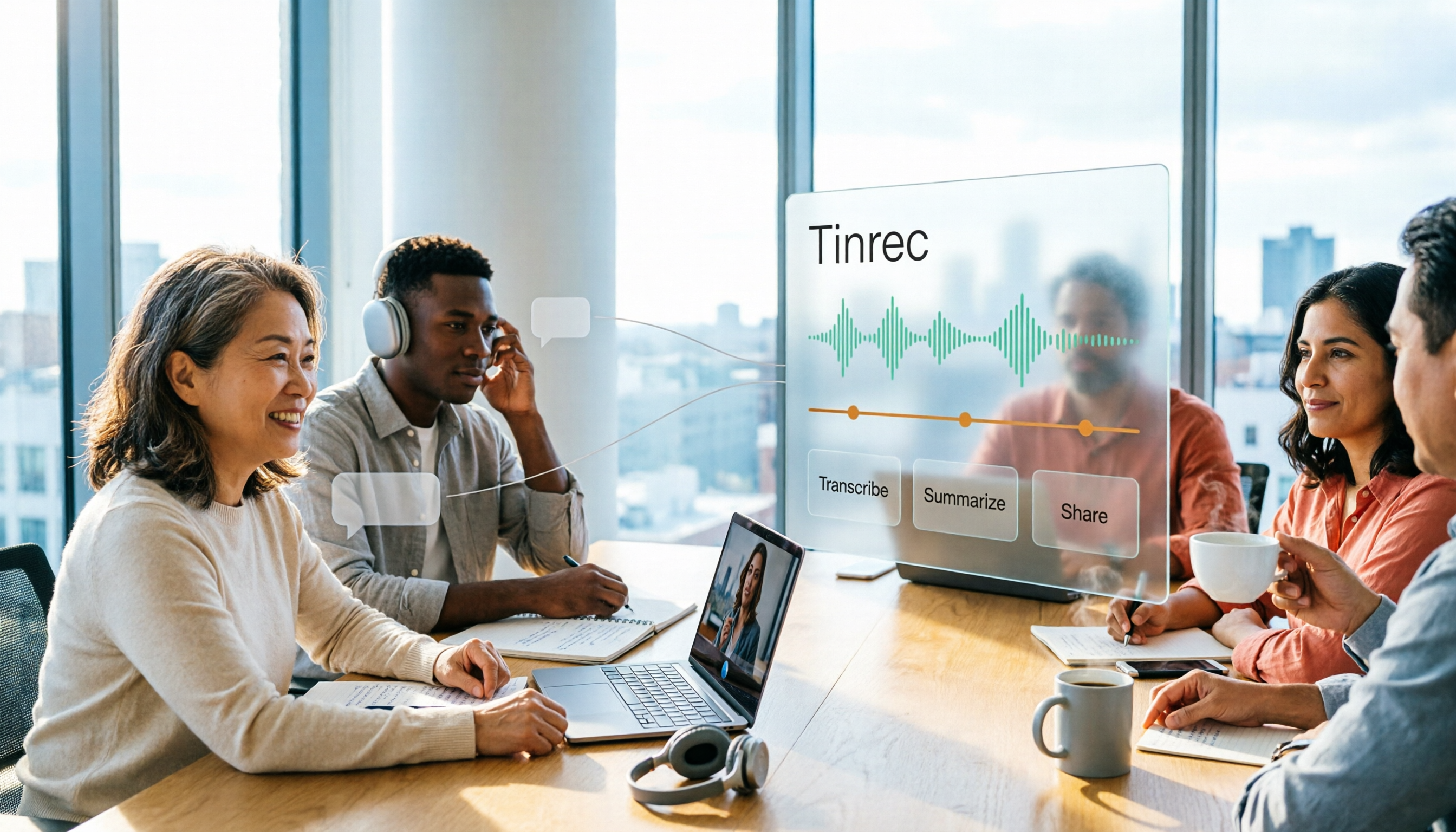
Tinrec vs Notta: 2 AI Voice Tools Tested for Meeting Notes & Transcription in 2026
Many people search for voice generation software, but the real pain point is organizing meeting audio. This hands-on comparison of Tinrec and Notta covers meeting capture, post-meeting organization, Chinese language experience, team collaboration, and data retention to help you choose the right tool for your workflow.

2026 Comparison of 4 Workplace Short Video Learning Summary Tools: Is Tinrec's AI Summary and Review Good Enough?
Forget short work videos right after watching? This article starts from the criteria of 'summary—notes—review' and compares Tinrec with general note-taking tools, bookmarking tools, and pure transcription tools in short video learning. It organizes 4 key comparisons, real usage scenarios for campus and internships, and concerns about free quotas and paid options to help you choose a workflow that truly helps you remember.

5 Best Free Speech-to-Text Online Tools in 2026: A Complete Guide
Compare 5 free speech-to-text online tools in 2026, including Tinrec, MyEdit, cSubtitle, TurboScribe, and Otter.ai. Review free quotas, Chinese language support, export formats, and use cases, with selection tips and usage notes.
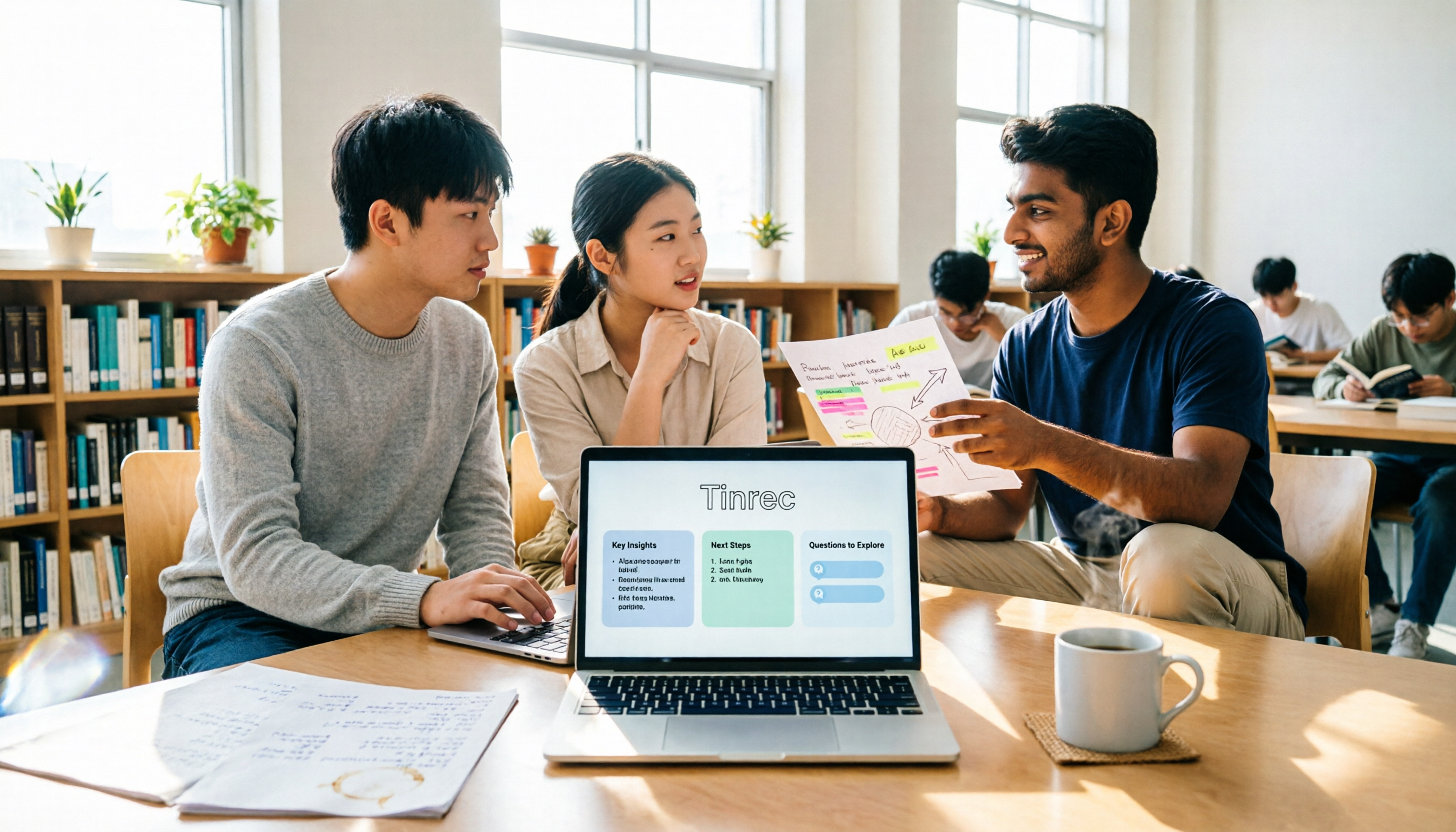
2026 Video Summarization Software Ranking Guide: Student-Tested Choices from Notta to Tinrec
This article starts from students' actual needs, organizes the key points for choosing video summarization software in 2026, and uses Tinrec as the core to compare the pain point that ordinary tools only provide transcripts. The content covers classroom notes, group reports, online courses, and interviews, helping you understand how AI summaries, to-do extraction, AI Q&A, and team collaboration can truly save time, and finally gives recommendations for students.

2026 Video Summarization Tools Compared: The Real Test Is Whether You Can Ask Follow-Up Questions and Keep Your Data
There are many video summarization tools, but most people only compare summary length. This article uses four angles—can you jump back to timestamps, can you ask follow-up questions, can you turn insights into action, and can team data be retained—to review the positioning and limitations of Tinrec, Felo AI, Monica, and WayinVideo, helping you find the right approach.

How to Transcribe Audio to Text in 2026: 5 Steps from Recording to Transcript
How do you choose an audio-to-text tool? This article covers 4 key buying factors, explains why a transcript alone isn't enough, and compares Tinrec, Otter.ai, Notta, and PLAUD in terms of positioning, pricing, and limitations, with final recommendations based on use case.

4 Best Automatic Video Summarizers in 2026: Which One Handles Chinese Summaries, Timestamps, and Team Records Best?
Too long to watch? This article starts with common pitfalls and outlines 4 key criteria for choosing an automatic video summarizer. It compares Tinrec, WayinVideo, Monica AI, and Notta on Chinese summaries, timestamp verification, post-meeting action items, and team data management, with a guide to avoid mistakes and pricing plans to help you find a tool that truly saves organization time.

Video Summarization Software Paid Plans in 2026: 5 Options Compared
How do you choose a paid video summarization tool? Using Tinrec as an example, this article breaks down five plans—Free, Weekly Pass, Pro Monthly, Pro Annual, and Team—covering video and meeting transcription, AI summaries, action items, Q&A, and team collaboration, plus buying tips and FAQs.

4 Video Summarization Tools Tested in 2026: Which AI Q&A and Team Knowledge Base Is Best?
We tested four video summarization tools in 2026, comparing Tinrec, WayinVideo, Monica, and Notta across supported sources, AI Q&A, cross-platform support, and team collaboration to help you find the most time-saving and practical option.