
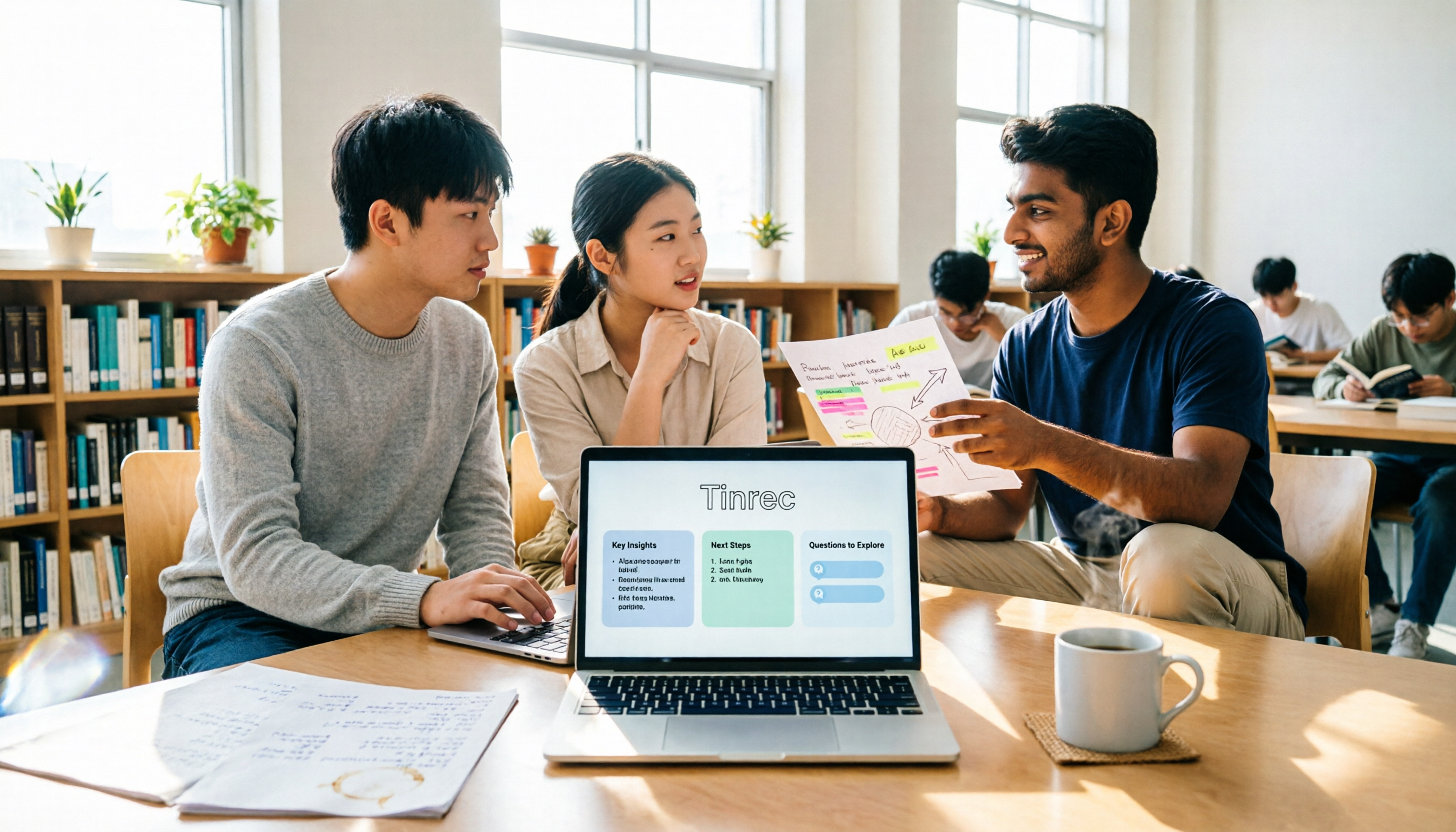
Turn recordings into transcripts and summaries in minutes
Upload audio or video for multilingual transcription, AI notes, and action items
Before midterms, I opened this semester's class recordings and realized I had no idea where the key points were—this was the result of using the wrong method before. At first, I thought "video summarization software" just meant converting videos into text, so I downloaded a bunch of tools from the rankings. When I opened them, the transcripts were ridiculously long, and I still didn't know what the professor was talking about. Later I figured out that a real video summarization tool doesn't give you a transcript; it directly tells you the key points, to-dos, and even lets you ask questions. This article is based on my experience testing tools this semester, helping you avoid those landmines that "look powerful but are tiring to use."
Why are many people still unsatisfied after using video summarization tools?
Most people look for video summarization tools to solve the problem of "videos being too long and having no time to watch." But many tools only do "speech-to-text," giving you a long transcript that you still have to read from beginning to end. What's more troublesome is that some tools only support YouTube. If you often watch Bilibili, Xiaohongshu, or TikTok, they can't handle it. Some free versions have pitifully small quotas, and after recording a few classes in a semester, they're used up. Another common pain point: Chinese recognition is inaccurate, and mixed Chinese-English content is a disaster. If you've encountered these situations, it means you need more than just "text conversion"—you need a tool that can help you organize, ask questions, and produce key points. Tinrec is designed in this direction.
What is the core experience difference between Tinrec and ordinary video summarization tools?
The first difference is input sources. Ordinary tools usually only allow file uploads or are locked to a single platform. In addition to uploading audio and video files, Tinrec also supports real-time recording, mobile recording, and desktop capture of computer system sound to record online meetings without adding a bot to the meeting. This is very practical for students: whether it's in-person classes, online courses, or group Google Meet discussions, the same tool can handle it all.
The second difference is post-meeting organization. Many tools stop after giving you a transcript. Tinrec automatically generates AI summaries, chapters, and key points, and can also extract to-dos from discussions. For example, after a group meeting, Tinrec will organize "who needs to complete what and by when," turning it directly into an action list without relying on memory.
The third difference is AI Q&A. This is the feature I find most impactful. Previously, to review a one-hour class recording, I had to constantly drag the progress bar to find key points; now I just throw the video into Tinrec and ask it: "What are the three marketing strategies mentioned by the instructor?" It answers directly based on semantics and marks the corresponding timestamps. This "asking" is much faster than "reading."
The fourth difference is multilingual support and translation. Tinrec supports Chinese, Traditional Chinese, and multilingual meeting transcription, and can also translate in real time, allowing you to view in original, translated, or bilingual mode. If you, like me, take a fully English online course, this feature can save a lot of time looking up words.
The fifth difference is team collaboration. Tinrec has team spaces where meeting materials can be stored centrally, members can share and view, and administrators can manage roles, seats, and usage. For student group reports, data won't disappear just because someone graduates or leaves, which is much more reliable than using personal accounts to record separately.
Overview of Tinrec's core features
Real-time recording and transcription: Open Tinrec to record, and text appears in real time with very low latency. During class, you can follow along with the text to confirm you haven't missed key points, and the transcript is ready right after class.
Bot-free online meeting recording: The desktop version directly captures system sound to handle Zoom, Google Meet, Microsoft Teams, Webex, and other meetings without inviting an extra bot. This is especially convenient for group online discussions and won't disrupt the meeting.
Stop organizing recordings by hand
Upload audio or video and automatically get a transcript, summary, and action items
AI summaries and chapters: After a long video or meeting, Tinrec automatically generates summaries and chapters, breaking content into an easily browsable structure. You don't need to watch from beginning to end; just read the summary to grasp the whole picture.
To-do extraction: Organizes action items from discussions, clearly indicating who needs to complete what and by when. Group reports fear no one remembering the conclusions after the meeting; this feature directly solves that problem.
AI Q&A: Continue asking questions around single or multiple meeting materials. For example, "What reference books were mentioned in this class?" "What are the three conclusions about the budget in the meeting?" It gives answers based on semantic understanding.
Multi-format export and Agent post-processing: You can export transcripts and summaries to Notion, Google Docs, OneNote, Dropbox, and other tools, and further generate reports, tables, and documents. For students who need to submit assignments or organize reports, this saves a lot of formatting time.
Team space: Centrally stores team meeting materials, and new members can view historical content. With role and seat management, it's suitable for group reports or club operations.
Actual usage scenarios
Class notes: Professors speak fast and flip slides even faster; handwriting can't keep up. Now I open Tinrec for real-time recording and transcription in class, and after class use AI Q&A to find key points, such as "What are the three theories discussed today?" I can review a two-hour class in five minutes.
Group reports: We're doing a graduation project this semester and have meetings every week. Previously, after meetings everyone asked in the group chat "So what's the conclusion?" Now we use Tinrec to record discussions, automatically generate to-dos and summaries, and who is responsible for what is clear at a glance.
Online courses and YouTube self-study: I took a fully English online course, and the instructor spoke super fast. I uploaded the video file to Tinrec, first read the Chinese summary, then used AI Q&A to confirm unclear parts, and finally exported the transcript to Notion for notes. I can digest a week's course in one afternoon.
Interviews and internship interviews: My friend is preparing for graduate school and needs to interview seniors. He used Tinrec to record the interview, and after the meeting directly asked "What preparation methods did the interviewee mention?" without having to re-listen to a one-hour recording.
When choosing video summarization tools, these points are worth noting
First, whether the supported platforms and input sources are broad enough. If you only watch YouTube, most tools work; but if you also watch Bilibili, Xiaohongshu, or need to handle online meetings and in-person recordings, choose a tool like Tinrec that is cross-platform and supports multiple input sources.
Second, Chinese recognition and multilingual capabilities. Taiwanese students often encounter mixed Chinese-English course content. If a tool is only good at English, the recognition results will be terrible. Tinrec is optimized for Chinese environments and also supports multilingual transcription and real-time translation.
Third, how deep the post-meeting features are. Tools that only give transcripts still require you to read them yourself. Look for AI summaries, chapters, to-do extraction, and Q&A features—these are the real time-savers.
Fourth, free quota and pricing. Students have limited budgets, so you can start with the free version. Tinrec's free version provides basic quota to experience recording, import, summaries, and transcription; if you have steady needs every week, then consider the Pro monthly or annual plan. The team version is about US$16.58 per person per month (annual payment), suitable for groups to split.
Fifth, team collaboration and data ownership. If group report data only exists in personal accounts, it's troublesome when members leave. Tinrec's team version data belongs to the team, and can be handed over when members change, which is important for long-term projects.
Conclusion: Is Tinrec worth a try?
If you're tired of getting a long transcript but can't find the key points, or having to re-listen to recordings after every group meeting, Tinrec will be very impactful. Its core advantages are: cross-platform input sources, automatic summaries and to-dos after transcription, and AI Q&A you can directly ask. For students, the most immediately helpful scenarios are class notes and group reports.
Who is it suitable for? College students, graduate students, people who frequently watch online courses or organize interviews, and teams that often do group reports. If you only occasionally watch a YouTube video, a free tool might be enough; but if you have multiple classes and meetings to organize every week, Tinrec's free version basic quota is worth trying. Testing with your own class recordings is more accurate than any ranking.
References
- One-click video to text: 3 video summarization AI tools recommended, quickly produce high-quality key summaries - Tinrec Blog
- Top 10 best AI YouTube video summarization tools recommended
- 2026 3 short video summarization tools tested and compared: whose free version is most sufficient? - Tinrec Blog
- 5 AI tools for summarizing video content tested: Chinese accuracy, summary depth, multi-platform support comparison - Tinrec Blog
- 16 super useful video editing software sharing list [2025 recommended], free and paid - Kocpc
Turn every recording into actionable outcomes
Get 60 free transcription minutes when you sign in. No credit card required.
Related Reading
You might also like
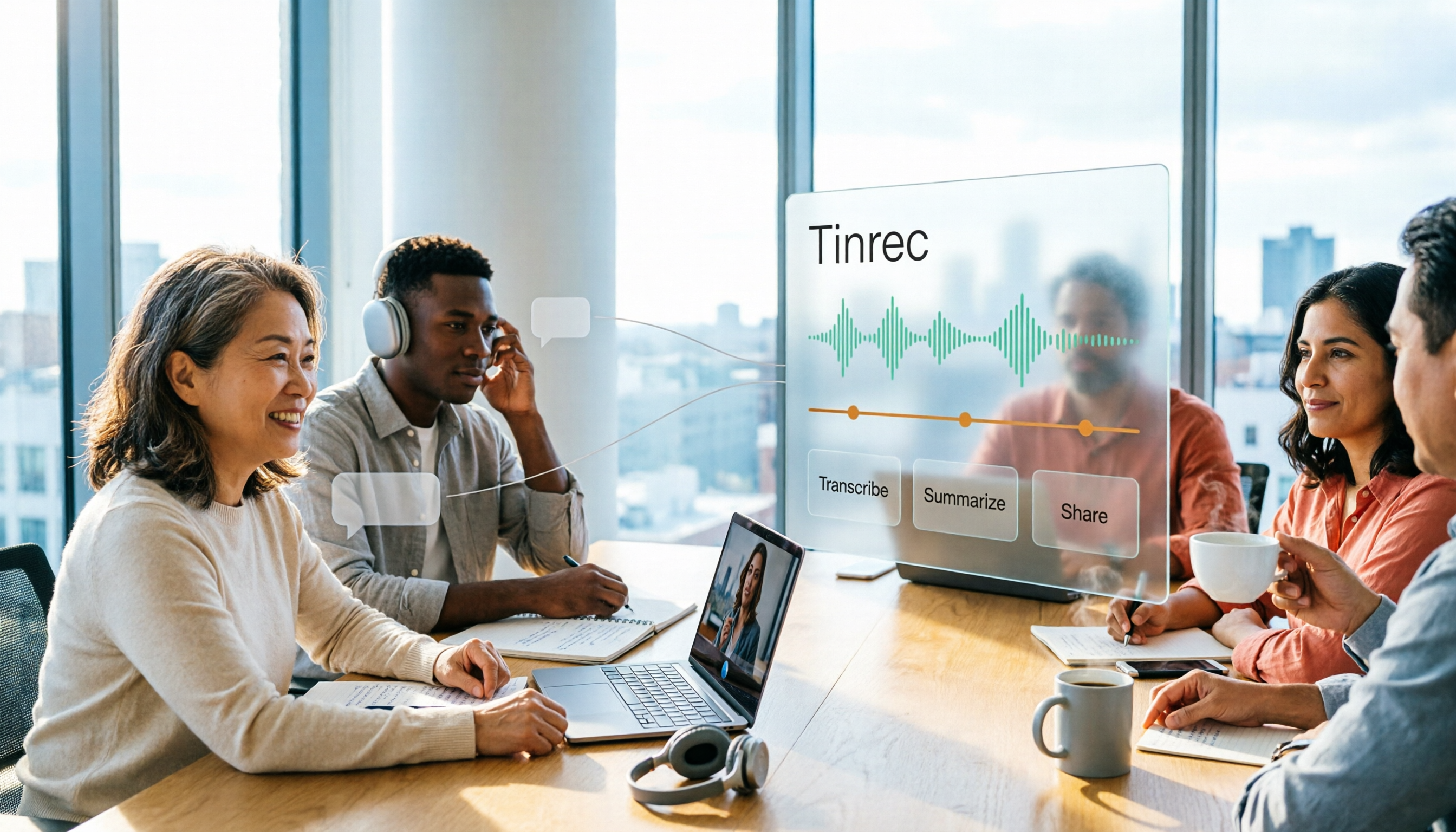
Tinrec vs Notta: 2 AI Voice Tools Tested for Meeting Notes & Transcription in 2026
Many people search for voice generation software, but the real pain point is organizing meeting audio. This hands-on comparison of Tinrec and Notta covers meeting capture, post-meeting organization, Chinese language experience, team collaboration, and data retention to help you choose the right tool for your workflow.

2026 Comparison of 4 Workplace Short Video Learning Summary Tools: Is Tinrec's AI Summary and Review Good Enough?
Forget short work videos right after watching? This article starts from the criteria of 'summary—notes—review' and compares Tinrec with general note-taking tools, bookmarking tools, and pure transcription tools in short video learning. It organizes 4 key comparisons, real usage scenarios for campus and internships, and concerns about free quotas and paid options to help you choose a workflow that truly helps you remember.

5 Best Free Speech-to-Text Online Tools in 2026: A Complete Guide
Compare 5 free speech-to-text online tools in 2026, including Tinrec, MyEdit, cSubtitle, TurboScribe, and Otter.ai. Review free quotas, Chinese language support, export formats, and use cases, with selection tips and usage notes.

2026 Video Summarization Tools Compared: The Real Test Is Whether You Can Ask Follow-Up Questions and Keep Your Data
There are many video summarization tools, but most people only compare summary length. This article uses four angles—can you jump back to timestamps, can you ask follow-up questions, can you turn insights into action, and can team data be retained—to review the positioning and limitations of Tinrec, Felo AI, Monica, and WayinVideo, helping you find the right approach.

How to Transcribe Audio to Text in 2026: 5 Steps from Recording to Transcript
How do you choose an audio-to-text tool? This article covers 4 key buying factors, explains why a transcript alone isn't enough, and compares Tinrec, Otter.ai, Notta, and PLAUD in terms of positioning, pricing, and limitations, with final recommendations based on use case.

4 Best Automatic Video Summarizers in 2026: Which One Handles Chinese Summaries, Timestamps, and Team Records Best?
Too long to watch? This article starts with common pitfalls and outlines 4 key criteria for choosing an automatic video summarizer. It compares Tinrec, WayinVideo, Monica AI, and Notta on Chinese summaries, timestamp verification, post-meeting action items, and team data management, with a guide to avoid mistakes and pricing plans to help you find a tool that truly saves organization time.

Video Summarization Software Paid Plans in 2026: 5 Options Compared
How do you choose a paid video summarization tool? Using Tinrec as an example, this article breaks down five plans—Free, Weekly Pass, Pro Monthly, Pro Annual, and Team—covering video and meeting transcription, AI summaries, action items, Q&A, and team collaboration, plus buying tips and FAQs.

4 Phone Recording-to-Text Assistants Tested and Compared in 2026: Is the Free Version Enough or Should You Go Team?
How do you choose a phone recording-to-text tool in 2026? This article examines four key points: on-site recording and online meetings, post-transcription processing, free quota traps, and team governance. It compares four solutions—Tinrec, Notta, Granola, and PLAUD—explaining their suitable scenarios, limitations, and team pricing, helping you decide whether to start with a free version or purchase directly for your team.
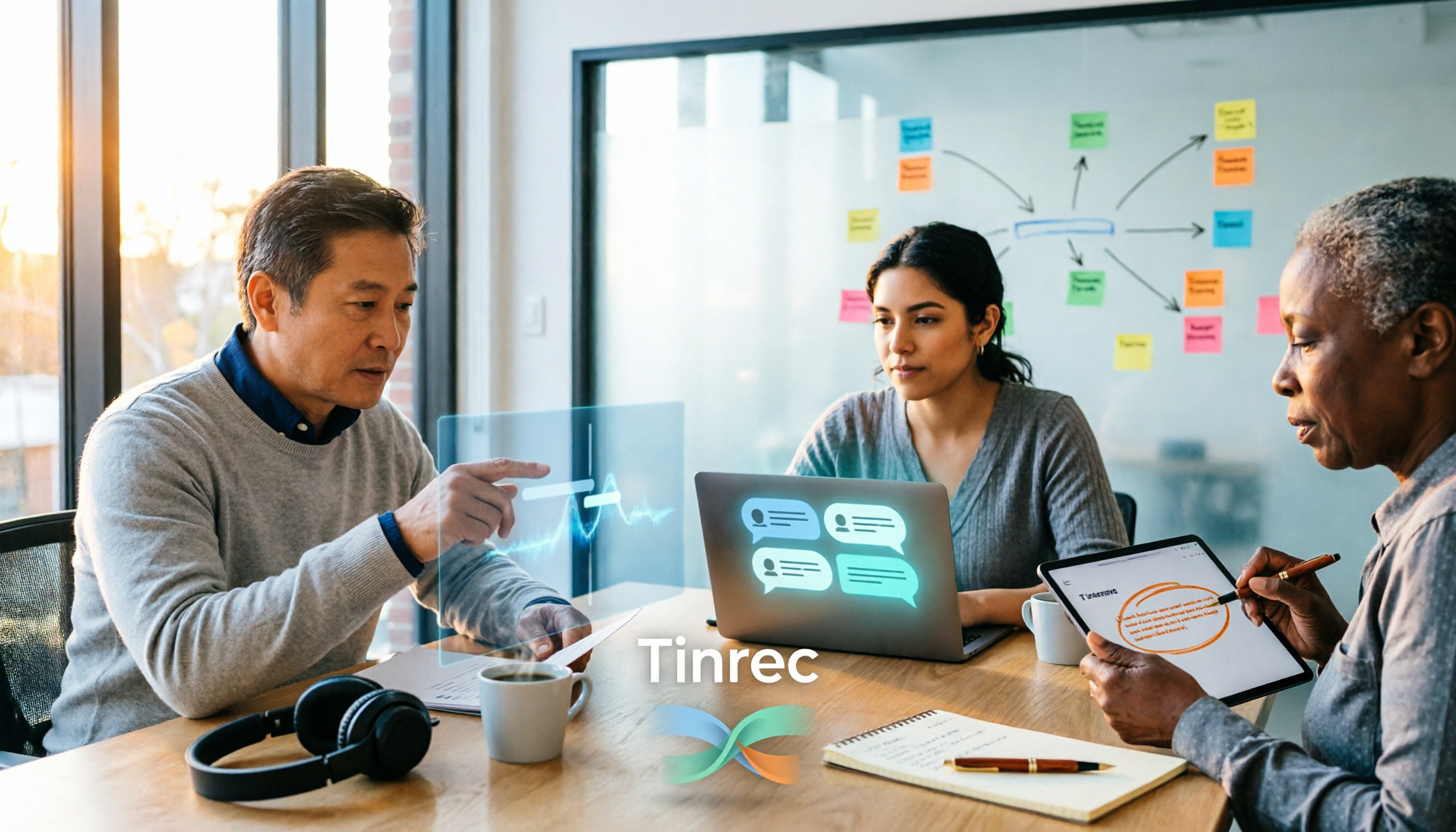
4 Video Summarization Tools Tested in 2026: Which AI Q&A and Team Knowledge Base Is Best?
We tested four video summarization tools in 2026, comparing Tinrec, WayinVideo, Monica, and Notta across supported sources, AI Q&A, cross-platform support, and team collaboration to help you find the most time-saving and practical option.