

Turn recordings into transcripts and summaries in minutes
Upload audio or video for multilingual transcription, AI notes, and action items
6 User Interview Tools Tested and Compared in 2026: Which One Actually Helps You Uncover User Pain Points?
Many teams finish a user interview and it effectively ends the moment the call hangs up—the recording sits on a phone, no one organizes the transcript, and a month later when it's time to write a requirements document, all you remember is "the user seemed to complain about something," but you can't recall exactly what was said, who said it, or at what minute.
This was the mistake I made most often in my first two years leading interview teams: spending all my energy on "how to ask" without thinking about "how to preserve what you learn after the interview." The value of an interview isn't really in those 60 minutes—it's in whether you can turn the pain points the interviewee mentioned into material you can look up later, cite, and use to persuade your boss.
A more sensible approach is to make content "organizable, taggable, and searchable" from the moment you press record. The 6 tools below are ones my own team has used in rotation over the past year for user interviews. I've organized my actual experience and pricing to help you avoid some unnecessary detours.
Why Do You Need User Interview Tools?
User interviews are the most direct way to get first-hand data, but the cost almost entirely falls on "afterward": a deep interview transcript is often longer than you expect, and after five interviews, just re-listening to recordings can eat up an entire afternoon. On top of that, B2B scenarios often involve "the buyer doesn't use it, the user doesn't buy it," so there's more than one person to interview, and data just keeps piling up. This article covers 6 tools, including real-time interview recording, batch transcription of existing audio files, and hardware recording devices, so you can directly match them to your own interview workflow.
Tinrec | The Most Complete AI Interview Recording and Organization Assistant
One-sentence positioning: Turn interviews from "a recording" into "searchable, queryable, citable" research data.
Core Highlights
- Records both online and offline interviews: The desktop version directly captures computer system audio to handle remote interviews on Zoom, Google Meet, Microsoft Teams, and Webex without inviting a meeting bot to join; for offline interviews, use real-time recording to transcribe as you talk, and the transcript is ready when you finish.
- Structured highlights right after the interview: Automatically generates transcripts, summaries, chapters, and action items, so a two-hour deep interview can be skimmed by section instead of listened to from start to finish.
- AI Q&A is its biggest difference from ordinary transcription tools: You can directly ask "What complaints did this interviewee mention about the payment process?" or query across multiple interviews "Who mentioned that importing is troublesome?" without flipping through transcripts page by page.
- Transcripts fit into your existing workflow: Supports export to Notion, Google Docs, OneNote, and Dropbox, and can further generate reports, tables, and documents.
Free and Paid: The free version lets you experience recording, import, summaries, and transcription; a weekly card is available for short-term intensive interviews; choose the Pro monthly card for steady weekly use; consider the annual card for a long-term accumulating interview database. If an entire research team needs to share, the team version is USD 29.80 per paid seat per month, or USD 199 per paid seat per year (about USD 16.58 per month), with each paid seat including 2,000 minutes of team shared import quota per month. First-time eligible users can try 7 days, 1 free seat, and 300 minutes of shared quota.
Who it's for: Product and research teams that mainly conduct interviews in Chinese, need to query pain points across interviewees, and want to turn each interview into a team research database.
Otter.ai | A Mature Choice for English Interviews
One-sentence positioning: A veteran AI meeting assistant with the strongest mindshare for English business interviews. The difference from Tinrec is that Otter's ease of use is mainly built around English meeting scenarios, and its Chinese interview organization experience is relatively not its home turf. Core highlights are real-time transcription, speaker identification, and AI Chat. On pricing, Basic is free with 300 minutes per month; Pro annual billing is about USD 8.49 per user per month, including 1,200 minutes of in-app recording and 10 file imports per month, subject to the official pricing page. Suitable for those whose interviewees are mainly English-speaking and whose teams already use English meeting tools.
Stop organizing recordings by hand
Upload audio or video and automatically get a transcript, summary, and action items
Notta | Multilingual Transcription and Translation
One-sentence positioning: A comprehensive tool covering multi-platform transcription, meeting notes, file import, translation, and team plans. The difference from Tinrec is that Notta's strength is in language and transcription itself, while Tinrec emphasizes bot-free recording, post-meeting AI Q&A, and team data accumulation. Core highlights are multilingual transcription and cross-device use. On pricing, the free version offers 120 minutes per month with a maximum of 3 minutes per session; Pro annual billing is about USD 8.17 per month with 1,800 minutes per month; Business annual billing is about USD 16.67 per seat per month, including unlimited transcription, role permissions, and usage reports. Suitable for researchers whose interviewees span multiple countries and who need multilingual interviews and translation.
Granola | An Interview Tool for Note-Taking While Listening
One-sentence positioning: A bot-free AI meeting note tool that integrates system audio with your own handwritten notes. The difference from Tinrec is that Granola does not save meeting audio and does not support uploading pre-recorded interview files; if you need to keep original recordings or organize existing interview files, Tinrec is more suitable. Core highlights are viewable, copyable, and searchable real-time transcripts, plus cross-meeting context organization. Pricing is Basic free, Business USD 14 per user per month, Enterprise USD 35 per user per month. Suitable for those who are used to taking notes during interviews and only need to handle real-time meetings.
TurboScribe | Batch Transcription for Large Numbers of Interview Recordings
One-sentence positioning: A cost-effective file transcription tool focused on long files, batch uploads, subtitles, and translation. The difference from Tinrec is that it handles "already recorded files" and does not handle real-time interviews; Tinrec covers both and adds post-meeting organization and querying. Core highlights are batch upload and ultra-long single-file processing. On pricing, free users get 3 files per day with a maximum of 30 minutes per file; Unlimited annual billing is USD 120 (about USD 10 per month), and paid versions support single files up to 10 hours or 5 GB, with up to 50 files uploaded at once. Suitable for those who have already completed a round of interviews and have dozens of recordings on their desk to organize all at once.
PLAUD Note / NotePin | Hardware-Style Portable Interview Recording
One-sentence positioning: AI recording hardware that sells the experience of a standalone device and portable recording. The difference from Tinrec is that PLAUD requires a device first; Tinrec can start with web, desktop, and mobile, and can directly handle online meetings. Core highlights are physical button one-touch recording, long battery life, and phone call recording. Pricing is NotePin USD 159, Note Pro USD 189; membership plans are Starter with 300 minutes per month, Pro USD 99.99 per year with 1,200 minutes per month, and Unlimited USD 239.99 per year. Suitable for those who often conduct on-site interviews and need a device they can put in a pocket and record with.
With So Many Options, How Should You Choose?
- Want to handle the complete process of "recording → transcript → summary → query → export" in one go → Tinrec (a solution with bot-free recording, AI conversational query, and post-meeting output)
- Interviews are mainly in Chinese and you need to query pain points across interviewees → Tinrec
- Research team needs to share interview data and manage member seats and usage → Tinrec Team Version
- Need to keep original recordings and also import existing interview files → Tinrec (Granola does not keep audio and does not support pre-recorded file import)
- Interviewees are mainly English-speaking → Otter.ai
- Interviewees span multiple languages and you need translation → Notta
- Already have a pile of recordings on your desk to batch process → TurboScribe
- Zero budget and just want to try it out → Otter.ai Basic free version or TurboScribe free plan
- Often conduct on-site interviews and want a physical device for one-touch recording → PLAUD Note / NotePin
4 Things to Know Before Using User Interview Tools
- **First turn "wanting to understand users" into a trackable goal.** Don't just write "understand user needs"; write something verifiable like "verify why the new registration flow fails to retain people." With a clear goal, you know what to ask in the interview guide and what the tool should help you preserve.
- **Semi-structured interviews are usually best.** Prepare an outline of core questions but allow yourself to follow the conversation; a fixed script is good for cross-interviewee comparison but can be restrictive when exploring unknown territory.
- **An interview doesn't end when the call hangs up.** A more effective approach is to build three layers of data: original recordings and transcripts, key clips tagged with #painpoint #featurerequest #emotionalhigh, and finally an integrated knowledge base. Tinrec's transcripts can be exported directly to tools like Notion, and AI Q&A saves the time of "flipping through the transcript again to find that sentence."
- **Interviewees aren't necessarily users.** In B2B, it's common that "the buyer doesn't use it, the user doesn't buy it," so you need to interview stakeholders; you can also deliberately find extreme users, or even churned customers who no longer use it. Also, get consent before recording and comply with relevant local regulations.
Summary
The value of user interviews isn't "how many questions you asked," but whether you can turn the pain points interviewees mentioned into material you can look up and cite later. What tools can help you with is saving the most mechanical part—re-listening, typing, and flipping through transcripts.
If your interviews are mainly in Chinese and you want to query, export, and share with your team after the interview, Tinrec currently has the most complete workflow; if your budget is limited, start with the free version for one or two interviews to confirm it fits your existing research process, then decide whether to move to Pro or the team version.
References
- A Brief Discussion on Conducting User Research Interviews - myMKC Management Knowledge Center
- Complete Guide to User Interview Techniques: From Recruitment to Execution, 2026 Practical Examples | PixelCake
- 6 Steps for User Interviews: Easily Build an Effective Interview Process - JEFEC - Feature-Complete and Powerful Cloud Order Management System
- How to Discover and Solve User Pain Points - jialiangzai - Blog Park
- What Are User Interviews? A Must-Learn User Research Tool for Product Developers
Turn every recording into actionable outcomes
Get 60 free transcription minutes when you sign in. No credit card required.
Related Reading
You might also like

2026 AI Meeting Knowledge Base Tools Compared: Tinrec vs PLAUD Note
Recorded meetings pile up, but when you need them, you can't find anything. This comparison looks at six dimensions—meeting capture, input sources, post-meeting workflow, Chinese language experience, team knowledge base, and pricing—to compare the software-based Tinrec with the AI recording hardware PLAUD Note, helping you decide which one better fits your meeting scenarios.
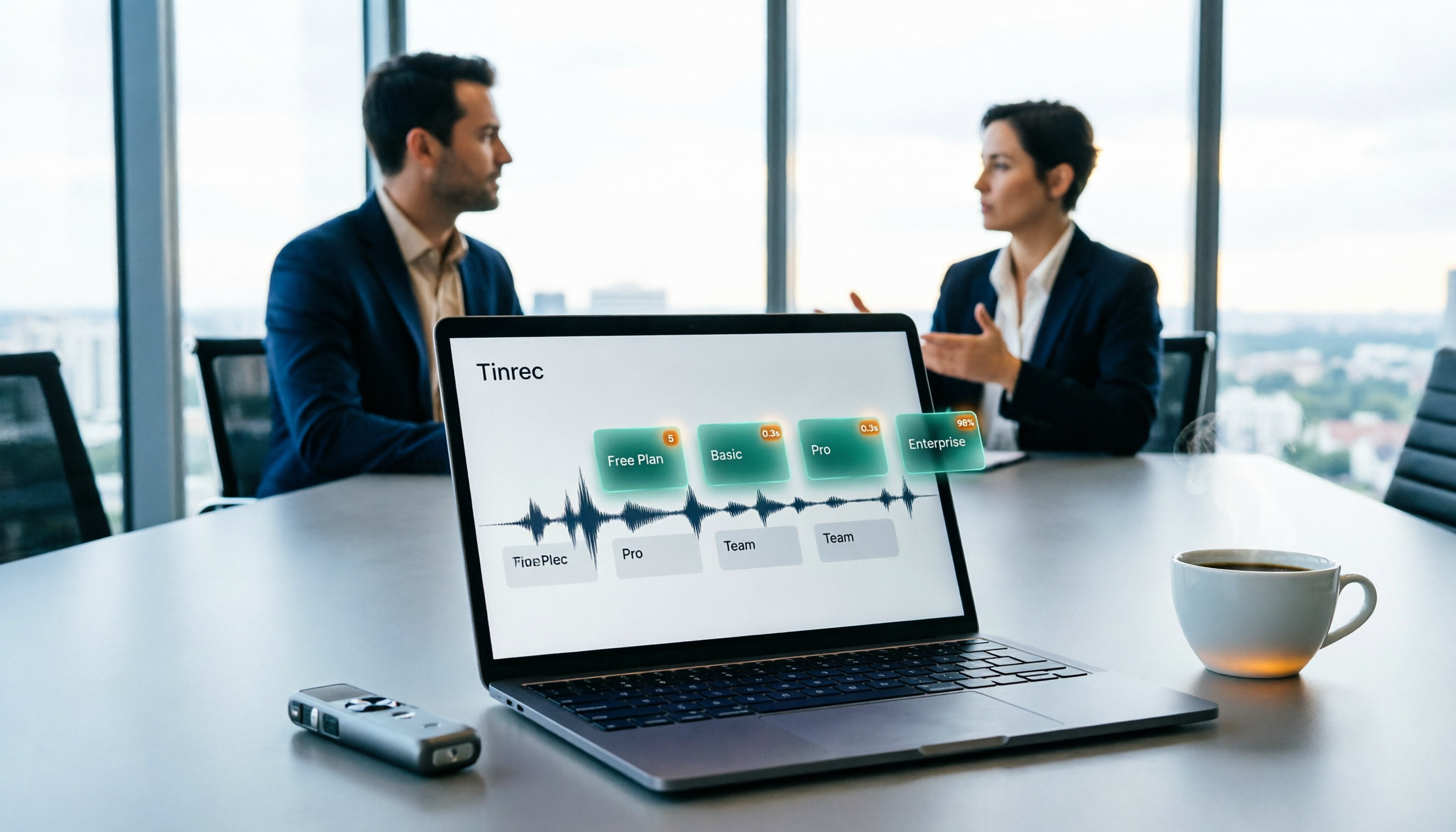
Free User Interview Transcription Options in 2026: 5 Tools Compared
The hardest part of user interviews isn't the interview itself—it's the 20 hours of audio afterward. This practical guide breaks down free transcription options and where the paid limits are, explains how far Tinrec's free plan can go, when it makes sense to upgrade, and 5 key factors to consider when choosing a tool.

2026年4款会议记录工具实测对比:谁能真正建立知识库?
会议记录不只是逐字稿,更要能沉淀成可搜索、可追问的知识库。本文实测对比4款工具,从选购标准、AI后处理、团队协作到避坑指南,帮你选出最适合的会议记录知识库方案。Tinrec(秒听录音)在无机器人录制、AI问答和团队资料沉淀方面的表现尤其突出。

4 Best Meeting Data Management Tools in 2026: Free vs. Team Plans Compared
Meeting data scattered across inboxes and personal computers makes retrieval a nightmare. This article starts from the decision point of 'where does the data ultimately reside' and compares four meeting data centralization tools—Tinrec, Notta, Otter.ai, and Fireflies.ai—on their capture methods, post-meeting organization capabilities, team spaces, and pricing limits. It also outlines 4 key considerations before choosing and 3 common pitfalls to help you select the right one for your team.

2026年3款用户访谈免费转写工具实测对比:别被免费额度骗了
访谈动辄一小时起步,免费转写工具的额度陷阱往往在第一场就出现。这篇先拆解 5 个常见误区与挑选判断点,再用 5 个维度实测比较 Tinrec(秒听录音)与雅婷逐字稿,从素材来源、会后整理、免费额度、回听保存到团队协作,帮你判断哪一种工具才真的省到时间。
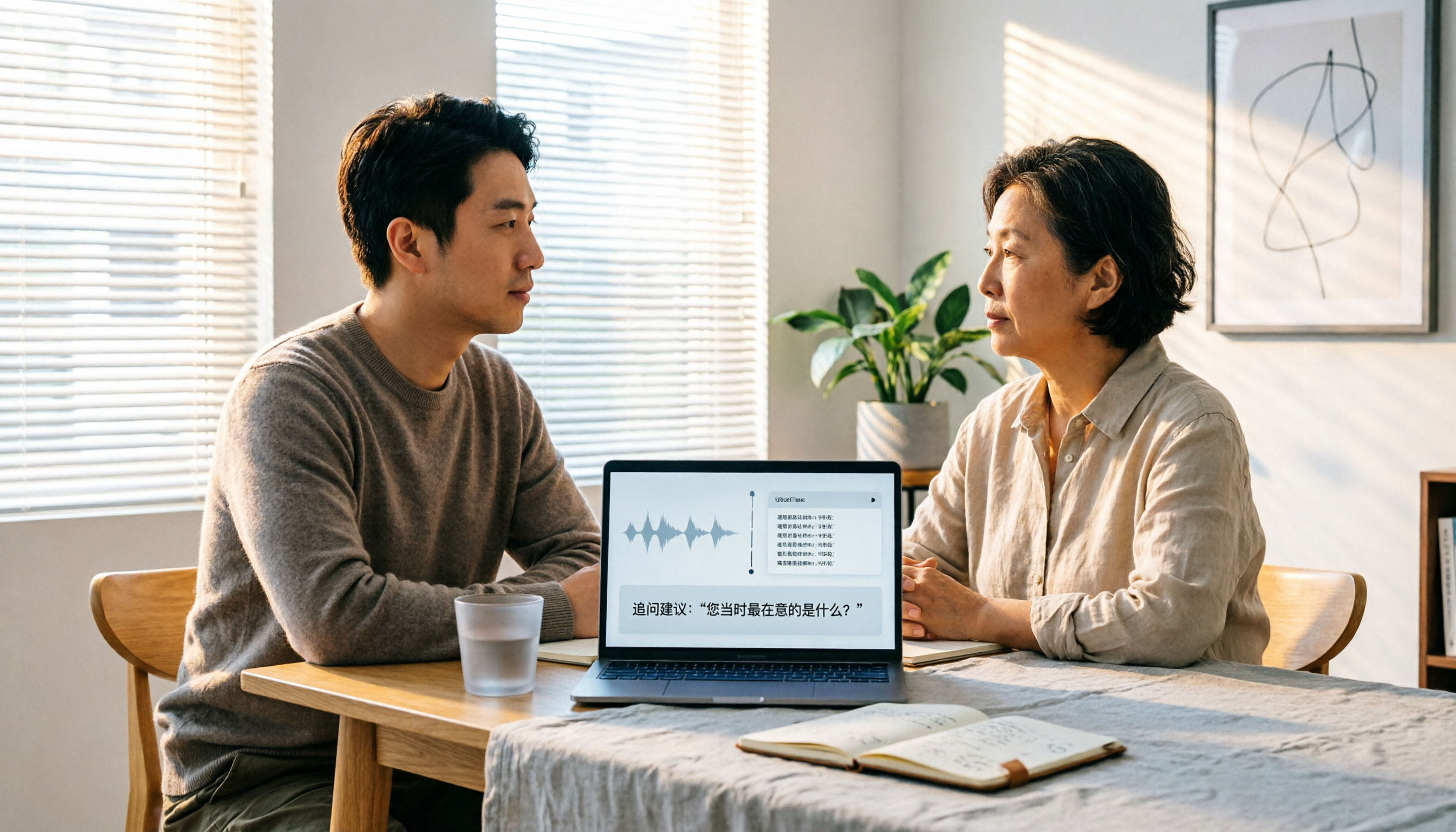
2026 User Interview AI Tools Comparison: After Transcription, Which One Helps You Ask the Right Follow-Up Questions?
In 2026, user interviews start with transcription, but that's just the beginning. This article compares 4 AI interview tools from a workflow perspective, covering live transcription, audio retention, AI follow-up capabilities, and team data ownership. It includes a ready-to-copy interview follow-up template and a pitfalls checklist to help you turn scattered interview recordings into searchable, queryable research data.

2026 User Interview Tools Compared: Which Report Template Saves the Most Time
Done with user interviews but transcripts and insights are scattered? Here's a ready-to-use user interview report template skeleton, plus a hands-on comparison of Tinrec, Notta, TurboScribe, and PLAUD Note on transcription, AI Q&A, and team collaboration—so you can pick the one that saves the most time.

2026 User Interview to Requirements Analysis: 2 AI Interview Tools Tested and Compared — Which One Uncovers Real Needs?
Finished the interview but can't turn it into requirements? This article compares Tinrec and Granola across 5 dimensions: importing existing audio files, Chinese transcription and terminology recognition, post-meeting requirements processing, output and workflow integration, and team data retention. Find out which tool is better for turning user interviews into actionable requirements analysis.

How to Turn User Interviews into a Requirements Document in 2026: A Complete 5-Step Guide
Struggling to turn interviews into a requirements document? The problem is often your recording tool. This article walks through 5 steps from user interview to requirements document, comparing Tinrec and Granola on recording retention, importing existing audio, Chinese transcription, post-meeting outputs, and team collaboration. It also covers pricing and FAQs to help you decide which tool to use.