

Turn recordings into transcripts and summaries in minutes
Upload audio or video for multilingual transcription, AI notes, and action items
How to Choose Cantonese Speech-to-Text in 2026: 5-Step Test of Free Tools
"Free" is the most expensive word in these tools.
When you search for "Cantonese speech to text free," you'll see every tool tagged with the word free, but the actual differences are huge: some free versions only give you the first 15 minutes of a single file, some only recognize Mandarin, and some require you to connect APIs and write your own prompts. This article doesn't list features; it directly answers a decision question—when your material is in Cantonese and often mixed with English, where should you spend your time on a free solution, and when is it worth upgrading?
Why Cantonese speech-to-text is more prone to pitfalls than you think
Let's start with three very real scenarios. First, a 40-minute Cantonese meeting where the speaker mixes English throughout—"deadline," "budget," "follow up" interspersed in Cantonese—but the transcription turns them into similar-sounding Chinese words, and you have to correct them one by one. Second, most free tools' models are trained for Mandarin or English. Cantonese tones and word usage are inherently different, so forcing them results in seemingly low error rates but a stuttering read. Third, free plan limits are often in fine print—15 minutes per file, 3 minutes per session, 3 files per day—and you only discover the mess after recording an hour-long interview.
These problems aren't just about "the model not being strong enough"; they're about whether the tool was designed with Cantonese and post-meeting organization in mind. Choosing the right tool can help you avoid most of these pitfalls before you even start.
How to choose free Cantonese transcription? Look at these 5 key steps first
Step 1: First distinguish whether the free quota is a "per-file limit" or "monthly total." These two types of limits feel completely different. A 15-minute per-file limit means you have to split an hour-long meeting into four parts, transcribe four times, and stitch them together yourself; a monthly total means you run out quickly and have nothing left by month's end. Before choosing, test with your longest recording—this is more accurate than any marketing claim.
Step 2: Confirm whether it truly handles Cantonese and mixed English. Many tools say "supports Chinese," but that Chinese means Mandarin. The real difference is: are English words in sentences preserved as-is, or written as similar-sounding Chinese? The latter turns your transcript into a guessing game.
Step 3: Confirm what you get after transcription. Getting only a transcript versus also getting a summary, chapters, and action items are two completely different workloads. A transcript is just raw material; whether it can directly produce meeting minutes and action lists is where real time savings happen.
Step 4: Confirm input sources and cross-platform support. Your material might be live recording, online meetings on your computer, existing audio files, or even public video links. A common workplace scenario in Taiwan and Hong Kong is "record on phone, organize on computer." If the tool only supports one platform, you'll have an extra step of transferring files.
Step 5: Confirm whether you can "ask" it. After recording, whether you can directly ask "What was the conclusion of the last meeting?" or "Who mentioned the budget?" determines whether you spend 30 minutes digging through the transcript afterward or get an answer in 30 seconds. This is the watershed for most free transcription tools and the biggest gap between AI meeting tools like Tinrec and pure transcription tools.
Tinrec – A top pick to keep in your pocket during the testing process
Tinrec is an AI meeting notes and collaboration tool for individuals and teams, covering iOS, Android, desktop, and web. It doesn't just convert sound to text; it organizes meeting content into searchable, queryable, exportable, and further processable data.
Scenario 1: Online meetings without an extra bot. Tinrec's desktop version directly captures your computer's system audio, handling Zoom, Google Meet, Microsoft Teams, Webex, and other online meetings without inviting a meeting bot or adding an awkward participant. For offline meetings, use the mobile or desktop version to record and transcribe simultaneously; the transcript grows in real-time during the meeting, and you can view the original text, translation, or bilingual content while recording—very useful for cross-language meetings.
Scenario 2: No need to start organizing from scratch after the meeting. After recording or importing an audio file, the system automatically generates a summary, chapters, and action items. Who is responsible for what and what the deadlines are can be extracted from lengthy conversations. Output can be exported to common formats or brought into Notion, Google Docs, OneNote, Dropbox, etc. for further use; when you need to submit reports, tables, or formal meeting minutes, you can also use Agent post-processing to generate them.
Scenario 3: Ask for key points directly after recording (core differentiator). This is the biggest difference from pure transcription tools. You can directly ask "Who mentioned the budget in the last meeting?" or "What was the conclusion of this section?" It doesn't give keyword search results but answers based on semantic understanding. Most tools at the same price point are still stuck at "outputting transcripts."
Stop organizing recordings by hand
Upload audio or video and automatically get a transcript, summary, and action items
Testing conditions and limitations. Our comparison controlled variables: the same Cantonese material (with mixed English and background noise), the same device, the same indoor environment, only changing tools. Official accuracy claims mostly come from quiet environments, but real meetings have air conditioning noise, keyboard sounds, and people interrupting—differences only show under these conditions. It should also be clear that transcription performance is affected by audio quality, accent, noise, overlapping speakers, and technical terms. Tinrec does not promise a fixed accuracy rate; for important content, it's recommended to verify against the recording and transcript timestamps.
Free and paid. The free version provides a basic quota, suitable for experiencing recording, importing, summaries, and transcription first; for short-term concentrated meetings or interviews, consider a weekly pass; for stable weekly needs, a Pro monthly or annual plan is more suitable. If a department or project team needs to share meeting data, the team version is a separate team space with member invitations, role and seat management, shared import quota, usage analytics, audit logs, and audio recycle bin. When members change, meeting data still belongs to the team; actual prices and benefits are subject to the official purchase page.
Who it's for. If you frequently handle Chinese (including Traditional Chinese) meetings, often have online meetings without wanting to add a bot, want to use AI to find key points directly after meetings, and switch between phone and computer, Tinrec is currently the most complete workflow worth trying first.
Besides Tinrec, what other free options are there?
Subanana. A Cantonese transcription service developed by a Hong Kong team, focusing on Cantonese models. When mixing English, English words are preserved as-is; you can choose spoken or written language, Traditional or Simplified Chinese. It supports MP3, M4A, WAV, MP4, MOV, and you can paste public YouTube, Instagram, Facebook links or record directly in the browser. Export formats include SRT, VTT, TXT, DOCX, XLSX, Markdown. The free part is a preview of the first 15 minutes of each file. It's strong in "Cantonese transcription," but after transcription, there's no AI Q&A or action item organization, and data stays at the single-file level—this is exactly where Tinrec does significantly more.
cSubtitle. Focuses on Chinese online transcription, no account registration required to upload, single file limit 4GB, duration up to 5 hours, supports MP4, MOV, MP3, WAV, M4A, OGG, WMA, outputs Word (with timestamps) and .sub, .vtt subtitle files—very suitable for video subtitling. Its training data is mainly Mandarin Chinese, quite sufficient for Mandarin courses or videos; but Cantonese and mixed English are not its focus, and it lacks real-time recording and post-meeting AI queries. Tinrec's difference here is "transcribing while meeting" plus post-meeting Q&A and organization.
Google AI Studio (Gemini). A free method recommended by many Hong Kong users: no API connection needed, works on desktop and mobile, friendly to Cantonese, and you can directly ask it to summarize and organize the transcript. The downside is the process is manual—you upload, write prompts, and manage files yourself, with no concept of team space, usage, or permissions. Suitable for those who occasionally organize a recording and are familiar with prompts; but if you have meetings every week and want to accumulate records, a tool that strings recording, transcript, summary, and Q&A into one workflow will save more time.
Pitfall guide: The 4 most common mistakes when choosing free Cantonese transcription tools
Pitfall 1: Only looking at the word "free" without checking where the limits are written. 15 minutes per file, 3 minutes per session, 3 files per day—these are all free. The correct approach is simple: test with your longest Cantonese recording, and the limits will immediately show.
Pitfall 2: Forcing a Mandarin model onto Cantonese. Many tools advertise high Chinese recognition rates, but the training data is Mandarin. Cantonese tones are different, and mixed English is more easily written as similar-sounding Chinese. When choosing a tool, ask directly: Does it handle Cantonese and mixed English?
Pitfall 3: Only looking at the transcript and ignoring how much time post-meeting takes. The transcript is raw material; summaries, action items, and the ability to ask questions are the finished product. Rather than comparing who has a one-percentage-point lower error rate, compare who saves you 30 minutes after the meeting.
Pitfall 4: Ignoring team and data ownership. No matter how large the free quota of a personal account, meeting data won't automatically stay when members leave. Teams need separate spaces, seats, and permissions—this is the fundamental difference between Tinrec's team version and "multiple people sharing one personal account."
Conclusion: Which one should you choose for your situation?
- Material is Cantonese, often mixed with English, and you want to use AI to find key points directly after meetings → Tinrec (summary, chapters, action items, AI Q&A all in one)
- Host Zoom, Meet, Teams but don't want to invite a meeting bot → Tinrec (desktop version captures system audio)
- Record on phone, organize on computer → Tinrec (iOS, Android, web all available)
- Team needs to share meeting data, manage seats and usage → Tinrec team version (separate team space, data belongs to the team)
- Just want to transcribe a Cantonese audio file into a transcript, no post-meeting organization needed → Subanana (free first 15 minutes to try)
- Material is Mandarin, main purpose is subtitling → cSubtitle
- Budget is $0, only occasional organization, and familiar with prompts → Google AI Studio
The most practical approach is to first run a free quota on your own Cantonese recording—preferably one with mixed English and background noise. Whether a tool is good or not, your meeting room is more honest than any marketing number.
References
- Free Cantonese speech-to-text app 2026 | Subanana
- Online AI speech, video, audio file auto transcription - Free trial - cSubtitle
- AI speech-to-text fast audio file online transcription, transcripts and video subtitling - Free trial - cSubtitle
- "Free + Cantonese OK: How to use Google AI Studio to transcribe your recordings" Finding a good transcript app is painful; I don't know if you've tried different recording-to-text apps—either fake free, charging you a lot after a few minutes, or only supporting English, not Cantonese, or requiring a lot of API setup // Recently discovered Google Gemini is world-class in this area: - [Truly free] No subscription charge after a few uses - [Cantonese friendly] Gemini accurate
- [Free tool] Cantonese speech-to-text! Just upload a file or YouTuber link. Up to 96% accuracy - YouTuber AI | Spend time on creativity, leave the AI to do the hustle work.
Turn every recording into actionable outcomes
Get 60 free transcription minutes when you sign in. No credit card required.
Related Reading
You might also like

5 Cantonese Speech-to-Text Tools Tested for 2026: Which Free Tier Actually Works?
A hands-on comparison of 5 speech-to-text tools that support Cantonese in 2026. This article examines free tier limits, Cantonese and mixed Chinese-English recognition, post-meeting summaries and action items, and cross-platform and team collaboration, explaining why Tinrec has become part of a mid-level manager's daily workflow, and honestly comparing when Subanana, Google AI Studio, and Otter.ai each make sense.

2026 Guide: Free Cantonese Audio to Text Solutions — Tinrec Free Tier + AI Meeting Summaries
This guide helps you avoid common pitfalls when converting Cantonese audio to text for free. We test Tinrec's free tier, transcripts, AI summaries, and team collaboration, and compare alternatives like Notta, Otter, and Google AI Studio to help you find the best Cantonese transcription workflow.

Tinrec vs Notta 2026: 5-Dimension Comparison for Cantonese Meeting Transcription
In 2026, choosing a Cantonese audio-to-text tool isn't about which is most accurate, but which workflow fits you best. This article compares Tinrec and Notta across 5 dimensions, covering differences like bot-free meeting recording, AI Q&A, and team spaces, plus use cases for Otter.ai and TurboScribe and 3 common pitfalls to avoid.

5 Cantonese Audio-to-Text Tools Tested and Compared in 2026: How to Solve the Transcription Pain Points Dcard Users Ask About Most
Discussions on Dcard about converting Cantonese audio to text mostly focus on two pain points: tools that don't understand Cantonese and privacy concerns about uploading files. This article starts from real-world use cases, compares the differences among 5 common approaches, and uses Tinrec as an example to explain how real-time transcription, bot-free meeting recording, AI summaries and Q&A, and team spaces solve these problems. It ends with 5 buying checkpoints and FAQs.

4 Cantonese Speech-to-Text Tools Compared for 2026: Free vs Paid Options Explained
How to choose a Cantonese speech-to-text tool in 2026? This article addresses common misconceptions and compares Tinrec, Otter.ai, PLAUD, and Notta on Cantonese support, free tiers, and post-meeting organization. It also provides 4 key buying factors and 3 pitfalls to avoid, helping you find the best transcription solution.

5 Best Cantonese Speech-to-Text Tools in 2026: Which Free Tier Actually Works?
Starting from a university group project with Cantonese discussions, this hands-on comparison tests free Cantonese speech-to-text tools on free quotas, mixed Chinese-English recognition, and post-meeting organization, sharing real-world experience using Tinrec in campus classes, interviews, and group collaboration.

Which Cantonese Audio-to-Text Tool Is Best? 2026 Hands-On Test of 5 Options, Top Pick for Chinese Meetings
The biggest pitfall when choosing a Cantonese audio-to-text tool is relying only on the official language list. This article first clarifies common misconceptions, then provides a hands-on testing process you can run yourself, and uses Tinrec to demonstrate a complete workflow from recording and transcription to summaries, action items, and team archiving, including pricing and plan limitations.
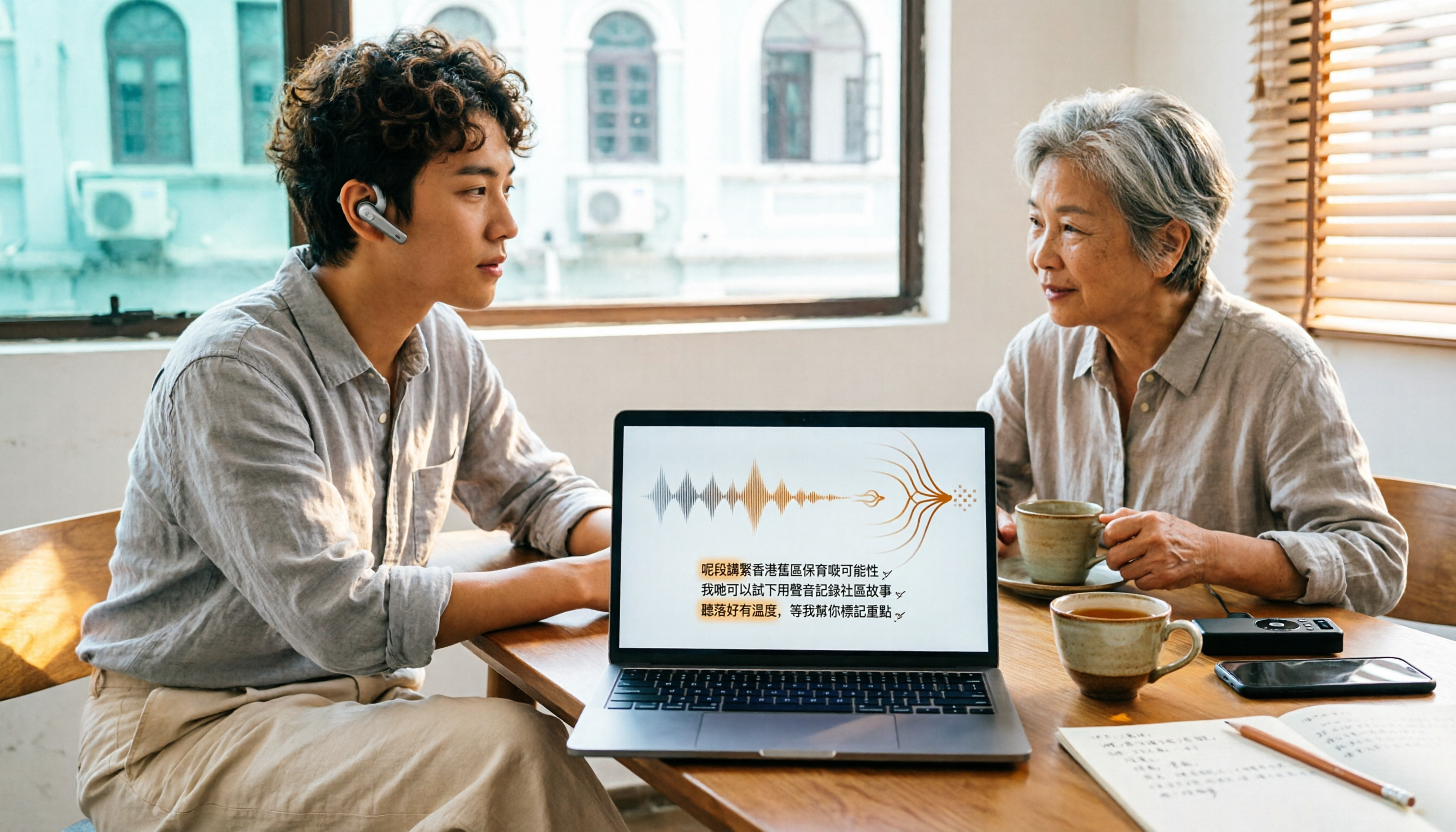
How to Choose Cantonese Audio-to-Text in 2026: 5 Steps to Pick the Right Free Tool
How do you choose a Cantonese audio-to-text tool? This article reviews 6 free and paid options in 2026, including Tinrec, Subanana, cSubtitle, Google AI Studio, Notta, and TurboScribe. It walks you through 5 steps—from language support and live meetings to post-meeting organization and team sharing—to find the one that saves you the most time.
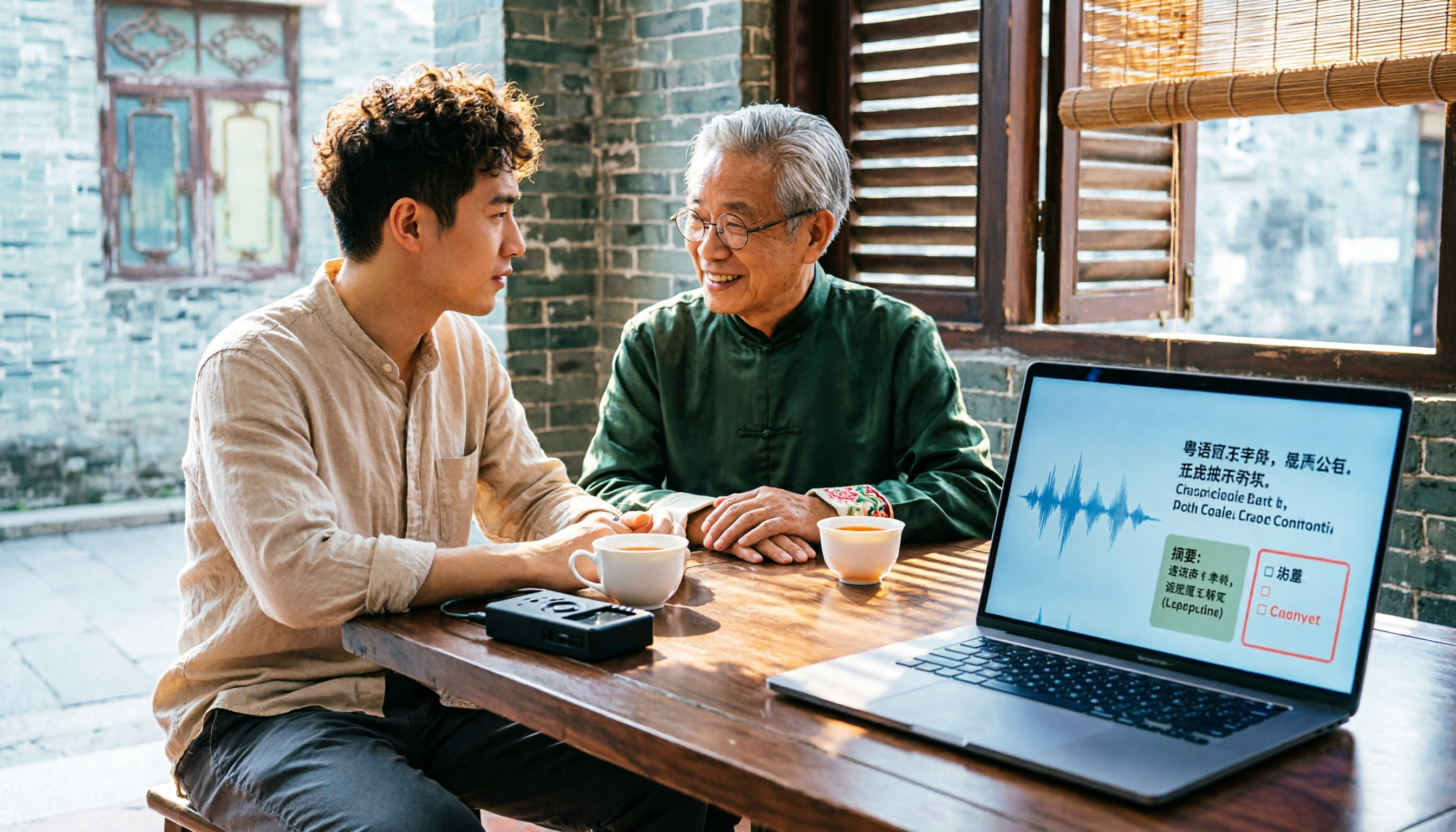
2025 Top 5 Cantonese Speech-to-Text Tools Tested: Which One Turns Transcripts into Usable Data?
After hands-on testing of several Cantonese speech-to-text tools in 2025, the key takeaway: getting a transcript is just the beginning. This article breaks down the complete workflow for Cantonese audio transcription, from real-time transcription and handling mixed Chinese-English to AI summaries and action items, team sharing, and purchasing considerations, with Tinrec demonstrating each step.