

Turn recordings into transcripts and summaries in minutes
Upload audio or video for multilingual transcription, AI notes, and action items
Best Meeting Productivity Tools in 2026: Tested 5, This One Excels at Chinese Meetings
It's Wednesday afternoon, and the two-hour project weekly meeting just ended. You close the video window, look down at your notes, and realize three action items are missing assignees, and you can't remember who proposed two of the decisions.
So you go back and forth in the group chat to confirm, and someone replies, "I think it was..."
It's not that you weren't paying attention. Taking notes while participating in a meeting is inherently difficult.
This article is based on my experience testing the same Chinese meeting recording with 5 different types of tools (meeting bot type, general transcription type, platform built-in type). It covers what they can do for you and what to look for when choosing. If you have more than 3 meetings a week, the following sections should resonate.
What Can Meeting Productivity Tools Do for You?
Scenario 1: Meeting notes ready 5 minutes after the meeting
Previously, a two-hour meeting required another hour of post-meeting organization. Take Tinrec for example: after recording ends, it automatically generates a transcript, summary, chapters, and action items, listing who is responsible for what and when it's due. You just need to proofread, not start from scratch.
Scenario 2: No more piecing together action items from memory
The easiest thing to miss in a meeting isn't the conclusion, but "who does what." Tinrec extracts action items from the discussion, which is especially helpful for project weekly meetings and client meetings with multiple assignees.
Scenario 3: No need to re-listen to cross-language meetings
When meeting with overseas colleagues or clients, Tinrec supports real-time translation, allowing you to view the original text, translation, or bilingual comparison. You don't have to wait until after the meeting to look things up; you can follow the discussion in real-time.
Scenario 4: Ask questions about meetings from three months ago directly
This is a less noticed use case. Tinrec's AI Q&A can answer questions about a single or multiple meetings, such as "What were the client's concerns about the quote last time?" It answers based on the content, so you don't have to search through the transcript yourself.
What Are the Core Capabilities of Meeting Productivity Tools?
Real-time speech-to-text
Transcribe while recording, not after. During the meeting, you can see the text in sync to confirm no key points are missed, which makes a big difference for those who need to take notes on the spot.
Bot-free online meeting recording
Some tools use a bot account to join the meeting, adding an extra participant to the screen. Tinrec desktop takes a different approach: it directly captures the computer's system audio, handling meeting audio played on the computer for Zoom, Google Meet, Microsoft Teams, and Webex, without adding an extra account to the meeting room.
Note that this still requires you to actively open Tinrec to start recording, not automatically join every meeting on your calendar.
AI summary and chapters
The summary isn't just condensing the transcript into a paragraph; it's structured organization: meeting topic, discussion highlights, conclusions, action items, listed separately. Long meetings are also divided into chapters, so you can jump to a specific section when reviewing.
Action item extraction
The most practical feature for project meetings. Tinrec organizes action items from the conversation, which you can directly bring into your subsequent workflow.
AI Q&A and post-processing
After transcription, you can ask Tinrec questions directly. It also offers Agent post-processing, which can generate reports, tables, and documents based on meeting content, suitable for situations where written materials are needed after the meeting.
Multi-format export
Meeting results are only useful if they can be brought into your existing workflow. Tinrec supports export to Notion, Google Docs, OneNote, Dropbox, and other tools, so you don't have to change your entire work habits for it.
Practical Application Scenarios
Project weekly meetings and decision meetings
For regular weekly meetings, the most troublesome thing is "what happened to the thing we said we'd change last time?" With Tinrec, you can store each meeting in the same space, and transcripts and action items are searchable, greatly reducing the cost of looking back. Decision basis also stays in place and won't disappear when people leave.
Client interviews and sales meetings
Clients usually speak quickly when stating requirements, and it's easy to miss details when listening and writing simultaneously. With Tinrec's real-time transcription, you can confirm the client's needs, concerns, and commitments from the summary after the meeting, which is much more reliable than filling in from memory.
Courses and online teaching
Stop organizing recordings by hand
Upload audio or video and automatically get a transcript, summary, and action items
Online courses have a large amount of content, and re-listening is costly. After recording the course and transcribing it, you can directly search for key sections and use AI Q&A to quickly review a topic.
Content creation and interview organization
When doing interviews or organizing materials, the most time-consuming part is often typing the transcript. Tinrec can directly import audio and video files for transcription, then export to writing tools for further processing, saving considerable time.
5 Things to Consider When Choosing a Meeting Productivity Tool
1. Recognition performance for Chinese and mixed Chinese-English
Don't just look at official copy; test with your own meeting recording. Chinese meetings often have mixed Chinese-English, technical terms, and overlapping speech, which are the real differentiators. Tinrec is designed for Chinese and multilingual meeting scenarios and offers a team hotword feature to add commonly used professional terms.
Actual performance is still affected by recording quality, ambient noise, accents, and overlapping speech. For important content, it's recommended to cross-check with transcript timestamps and recording playback.
2. How the meeting is recorded
This is often overlooked. Meeting bot tools add an extra participant to the meeting room, which may not be suitable for some occasions (e.g., external client meetings). Tinrec desktop uses system audio capture, without adding extra participants, making it more friendly for external meetings.
3. Can it help you organize after transcription
The transcript is just raw material. What really saves time is the summary, chapters, action items, and Q&A after transcription. Tinrec's positioning is to complete this entire process, not just stop at text output.
4. Export and workflow integration
Check if the tool can send results to your existing document and note-taking systems. Tinrec supports multi-format export to common third-party tools and also supports generating reports, tables, and other office documents.
5. Team collaboration and management capabilities
If your meeting data needs to be shared among multiple people, look at team spaces rather than personal accounts. Tinrec team version provides independent team spaces, member invitations, owner/admin/member roles, seat allocation, usage analytics, audit logs, and audio recycle bin.
It's important to distinguish between roles and seats: roles determine who can manage the team, seats determine whether members can record, upload, edit, and export. Members without seats can still view, play, and read team data.
FAQ
Q1: Is Tinrec free version enough?
You can start with the free version and experience recording, import, summary, and transcription with basic quota. If you only occasionally organize a recording, the free version is usually enough; if you have regular needs every week, Pro monthly or annual plan is more suitable; for short-term intensive meetings, classes, or interviews, consider a weekly plan.
Q2: Do I need to add a bot to the meeting?
No. Tinrec desktop directly captures the computer's system audio, without inviting an extra bot account to join the meeting. However, recording requires you to actively initiate it; it currently does not automatically join calendar meetings.
Q3: What's the difference between team and personal versions?
Personal version data is managed by the individual account. The team version is an independent collaboration space where meeting data belongs to the team, and adds member management, roles and seats, sharing benefits, usage trends, audit logs, and audio recycle bin. When a member leaves or is removed, their team resources can be transferred to other active members, so data doesn't leave with the individual.
The first eligible trial for the team version is 7 days, 1 free seat, 300 minutes of team shared import quota; paid plans are USD 29.80 per paid seat per month, annual payment USD 199 per paid seat per year (about USD 16.58 per month), each paid seat provides 2,000 minutes of team shared import quota per month. Under an active team plan and seats, real-time recording is currently not deducted by minutes. Actual prices and benefits are subject to the official purchase page.
Q4: How good is the recognition for Chinese meetings?
Tinrec covers Chinese, Traditional Chinese, and multilingual meeting scenarios, and also supports real-time translation and bilingual comparison. Actual performance is still affected by audio quality, noise, accents, and technical terms. It's recommended to test with your own meeting recording first to confirm it meets expectations before deciding on a plan.
Q5: What should I pay attention to when recording online meetings?
Regulations on meeting recording vary by region. It's recommended to inform participants and obtain consent before recording, especially for external meetings or discussions involving sensitive information.
Q6: Can transcripts be exported?
Yes. Tinrec supports multi-format export and can send results to Notion, Google Docs, OneNote, Dropbox, and other tools for continued use. It can also generate reports, tables, and meeting minutes.
Conclusion
What meeting productivity tools really solve isn't "recording," but the post-meeting organization time that is most easily overlooked.
When choosing, think about three things: whether the recording method will cause inconvenience, whether it helps you organize after transcription, and whether the data can ultimately stay in the team for reuse.
If you have more than 3 meetings a week, you can start with Tinrec free version. Run it with your next meeting and see how the AI-generated summary and action items compare to the notes you usually spend time on after the meeting.
References
- Top 5 Recommended Online Meeting Software to Greatly Improve Remote Work Meeting Efficiency! - EventX
- 2026 Most Recommended AI Meeting Minutes Tool, Time-Saving and Labor-Saving Essential for Meetings!
- How to Choose Online Meeting Software? 5 Software Features, Prices, and Applicable Scenarios at a Glance! - 棋崚ALEN
- 2026 Free Online Meeting Software and Video Software Recommendation List! Compare Teams, Zoom, Google Meet Differences | 出任務好文章專欄
- Best AI Meeting Minutes Tool Recommendations to Make Your Team Work More Efficient - 消費生活導航站
Turn every recording into actionable outcomes
Get 60 free transcription minutes when you sign in. No credit card required.
Related Reading
You might also like

2024 Meeting Productivity Tools Comparison: Tinrec vs Otter.ai — Which Is Better for Chinese-Speaking Teams?
Most people choose meeting productivity tools based only on transcription accuracy, but the real pitfalls are often that no one reads the transcripts, recordings are scattered across personal accounts, and a bot unexpectedly joins the meeting. This article compares Tinrec and Otter.ai across five dimensions—Chinese-language experience, recording methods, post-meeting outputs, team governance, and pricing—to help you decide which tool better fits your meeting scenarios.

7 Best Meeting Productivity Tools in 2026: How to Choose a PTT-Approved Audio-to-Text Solution
In 2026, PTT discussions about meeting productivity often focus on mobile app usability and microphone clarity, but overlook the real bottleneck: post-meeting organization. This article reviews 7 meeting productivity tools, covering their positioning, pricing, and ideal users—from bot-free online meeting recording, transcription, AI summaries, to team knowledge retention.

4 Meeting Productivity Tools Tested for 2026: Which One Actually Saves You Post-Meeting Time?
Spending hours organizing meeting notes after the meeting ends? This article starts with common pitfalls, breaks down 4 key factors for choosing a meeting productivity tool, and compares Tinrec, Otter.ai, Notta, and Granola in Chinese transcription, post-meeting organization, and team collaboration. It also includes a guide to avoid pitfalls and scenario-based selection advice.
How to Choose a Free Meeting Productivity Tool in 2026: 5 Steps from Recording to Meeting Minutes
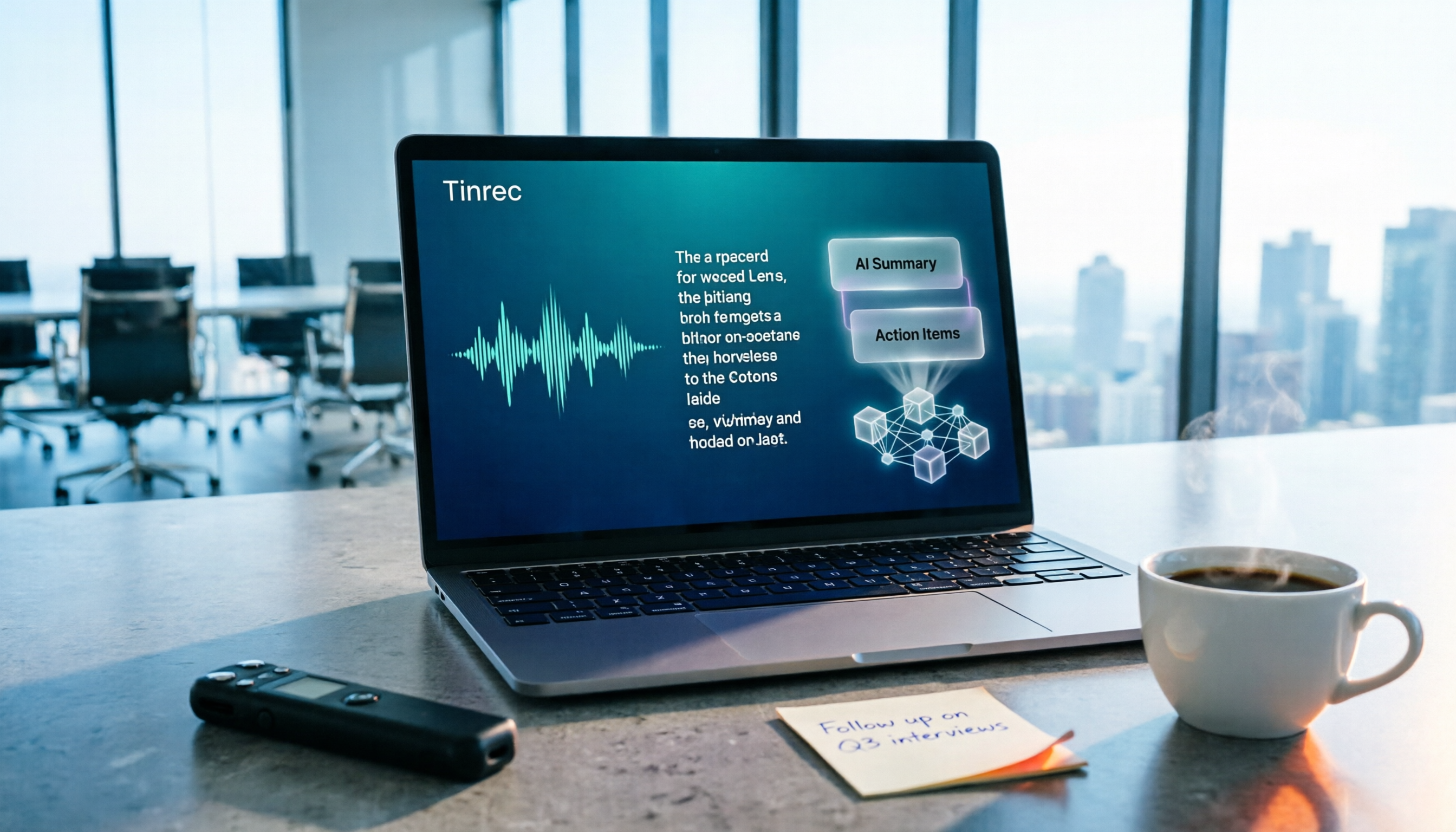
Starting from the pain points of post-meeting organization, this article compares built-in free meeting tools from platforms with Tinrec, and breaks down the complete workflow from recording, transcription, AI summarization, to team knowledge retention in 5 steps, helping readers determine if a free plan is sufficient and how to choose.

2026 Meeting Efficiency Tools Comparison: Which AI Meeting Notes Actually Save You Post-Meeting Time?
Meeting efficiency tools review 2026: This article uses Tinrec as the main test subject, breaking down what meeting efficiency tools can do for you, six core capabilities, four practical use cases, and 5 key points to consider when purchasing, covering Chinese recognition, bot-free online meeting recording, AI summaries and action items, team roles and seat management, plan quotas, and includes FAQs.

Best Meeting Efficiency Tools in 2026: We Tested 5, and the One With No Bot Recording Is the Easiest
A mid-level manager who attends over a dozen meetings a week tested meeting efficiency tools using one standard: can it save an hour of post-meeting busywork? This article starts from the buying decision focus, breaks down what meeting efficiency tools can do for you, five core capabilities, real-world use cases, and five key buying considerations. It also explains Tinrec's actual performance and limitations in bot-free recording, AI summary to-dos, and team space governance.

2026 Meeting Productivity Tools Comparison: Tinrec vs Otter.ai Five-Dimension Test, Which Should Chinese Teams Choose?
There are countless meeting productivity tools, but the first thing to clarify is whether your meetings are primarily in Chinese or English, and whether data needs to stay within the team. This article compares Tinrec and Otter.ai across five dimensions, breaking down Chinese transcription, meeting capture methods, post-meeting outputs, team spaces, and pricing plans, with an FAQ to help Chinese teams quickly decide which one to choose.

2026 Meeting Productivity Tools: Tinrec vs PLAUD Note — 5-Point Hands-On Comparison
Meeting's over, but the transcript, notes, and action items aren't done? This article compares two common approaches to meeting productivity tools—Tinrec and PLAUD Note—across 5 dimensions: software-based bot-free recording, file import, post-meeting AI Q&A, and team data governance versus hardware-based portable recording. It includes step-by-step instructions and selection advice to help you decide which one actually saves you from after-hours overtime.
2026 Meeting Efficiency Tools Comparison: Beyond Zoom and Teams, What Are Your Options?
How do you choose a meeting efficiency tool? This article starts with common misconceptions, then compares Tinrec, Otter.ai, Notta, and Granola in real tests, explaining differences in bot-free online meeting recording, AI summaries and action items, AI Q&A, and team knowledge retention. It also covers 4 key buying factors and 3 common pitfalls to help you choose the right tool for your meeting scenarios.