
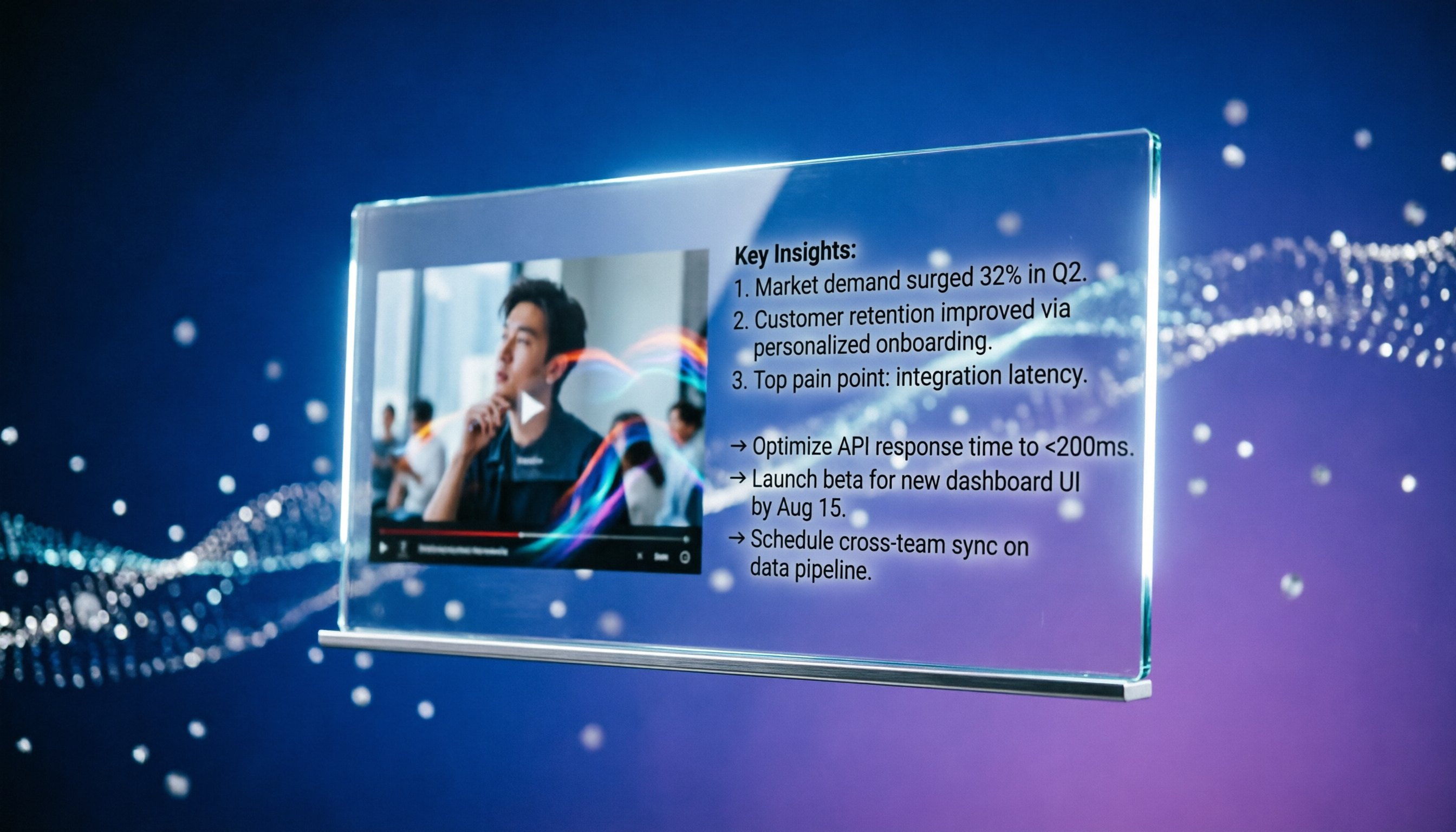
Turn recordings into transcripts and summaries in minutes
Upload audio or video for multilingual transcription, AI notes, and action items
Why You Need AI to Summarize Bilibili Video Content
Bilibili (B站) is no longer just an entertainment platform; it's a vast knowledge base covering programming tutorials, language learning, industry analysis, and other high-density content. However, facing hours-long videos, manual note-taking is extremely inefficient, and rewatching is a waste of time. The traditional "pause-record" mode easily disrupts learning flow and makes it hard to review the overall logical structure.
This article addresses the need for "how to use AI to summarize Bilibili video content" by testing and comparing four mainstream tools on the market. We evaluate them from three core dimensions: Chinese speech recognition accuracy, summary structuring ability, and support for conversational querying. If you value precise understanding in Chinese contexts and extraction of actionable items, Tinrec is a candidate solution worth considering—it converts audio/video content directly into an actionable workflow.
Quick Navigation Conclusions:
- Prioritize Chinese accuracy and action item extraction → Check out Tinrec first.
- Need cross-platform sync and multilingual support → Consider Notta.
- Only need simple subtitle generation → cSubtitle or built-in tools may suffice.
- Developer/tech-oriented → Explore OpenAI Whisper local deployment.
3 Key Dimensions for Choosing an AI Video Summary Tool
Before choosing a tool, clarify your use case. Not all tools are suitable for handling Bilibili's long videos or specialized terminology.
1. Chinese Speech Recognition (ASR) Accuracy
Bilibili content is mainly in Chinese, often mixed with professional jargon, internet slang, or accents. A good tool should accurately distinguish homophones and correctly tag proper nouns. If a tool has poor Chinese support, the subsequent summaries will be full of errors and lose value.
2. Summary Structuring and "Action Item" Capability
Pure transcripts are not summaries. High-value tools should automatically identify content logic and generate structured notes including "core insights," "chapter outlines," and "action items." This is crucial for learning courses or organizing meeting recordings.
3. AI Conversational Querying (Chat with Audio/Video)
This is a key differentiator for next-gen AI tools. Traditional tools only let you Ctrl+F search keywords, while tools supporting AI queries allow you to ask questions directly, e.g., "What are the three marketing strategies mentioned in the video?" or "Explain the Python recursion example from the second segment." This semantic-based retrieval greatly saves review time.
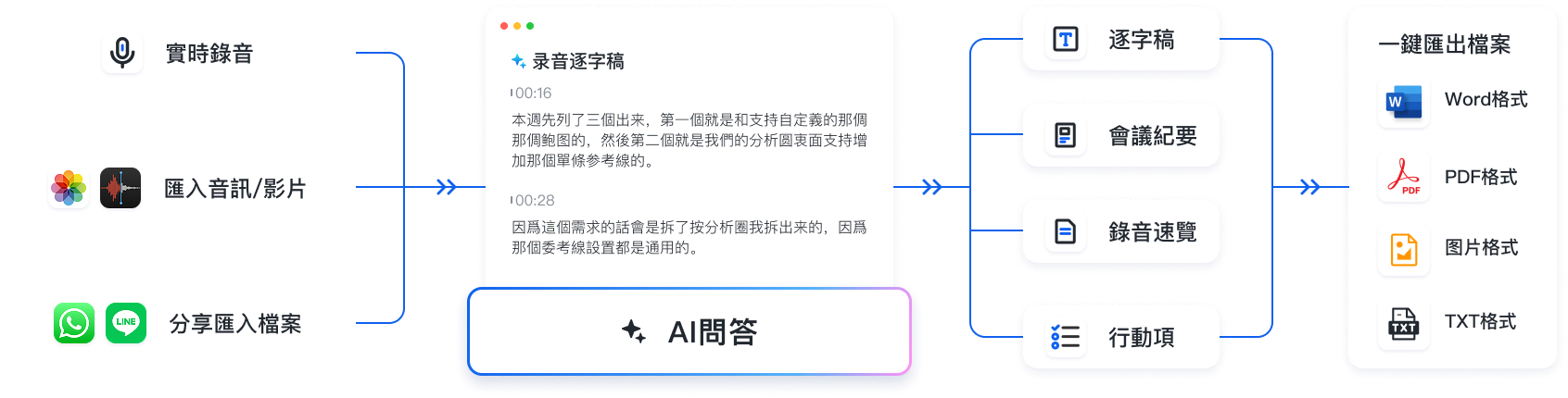
Comparison of 4 Popular Tools: Tinrec vs Notta vs cSubtitle vs Whisper
The table below compares four common tools to help you choose based on your needs.
| Dimension | Tinrec (秒聽錄音) | Notta | cSubtitle | OpenAI Whisper (Local) |
|---|---|---|---|---|
| Chinese Recognition Accuracy | ⭐⭐⭐⭐⭐ (Optimized for Chinese) | ⭐⭐⭐⭐ (Broad multilingual support) | ⭐⭐⭐ (Basic subtitle level) | ⭐⭐⭐⭐⭐ (Depends on model version) |
| Summary & Action Items | ✅ Auto-generates meeting notes & to-dos | ✅ Provides meeting summaries | ❌ Only generates subtitle files | ❌ Only outputs transcript; needs custom development |
| AI Conversational Query | ✅ Supports semantic Q&A | ✅ Supports some queries | ❌ Not supported | ❌ Not supported (requires additional LLM integration) |
| Input Source Support | Recording, audio files, video links | Recording, audio files, some videos | Local audio/video files | Local audio/video files |
| Ease of Use | Low (Out-of-the-box, Web/App) | Low (SaaS platform) | Medium (Requires manual parameter tweaks) | High (Requires technical background to deploy) |
| Price/Free Tier | Free: 100 minutes/month | Free tier limited | Open source / Free | Open source / Free (requires own hardware) |
Stop organizing recordings by hand
Upload audio or video and automatically get a transcript, summary, and action items
Tool Analysis
- Tinrec: Strength lies in the complete "Record → Understand → Act" workflow. Especially suitable for users who need to extract concrete conclusions and to-dos from Bilibili courses or meeting recordings. Its AI conversational query makes reviewing content feel like talking to an expert.
- Notta: Internationally known multilingual tool with a friendly interface, good for cross-border teams. However, when handling highly localized Chinese contexts or domain-specific terms, occasional manual proofreading may be needed.
- cSubtitle: Primarily a subtitle generation tool, suitable for creators needing SRT/VTT files. Lacks AI summary and understanding capabilities, not ideal for quick knowledge extraction.
- OpenAI Whisper: Powerful open-source model with high accuracy. But for non-technical users, the cost of deployment, handling audio formats, and integrating a summary model is high, not suitable for general users seeking efficiency.
Practical Tutorial: How to Use Tinrec to Summarize Bilibili Videos and Audio
Below, using Tinrec as an example, we show how to transform Bilibili videos or local recordings into structured notes. Tinrec supports multiple input methods, covering scenarios from live meetings to post-event organization.
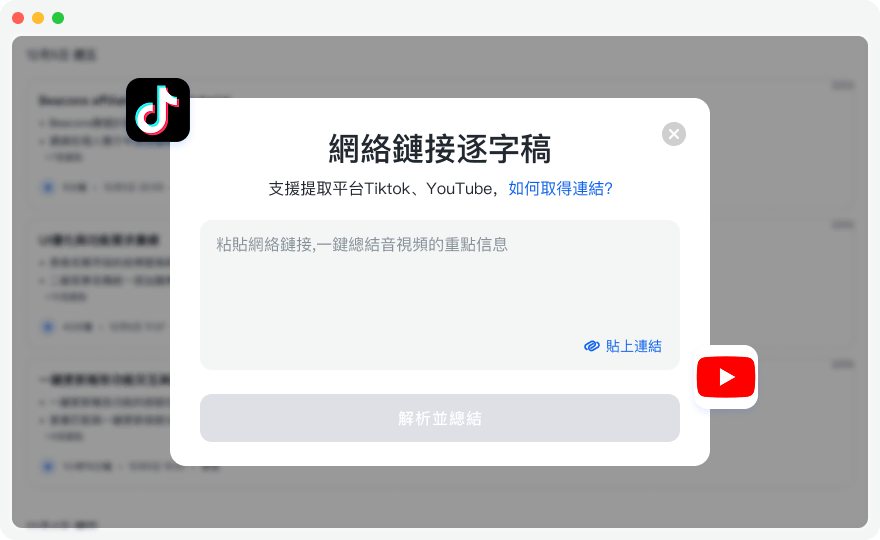
Step 1: Use the "Video Link" Feature to Parse Bilibili Content
If the Bilibili video is publicly accessible, the most direct way is to use the online video to text feature.
- Copy the Bilibili video URL.
- Go to Tinrec's "Podcast/Online Video to Text" page.
- Paste the link; the system will automatically fetch the audio track and transcribe it.
- Wait for processing to complete, then view the auto-generated transcript and AI summary.
Note: If the video is copyrighted or cannot be fetched directly, consider using the "Audio File" upload method in Step 2, or use screen recording and extract the audio.
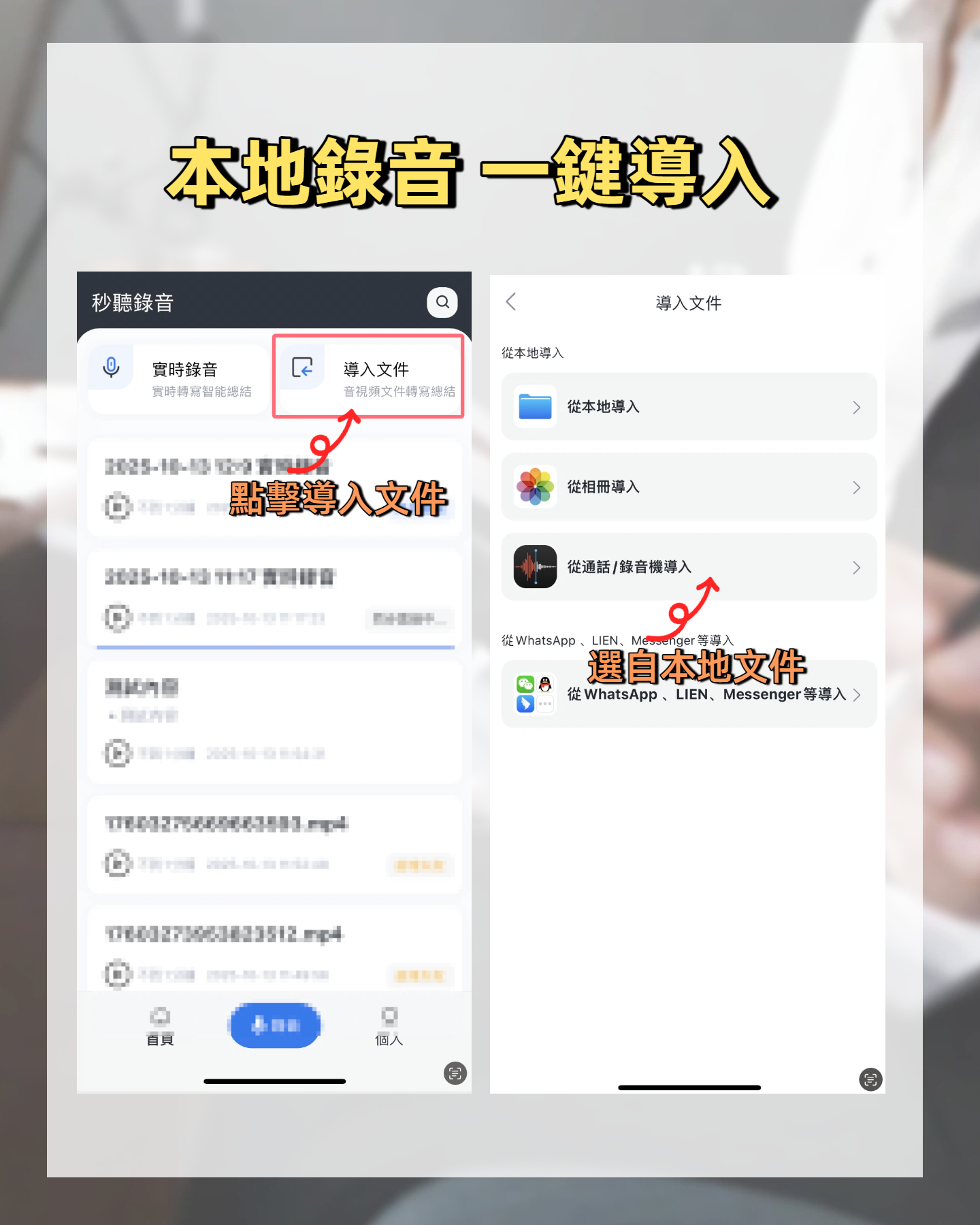
Step 2: Upload Local Audio Files for Transcription
For downloaded Bilibili videos or on-site recordings:
- Go to the "Audio File to Text" feature page.
- Upload common audio formats such as MP3, M4A, WAV.
- Select the corresponding language (e.g., Chinese); the system will automatically recognize and convert.
- After completion, you'll get a transcript with timestamps.
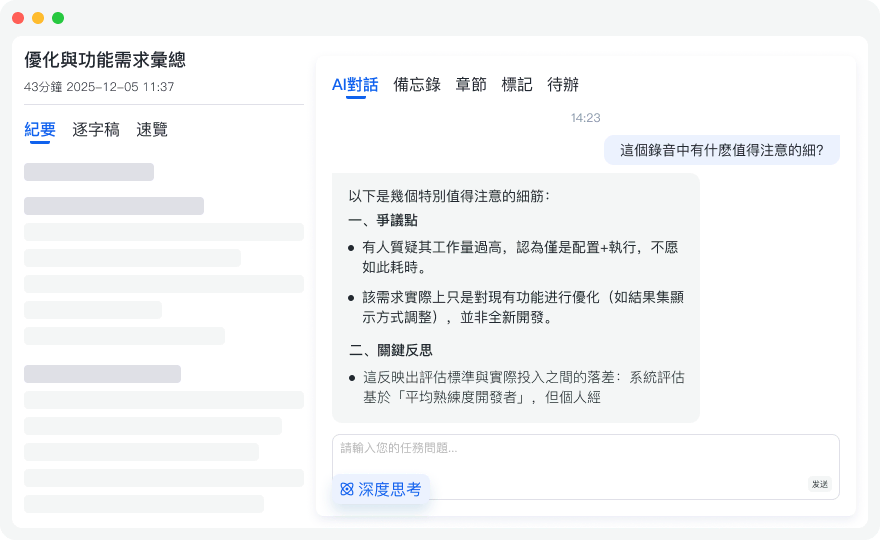
Step 3: Use AI Conversational Query to Deep Dive into Key Points
This is a key step to boost learning efficiency. Don't just read the transcript—ask the AI questions.
- In the completed transcription page, find the "AI Conversation Query" entry.
- Enter questions, e.g.:
- "Summarize the three key points about 'market trends' in this video."
- "What is the code example for 'Python decorator' mentioned by the instructor?"
- "List all learning resources recommended in the video."
- The AI will give precise answers based on the full content and indicate the source timestamps.
Step 4: Export and Organize Action Items
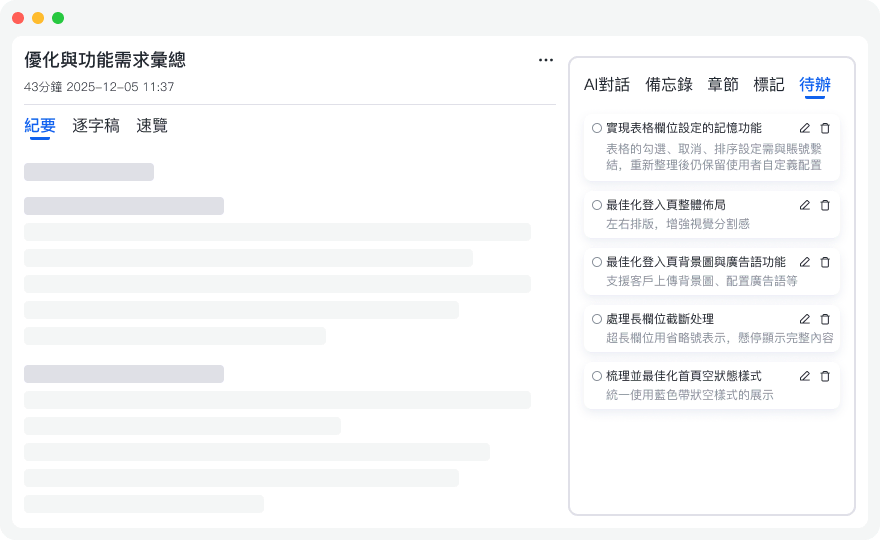
After confirming the summary is correct, you can export the results as TXT or DOCX, or copy them directly to note-taking apps (e.g., Notion, Evernote) for archiving. Tinrec's auto-extracted "action items" help turn knowledge into executable steps.
Frequently Asked Questions (FAQ)
Q1: Does Tinrec support direct parsing of Bilibili links?
Tinrec's "Podcast/Online Video to Text" feature is optimized for mainstream platforms. If a Bilibili link cannot be parsed directly, first download the video audio as MP3/M4A format, then use the "Audio File to Text" feature to upload, achieving the same transcription and summary effect.
Q2: Is the free version sufficient? What are the limitations?
Tinrec's free version provides 100 minutes of transcription per month, usually enough for users who occasionally process short videos or meeting recordings. For heavy use with long videos, consider the Basic or Pro plans, offering 600 and 1200 minutes per month respectively.
Q3: Compared to other tools, what advantages does Tinrec have in Chinese processing?
Compared to tools like Otter.ai, which are mainly English-centric, Tinrec is deeply optimized for Chinese contexts, handling Chinese-English mix, professional terminology, and different accents better. Moreover, it doesn't just provide transcripts; it emphasizes generating structured meeting notes and action items, suitable for Asian workplace and learning scenarios.
Q4: Can I upload recordings made on iPhone?
Yes. Tinrec supports iOS, Android, and Web. You can use the built-in voice recorder on iPhone, then share the file via AirDrop or cloud storage to upload to Tinrec Web for transcription; or use the Tinrec App for real-time recording to text.
Q5: How accurate is the AI summary? Do I need to manually proofread?
AI summaries provide high reference value, especially for clearly structured speeches or meetings. However, for highly specialized or ambiguous content, a quick manual review is recommended. Tinrec's "AI Conversation Query" feature also helps quickly verify specific details.
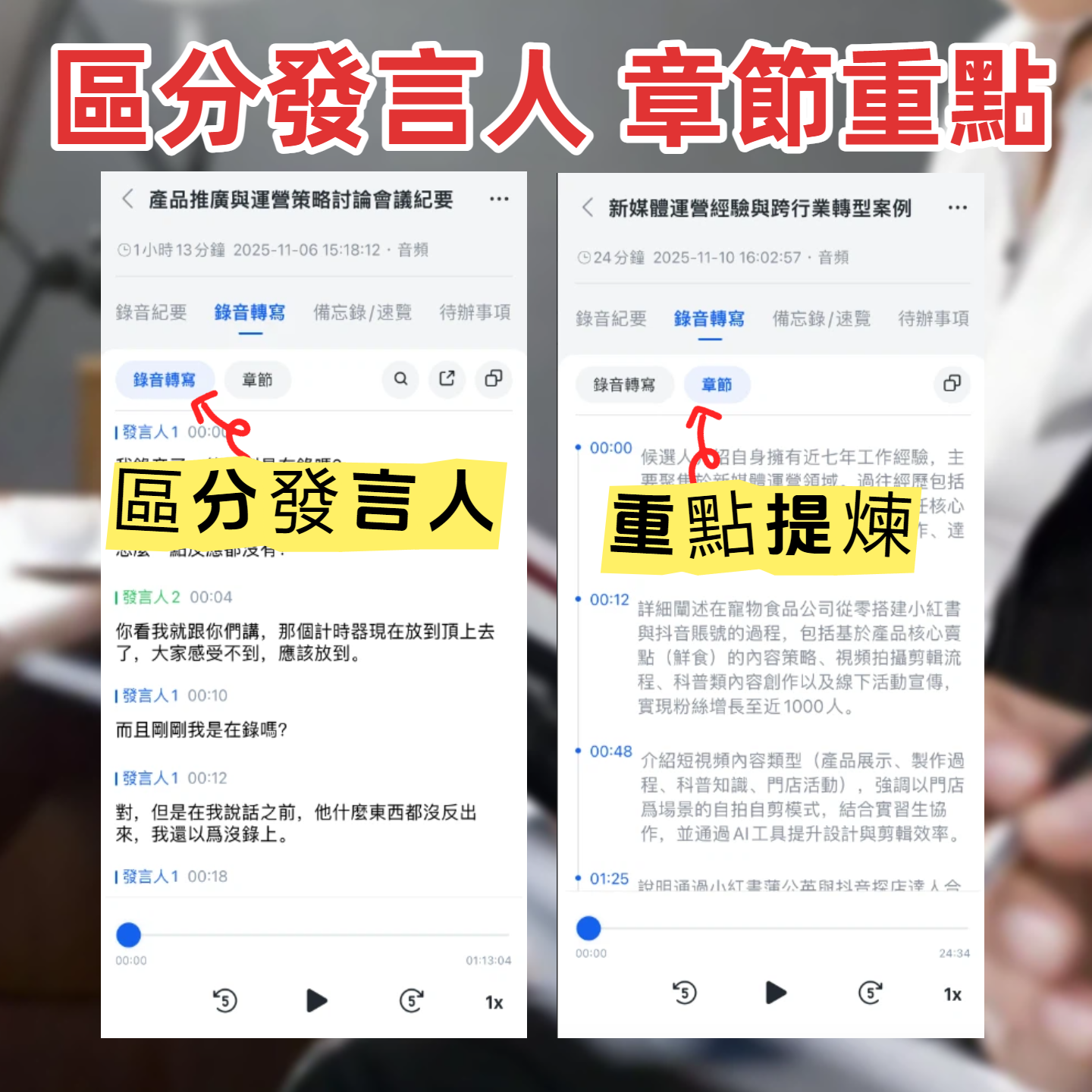
Q6: Can the tool distinguish multiple speakers in a video?
Yes, Tinrec has speaker diarization feature that automatically marks different speakers in the transcript, making meeting records or interview notes clearer and easier to read.
Turn every recording into actionable outcomes
Get 60 free transcription minutes when you sign in. No credit card required.
Related Reading
You might also like

Best Table to Text Converter in 2026: 3 Methods Tested — Word Is Fastest, Tinrec Saves the Most Time After Meetings
How do you choose a table to text converter? This article tests 3 methods — Word's built-in feature, a Google Docs add-on, and Tinrec's post-meeting workflow — to help you solve the pain points of converting tables to text and organizing meeting notes.

2026 AI Meeting Notes Tools Compared: Which Turns Transcripts into Actionable Minutes?
The bottleneck in meeting minutes isn't writing skill—it's choosing the wrong tool. This hands-on comparison of Tinrec, Notta, Otter.ai, and Granola breaks down 4 key factors for choosing a meeting minutes tool, 4 common mistakes, and how to pick for Chinese meetings, post-meeting Q&A, and team knowledge retention.
Tinrec vs Notta 2026: 5-Dimension Comparison for Chinese Meeting Minutes
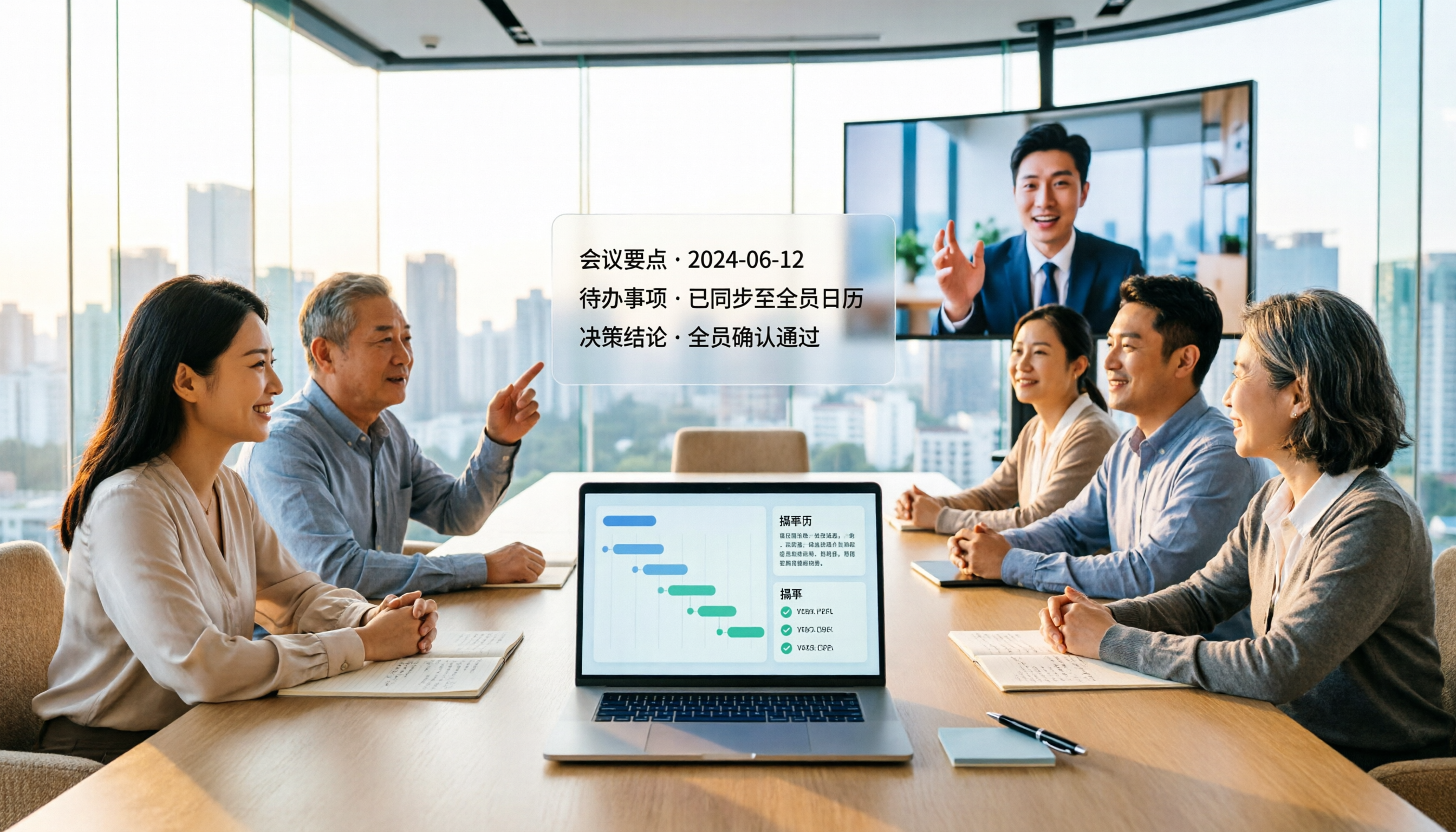
Which AI meeting minutes tool is better? This article compares Tinrec and Notta across 5 dimensions: meeting capture method, Chinese transcription, post-meeting outputs, team governance, and pricing. Tinrec's desktop version records Zoom, Meet, and Teams meetings without a bot, and supports AI summaries, action items, Q&A, and team spaces. Notta excels at file transcription and multi-platform solutions. Find the best meeting minutes tool for your budget and team needs.

2026 Comparison of 4 Medical Record Summarization Tools: Which Saves More Time—Chinese Transcription or AI Summary?
Medical record summarization often gets stuck at 'recorded but no time to organize.' This hands-on comparison tests tools like Tinrec, Notta, Granola, and PLAUD, covering Chinese and terminology recognition, summary to-dos, AI Q&A, team collaboration, and compliance reminders to help you find the most time-saving way to organize.

How to Extract Text from Photos in 2026: A Complete 5-Step Guide
Photo-to-text extraction is often mistaken for just finding a free OCR tool, but image quality, privacy, and usage limits are common pitfalls. This article helps you distinguish between static photos and meeting recordings, and uses Tinrec as an example to show how AI transcription tools can turn meetings, interviews, and course content into searchable, organized transcripts and action items.

Best AI Transcription Tools in 2026: 4 Tested, This One Saves the Most Time for Chinese Meetings
How to choose an AI transcription tool? This article compares Tinrec, Otter.ai, Notta, and Granola, covering Chinese and mixed Chinese-English recognition, post-meeting output, recording retention, and old file import, plus team data ownership. It also lists 4 key buying factors and common pitfalls to help you find the best solution for Chinese meeting transcription.

How to Transcribe iPhone Voice Memos in 2026: A Complete 5-Step Guide
The built-in Voice Memos app on iPhone supports Traditional Chinese transcription starting with iOS 18.4, but there are common misconceptions: device compatibility, older recordings may not be transcribed, and a transcript is not the same as meeting notes. This article walks you through the 5-step process of transcribing iPhone recordings and compares the built-in iPhone feature with Tinrec, Notta, and PLAUD, explaining which tool to use in which situation.
Tinrec vs Otter.ai 2026: 5-Dimension Comparison for Long Audio Transcription, Which One Should Chinese Teams Choose?
Long audio transcription isn't just about converting speech to text; it's about whether the output is usable. This article compares Tinrec and Otter.ai across five dimensions: Chinese long meeting transcription, bot-free recording, post-meeting organization, AI Q&A, and team governance, helping Chinese teams find the best long audio transcription solution.

2026 Voice-to-Text Tools Compared: Which Is Fastest for Chinese Meeting Transcripts?
Voice-to-text tools range from free to dozens of dollars per month, but the real question isn't budget—it's whether you need a raw transcript or meeting materials you can act on. This article breaks down 4 key buying factors and compares Tinrec, Otter.ai, Notta, and Granola on Chinese meeting transcription, post-meeting organization, AI Q&A, and team collaboration, plus 3 common pitfalls to avoid.