
Turn recordings into transcripts and summaries in minutes
Upload audio or video for multilingual transcription, AI notes, and action items
For many people or professionals accustomed to communicating in Taiwanese, turning "spoken Taiwanese" into "text" has always been a major challenge. In the past, most speech-to-text tools on the market only supported Mandarin or English, and when encountering Taiwanese, they often "couldn't understand a thing."
Although the Ministry of Education recently launched an official input method app, is a simple input method sufficient for "long meeting transcripts" or "interview organization"? This article will quickly evaluate two different approaches:
- Short sentence input (chatting/posting): Best suited for the official "Taiwanese Hokkien Input Method" from the Ministry of Education.
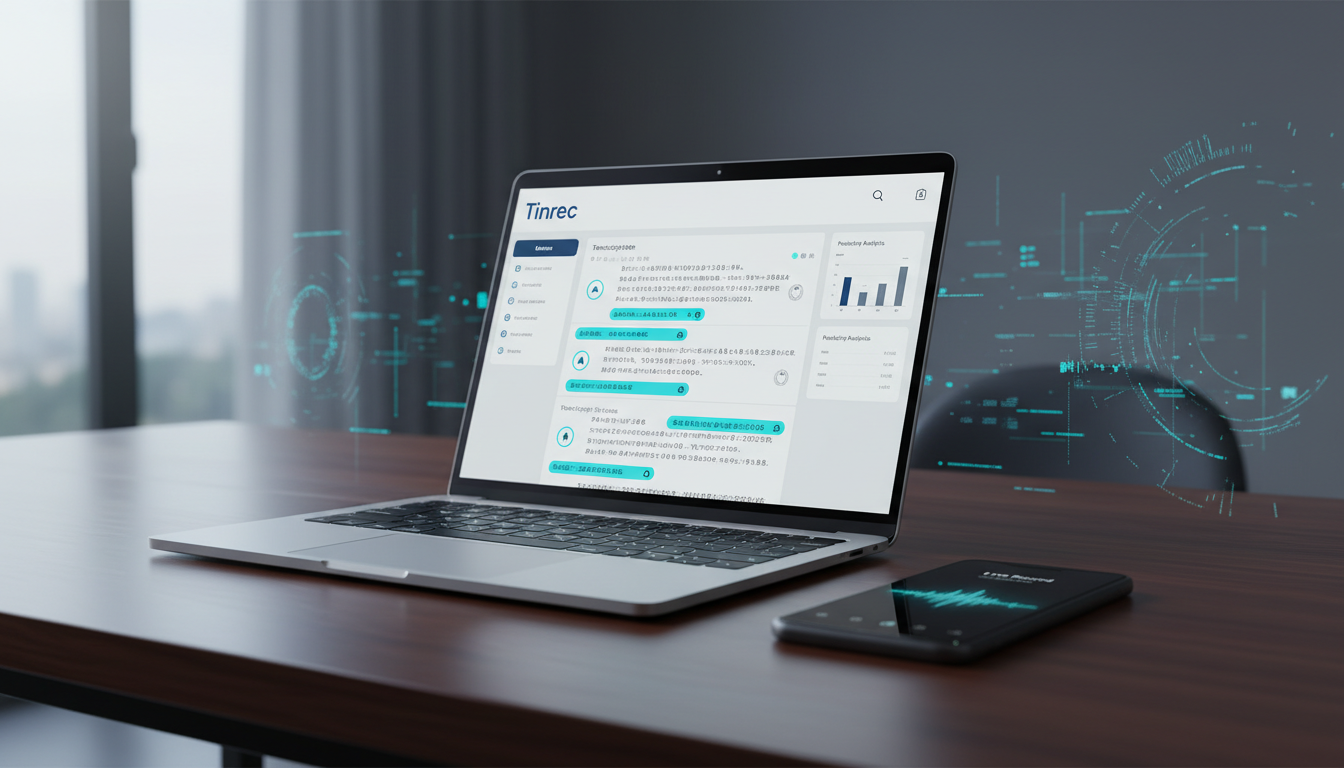
- Long recording transcription (meetings/interviews): Best suited for "Tinrec," which features AI summarization.
Next, we'll dive into the differences between these two tools and provide hands-on tutorials.
1. Current State and Pain Points of Taiwanese Transcription
In the digital age, users of Taiwanese (Taiwanese Hokkien) often face the following three technical gaps, leading to inefficient communication and recording:
- Insufficient input method support: In the past, typing Taiwanese Chinese characters or Romanization on phones was very difficult, causing many elderly or Taiwanese-thinking people to switch to Mandarin on Line or social media, losing the flavor of their native language.
- Time-consuming long recording transcription: For those conducting field research, elderly interviews, or local meetings, after recording Taiwanese audio files, they often need to spend 3–5 times the duration on manual transcription, lacking automated verbatim tools.
- Lack of semantic understanding and summarization: Even if a transcript is generated, without AI assistance to extract key points, the subsequent organization of a one-hour audio recording remains heavy.
2. Tool Comparison: Ministry of Education App vs. Tinrec
To address the above pain points, there are currently two types of solutions in the market. One is an official tool focused on "real-time input," and the other is an AI recording tool focused on "post-production productivity." Below is a detailed comparison of the Ministry of Education's "Taiwanese Hokkien Input Method" and Tinrec:
2.1 Tool Positioning Differences
Ministry of Education "Taiwanese Hokkien Input Method": This is a "keyboard input method" tool developed by the Ministry of Education. Its core purpose is to allow people to easily "type" or "speak" Taiwanese Chinese characters on their phones. It addresses the need for "sending messages." According to the Ministry of Education, the app supports phonetic and voice input, and for rare characters that cannot be displayed, it offers a "character-to-image" function to ensure the recipient can see the character.
Tinrec (Miaoting Recording): This is a multi-platform AI recording assistant focused on "content recording and understanding." It not only supports recognition of Taiwanese and many other languages but also emphasizes "AI processing" after recording. It can convert long audio files into text and automatically generate summaries and action items. It addresses the need for "data organization and review."
2.2 Specification Comparison Table

| Comparison Dimension | Ministry of Education "Taiwanese Hokkien Input Method" | Tinrec (Miaoting Recording) |
|---|---|---|
| Core Purpose | Typing on phone, sending messages, posting | Meeting minutes, interview organization, lecture notes |
| Taiwanese Voice Recognition | Supported (short sentence voice input) | Supported (long recording transcription) |
| Use Cases | Line chat, Facebook posts | Meetings, lectures, podcast transcription |
| AI Summarization | None | Supported (meeting minutes, action items) |
| Output Formats | Text strings, images (for rare characters) | Word, PDF, TXT, audio files |
| Cross-Platform Support | iOS, Android (mobile-focused) | iOS, Android, Web (multi-platform sync) |
| Pricing | Free | Free tier (100 minutes/month) / Paid plans |
Stop organizing recordings by hand
Upload audio or video and automatically get a transcript, summary, and action items
3. In-Depth Review of Tinrec: A Complete Workflow from Recording to Action
If you are a student, journalist, or administrative worker who needs to process large amounts of audio information, Tinrec offers a more complete "productivity workflow" for Taiwanese voice-to-text applications.
1. Multi-Language Recognition and Long Transcription
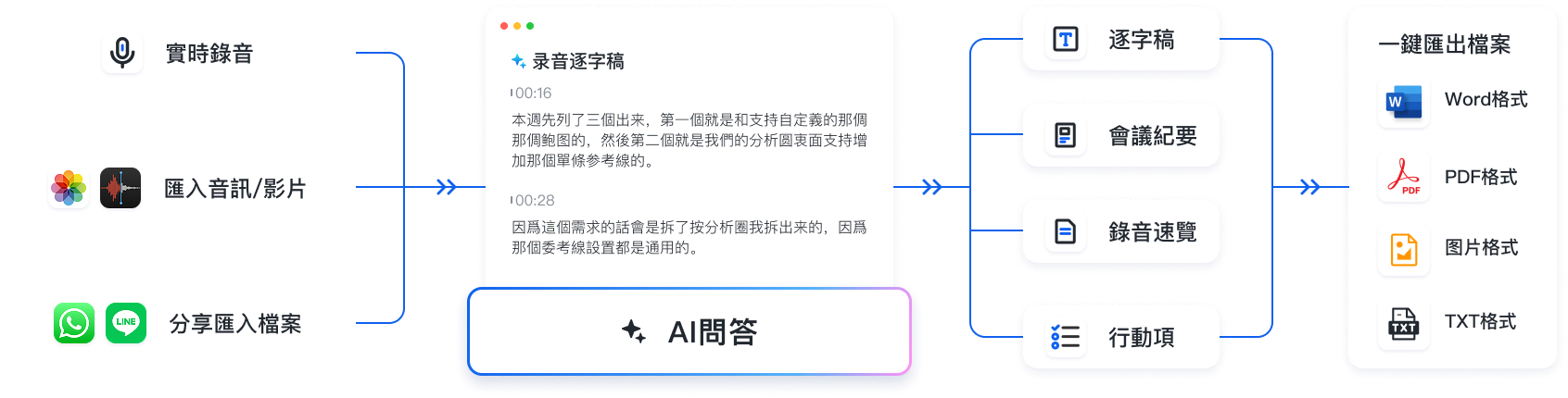
Unlike an input method that handles only one sentence at a time, Tinrec is designed for long recordings. Whether it's a 1-hour interview or a 2-hour meeting, it can record in the background and perform cloud transcription. In addition to Taiwanese, it supports 10 languages including Chinese, English, Japanese, Korean, and Cantonese, making it suitable for multilingual workplace environments.
2. AI Smart Summarization and Action Items
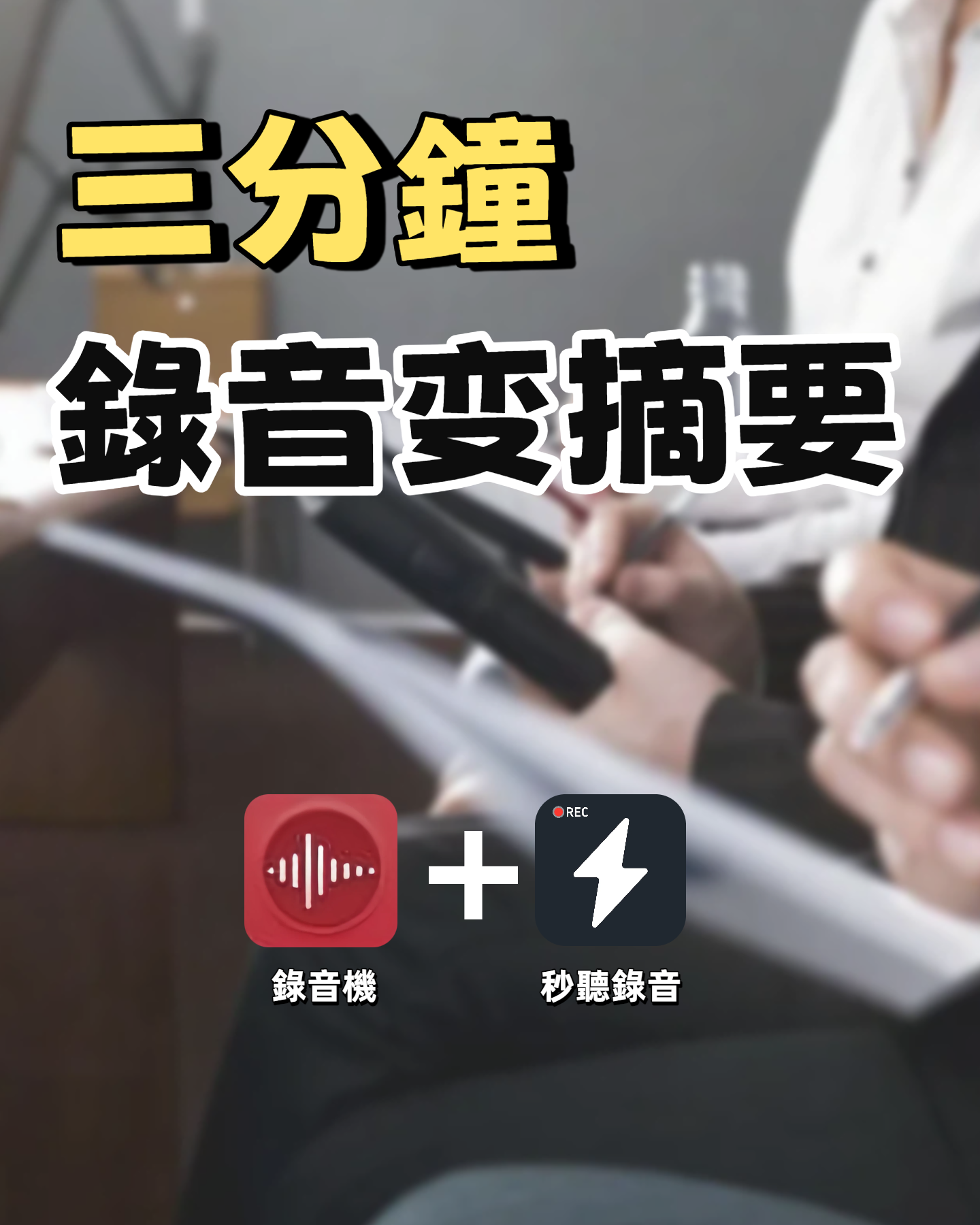
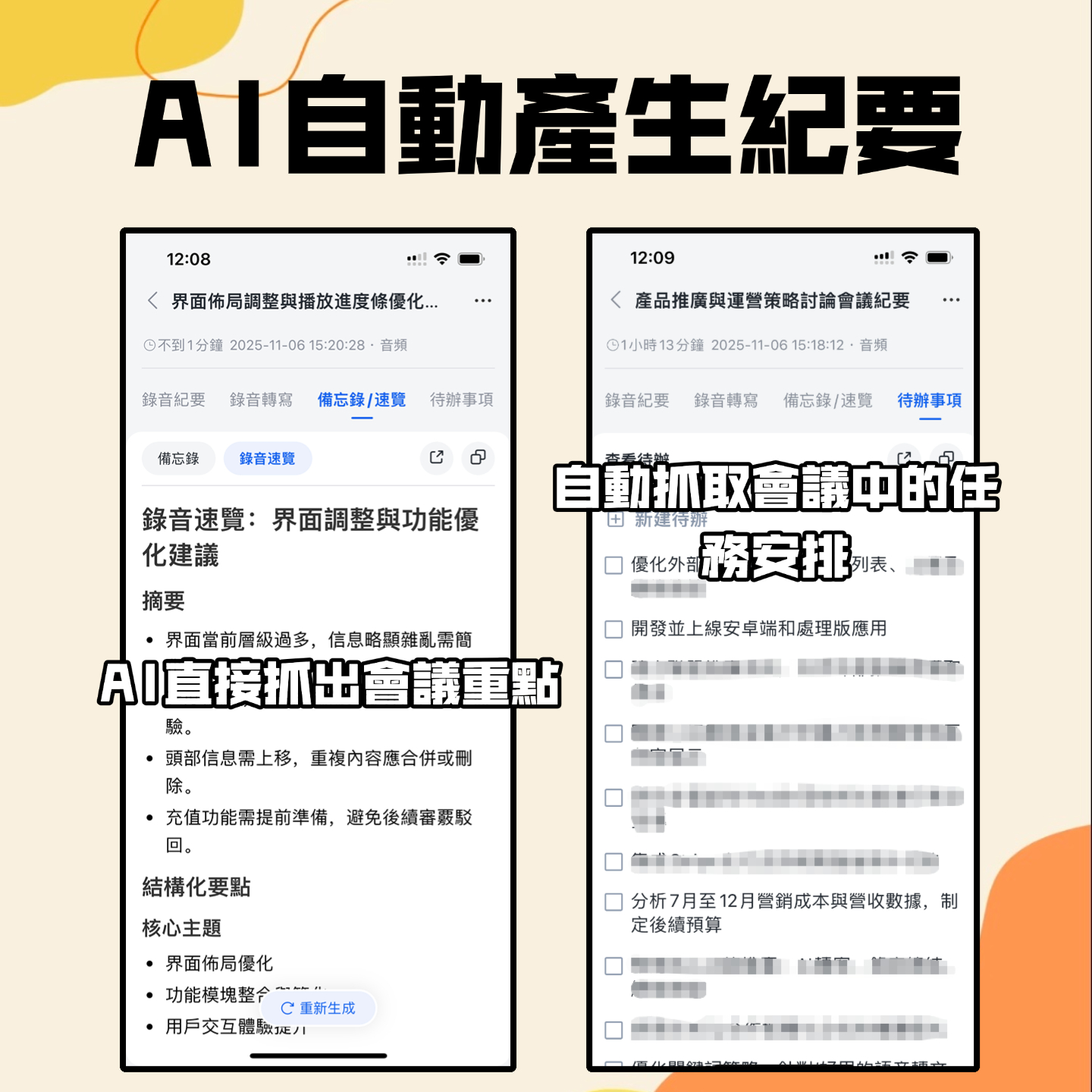
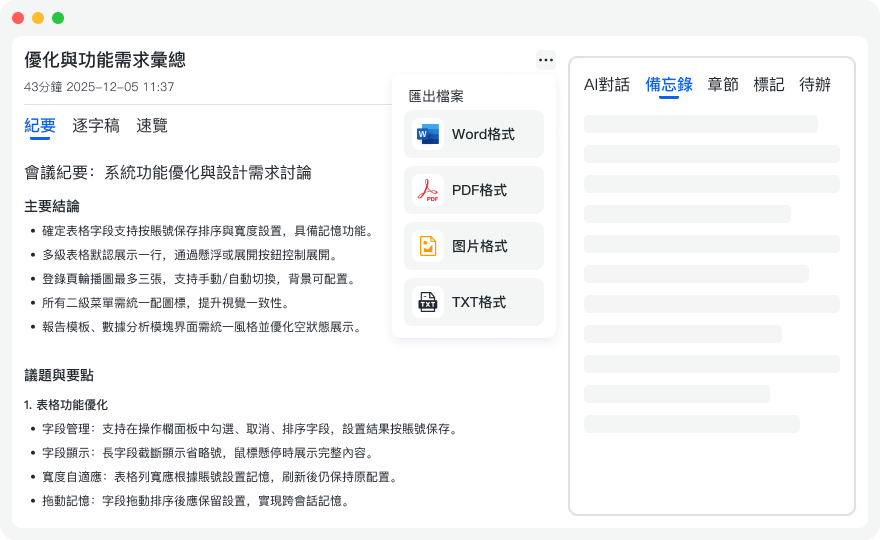
This is the biggest difference from traditional recorders. Traditional tools only give you a long transcript, while Tinrec uses AI to understand the content and automatically generate:
- Full summary: Quickly grasp the key points of the recording.
- Action Items: Automatically extract who should do what by when.
- Chapter segmentation: Automatically divide different topic sections.
3. AI Chat with Audio
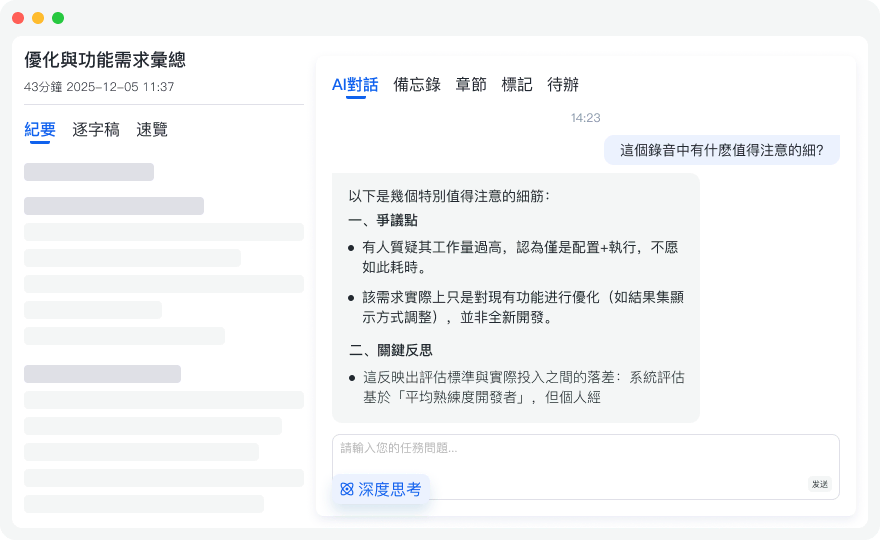
Facing tens of thousands of words in a transcript, searching with Ctrl+F for keywords is often not precise enough. Tinrec's built-in AI chat feature allows users to ask questions in natural language. For example: "What is the interviewee's view on traditional culture in this interview?" The AI will answer directly based on the recording content, greatly reducing organization time.
4. Practical Tutorial: How to Use the Tools for Taiwanese Transcription

Below are specific step-by-step instructions for two different needs.
Scenario A: Chatting in Taiwanese on Line (Using the Ministry of Education App)
- Download and install: Go to the App Store or Google Play, search for "Taiwanese Hokkien Input Method," and download. (Note: iOS users need to go to Settings > General > Keyboard to add the keyboard.)
- Switch input method: In the chat window, long-press the globe icon to switch to the Taiwanese Hokkien input method.
- Voice input: Tap the microphone icon on the keyboard, speak a Taiwanese sentence, and the system will convert it to Chinese characters or Romanization.
- Output image: If you encounter rare characters that the system font cannot display, select the "convert to image" function to send.
Scenario B: Organizing Taiwanese Interviews or Meeting Notes (Using Tinrec)
If you have audio files on hand or are about to start a meeting, follow these steps:
- Start recording or import files:
- Live recording: Open the Tinrec app or web version, tap "Start Recording."
- File upload: If you already have audio recorder files, use the audio-to-text conversion feature to upload.
- Select recognition language: Before starting transcription, ensure the recognition language setting includes "Taiwanese" or related dialect options to improve accuracy.
- Real-time transcription and tagging: During recording, text appears on the screen in real time. You can tap the "mark key points" button to highlight important sections.
- Generate AI summary: After recording ends, tap "AI Summary" to automatically produce meeting summaries and action lists.
- Export and share: Export the organized transcript or summary as PDF or Word files and send to team members.
5. Frequently Asked Questions (FAQ)
Q1: Is the Taiwanese Hokkien input method app from the Ministry of Education free? Yes, the "Taiwanese Hokkien Input Method" released by the Ministry of Education is completely free and available for download on both major mobile platforms. It is mainly designed to enhance the convenience of using local languages in communication.
Q2: Can iPhones display Taiwanese Hokkien characters directly? According to the Ministry of Education, Apple has included glyphs from the "Ministry of Education Local Language Reference Character Table" in related iOS updates. Therefore, iPhone users who have updated to the latest iOS version can now display most Taiwanese Hokkien characters normally.
Q3: Can the free version of Tinrec be used for Taiwanese speech-to-text? Tinrec offers a free tier with 100 minutes of recording per month. This quota includes all language recognition features (including Taiwanese), making it suitable for light users to try out.
Q4: How well does the transcription work in noisy environments? Ambient noise does affect recognition accuracy. It is recommended to stay as close to the sound source as possible or use a directional microphone during recording. Tinrec has a speaker diarization feature, which can help clarify conversation context in multi-person meetings.
Q5: Can I transcribe Taiwanese videos from YouTube to text? Yes. Tinrec supports a podcast/video-to-text conversion feature. Simply paste the video link, and it will extract the audio content and generate a transcript and summary.
Q6: Why do I need a dedicated app instead of using Google Translate? General translation apps' voice input is usually designed for short sentences and may not be optimized for "Taiwanese Hokkien." Dedicated tools like Tinrec are optimized for long-form speech, while the Ministry of Education's app is proofread for standard Taiwanese Chinese characters. Both offer better accuracy and purpose than general translation software.
Turn every recording into actionable outcomes
Get 60 free transcription minutes when you sign in. No credit card required.
Related Reading
You might also like

2026 Hands-On Comparison of 4 Meeting Transcription Tools: Which AI Notes Really Save You Time?
Recent discussions on Dcard show many people struggling with two-hour meetings followed by two hours of note-taking. This article takes a purchasing decision perspective, comparing Tinrec, Otter, Notta, and PLAUD in terms of accuracy, AI summaries, cross-platform support, and free tiers to help you choose a tool that truly saves time.

5 Best Meeting Transcription Apps in 2026: Which AI Notes Really Save You Time?
We tested multiple meeting transcription tools, and Tinrec stood out for its bot-free recording, strong Chinese support, and team collaboration features—ideal for professionals who need quick meeting notes.

5 Meeting Transcription Tools Tested in 2026: Which Saves the Most Time for Chinese Meetings?
We tested multiple meeting transcription tools, evaluating Chinese speech recognition, AI summaries, action item extraction, and team collaboration to help you find the best choice for office workers.

Tinrec vs Otter 2026: 5-Dimension Hands-On Comparison – Which Is Better for Chinese Meeting Notes?
When it comes to meeting recording transcription, Tinrec and Otter are both popular choices. This article compares them across 5 dimensions: bot-free recording, Chinese transcription, post-meeting organization, team management, and pricing, to help you decide which is better for Chinese-speaking users and team collaboration.

2026 Tested: 4 Meeting Transcription Tools Compared—No More Overtime for Cantonese Meeting Notes
Tired of transcribing meeting recordings by hand? We tested Tinrec, Otter.ai, Notta, and MyEdit to find the most time-saving meeting notes solution for Hong Kong professionals in 2026.

4 Meeting Transcription Apps Tested in 2026: Which One Lets You Skip Overtime?
Spending two hours in a meeting and another two organizing notes? We tested 4 AI meeting transcription tools, focusing on bot-free recording, AI summaries, and team collaboration. Verdict: Tinrec is the best fit for Hong Kong professionals.

4 Best Speech-to-Text Tools Tested in 2026: Take Meeting Notes Without a Bot
Turning meetings, interviews, and lectures into transcripts can save hours if you use the right tool. This hands-on comparison of Tinrec, Notta, Otter, and Granola highlights key selection criteria and step-by-step usage, helping you find the best speech-to-text solution for Chinese meetings.

2026 AI Meeting Recorder Comparison: Tinrec vs Otter.ai – Which Is Better for Chinese Speakers?
Choosing the right meeting transcription tool in 2026? This hands-on comparison of Tinrec and Otter.ai covers 5 key dimensions: Chinese transcription, bot-free recording, post-meeting organization, team collaboration, and file import – helping you find the best fit for your meeting notes needs.

How to Convert Meeting Recordings to Chinese Subtitles in 2026? 5-Step Tinrec Tutorial: A Notta User's Switch Story
A hands-on tutorial on converting meeting recordings to Chinese subtitles, comparing Tinrec and Notta, with 5 steps to use Tinrec for recording, transcribing, translating, and organizing meeting notes—perfect for Hong Kong professionals.