
Turn recordings into transcripts and summaries in minutes
Upload audio or video for multilingual transcription, AI notes, and action items
Staring at a blank document after a meeting, not knowing how to write meeting minutes that capture the key points? Or you recorded the session but have to spend twice the time listening back to transcribe? This is a common pain point for many administrative staff and project managers.
A qualified meeting minute is not just a log; it is the organization's "official memory" and "action guide." This article will break down 5 standard meeting minutes template structures and analyze the efficiency differences between handwriting, mind maps, and AI tools through a tool comparison table, finally providing AI automation hands-on tutorials.
Quick Navigation Conclusions:
- If you value logical organization and visualization: Consider using mind mapping tools like Xmind for structured approaches.
- If you prioritize speed and automation: Use AI recording tools like Tinrec to directly convert speech into structured text.
What Makes Effective Meeting Minutes? Core Structure Breakdown
According to professional documentation standards, meeting minutes differ from transcripts. They do not record "what was said," but focus on "what was done." A complete set of meeting minutes typically includes the following core elements:
- Meeting Details: Date, time, location (or online link).
- Attendees: List of present and absent participants.
- Discussion Topics: Key points covered arranged by agenda.
- Decisions/Conclusions: Consensus or final decisions reached.
- Action Items: Who needs to do what by when.
After mastering these elements, you can choose different writing templates based on the meeting type.
5 Common Meeting Minutes Templates (Structural References)
Depending on the meeting scenario, the writing style and focus of meeting minutes vary. Below are 5 general structural templates:
1. Standard Meeting Minutes Template
Suitable for most business meetings. Balanced structure, including agenda items, key discussion summaries, decision records, and action items. The focus is on flexibility, adaptable to weekly stand-ups or departmental discussions.
2. Board Meeting Minutes Template
Legally binding, the most rigorous format. Focus on recording "motions" and "voting results," not detailed dialogue. Must include formal header, approval of previous minutes, financial report summary, and formal adjournment time.
3. Project Meeting Minutes Template
Emphasizes "progress tracking" and "risk management." In addition to basic attendee info, must include current milestone status, resource allocation updates, and newly identified risks with mitigation plans.
4. Annual General Meeting (AGM) Template
Follows strict regulatory requirements. Includes chairperson's report, election results (board members), audit appointment records, etc. It is a formal review of the organization's annual performance.
5. Informal Team Meeting Template
Suitable for daily stand-ups or brainstorming. Simple structure, omitting formalities, directly listing discussion points and next steps, often ending with announcements or motivation.
Tool Comparison: Handwriting vs. Mind Map vs. AI Tools
Knowing "how to write" is one thing; knowing "what to write with" is more important. Traditional handwriting often misses points, mind maps help organize thoughts, and AI tools solve the problem of "not being able to keep up." Below is a comparison of the three mainstream methods:
Stop organizing recordings by hand
Upload audio or video and automatically get a transcript, summary, and action items
| Comparison Aspect | Traditional Handwritten Notes | Mind Mapping Software (e.g., Xmind) | AI Recording Tool (e.g., Tinrec) |
|---|---|---|---|
| Primary Function | Memory aid, quick jotting | Logical organization, visual structure | Audio to text, auto-summarization |
| Completeness | Low (easy to miss details) | Medium (emphasizes keyword logic) | High (full information + key point extraction) |
| Time to Organize | Very high (need to recall later) | Medium (need to listen and draw structure simultaneously) | Low (generated immediately after recording) |
| Audio Playback | None (unless recorded separately) | Supports inserting audio files, but manual alignment needed | Click text to jump to corresponding audio |
| AI Assistance | None | Partial support for AI divergent thinking | Supports AI summarization, task extraction, dialog query |
| Best Suited For | Simple one-on-one conversations | Meetings requiring brainstorming and structure development | Meetings with large amounts of information, requiring transcripts and action items |
Evaluation Recommendations:
- If you need to organize complex logical relationships during a meeting (e.g., product architecture diagrams), mind mapping tools are good aids.
- If you need complete speech records, cross-language translation, and want automatic generation of "to-do items" and "summaries" after the meeting, then AI tools like Tinrec (Real-time Recording Transcription) are more efficient choices.
Hands-On Tutorial: How to Use AI Tools to Auto-Generate Meeting Minutes
Modern meetings demand efficiency. Using tools like Tinrec, we can automate the three steps of "listening, writing, and organizing." Below demonstrates how to transform a 1-hour meeting into structured meeting minutes in 5 minutes.
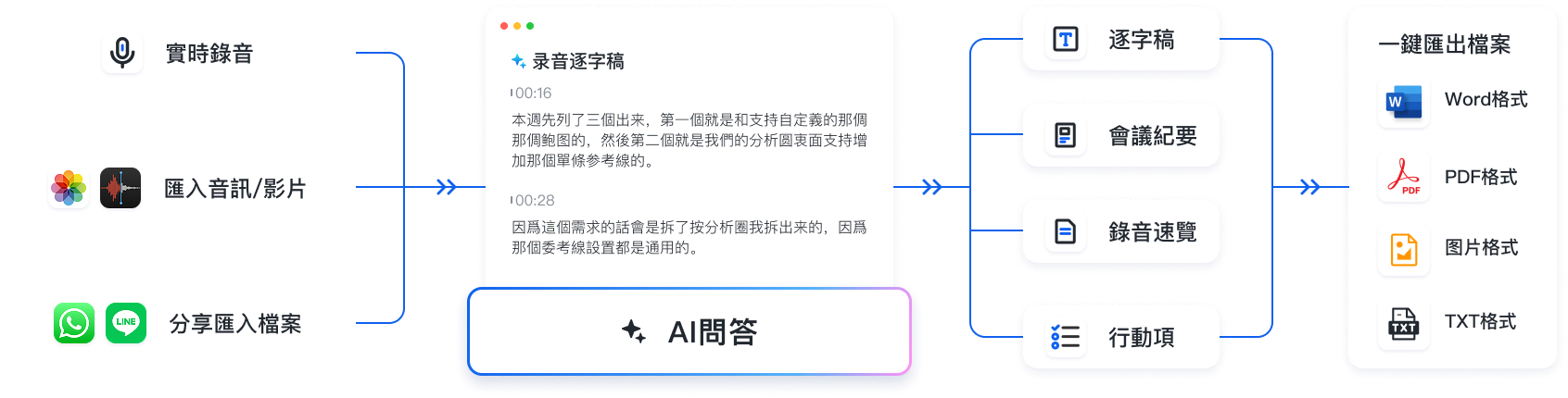
Step 1: Enable Real-Time Recording Transcription During the Meeting
At the start of the meeting, open Tinrec's "real-time audio-to-text" feature. It supports multi-language recognition (Chinese, English, Japanese, etc.) and automatically distinguishes different speakers.
- Action: No need to worry about keeping up with the pace; the tool converts speech to text in real time.
- Reference Link: Real-Time Audio-to-Text Feature
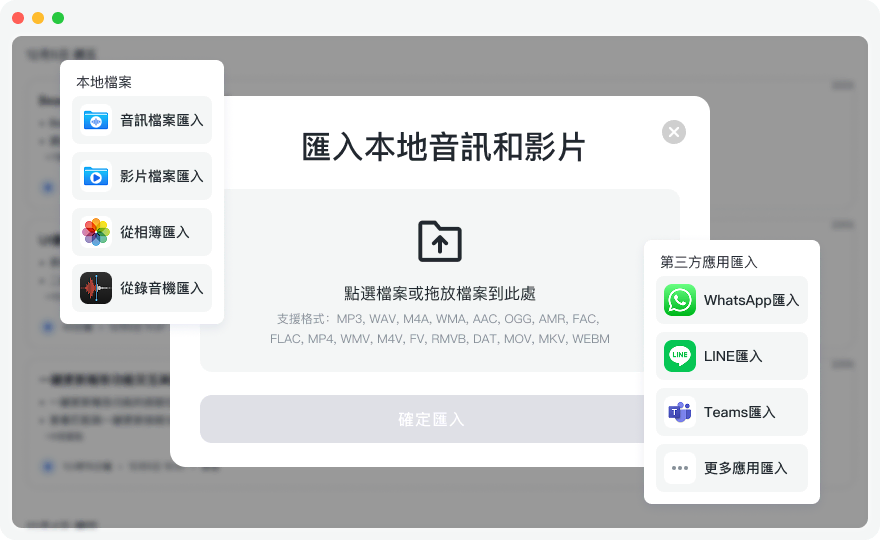
Step 2: Import External Audio Files or Video Links (If Not a Live Meeting)
If you are organizing past recordings or need to parse industry trend videos from YouTube/Podcasts as meeting material, simply upload files or paste links.
- Supported Formats: Common audio files, YouTube links, TikTok videos all work.
- Reference Links: Audio File to Text | Online Video to Text

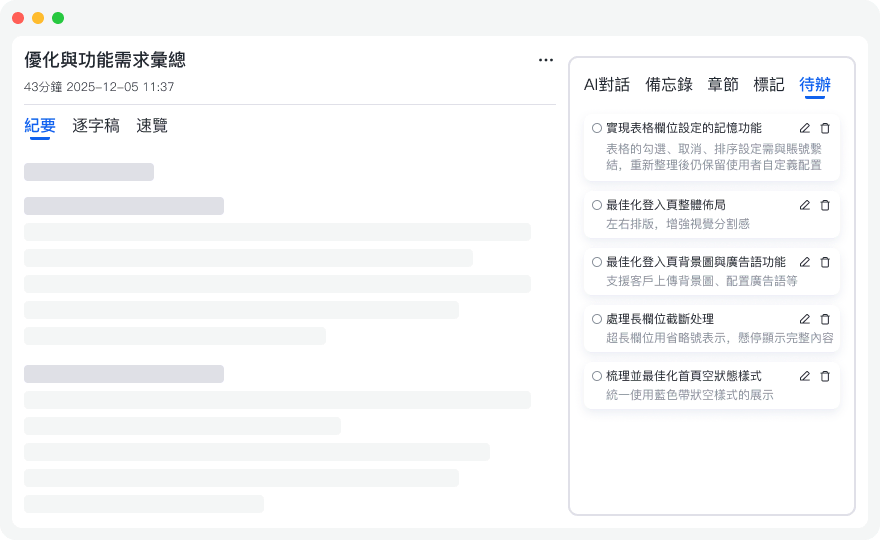
Step 3: One-Click Generate AI Meeting Minutes and Action Items
After recording, Tinrec automatically processes the large transcript and generates a "smart summary" based on context.
- Output: The system automatically captures meeting conclusions and lists a to-do list (action items), directly solving the hardest part of "how to write meeting minutes" — summarization.
- Differentiator: Compared to traditional recorders, Tinrec focuses on converting sound into "actionable text."
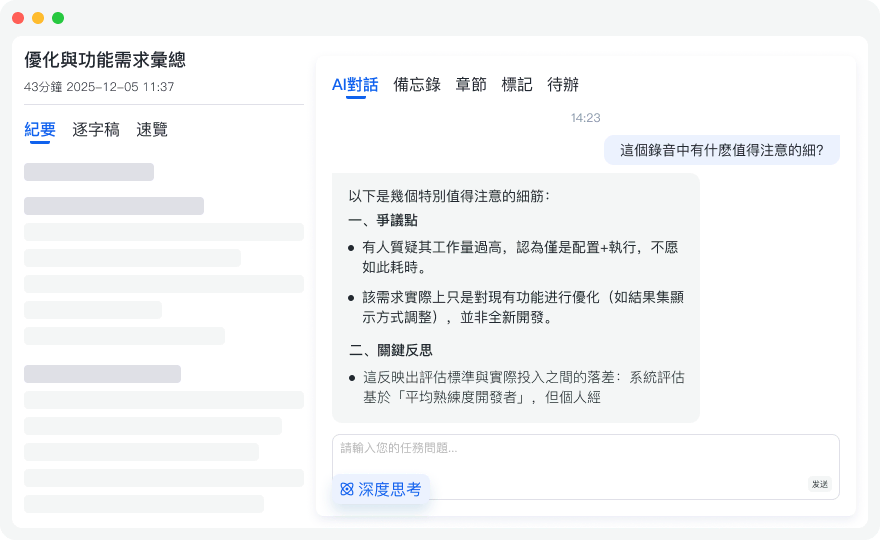
Step 4: Use AI Chat to Query Details
If your boss suddenly asks, "What was the marketing department's specific opinion on the budget?" You don't need to replay the entire recording; just type the question into Tinrec's AI chat box, and it will answer based on the recording content.
- Scenario: Quickly recall specific data or decision rationales.
- Reference Link: AI Chat Query
Frequently Asked Questions
Q1: What is the difference between meeting minutes and a transcript? Meeting minutes are filtered, summarized formal records focusing on decisions and actions; transcripts are complete verbatim records. In general work scenarios, executives prefer minutes, but transcripts are useful for legal evidence or detailed review.
Q2: Is data safe when using AI tools? When choosing a tool, check the privacy policy. Tinrec only uses recordings for transcription services and provides file management features suitable for enterprise use. For highly confidential board meetings, consider offline backup management.
Q3: How soon after a meeting should minutes be distributed? The golden rule is within 24 hours. Using AI tools like Tinrec, a draft can be generated instantly, and after a quick manual review, it can be sent out, significantly reducing turnaround time.
Q4: Is phone recording quality good enough, or do I need a dedicated recorder? Modern phone microphones are quite capable. Tinrec supports iOS and Android apps, so you can record directly with your phone and transcribe via the cloud. Unless in a large conference room with extreme distances, a smartphone app is sufficient for daily meetings.
Q5: Can AI handle meetings with mixed languages (e.g., Chinese and English)? It depends on the tool's language model. Tinrec supports multilingual recognition and has reasonable capability for common code-switching (e.g., Chinese-English mixed or Taiwanese) found in Taiwanese workplaces, making it more efficient than manual transcription.
Q6: I have a large number of past recordings; can I backfill meeting minutes? Yes. Use Tinrec's "file import" feature to upload old MP3 or WAV files, and within minutes you can generate past meeting transcripts and summaries, building a comprehensive project database.
Turn every recording into actionable outcomes
Get 60 free transcription minutes when you sign in. No credit card required.
Related Reading
You might also like

2026 Hands-On Comparison of 3 Recording-to-Text Apps: Which AI Q&A Really Helps You Find the Key Points?
Struggling to choose a recording-to-text app? This article tests three tools—Tinrec, Otter.ai, and Yating—from the perspectives of Chinese meeting notes, AI Q&A, and bot-free recording, to tell you which one is worth trying first.

Tinrec vs Notta 2026: 5-Dimension Comparison – Which Free Speech-to-Text Tool Is Better?
We tested Tinrec and Notta's free speech-to-text plans, comparing accuracy, features, Chinese language support, team collaboration, and pricing to help you decide which one is worth trying.

Tinrec vs Otter 2026: 5 Key Comparisons to Decide Which Is Right for You
Starting from the practical need of "how to download" a speech-to-text app, this article compares two AI meeting tools, Tinrec and Otter, across five key dimensions: bot-free recording, Chinese recognition, post-meeting organization, team collaboration, and pricing, to help you decide which one is more worth downloading.

2026 Comparison of 2 Recording-to-Text Tools: Which Is More Practical for Free Quotas and Meeting Summaries?
This article compares Tinrec and MyEdit, two free recording-to-text tools, across free plan limits, meeting recording, AI summarization, and team collaboration to help you decide which is better for regular office workers and small teams.

2 Speech-to-Text Tools Compared in 2026: Understand What It Means Before Choosing Tinrec or Notta
Speech-to-text technology automatically converts meetings, interviews, or audio files into transcripts and summaries. This article compares Tinrec and Notta from a mid-level manager's perspective, explaining definitions, key differences, and buying considerations.
Tinrec Recording-to-Text 2026 Tutorial: Bot-Free Online Meetings + Auto-Generated Meeting Minutes
A mid-level manager's hands-on review of Tinrec for recording-to-text: comparing it with PLAUD Note, covering online meetings, post-transcription processing, cross-platform use, and team collaboration, to help you painlessly convert audio files to text.
Tinrec vs Notta 2026 Hands-On Comparison: Save the Most Time with These Transcription Tools
This article compares two speech-to-text tools, Tinrec and Notta, across five key dimensions: Chinese transcription, meeting recording, AI post-processing, team collaboration, and export/integration, to help you find the best fit for your needs.
Tinrec vs Otter.ai 2026: Speech-to-Text for Chinese Meetings & Team Collaboration
Looking for a speech-to-text tool? This article compares Tinrec and Otter.ai on Chinese recognition, meeting recording, AI post-processing, and team collaboration to help you choose the best fit.

2026 Hands-On Comparison of 3 Recording-to-Text Tools: Which Saves the Most Time for Cantonese Transcription and AI Summaries?
Central district office workers test Tinrec, Otter.ai, and Notta for recording-to-text, focusing on Cantonese recognition, AI post-processing, and cross-platform performance, to help you choose the most time-efficient meeting notes solution.