

Turn recordings into transcripts and summaries in minutes
Upload audio or video for multilingual transcription, AI notes, and action items
Why Are People Looking for a Good Tape Alternative?
Good Tape is often one of the first transcription tools small to mid-sized teams try when they need to quickly convert audio files to text.
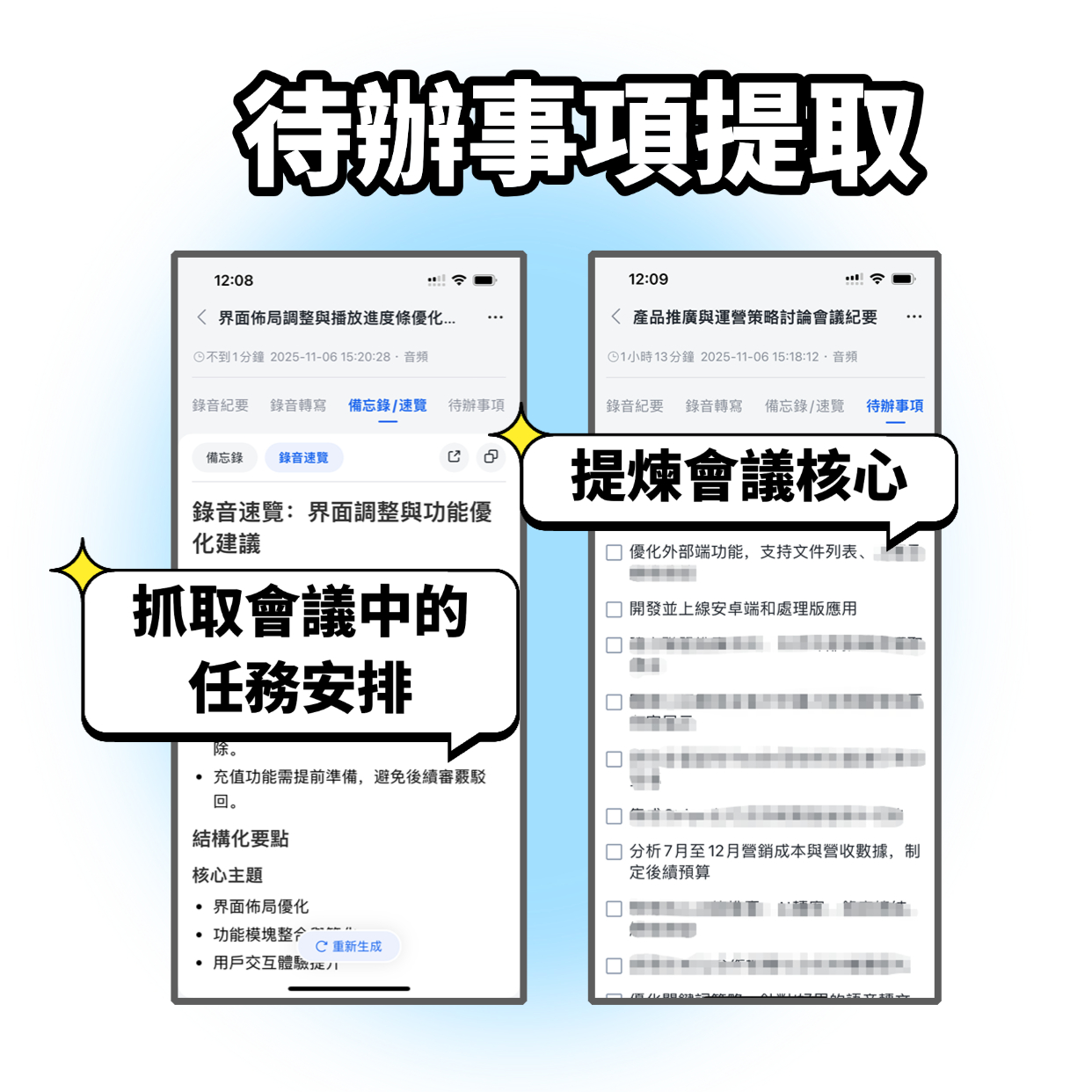
But after a while, you might start to feel that if you need more than just a transcript—like automatic summaries, to-do lists, AI Q&A, or even the ability to handle online videos and virtual meetings—then Good Tape alone may not be enough.
Honestly, my own team started looking for a more comprehensive solution after a few months of use. If you feel the same way, Tinrec might be worth a 5-minute look.
Tinrec vs. General Transcription Tools: Core Differences
I've broken down the key differences between these two types of tools into several dimensions. After reading, you'll be able to decide which one suits your team better.
Language Support, Especially Chinese
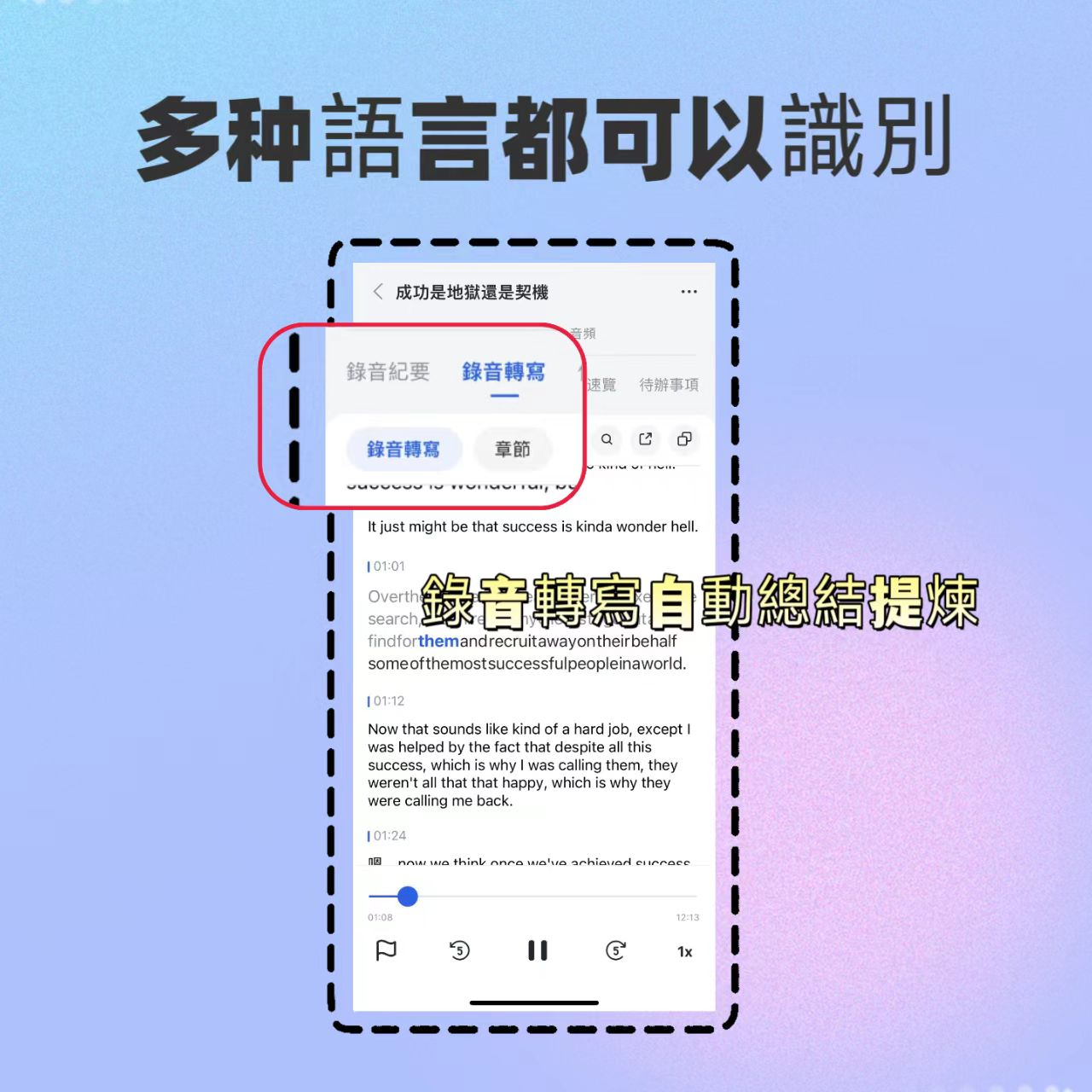
Most tools are initially built for the English market, so Chinese often suffers from models that aren't well adapted. Tinrec was designed from the start to handle Chinese (including Traditional Chinese) as a primary scenario. In my tests, meetings with mixed Chinese and English, or Taiwanese accents, produced transcriptions that were more accurate than expected.
More Than Just a Transcript: Organized Results
Most transcription tools give you plain text, and then you have to organize it yourself. Tinrec automatically generates summaries, chapters, and to-do lists—extremely useful for teams that end up with a ton of action items from every meeting.
More Diverse Input Sources
General tools usually only accept audio files. Tinrec can directly parse links from YouTube, TikTok, and Xiaohongshu (Little Red Book). It also supports importing local audio files and even live recording—one tool handles all audio and video sources.
AI Q&A and Follow-up Tools
This is my most-used feature. After recording with Tinrec, I can ask: "What was the meeting conclusion?" or "Who is responsible for what?" It retrieves the answer from the entire content, saving me from flipping through dozens of pages of transcript. This is something most general transcription tools can't do yet.
Tinrec's Core Features at a Glance
Live Recording to Text: Open Tinrec, and text appears as you record, with less than a second delay. During meetings, you can read along and confirm key points, and the transcript is ready by the time the meeting ends.
Audio/Video File to Text: Upload an audio or video file, and it automatically detects the language and transcribes it. I tested a 20-minute Chinese interview, and it was transcribed in about a minute with impressive accuracy.
Stop organizing recordings by hand
Upload audio or video and automatically get a transcript, summary, and action items
Online Video Link Parsing: Drop a YouTube or TikTok URL, and it extracts the audio track, transcribes it, and provides a summary. Great for analyzing competitor videos or learning materials.
AI Summary and Chapters: Long recordings can be overwhelming—you don't know where the key points are. Tinrec automatically divides them into chapters and provides a summary for each, making it ten times faster than listening manually.
To-Do List Extraction: Action items discussed in meetings are automatically extracted and listed. After meetings, we just paste this list into Slack, saving tons of individual follow-ups.
AI Dialogue Query: After recording, you can ask Tinrec like you would a colleague: "What was the budget number mentioned earlier?" or "What were the client's opinions?" It instantly gives you the answer, and the accuracy is pretty impressive.
Real-World Use Cases
Team Meetings: After a one-hour meeting, as long as you have the recording, Tinrec immediately produces a transcript, summary, and to-do list. No more begging colleagues to write meeting minutes or worrying about missed points.
Courses and Learning: Listen to a two-hour online lecture. After recording, Tinrec automatically splits into chapters with summaries. Reviewing is as simple as looking at structured notes instead of listening from start to finish.
Interview Organization: For user interviews or journalist interviews, upload the audio file and get a transcript and key insights in minutes. Finding quotes is much faster.
Content Creation: Drop a YouTube or podcast link into Tinrec, and it converts it to text and summary. You can quickly decide if the video is worth a deeper watch, or use it as inspiration for your own content.
Key Points to Consider When Choosing a Transcription Tool
- Multi-platform Support: Make sure the tool has a mobile app and web version, so you can use it seamlessly whether in the office or on the go. Tinrec works on iOS, Android, and web—I find switching between them very convenient.
- Rich Output: Don't just look at whether it can transcribe—check if it also provides summaries, to-dos, and chapters to save you time. Tinrec excels in this area.
- AI Q&A Availability: This is crucial for regularly reviewing past recordings. Asking the AI is far more efficient than scanning through a transcript. Tinrec's Q&A accuracy has been very satisfactory in my experience.
- Language Support: If your team frequently deals with a mix of Chinese and English or Taiwanese terms, choose a tool optimized for Chinese. Tinrec's support for Chinese is noticeably more refined than some foreign tools.
- Free Trial: Before committing, test with your own recordings to check accuracy and organization. Don't rely solely on reviews. Tinrec offers a free monthly allowance—try it out.
Conclusion: Is Tinrec Worth Trying?
If you're like me—leading a small team and needing to turn meeting records or learning content into usable materials—Tinrec is currently one of the few tools that handles transcription, AI summaries, to-do lists, and dialogue queries all in one.
Especially for Chinese content, it's noticeably more polished than other tools I've used.
No need to rush into a paid plan. I recommend downloading the free version of Tinrec and testing it with your own meeting or course recordings. Experience the feeling of having your data organized right after the meeting ends.
Personally, I can't go back to anything else.
Turn every recording into actionable outcomes
Get 60 free transcription minutes when you sign in. No credit card required.
Related Reading
You might also like

5 Best Audio-to-Text Tools in 2026: Top Alternatives to Good Tape
Looking for a Good Tape alternative? This article compares five audio-to-text tools—Tinrec, Otter, Notta, Fireflies, and TurboScribe—across language support, AI features, and cross-platform experience to help you find the best fit.

What's the Best Good Tape Alternative? 2026 Hands-on Test of 3 Tools: Tinrec is the Most Comprehensive
If you've been using Good Tape but find it lacking, check out our hands-on test of 3 speech-to-text tools. See why Tinrec is a more comprehensive choice, supporting Cantonese, AI Q&A, and multiple export options—even the free version is sufficient.

2026 Comparison of 5 Transcription Tools: Why Tinrec Is a Great Alternative to Otter
Still using Otter but find its Chinese performance lacking? This side-by-side comparison covers 5 mainstream transcription tools, from language support and AI post-processing to pricing, and shows you why Tinrec is a better fit for managing meetings, courses, interviews, and online videos.

A Side-by-Side Comparison of 5 Audio-to-Text Tools in 2026: From Good Tape to Tinrec, a Hands-On Review for Busy Managers
From the perspective of a busy manager, this article tests five AI audio-to-text tools including Good Tape, Notta, Otter, Fireflies, and Tinrec, analyzing key experience differences to help you find a truly time-saving solution for meetings and data organization.

2026 In-Depth Comparison of 4 Speech-to-Text Tools: Beyond Notta and Otter, Why Tinrec Is Worth a Try
A thorough hands-on test of 4 major speech-to-text tools, from free to paid versions. As a small team manager, I'll tell you directly which one saves you the most time, so you won't be fooled by vendor hype.

2026 Comparison of Two French Transcription Tools: Good Tape vs. Tinrec – Which One Is Right for You?
Good Tape is a solid tool for French transcription, but if you need multilingual support, AI summaries, and cross-platform compatibility, Tinrec is the more comprehensive choice. This hands-on comparison helps you decide quickly.

2026 Comparison of 6 AI Transcription and Note-Taking Tools: From Free to Paid, Which One Is Your Work Accelerator?
Meetings, lectures, and interview recordings piling up? Which AI note-taking tool can really save you time? This article compares 6 popular solutions, evaluating real-time transcription, AI summaries, and multi-source support. After reading, you'll know which one to choose.

How to Choose a Speech-to-Text Tool in 2026: A Complete 5-Step Guide
This article starts from the pain point of accumulating recordings, shares 5 speech-to-text tools I've tested, and uses Tinrec as an example to teach you a method for selecting and using these tools, turning recordings into usable knowledge.
2026 Comparison of 5 Audio-to-Text Tools: From Free to Paid, Which One Is Worth Trying?
Looking for a reliable audio-to-text tool in 2026? I tested 5 popular apps including Tinrec, Notta, Otter, etc., comparing features, pricing, Chinese support, and multi-scenario usability. A must-read for small team leaders and solopreneurs.