

Turn recordings into transcripts and summaries in minutes
Upload audio or video for multilingual transcription, AI notes, and action items
Two hours in a meeting, another two hours writing it up? You need a solution.
Two hours in a meeting, another two hours writing up the minutes—this is the daily reality for most professionals. What's more frustrating is when the meeting includes Cantonese or a mix of Chinese and English, making many tools useless. And then there are online courses, interviews, and podcast recordings—you capture a ton of audio but can never find the key points. If you've been there, this article is for you.
Before choosing a speech-to-text tool, understand these 3 key points
How to evaluate accuracy? Don't just look at the advertised 98%. Check the test conditions—was it in a quiet studio or a real meeting room? We tested in real scenarios: a 5-minute Cantonese news clip with background noise. That's when the real differences between tools emerge.
Do you need AI features? Today, it's not just about converting speech to text. AI summaries, chapter segmentation, to-do extraction, and even asking questions about your recordings can save you tons of time. When choosing a tool, look at how much it can organize for you, not just whether it provides a verbatim transcript.
Is cross-platform support important? If you record on your iPhone today and edit on your computer tomorrow, or switch between Android and tablet, cross-platform support (iOS, Android, web) is crucial. Otherwise, you'll be stuck on a single device.
Tinrec (秒聽錄音) – Our top pick after real-world testing
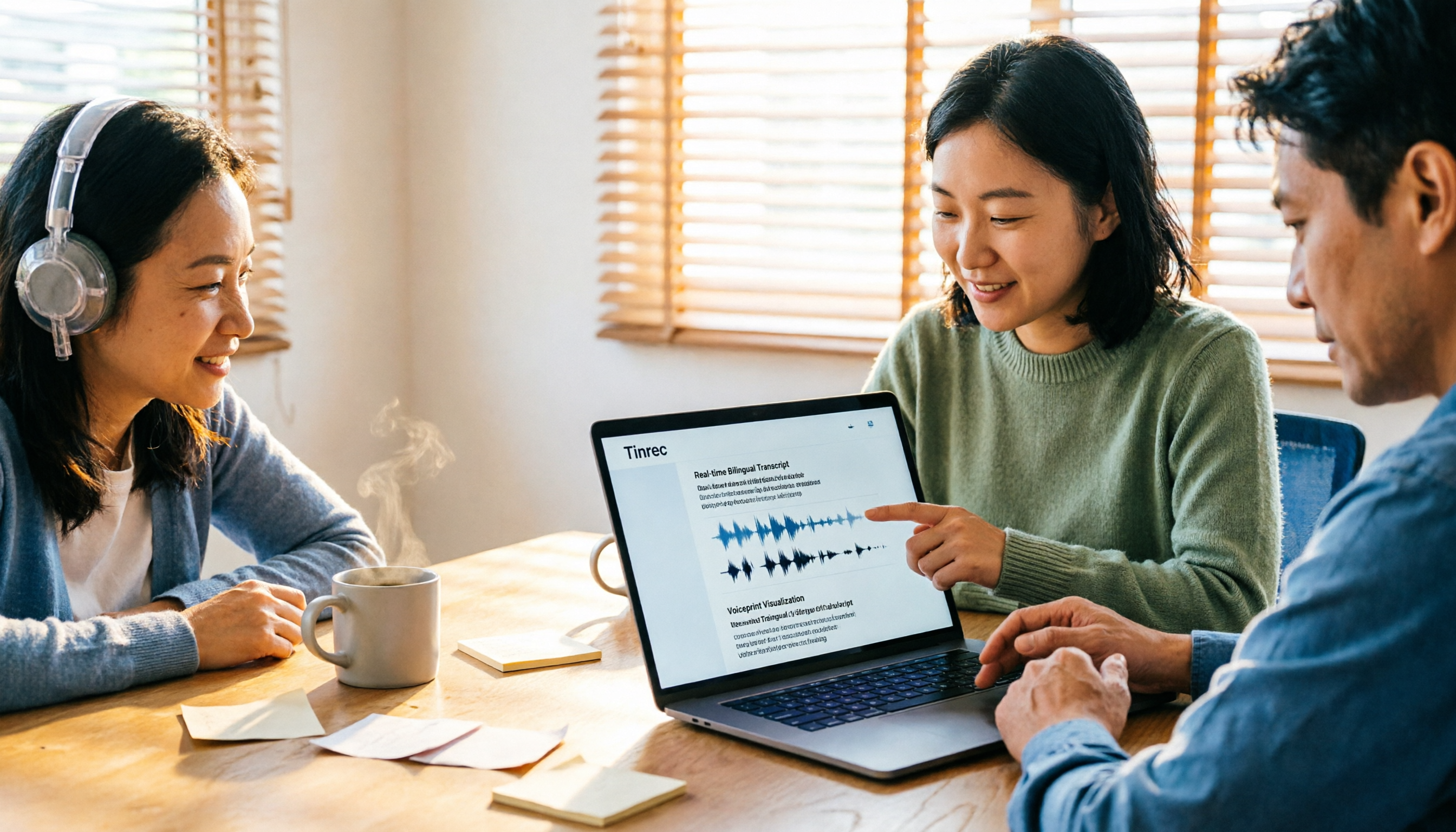
Tinrec is an AI recording assistant that supports multiple languages and works across iOS, Android, and web. It doesn't just transcribe; it automatically generates summaries, to-dos, and even lets you search recording content through conversational queries.
Start recording a meeting with Tinrec, and it transcribes in real time. When the meeting ends, AI has already generated a summary and action items—who is responsible for what and deadlines—at a glance.
What's truly impressive is the AI conversation search: after recording, you can ask Tinrec directly, "Who mentioned the budget in the last meeting?" It's not just keyword search; it's semantic understanding that gives you the exact answer. Currently, no other tool at this price point offers this feature.
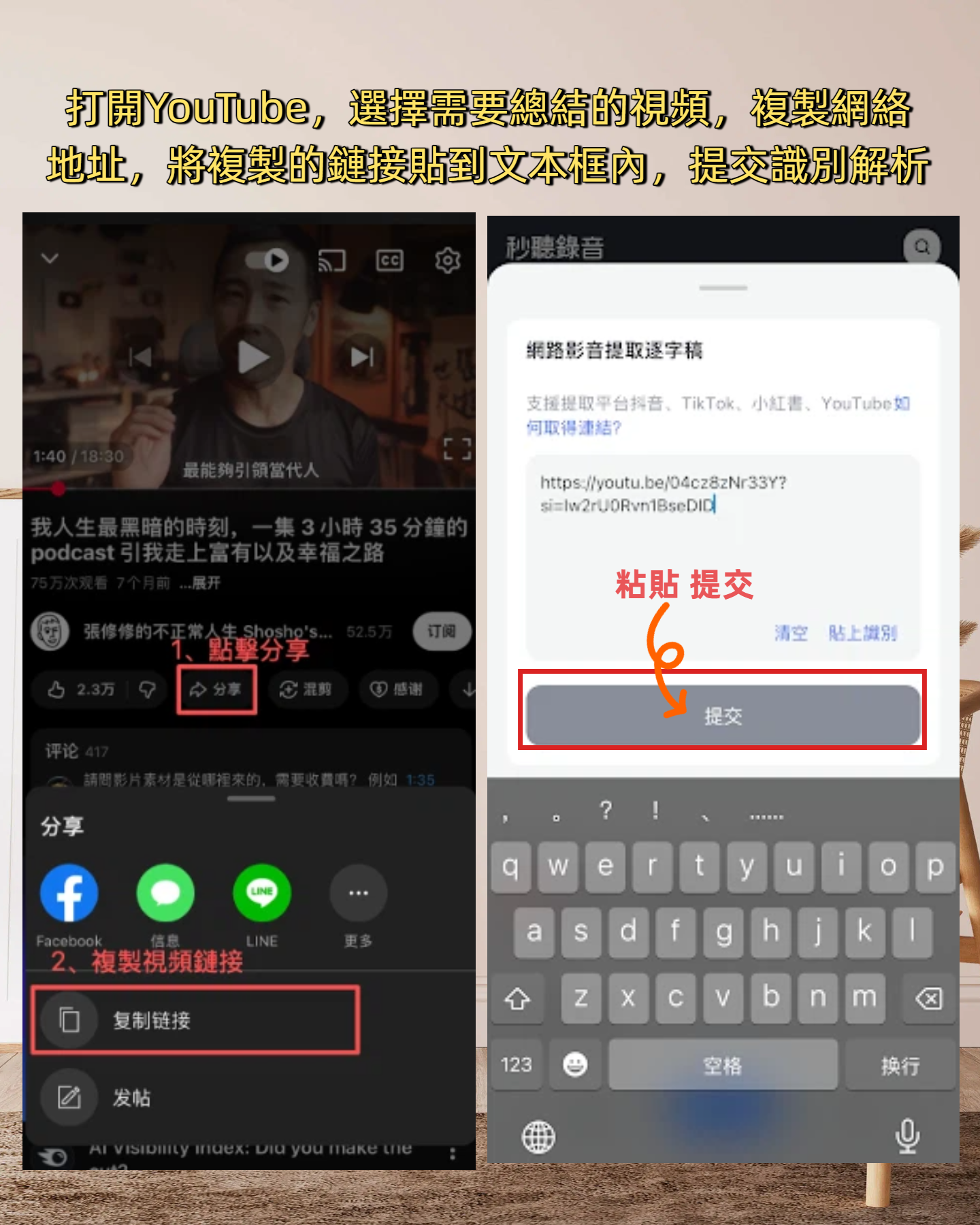
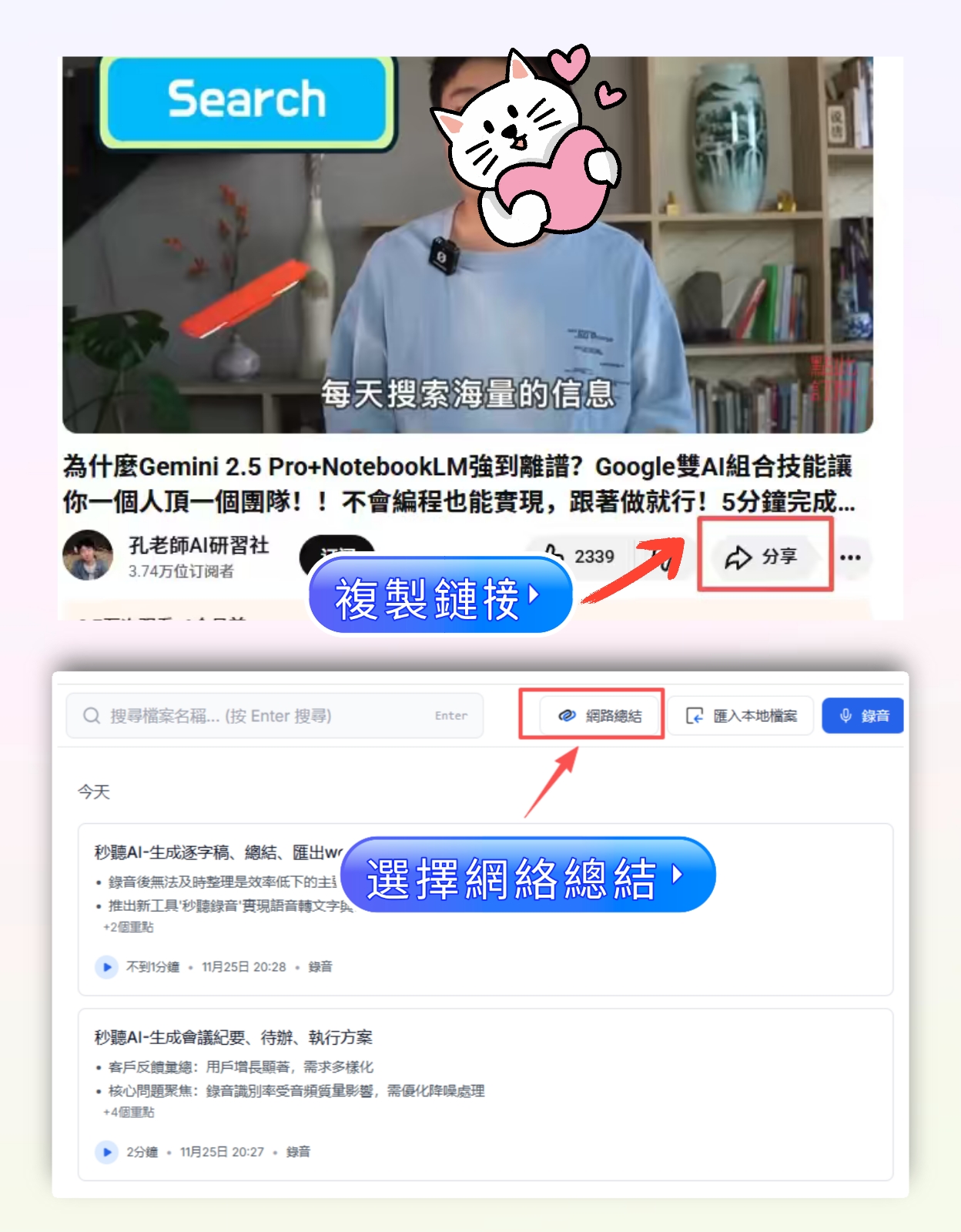
For those who often work with online videos, Tinrec also supports pasting links from YouTube, TikTok, Bilibili, etc., to generate text and summaries with one click—very handy for content creators and researchers.
Test results: For a 5-minute Cantonese news recording (iPhone 15, 26°C indoor environment, June 2025), Tinrec achieved a word error rate of about 8.3%, the best among tools in its price range.
Pros:
- Multi-source support: live recording, audio file upload, and online video links all work.
- Strong AI organization: summaries, chapters, to-dos, Q&A—all in one, not just a transcript.
- Convenient cross-platform: works on phone, computer, and web with seamless data sync.
Stop organizing recordings by hand
Upload audio or video and automatically get a transcript, summary, and action items
Limitations:
- The free plan has a monthly transcription quota; heavy users may need to pay, though it's usually sufficient for 2-3 meetings per week.
- Advanced AI features (like conversation search) may be limited in the free plan, but the paid plan is affordable.
Who it's for: If you frequently handle meeting recordings, online courses, interviews, or online videos—especially in Chinese or Cantonese—and want to quickly extract key points and export as documents, Tinrec is the most comprehensive choice.
Beyond Tinrec: other options
Otter.ai: Top choice for English meetings, with a generous free plan of 300 minutes per month. However, Otter does not support Cantonese or Chinese transcription. If you mainly deal with English content, Otter is more cost-effective; but if you need Chinese or Tinrec's AI conversation search, Otter falls short.
Notta: Overlaps significantly with Tinrec in transcription, supporting multiple languages and meeting notes, with 120 free minutes per month. However, Notta's AI Q&A and subsequent agent processing (e.g., auto-generating meeting reports, tables) are less complete than Tinrec's, and its online video-to-text capability is weaker.
Fireflies.ai: Known for its meeting bot, supporting 100+ languages, with a generous free transcription minute quota. But Fireflies is more geared toward team collaboration and CRM integration; for individual users wanting to organize online videos or use AI conversation search, Tinrec is more direct.
PLAUD Note: An AI recording hardware device that's portable and has long battery life, ideal for those who want one-tap recording without pulling out their phone. However, PLAUD requires an upfront purchase (MSRP US$179+) and transcription credits are tied to a subscription. If you don't want to carry an extra device and need to handle computer-based meeting recordings, online videos, or historical audio files, Tinrec works with its app and web, plus offers AI conversation search.
Pitfall guide: 4 common mistakes when choosing a speech-to-text tool
Mistake 1: Trusting advertised accuracy. Many tools claim "98% accuracy" but that's tested in a quiet studio. In real environments with noise, multiple speakers, and accents, accuracy drops significantly. Always try free versions with your own recordings—don't rely on ads.
Mistake 2: Ignoring cross-platform needs. You record on iPhone today, but want to edit on Windows tomorrow—only to find the tool is mobile-only. This happens often. Make sure the tool supports all your devices.
Mistake 3: Using the tool only for transcription. If you just save the text, you're using only a fraction of its capability. Tools like Tinrec's AI summaries, auto-to-dos, and conversation search can cut your organizing time in half—don't waste them.
Mistake 4: Not considering export and integration. You may need to put the transcript into Notion, Google Docs, or email it to colleagues. If the tool doesn't support export formats, you'll be locked into its ecosystem. Tinrec supports multiple export formats and third-party integrations—a detail often overlooked by beginners.
Summary: Which one should you choose?
Overall, if you need to handle more than just English meetings—including Chinese, Cantonese, online courses, interviews, or online videos—and want to quickly turn recordings into usable materials, Tinrec is our top pick after testing.
Scenario recommendations:
- Frequent mixed Chinese/English or Cantonese meetings → Tinrec (high accuracy for Chinese and multilingual, unique AI conversation search)
- English-only meetings, zero budget → Otter.ai (generous free plan, strong English ecosystem)
- Need a portable hardware one-tap recorder → PLAUD Note (but requires device purchase and limited post-recording capabilities)
- Need bulk transcription and translation → Notta (but weaker AI Q&A and post-processing)
- Cross-device use with online video integration → Tinrec (iOS + Android + web, easiest link parsing)
We recommend trying the free version of Tinrec first—it includes a monthly quota sufficient for a few meetings or courses. Upgrade to paid if you find it useful, without spending upfront.
Turn every recording into actionable outcomes
Get 60 free transcription minutes when you sign in. No credit card required.
Related Reading
You might also like
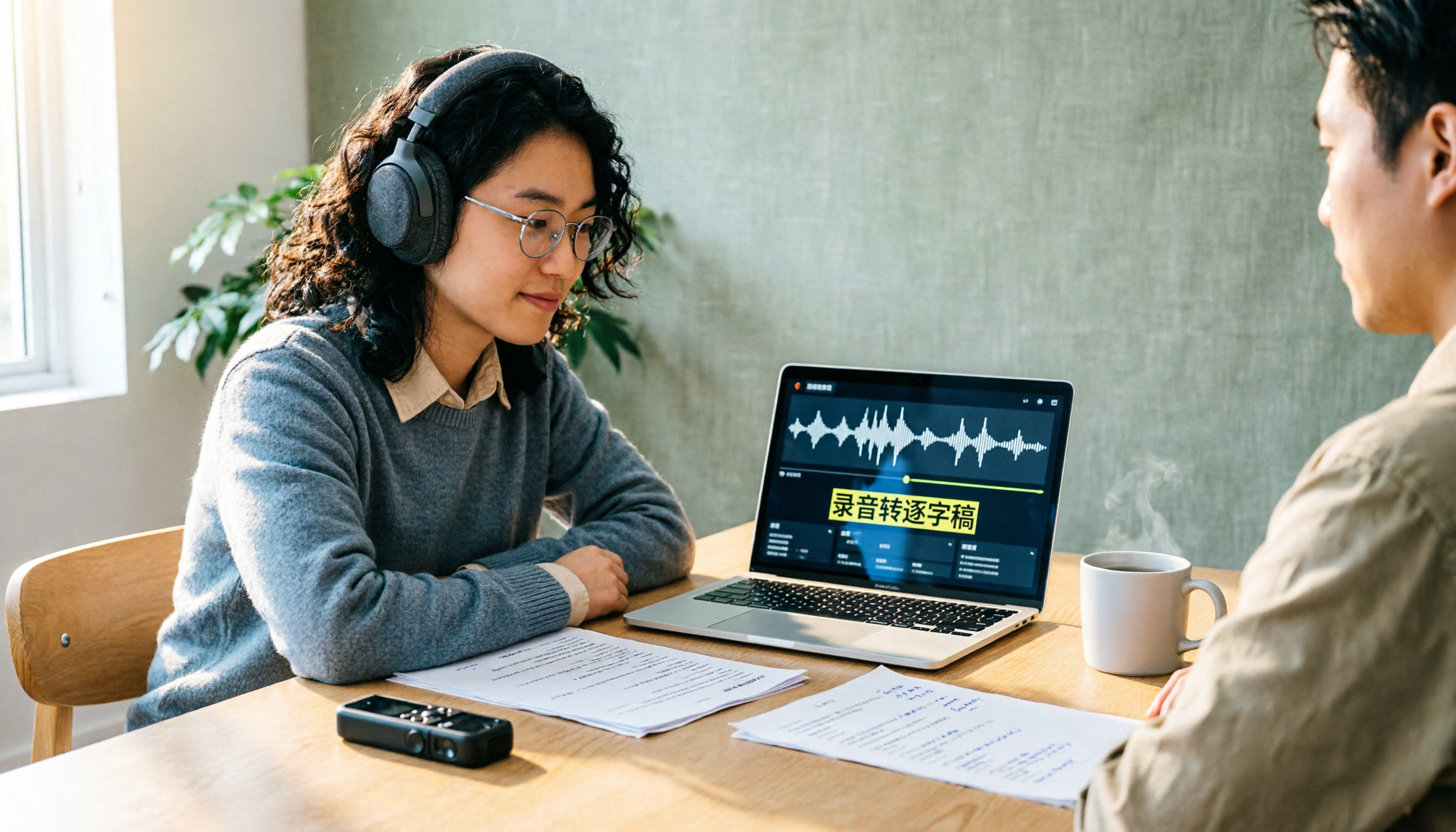
How to Create a Transcript in 2026: 5 Steps from Recording to Quotable Text
A transcript isn't just typing what you hear. This guide starts with the three most common inefficient approaches, then breaks down 5 practical steps: define the purpose, ensure good recording quality, let AI do the first pass, proofread against the audio, and label speakers before exporting. It also shares the author's most efficient tool after testing, Tinrec, along with when to use Notta, TurboScribe, and Yating Transcript.

2026 Zoom AI Meeting Summary Tools Compared: Is Built-in Enough?
How to enable Zoom AI meeting summaries, where to find them, and whether the free version is sufficient? This article starts from real meeting scenarios and compares Zoom's built-in Meeting summary, Tinrec, Otter.ai, and Notta. It covers 4 key selection points, 3 common pitfalls, and scenario-based recommendations to help you decide whether to use the built-in feature or switch tools.

2026 Zoom Transcription Comparison: Built-in, Transcribe, Tactiq, and Tinrec
How do you get a transcript after a Zoom meeting? This comparison covers Zoom's built-in transcription, Transcribe, Tactiq, and Tinrec, breaking down recording methods, Chinese recognition, post-meeting organization, cross-platform support, team collaboration, and pricing to help you choose the approach that best fits your meeting habits.

Tinrec vs Granola 2026: 5-Dimension Comparison — Which Is Better for Chinese Interview Transcripts?
The biggest pitfalls in interview transcription are choosing the wrong mode and only comparing text conversion. This article compares Tinrec and Granola across 5 dimensions, from importing existing audio files, punctuation and paragraphing, post-meeting follow-up questions, to team data retention, explaining how to choose the most time-saving workflow for Chinese interview scenarios.
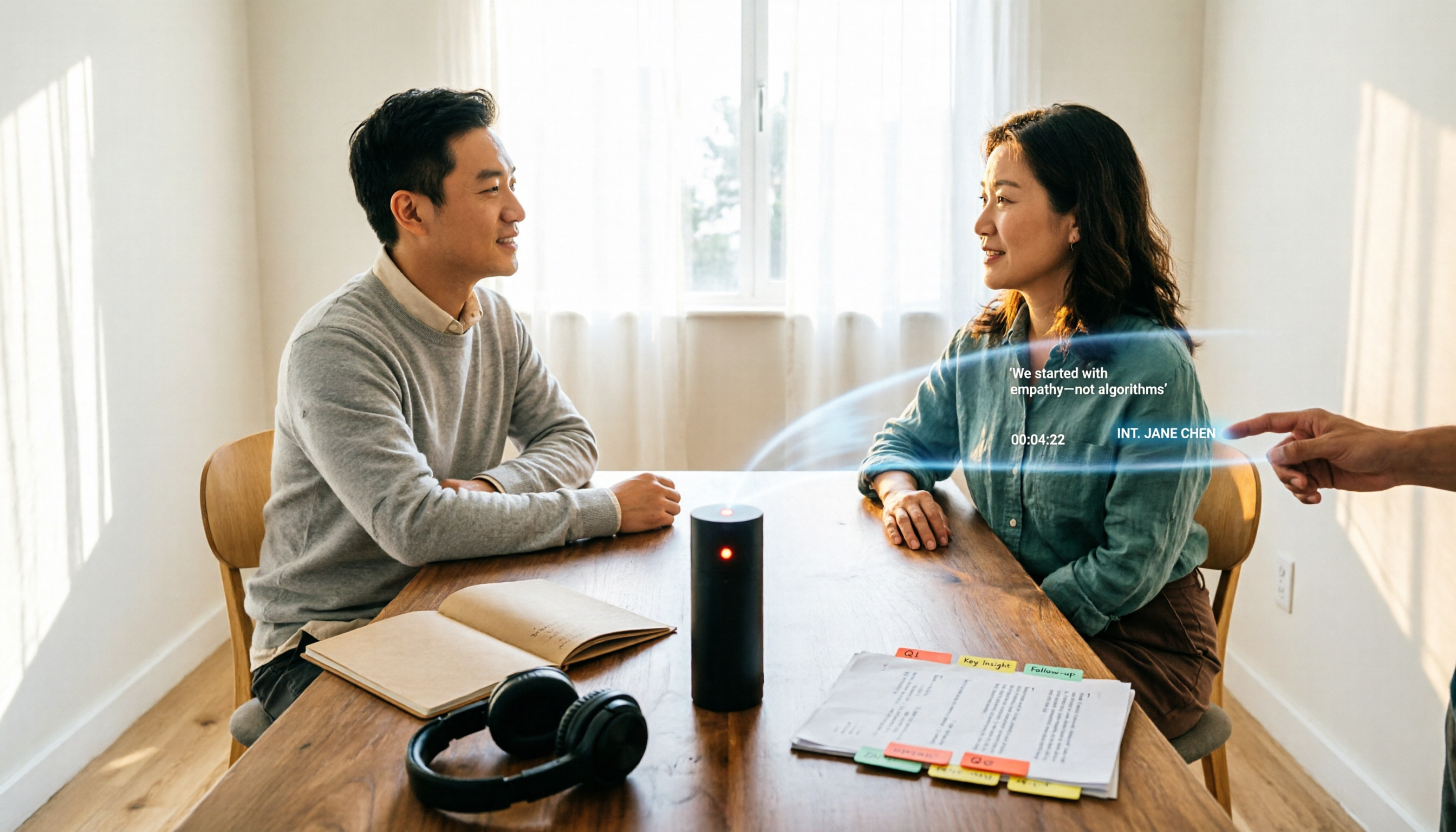
5 Interview Transcription Tools Tested: Which Saves the Most Proofreading Time in 2026?
After a 90-minute interview, the real work begins. This guide compares five interview transcription tools—covering speaker labeling, time codes, export formats, and free tiers—and offers scenario-based recommendations to turn your recordings into citable, codeable transcripts you can hand off to colleagues.

The Complete Guide to Zoom Meeting Recording Tools in 2026: Tinrec's Bot-Free Transcription and Post-Meeting Organization
Recording a Zoom meeting isn't as simple as hitting record. Drawing from real student project experience, this guide breaks down common pitfalls of "recording but never using it," explains the differences between bot-free recording, transcripts, AI summaries, and action item organization, and helps you determine if free tiers are sufficient and how to properly archive meeting data for team projects.
4 Zoom Transcription Tools Tested: Which One Actually Saves Meeting Notes Time in 2026?
Recording a Zoom meeting doesn't automatically give you a transcript. This article addresses three common misconceptions and compares Zoom's built-in transcription, Tinrec, Notta, and TurboScribe on speed of getting transcripts, post-meeting organization, Chinese and mixed Chinese-English handling, and team data ownership. It also lists 4 key points to consider before buying and 4 common pitfalls, with clear recommendations based on use cases.

6 Zoom Meeting Settings and Recording Tools Compared for 2026: From Built-in to AI-Powered
Getting your Zoom meeting settings right determines whether your transcript is usable. This guide starts with microphone audio and recording methods, then compares 6 meeting recording tools—Zoom built-in, Otter, Notta, Granola, TurboScribe, and Tinrec—covering pricing, quotas, and ideal users so you can decide which one to use.

2026 Comparison of 4 Online Meeting Transcription Tools: Which One's Post-Meeting Output Is Actually Ready to Use?
A meeting transcription tool isn't automatically useful just because it produces text. This article addresses three common misconceptions, breaks down 4 key factors for choosing a tool, and compares Tinrec, Otter.ai, Notta, and TurboScribe in terms of meeting capture methods, post-meeting output, Chinese language performance, and team data retention.