
Turn recordings into transcripts and summaries in minutes
Upload audio or video for multilingual transcription, AI notes, and action items
When dealing with Cantonese meetings full of Chinese-English code-mixing or needing to transcribe Taiwanese (Hokkien) interviews, general speech recognition software often outputs large amounts of gibberish. For content creators, administrative staff, and students, choosing a tool that understands dialects is key to saving hours of manual transcription.
This article will review the top AI tools on the market in 2025 optimized for dialects. We will conduct an in-depth comparison based on recognition accuracy, real-time capability, functional scenarios (subtitles vs. notes), and pricing. If you are a video creator, Subanana might be your top choice; if meeting efficiency and note-taking are your priorities, Tinrec offers a complete solution from recording to action items.

2025 Speech-to-Text Tools: Which Dialect Recognition Is the Best?
Tools on the market can be mainly divided into "post-production video" and "productivity notes" categories. Below, based on actual test data and feature characteristics, we analyze several representative tools.
1. Subanana: King of Cantonese Video Subtitles
According to an in-depth review from Subanana’s official site, this tool developed by a Hong Kong team excels in Cantonese recognition. In scenarios involving Chinese-English code-mixing (e.g., tech press conferences), its accuracy reaches as high as 97.5%; even in noisy environments, it maintains a high level of 93.4%. Its biggest highlight is support for "direct conversion of spoken to written language," automatically turning spoken Cantonese into fluent written Chinese, making it ideal for video subtitle creation.
2. Taption: A Subtitle Option from Taiwan
Taption is an online tool from Taiwan with a user-friendly interface and no installation required. Although its accuracy in Cantonese Chinese-English code-mixing tests is about 85.3%, lower than Subanana, as a Taiwan-developed software, it has some support for Taiwanese usage habits. It supports bilingual transcription and direct import from YouTube links, suitable for lightweight video creators.
3. Premiere Pro and ArcTime: Challenges of Traditional Post-Production Tools
Adobe Premiere Pro, though an industry standard, sees its accuracy drop to around 75.6% when handling Cantonese with background noise. ArcTime requires purchasing credits, and for users who only need "transcripts" rather than "timeline subtitles," the learning curve is relatively high.
4. Tinrec (MiaoTing Recording): A Productivity Dark Horse Across Languages
If your needs are not just "making subtitles" but "meetings, classes, and note-taking," Tinrec offers a different approach. It not only supports Cantonese and Taiwanese automatic recognition but also emphasizes overall workflow efficiency.
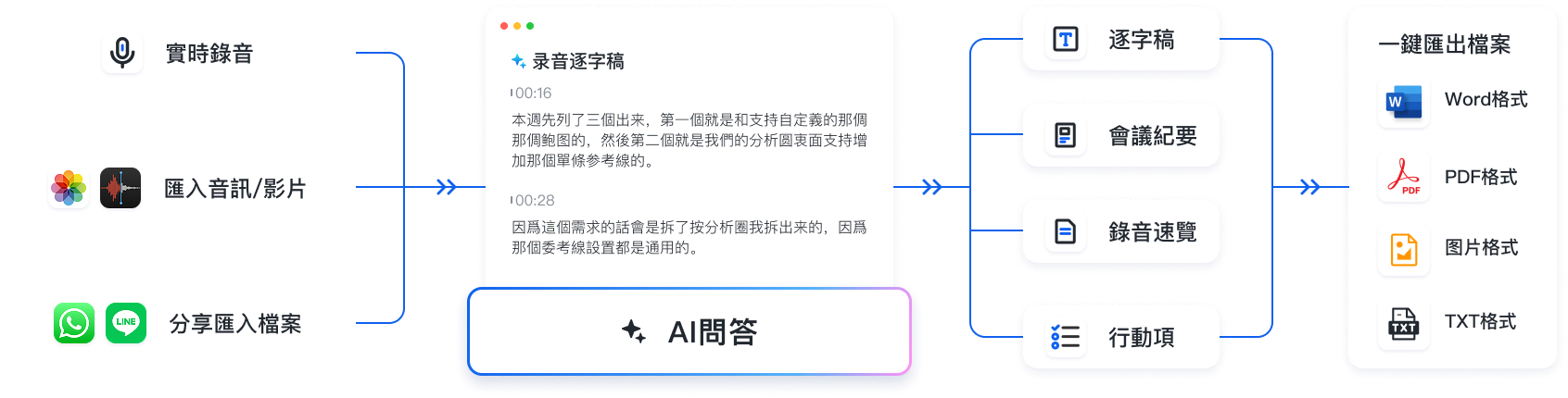
- Multilingual support: Covers 10 languages including Chinese, Japanese, English, Korean, German, Taiwanese, Cantonese, etc., solving pain points of cross-language meetings or dialect interviews.
- Real-time transcription: Unlike many tools that require "upload after recording," Tinrec supports real-time transcription during recording, suitable for classroom and meeting follow-up.
- AI smart summary: In addition to the transcript, it automatically generates summaries and action items, allowing users to avoid reading the entire transcript.
Tool Specs Face-Off: Which One Suits You?

To help you decide quickly, we have compiled a comparison table of key dimensions:
Stop organizing recordings by hand
Upload audio or video and automatically get a transcript, summary, and action items
| Comparison Dimension | Subanana | Tinrec (MiaoTing Recording) | Taption | Premiere Pro |
|---|---|---|---|---|
| Main Strength | Cantonese subtitles, spoken-to-written conversion | Meeting notes, Taiwanese/Cantonese support, AI chat | Video subtitles, Taiwan-based team | Professional video editing integration |
| Real-time Recording Transcription | No (file upload required) | Yes (transcribe as you record) | No (file upload required) | No |
| Language Advantage | Cantonese (specially optimized) | Taiwanese, Cantonese, multiple languages | Traditional Chinese, English | Multiple languages (dialects weaker) |
| AI Summary/Action Items | No | Yes (auto-generated) | No | No |
| Supported Platforms | Web | iOS, Android, Web | Web | Desktop (requires high-end hardware) |
| Ideal Use Case | YouTubers adding subtitles | Meetings, classes, interview transcription | Short video subtitles | Professional film post-production |
Hands-On Tutorial: How to Efficiently Process Dialect Recordings with AI?
Below, using Tinrec as an example, we demonstrate how to turn recordings containing dialects into usable notes and summaries.
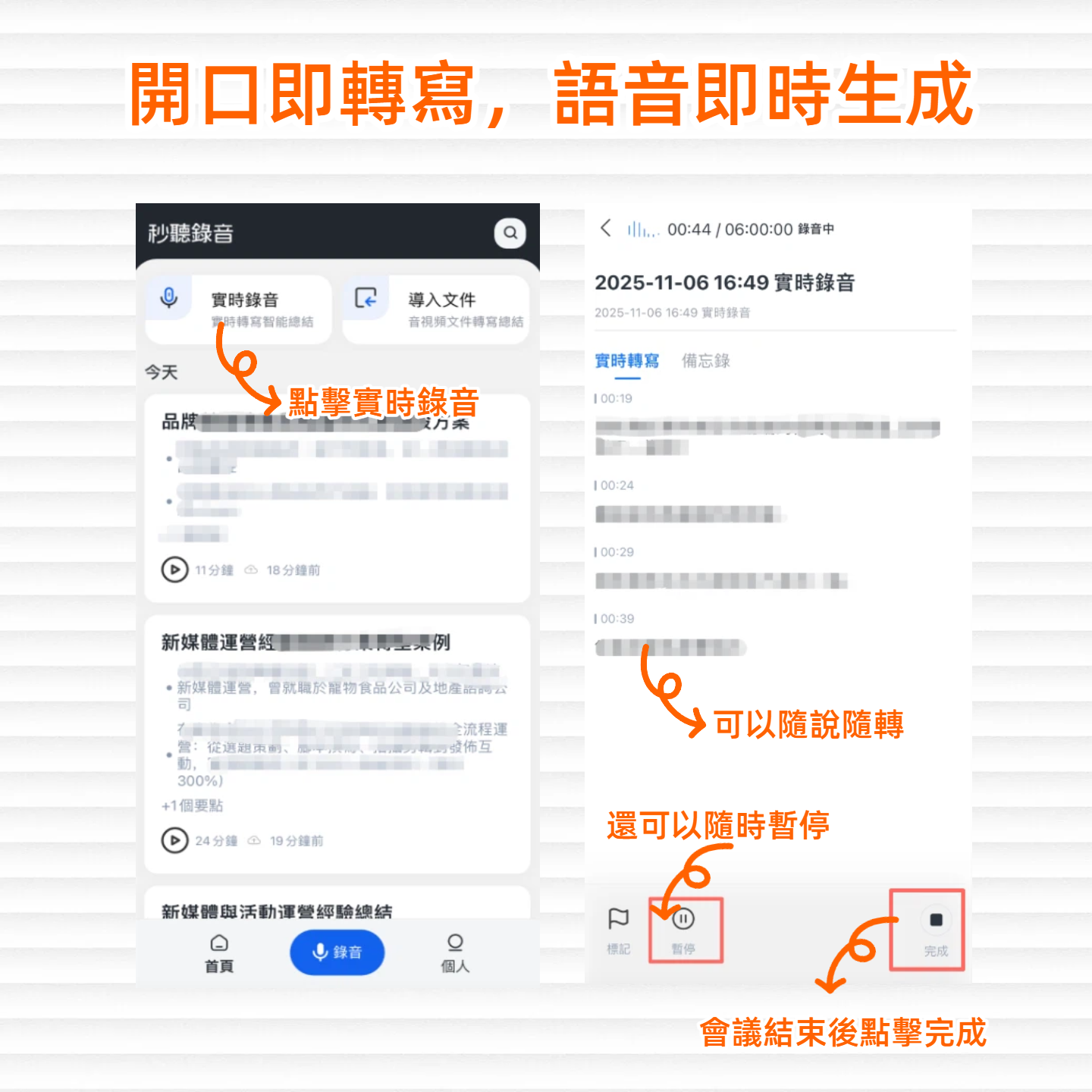
Step 1: Choose Recording Mode
Depending on your source, Tinrec offers three entry points:
- Live Meeting/Interview: Use the mobile or web version, click Record to Text in Real Time. The system generates a transcript while recording, with support for marking key points.
- Existing File: If you already have a file from a voice recorder, use the Audio File to Text function to upload, supporting common formats like mp3, m4a, wav.
- Online Video: For Cantonese interviews or podcasts on YouTube, directly paste the link into Podcast/Online Video to Text.
Step 2: Confirm Language Settings
Before starting transcription, ensure the language settings include the target dialect (e.g., Cantonese or Taiwanese). Tinrec’s multi-language identification engine helps distinguish the content.
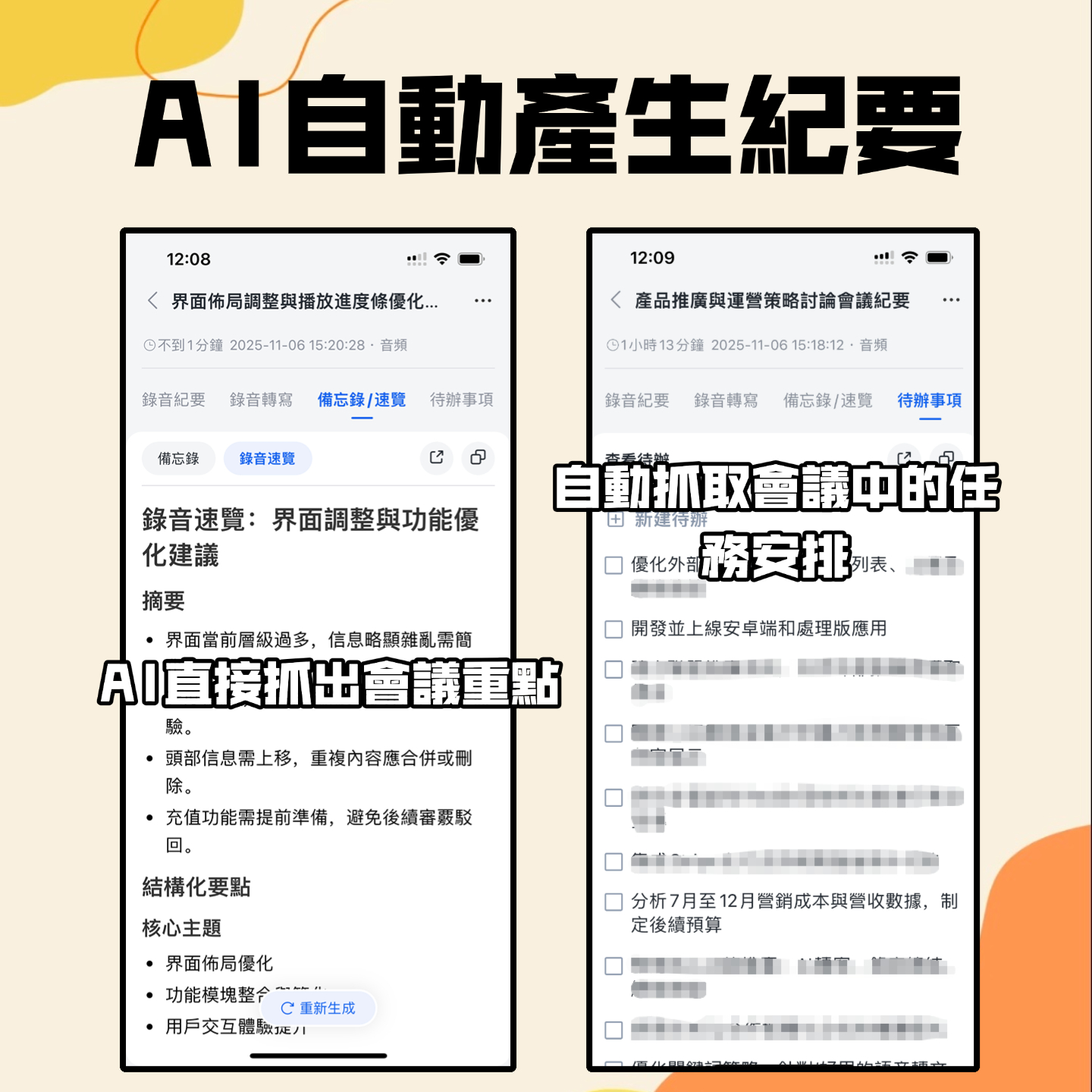
Step 3: Use AI to Extract Key Points
After obtaining the transcript, instead of reading from beginning to end, you can:
- View AI Summary: The system automatically differentiates speakers and summarizes each paragraph’s main idea.
- Extract Action Items: For meeting recordings, directly view the auto-generated To-Do list.

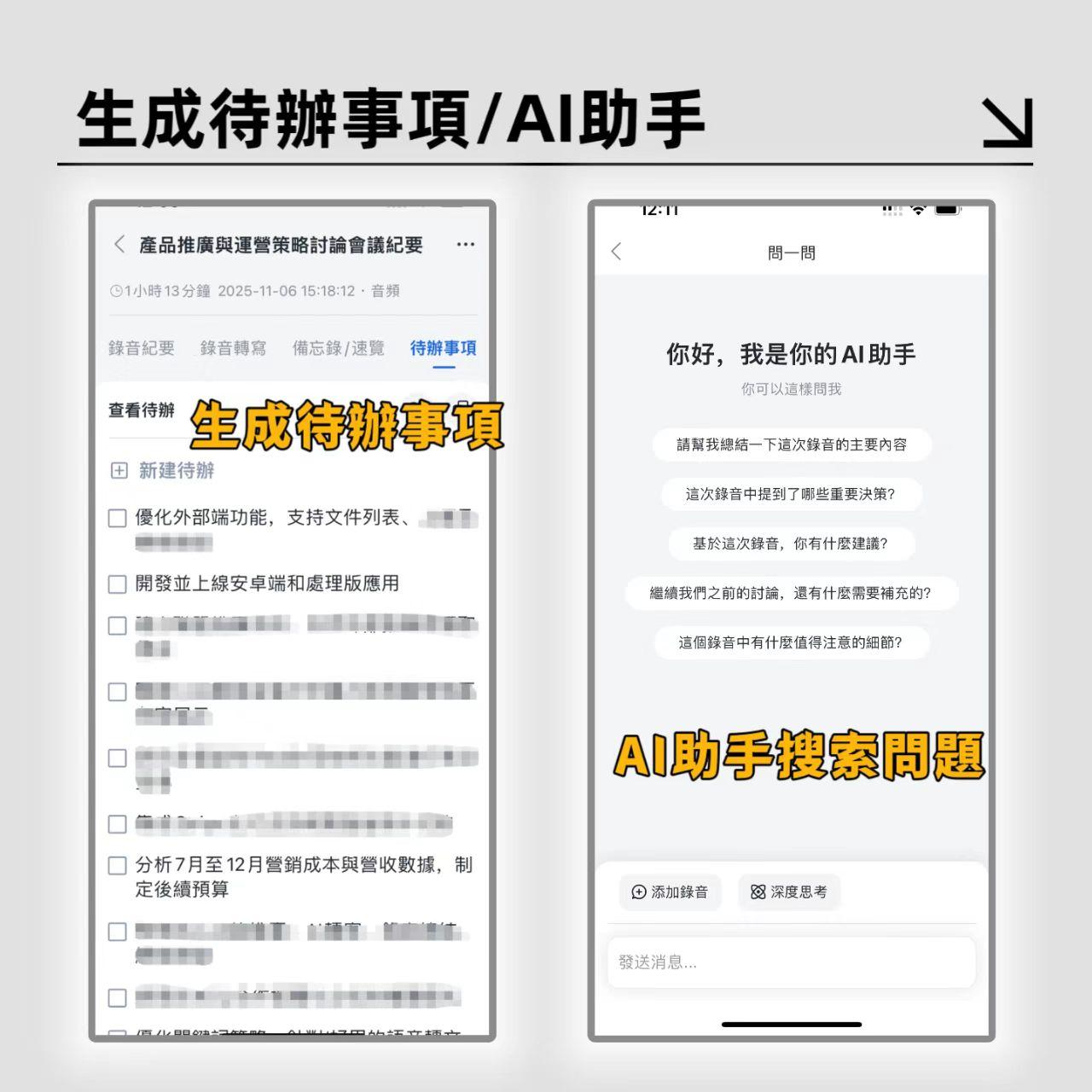
Step 4: Use AI Chat to Query Details
If the recording is long (e.g., a 2-hour interview), there is no need to relisten. Use the AI Chat Query function. For example, type: "What market data did the interviewee mention?" The AI will answer directly based on the recording content.
Frequently Asked Questions (FAQ)
Q1: Why is the Cantonese recognition rate of many software tools not high?
A: Cantonese contains many colloquial terms (e.g., "ge," "hai") and code-mixing of Chinese and English. If the software has not been specially trained on corpora specific to Hong Kong or the Guangdong region, it easily fails to recognize. Subanana and Tinrec both have targeted language model optimization.
Q2: Can iPhone recordings be directly transcribed to text?
A: The built-in Voice Memos on iPhone cannot output a transcript directly. It is recommended to use Tinrec’s iOS app for recording, or export the iPhone recording file and upload it to Tinrec’s web version for processing.
Q3: Do these tools have free trials?
A: Yes. Subanana offers a basic free plan; pyTranscriber is completely free (but requires manual installation); Tinrec provides a free version with 100 minutes of recording per month, including real-time transcription and AI summary features.
Q4: What is the difference between tools for video subtitles and meeting notes?
A: Video subtitle tools (e.g., Subanana, ArcTime) focus on "timeline" accuracy and subtitle format export (SRT/VTT); meeting notes tools (e.g., Tinrec) emphasize "content understanding," providing summaries, keyword search, and action item extraction, making them more suitable for workplace and learning purposes.
Q5: Any recommendations for Taiwanese (Hokkien) speech-to-text?
A: Taiwanese (Southern Min) recognition is challenging. Tinrec supports Taiwanese recognition, converting speech to text, helping users transcribe interviews or elders’ oral histories.
Q6: I have a long recording file. Will uploading take a long time?
A: It depends on internet speed and file size. Tinrec supports cloud processing and offers a "link parsing" feature: if the file is already on YouTube or online, simply paste the link to start parsing instantly without downloading and re-uploading.
Turn every recording into actionable outcomes
Get 60 free transcription minutes when you sign in. No credit card required.
Related Reading
You might also like

2026 Comparison of 4 Speech-to-Text Apps: Which Free Plan Suits Hong Kong Office Workers Best?
Tired of meetings and typing up recordings afterward? This article tests Tinrec's free plan and breaks down how to choose a speech-to-text app without getting scammed, helping you save overtime hours.

2026 iPhone Voice-to-Text: Free Built-in Features vs Tinrec Premium Choice
Want to transcribe iPhone recordings for free? Is the built-in Voice Memos app enough? Our tests show free options fall short in noisy environments, Cantonese recognition, and post-processing. This article compares iOS built-in features, free apps, and Tinrec to help you find the best solution.
2026 Speech-to-Text Tool Review: Is Tinrec's Free Plan Really Enough?
A mid-level manager tests online speech-to-text tools, from free quotas to transcription accuracy and post-meeting organization, to tell you whether Tinrec's free plan is sufficient and when you should upgrade.

4 Best Online Speech-to-Text Tools in 2026: Free Plans and AI Features Compared
This article tests four online speech-to-text tools—Tinrec, Otter.ai, Notta, and Granola—and provides buying advice based on free allowances, bot-free meeting recording, AI Q&A, and team collaboration features.

2026 iPhone Voice-to-Text App Tutorial: Tinrec 3-Step Automatic Transcription + AI Summary
A student's hands-on review of Tinrec, an iPhone voice-to-text app that automatically generates transcripts, AI summaries, and to-do lists for classes, meetings, and interviews. The free version is enough to get started, saving more time than built-in features.

Best Speech-to-Text Tools in 2026: Notta vs. Tinrec and 3 Others—Tinrec Wins for Meeting Notes
A mid-level manager tested 4 speech-to-text tools for meeting notes, comparing Notta and Tinrec on bot-free recording, Chinese language support, post-meeting organization, and team collaboration, and explains why Tinrec came out on top.

2026 Free Cantonese Audio-to-Text Solutions: 3 Options Compared
Looking for a free Cantonese audio-to-text tool? Tinrec's free plan might be the most efficient choice. This article reviews 3 free options, with a focus on Tinrec, showing how it can save you overtime hours.

4 Best Online Audio-to-Text Tools in 2026: Free Plans, AI Features, and Team Collaboration Compared
How to choose an online audio-to-text tool? This article compares Tinrec, Otter.ai, Notta, and TurboScribe, focusing on free quotas, AI post-processing, cross-platform support, and team collaboration to help you find the best fit.

The Complete Guide to Online Speech-to-Text in 2026: From Meeting Minutes to Team Collaboration
Tired of manually transcribing recordings? This article tests multiple online speech-to-text tools, comparing features, accuracy, free tiers, and team collaboration to help you choose the best AI meeting notes solution.