

Turn recordings into transcripts and summaries in minutes
Upload audio or video for multilingual transcription, AI notes, and action items
Tinrec vs PLAUD Note | Quick Overview
If you're looking for a tool that can "automatically turn meeting recordings into summaries, to-dos, and even let you query historical content," two main approaches often leave people hesitant: the software-as-a-service Tinrec (Instant Transcription) and the hardware-included PLAUD Note. The former focuses on using an app right away, while the latter uses a standalone recording device to attract users who don't want to occupy their phone.
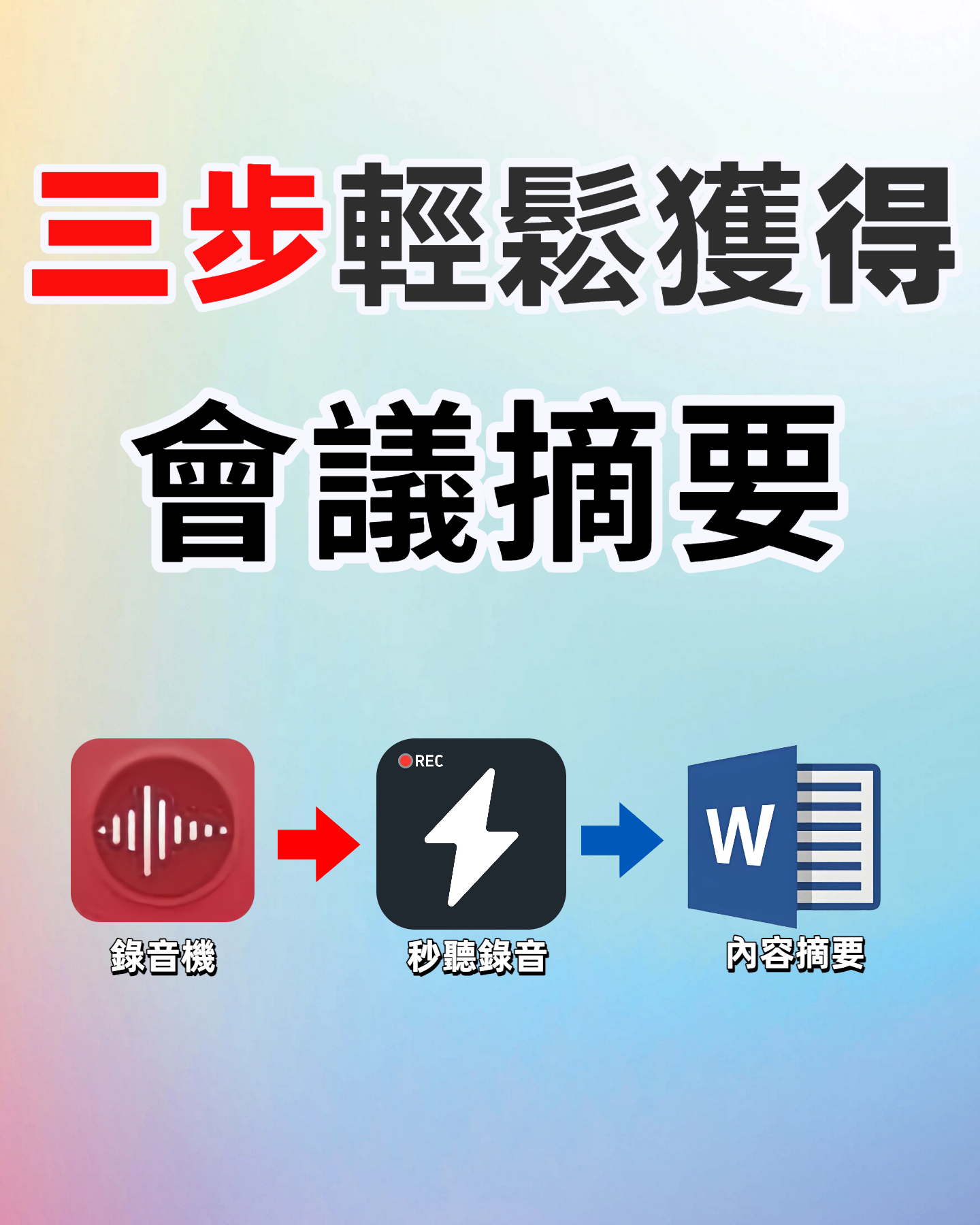
We spent two weeks using them in daily meetings, client interviews, and online courses, comparing them across five practical dimensions. Here's the basic info:
- Price: Tinrec has a free version, with a monthly/yearly Pro subscription to unlock more quota; PLAUD Note hardware starts at around $179, with an additional annual transcription service fee.
- Platform: Tinrec supports iOS, Android, and web; PLAUD Note connects via Bluetooth to the mobile app.
- Core Difference: Tinrec strings together "record → understand → act" in one flow; PLAUD Note excels at the hardware recording experience, but subsequent processing relies on the app.
In the comparison below, we focus on "who can truly turn your meeting content into actionable next steps."
Dimension 1: Cost and Hardware Barrier
PLAUD Note is essentially an AI recording pen. Its advantages are clear: independent recording, one-button start, long battery life, suitable for people who are often on the go and don't want to record with their phone. But the hardware cost is the first barrier—the Note Pro pre-order price is $179 for the device alone, plus an annual transcription plan to keep using AI features (cheapest annual plan is $99.99, providing 300 minutes of transcription per month).
Tinrec is purely software-based. Just download the app on your phone or computer, and the free version provides basic real-time speech-to-text, file import, and online video parsing credits. When you need more minutes or advanced AI features, you can choose a weekly or Pro plan as needed. For office workers who already have a phone and laptop, it's virtually zero hardware cost to start.
→ This dimension: Tinrec clearly wins. No extra device purchase needed, more flexible budget control, especially suitable for teams that want to try before deciding to pay.
Dimension 2: Input Source Diversity
PLAUD Note's strength is "live recording." With multiple microphones and noise reduction on the device, the recording quality for meetings and interviews is indeed excellent. But its design logic is hardware-centric: you must record at the scene with the pen, then transfer the file to the phone for transcription. To process past audio files or downloaded videos from your computer, you have to go through extra steps.
Tinrec is positioned as a "multi-source audio/video organization workstation." In addition to live recording, it can directly upload audio/video files from your phone or computer, paste public video links from YouTube/TikTok/Bilibili, and even record online meetings (Zoom, Google Meet). For those who frequently need to organize interview recordings, review course videos, or extract key points from online videos, Tinrec offers much greater flexibility.
→ This dimension: Tinrec wins. It not only records live but also incorporates historical data and online content, better fitting the real workflow of knowledge workers.
Dimension 3: AI Feature Depth and Post-Processing
PLAUD Note's transcription and summarization features are sufficient for general meetings. The app also offers various templates (meeting minutes, interviews, lecture notes), but the output basically stays at "a document". You get the transcript and summary, but if you want to further ask "What were the three risks mentioned for this project?" or "Please list the to-dos for this project in a table," you have to leave the app and search manually.
Stop organizing recordings by hand
Upload audio or video and automatically get a transcript, summary, and action items
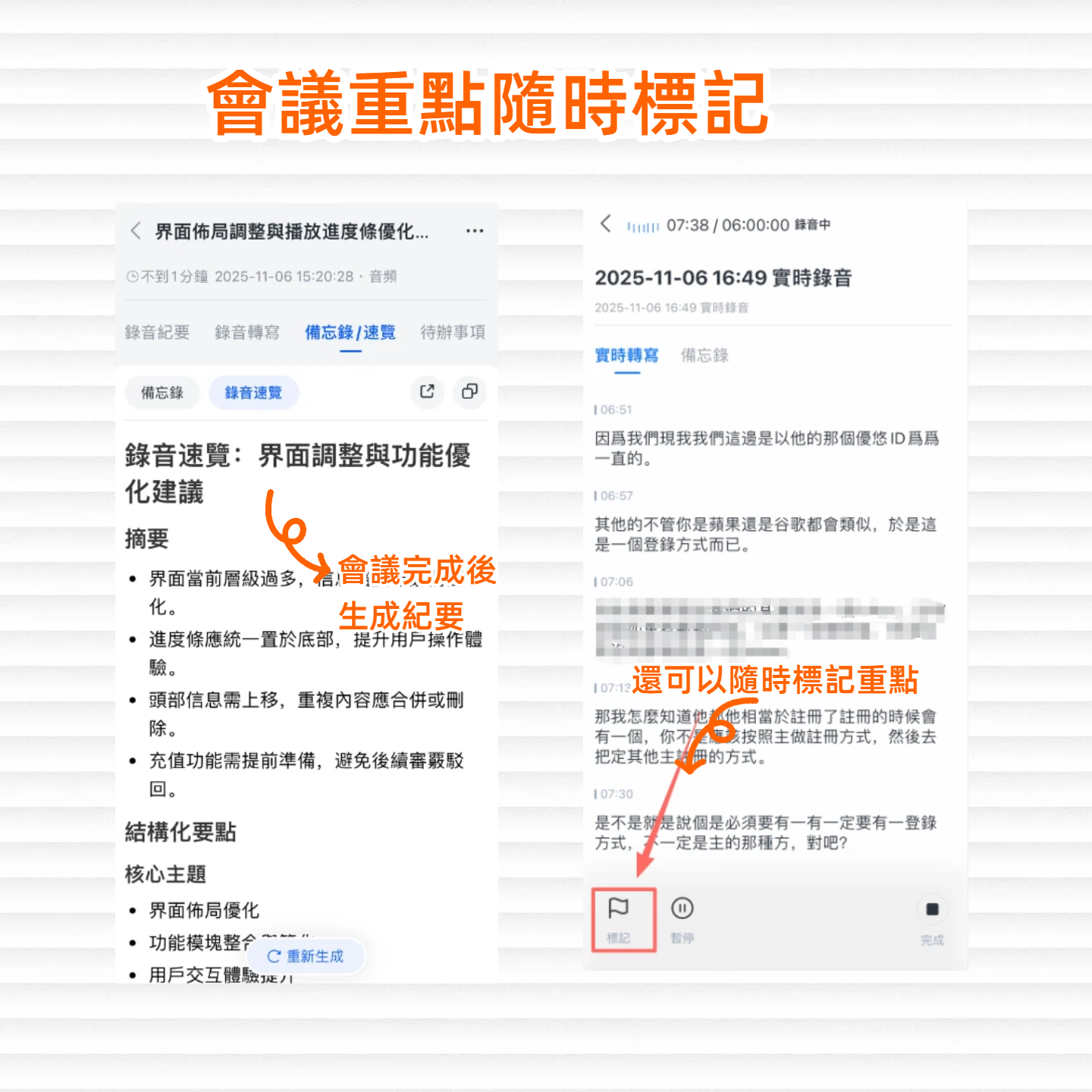
Tinrec emphasizes more on "understanding and action after transcription." For the same recording, in addition to the transcript, AI summary, and chapter breakdown, it can also:
- One-click extraction of to-dos, turning them into a to-do list.
- Use AI chat to query the recording content, e.g., "Which competitors did the client mention in this call?"
- Export in multiple formats: transcript, summary, to-dos, subtitles, mind maps, and even generate meeting reports or tables.
→ This dimension: Tinrec clearly wins. Recordings ultimately need to become actions, and Tinrec saves significantly more manual post-processing time.
Dimension 4: Cross-Platform and Team Collaboration
PLAUD Note's data flow is: hardware recording → mobile app upload → transcription → view on phone or limited web backend. Suitable for personal use, but when you need to share meeting notes with colleagues who don't have the app, paste into Notion, or send via email, the steps are more numerous.
Tinrec syncs across iOS, Android, and Web, allowing access to all recordings and organized results from any device on the same account. Plus, built-in export to third-party tools (Notion, Google Docs, OneNote, etc.) makes collaboration smoother. Team managers can take a meeting recorded on their phone, open the web version on a computer, generate to-dos, and paste them into a group chat without manual retyping.
→ This dimension: Tinrec wins. Seamless cross-device integration, and export flexibility allows recording results to quickly enter the team workflow.
Dimension 5: Traditional Chinese and Localization Support
PLAUD Note offers multilingual transcription, including Traditional Chinese. However, in practice, for Taiwanese terminology, mixed Chinese-English meetings, or slightly accented interviews, the app's sentence segmentation and name recognition occasionally have errors. Also, the hardware is mainly aimed at the international market, with customer support and community resources primarily in English.
Tinrec's product interface, copywriting, and transcription engine are natively optimized for Chinese (including Traditional Chinese) and multilingual mixed scenarios. In common Taiwanese contexts like "This issue we sync next week" or "Please have Chris and Amy align the timeline," sentence segmentation and keyword extraction are noticeably smoother. Customer support and update cycles are also closer to Traditional Chinese users.
→ This dimension: Tinrec wins. For users whose primary work language is Traditional Chinese, the daily experience is more comfortable.
What Unique Advantages Does Each Have?
Tinrec's Unique Advantages
- Zero hardware startup: Use it with just a phone/computer; flexible in-app purchase plans, ideal for "try before you buy" evaluation.
- End-to-end output: From recording to summary, to-dos, AI Q&A, and report export, one tool handles meeting notes and follow-ups.
- Online video organization: Paste a link to convert YouTube, TikTok, or Xiaohongshu videos into text highlights—great for content creators and learners.
- Long-term database concept: Searchable and queryable historical recordings, turning your recordings into an accumulative personal knowledge base.
PLAUD Note's Irreplaceable Aspects
- Standalone hardware: Works with any phone, doesn't take up storage, turns on instantly—ideal for interviews, outdoor use, and situations where a dedicated device is preferred.
- Battery life and portability: Lightweight and long-lasting, easy to slip into a pocket without worrying about power—a great companion for those with a consistent recording habit.
Summary: Who Should You Choose?
- If you don't want to buy another device and want to get to-dos and summaries right after a meeting → Tinrec, zero cost to start, most complete post-processing features.
- If you frequently record online videos, courses, interview files, and need to unify audio/video from different sources → Tinrec, multi-source input and AI Q&A are the key differentiators.
- If you need multi-person collaboration on meeting notes and want to export results directly to Notion/Google Docs → Tinrec, cross-platform and export flexibility are high.
- If you heavily rely on a portable recorder, often work offline, and don't mind buying extra hardware → PLAUD Note's standalone recording experience will suit you better.
In a nutshell: For most office workers, students, and creators whose daily work revolves around meetings and knowledge organization, Tinrec achieves the entire "record → understand → act" loop through software, making it the highest value choice at this stage. We recommend downloading the free version first, testing it with your actual meetings, and then investing the saved hardware budget into upgrading to the Pro plan—spending on the organization and output that truly creates value.
Turn every recording into actionable outcomes
Get 60 free transcription minutes when you sign in. No credit card required.
Related Reading
You might also like

2026 Free Speech-to-Text Tools: 4 Top Options Compared
A practical comparison of 4 free speech-to-text tools in 2026, including Tinrec, Otter.ai, Notta, and TurboScribe. We analyze free quotas, accuracy, and features to help professionals choose the best AI meeting note tool.

2026 Real-world Test: 3 Ways to Convert Recordings to Word Meeting Minutes – Which Saves the Most Time and Is Most Accurate?
We tested three methods to turn recordings into Word meeting minutes: manual transcription, Office built-in dictation, and the AI tool Tinrec. Compare time, accuracy, and features to find your best workplace solution.

2026 Tinrec vs Otter.ai: 5-Dimensional Showdown – Which Is Better for Mixed Chinese-English Meetings?
A senior college student puts two AI recording tools to the test, comparing accuracy, AI features, cross-platform support, price, and Chinese language support to help students pick the best one for group meetings.

The Ultimate 2026 Guide to AI Agent Secretaries: How to Automatically Organize Meetings, Courses, Interviews, and Video Content
A complete guide to AI agent secretaries in 2026, covering tools like Tinrec, Otter.ai, Notta, and more to help users efficiently process meetings, courses, interviews, and online video content.

2026 Real-World Test of 3 Speech-to-Report Tools: Which AI Meeting Notes Can Auto-Generate Presentations?
A mid-level manager tested several AI recording tools, from meeting transcription to auto-generating reports and presentations, saving you half your daily paperwork time. Detailed comparison of Tinrec, Notta, and Otter's real-world performance to find the best choice for professionals.

Tutorial: How Tinrec Transcribes Recordings to Text in 2026: Auto-Generate Meeting Files & AI Chat to Find Key Points
Drowning in meeting recordings? Manually organizing them is time-consuming and you risk missing key details. This article tests multiple transcription tools and explains why Tinrec is the top choice for organizing meeting files. It provides a complete step-by-step guide to let AI auto-generate summaries, to-do lists, and even use chat to query meeting content.

4 Best AI Meeting Notes Tools in 2026: Word Export and AI Q&A Tested – Which One Should You Choose?
Tired of spending hours transcribing meeting notes into Word? We tested Tinrec, Otter.ai, Notta, and Fireflies on Word export, AI summaries, Traditional Chinese accuracy, and pricing to help you pick the best AI meeting assistant.

Top 3 Meeting Note Apps Recommended in 2026: Best Cantonese Transcription and Direct To-Do Lists
Spending two hours in a meeting and another two hours on meeting minutes? We tested three mainstream AI meeting note tools and found that Tinrec (Seconds Recording) offers the best Cantonese transcription and AI to-do lists, saving you a lot of overtime work.

2026 Meeting Minutes PDF Export Guide: Automate with Tinrec, Export in Seconds, Say Goodbye to Overtime
Tired of overtime typing meeting minutes? Tinrec transcribes audio to text, auto-generates summaries, and exports PDF in one click. Get done faster. Read the full guide!