
Turn recordings into transcripts and summaries in minutes
Upload audio or video for multilingual transcription, AI notes, and action items
Facing hour-long YouTube tutorials, podcast interviews, or online course recordings, do you often drag the progress bar back and forth because you can't find the key points?
This is not just a time management issue; it's an efficiency bottleneck in information retrieval. For students, researchers, or content creators, converting YouTube videos into transcripts is a top priority. This article takes a practical approach, analyzing popular video-to-text solutions in 2026 and providing a detailed tool comparison and hands-on guide to help you transform 'listening to content' into efficient 'searching content'.
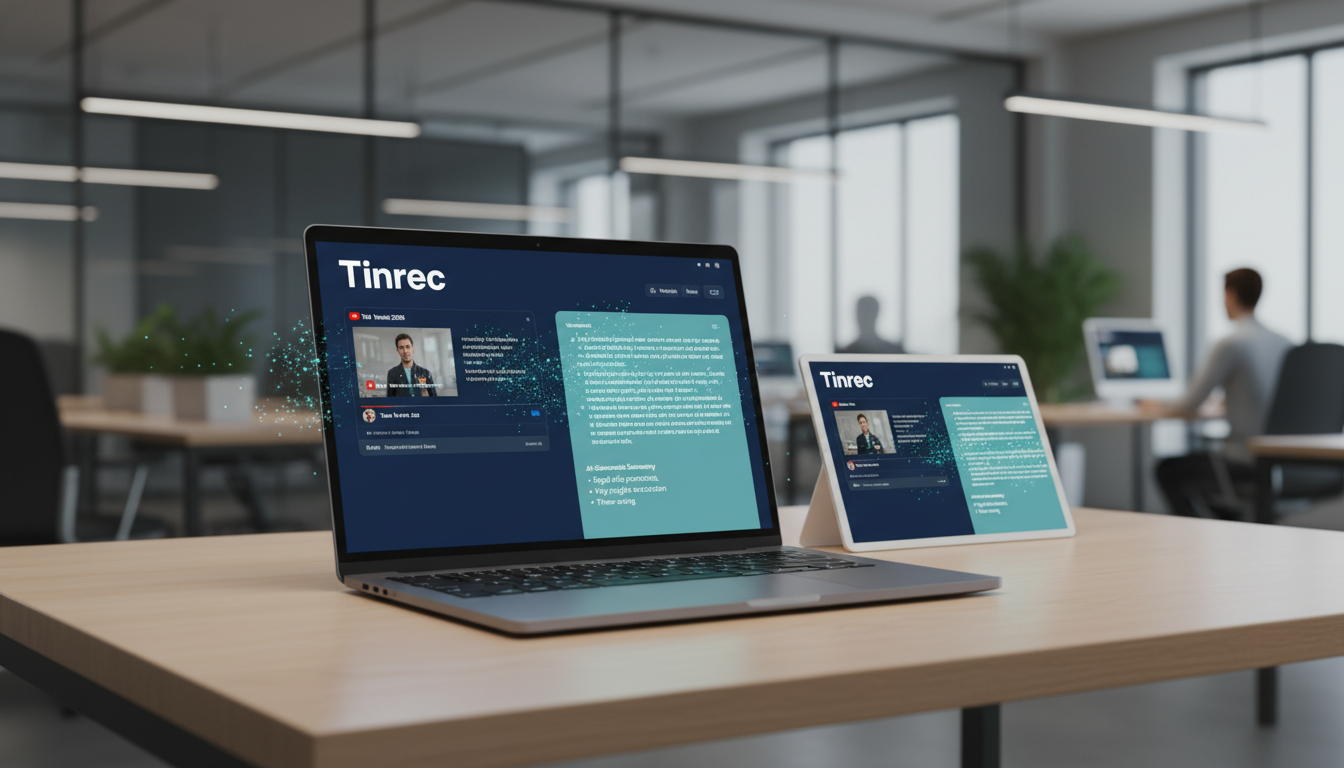
Quick Navigation Conclusion:
- If you need to create CC subtitle files (SRT/VTT): Choose traditional subtitle software specialized in timeline alignment (e.g., Arctime or built-in editing tools).
- If you need to 'understand content' and 'organize notes': Prioritize tools that support URL link parsing and AI conversation summarization (e.g., Tinrec), which skip the tedious file download step and achieve 'paste URL, get draft'.
1. Why You Need a 'Video-to-Text' Tool: Three Core Pain Points
In digital learning and remote work scenarios, the simple 'video' format has inherent limitations:
Low information density, difficult retrieval Text can be scanned quickly, but video must be played linearly. Finding a specific point in a 2-hour interview without a transcript is like searching for a needle in a haystack.
High cross-language comprehension cost When watching English or Japanese YouTube trend videos, relying on YouTube's auto-generated subtitles often leads to unnatural translations or terminology errors, and you can't save a bilingual comparison.
Watch and forget, unable to convert into action Watching a video leaves a 'vague impression' but is hard to turn into concrete notes or action items. The traditional method of pausing and typing while watching is extremely inefficient.
2. Tool Comparison: Traditional Transcription vs. Voice Recorder Apps vs. AI Efficiency Tools
The market offers a wide variety of tools. We've selected three main categories for a feature comparison to help you decide which suits your scenario best.
| Comparison Dimension | Category A: Traditional Subtitle Editors | Category B: General Voice Memo Apps | Category C: AI Efficiency Assistants (e.g., Tinrec) |
|---|---|---|---|
| Primary Use | Video post-production, subtitling | On-site recording and simple archiving | Content organization, knowledge management, note-taking |
| YouTube Support | Must download video file (MP4) first, then import | Cannot directly process web links | Supports YouTube/Podcast link parsing |
| Output Content | Transcript + timeline (SRT) | Raw audio file or rough text | Transcript + AI summary + action items |
| Interactivity | Read and edit only | Re-listen only | Supports AI chat for queries (Chat) |
| Multilingual Recognition | Depends on software plugins | Usually single language | Supports multiple languages: Chinese, English, Japanese, Korean, etc. |
| Cross-Device Experience | Mostly desktop software | Mobile-first | Web / iOS / Android multi-device sync |
Stop organizing recordings by hand
Upload audio or video and automatically get a transcript, summary, and action items
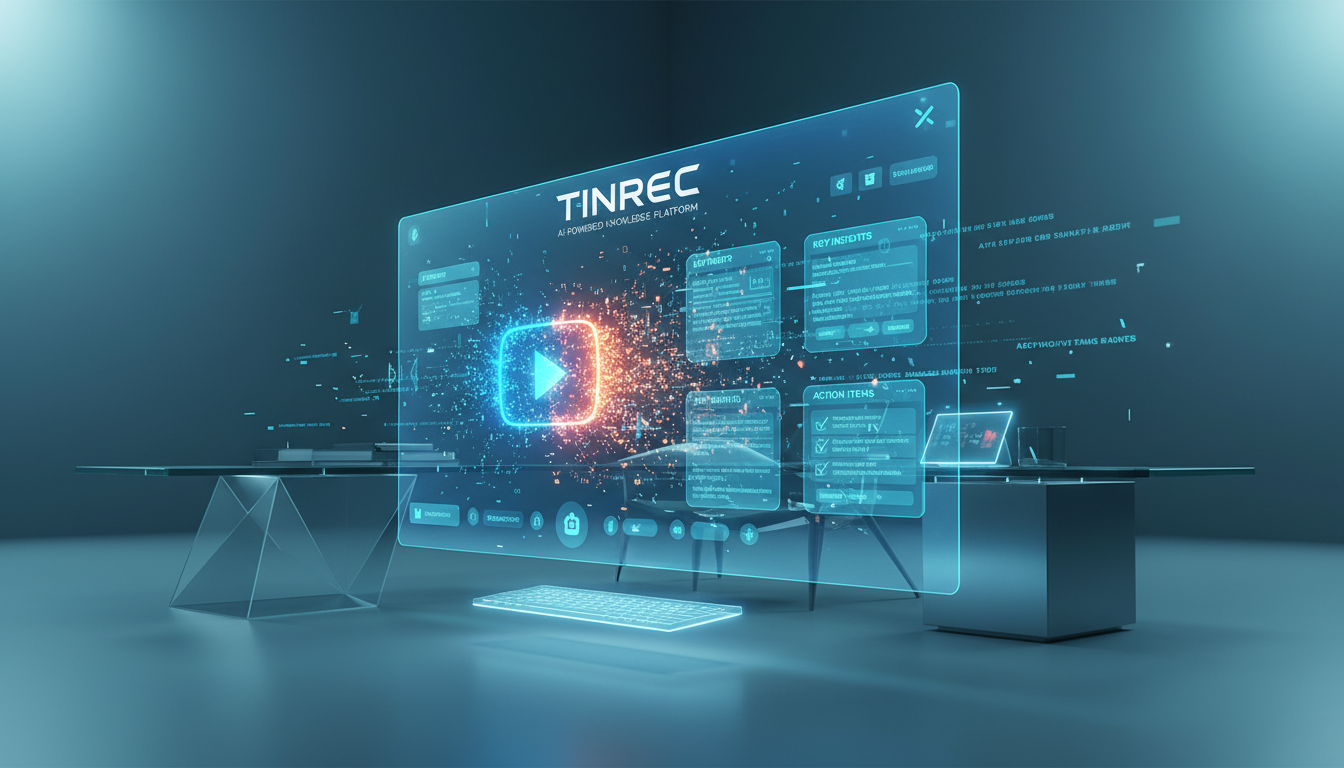
Analysis Perspective: If you need subtitles for 'video editing', Category A tools are the best choice. But if you need 'learning', 'meeting notes', or 'research', Category C tools (like Tinrec) save you the time of downloading videos and directly convert links into an editable knowledge base—a huge efficiency difference.
3. Deep Dive: How Tinrec Solves the 'Video Organization' Challenge
Among many AI tools, Tinrec (MiaoTing Recorder) takes a different path. It's not just a transcription tool; it's more like a 'reader for audio/video content'.
3.1 Direct Link-to-Text, No Download Needed
Most tools require users to first download YouTube videos using third-party sites, then upload to a transcription platform. Tinrec integrates 'Podcast/Online Video to Text' functionality: simply paste a YouTube or Podcast URL, and the system will automatically fetch and transcribe it in the cloud, significantly lowering the barrier.
3.2 From 'Transcript' to 'AI Decision Summary'
For hours-long content, Tinrec's AI engine automatically generates:
- Structured Summary: Summarizes video content by sections.
- Action Items: If the video includes tutorial steps or meeting decisions, the AI extracts them into a to-do list.
3.3 AI Chat: Ask Questions Like an Expert
This is the biggest difference from traditional tools. You can type: "What are the main points about SEO trends in this video?" Tinrec will answer based on the recording content, letting you get answers without re-listening to the entire audio.
4. Hands-On Tutorial: 3 Steps to Turn YouTube Videos into High-Quality Notes
Below is a demonstration of using Tinrec to convert a long YouTube speech into personal notes, without installing complex software.
Step 1: Get the Video Link
Open the YouTube app or website, find the video you want to process (e.g., TED talk, online course, product launch), tap 'Share' and copy the link.
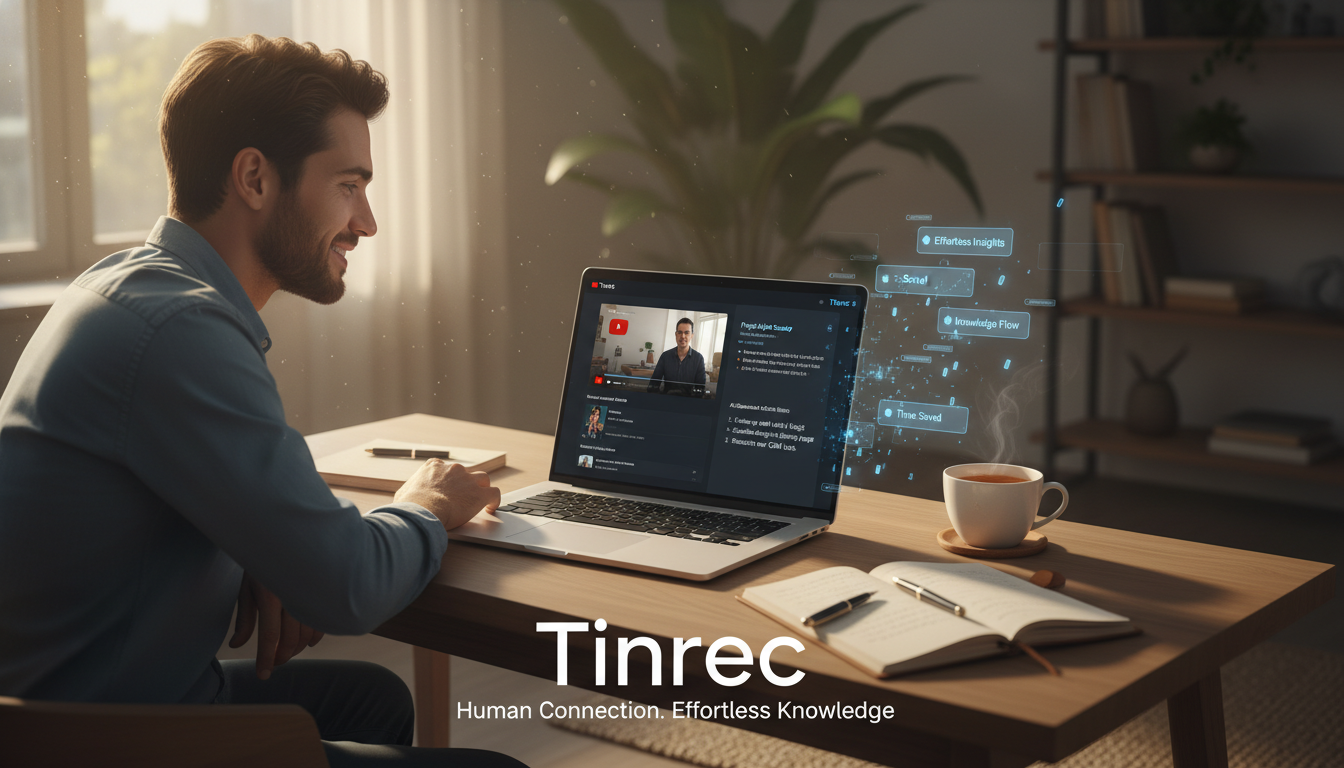
Step 2: Use Link Parsing
Go to Tinrec's Online Video to Text feature page:
- Select 'Link Import' option.
- Paste the YouTube URL you copied.
- Choose the video's primary language (e.g., English, Chinese, Japanese, etc.) to ensure recognition accuracy.
- Click start conversion; the system processes in the background, usually taking a fraction of the video length.
Step 3: AI-Assisted Organizing and Export
After conversion, you'll see:
- Full Transcript: With timestamps; click any text to jump to that point in the video.
- AI Summary Area: Quickly review key points.
- AI Chat Window: Ask questions about specific sections (e.g., "What was the third strategy mentioned by the speaker?").
Finally, you can export the organized content as Markdown, Word, or PDF, and paste it directly into Notion or Evernote for permanent storage.
5. FAQ
Q1: Do these tools support iPhone or Android? Most modern AI tools support cross-platform. For example, Tinrec offers Web, iOS, and Android apps, so you can paste links on your phone during your commute and organize notes later on your computer.
Q2: How accurate is video-to-text conversion? Accuracy depends on audio quality and speaker clarity. For clear interviews or lectures, advanced tools like Tinrec typically achieve 95%+ accuracy. With background noise or overlapping speakers, accuracy drops; using speaker diarization helps.
Q3: What are the typical free plan limits? Most tools follow a 'freemium' model. Common limits include monthly transcription minutes or single file length. Tinrec's free plan offers 100 minutes per month, sufficient for occasional short videos; upgrade for heavy course usage.
Q4: Can I translate foreign language videos? Yes. Tinrec supports recognition of 10 languages including Chinese, Japanese, English, and Korean. You can import an English video, get an English transcript, then use the built-in AI to assist in translation.
Q5: Can the exported text be used as subtitles? Although these tools are mainly for notes, they typically export text with timestamps, which can serve as a subtitle draft. Import into editing software for fine-tuning—much faster than manual transcription.
Q6: Can private or unlisted videos be processed? For videos requiring login, direct URL parsing may fail. Use screen recording or download the audio file, then use audio file to text feature to upload and process.
Turn every recording into actionable outcomes
Get 60 free transcription minutes when you sign in. No credit card required.
Related Reading
You might also like

2026 Comparison of 4 Speech-to-Text Apps: Which Free Plan Suits Hong Kong Office Workers Best?
Tired of meetings and typing up recordings afterward? This article tests Tinrec's free plan and breaks down how to choose a speech-to-text app without getting scammed, helping you save overtime hours.

2026 iPhone Voice-to-Text: Free Built-in Features vs Tinrec Premium Choice
Want to transcribe iPhone recordings for free? Is the built-in Voice Memos app enough? Our tests show free options fall short in noisy environments, Cantonese recognition, and post-processing. This article compares iOS built-in features, free apps, and Tinrec to help you find the best solution.
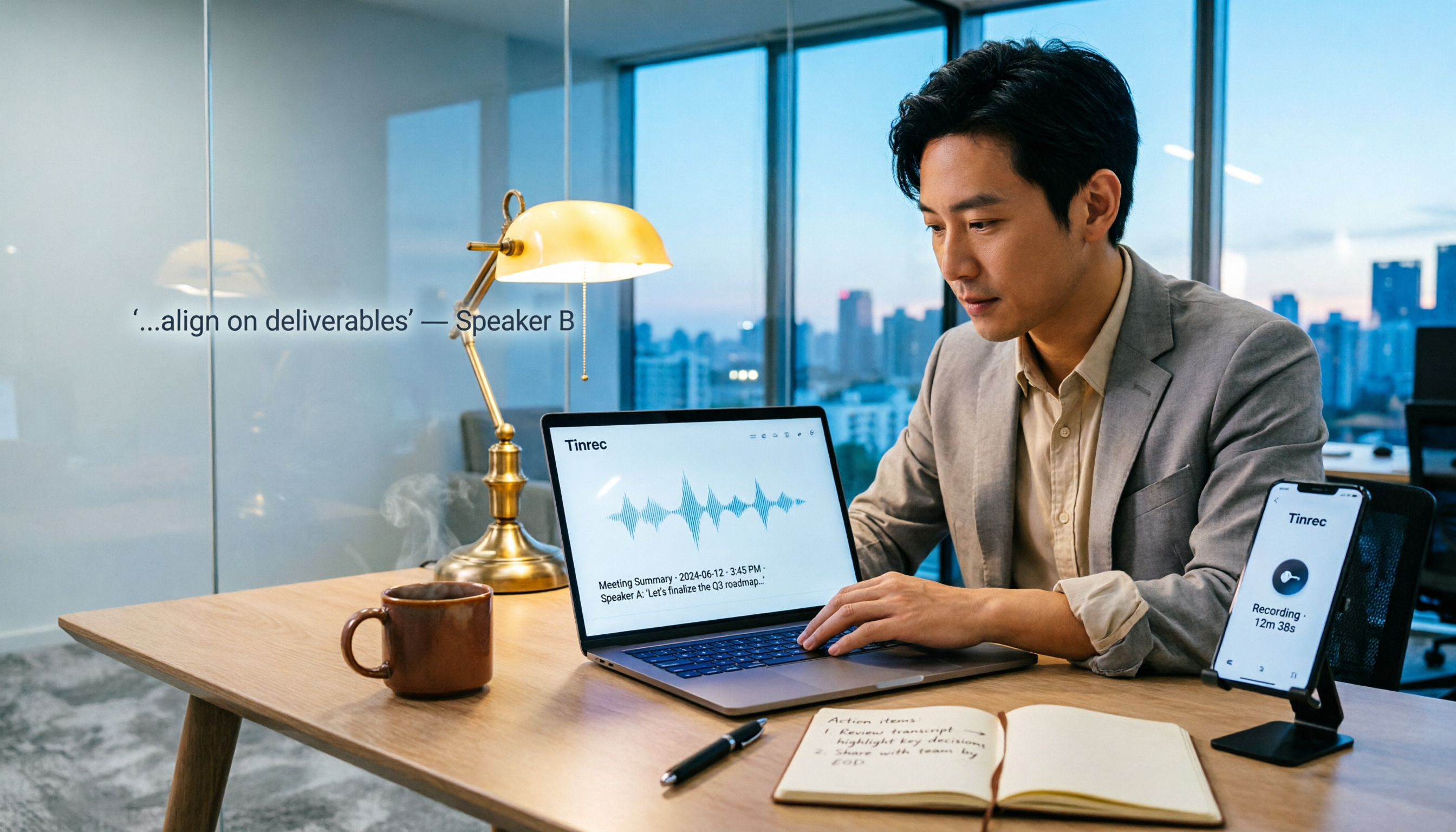
2026 Speech-to-Text Tool Review: Is Tinrec's Free Plan Really Enough?
A mid-level manager tests online speech-to-text tools, from free quotas to transcription accuracy and post-meeting organization, to tell you whether Tinrec's free plan is sufficient and when you should upgrade.

4 Best Online Speech-to-Text Tools in 2026: Free Plans and AI Features Compared
This article tests four online speech-to-text tools—Tinrec, Otter.ai, Notta, and Granola—and provides buying advice based on free allowances, bot-free meeting recording, AI Q&A, and team collaboration features.

2026 iPhone Voice-to-Text App Tutorial: Tinrec 3-Step Automatic Transcription + AI Summary
A student's hands-on review of Tinrec, an iPhone voice-to-text app that automatically generates transcripts, AI summaries, and to-do lists for classes, meetings, and interviews. The free version is enough to get started, saving more time than built-in features.

Best Speech-to-Text Tools in 2026: Notta vs. Tinrec and 3 Others—Tinrec Wins for Meeting Notes
A mid-level manager tested 4 speech-to-text tools for meeting notes, comparing Notta and Tinrec on bot-free recording, Chinese language support, post-meeting organization, and team collaboration, and explains why Tinrec came out on top.
2026 Free Cantonese Audio-to-Text Solutions: 3 Options Compared
Looking for a free Cantonese audio-to-text tool? Tinrec's free plan might be the most efficient choice. This article reviews 3 free options, with a focus on Tinrec, showing how it can save you overtime hours.

4 Best Online Audio-to-Text Tools in 2026: Free Plans, AI Features, and Team Collaboration Compared
How to choose an online audio-to-text tool? This article compares Tinrec, Otter.ai, Notta, and TurboScribe, focusing on free quotas, AI post-processing, cross-platform support, and team collaboration to help you find the best fit.

The Complete Guide to Online Speech-to-Text in 2026: From Meeting Minutes to Team Collaboration
Tired of manually transcribing recordings? This article tests multiple online speech-to-text tools, comparing features, accuracy, free tiers, and team collaboration to help you choose the best AI meeting notes solution.