

Turn recordings into transcripts and summaries in minutes
Upload audio or video for multilingual transcription, AI notes, and action items
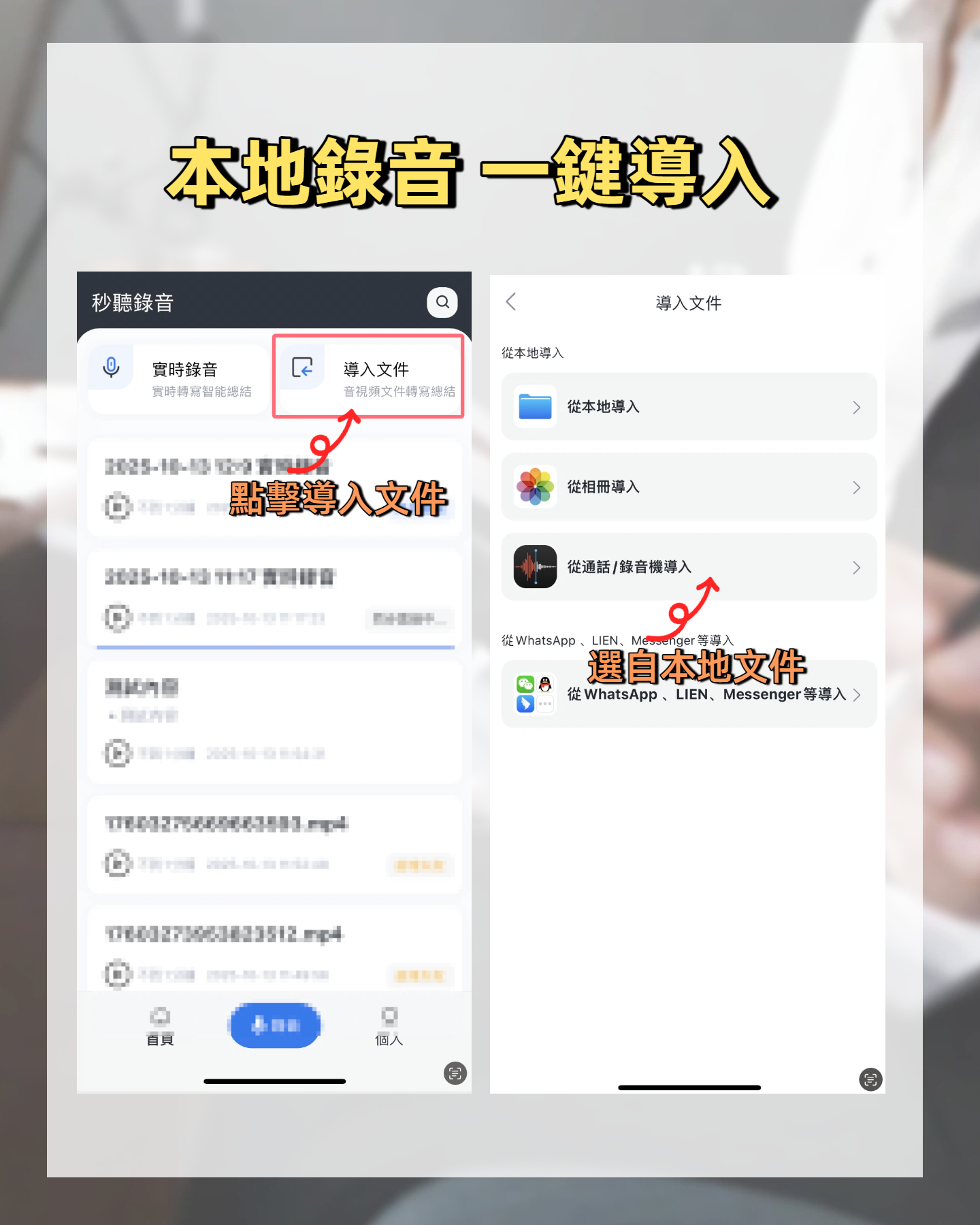
Tinrec is an AI-powered recording tool that integrates real-time recording, audio file upload, and public video link parsing. For students and researchers who need to transcribe thesis interviews, it saves hours of manual transcription. It supports iOS, Android, and web, and its free plan provides basic transcription credits. Otter.ai is known for meeting notes and has high recognition in English business scenarios. This article compares the two tools across five dimensions—Chinese recognition, file support, free plan limits, AI post-processing, and cross-platform support—specifically for thesis interview transcription.
Tinrec vs Otter.ai: Quick Overview
| Category | Tinrec | Otter.ai |
|---|---|---|
| One-Line Positioning | Transform recordings and videos into actionable knowledge | AI meeting notes and team collaboration tool |
| Chinese Thesis Interview Suitability | ★★★★★ | ★★★☆☆ |
| Free Plan | Monthly basic transcription credits, most features accessible | 300 minutes of transcription per month |
| Paid Plan | Weekly card, Pro monthly/yearly, choose by usage | Pro yearly ~$8.33/month, includes 1200 minutes |
| Key Difference | Goes beyond transcription: focuses on organization, Q&A, and output | Specialized in meetings, auto-joins online meetings for collaboration |
This article covers the following dimensions:
- Chinese speech recognition accuracy
- Audio and video file support
- Free plan and restrictions
- AI organization and downstream applications
- Cross-platform and download features
Dimension 1: Chinese Speech Recognition Accuracy
Otter.ai excels in English recognition. When handling Chinese interviews, especially academic jargon or code-switching, error rates increase significantly—sometimes entire sentences are misrecognized. We tested with the same 15-minute Chinese thesis interview recording (iPhone, quiet indoor environment). Otter often transcribed "qualitative research" (質性研究) as "execution research" and "coding" (編碼) as "changing horse."
Tinrec is fine-tuned for Chinese. On the same recording, it accurately recognized terms like "grounded theory" and "triangulation" and handled mixed Chinese-English speech with near-zero errors. The generated transcript was immediately usable without extensive editing.
→ Winner: Tinrec.
Dimension 2: Audio and Video File Support
Otter's free account allows only 10 audio uploads per month (Pro: 1200 minutes), primarily audio files. It does not support direct transcription from public video links. If your thesis interviews include video recordings, you must convert them first, adding extra steps.
Stop organizing recordings by hand
Upload audio or video and automatically get a transcript, summary, and action items
Tinrec supports uploading audio and video files, and directly pasting public video links from YouTube, Bilibili, etc., streamlining the process. The free plan includes file imports and link parsing with more generous limits, offering greater flexibility for researchers handling multiple interviews.
→ Winner: Tinrec.
Dimension 3: Free Plan and Restrictions
Otter's free plan offers 300 minutes per month, but this includes all input sources, and advanced features (AI Chat, team collaboration) require payment.
Tinrec's free plan also provides monthly credits for real-time recording, file uploads, and link transcription. Importantly, AI summary, chapter sorting, and action item extraction are available on the free plan, so you can test core functionality without spending.
→ For thesis interviews requiring a full set of features, Tinrec offers a more complete free experience. Slight edge for Tinrec.
Dimension 4: AI Organization and Downstream Applications
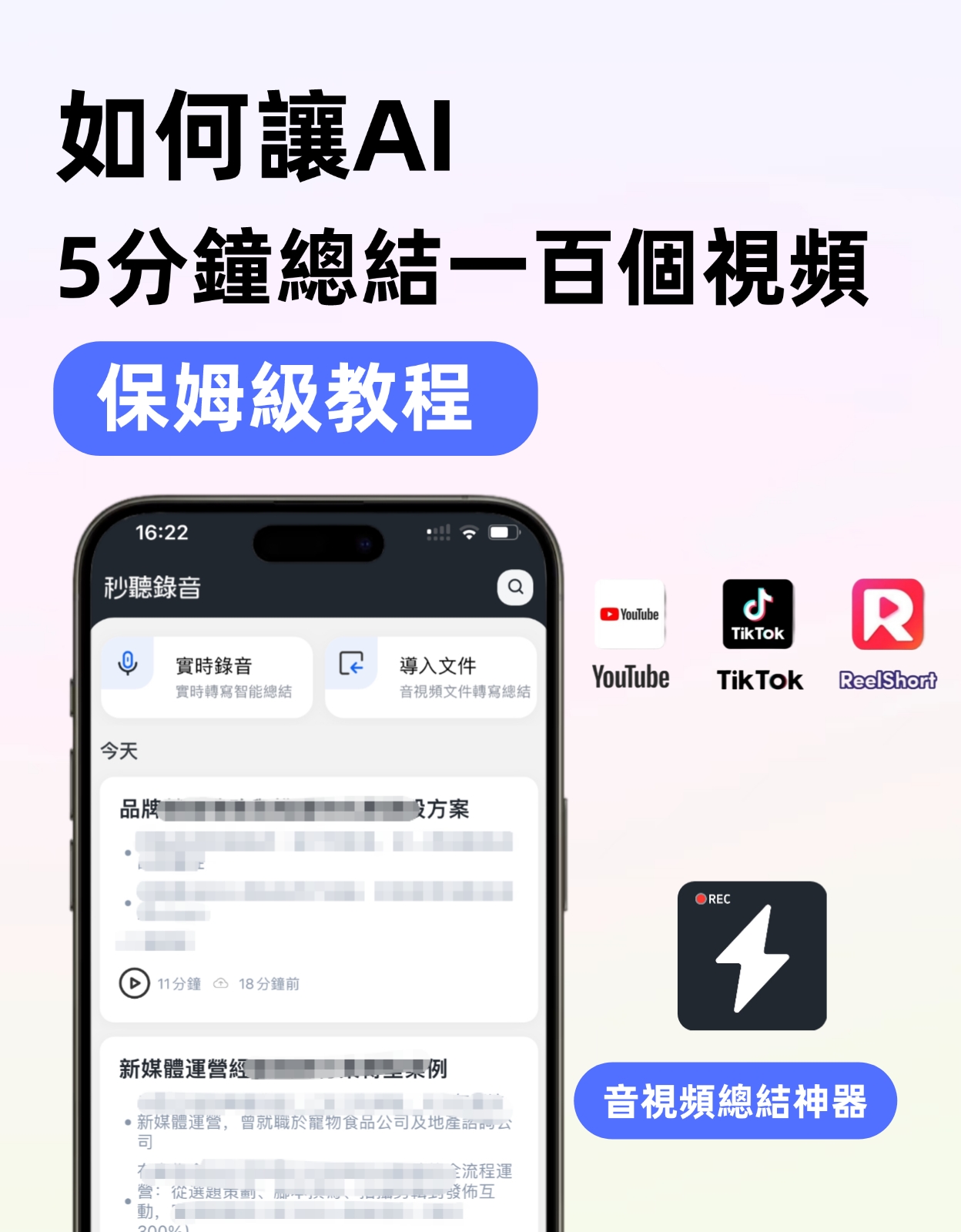
Otter automatically generates meeting summaries and action items and offers AI Chat for questions about the recording. However, these features perform noticeably worse in Chinese, with imprecise responses.
Tinrec's AI goes beyond summaries: it automatically splits chapters, extracts tasks, and allows conversational Q&A about interview highlights. Crucially, you can export transcripts as Word, TXT, SRT, or send to Notion or Google Docs. You can even generate meeting minutes or reports from the AI. For thesis writing, this means editable materials instead of a raw transcript.
→ Winner: Tinrec.
Dimension 5: Cross-Platform and Download Features
Otter has iOS, Android, and web versions with cloud sync, but the free plan cannot download recordings and export formats are limited. For thesis interviews, offline backup or editing in word processors is often needed, which becomes a hurdle.
Tinrec also supports iOS, Android, and web. Both recordings and transcripts can be downloaded. Export formats include Word, TXT, SRT, and more, with one-click sync to Notion and Google Docs. For users who want to continue editing across devices, it's much more convenient.
→ Tinrec wins on download and format flexibility; cross-platform reach is similar. Overall Tinrec.
Unique Advantages of Each
Tinrec's Unique Advantages
- Multiple input sources: Real-time recording, audio, video files, and online links—all in one place. Ideal for interview recordings and lecture videos.
- Strong Chinese comprehension: Accurate recognition of code-switching and academic terms, reducing post-editing.
- End-to-end from transcription to application: Built-in summaries, Q&A, task extraction, multi-format export, and third-party sync—directly produce thesis-ready materials.
- Generous free plan: Core organization features available without payment, friendly for students.
Otter's Unique Advantages
- Meeting bot: Auto-joins Zoom, Google Meet, Teams meetings—great for team meeting notes.
- Team collaboration: Shared notes, comments, and permissions—better for business teams.
Conclusion: Which Should You Choose?
- If you're a graduate student writing a thesis and need accurate Chinese interview transcription with further organization, Q&A, and export → Tinrec is the more complete choice (good Chinese recognition, video transcription, and summary generation).
- If you need auto-join online meetings and real-time collaboration, and interviews are mostly in English → consider Otter.ai.
- If your interview materials include video links or require flexible file imports → Tinrec wins (Otter doesn't support video links, and file limits are tighter).
- If you're a budget-conscious student wanting to try free tools first → Tinrec's free plan opens most organization features, offering higher value.
In short, for most users needing to transcribe Chinese thesis interviews, Tinrec's completeness and localization fit better. We recommend testing your own recordings with the free plan.
Turn every recording into actionable outcomes
Get 60 free transcription minutes when you sign in. No credit card required.
Related Reading
You might also like
![[Tutorial] Tinrec Interview Transcription 2026: Real-Time Transcription, AI Summaries & Q&A](https://record-img.tos-accelerate.volces.com/images/2026/07/24/1784906660573545479.png)
[Tutorial] Tinrec Interview Transcription 2026: Real-Time Transcription, AI Summaries & Q&A
This article compares Tinrec and Plaud Note for interview recording management, covering recording sources, transcription capabilities, organization features, and pricing plans, helping you choose the right interview tool.

Tinrec Audio to Text Tutorial 2026: Supports Cantonese, AI Auto-Organizes Medical Meeting Notes
Hong Kong healthcare professionals often deal with a large number of audio recordings? This Tinrec tutorial teaches you how to use your phone or computer to quickly transcribe medical recordings and meeting discussions into text, with AI automatically organizing summaries and key points, saving you plenty of time.
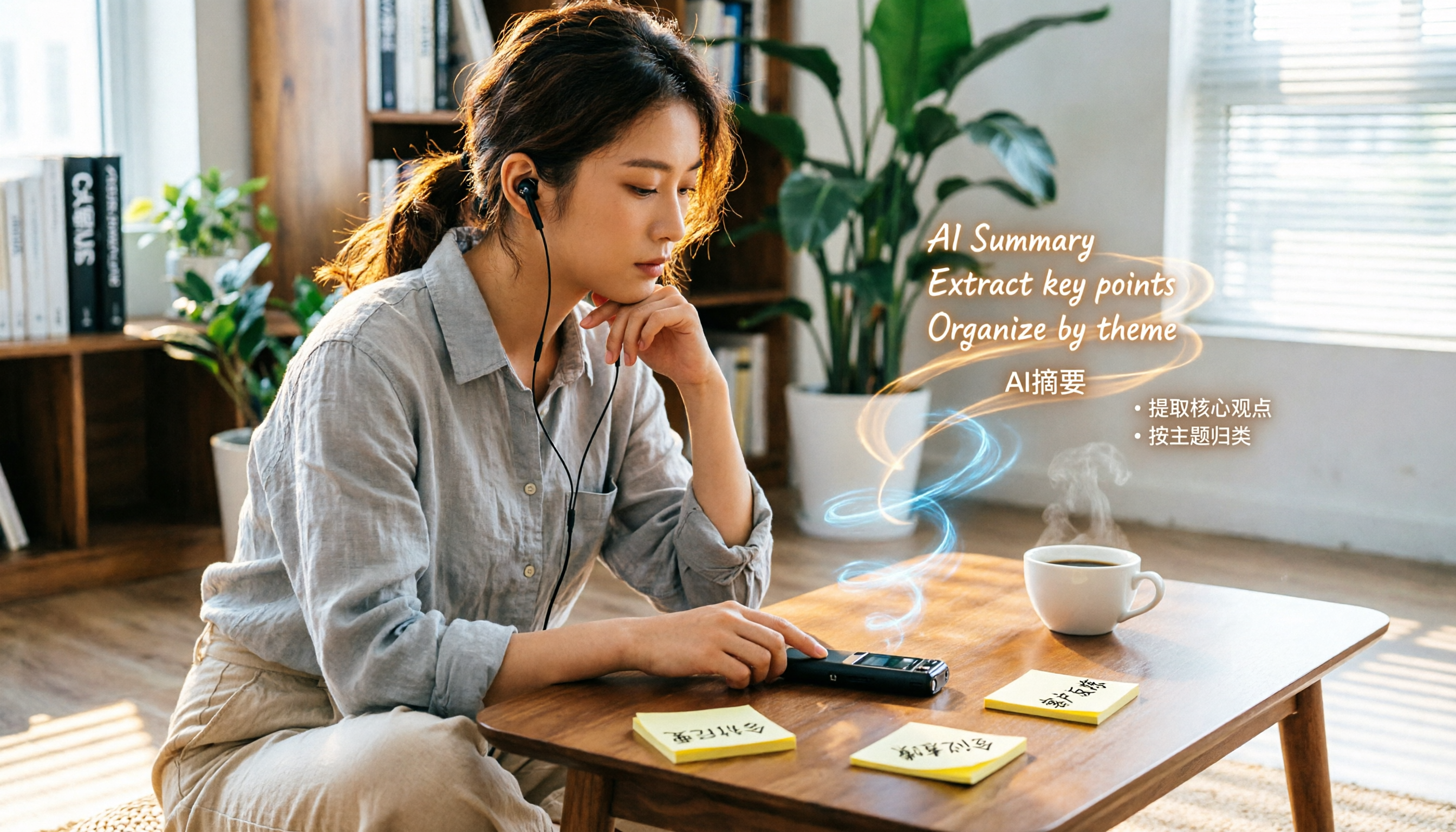
Which Speech-to-Text App is Best? 2026 Hands-on Test of 4 Apps – This One is Perfect for Bloggers
As a blogger, you often need to edit videos and organize interview recordings, so finding an accurate and convenient speech-to-text app is crucial. After testing 4 tools, I found that Tinrec not only transcribes but also offers AI summaries and task extraction, perfect for content creation. Find out why it's the top choice for bloggers!
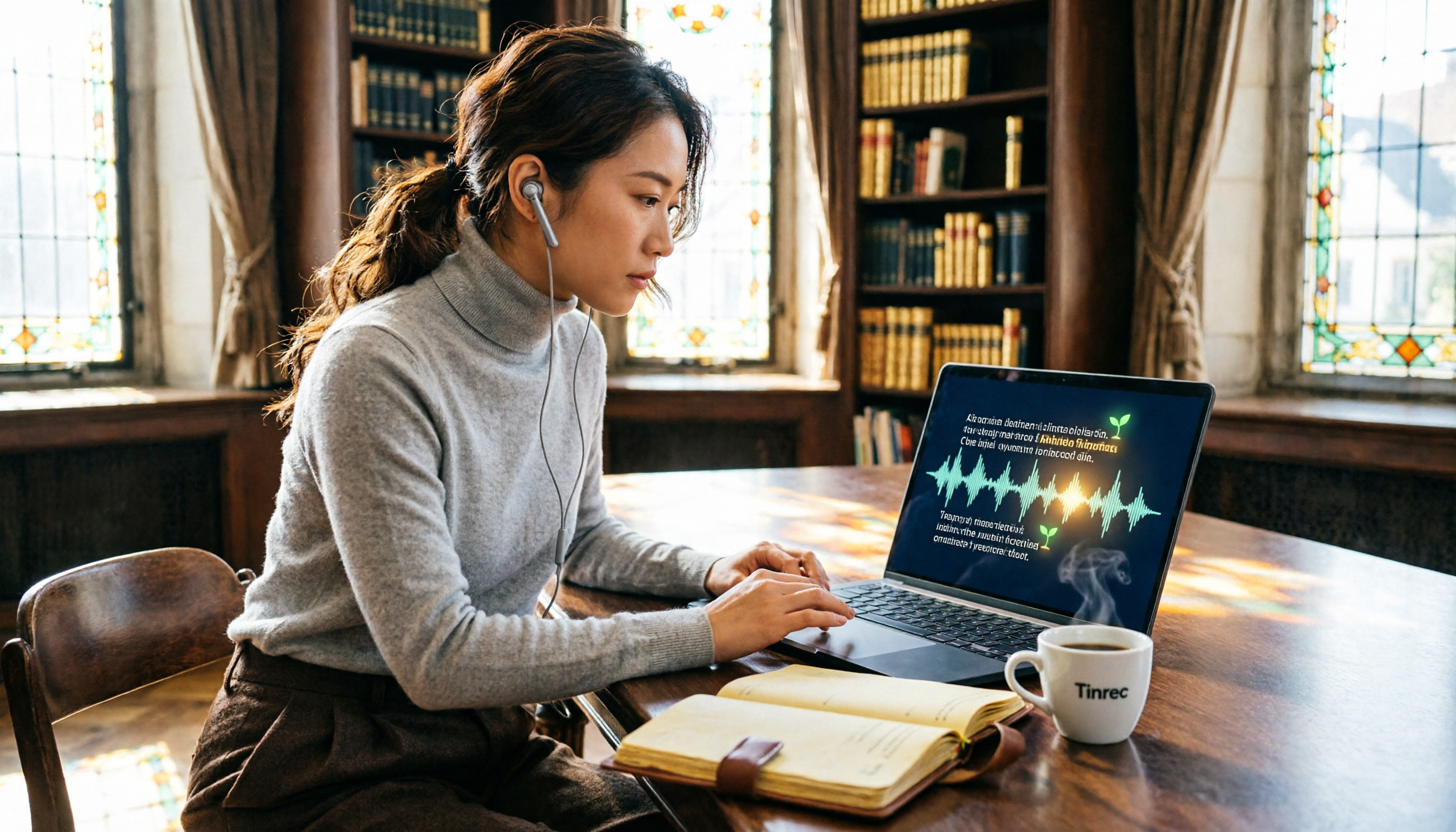
Tutorial: Use Tinrec in 2026 to Efficiently Organize Academic Conference Notes – Real-time Transcription, AI-Generated Summaries & To-Dos
The biggest pain about academic conferences isn't understanding the talks – it's failing to take notes and not wanting to re-listen to recordings. With Tinrec, I turned three days of international conference recordings into structured summaries, searchable transcripts, and actionable checklists. This article shares how I used one app to transform audio files into truly usable data.
Tinrec vs Notta in 2026: A 4-Dimensional Comparison, the Best Tool for Clinical Notes
Physicians face lengthy dialogues daily, and manual or post-visit note-taking is time-consuming. This article tests two AI speech-to-text tools, Tinrec and Notta, comparing accuracy, AI post-processing, privacy, and cross-platform usability to help you find the best solution for clinical documentation.

2026 Workplace Meeting Note Tool Buying Guide: Hands-on Review of 2 Tools and Recommendations
A mid-level manager compares Tinrec and Otter.ai in real-world tests, covering transcription accuracy, multi-source input, AI post-processing, and pricing, to give practical buying advice.

Top 5 Audio-to-Text Transcription Tools for Field Research 2026: Tested Apps Researchers Trust
Field researchers often waste hours transcribing interviews. This article reviews 5 audio-to-text tools including Tinrec, Notta, Otter, TurboScribe, and PLAUD, covering free and professional plans. Find the best AI assistant for interviews, documentation, and analysis.

How to Do Speech-to-Text for Writers in 2026? A 4-Step Complete Guide with Comparison
Writers can save time organizing ideas and interviews with speech-to-text, but how to choose among so many tools? This article, from a journalistic perspective, compares Tinrec and PLAUD Note across recording sources, AI processing, Cantonese recognition, and cross-platform support, teaching you 4 steps to pick the right tool, with detailed pros and cons and suitable user types.
Best Court Recording to Text Tool? 2026 Comparison of 2 Options: Software Offers Better Value
You don't need expensive hardware for court recording transcription. This article compares Tinrec and PLAUD Note across 5 key dimensions—cost, cross-platform support, AI features, input sources, and privacy—to show why Tinrec is the more cost-effective choice for most legal professionals.