

Turn recordings into transcripts and summaries in minutes
Upload audio or video for multilingual transcription, AI notes, and action items
What do office workers dread most in meetings? Not the boss's long-windedness, but having to listen back to recordings after the meeting to write minutes. And if the meeting is conducted in Hakka, finding a colleague who understands the dialect to help is tough. Fortunately, AI transcription tools have matured and now even handle dialects. This time, we test Tinrec's instant transcription to see how it turns Hakka recordings into useful text.
What Can Hakka Speech-to-Text Do for You?

Previously, handling Hakka recordings meant either transcribing manually or paying someone to do it—time-consuming and costly. Now, with advances in AI speech-to-text, take Tinrec for example: you can directly upload Hakka recordings and it automatically generates verbatim transcripts, plus summarizes key points and action items. That means after a Hakka meeting, you no longer need to sit and replay the recording; Tinrec delivers meeting minutes in minutes.
What are the practical use cases?
- Walled Village Meeting Minutes: Many walled villages in the New Territories still communicate in Hakka. After each meeting discussing village affairs, record with a phone, upload to Tinrec, and it automatically generates text records—no need to worry about missing key points from any elder.
- Academic Interview Transcription: If you're researching Hakka culture and have recorded interviews with elders, Tinrec can transcribe and auto-chapter the content, making data retrieval much faster.
- Language Learning Notes: For learners of Hakka, transcribing class recordings and using AI summaries boosts study efficiency instantly.
What Core Capabilities Does Tinrec Have for Hakka Speech-to-Text?
Tinrec is not just a recording app; its strength lies in turning audio and video materials into "actionable knowledge." For Hakka scenarios, these features are especially useful:
Real-time Verbatim Transcription
Whether live recording or uploading old files, Tinrec quickly produces verbatim transcripts. Although Hakka is a dialect, Tinrec's speech engine is trained on a large corpus of Chinese and has some adaptability to different accents. In practice, as long as the recording is clear, transcription quality is decent; of course, very obscure local accents may be less accurate.
AI Semantic Summarization
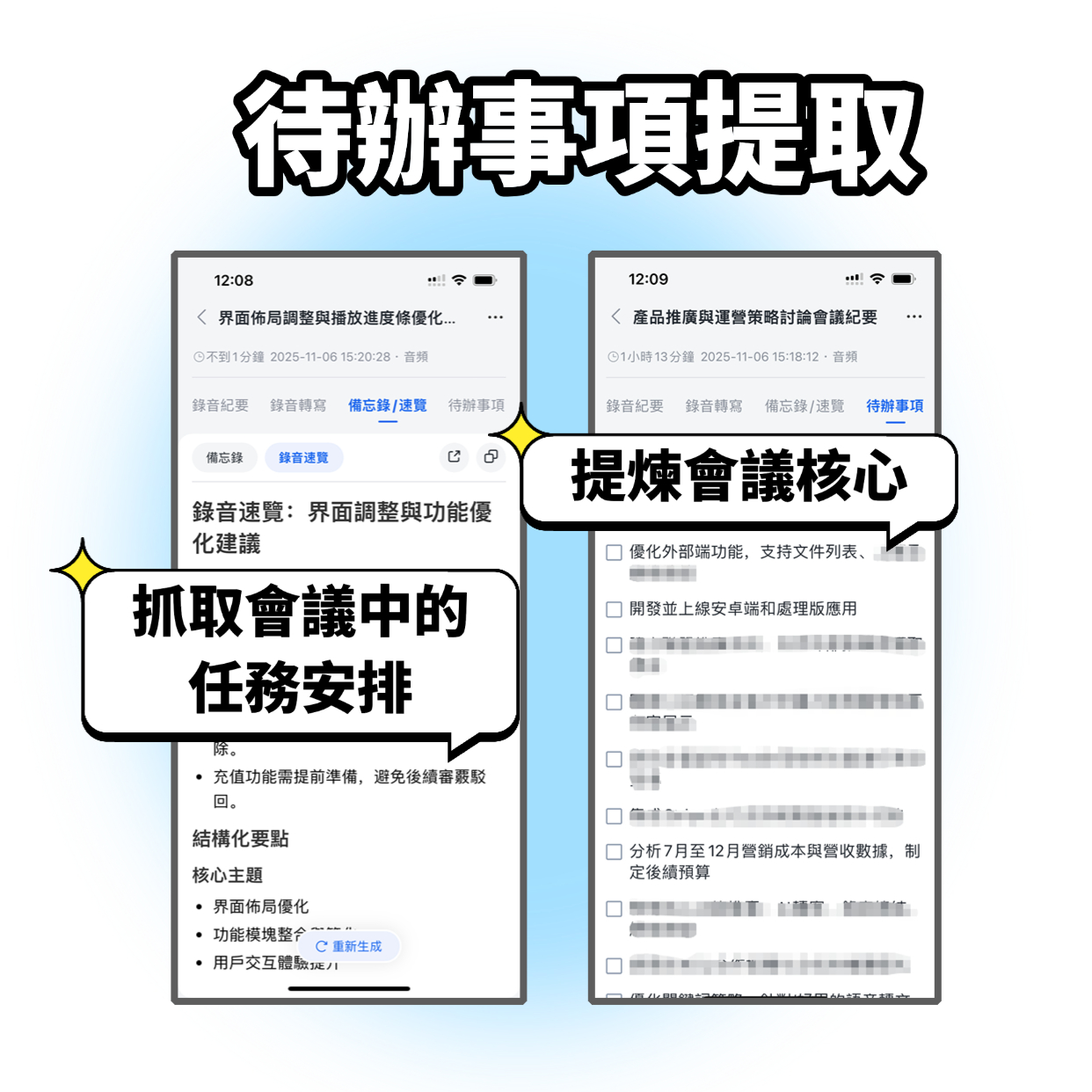
Hakka meetings tend to be lengthy—listening to a one- or two-hour recording to find key points is tedious. Tinrec's AI automatically analyzes content and generates structured summaries: topics, conclusions, and action items at a glance. You can also jump to specific chapters to hear the original audio.
AI Dialogue Query
After transcription, you can directly ask Tinrec questions like, "Who mentioned renovating the ancestral hall during the meeting?" or "What were the elders' opinions on the budget?" It uses semantic understanding to provide answers without scrolling through the transcript.
Multi-format Export
Finished text can be exported as Word, PDF, or synced directly to Notion, Google Docs, making it easy to share with colleagues who don't understand Hakka.
Stop organizing recordings by hand
Upload audio or video and automatically get a transcript, summary, and action items
Practical Application Scenarios
Scenario 1: Fast and Accurate Walled Village Meeting Records
Ah Keung, a village representative in Yuen Long, used to record meetings on his phone and then spend hours listening back to write minutes. After using Tinrec, he imports the recording file and gets a complete transcript and summary in about 10 minutes, with three action items automatically extracted. Ah Keung says, "Now I can deliver the minutes the same day after a meeting—no more overtime."
Scenario 2: More Efficient Hakka Interview Research
A graduate student at Chinese University studying Hakka folk songs interviewed over a dozen elders, recording more than 20 hours. Previously, hiring someone to transcribe was costly. Using Tinrec not only transcribes text but also marks paragraphs where each song appears, saving a lot of time. The AI query feature lets them search for specific lyrics in which recording segment—super convenient.
Scenario 3: Personal Tutor for Learning Hakka
Emily, who works in Hong Kong Island, wants to learn Hakka to communicate with her grandmother. She records her grandmother's stories, uploads them to Tinrec for transcription, and studies by comparing. The AI summary helps her quickly grasp the story outline, and she can import the audio as learning material, progressing much faster.
4 Key Points to Consider When Choosing a Hakka Speech-to-Text Tool
- Dialect Recognition Capability: Don't just rely on marketing; test by uploading a Hakka recording yourself. Although Tinrec doesn't claim to support all dialects, its Chinese model has basic recognition for Cantonese, Hakka, etc. Under clear recordings, results are decent. Try the free version first to see if it meets your needs.
- Post-Transcription Organization Features: Verbatim transcripts are just the first step; finding key points is where time is really saved. Tinrec's AI summary, chapter splitting, and action item extraction turn long recordings into useful reports without manual work.
- Cross-Platform Support: Your recordings may come from a phone, computer, or voice recorder. Tinrec offers iOS, Android, and web versions, so you can upload and process recordings anytime, anywhere, without being tied to one device.
- Cost and Quota: If you only occasionally process a couple of Hakka files, the free tier's monthly base transcription minutes are enough for a trial. For regular use, a Pro monthly or annual plan is more cost-effective. Don't blindly chase unlimited minutes; focus on transcription quality and additional features.
Frequently Asked Questions
Q: Does Tinrec support Hakka-to-text conversion?
A: Tinrec currently doesn't have a separate Hakka language option, but its speech engine supports multiple Chinese languages and variants. In tests, uploading clear Hakka recordings yields acceptable transcription results, especially for accents close to Cantonese or Sixian dialect. Accuracy is affected by background noise, speed, and accent; we recommend testing with the free version first.
Q: How accurate is Tinrec for Hakka transcription?
A: We tested several Hakka recordings with different accents. In quiet environments at moderate speed, word accuracy was around 70-85%. Of course, this varies with recording quality. Tinrec's strength is post-transcription AI organization; even if some words are wrong, summaries and key points remain quite reliable.
Q: Besides Hakka, what other languages does Tinrec support?
A: Tinrec supports 14 languages including English, Mandarin, Cantonese, Japanese, Korean, etc. Its multilingual model handles mixed Chinese-English or everyday Cantonese meetings smoothly. Hakka, though not listed as a separate language, is recognized as a Chinese dialect through the Chinese model.
Q: Can I use Tinrec to transcribe Hakka videos from YouTube?
A: Yes. Tinrec supports pasting public video links from YouTube, Bilibili, etc., directly parsing audio and converting to text. If you find Hakka tutorial videos or documentaries, this feature quickly gives you text content, saving viewing time.
Q: Can the transcribed text be exported to other apps?
A: Yes. Tinrec supports export to TXT, Word, PDF, and direct sync to Notion, Google Docs, OneNote, etc., for easy integration into your workflow.
Summary
AI speech-to-text is not new, but finding a tool that handles Hakka and automatically organizes content is rare. Tinrec's value lies in providing not just a verbatim transcript but also a searchable, queryable, exportable database of recordings. If you frequently deal with Hakka meeting minutes, interview recordings, or want to preserve elders' precious oral history, we highly recommend downloading Tinrec's free version to try it out. It comes with monthly base minutes—enough for a few tries—to see how AI can save you time.
Turn every recording into actionable outcomes
Get 60 free transcription minutes when you sign in. No credit card required.
Related Reading
You might also like

2026 AI Recording Solutions Compared: Plaud vs. Phone Recording vs. Tinrec — Which Should You Choose?
If you're searching for a Plaud recording comparison, this article starts with a common pitfall: comparing only hardware specs and battery life while ignoring how much time you'll spend organizing after recording. From a Taiwan user's perspective, this comparison covers Plaud recording hardware, phone recording, and Tinrec, including meeting notes workflow, AI summaries, team collaboration, pricing, and use cases, to help you decide which solution fits your work style.

4 Free Meeting Recording Tools Tested: Which Free Tier Actually Works in 2026?
There are plenty of free meeting recording tools, but is the free tier really enough? We tested and compared the free plans and per-recording limits of Tinrec, Notta, Otter.ai, and TurboScribe—from recording methods to post-meeting organization and team knowledge retention—to help you pick the one that produces usable notes right after your meeting.

2026 AI Meeting Recorder Comparison: What Does 'Otter' Mean in Chinese? Which Tool Fits Chinese Meetings?
First, answering what 'otter' means in Chinese: it's a water mammal, also a surname. Otter is also Otter.ai, an AI meeting assistant. This article compares Otter.ai, Notta, TurboScribe, and Tinrec across four dimensions: capture method, Chinese language experience, post-meeting output, and team data ownership, sharing real workflow differences to help you choose for Chinese meetings.

What Is Vocal Fry in Chinese? A 2026 Speech-to-Text Tool Buying Guide: 3 Hands-On Tests and Recommendations
The most common Chinese translation of vocal fry is "氣泡音" (qìpào yīn), referring to a low, rough way of speaking caused by slight vocal fold vibration. This article first explains the meaning and origin of the term, then from the perspective of "how to fully capture meeting recordings," helps you decide how to choose a speech-to-text tool, and compares the differences and use cases of Tinrec, Otter.ai, Notta, and Granola.
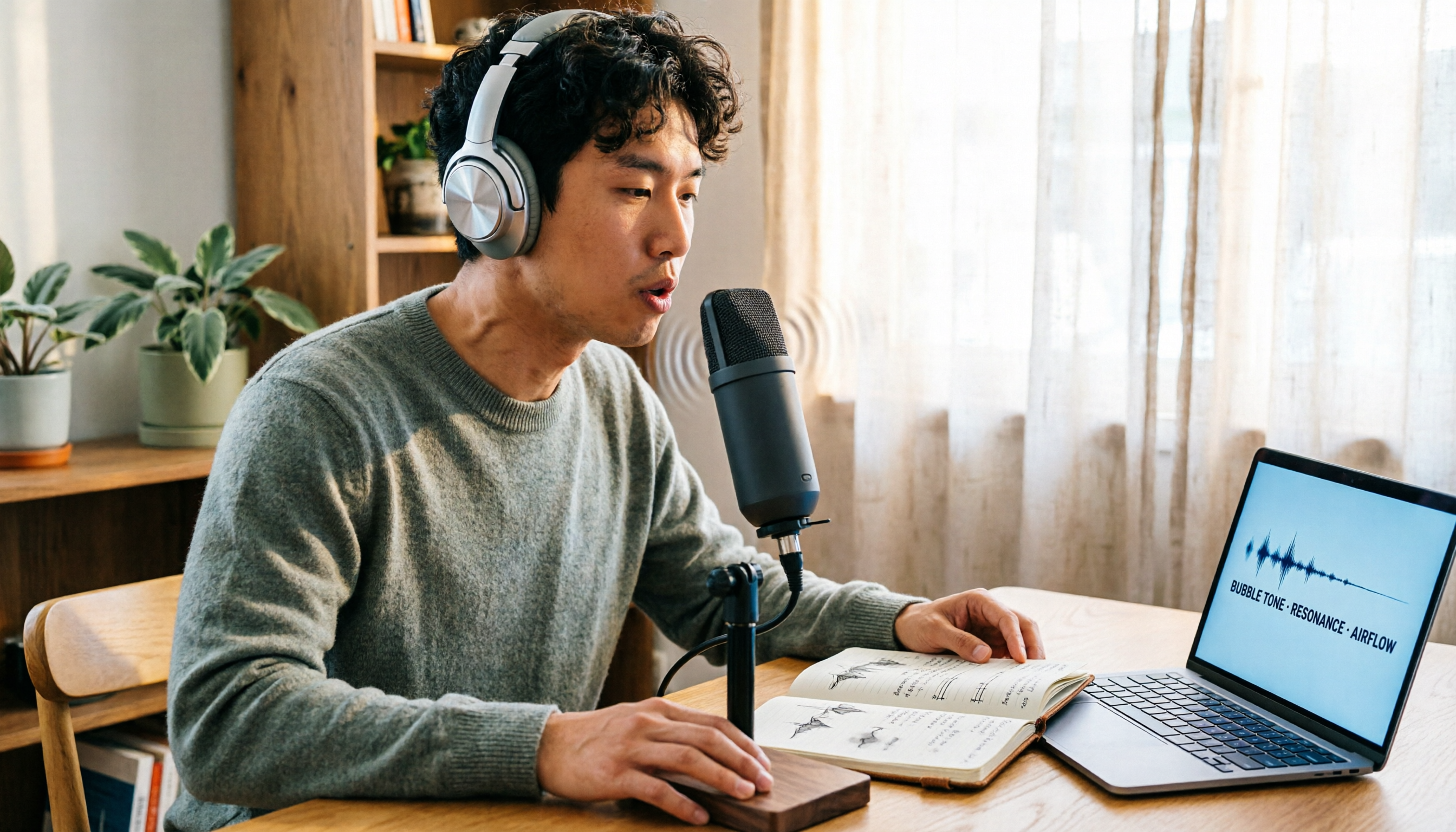
Vocal Fry Meaning Explained: 3 Key Questions to Decide If It's a Style or a Vocal Habit
What does vocal fry mean? This plain-language guide explains the definition, how it's produced, and famous examples. It also covers 3 key questions to help you decide whether to use it, plus practical tips for recording transcription and tool selection.

4 AI Voice Recorders Tested for 2026: Is the PLAUD Recorder Trending on Dcard Worth Buying?
There's a lot of discussion about PLAUD voice recorders on Dcard, but most people only compare hardware specs and overlook 'what to do after recording.' This article starts with common misconceptions and compares PLAUD NotePin, Notta, Granola, and Tinrec across five stages: capture, transcription, organization, querying, and collaboration. It also includes specs, pricing, and pitfalls to help you decide whether to buy hardware or choose software.

Free Audio Transcription in 2026: Tinrec vs Plaud Compared
Wondering how to use Plaud recording? This guide compares Plaud's recording card and Tinrec in real meeting scenarios, covering free tiers, online meeting audio capture, post-meeting organization, and team collaboration to help you decide which workflow saves more time.

PLAUD Voice Recorder Review: Which Model Is Best? 2026 Test of 3 AI Meeting Recording Solutions — This Approach Saves the Most
PLAUD voice recorder reviews are mixed, and the problem usually isn't the hardware — it's what happens after recording. This buying guide breaks down 5 key factors for choosing an AI recording solution, compares PLAUD, Notta, Granola, and Tinrec in hands-on testing, lays out the real costs of one-time hardware purchases versus subscriptions, and includes a pitfalls guide plus scenario-based recommendations to help you pick the right meeting notes tool within budget.

Vocol.ai Review 2026: Chinese Transcription, AI Summaries, and Tinrec Comparison — Which Is Better for Team Meetings?
After hands-on testing, we break down Vocol.ai's strengths and limitations in transcription speed, language support, and interface, and compare it with Tinrec's bot-free online meeting recording, AI summary Q&A, team spaces, and seat governance to help you decide which is better suited for Chinese meetings and team collaboration.