

Turn recordings into transcripts and summaries in minutes
Upload audio or video for multilingual transcription, AI notes, and action items
I recently sorted out an in-depth online interview.
The interviewee was a teacher working on cultural preservation in Sichuan. The entire conversation had a strong Sichuan accent, mixed with Mandarin and technical terms. Initially, I thought throwing the recording into a transcription tool would solve everything, but the transcript came out riddled with errors — "曉得 (know)" became "小的 (small)", "咋個 (how)" became "砸個 (smash)". The whole thing looked like it had been mangled.
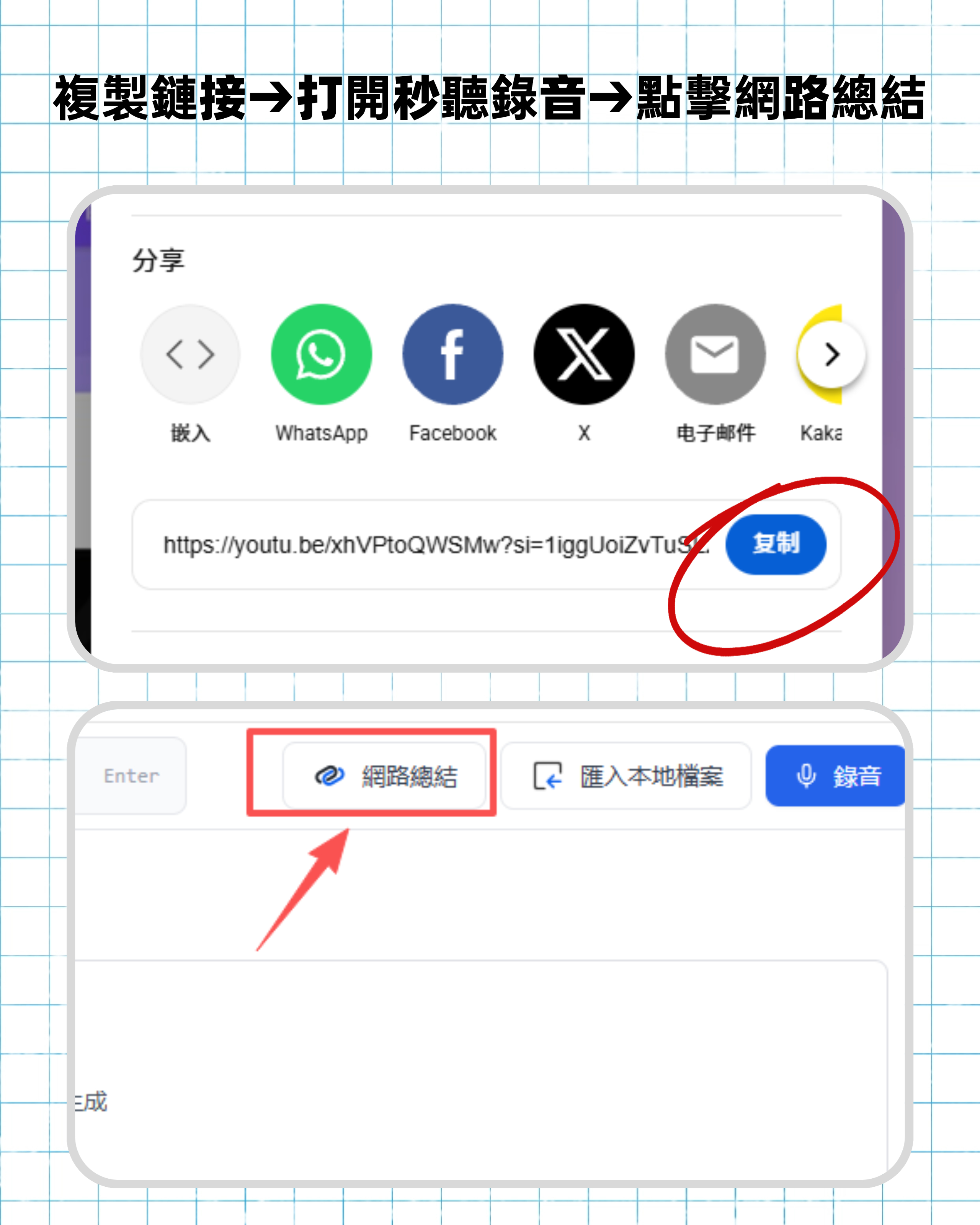
It wasn't just recognition errors. The bigger problem: even if the transcript was correct, a one-hour conversation would still take an entire afternoon to read through, extract key points, and write a summary.
I started thinking: is there a tool that doesn't just convert sound to text, but can actually help me organize these long, heavily accented recordings into truly usable data?
(Screenshot here: Real-time recording transcription 1, arrow pointing to the live transcription screen)
Why Are People Looking for Alternatives to Speech-to-Text Tools?
Most transcription tools boast "high accuracy" and "generous minute allowances," but in practice, you'll find several issues:
First, if you record Chinese dialects or accented conversations, standard models often make mistakes, and few tools claim specialized support for Sichuanese. Second, most tools just give you a transcript and that's it — you have to figure out how to digest it yourself. Third, cross-scenario needs: you want to handle meetings, lectures, interviews, even online videos, but each tool seems to focus on just one area.
If you share these frustrations, maybe you should look at tools that "do more than transcribe," just like I did.
Tinrec vs Notta vs Otter: What's Different in Core Experience?
I tried Notta and Otter first, and then Tinrec last. This journey made the positioning differences among the three tools clear.
First: More Than Just a Transcript Notta transcribes quickly and its subtitle feature is good, but the core output is still a transcript. Otter excels at meeting summaries, but it's clearly stronger in English scenarios and only average at handling Chinese accents. Tinrec felt different — after transcribing, it automatically generates summaries, chapters, action items, and even lets me "ask" questions about the recording conversationally.
This saved me the most time: not proofreading the transcript, but "digesting the content."
(Screenshot here: AI conversation query 1, arrow pointing to the question box)
Second: More Than One Input Source Otter is best for online meetings. Notta can handle files and meetings. But Tinrec can handle live recording, files, and even paste online video links for direct parsing. I tried pasting a YouTube video about Sichuan dialect research, and it not only transcribed it but also automatically split the content into chapters.
For anyone who collects various audio/video materials, this means needing fewer tools.
Third: Practical Details for Chinese Scenarios Although all three tools claim to support Chinese, Tinrec's post-processing was a huge help with accented interviews. Even if the initial transcription had flaws, I could just ask the AI: "What was the main point of that older gentleman mentioned earlier?" Tinrec would understand from context and give a clearer answer than the raw transcript.
This doesn't mean it recognizes Sichuanese perfectly, but it makes imperfect recognition much more tolerable.
Tinrec's Core Features at a Glance
Next, I'll walk you through Tinrec's key features using my actual workflow. This isn't a feature list, but a method to turn long recordings into actionable data.
Real-Time Recording Transcription
Open Tinrec, hit record, and text appears on screen almost in real time. This is especially useful for meetings or classes — you can listen while glancing at the text to confirm key points, without worrying about missing anything.
(Screenshot here: Real-time recording transcription 1)
Stop organizing recordings by hand
Upload audio or video and automatically get a transcript, summary, and action items
Import Audio or Video Files
Already have a recording? Whether it's MP3, WAV, or MP4, just drop it into Tinrec and it automatically transcribes. My interview recording was 57 minutes long, and transcription took about a third of that time.
(Screenshot here: Import audio/video file for transcription 1)
Online Video Link Parsing
Paste a YouTube, Bilibili, or Xiaohongshu video link, and Tinrec can grab and transcribe the content. I recently used this feature to quickly organize several public videos about dialect preservation.
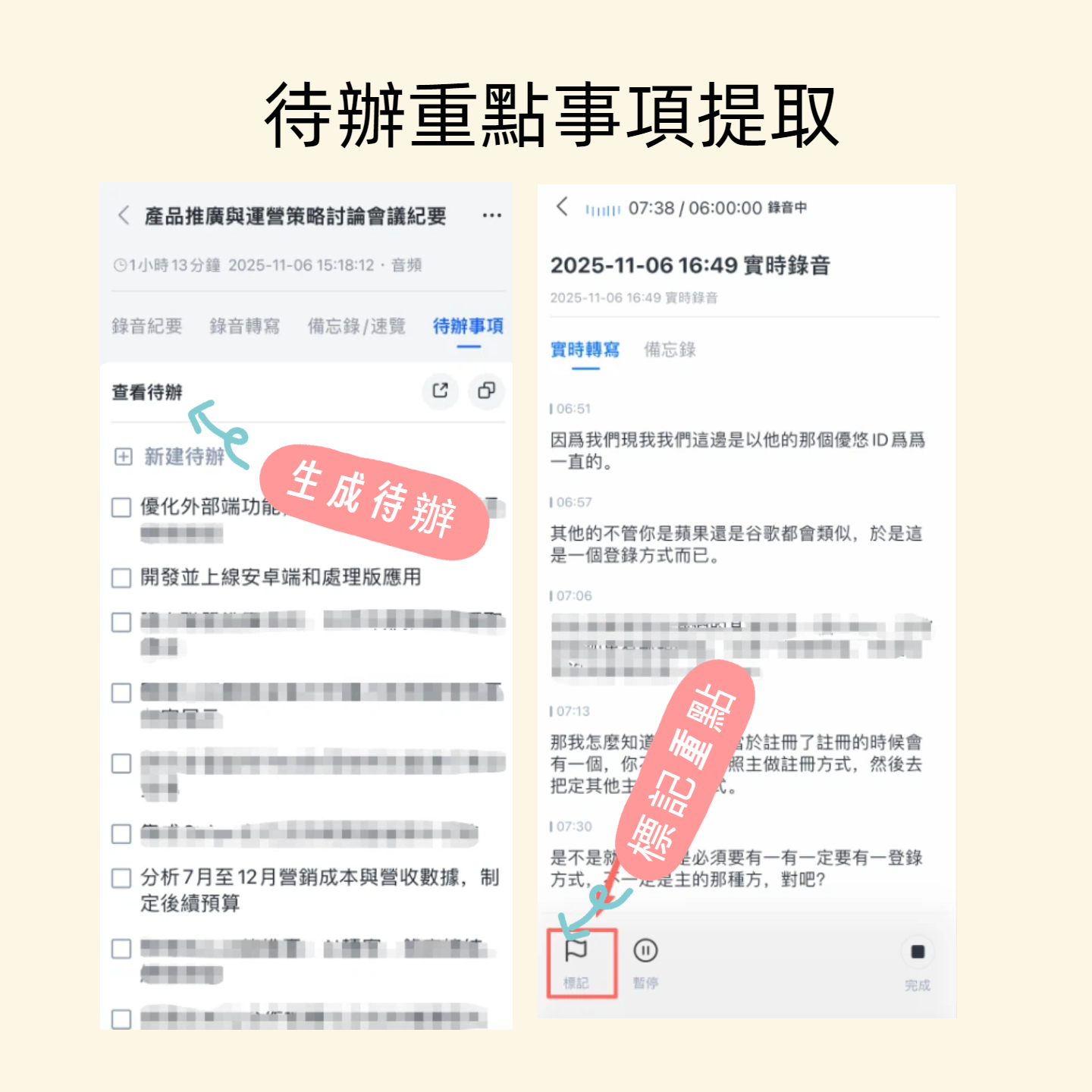
(Screenshot here: Online video link parsing)
AI Summaries and Chapters
After transcription, Tinrec automatically generates summaries and chapter titles. You don't have to read through 50 pages of transcript. Just check the summary to grasp the big picture, then dive into specific chapters for details.
(Screenshot here: AI conversation query 1, arrow pointing to summary or chapters)
AI Conversation Query
This is my most relied-upon feature. It's like having a super assistant you can ask: "In this interview, what does the interviewee think is the biggest challenge for passing on the Sichuan dialect?" Tinrec extracts the answer from the recording and even tells you the timestamp.
You can start with this prompt template:
"Based on this recording, complete the following tasks: 1. List three core points with supporting quotes from the transcript; 2. Summarize all action suggestions mentioned by the interviewee; 3. If I were the project lead, what should I do next?"
(Screenshot here: AI conversation query 2)
Action Item Extraction
After a meeting, no need to dig through notes for "who needs to do what." Tinrec automatically extracts promised actions from the discussion and organizes them into a to-do list. You can even copy it to Notepad or Notion with one click.
(Screenshot here: Action item extraction 1)
Multi-Format Export
Export the organized results as PDF, Word, TXT, subtitle files, or sync directly to Google Docs, Notion, OneNote. This makes Tinrec not a closed tool, but part of your workflow.
(Screenshot here: Multi-format file export)
Practical Scenarios: How to Organize Sichuan Dialect Meetings, Lectures, and Interviews
Scenario 1: Sichuan Dialect Project Meeting
Several teammates from Sichuan occasionally use dialect in meetings. After recording with Tinrec, I can just ask the AI: "How many versions of the Sichuan dialect course outline were discussed today?" Tinrec finds them for me without replaying the recording.
Scenario 2: University General Education Course "Dialect and Culture"
In a two-hour class, the professor recited a folk song in Sichuan dialect. It was interesting to hear, but hard to review afterward. I used Tinrec to transcribe it, and then used the Q&A feature to dig out key background points about the folk song and turn them into notes.
Scenario 3: Field Interview Organization
The Sichuan culture interview I mentioned earlier was the tipping point for me switching to Tinrec. Relying only on a transcript would have taken me over 3 hours to outline. But with Tinrec's summaries and Q&A, I produced a well-structured interview report in just 40 minutes. Even my boss said, "This time it's really well organized."
Key Points to Consider When Choosing a Transcription Tool
If you're evaluating different tools, consider these aspects:
- Output completeness: Transcription is just step one. Can it automatically summarize, generate chapters, and extract action items? That determines how much time you'll spend afterward.
- Input diversity: Do you only need meeting transcription, or also files and online videos? The broader the source support, the more you'll use the tool.
- Tolerance for imperfect recognition: No tool can 100% correctly recognize dialects. But if it has built-in AI Q&A, even if the transcript has errors, you can still capture semantic key points.
- Cross-platform and export: Can the results integrate into your existing workflow (e.g., Notion, Google Docs)? That affects whether you'll keep using it.
- Free plan generosity: Don't rush to buy. Test with your own recordings on the free version first — that's more reliable than any review.
Conclusion: Is Tinrec Worth Trying?
If your recordings often involve Chinese accents or dialects, and you need not a "draft to proofread" but a finished result you can act on, Tinrec is a great fit.
Especially for multi-source audio/video processing, it covers live recording, files, and online videos in one app, then uses AI to directly extract key points from long content. This method is what turned my past hours-long transcription organization into a report delivered in half an hour.
I recommend downloading Tinrec's free version and testing with your own recordings. Don't rush to judge — give it a chance, and you might find that organizing recordings can be this easy.
You Can Do It Too: A 5-Step Checklist for Organizing Recordings with Tinrec
- Open Tinrec, record your meeting or class, or import an existing file.
- After transcription, first look at the AI-generated summary and chapters.
- For parts you want to dive deeper into, use the AI Q&A to ask questions.
- Copy key points and action items to your note-taking tool.
- Export in your desired format and save to your work folder.
Test step by step, and you'll gradually master this method, turning recordings from "files waiting to be listened to someday" into actionable data.
Turn every recording into actionable outcomes
Get 60 free transcription minutes when you sign in. No credit card required.
Related Reading
You might also like

2026 Complete Guide to Speech-to-Text: Features, Use Cases, and Tool Selection
As a senior college student, I used speech-to-text tools for an entire semester to organize lecture notes, group discussions, and YouTube study videos. This guide introduces you to Tinrec, from core features to real student scenarios, showing how AI turns audio and video into actionable knowledge.

2026 Free Speech-to-Text Solutions: 2 Tools Compared
A mid-level manager puts two popular free speech-to-text tools—Tinrec and Otter.ai—to the test, comparing Chinese accuracy, free tiers, AI features, and cross-platform support to help you pick the best one for workplace productivity.

2026 Tinrec Voice-to-Text Tutorial: No Hardware Needed, AI Organizes from Multiple Sources
How to choose voice-to-text software? This article compares Tinrec and Plaud Note, from hardware requirements, input sources, AI features to pricing, and tells you why you don't need to buy a voice recorder — your phone can handle meetings, lectures, and online video transcription.

2026 Hands-On Comparison of 5 Cross-Border Meeting Note Apps: Which AI Summary Saves the Most Time?
Dealing with cross-border meetings daily, mixing English, Mandarin, and Cantonese? Still transcribing recordings after meetings? We test 5 transcription apps to see which one can quickly organize multilingual meetings, saving you time and overtime.
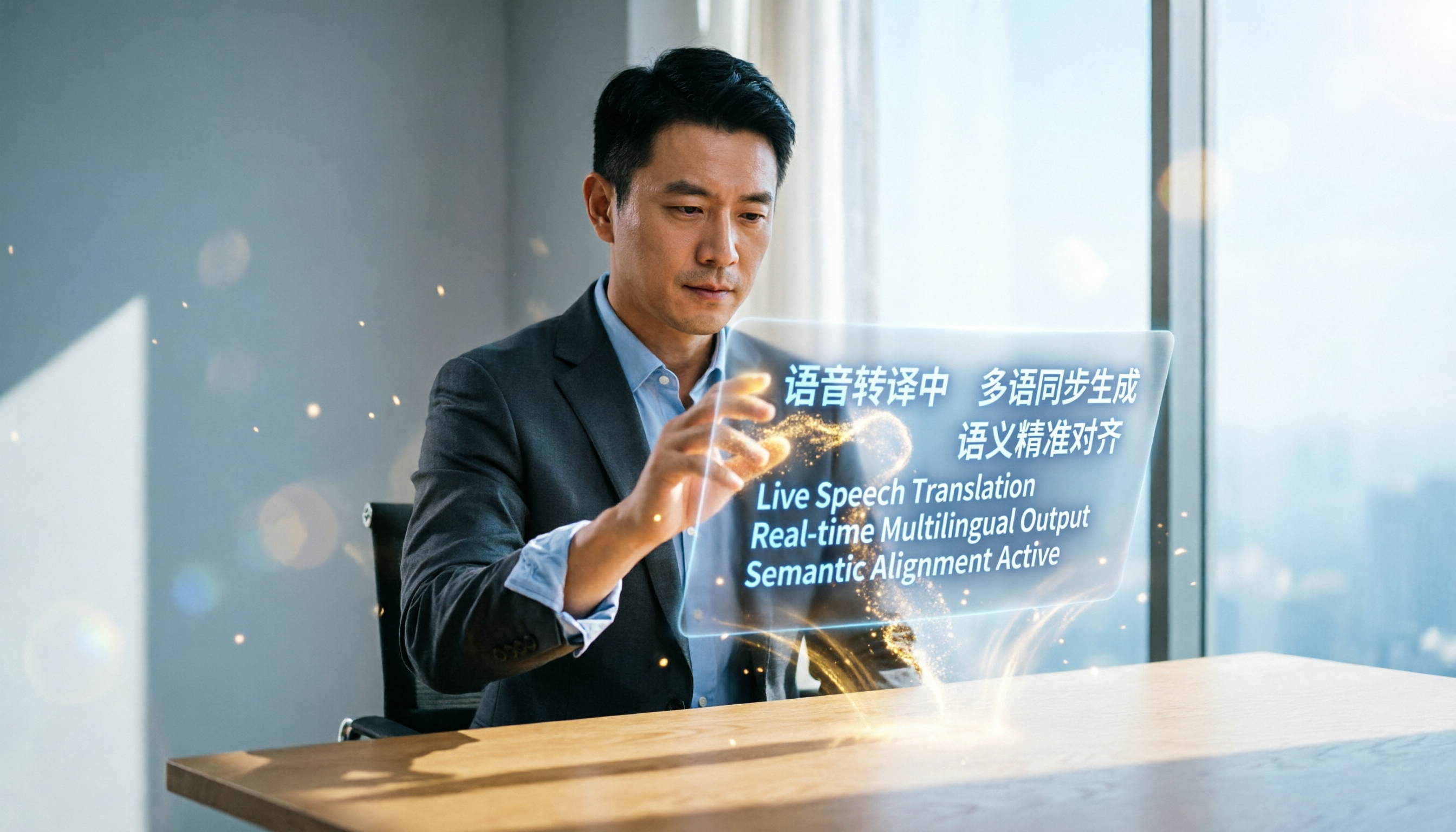
2026 Free Chinese-English Real-Time Translation Solutions: 3 Tools Compared
A must-read for professionals: hands-on testing of Chinese-English real-time translation tools. From cross-border meetings to self-study, Tinrec not only translates in real time but also transcribes audio and generates AI summaries, truly solving the pain points of middle managers.

2026 Tinrec vs Otter.ai: 5-Dimension PK – Which Is Better for Chinese Transcription?
Looking for a great speech-to-text app? This article compares Tinrec and Otter.ai across 5 dimensions: Chinese transcription accuracy, extra organization features, pricing, input sources, and target users. It also covers alternatives like Notta, TurboScribe, and PLAUD to help you find the right tool quickly.

How to Choose a Multilingual Speech-to-Text Tool in 2026: A 5-Step Guide
Cross-border team meetings often mix English and Chinese, and a simple English transcription tool fails when it hits Chinese. After using Otter.ai for two years and switching to Tinrec, here's a 5-step guide to choosing the best multilingual speech-to-text solution, covering accuracy, translation, input sources, AI post-processing, and pricing.

2026 Comparison: 3 Transcription Apps Tested – Which AI Summary Actually Saves Time?
We tested three popular voice-to-text apps—Tinrec, Otter.ai, and Notta—comparing language support, cross-platform capabilities, AI summaries, and free plans to help you find the best time-saving tool for Chinese users.

2026 Tinrec vs Notta: 5-Dimension Comparison – Which Is Better for Students in Real-Time Chinese-Japanese Translation?
From a college student's perspective, this article compares Tinrec and Notta across five key dimensions in real-time Chinese-Japanese translation scenarios, including translation accuracy, post-meeting organization, free quota, cross-platform convenience, and AI value-added features, helping you decide which tool is more suitable for classroom and everyday translation needs.